Alexandra Park, Crewe

044045

After the glitter of the Premier League and the Manchester United, I found myself on the train from Manchester Piccadilly to Crewe Wednesday night. I had expected to chat up some fans on the train, as I have gone used to trains on match days being full of supporters. But tellingly, I didn’t spot a single one, so the only fun on the 50 minute trip was a conductor telling people to take the luggage off the seats “or I will throw it out the windows when I come around” and at Alderley Edge (where quite a few footballers live) telling people not to get off unless they were “wearing smart shoes and no denims”.
Fortunately, you can spot the ground from the railway station, so despite the lack of supporters walking from the station, I had no problems in finding the way.
068078
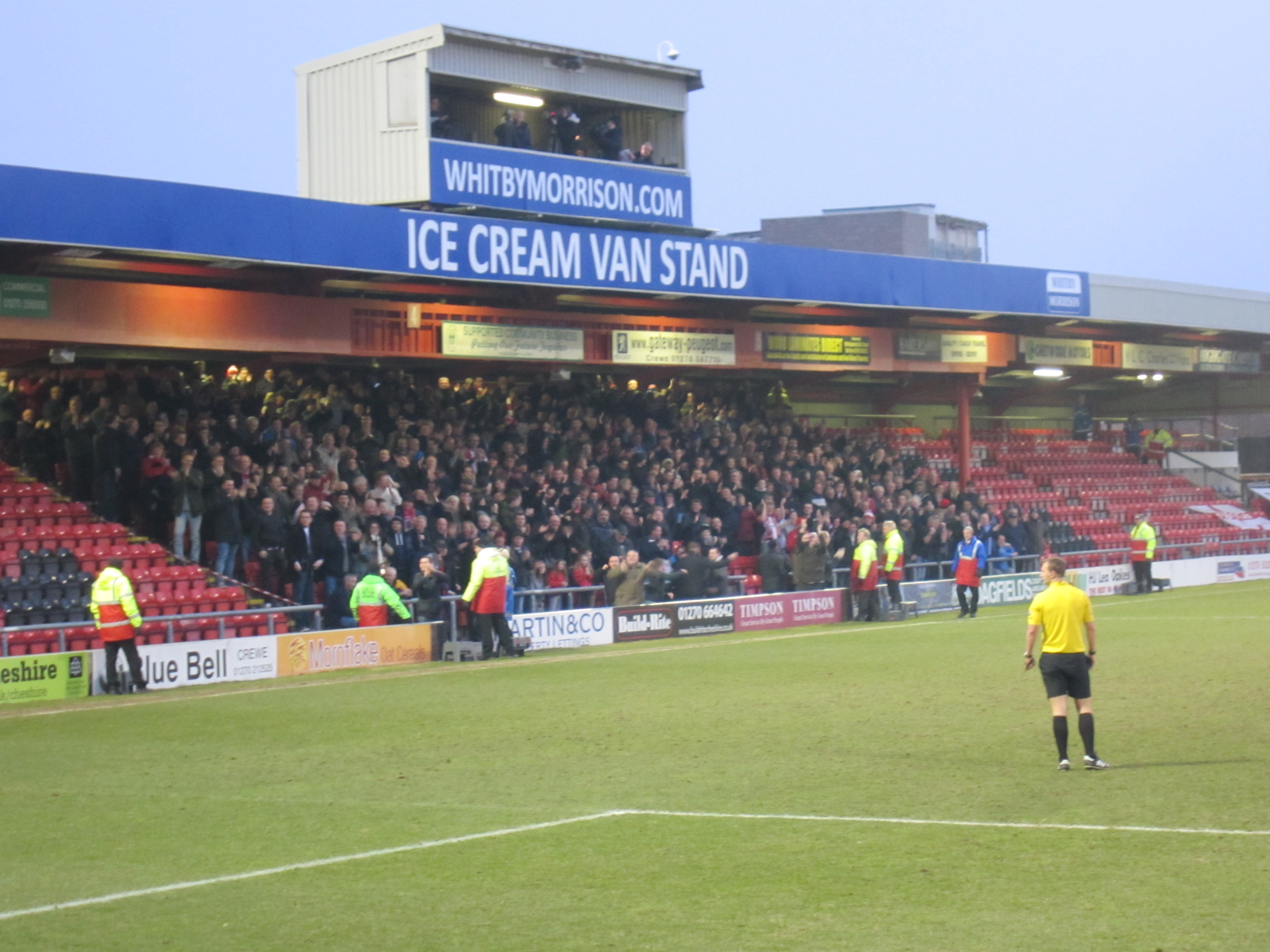
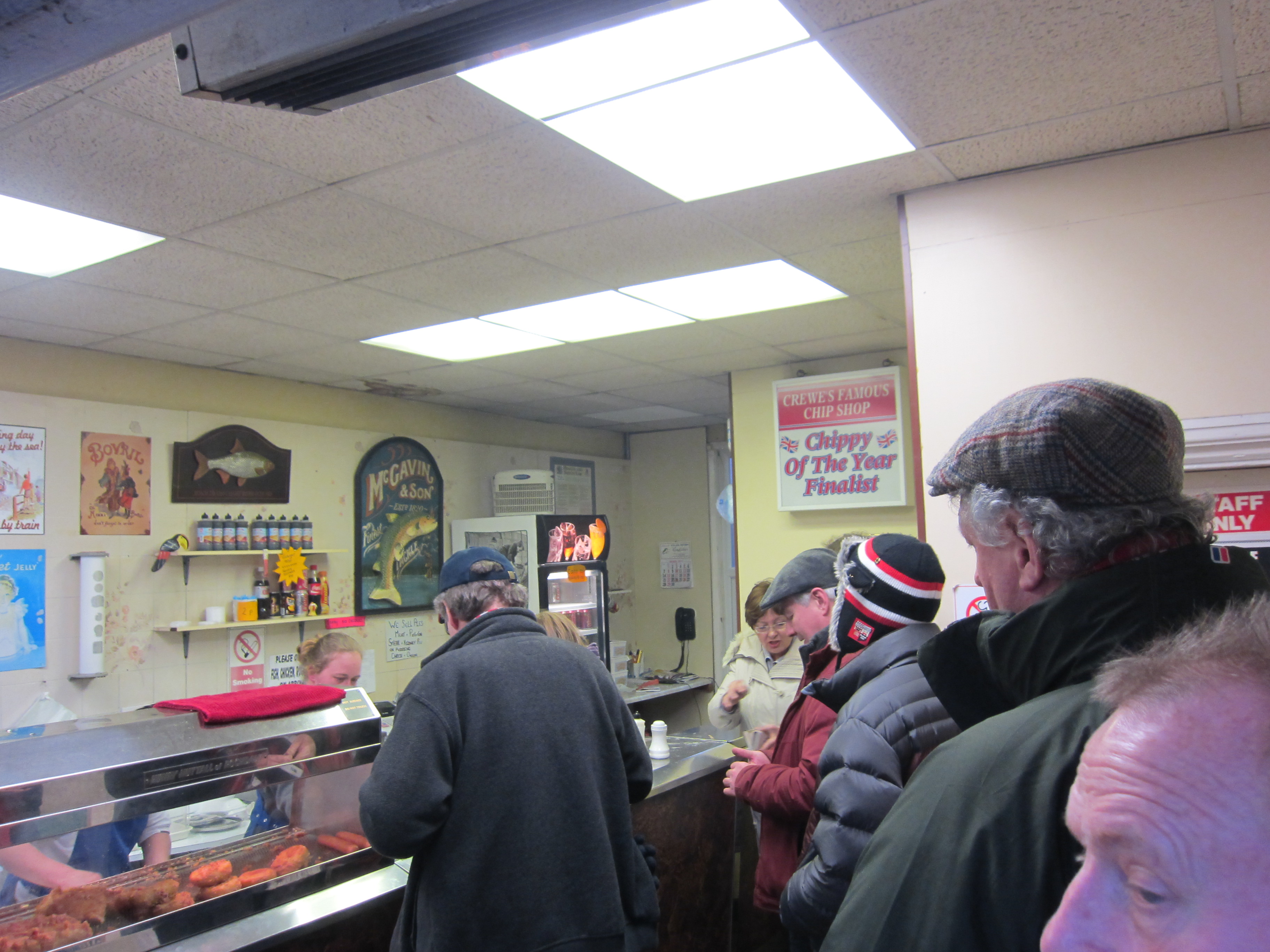
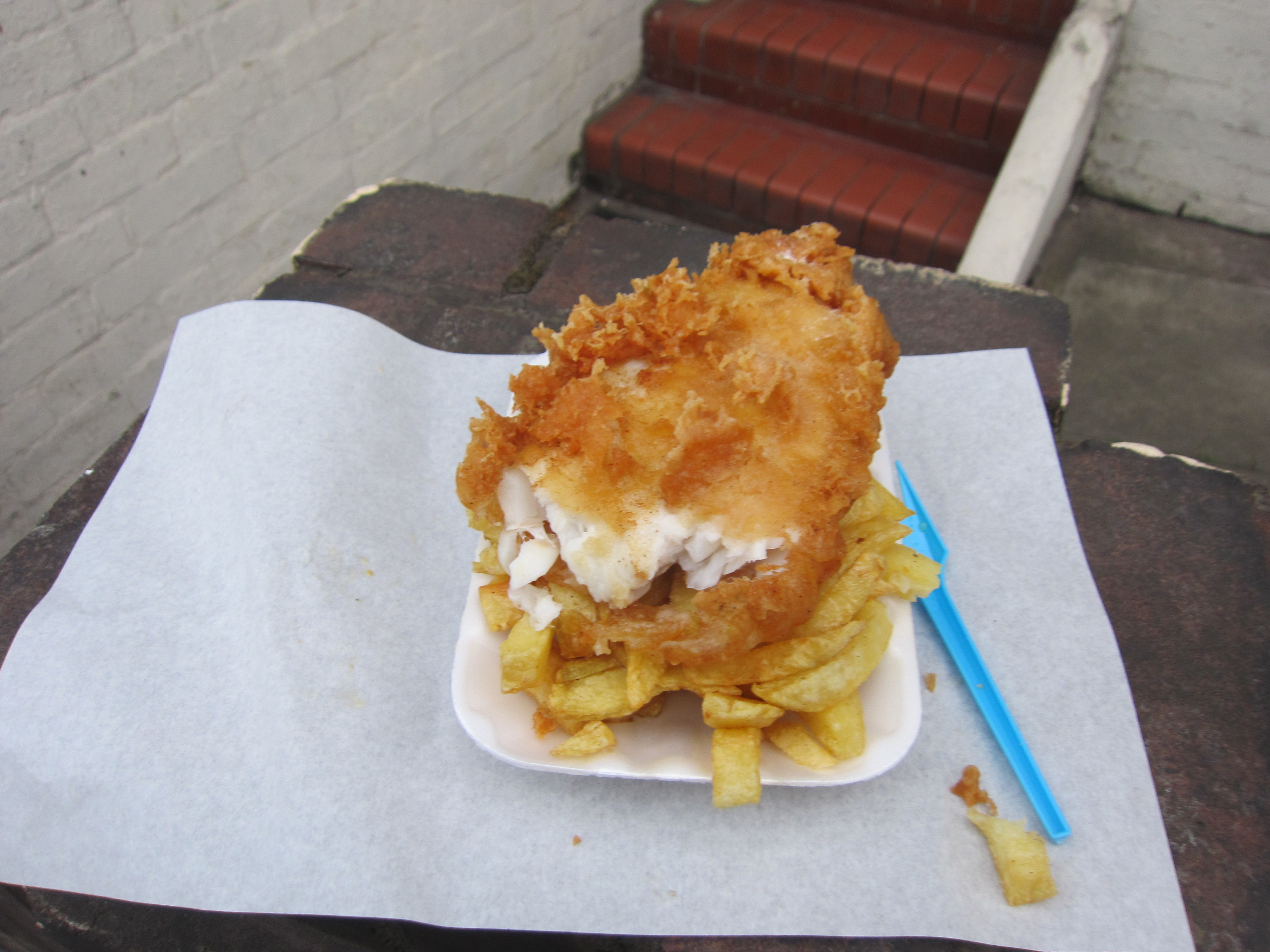
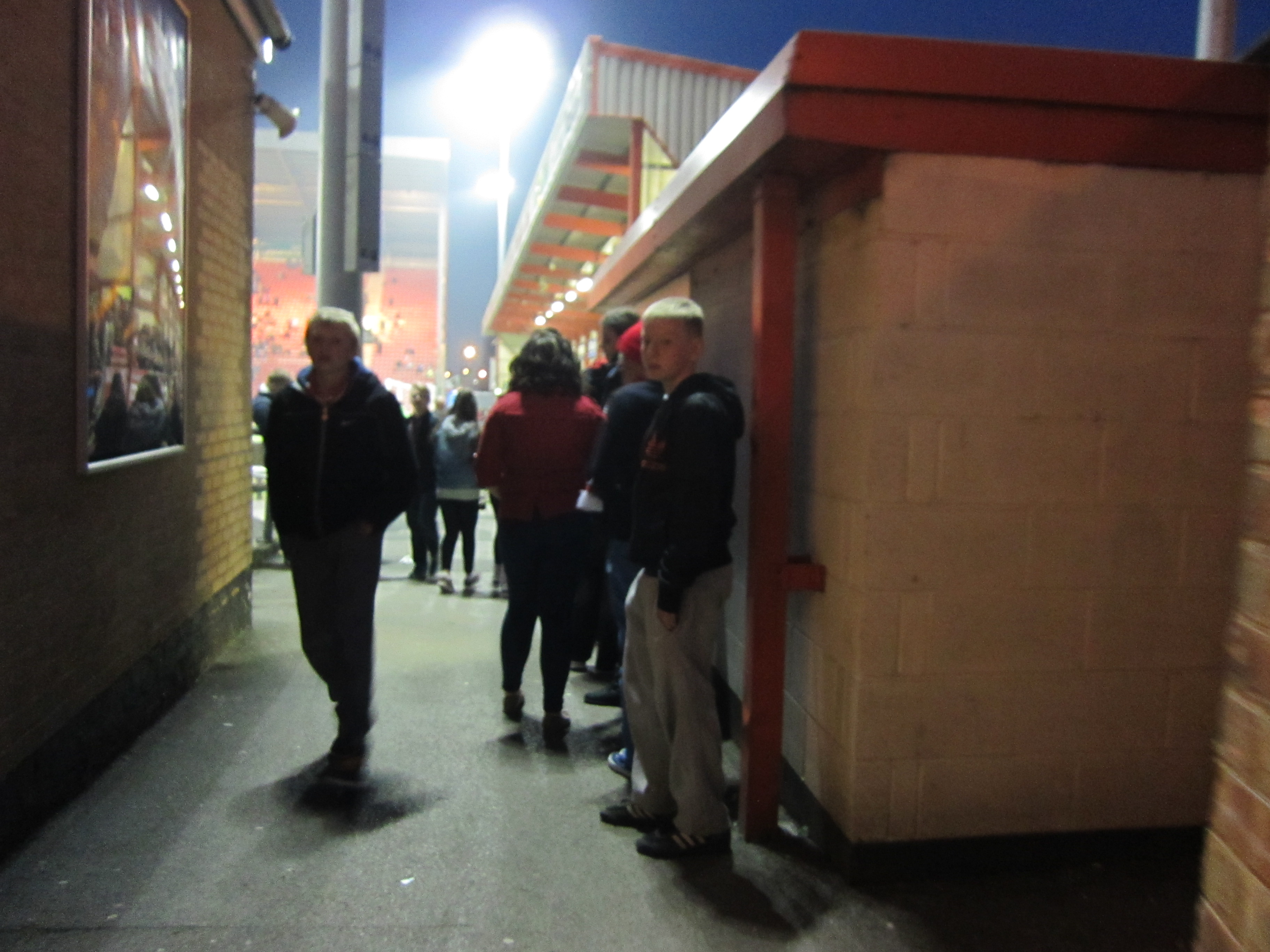
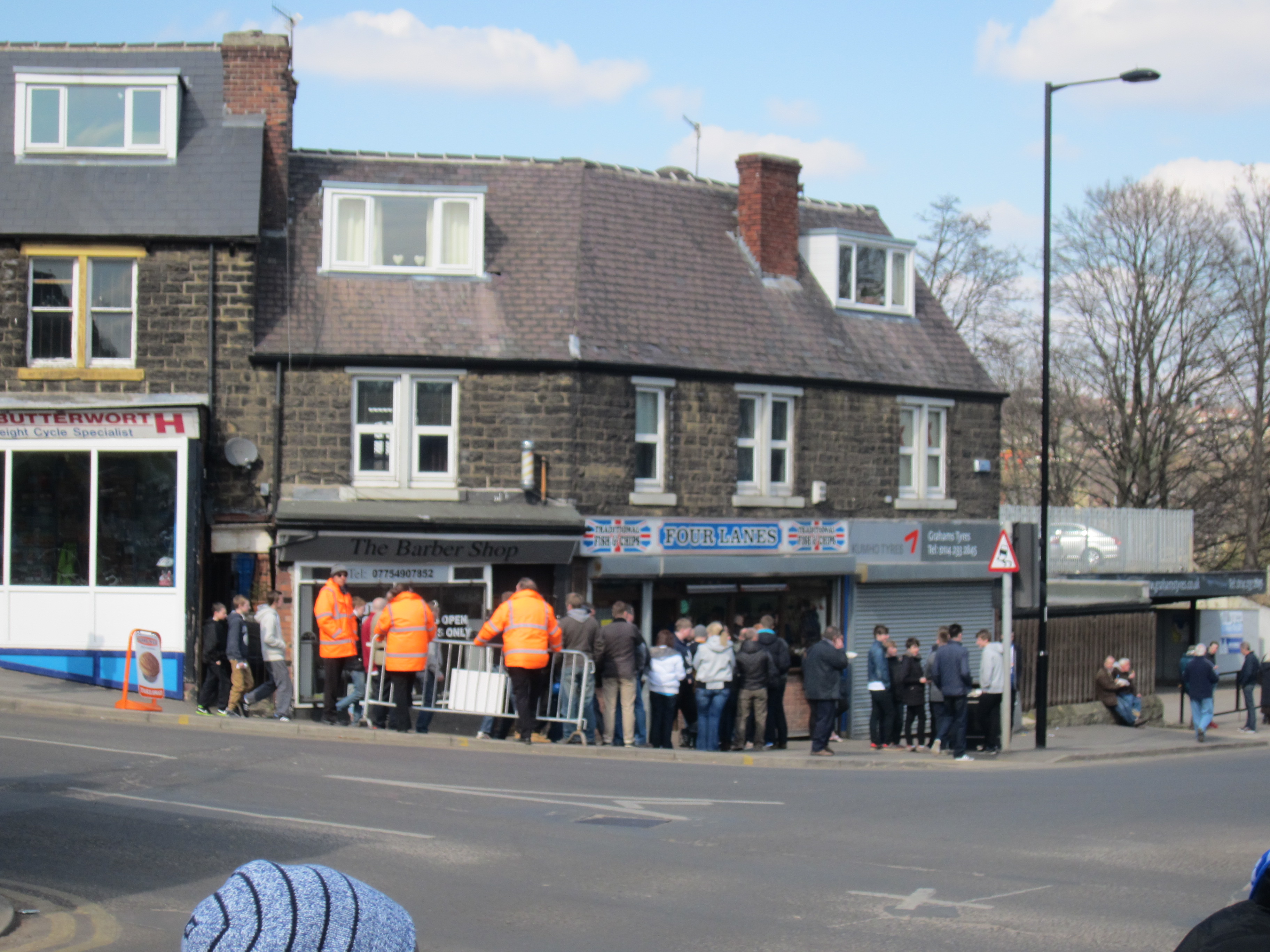
Alexandra Park reminds me of the small Copenhagener football grounds with a main stand with about 6000 seats being the centre point, with only small low stands on the three other sides, totalling about 4.000 seats. The differences are that the three other stands are ceiled and all-seater; that “The Ice Cream Van Stand” contains a pub-like bar for local fans; that Gretsy Road outside parade one of the finalists for fish ‘n chip shop of the year (I most admit that it is probably the best fish ‘n chips I have had for several years); and that the crowd has the characteristic pride and passion in their team.
049051
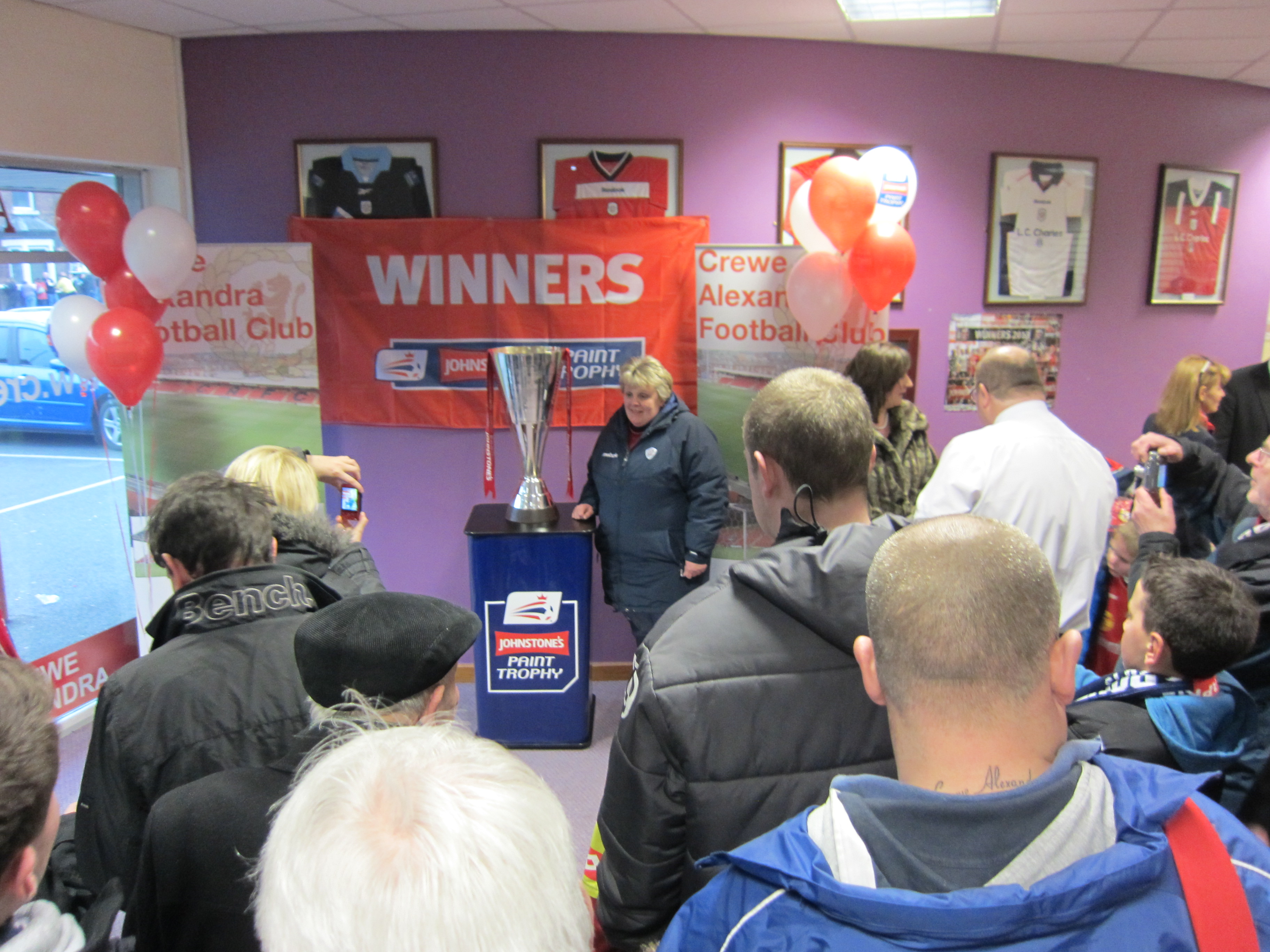
It feels a bit odd that you for a 4.500 spectator match at a 10.000 seater stadium have to buy at ticket at the ticket office to get in, instead of just paying at the turnstyle. I asked the lady for a ticket to the most vocal part of the ground, and she answered that that would be behind the goal (or she could have sent me to the visitors, Brentfords section). Having purchased my ticket, I went to the souvenir shop, where fans proudly (apparently without paying) had their photo taken with the Johnstone’s Paint trophy cup that they had won at Wembley during the weekend.
042046
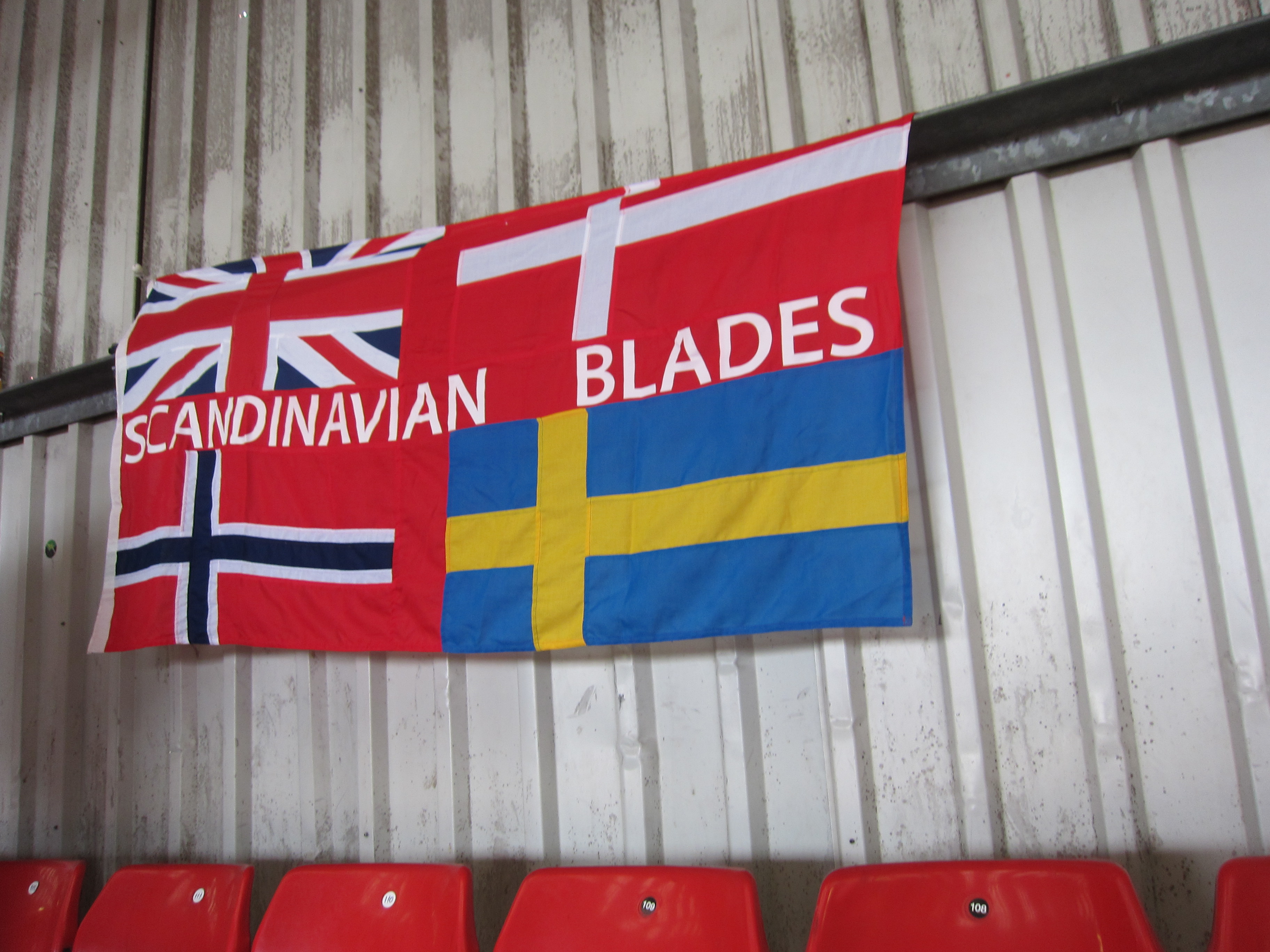
That just about left me time to go to the chippy before the match. The queue was long (compared to the many outlets of junkfood around many football grounds), so I only just made it into the ground by kick-off. The crowd seemed very local; although a nice Crewe fan I spoke with on the way back told me that they had a Scandivian supporters club and that there always were members attending.
He was himself born in Manchester and used to be a City supporter, but at 11, his family moved to Crewe, and he had gone over to his new local team. Having grown up, he had travelled round the world for many years, but when he settled back in the UK near Stocport 10 years ago, he and his wife got themselves season tickets – and went to all home matches. And if the fixture list was kind enough to make it possible to accomodate away fixtures in their daily life, they went to them as well.  The problem was, however, that the young lads in Crewe watched the premiership on televsion and ended up supporting Liverpool or other premiership clubs nearby.

053076
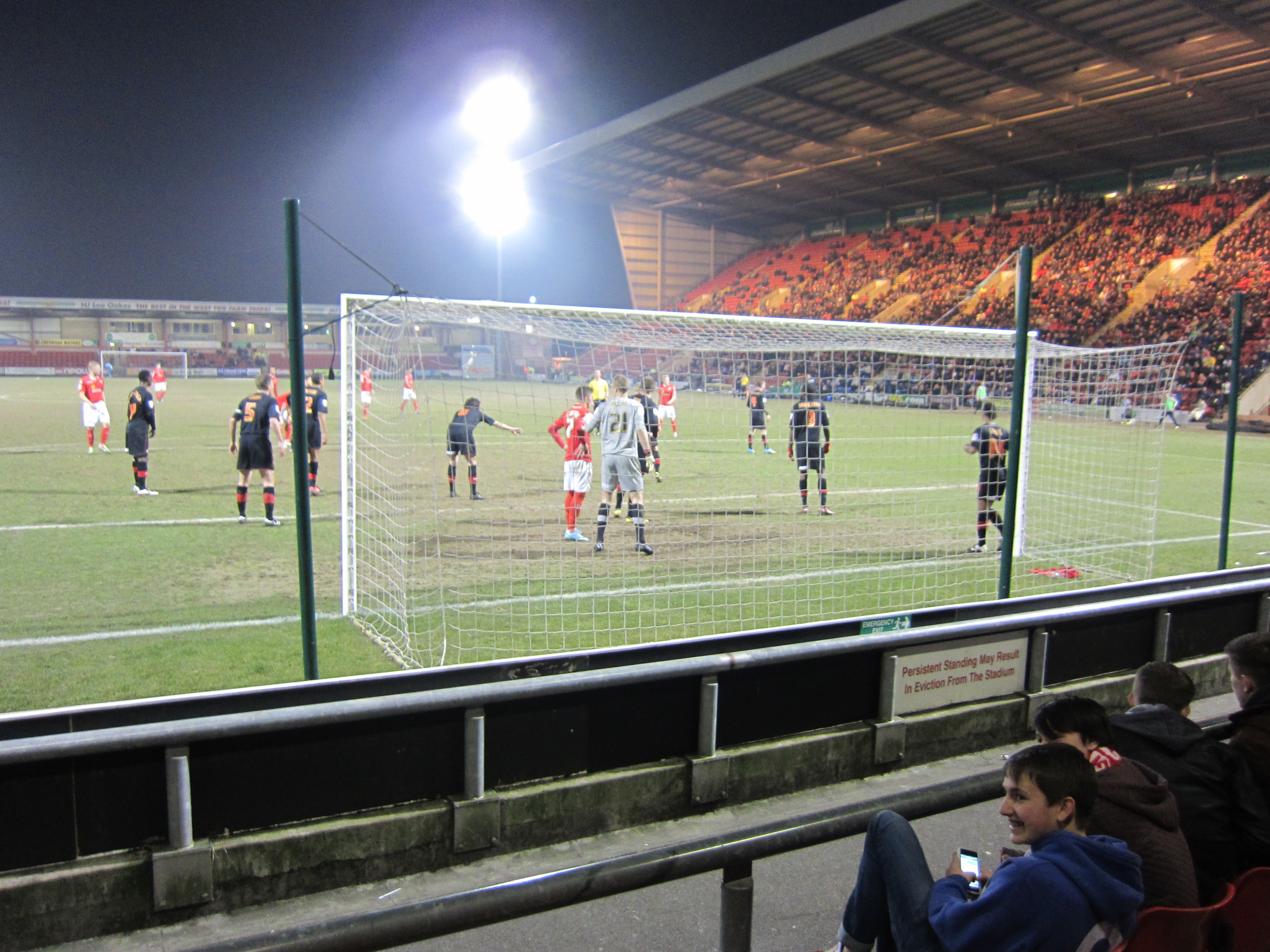
In my section behind the goal, more than half the crowd were teenagers. I guess we were about 5-600 hundred, the Brentford supporters in the small stand by the touchline roughly the same, with about 3.000 in the main stand. A few of them still proudly wore their Wembley robes from the weekend. And the Wembley hangover may, according to my friend, have contributed to a tame Crewe performance.
067097070

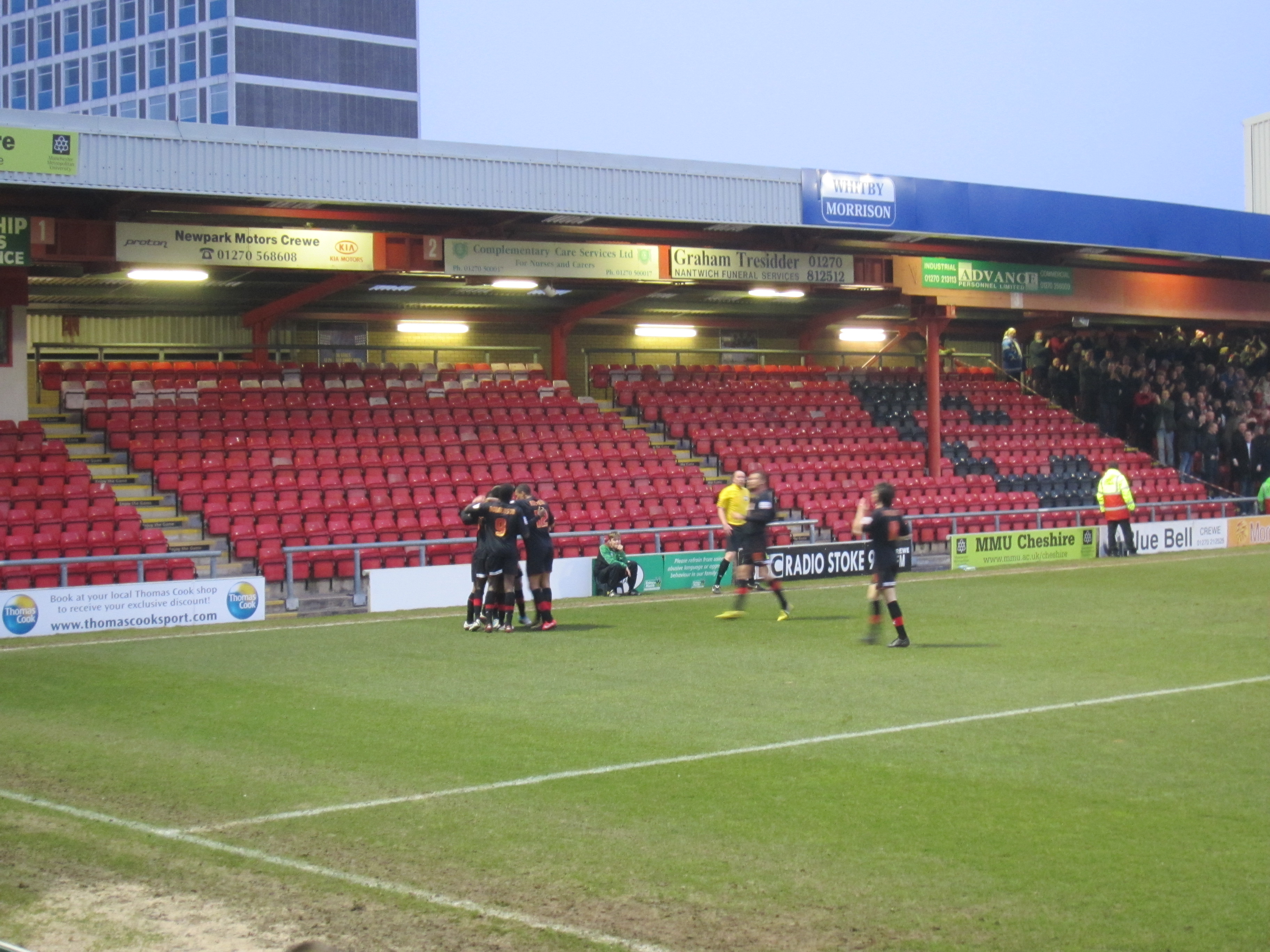
As Brentford according to a couple of their fans put in their best away performance of the year (according to my Crewe friend Brentford were the best team to visit the Alexandra this year, and they certainly played the best football I have seen on this tour so far) and took the lead after about 10 minutes with a stunningly beautiful goal, the Crewe fans as well focused their energy on talking about the glory of the weekend rather than trying to get behind their team.

073094
There were a few chants, but the stand turned into a social gathering for groups of teenage boys with the odd pairs of teenage girls in between them. Amd after all, Crewe only had an outside chance of making the play-offs, so why dwelve too much on that? Why not have a good time talking with your mates?
Despite carving out several good positions with their crisp and energetic football, Brentford didn’t manage to find a second goal till 8 before time. At that stage, a large part of the teenagers disappeared into the dark night, while the old ones stuck it out until the end, swearing and cursing.

103084104

Alexandra Park seems to be a nice social arena for local gatherings. Perhaps not too different from Danish football, but still with a distinct English touch, in the way you dress, eat, drink, watch, sing, chant – or in other words how you consume football.
Tagged with: , , , , ,
Posted in Football grounds, Uncategorized

Old Trafford, Manchester

047058

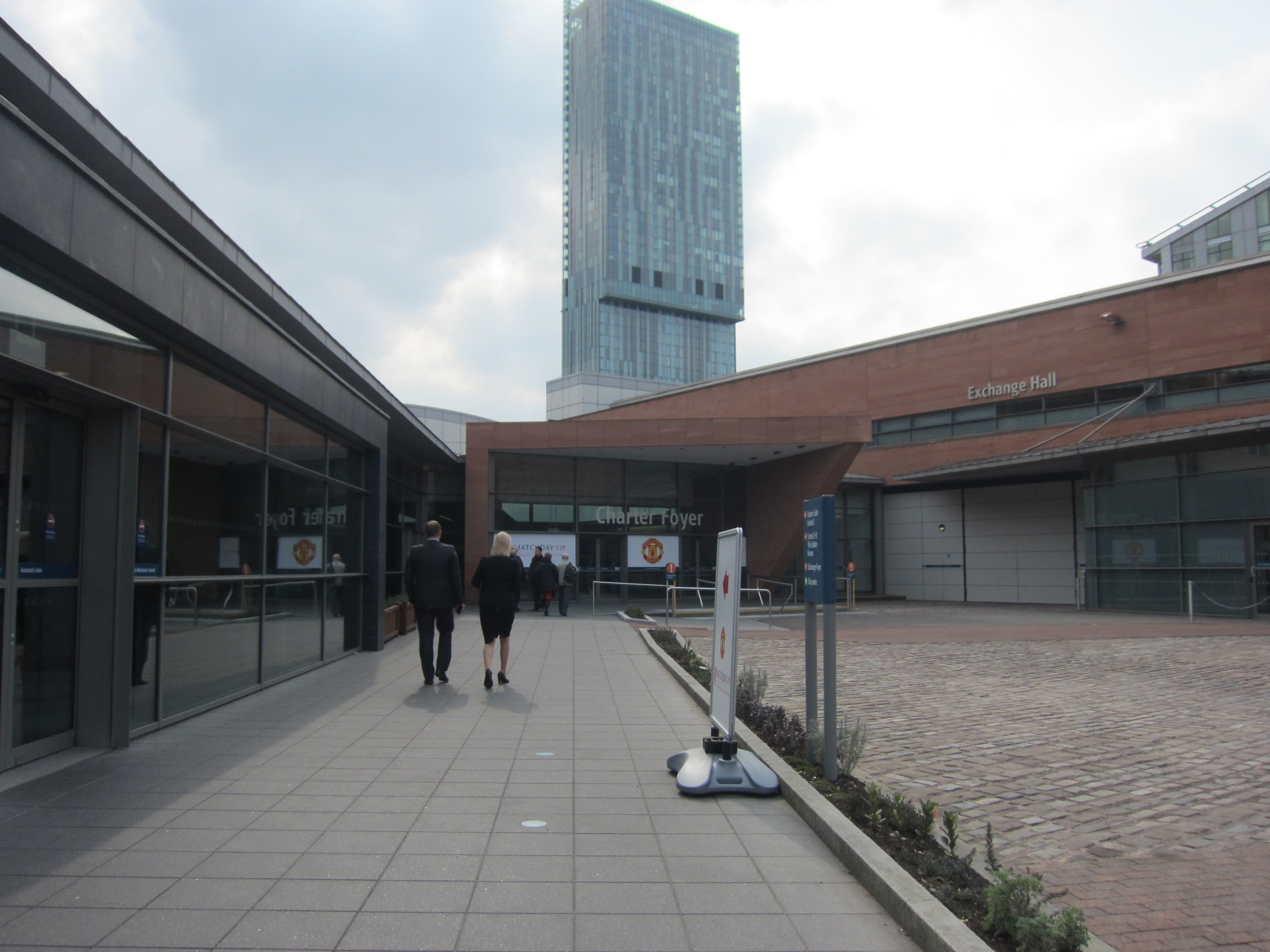
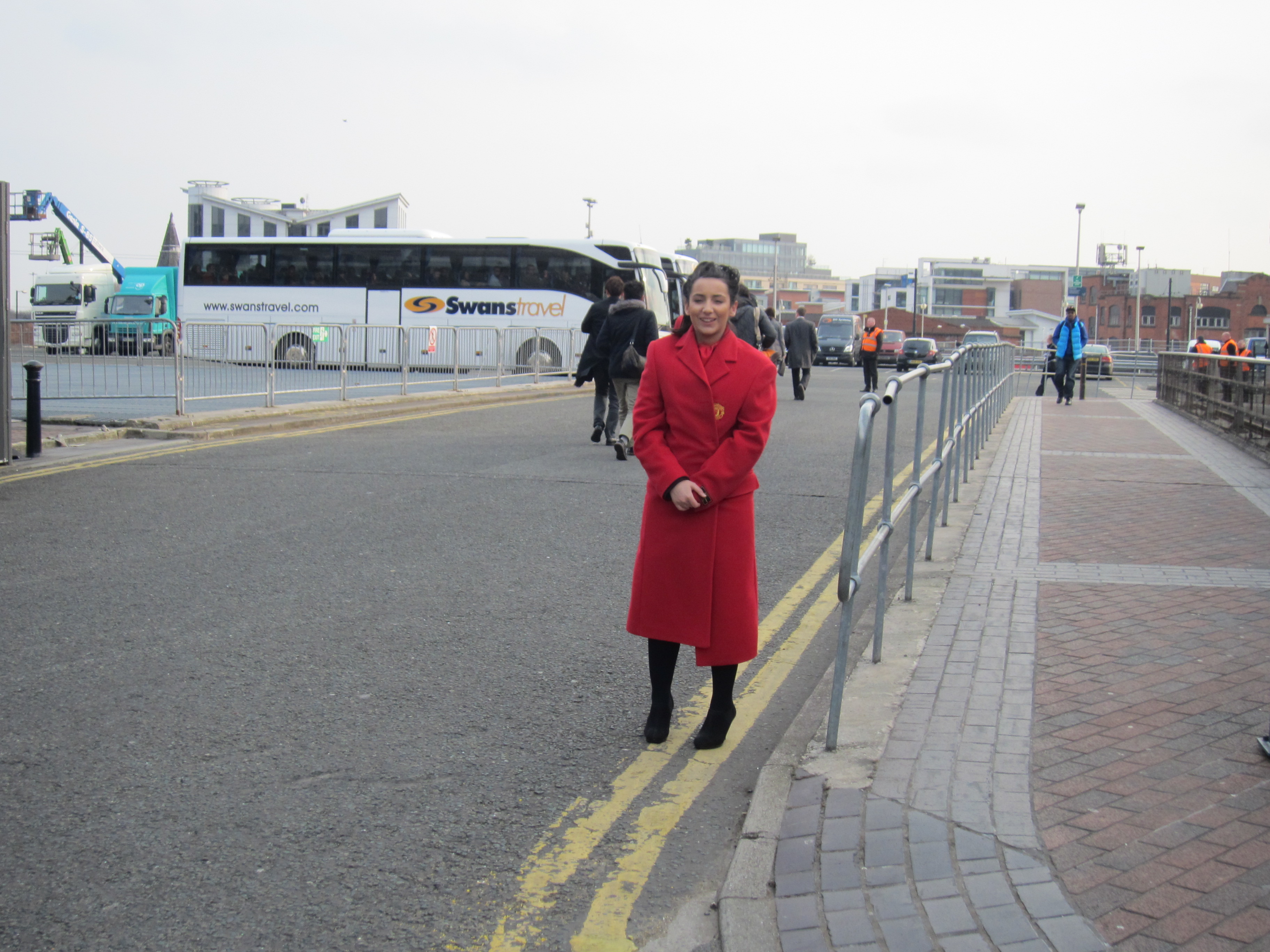
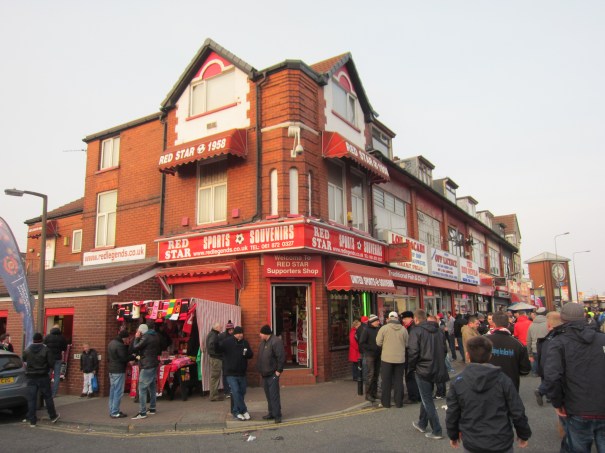
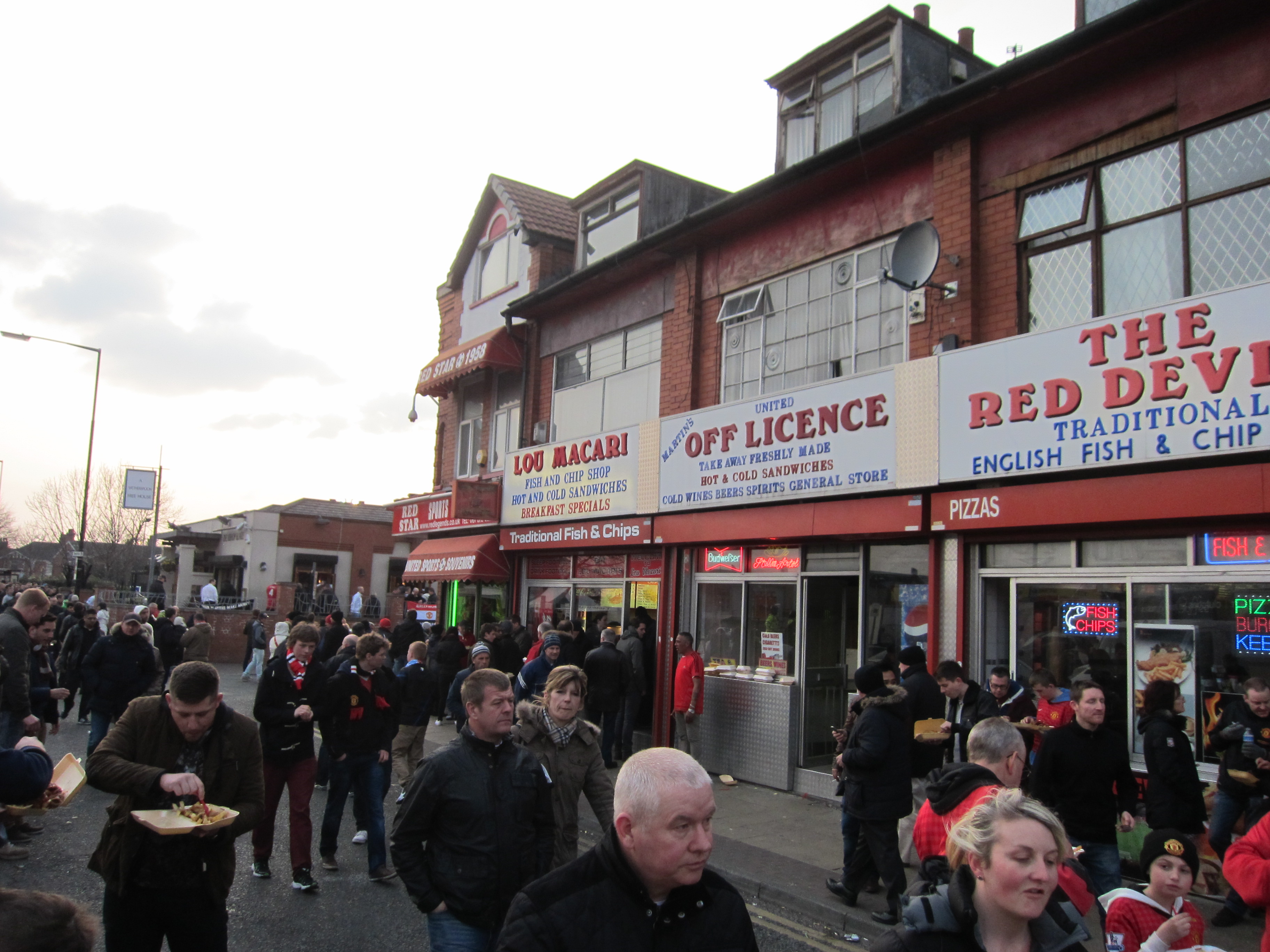
I knew that it would go wrong, when I at 2.40 left Old Trafford for the metro, passing the shops on Chester Road. I have always had my pre-match meal at Lou Macari’s fish ‘n chips there; but yesterday I was going to the Manchester Central in stead as part of my VIP package. You should never break a match-day habit.

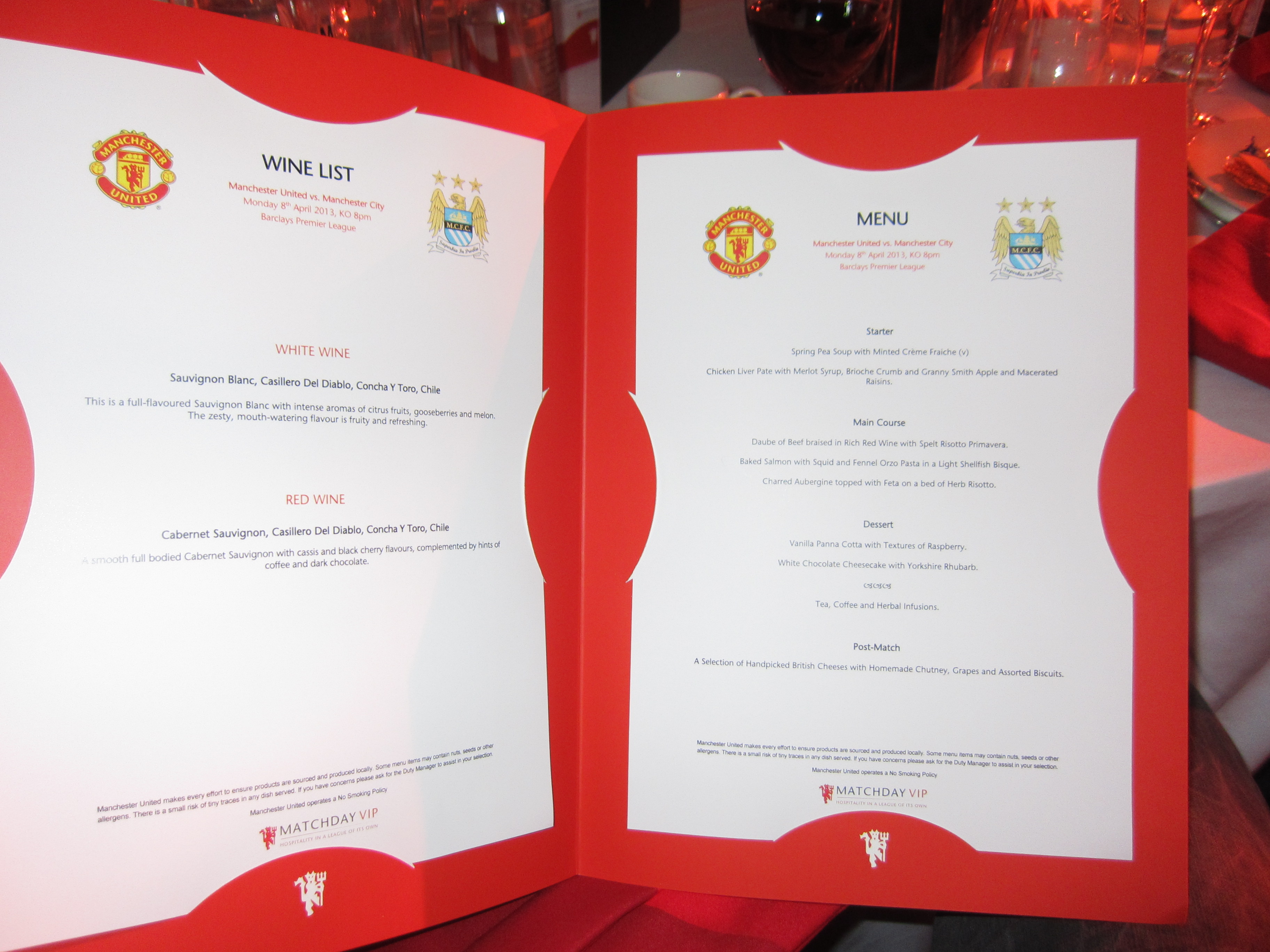
I had lost out on the ballot among members for tickets for the local derby, so I had had to splash the cash on a VIP package. Champagne, 3-course meal, a United legend, coach to the match, and back to the central for free bar. It may sound good – but it is not the match experience that I have gone used to. Anyway, this would be a new and different take on matches – to meet the VIPs – and I wouldn’t have to leave the ground at 5.45 without attending the match which would have been even more strange.

012010

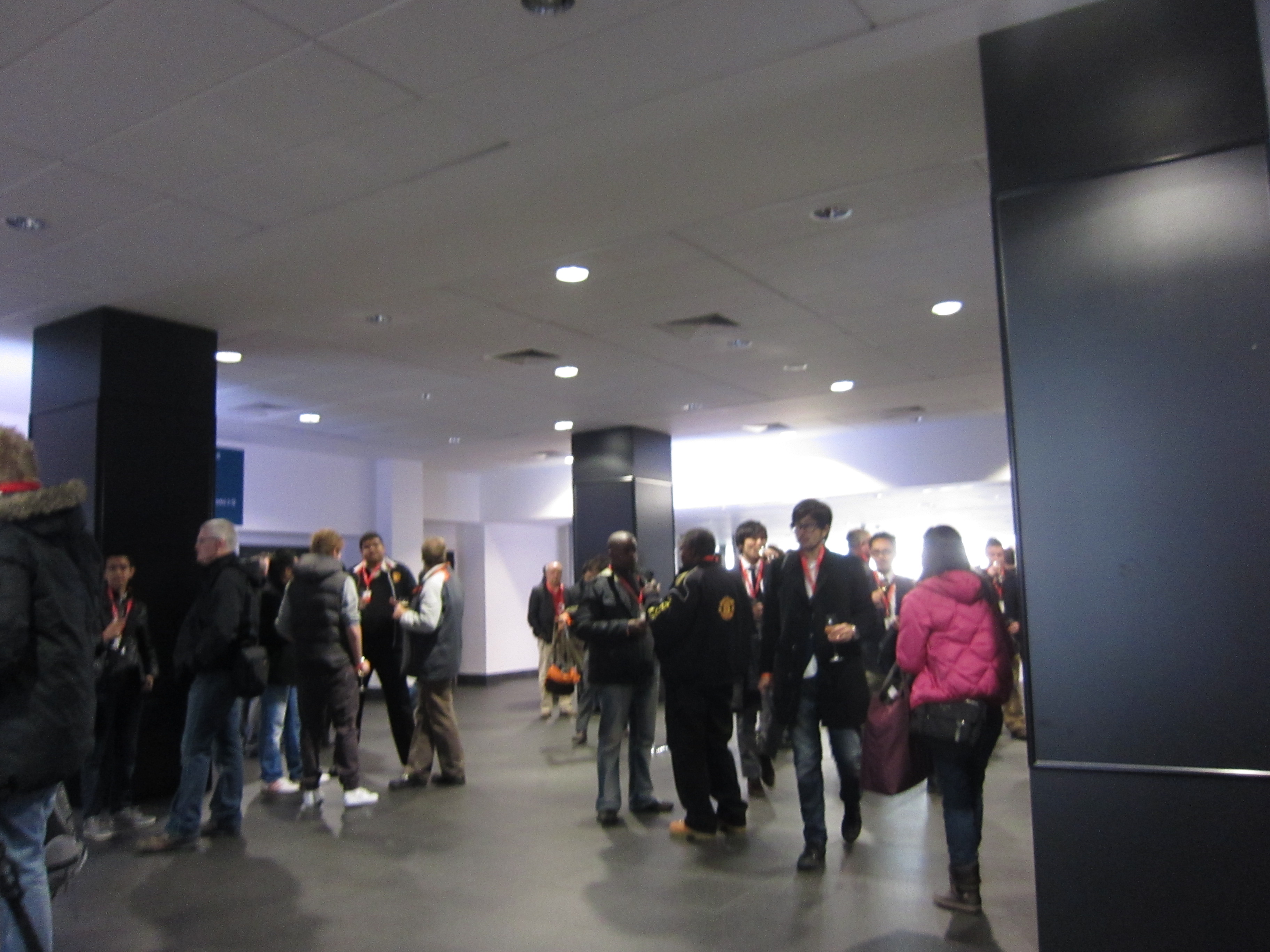
Finely dressed hostesess pointed the way to the reception at Manchester Central, where I got my armband and was offered my drink. There was not much VIP over the guests, in fact, they were just as “ordinary fans” as myself. They all seemed to be foreigners over for the match, who had been unable to get an ordinary ticket, and anxious not to miss out on the match had bought the package. The difference was that most of them were over for their first or second match, whereas I have reached the fourty mark.

As soon as we entered the hall for dinner, I spotted that the legend was Clayton Blackmore, and went up to him for a chat on life as a pro then compared to now, before he started going round the tables chatting with visitors. Great guy – but I couldn’t help feeling a bit uncomfortable with the efforts of the host to create an exciting atmosphere with music, a quiz and agitated talking. But perhaps it was necessarry, because looking around at the tables, there were a few people seemingly much more uncomfortable than me not speaking with anybody. I, at least, had a good time with new fellow United supporters from Malaysia, Norway, Namibia and Belgium.

018026

We were supposed to leave for the ground in coaches at 6.30, but if there many people who wanted to go early, they would send off some of the coaches at 5.45. Everybody at my table wanted to go …

Looking at it a bit cynically, the VIP packages are the club’s way of taking income that the ticket touts otherwise would have got. When you spend hundreds of pounds to travel to Manchester for a game, you are likely to spend another few hundreds on getting your ticket. And normally that would create a good market for the ticket touts. But now the club has taken out a few thousand tickets and is selling them at £250 more than face value – with the dinner, the legend, and a quiz as the excuse. And compared to buying tickets from a ticket tout, it is much safer to buy the high price tickets from the club – and get the bonus of a chat with a United player.

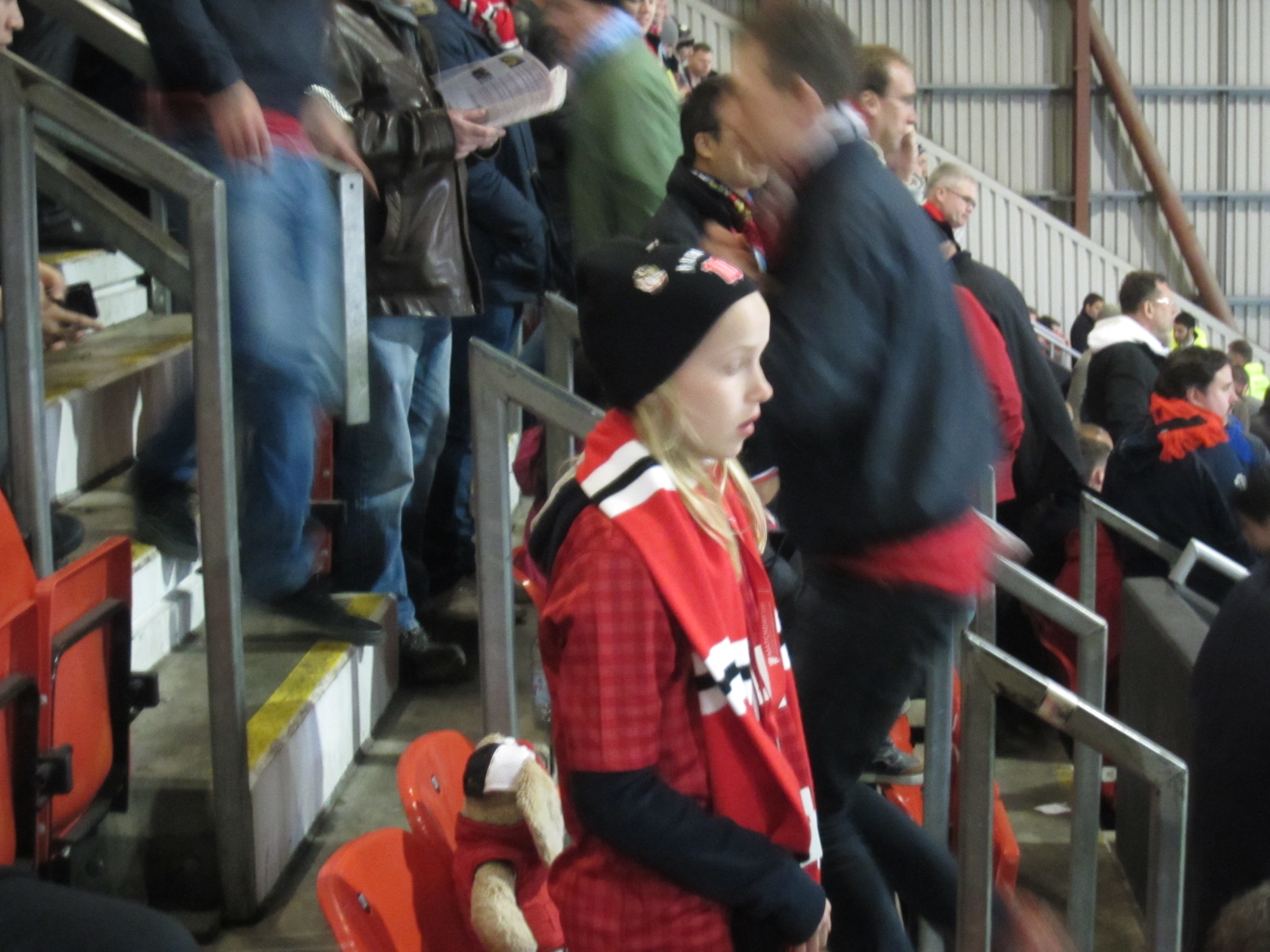
And to some of the visitors, it was probably a great experience. Everybody celebrating their birthday was called up to receive a birthday card from Clayton and have their photo taken with him. And I couldn’t help feeling warm inside when 12-year-old Julie from Norway – making the trip for the first time as a birthday present – was called up. I think that added to her day out. And my new Malaysian friend, whom I photographed together with Clayton, also got a memory to cherish.

110025

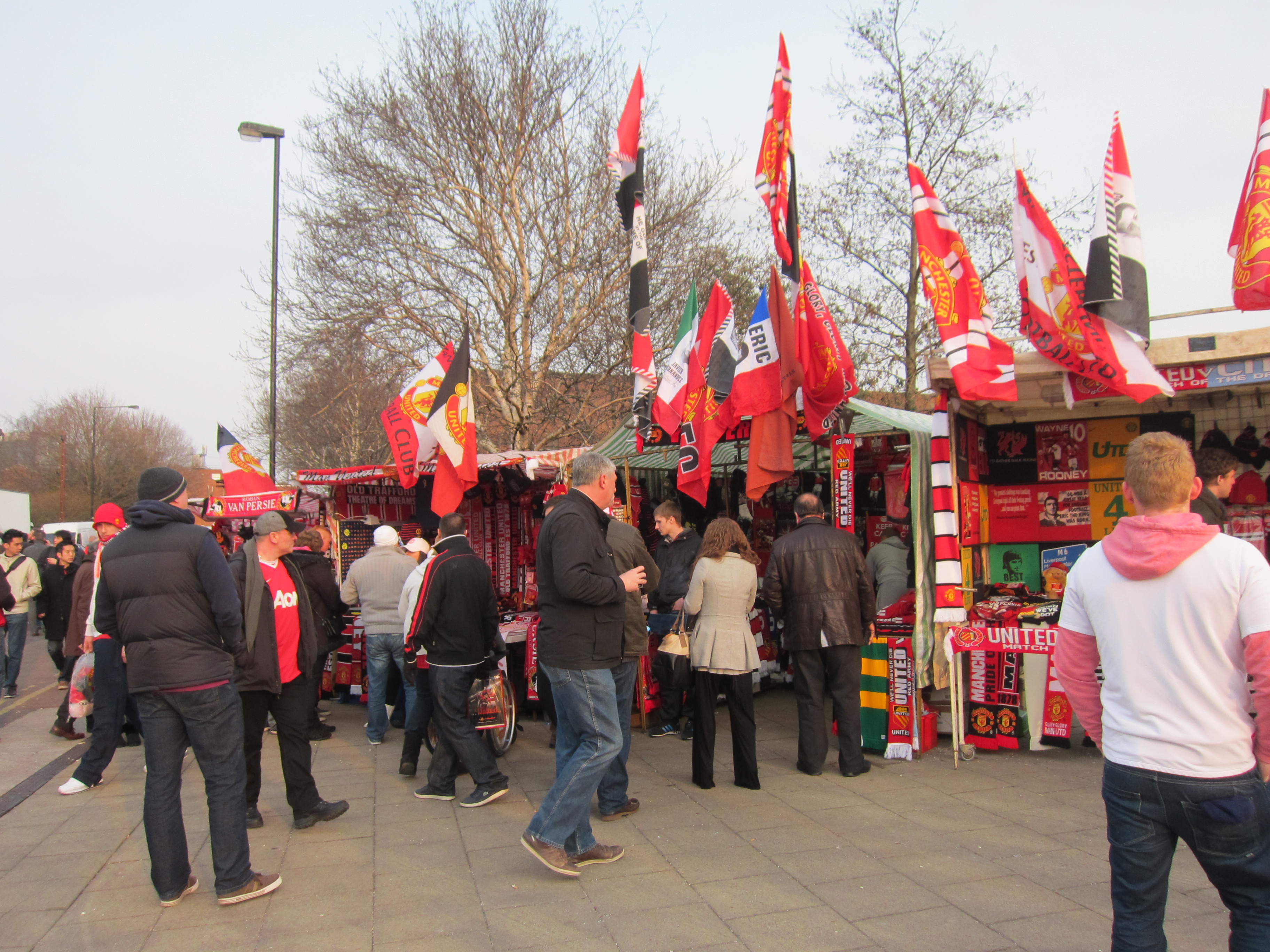
But – I prefer the Chester Road match experience, whether it is the Bishop Blaize, the Lou Macari fish ‘n chips or Red Legends souvenir shop and a chat with Angelo, or the fanzine sellers on Sir Matt Busby way. Perhaps a nostalgic feeling of what it used to be like to go to matches, when I was one of a very few foreigners travelling.

067028

It is really globalization. We all know the phenomena of Europeans spotting exotic little places, and within no time these places are taken over by tourism and “spoiled”. This is the same, only here it is the Asians (and Scandinavians) coming in great numbers, creating something new and different. Fans of other clubs claim that it is “fake”. But there is still a core of the old match experience. And on the positive side, it attracts a much more varied audience than the normal, mainly white, adult male audience. The crowd at Old Trafford is certainly much more diverse ethnically and genderwise than at the other grounds, I have visited.

003091

I can understand the locals, who have no chance of competing for the £ 300 VIP tickets and miss out on games – there are 8.000 corporate seats at Old Trafford, and they don’t include our VIP group. But if it wasn’t for the money of the tourists, Old Trafford probably wouldn’t have been expanded from the 44.000 it held, when the ground was redeveloped and the premier league started out in 1992, to the 76.000 today. It is bit like the argument of whether City or United are the “real” Manchester club. A survey was made some 10 years ago of season ticket holders’ postal code. City claimed that it proved that people in Manchester supported them, as 40% of their season ticket holders had a Manchester postal code compared to 28% of United’s. But as United had more season ticket holders than City, there still numerically were more United season ticket holders with a Manchester postal code than City season ticket holders. United just have this “extra”. And basically, it is my impression that deep down most other clubs envy United their global pulling power.

082

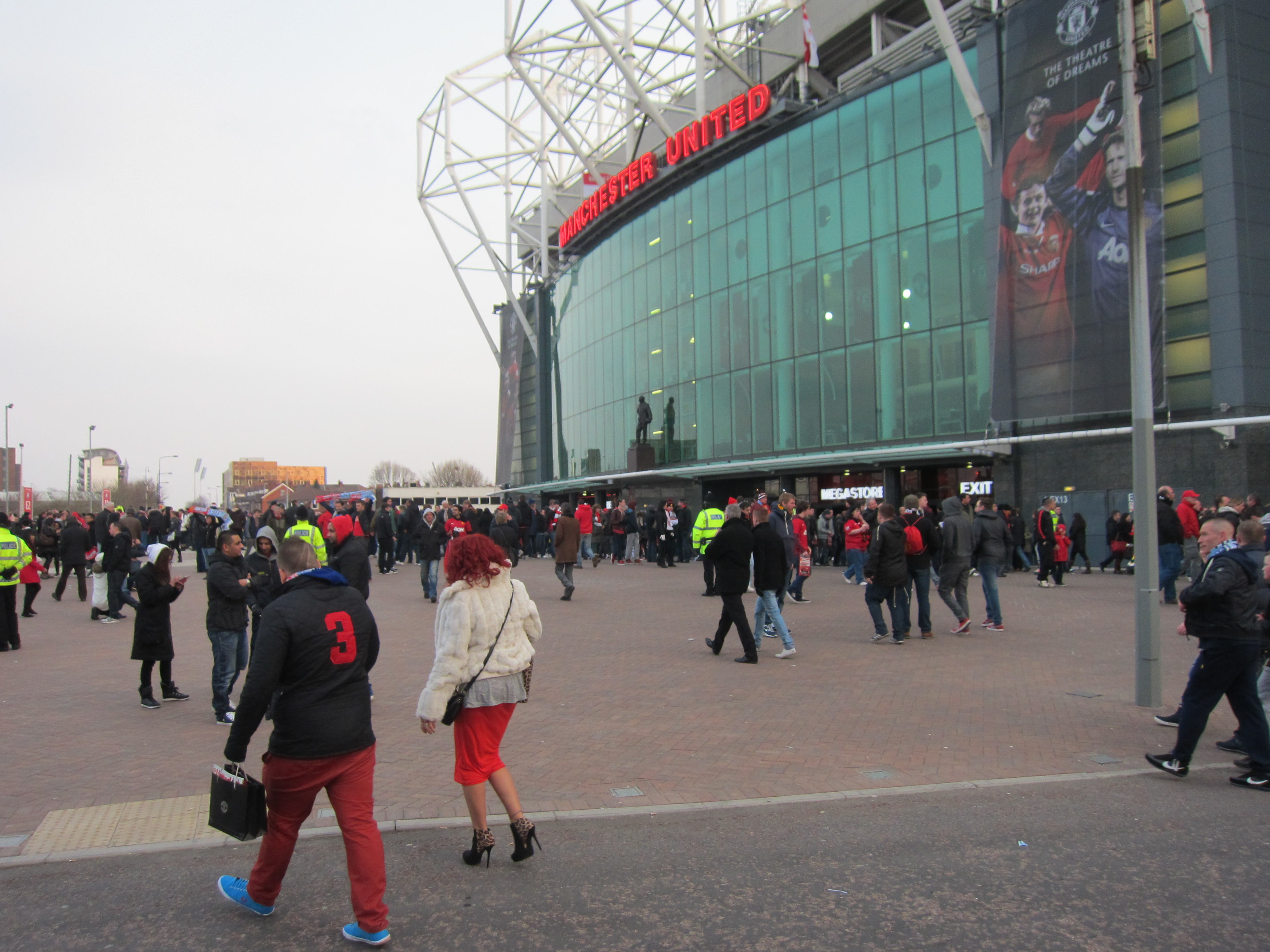
Old Trafford has been redeveloped to such an extent that it hardly bears any resemblance with the ground of the late 80’s. “Car park archictecture” one of my friends have labelled Old Trafford and the Emirates. With a corporate glass facade you may add. It doesn’t have the charm of the old factory/fortress of Old Trafford of the 80’s. But toilets and facilities are definetely more convenient now.

094088

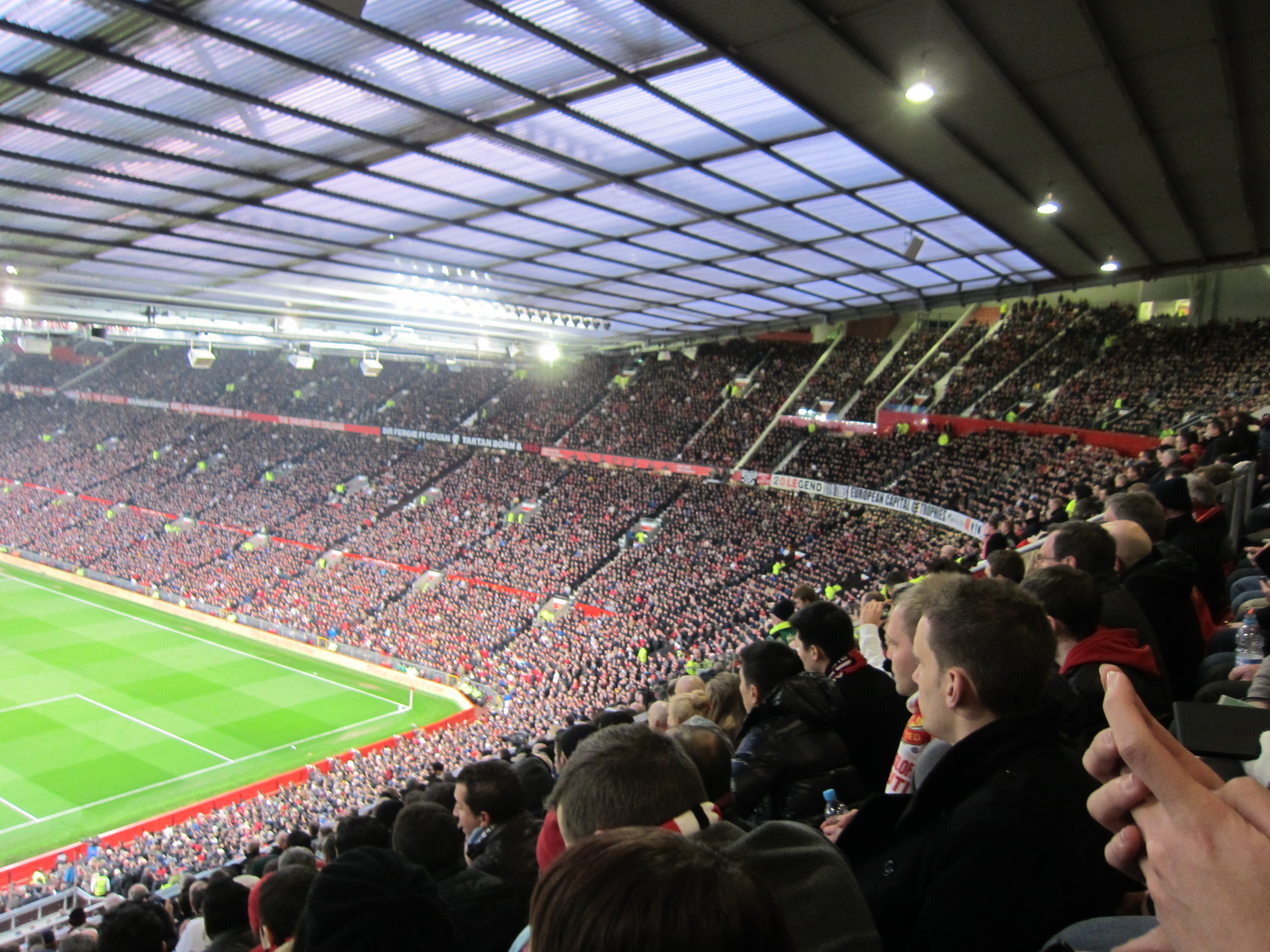
As you can’t bring alcohol into the stands, and you can’t stand next to your mates and chat, most people stay away from theirr seat till the very last moment before kick-off. Therefore, there is little of the build-up there used to be. But for the Manchester derby and similar big matches there was enough edge to generate a bit of atmosphere about 10 minutes before kick-off, sparked by outbursts of singing and chanting of the City supporters – as away supporters always seem to be the most tightly knit, vocal group.

And for the first 25 minutes of the match, it was almost nonstop singing and chanting around the ground. There were no silent spells like at Anfield the previous day, but, of course, a Liverpool – Everton clash at a later kick-off time, with the title at stake, would definetely also have created a more heated atmosphere.

105103

The feeling of things being all wrong, when I skipped Lou Macari’s in the afternoon, came back to me, as United’s injury-hit back-four backed off City’s attackers, giving them yards of space to receive and control the ball. Astonishing. And a remarkable high percentage of bad passes, capped by Rafael when he threw a throw-in straight to a City player without a United player near him. Rooney and RVP looked off the pace – so from the 20th minute, I was hoping for a couple of substitions to turn it around. They just didn’t happen. And when Ryan Giggs early in the second half carelessly backheeled a City player into possession and City grabbed a goal (which actually ought to have been ruled-out for off side), it was hard to see a way back. United did, somehow, grab a deflected equalizer, and the crowd rose accordingly. But when City regained the lead 12 minutes from time, there was not much belief and energy in the crowd, as people started leaving to beat the hour-long queues out of Manchester. I should have had the fish ‘n chips.

115

I had thought of trying to get some autographs for my son’s collection, but thought that there probably wouldn’t be anybody signing after such a disappointing match. So I went to chat with some Irish guys, who were waiting for former players to leave the Director’s entrance. I just didn’t feel like going to the free bar and the agitated host trying to keep spirits up after such a disappointment.

Tagged with: , , , , , , , , , ,
Posted in Football grounds, Uncategorized

Anfield Road, Liverpool

014  027

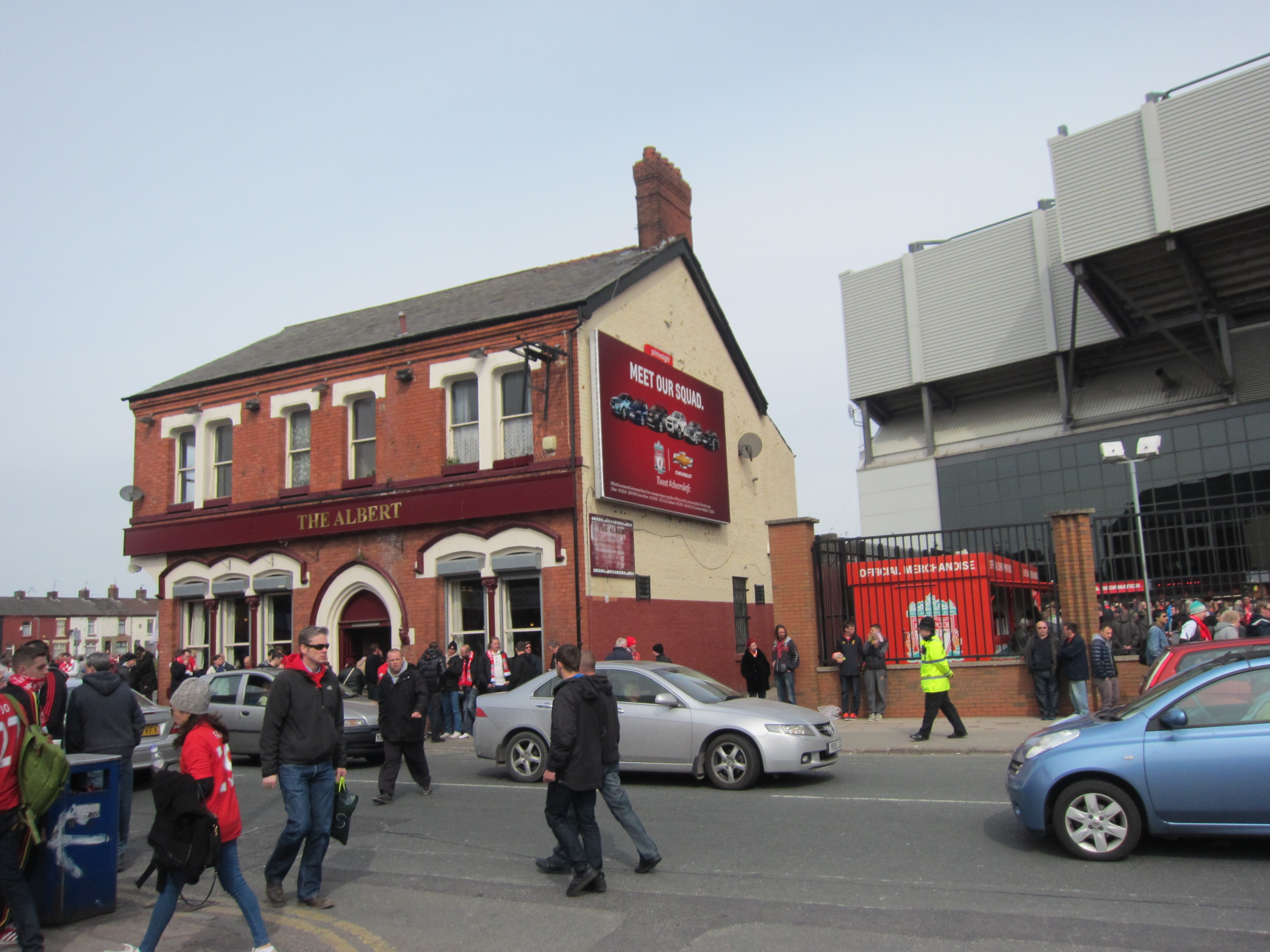
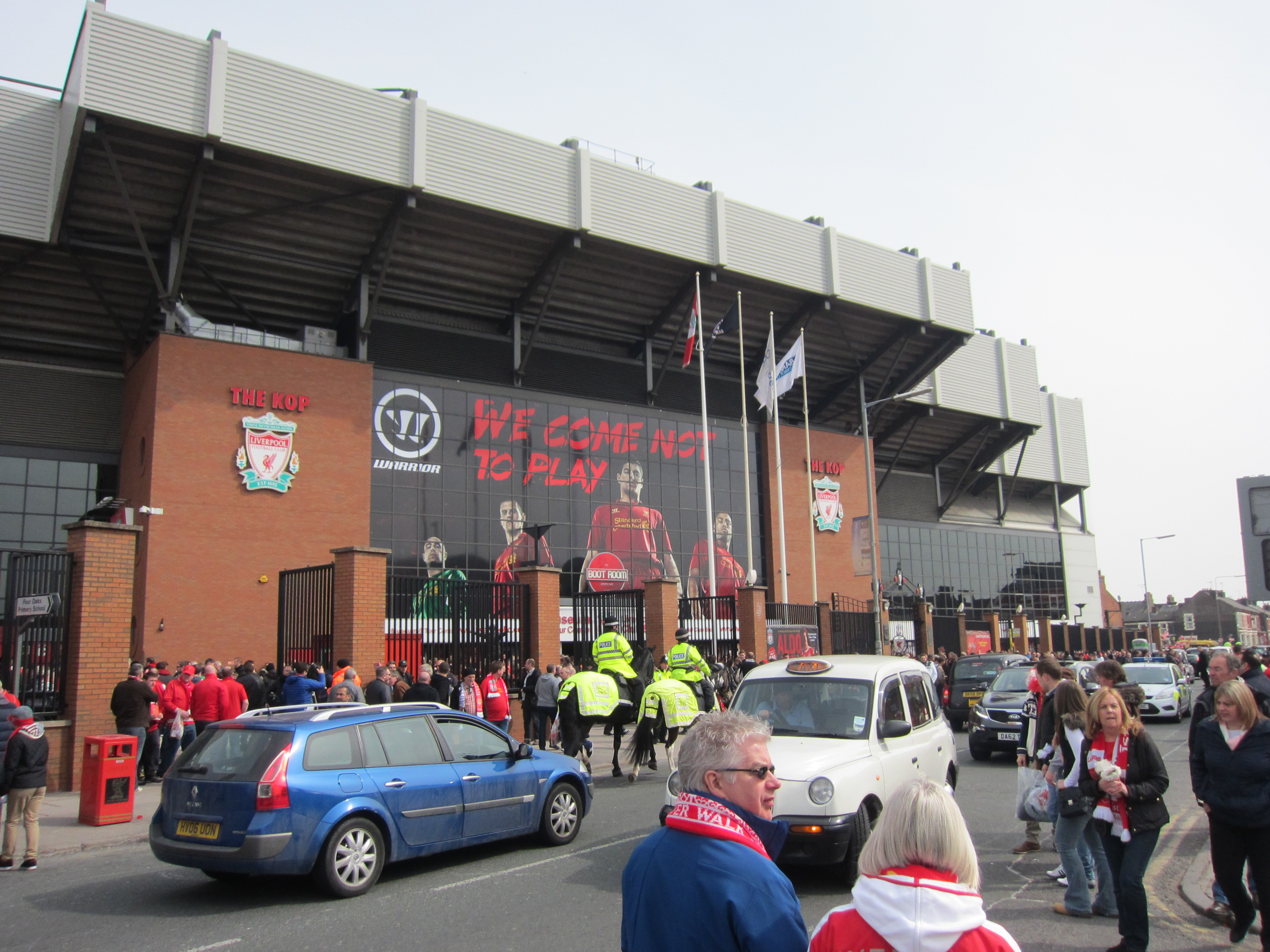
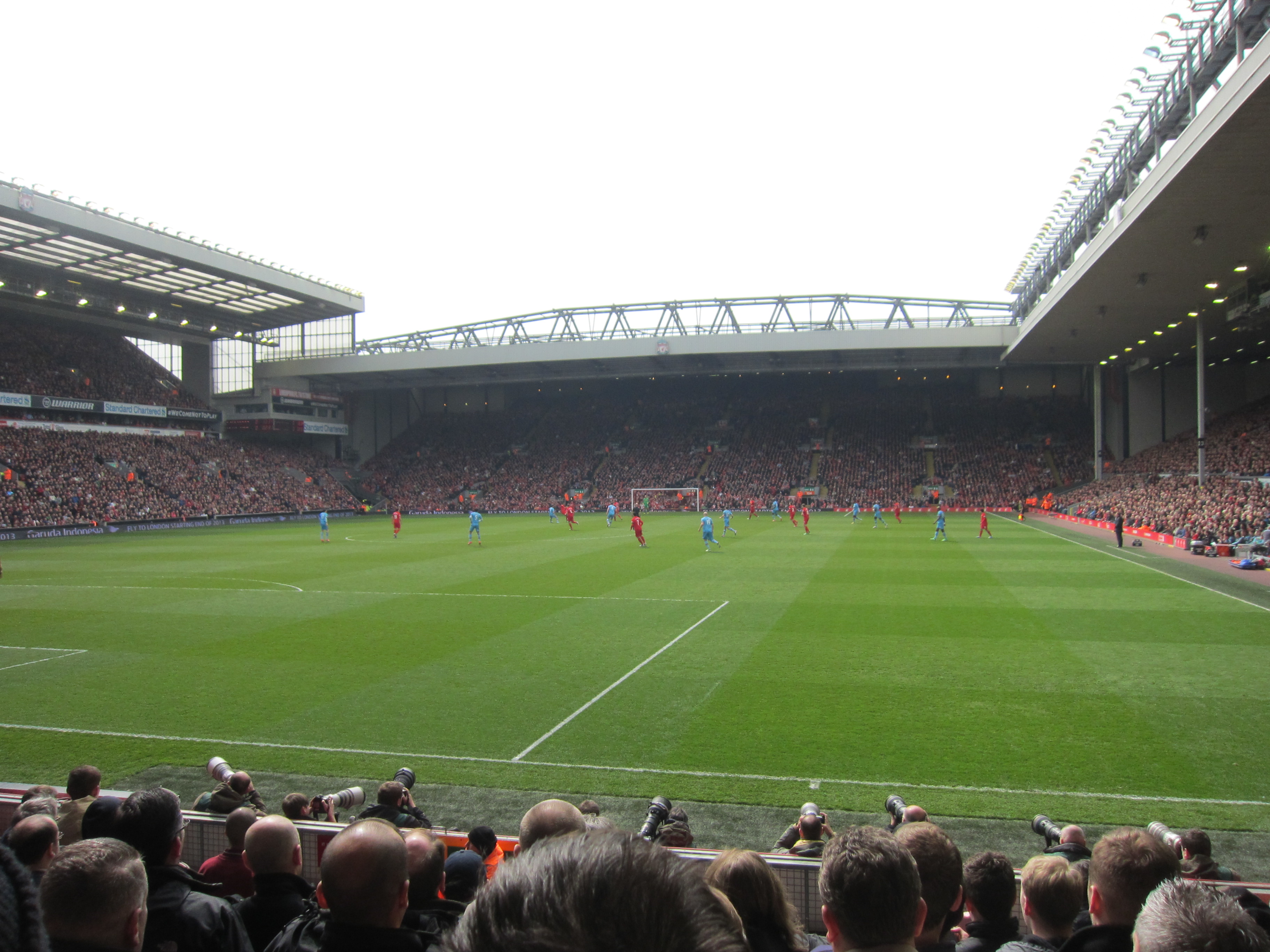
Despite plans for a new stadium, Liverpool are still at Anfield Road – one of the tradtional grounds in English football. It is located in the Anfield and Breckfield neighbourhood, hidden behind narrow streets and rows of housing, shops and pubs. In many ways, the essence of English football.
100016

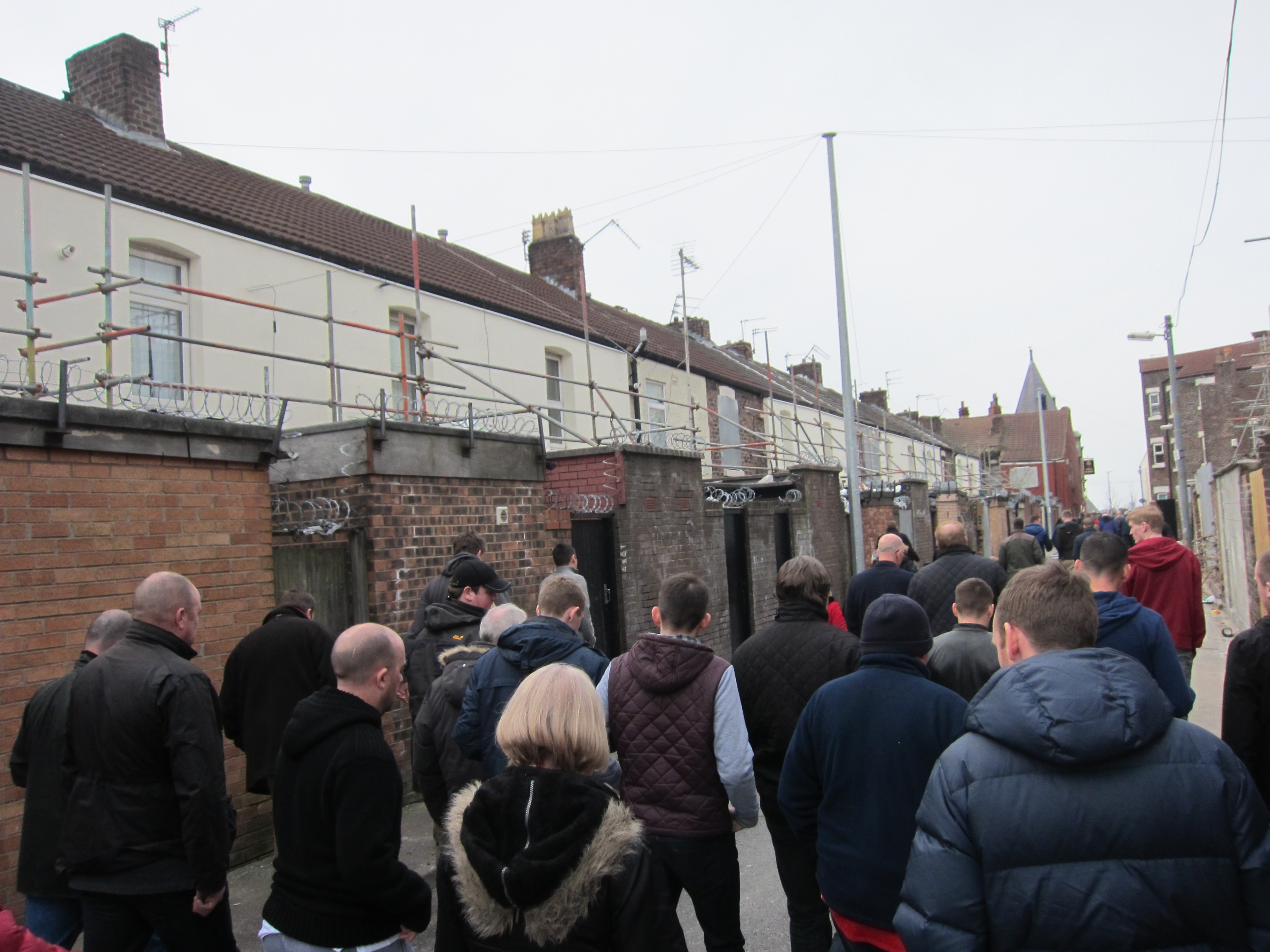
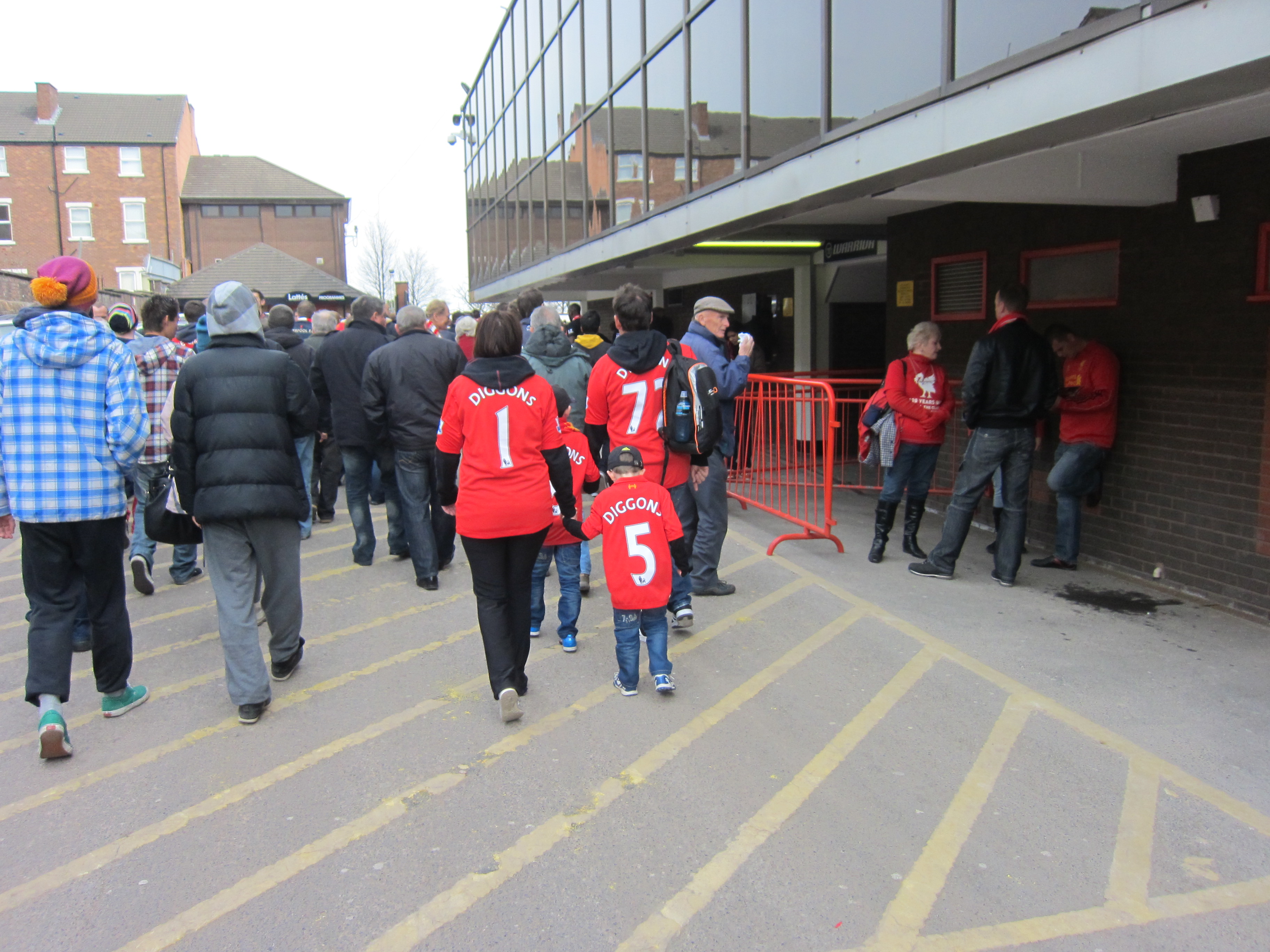
The modern day neighbourhood, however, is a sad sight. The neighbourhood has been selected for regeneration with the houses condemned. Most of them stand empty, with boarded up doors and windows and barbed wire on top of the fencing. What would have been a romantic walk to the ground, now gives you the impression of entering a war zone. In some of the houses, you see posters in the windows condemning politicians and Liverpool Football Club alike: This is Anfield, they proclaim.

099106

The use of the text, inscribed over the players’ tunnel at Anfield, is ironic. Because no other English club has managed to brand themselves as strongly as Liverpool with the “This is Anfield” sign and the “You will never walk alone” anthem. Coaching youngsters in Denmark, quite a few have been brought up Liverpool fans by their fathers and uncles, brought up with Liverpool’s succes in the 70’s. They are arguably the most die-hard supporters among the kids, and they subscribe to the image of Anfield Road as the most atmospheric ground in the UK referring to this branding. Even my director at the Danish Museums Association, who does not take an interest in football, has exclaimed his fascination by Liverpool’s “You’ll never walk alone”.

I visited Anfield back in 1981 as a Manchester United away supporter and I must admit, I didn’t notice it back then. I was so excited by the United supporters totally outsinging the home crowd. They may have sung it – but then everybody did in those days. You can see United supporters singing it quite often in recordings from those days, But as branding gradually crept into football in the 80’s it was taken over/left to Liverpool.

038021

A good colleague of mine, a West Ham United die-hard, had somehow managed to get me a ticket for the away section at Anfield Road once again. And I most admit, I was curious whether the atmosphere and the “You’ll never walk alone” could live up to the branding.

http://www.youtube.com/watch?v=47rAE4prwZY&feature=youtu.be

It truly was a spectacular sight seeing fans around the ground (not especially the Anfield Kop) raising their scarves above their heads as the playback of the tune started on the PA system. But I was a bit disappointed that the PA was the main sound to be heard all the way. To me, it sounded more impressive hearing the 19.000 Sheffield United supporters taking over the Greasy Chip Butty Song at Bramall Lane, than having the playback leading the 44,000 Anfield crowd through. And more impressive to witness an impeccable observation of one minute’s silence to the Hillsborough victims.

044042

Speaking of silence, the silence within the ground once the game started was so striking that the West Ham supporters started to send out “Shhhhhh” s followed by songs asking “Is this the library?” or “Where is your famous atmosphere?” – or even asking the Liverpool fans if they should sing their songs. From what you could hear at the West Ham end, the Kop only mustered 2 or 3 feeble chants in the first half. So when the Liverpool crowd started an aggrieved moaning, as all the West Ham players had taken advantage of a stoppage in play to go to the touch-line to drink, the West Ham support responded with a “we had forgotten you were here” chant. Apart from that, there were a few shouts for handball (mimicked frequently afterwards from the West Ham crowd whenever a Liverpool player lost the ball), and moans at refereing decisions.

Things improved slightly in the second half, as Liverpool were attacking the Kop. Whenever play approached the West Ham goal, the crowd got up from their seats, and corner kicks now triggered a “Liverpool” chant.

059048

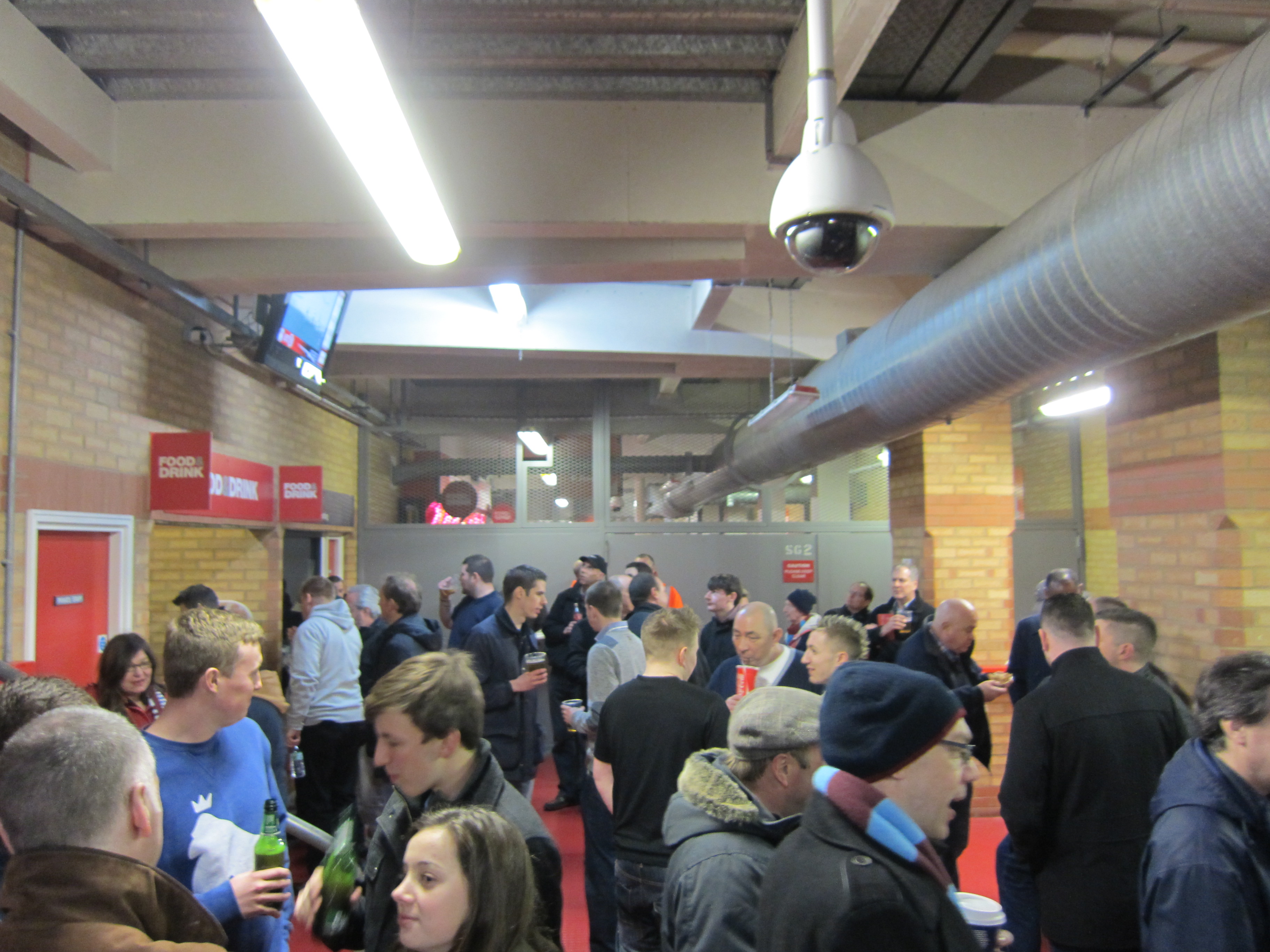
The West Ham section was not that big. And the atmosphere was very laid-back. One of them said to me that you could really see that it was an early kick-off and people just weren’t ready for it. Maybe they didn’t expect to get anything out of it. So it was not a passionate support as you sometimes get from travelling fans. But there was a lot of mockery of the lack of Liverpool support, as well as a lot “I’ons” chants, and “I’m forever blowing bubbles” songs going up. And despite the PA announcing that any visiting supporter persisting in standing risked eviction from the ground, it was just met by a “Stand up, if you love West Ham”. And all through the match, the entire West Ham section stood up, whereas all the Liverpool fans sat down; and all through half time, the West Ham section sat down, while the Liverpool fans stood up.

Perhaps this was a bad day to see Liverpool – disappointingly to their supporters drawing 0-0 against West Ham. On the train back to Liverpool Central, a Liverpool supporter shook his head and said: “this was one of those games where nothing was right”. When I visited Liverpool museum curator Stephen Done back in February, Liverpool had also drawn 0-0 at home the previous night- Stephem said that on such a night – with bad weather and the team not really hitting form – the crowd ought to get behind the team, but with all the tourists that just didn’t happen. They expected to be taken for ride, and when they didn’t, they just sat there, silently frustrated or even discontent. You could argue that the same applies for Manchester United or any other of the big clubs that attend footballing tourists.

004036

There were quite a few tourist at the game. When I arrived at Liverpool Lime Street, the queue for taxis to the ground was only rivalled by the queue to leave luggage at the station before going to the match. The Scandinavians were far more dominant than the Asians here, compared to Manchester United. There was also a big number of matchday-scarves, sign of tourists. So that may go some way to explaining the quietness.

080045

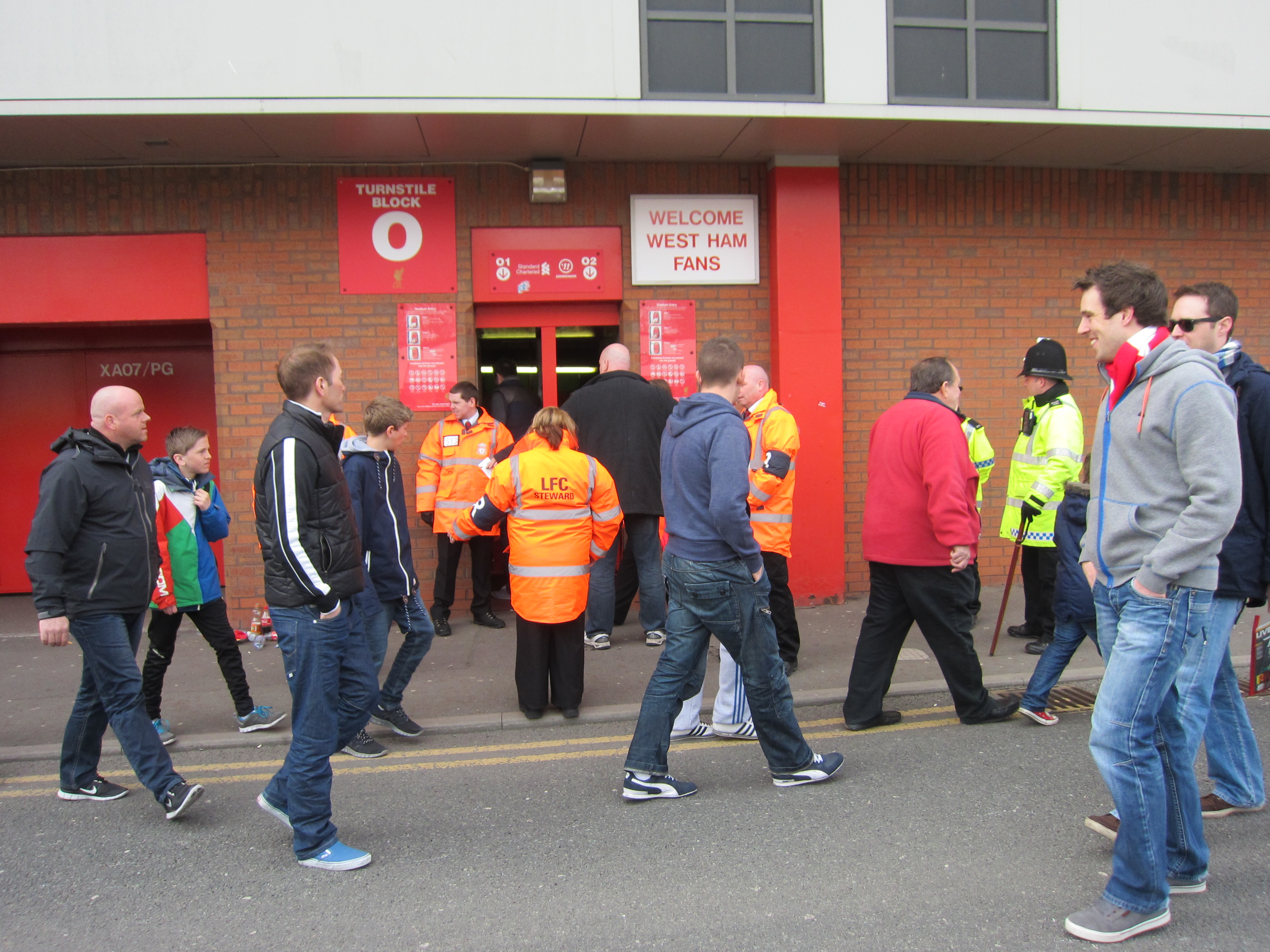
Having said that Liverpool showed good hospitality to the away support. Signs at the snack bars inside the ground welcomed West Ham United, the body-search was nowhere near as strict as at Tottenham, my latest away ground, and the stewart at the exit told me to “take care” as I left the ground. There was generally a friendly atmosphere, going all the way down to the players. When Sturridge was warming up for Liverpool, he laughed at and applauded the West Ham supporters chanting, which made them sing “Sign him on”. And Jamie Carragher also adressed the West Ham support in a good humoured way. The West Ham players were great with the fans – applauding before and after the match, John Colling, arguably man of the match, threw his shirt to the fans. And despite the disappointing atmosphere and the sombre surroundings, Anfield Road is a nice ground with particularly the two one-tire stands without corporate boxes standing out.

Tagged with: , , , , , ,
Posted in Football grounds, Uncategorized

Hillsborough, Sheffield

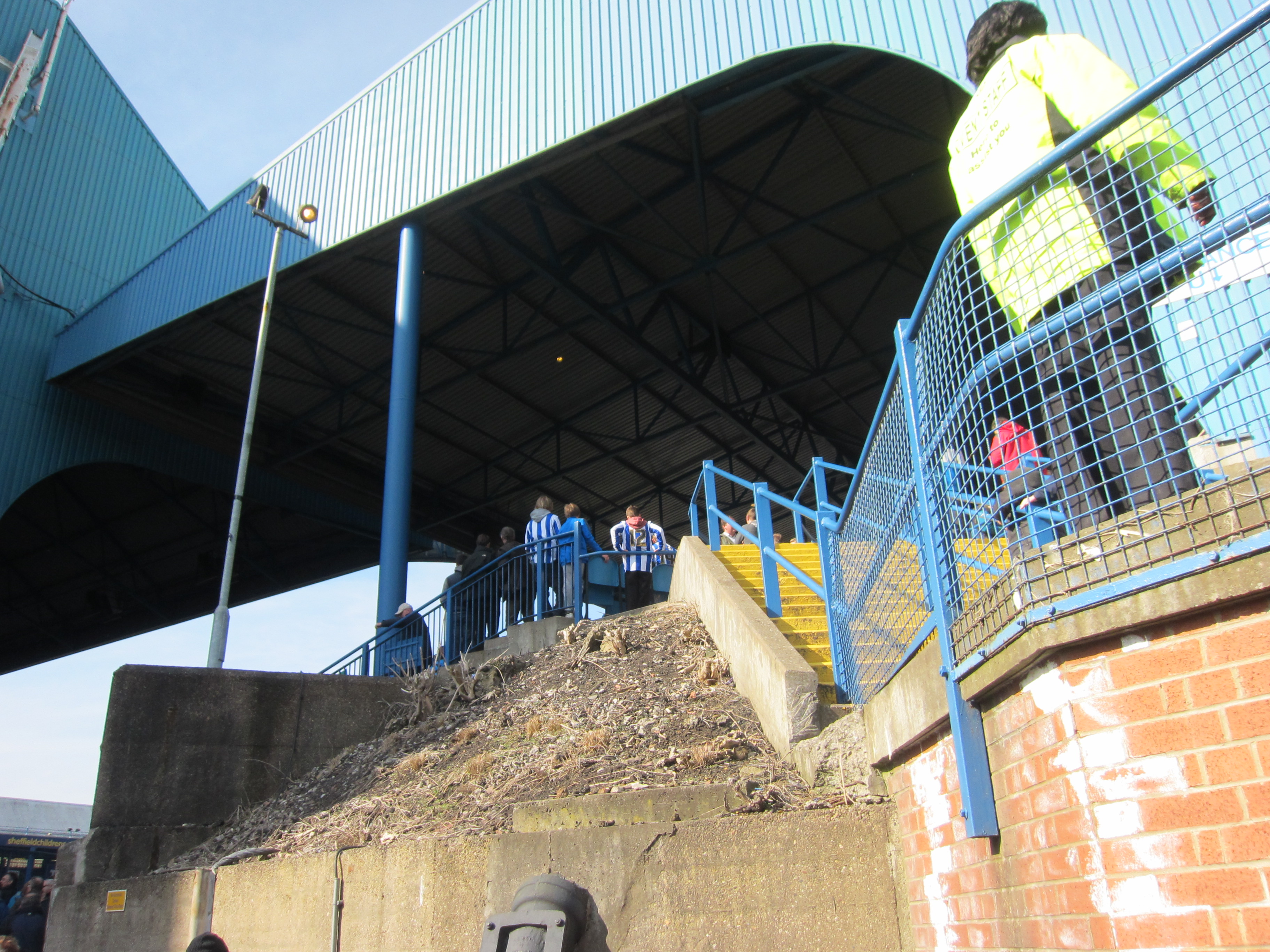
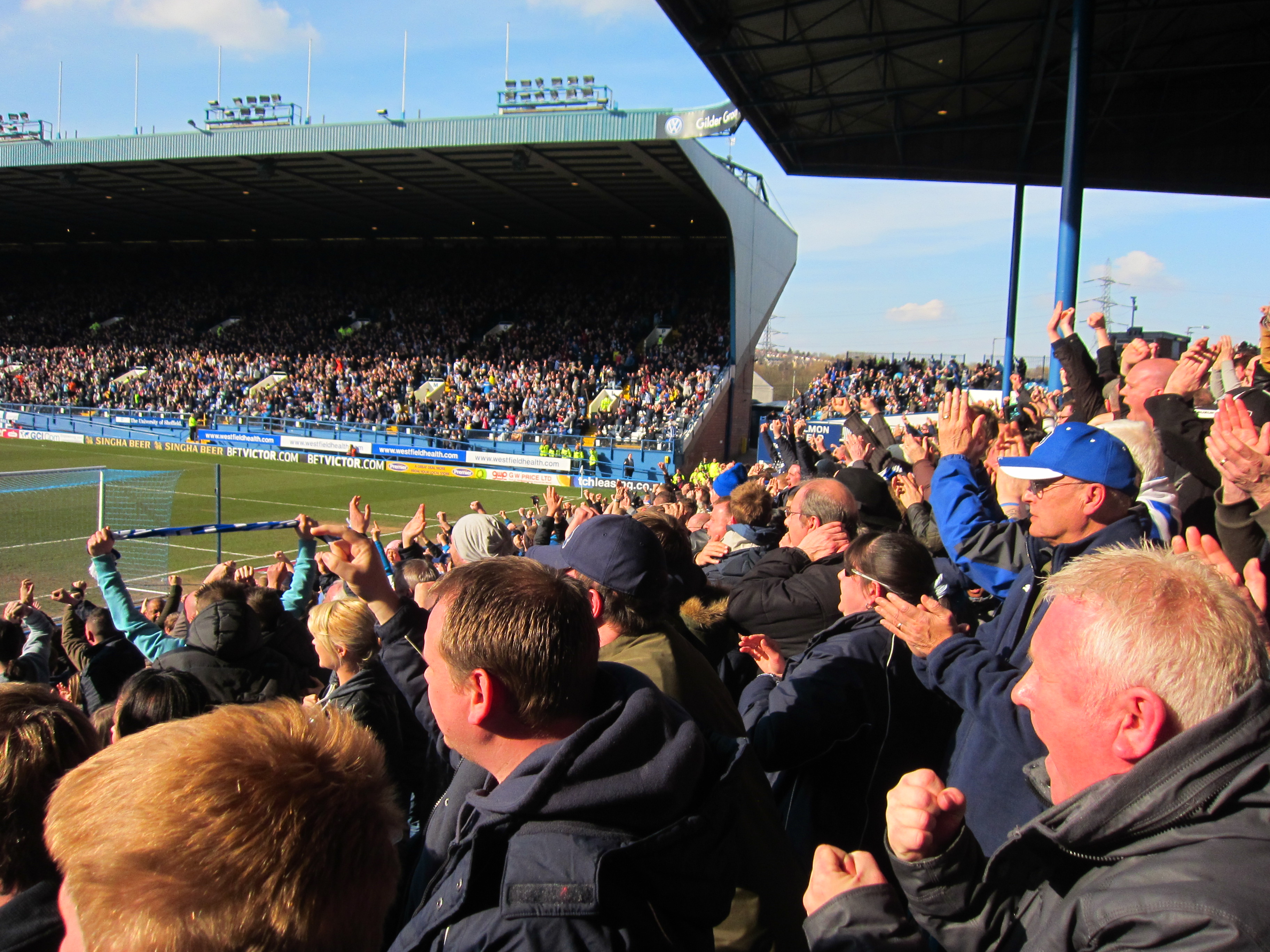
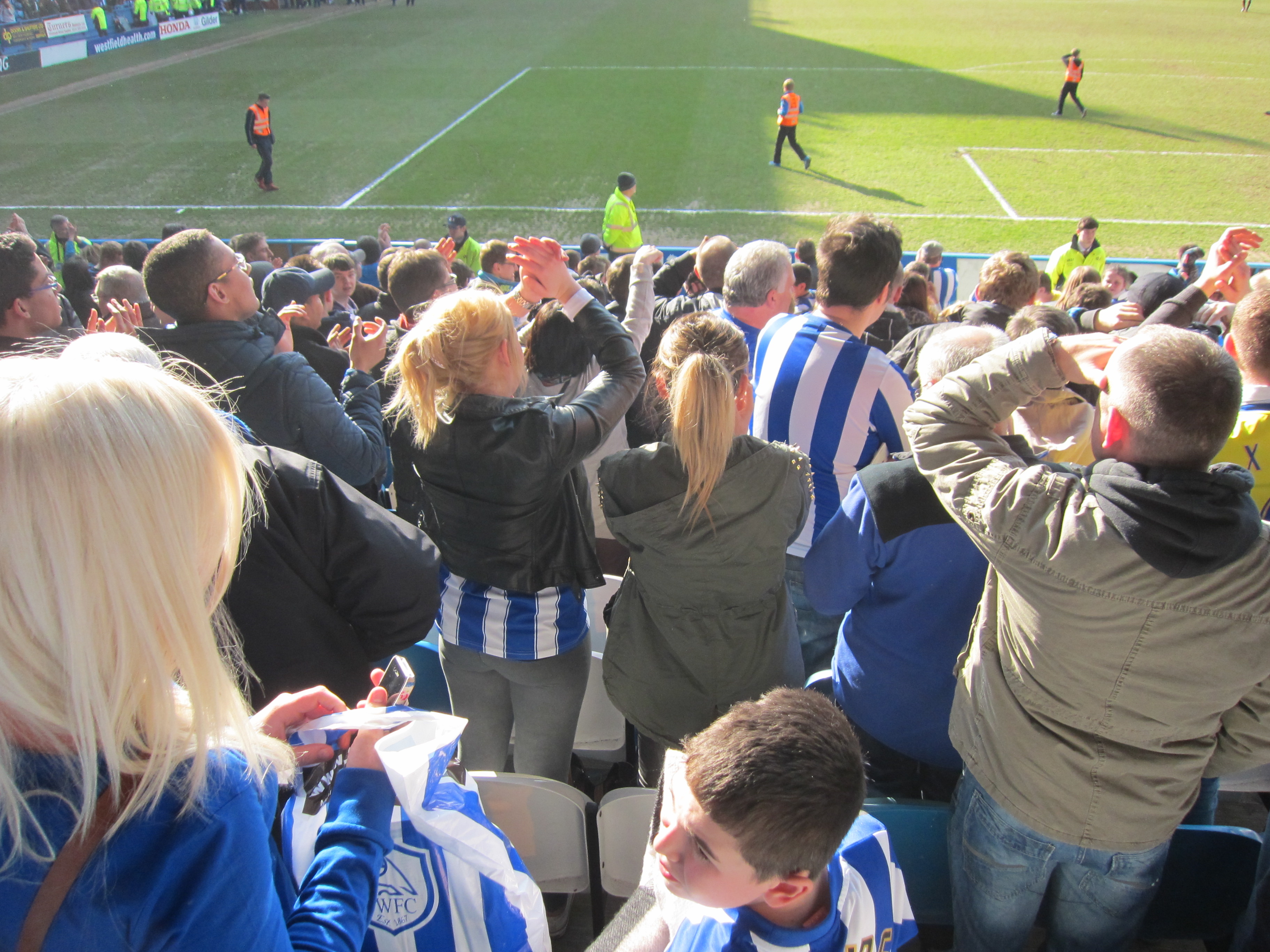
Back in Sheffield for the second time in six days, this time to visit Sheffield Wednesday in relegation battle against Blackburn Rovers. And to see for myself whether it is actually true that the Wednesday supporters are not as passionate as the United supporters.

But first of all an opportunity to visit arguably one of the most famous football grounds in the UK. It is not just that it was the stadium disaster at Hillsborough in 1989 that triggered the transformation of English football. Even before, Hillsborough had been the venue of so many classic FA Cup semifinals – and afterwards hosted among others Denmark in Euro 96.

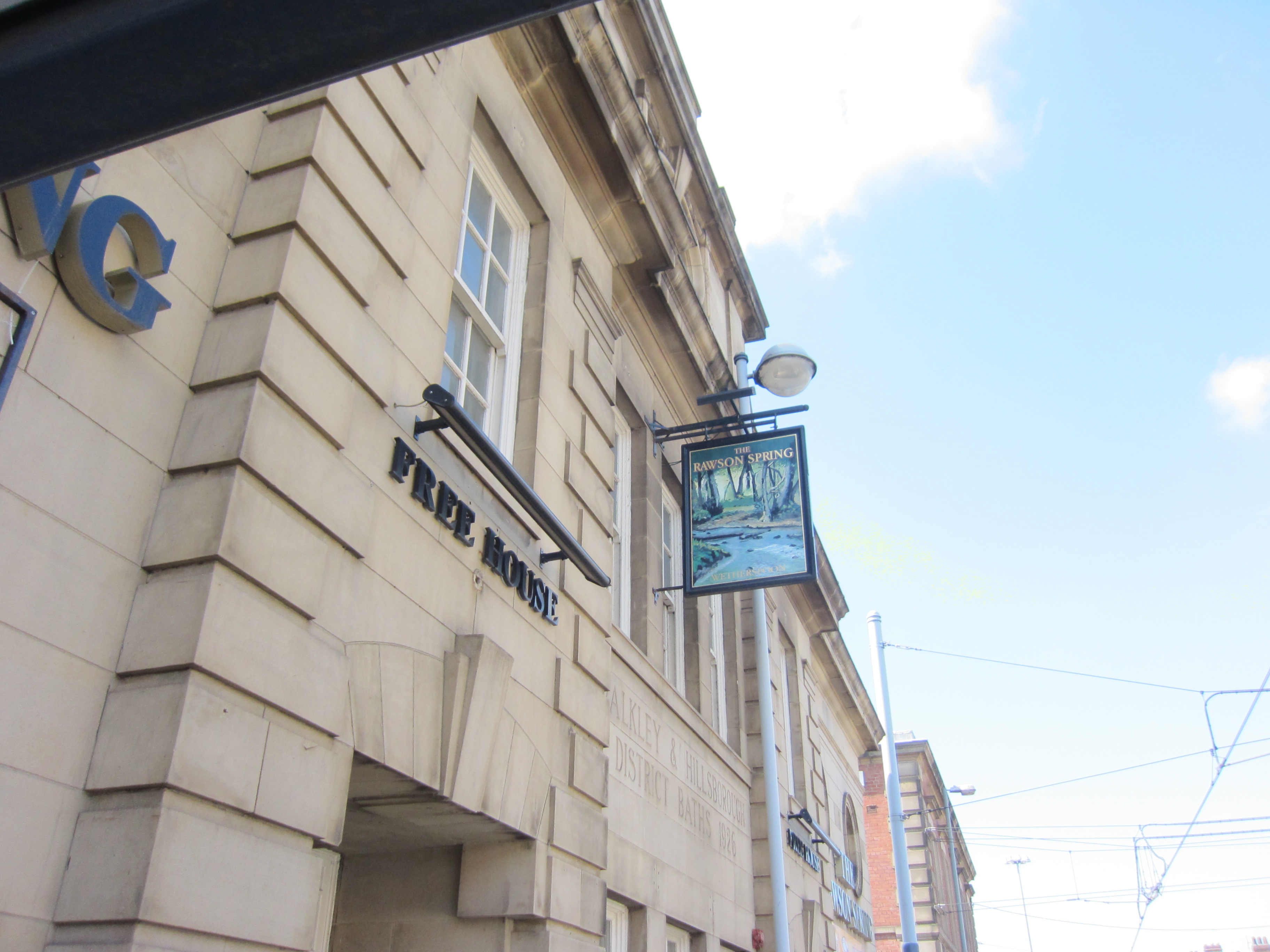
I had hardly got off the train at the station before I was struck by the welcoming, friendly attitude of Sheffield Wednesday supporters. I asked a father of a teenage daughter, how to buy tickets for the tram – along with a lonely Blackburrn supporter. After exchanging frustrations and pessimism with the Blackburn lad, the Wednesday supporter and I were absorbed in conversation. I told about my project of travelling around; and soon the ladies sitting next to us on the tram joined in. The two elderly ones were not going to the match today, but Christine (about my own age) suggested that I should get off at The Rawson Spring for a pint where they had some good sandwiches as well.

019021

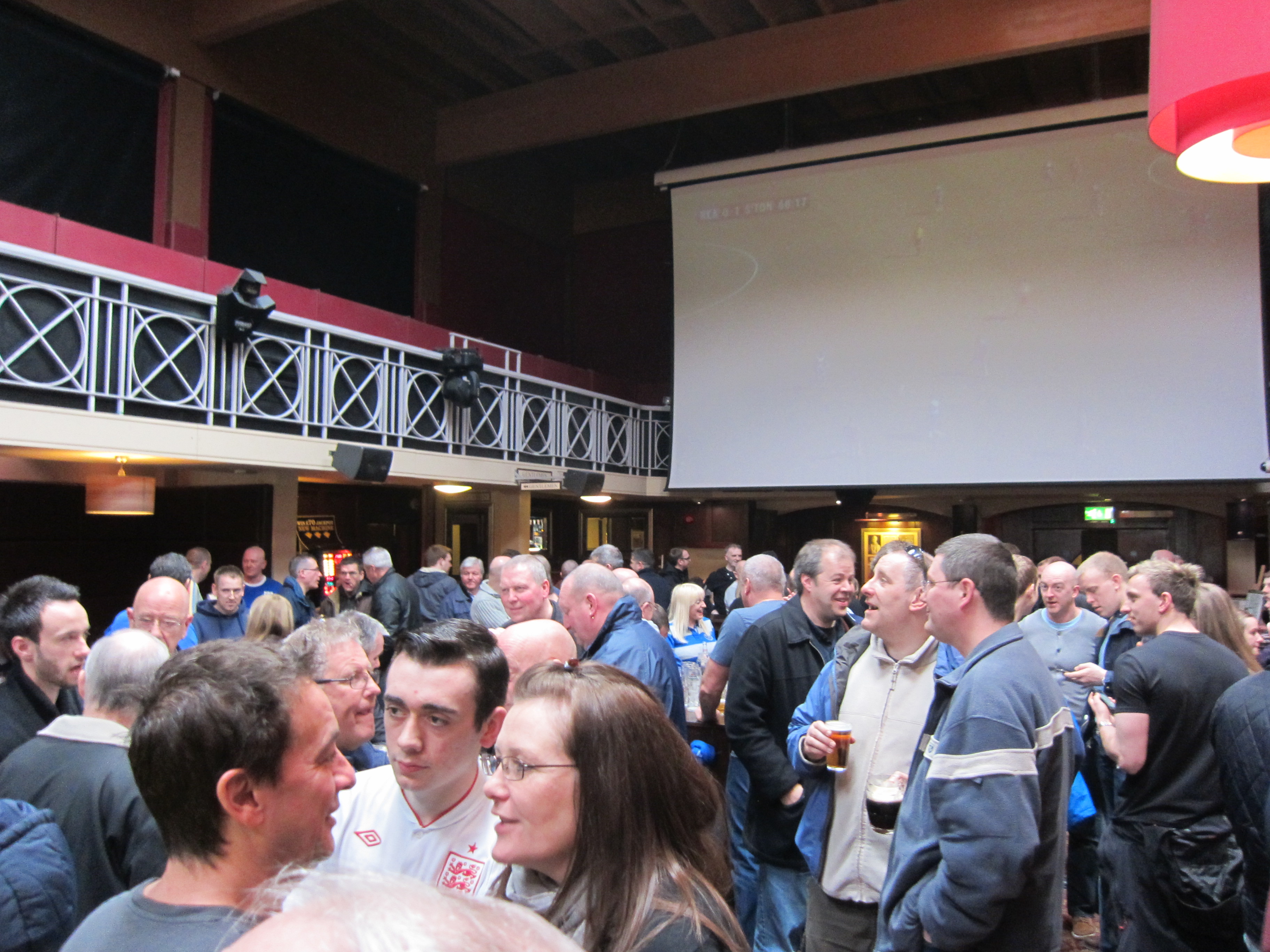
As I hadn’t had any breakfast, I  followed her – and we joined up with her mates at the back of the crowded pub. We had a few pints – and a good chat. They asked me why I had chosen Sheffield as destination on my travels – and I answered that Sheffield was a pioneering footballing city. They did, actuallly, take great pride in this (adding that the rules for the modern game also originated from Sheffield), but stressed that Sheffield United weren’ pioneers but just copycats. They took over the ground, when Wednesday left the cricket ground to build Hillsborough; they took over the nickname “The Blades” when Wednesday adopted “The Owls” after moving to Owlston; they took over stripes on the shirts – and they were created by a Wednesday board member, who was also chairman at the cricket club, so that Wednesday had a local team to play. I asked them about the United museum – and perhaps tellingly for fans’ view on football museums, they said that there was nothing in it; Sheffield United hasn’t won anything for 100 years.
When I told them that I recently had read that Michael Palin, born in Sheffield, actually grew up supporting United,but since he left the city has stretched his loyalties to Wednesday as well, they were very scornfull. You can’t do that. No way.

I also asked them about their greatest moments. The first three they mentioned were victories against Manchester United – so I had to tell them about my loyalties. At first they were a bit sceptical, thinking I was just a glory hunter – but telling that my first United match was in 1972 got us over that.

They were so knowledgable about Danish football, that they not only asked for my Danish team; they also asked what was going wrong at Brondby.

I left 45 minutes before kick-off, as I hadn’t got a ticket – promising to meet up at the same table after the match.

185026

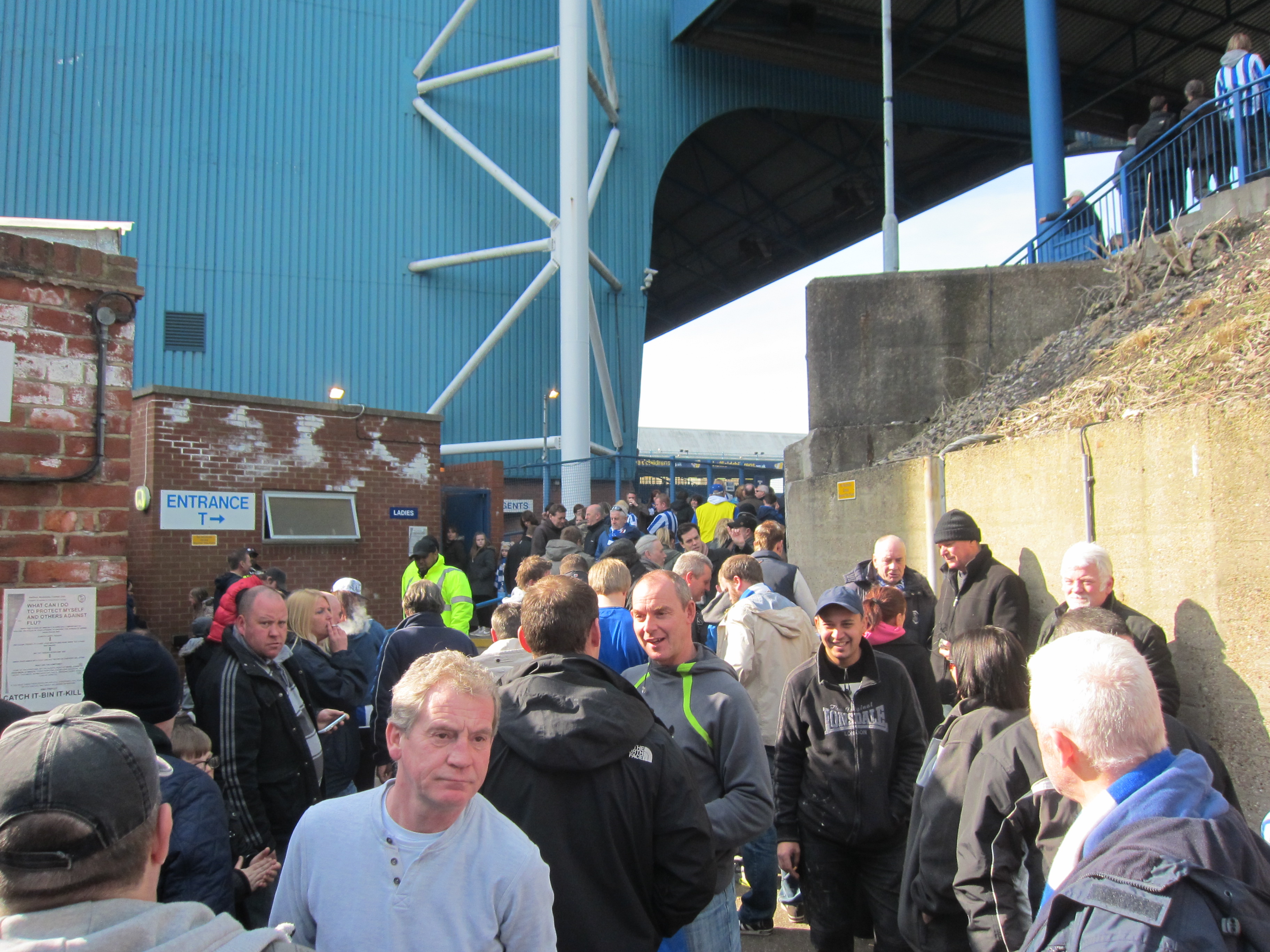
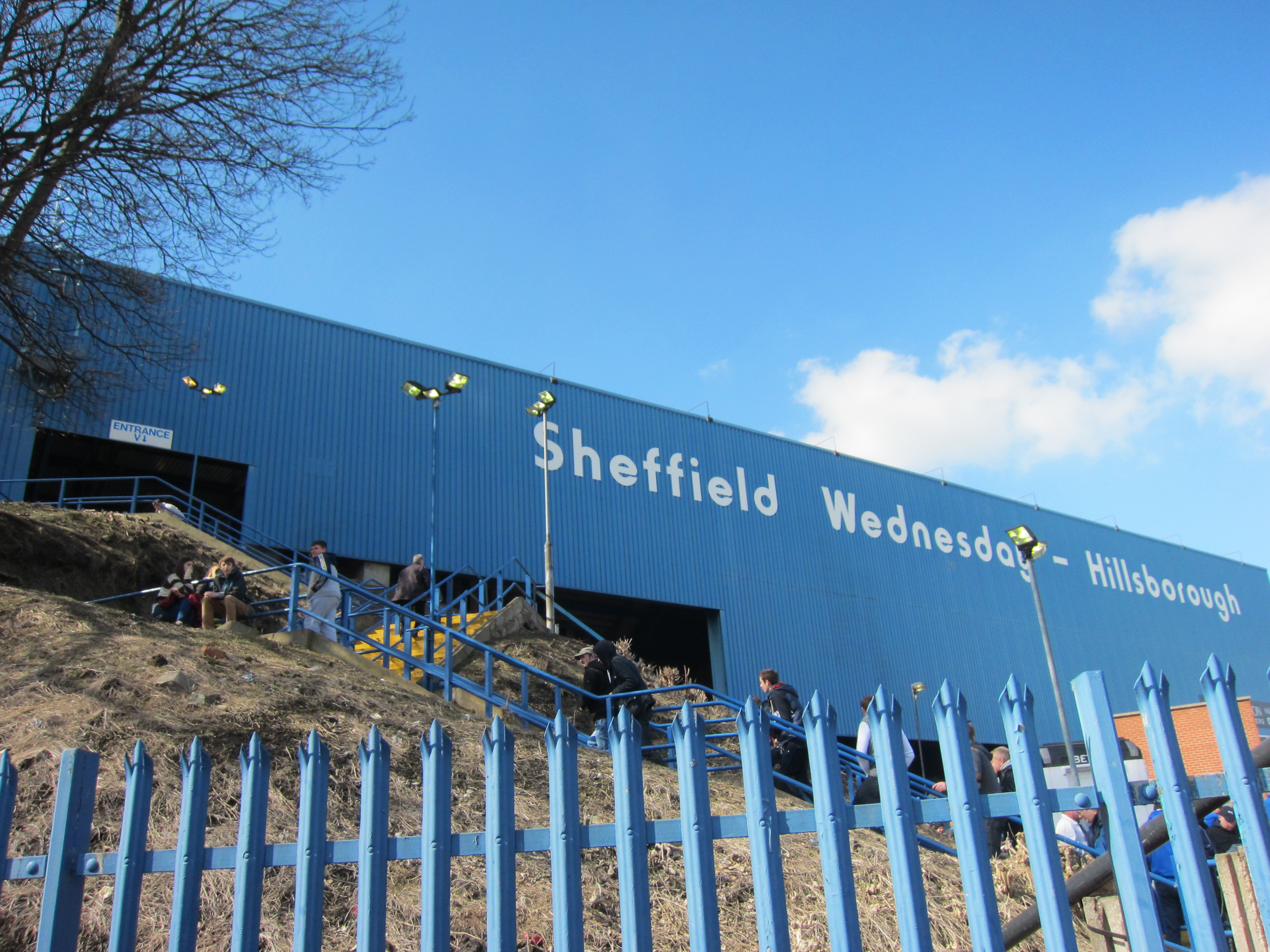
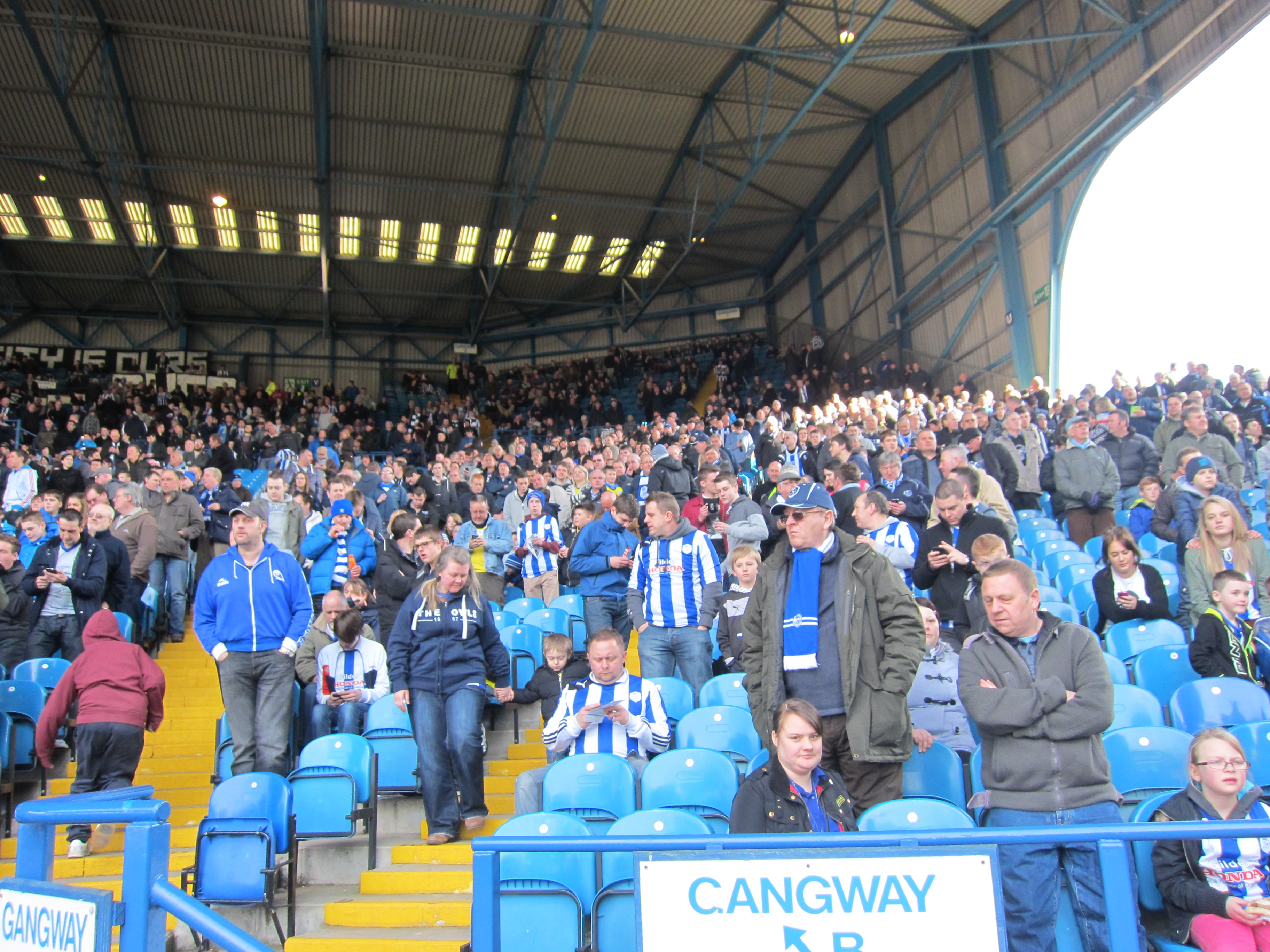
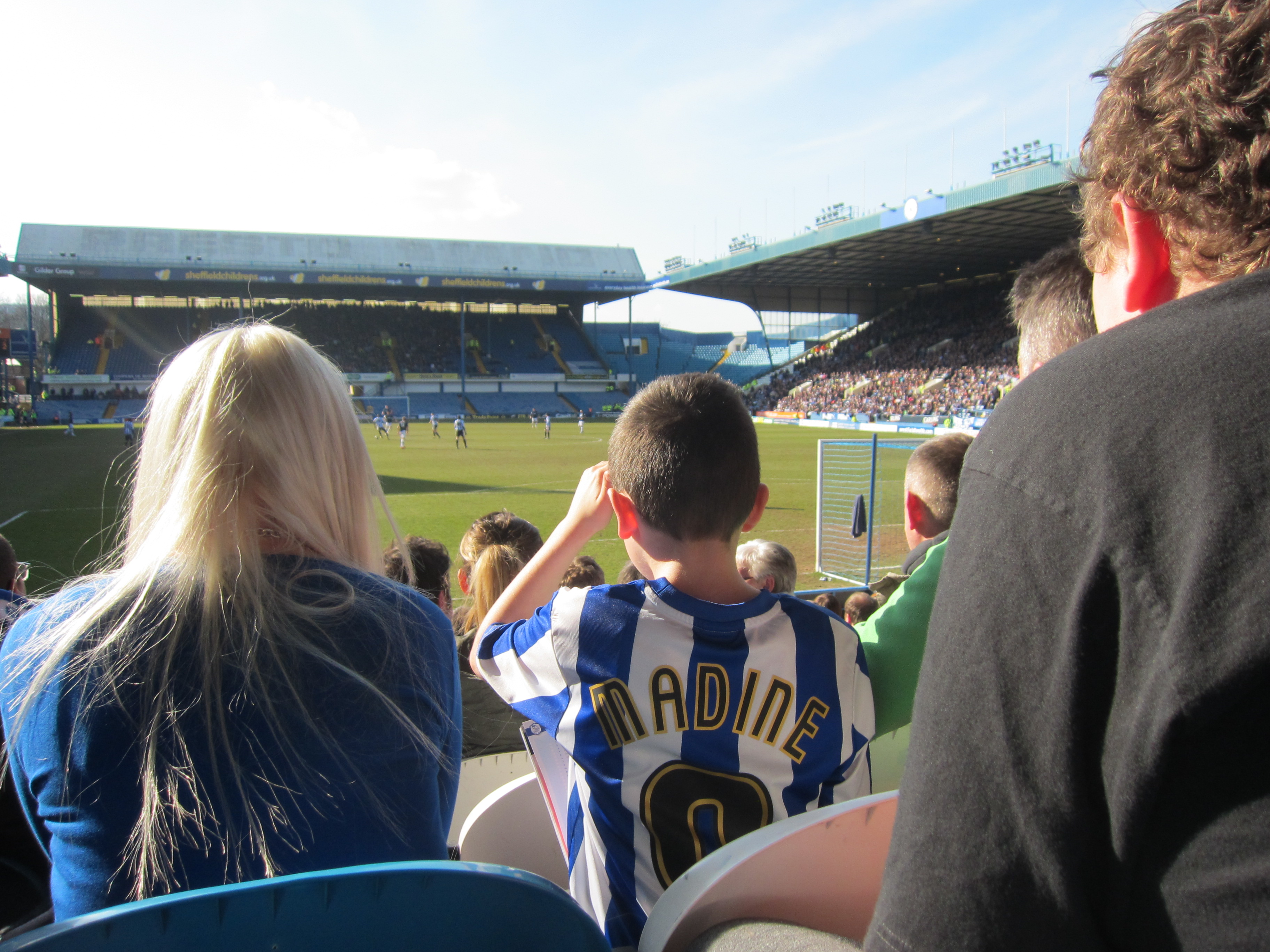
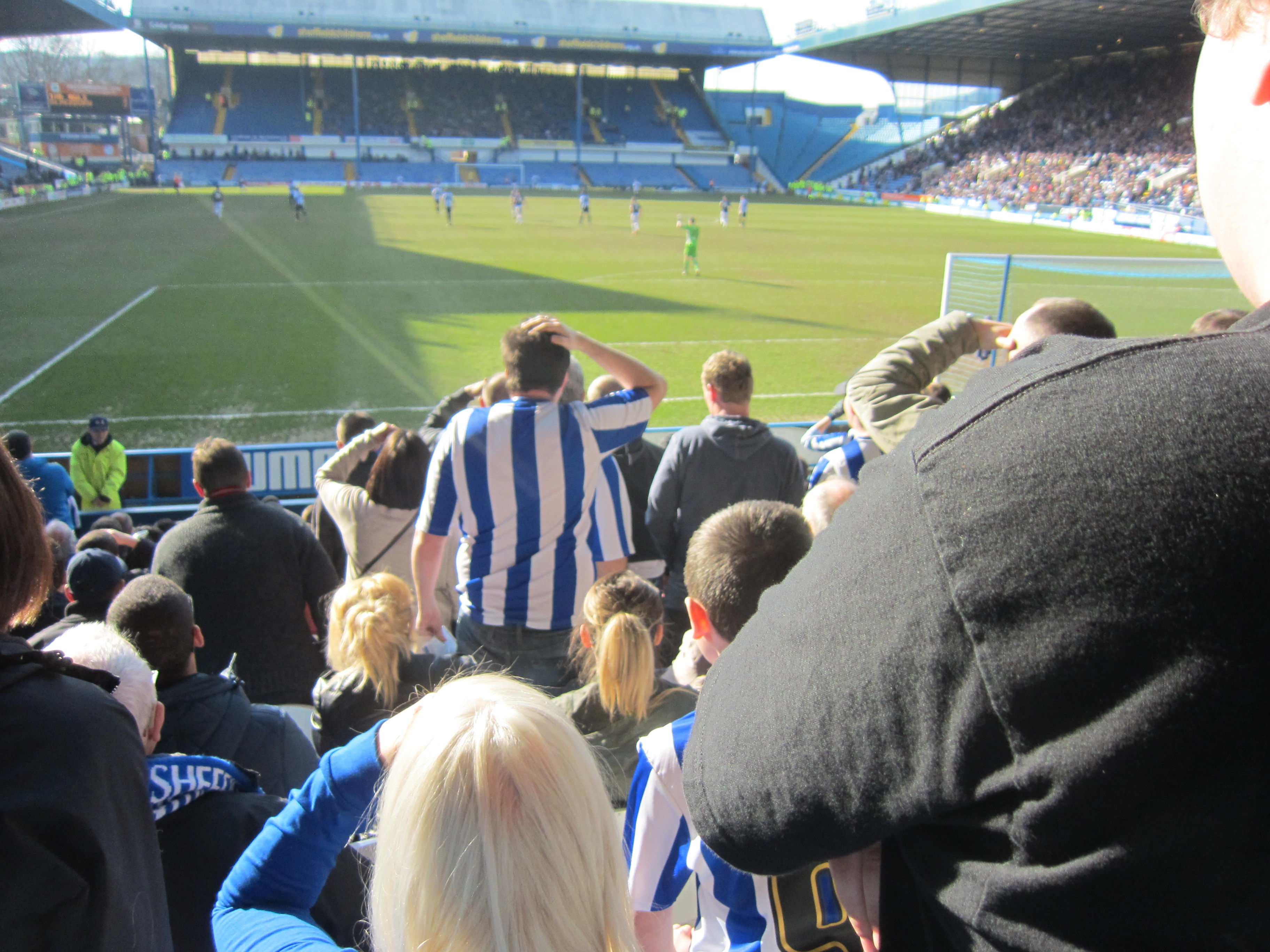
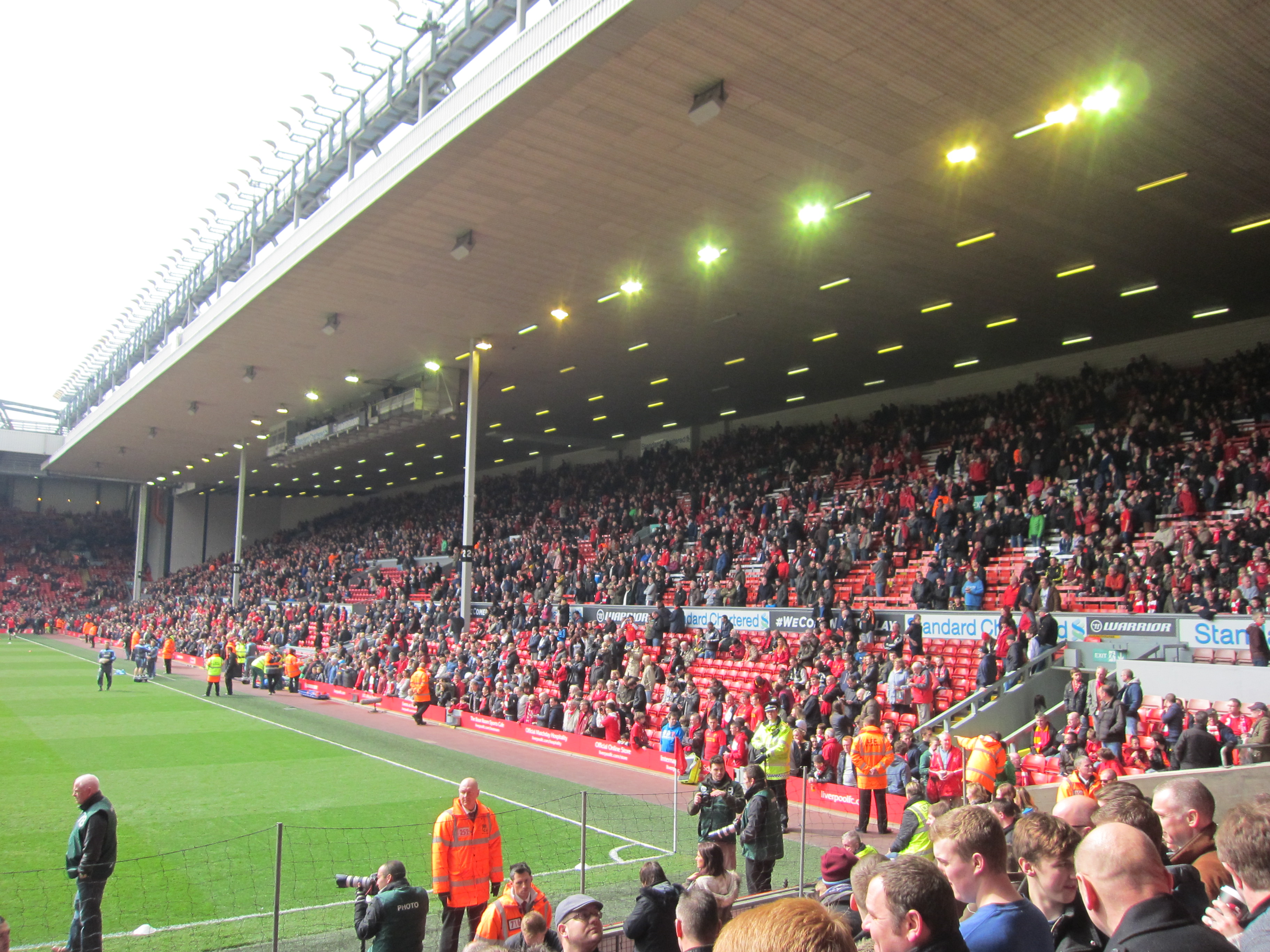
Took the tram another two stops and got off at Lepping Lane as the 24.660 crowd really was gathering. The ground is beautifully located, with a sloping hill in the distance, narrow streets of housing along the North Stand, and a river along the South Stand. Although the ground has been modernised since 1989, the changes are not radical. Of course, the terraces have been covered with seating; the wooden seats replaced by the standard plastic seats; and the South Stand has been redeveloped, but still with the 124 old clock on top it. It really has a unique atmosphere (and the supporters were scorrnfull of the Reebok in Bolton.).

076089

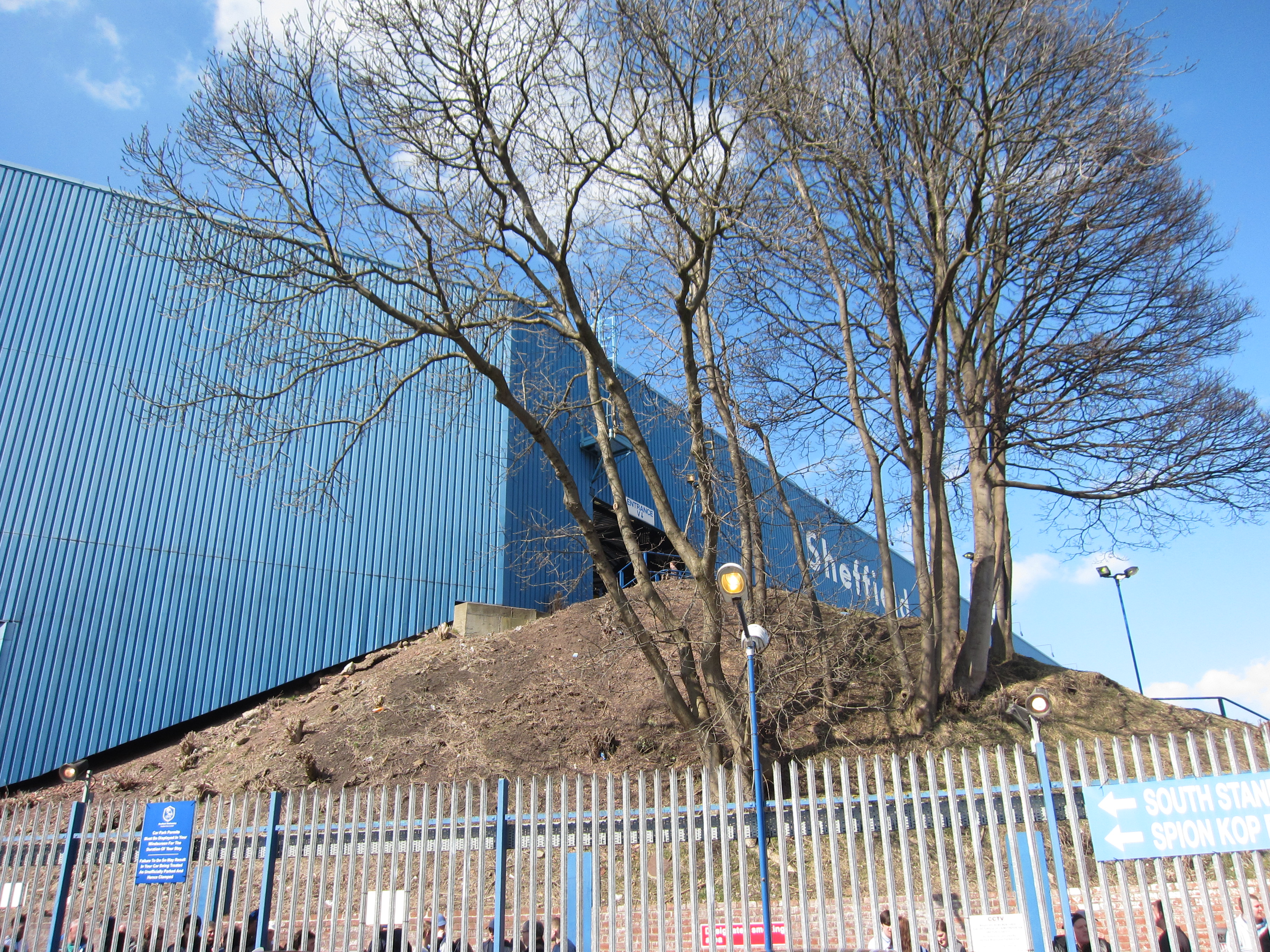
As I made my way round the ground heading for the ticket office, I passed the Spion Kop, which like the one at Bramall Lane was still a sloping hill side with trees on it. Although the first Wednesday fan I met had advised to buy a ticket for the more “modern” South stand, I just had to try this Kop as well.

043 044

On the tram, one of the ladies had labelled Sheffield Wednesday “a family club”. And most of my impressions supported that claim. Not just the smashing Wednesday supporters at the pub; the guy in the ticket office asked for my postal code. When I said I was from Denmark, he went: “oh, I was in Copenhagen a few weeks ago. Great place, do you live there?” With 20 minutes to kick-off and a queue behind me, you wouldn’t expect him to chitchat.

167056127

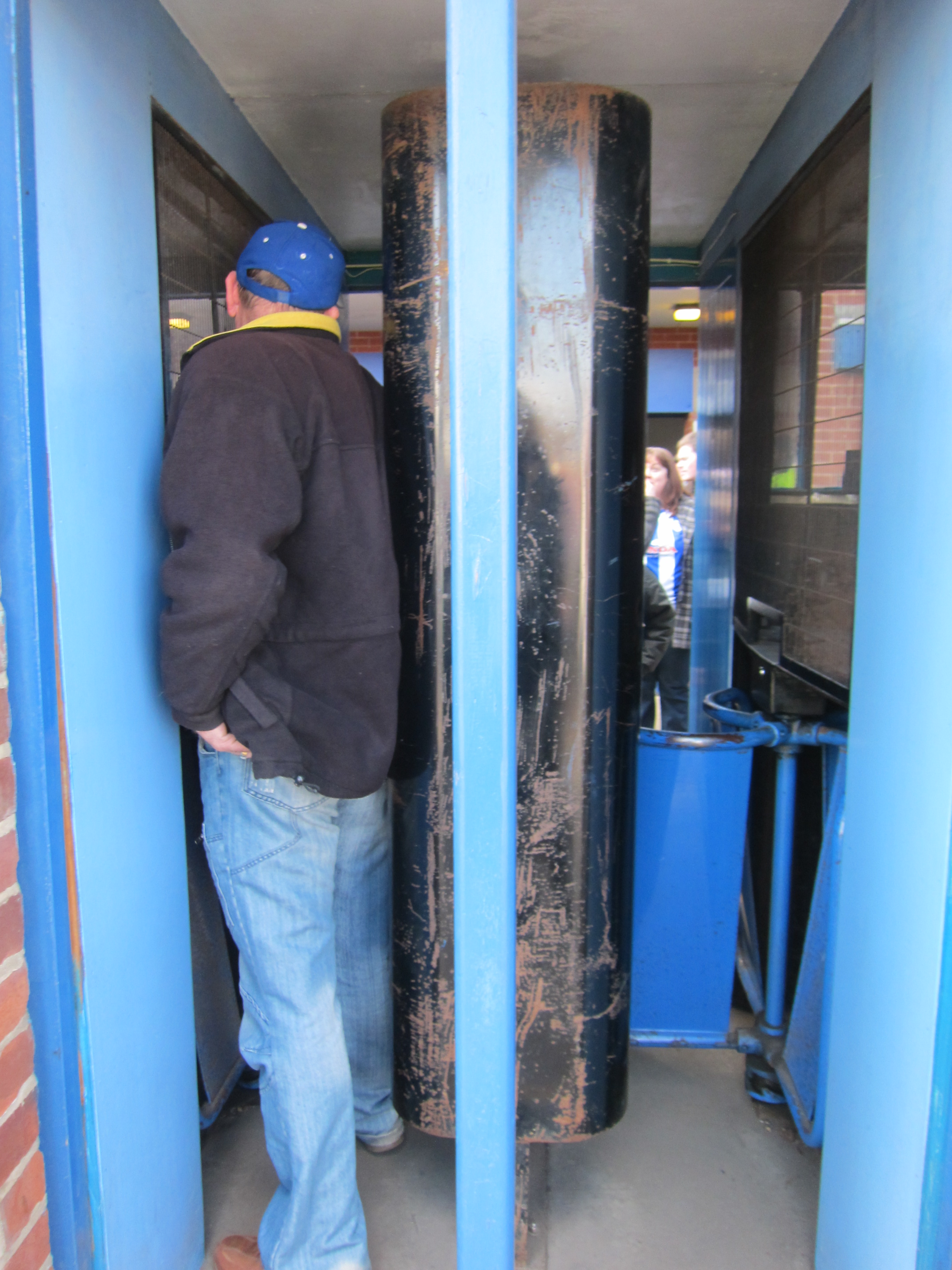
The turnstyle was the most narrow one I have passed so far. Looking at some of the overweight fans, I wondered how they managed to do it. The spaces at the foot of the hill are also very narrow, the toilets and stalls as well. I felt a bit like going to the trenches, with stairs leading “over the top” to the battleground.

114057

063065

068113
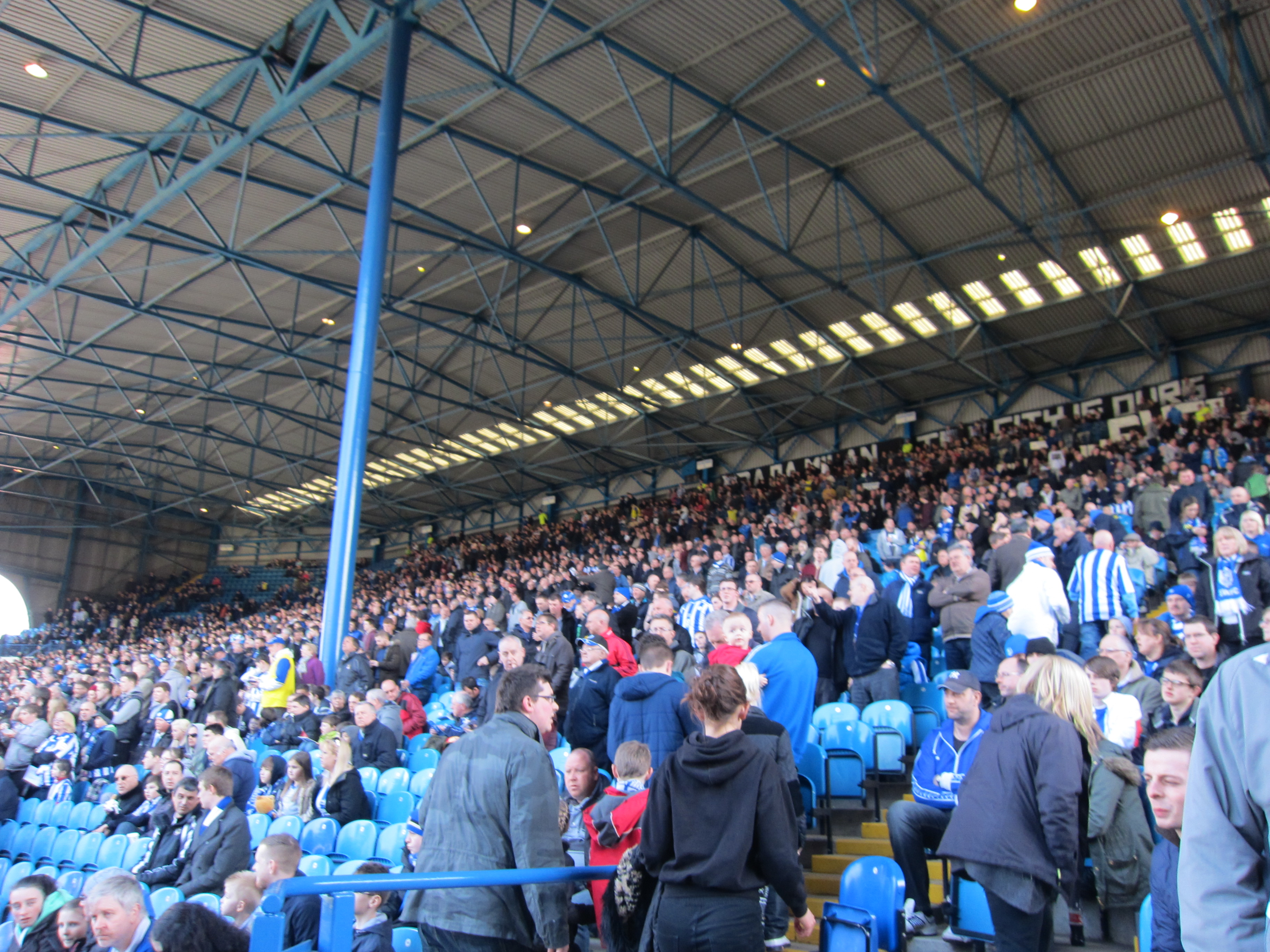
The Hillsborough Kop IS impressive. Before it was converted into an all-seater in 1993, it held 22.000 fans – claimed to be the biggest terrace in Europe. Now, it only holds half that number, but still – very impressive.

109074

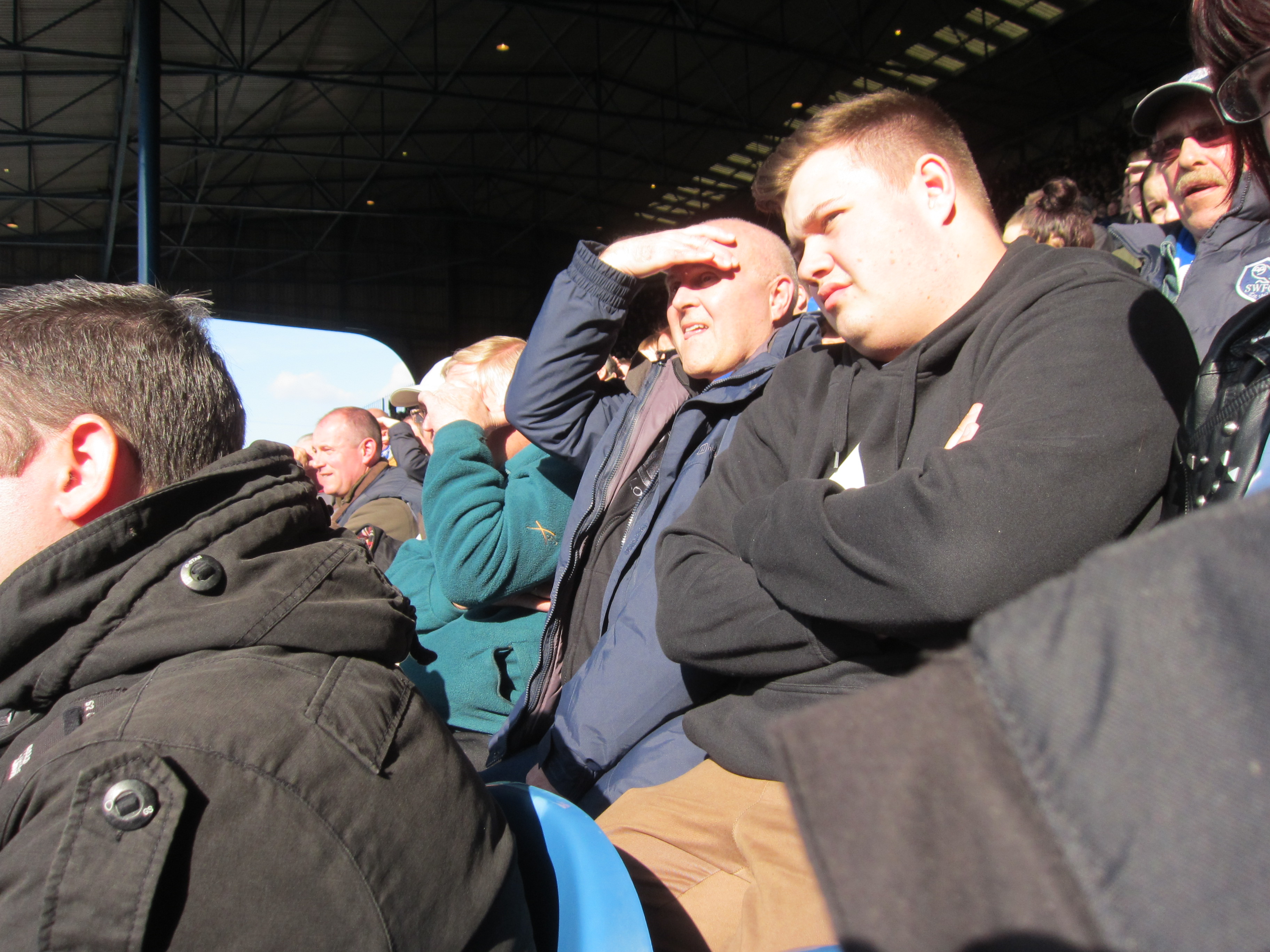
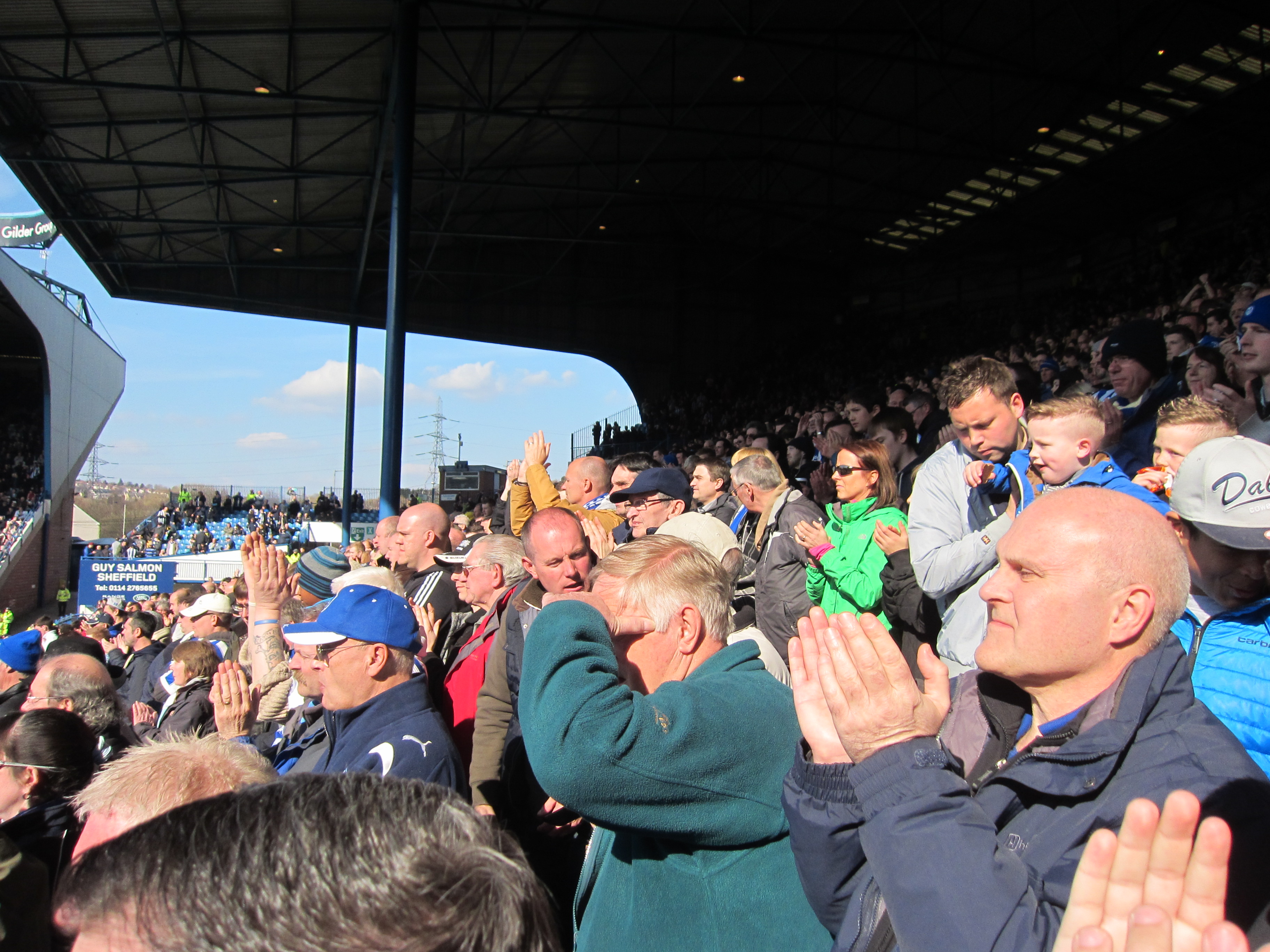
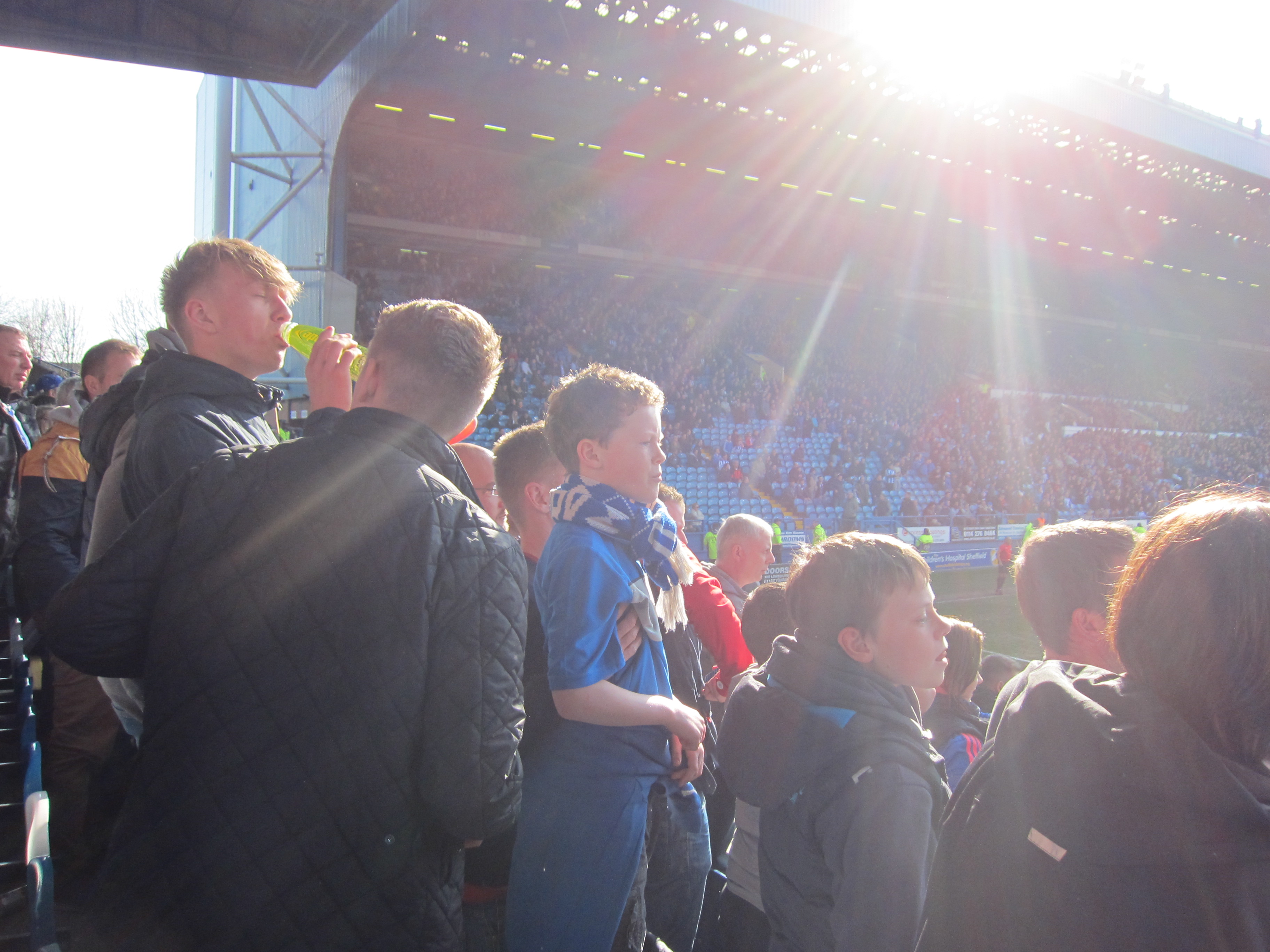
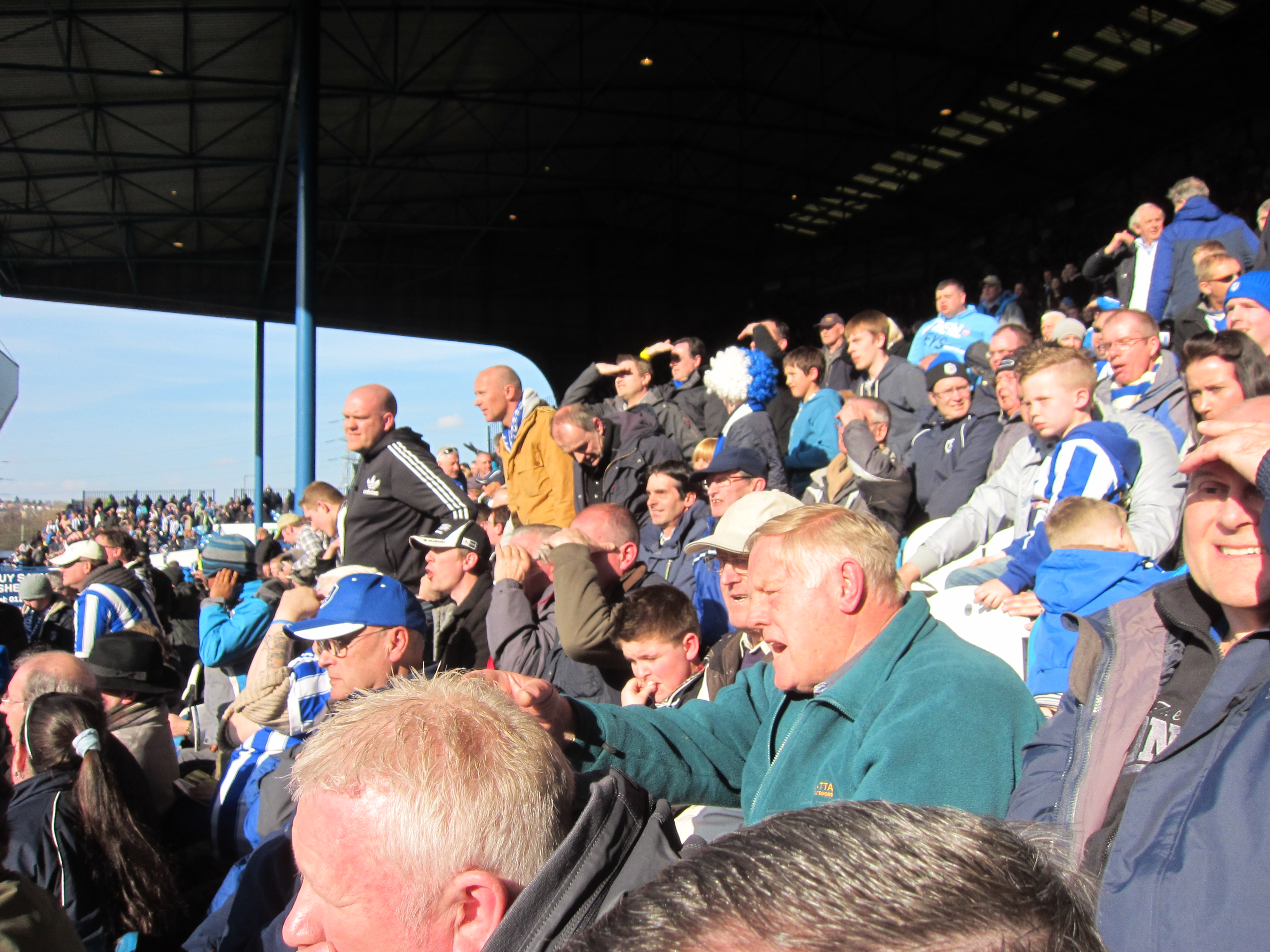
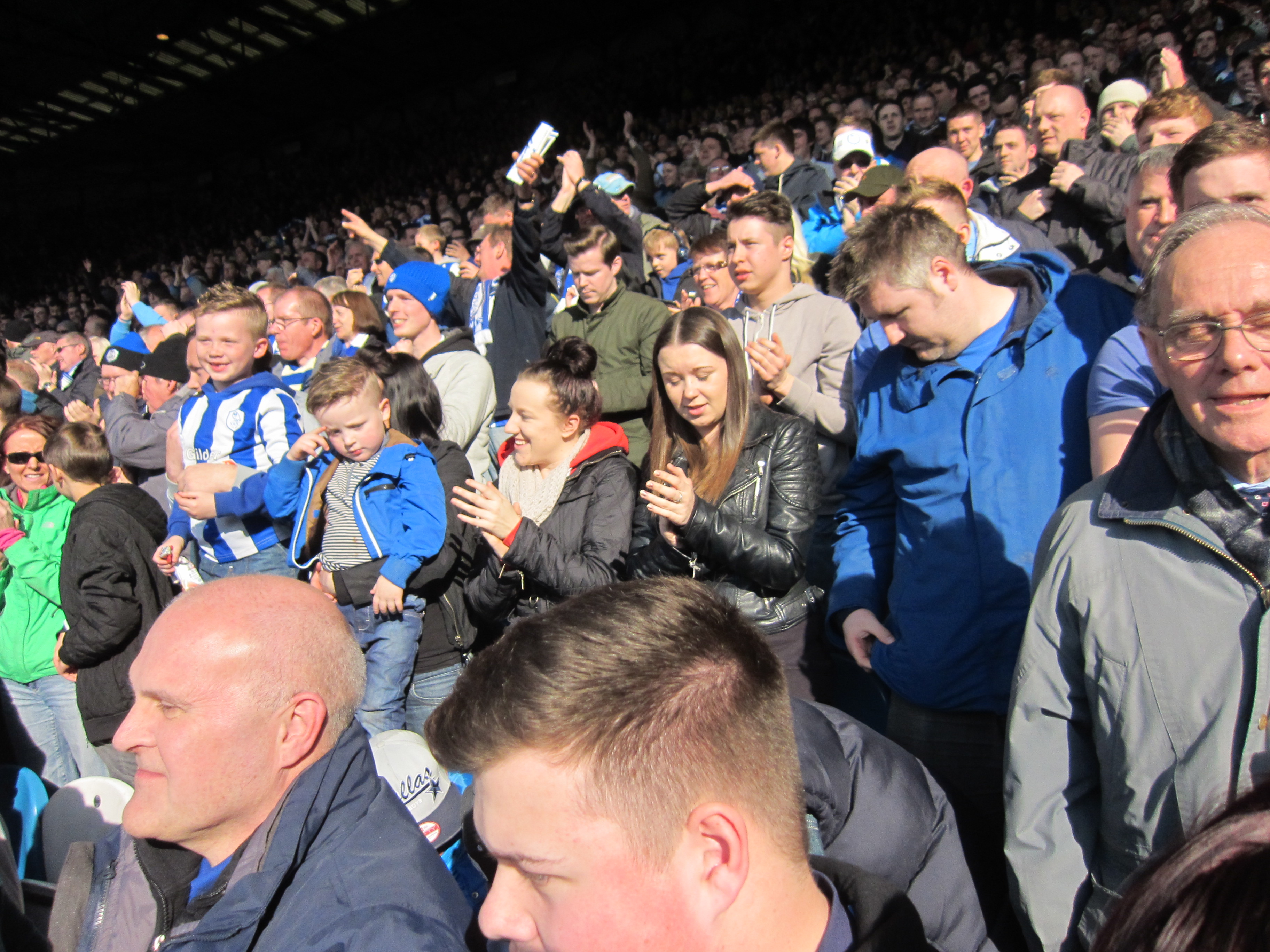
The crowd seemed to confirm the claim to being a family club. There was a lot of variety in age – and genderwise, I would estimate that there were no more than 3 men for every woman. In front of me, for instance, I had two women and a little girl. And that was probably the most remarkable – the number of kids aged 8-12, some even younger.

120164

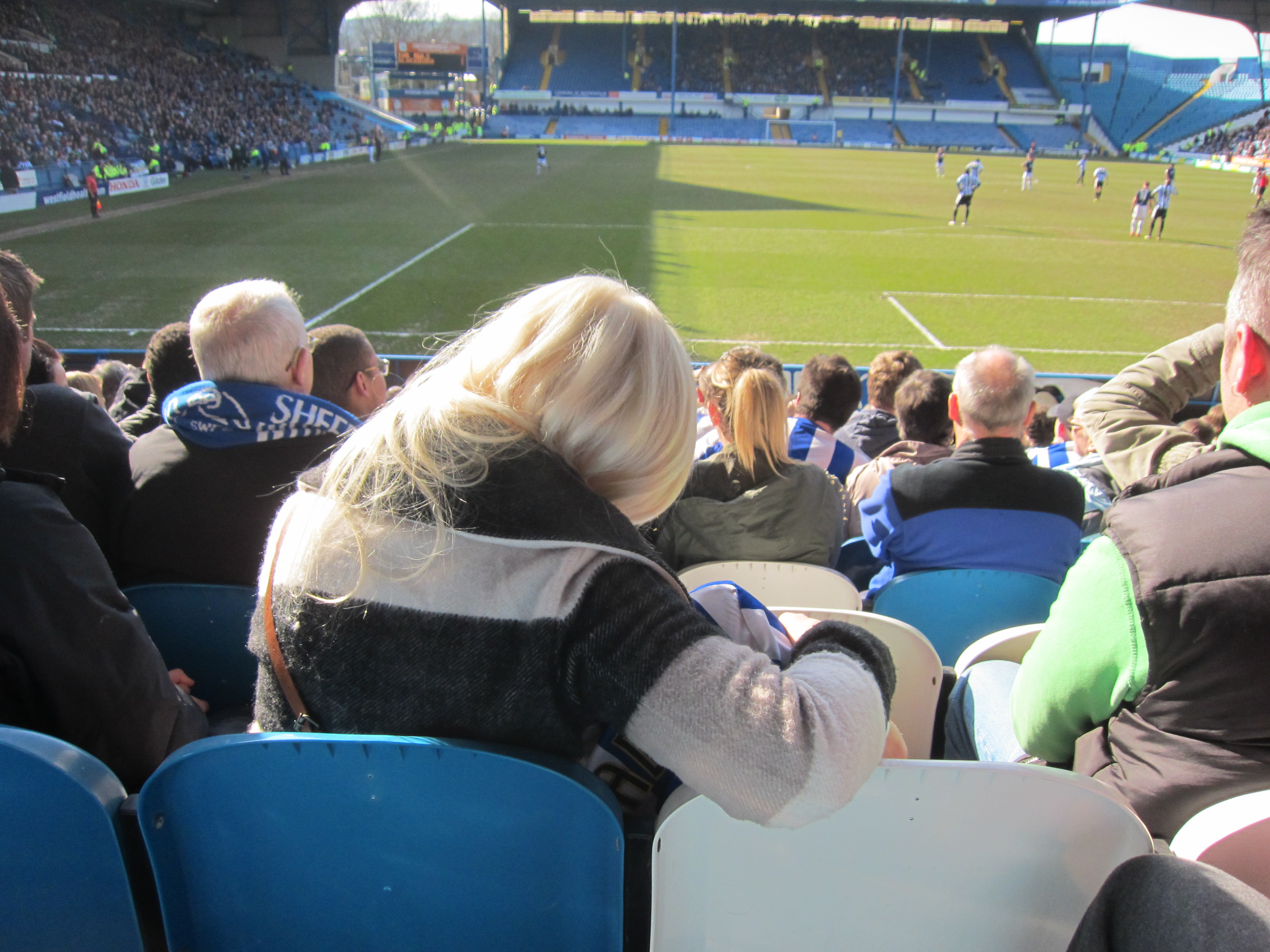
It is difficult to compare levels of engagements in matches. There are so much more excitement in a 3-2 win compared to a 0-0 draw that it probably would be unfair to the Sheffield United supporters to conclude that the Wednesday supporters are slightly more vocal.  But – they did have a drum and a trumpet accompanying them, making the sound a touch too continental for my liking.

130119

Although the crowd was vocal, there were not any aggresive chants aimed at the away supporters, who admittedly didn’t make much of a show. There were a couple of “Hark now here, the Wednesday sing, the United run away, cause we will fight forevermore, because of boxing day”, although the section of the North stand closest to the away supporters may have made up for that. Not that there were no f-words being hurled at the referee and players throwing the ball away. But the ground seemed more “family geared” in this way, too.

143129

The fans also seemed to apppreciate more controlled football than sheer effort and determination. Whenever a Wednesday player whacked an aimless ball forward, there were groans of frustration going round the ground.

159

After the match, I went back to the pub for another few point while we witnessed Cardiff battling out a goalless draw at Watford on the big screen. Big hugs and exchange of email adresses at the end. I will definetely be back!

154151

142135

Tagged with: , , ,
Posted in Football grounds, Uncategorized

Reebok Stadium, Bolton

Bolton 029 Bolton 025

After the stadium disasters in the 1980’s and the Taylor Report, all-seating at stadiums were imposed by law under Margaret Thatcher. Grounds either had to be redeveloped – or replaced.

Bolton Wanderers, one of the founding members of the football league, chose to leave their ground, Burnden Park. A ground made famous by Lowry’s painting, “Going to the match.”

IMG_9146

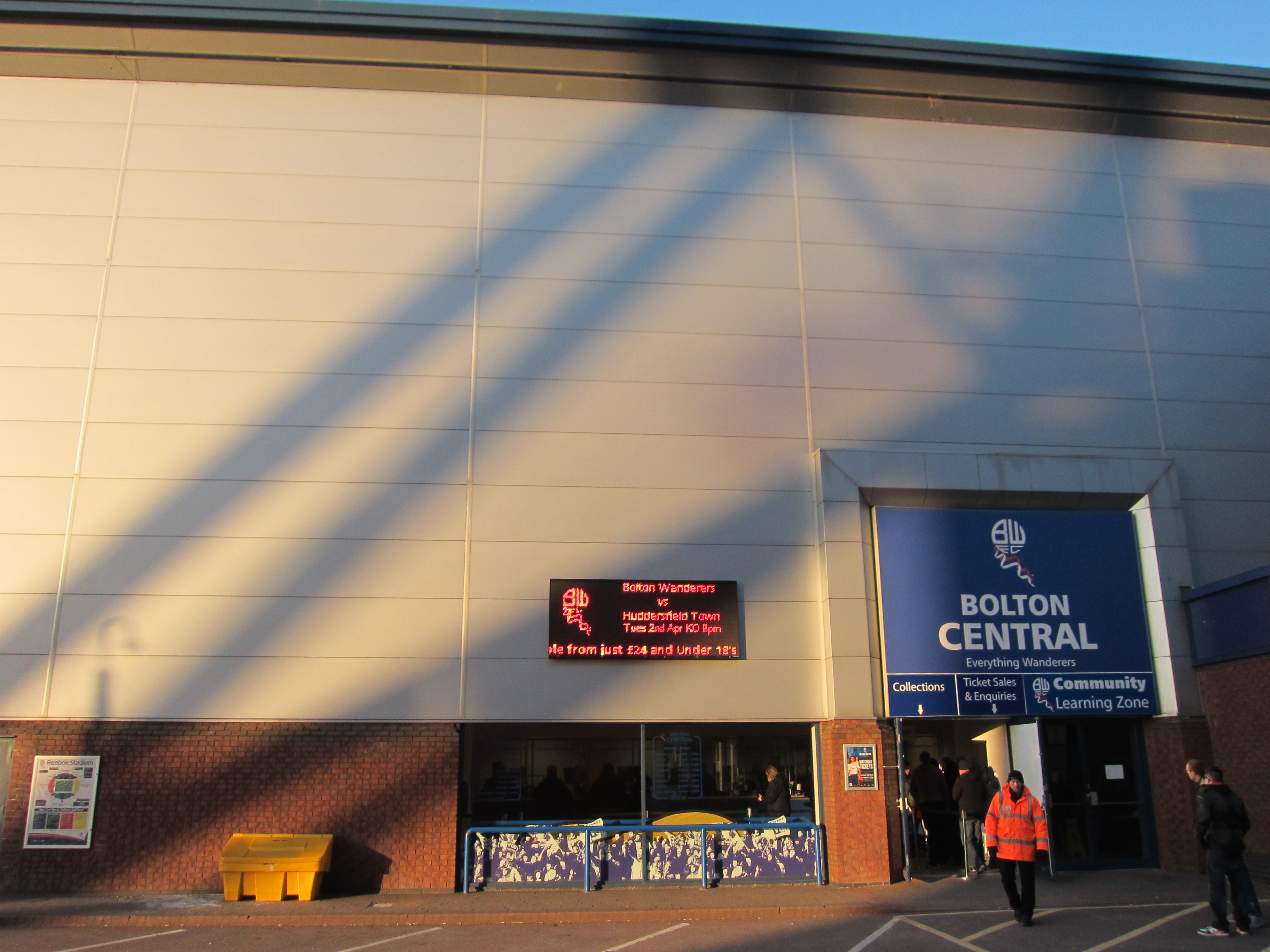
Well, compared to this painting, the new ground, The Reebok Stadium, sums up the transition of English football. In stead of being located in an industrial city with people walking to the ground, The Reebok is located outside the city with sloping hills in the distance – and a highway, huge car parks and a trainline next to it. There are no pubs or chippys next door – but a KFC and a MacDonalds.
Bolton 008Bolton 007

From the outside, the stadium looks like something that has landed in the middle of nowhere from outer space. The only thing that breaks the corporate facade is a luxury hotel. And the historic landmark is a plaque declaring that the foundation was laid in 1997 by – not Margaret Thatcher – but John Mayor.

Bolton 022Bolton 080

I arrived 80 minutes before kick-off, but you did not really sense a match-day atmosphere outside. Of course, it was an evening kick-off (on a very cold evening) which might have kept people away. But I didn’t see any of the small stalls that you usually see around a football ground.

I went to the ticket office and asked for a ticket. “Which part of the ground?” “The most vocal” I replied. “Right, I will put you in this corner, then, next to the away fans. That is the most vocal”. Equipped with a ticket, I went on to the souvenir shop. There were plenty of signed shirts and photos on offer. From stars from different decades such as Frank Worthington, Henrik Tømrer Pedersen and Chris Eagles!

Bolton 018

I had been told that the catering inside the ground was good, and as the alternative seemed to be KFC or MacDonalds, I entered the ground. It was ok – I had a chicken wrap, a chicken pie – and a bovril at halftime. But still, I was not really impressed.

Bolton 033

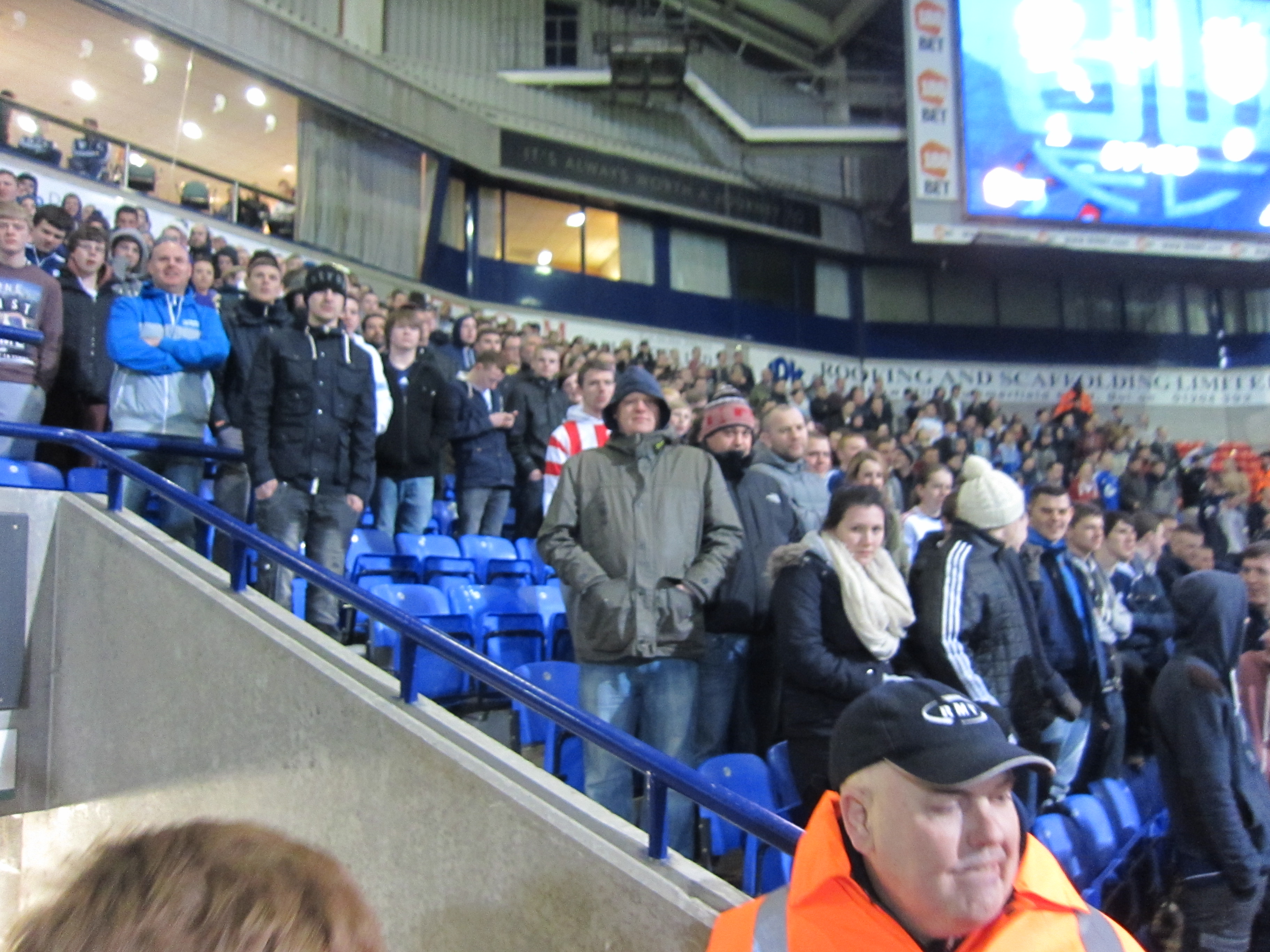
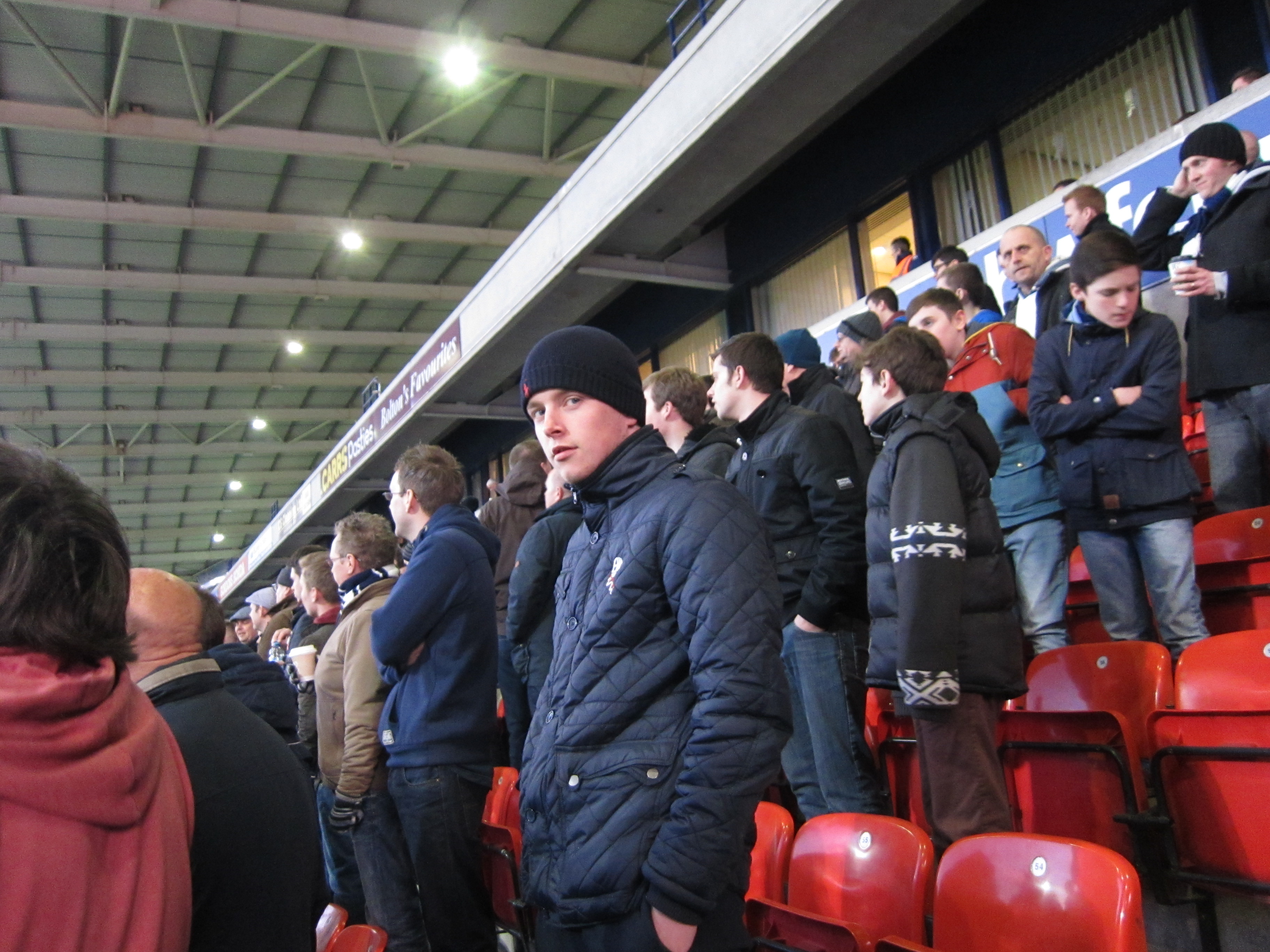
I hadn’t seen that many people outside the ground. And my section was probably not “average”. But the composition of the crowd was far from the corporate image that the ground conveyed. I would say it was a 99% white crowd. In my section 90-95% male (with most of the women being teenage girls in pairs). And – again in my section – 50% teenage boys in groups of 4-8. And everybody was standing throughout the match

Bolton 045

The travelling Huddersfield fans filled their section just before the kick-off, so the demarcations had to be moved closer to our section – and the most vocal Huddersfield supporters jumped at the opportunity to get closer at us. And they were quite impressive. They may not have been 1.000 strong, but they were vocal all the way. And particularly in the opening 25 minutes and the last 30, the Bolton fans in my section responded to that.

Bolton 072

A few fans from both sides were far more preoccupied with gaining eyecontact with opposing fans, gesticulating, singing – but in an overall goodhumoured way. There was a lot of Lancashire-Yorkshire rivalry in the chanting. “Sheep, sheep, sheepshaggers” were chanted from the Bolton section, with the Huddersfield fans responding, singing: “he s…… all your kids, he s…… all your kids, Jimmy Saville, he s……. all your kids”. That response was greeted by smiles and grins and even applauds from the Bolton fans, before they returned the chant: “he s…… all your sheep, he s……. all your sheep, Jimmy Saville, he s…… your sheep”.

Bolton 079Bolton 064

As the game gradually lost a bit of its initial spark, the responses from the Bolton fans peetered out at the end of the half, particularly as Huddersfield carried the greater threat. But it was sparked to live in the second half, particularly after Chris Eagles gave the Wanderers the lead. It added an edge to the chanting – and the most gesticulating Huddersfield fan was one of two away supporters being removed by the police.

The game opened up considerably at the same time with great chances at both ends; so despite the apparently corporate setting, the relatively low crowd of just over 15.000, and the cold night, it became an absorbing and very vocal contest. And on the train back to Bolton, there was quite a lot of singing, chanting, wall-banging as well.

So – despite the modern stadium setting – this was as good oldfashioned English football as it gets. Perhaps not a full house, perhaps not high quality of football – but a lot of passion,

Tagged with: , , , , , , ,
Posted in Football grounds

Bramall Lane, Sheffield

068 069

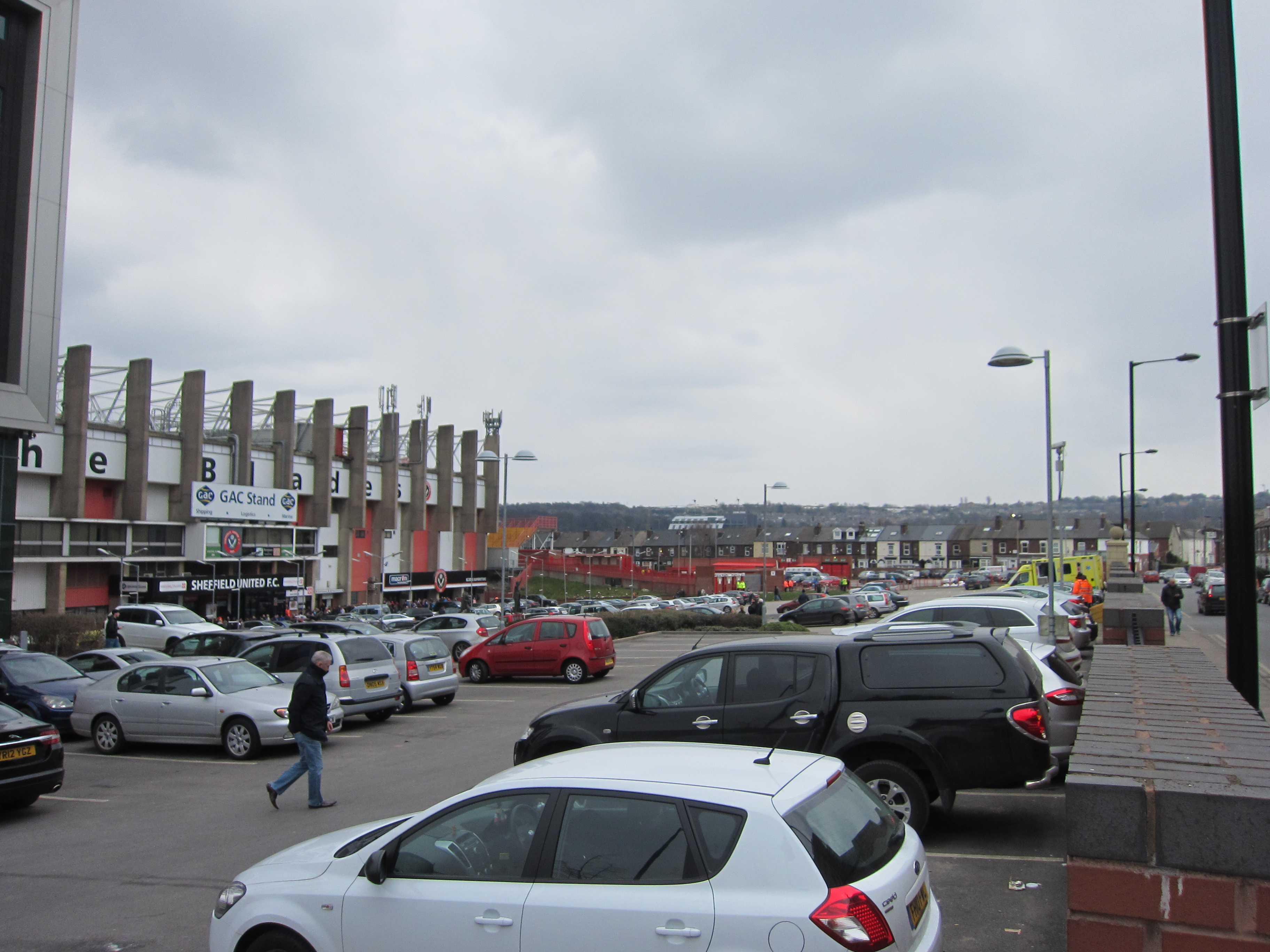
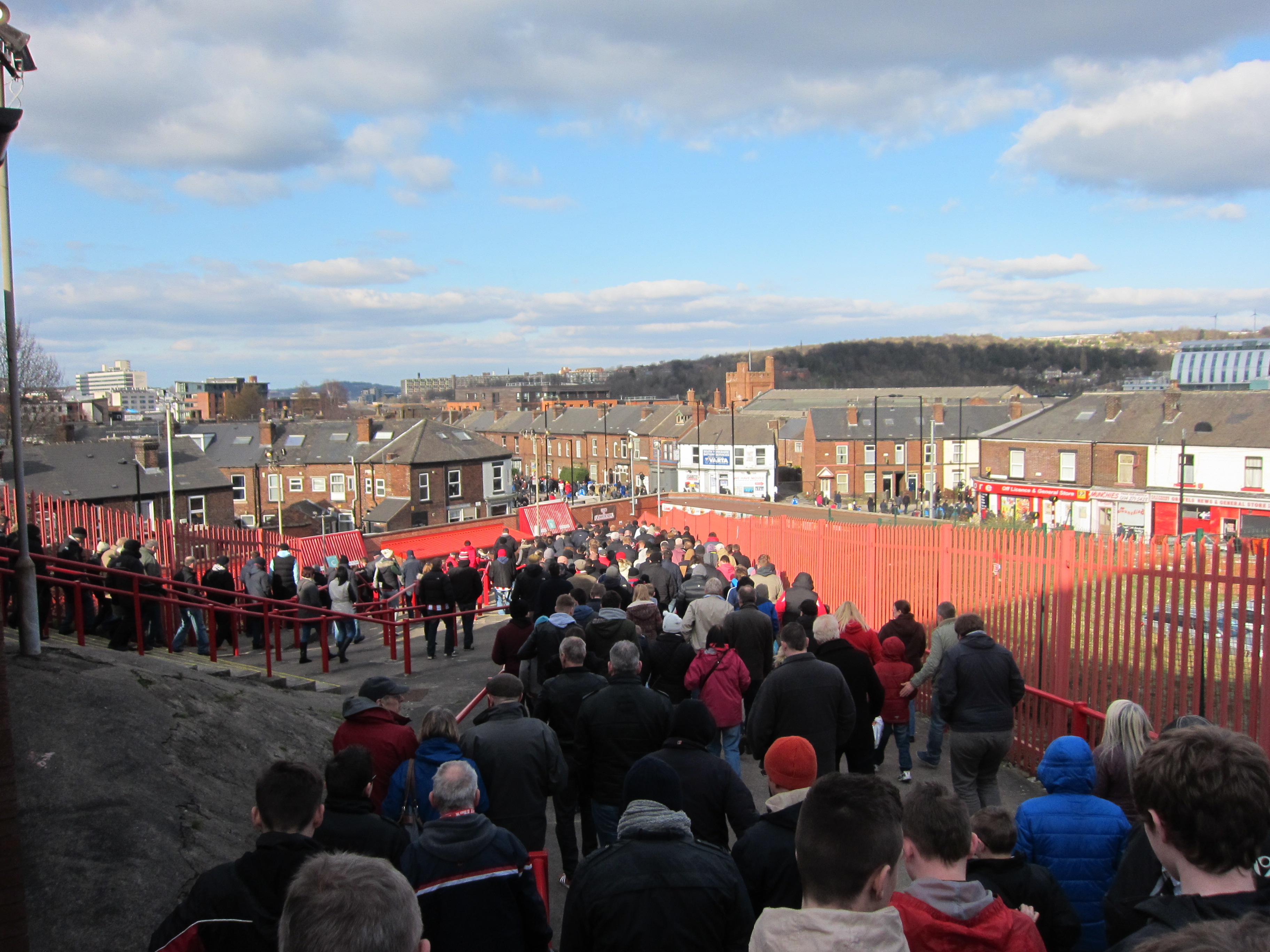
The city built on 7 hills – Sheffield. That does oblige to strive for greatness – and although not quite in the caliber of Rome, Sheffield can stake a claim for that. Not just for its rise as the “steel city”. It is one of the footballing pioneering cities. Sheffield FC is the oldest football club, Sheffield Wednesday and Sheffield United were among the first league clubs, and Bramall Lane was the first ground to host a floodlit football match back in 1878 (!) and fittingly became the first one to have floodlights permanently installed in 1953.

084  083

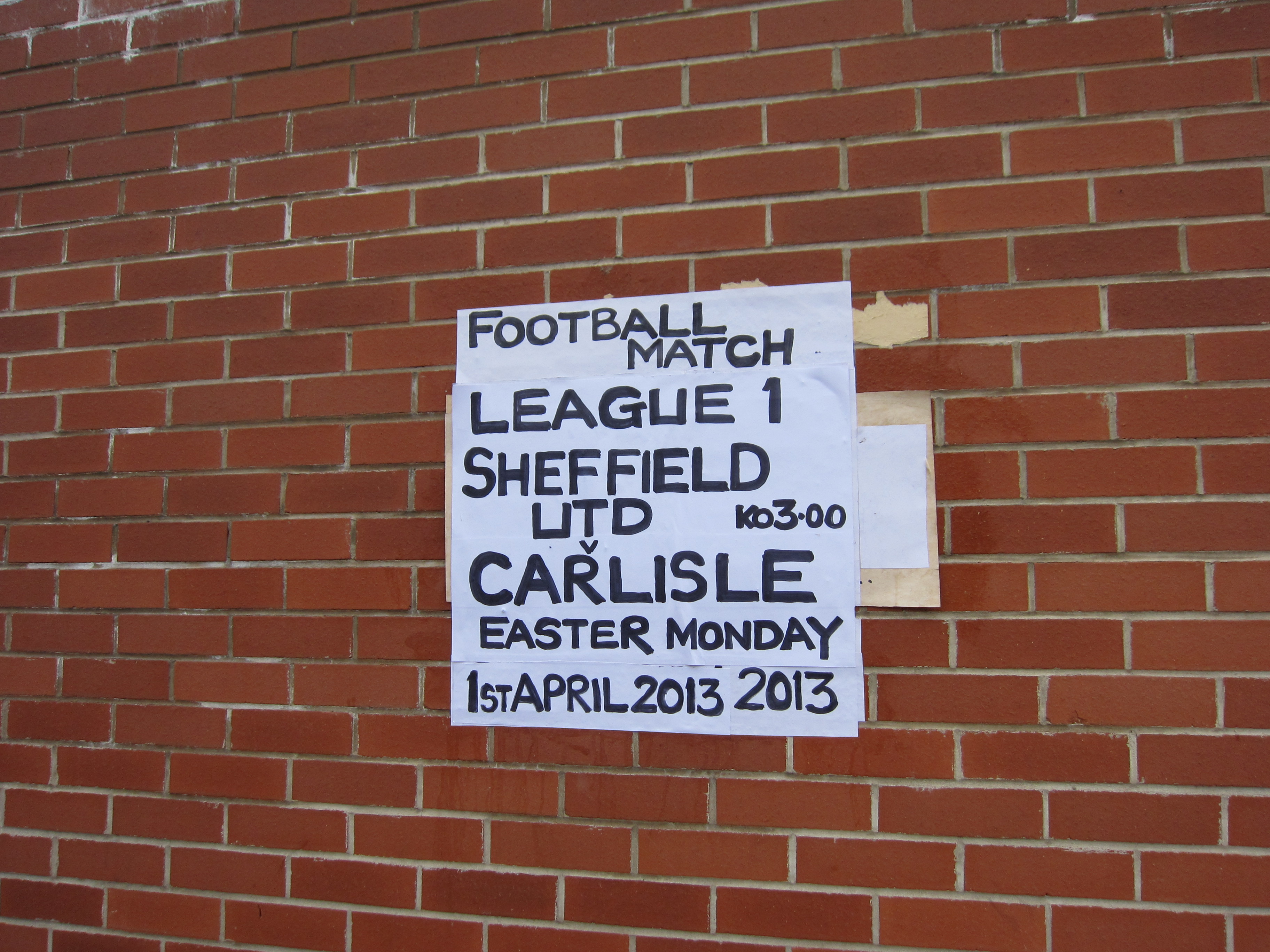
So what better place to start a tour round English football grounds than Bramall Lane in Sheffield? Home of United, the Blades. A ground that was originally a cricket ground and hosted cricket matches right until 1973 – and therefore only had stands on three sides of the football pitch! A fourth stand was finally added in 1975, but it was followed by a quick demise in fortunes for the Blades, who slid from the first to the fourth division by the start of the 1980’es. They managed to claw their way back in time to be part of the new premier league in 1992 – but their stay was short, and although they returned in the early 2000’s, they are currently in League One, that is the third tier of English football.

Still, they have quite a loyal following, 19.005 turned out in the cold Easter weather that even saw a drizzle of snow – with snow still lying around the ground after last week’s match had to be called off.

131128

Sheffield United is said to have the more partisan support in Sheffield compared to Sheffield Wednesday. And when you look at their celebrity fans, Sean Bean of United and Sebastian Coe of Sheffield Wednesday, you can’t help feeling that there must be something to it.

In the foreword to “Sheffield United – a biography”, Sean Bean writes: “As a teenager in the 70s I became a regular on the Kop. I loved the pushing and swaying the terraces provided. I was never frightened or alarmed; why should I be? Surrounded by family, friends and Bladesmen any unwelcome visitors would soon be cleared off. When United scored, a young man could end up tossed around in the frenzy, finding himself miles from his original spot. When the joy died down we all looked around to se where we’d come from. Sometimes it was yards and yards away – but what a beautiful journey….  A new correctness around the game allied with Thatcherite legislation has ended some of the rivalry between Sheffield’s two great clubs.”

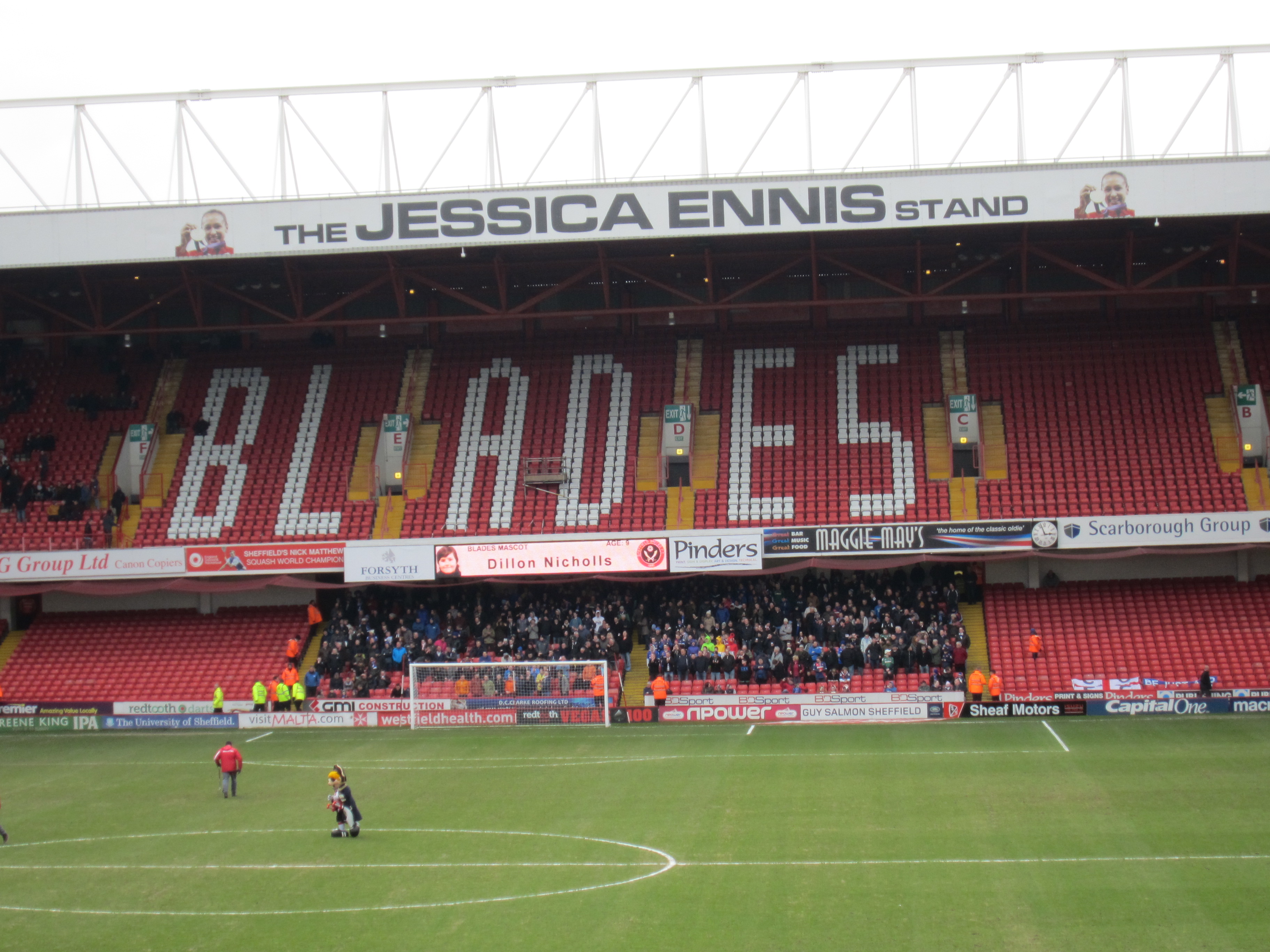
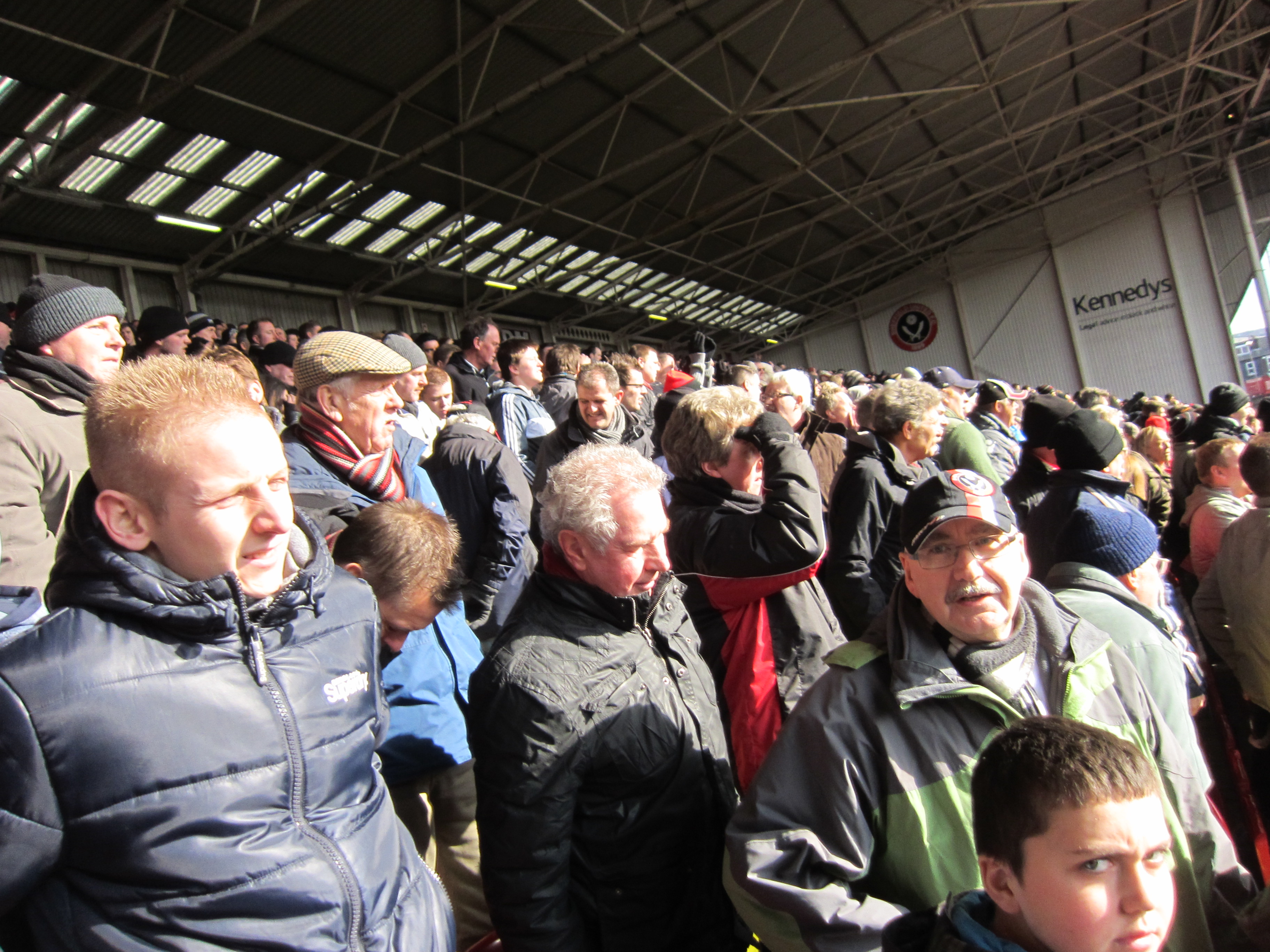
So arriving in Sheffield, I decided to que up to buy a ticket for the Kop.  There were tickets to be bought – but only just, as every Sheffield United supporter chose the Kop over the newly named Jessica Ennis stand, which only hosted a small contingent of Carlisle Supporters. But the Kop has been turned into an all-seater stand; and there were no goals to celebrate…

158212

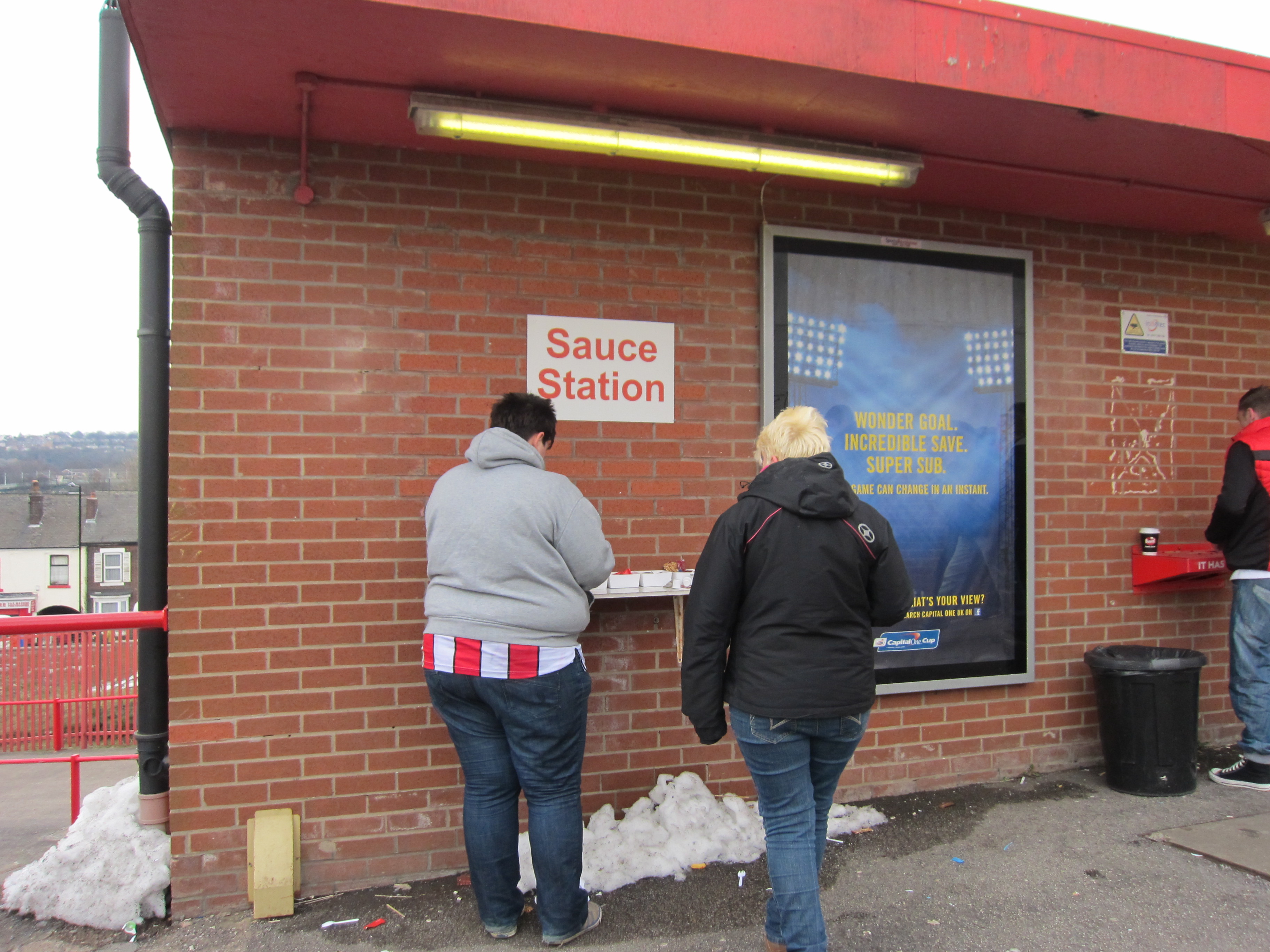
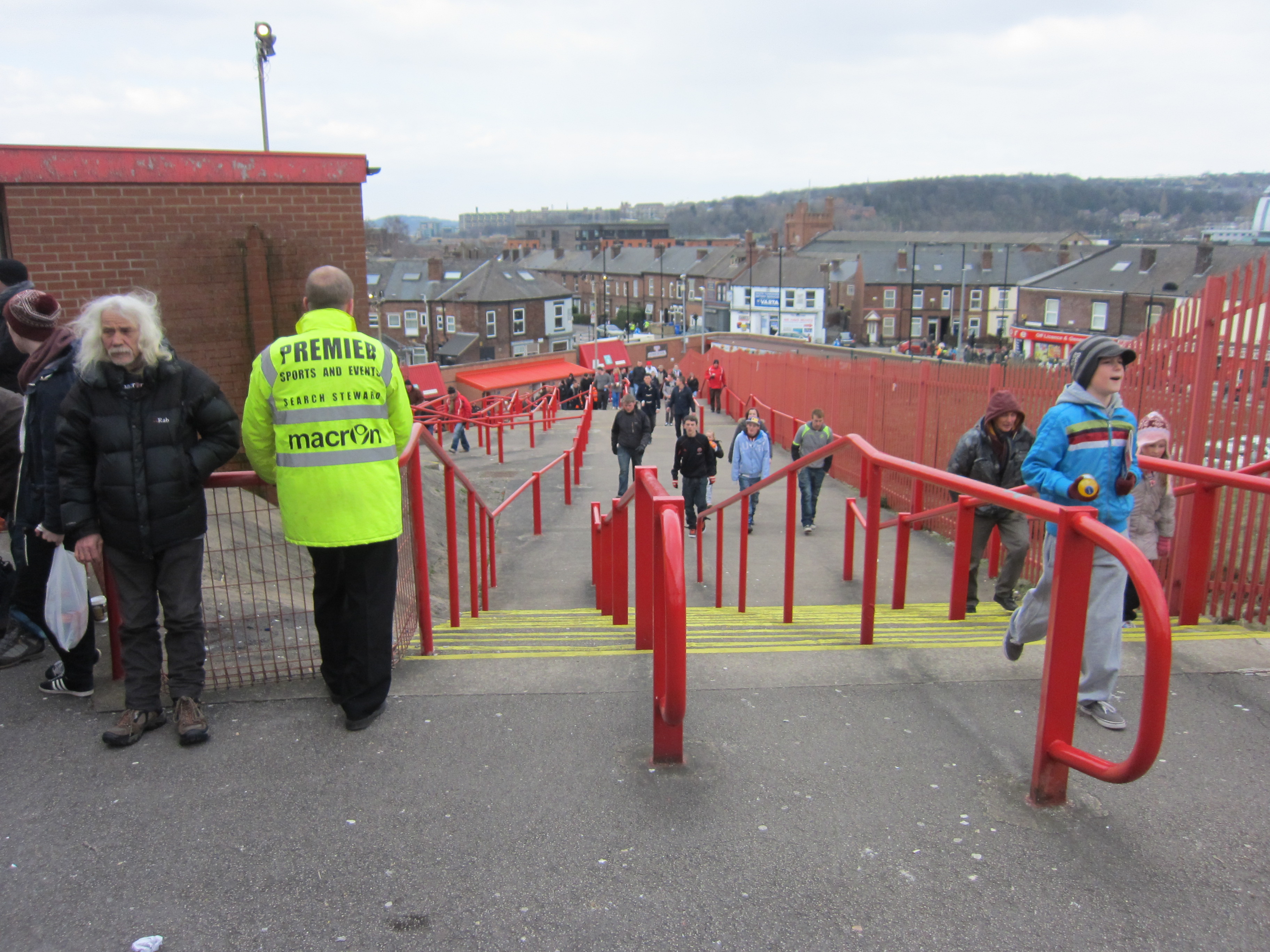
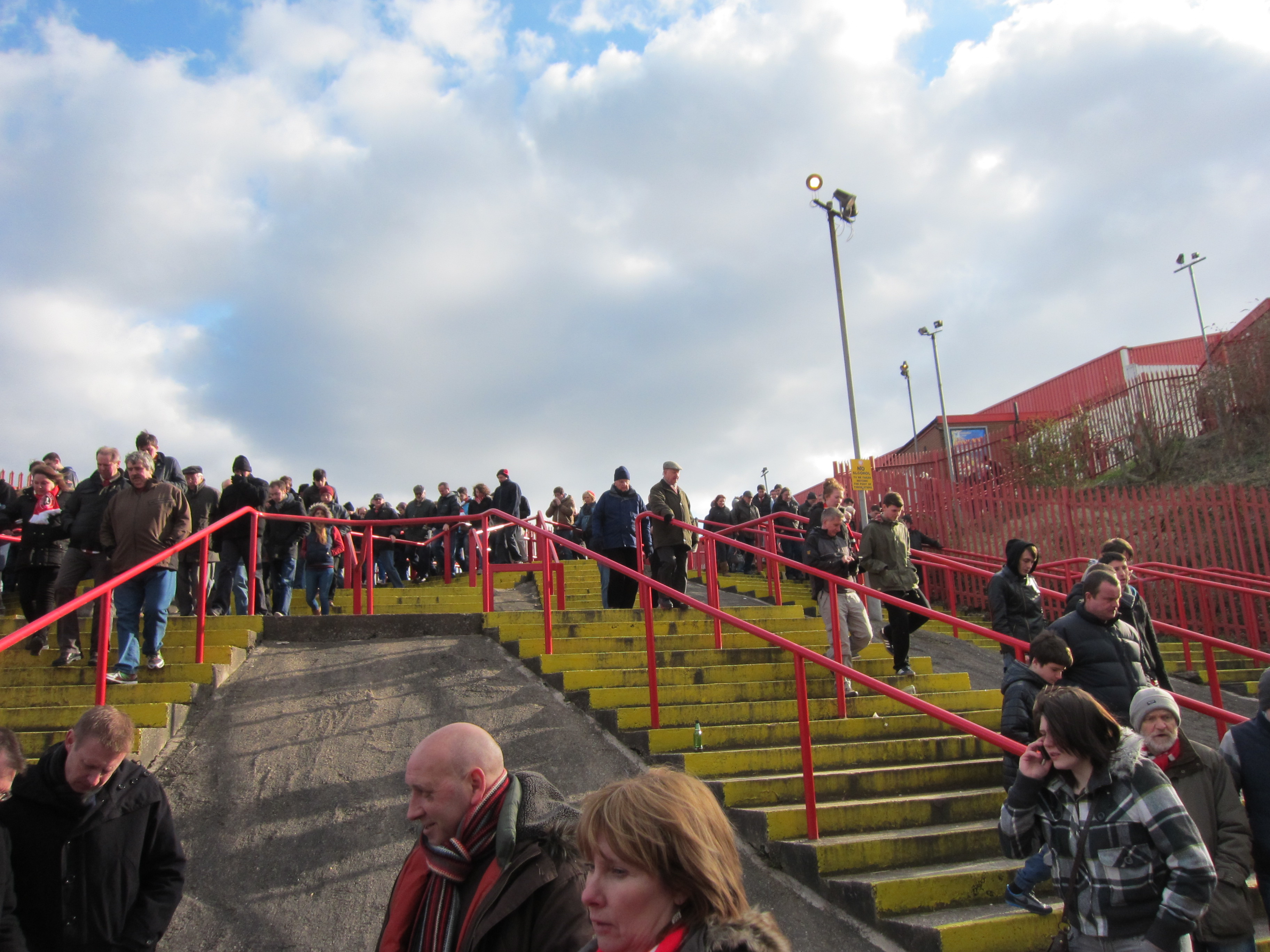
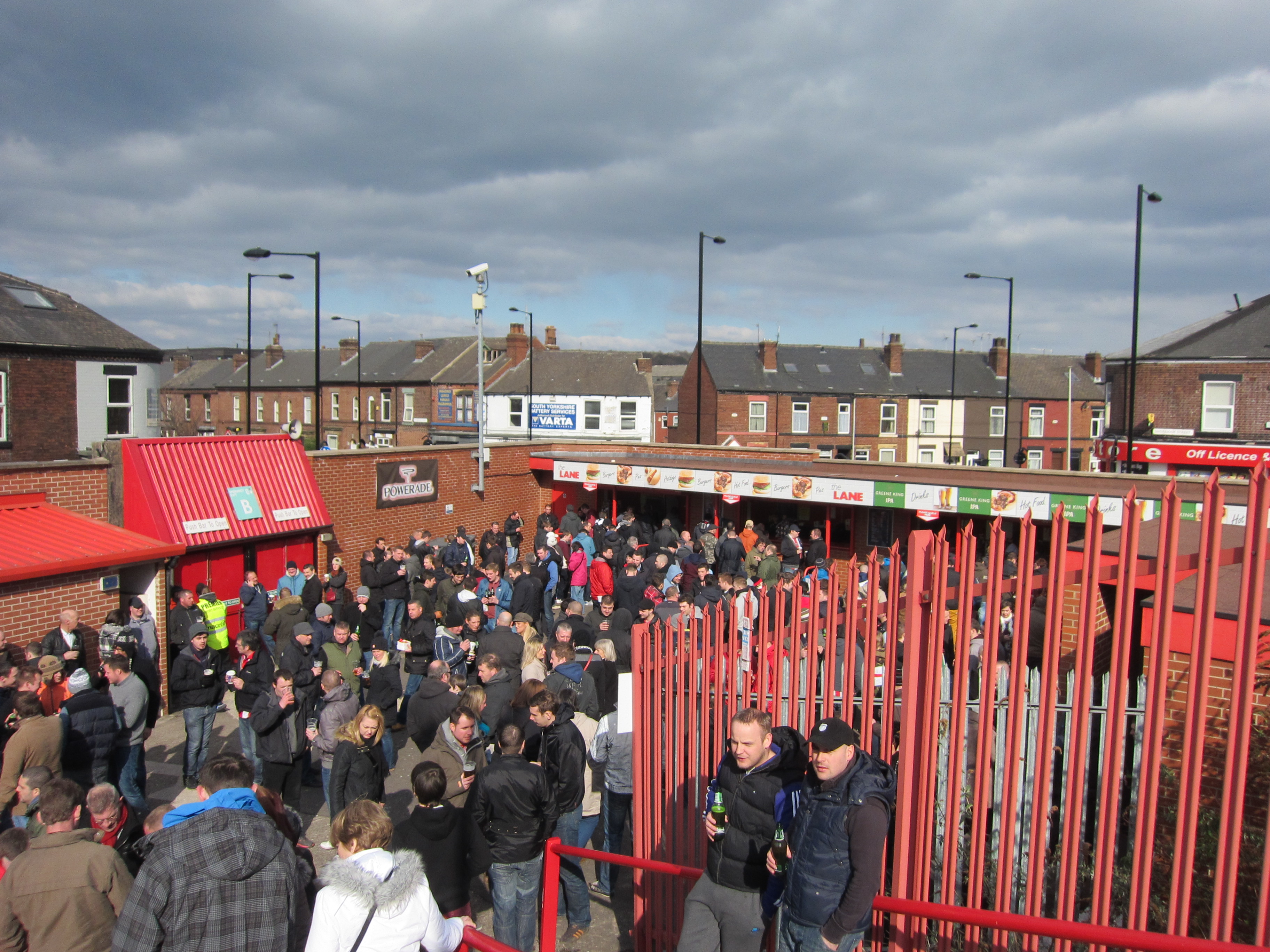
Still, the Kop was an impressive sight. Certainly in Denmark, many people think that the Kop at Anfield is the only one. But several grounds had huge terraces named after the Spion Kop battle in the Boer War, where the British suffered heavy casualties on a steep hillside.  Steep terraces with loyal supporters were named after the battlefield to honour the victims and send a signal of determination. And although the present Kop at Sheffield is an all-seater construction, you can see and sense the steep hill, it is erected on. Whereas you go inside for half-time snacks in modern football grounds, you go outside on the hill – with catering at the top as well as at the foot, creating a room for meeting up and chatting.

089114195341186324

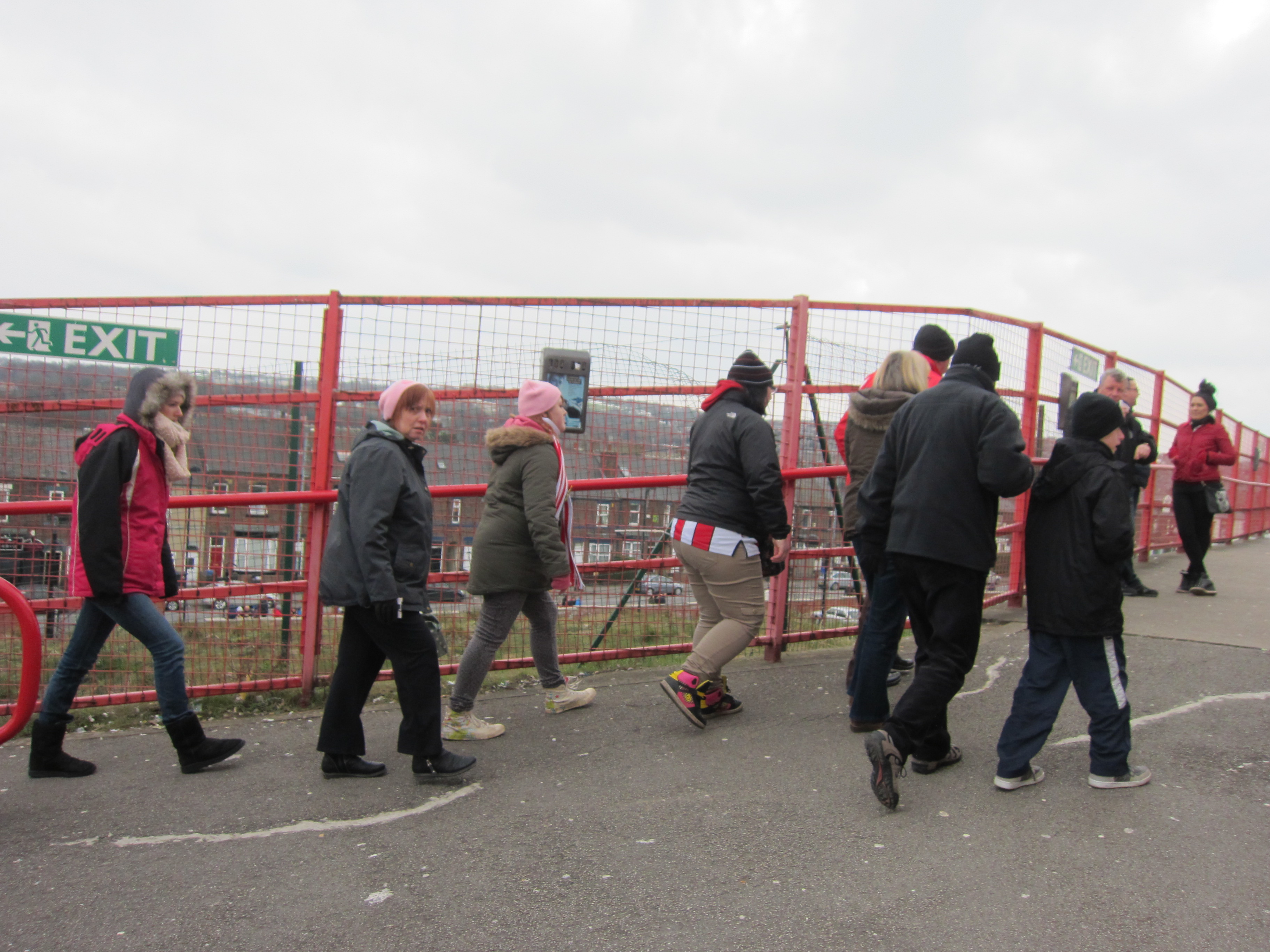
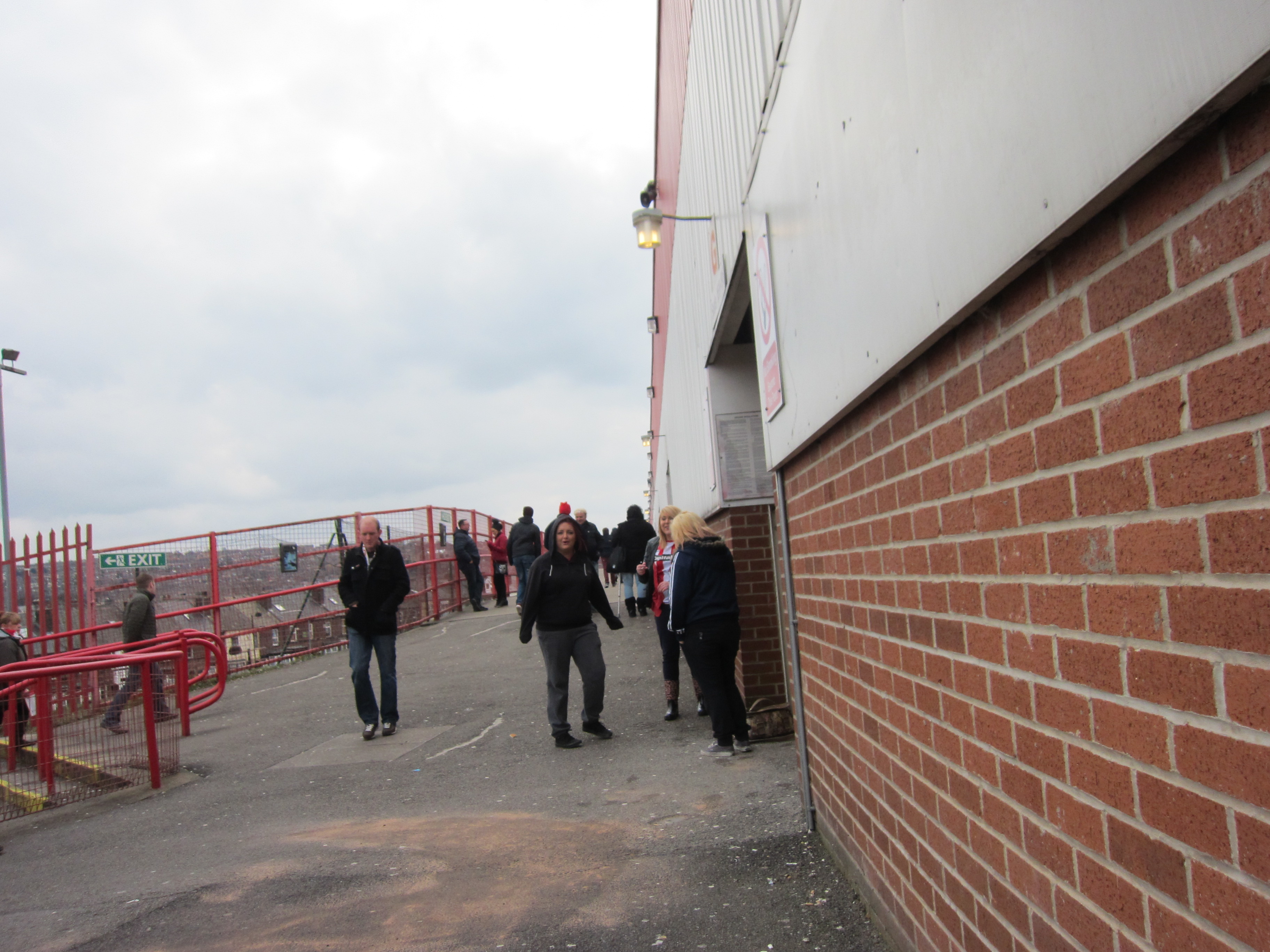
And you really get a sense of the Kop being a local meeting up. Inevitable, there was a banner from the Scandinavian supporters club, but otherwise the crowd seemed very local. And alarmingly etnichally almost 100 % white, and 85 % male. Compared to other grounds, the corporate visitors seemed to be relatively few, whereas there were quite a few teenage boys and girls.

126133121

After a full voice performance of “The Greasy chip Butty Song” at kick-off (in the first as well as the second half), there was a fair bit of chanting, but you sensed that everybody were rather laid-back, waiting for Sheffield United to steamroll Carlisle. That  just didn’t happen. In fact, Carlisle put together the best footballing moves (for the warm-up, the Sheffield United back four were put in a line. At first they were thrown high balls that they just had to head away. Then hard shots were aimed at them, and they just had to whack the ball to the halfway line! Amazing. Who said the good old centre back is dead?), and by the time Sheffield United finally applied some pressure in the second half, the anxiety had grabbed hold of the crowd, with ooohs and aaaahs, moans and groans – willing the ball to cross the Carlisle line, but in vain. You really felt the passion by then. But it ended in a disappointing scoreless draw.

059070

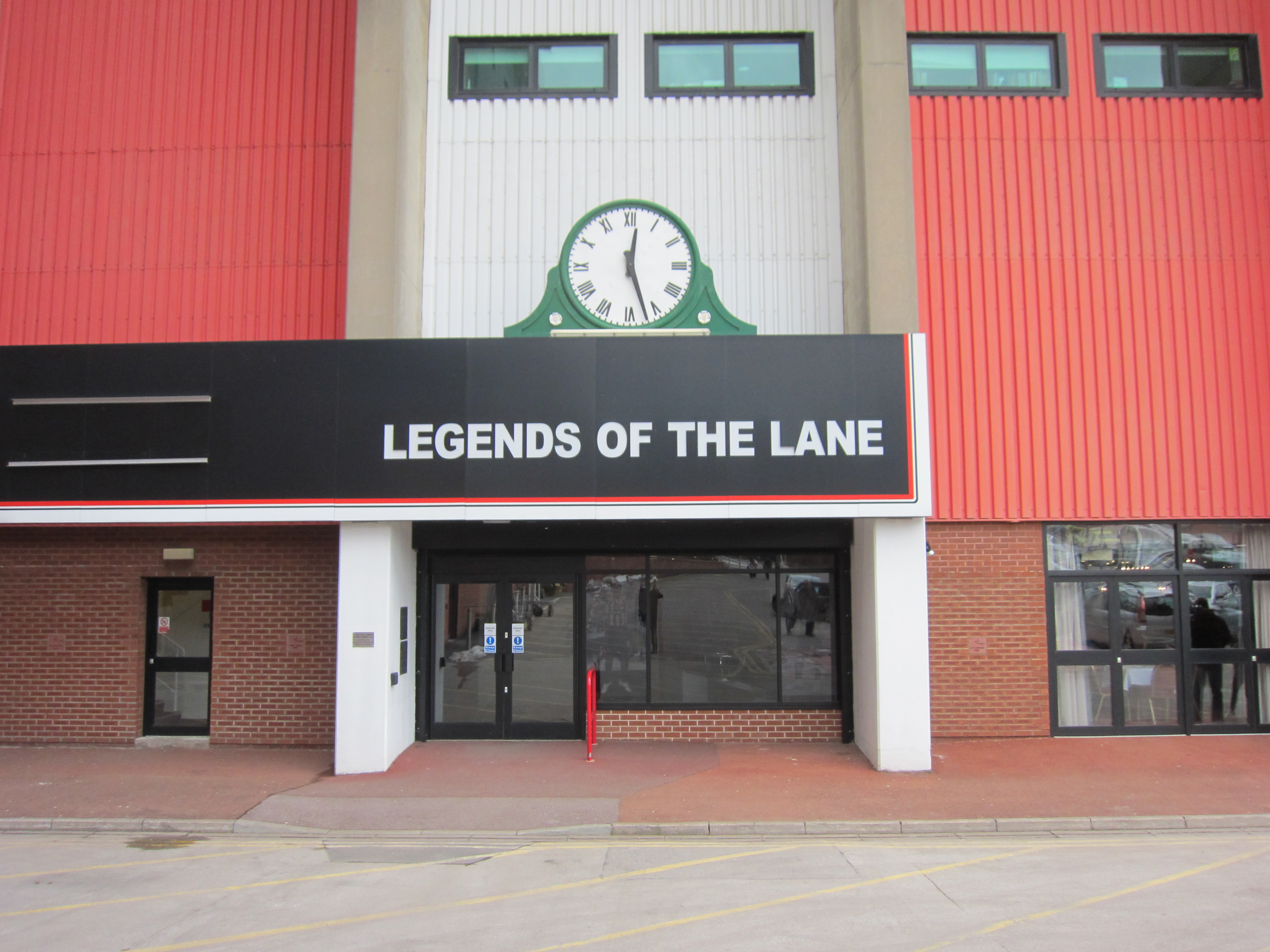
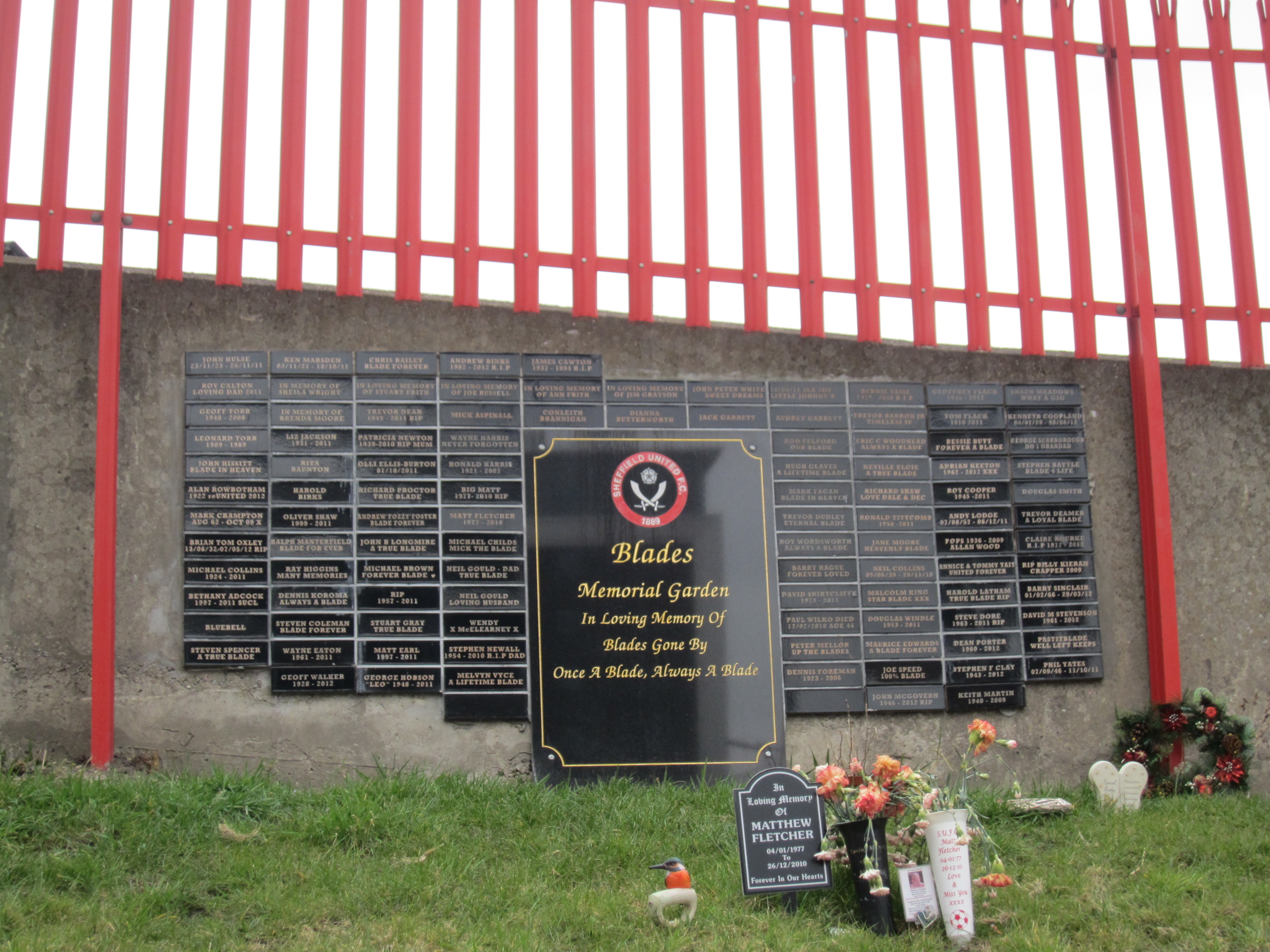
Passionate and friendly – and with a pride in their history. They had an exhibition “Legends of the Lane” which unfortunately only was open to prebooked tours. But around the ground, their were red heritage signs telling about major events, engraved stones, statues – and a memorial lawn for ashes of fans.

045043

The football being played by two all-british teams (no foreigners judging from the names), the surroundings, the steep Kop with stalls selling Bovril, fish ‘n chips and steak ‘n kidney pies, the classic red, white and black colours, the singing and passionate atmosphere, the all white, predominantly male crowd made you think that this match could have been played 40 years ago – except for the all-seating and the the brandishing of sponsornames all around.

Tagged with: , , , , ,
Posted in Football grounds

National Football Museum, Manchester

IMG_9064

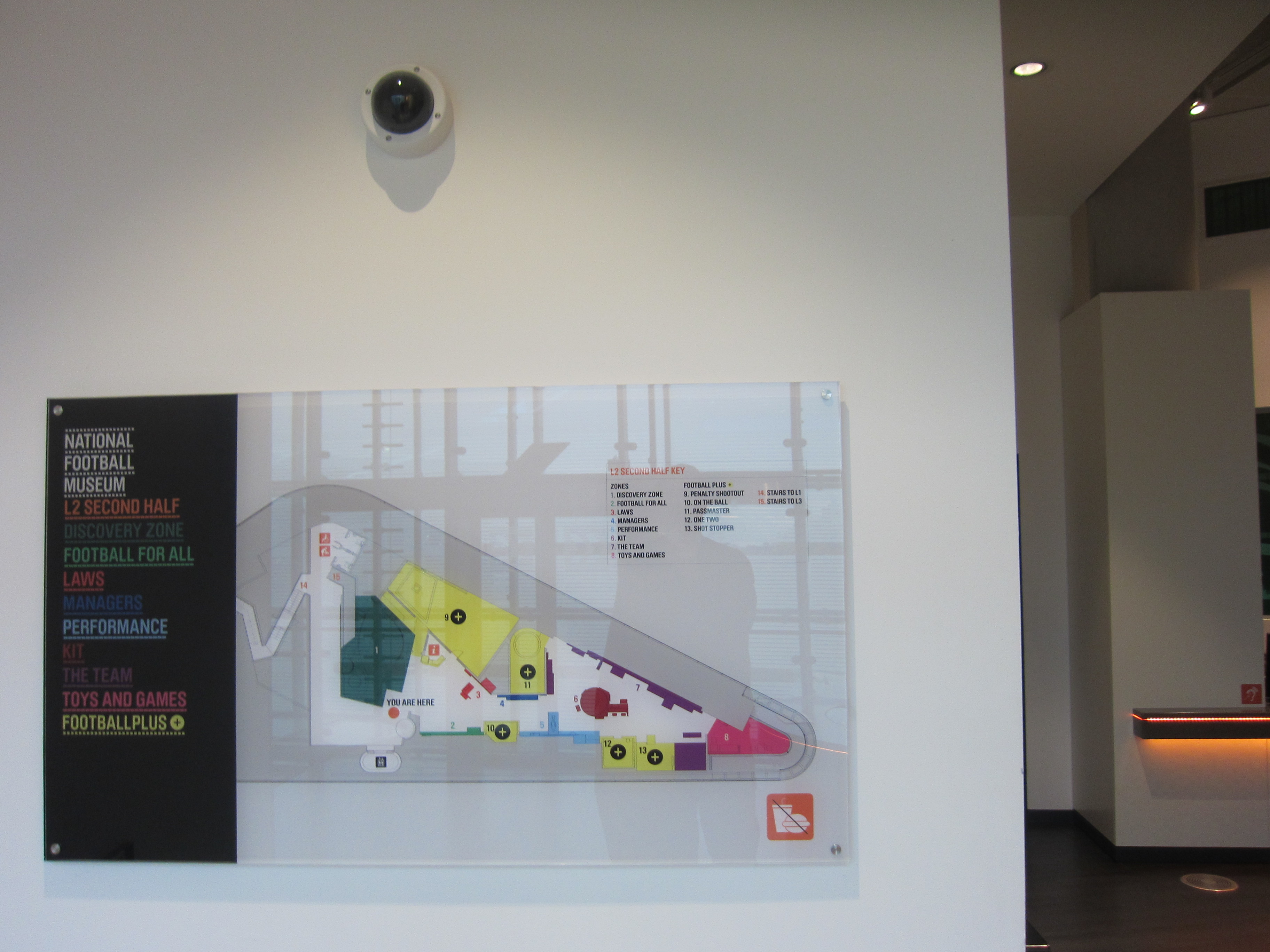
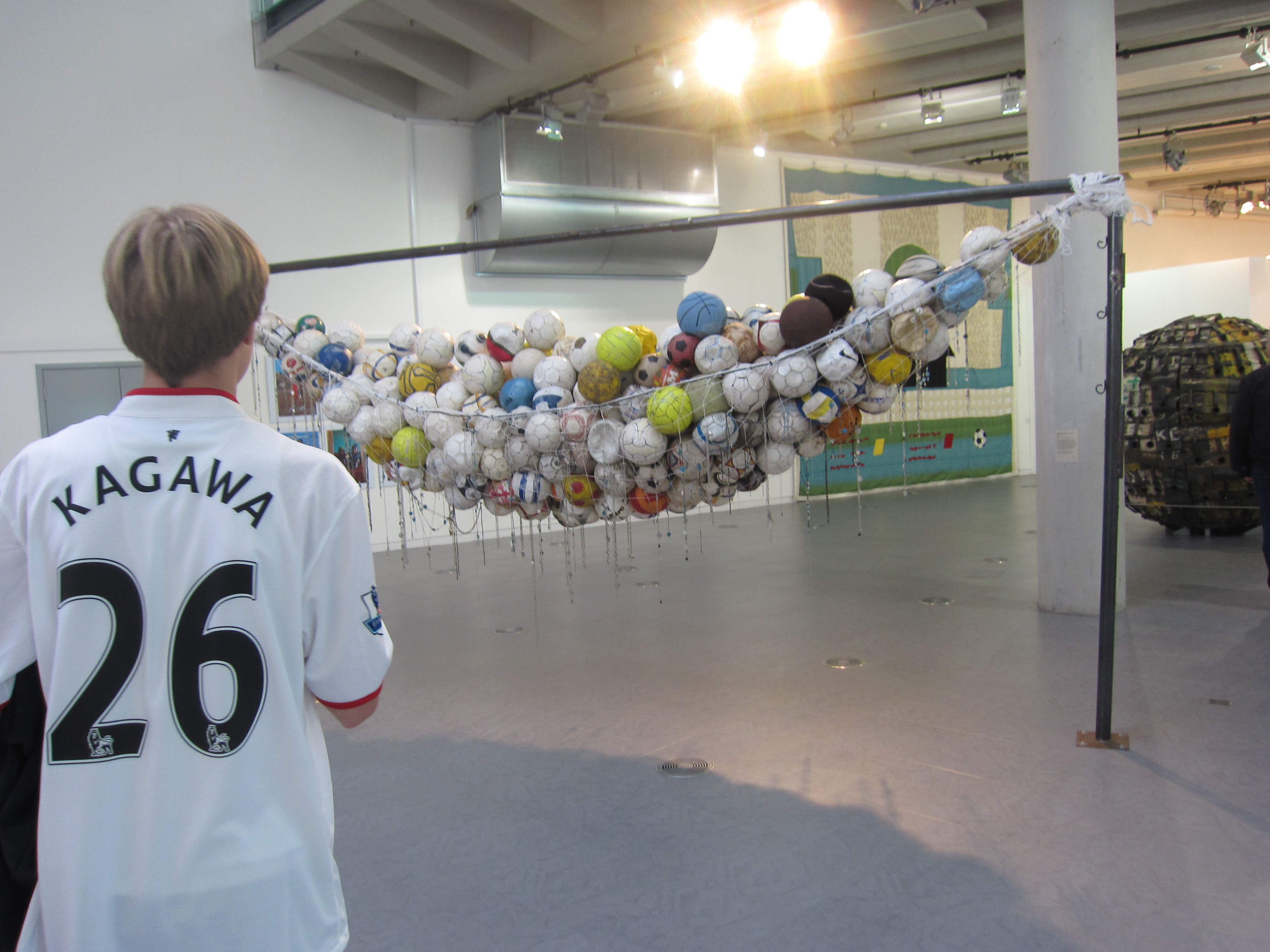
I visited the National Football Museum in Manchester with my wife and two teenage children back in October. We had an hour and a half before closing time – and time just flew by. We were all very disappointed when we were told that the museum was closing and we had to leave. So disappointed, in fact, that my son and I decided to return the following day.

Any museum should pride itself of managing to capture the attention of an entire family (with very different levels of interest in its subject) in this way. My son and I can be labeled football crazy, but you could hardly label my wife that – and certainly not my daughter. So it is really quite an impressive feat that the national football museum managed to keep us all captivated for 1½ hours.
Of course, our experiences were very different. We each went our separate ways through the exhibitions, sometimes converging around an exhibit, before following our own paths again. The thematic structure and open spaces within the galleries with no fixed route certainly facilitated this pursuit of individual interests – and at the same time allowed us to feel part of a group.

IMG_9255

The structure
The exhibitions do not set out to tell the story of English football from the early days to the present. There is an introductory section about the early game in the main gallery on the first floor, but the rest of the gallery is thematically structured around the fans, the competitions, the “global game”, the stadiums, the media, and the players. And the second floor deals with the laws, fitness, managers (tactics), technical equipment , games and finally a number of stations where you can test your own skills.

So there is no storyline that you could or should follow, no chronology. The NFM avoids the classical mistake in museums, trying to transform the “great book” on a subject into an exhibition with the texts as the meaning making guideline and objects as illustrations to it. The objects, the photos – and not the least the many interactive stations – are allowed to draw the visitors’ attention freely – and the visitors are allowed to make their own meaning there. There is seemingly no ambition to lead the visitors from one station to the next.
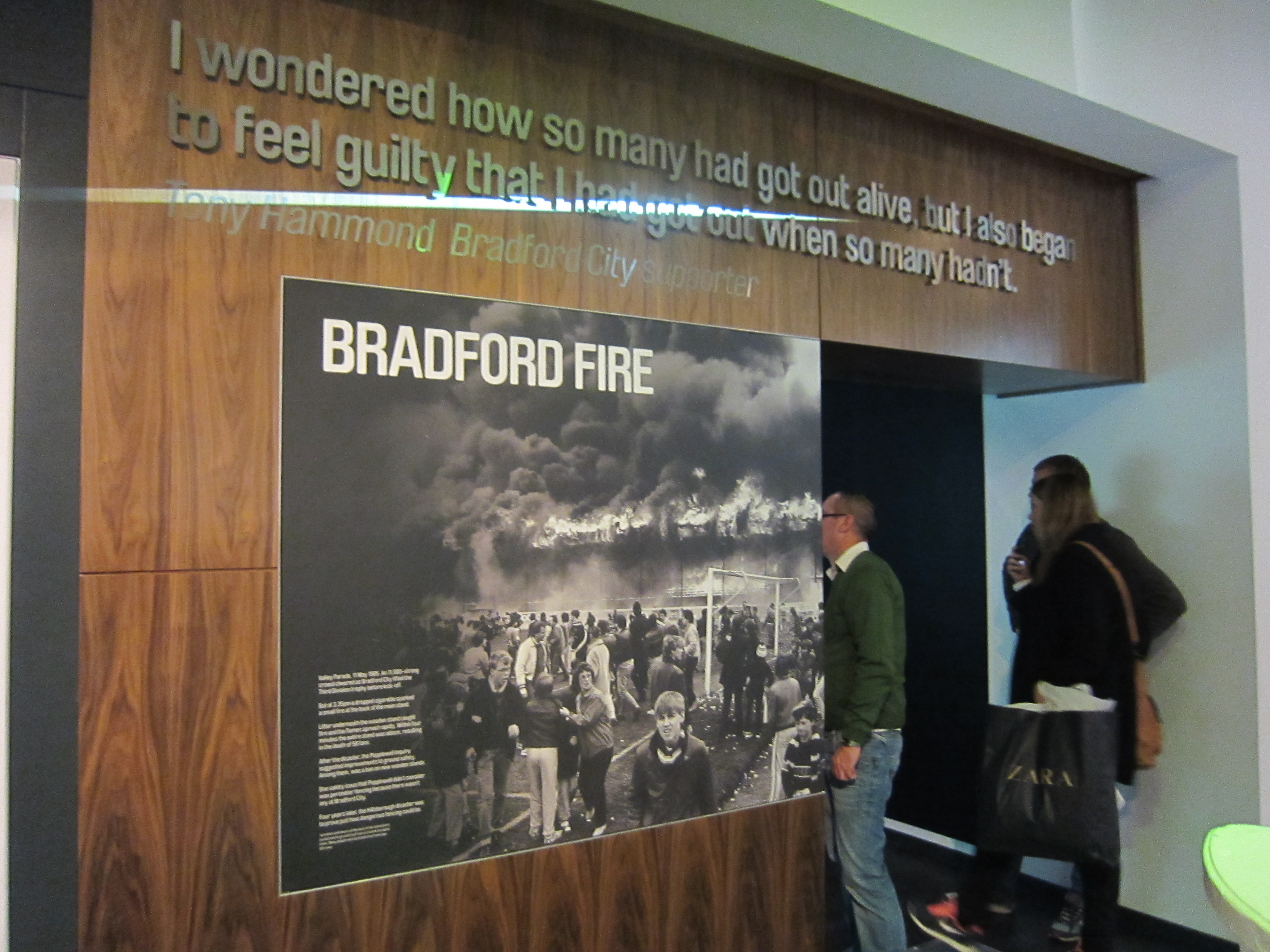
Of course, there is a structure. There is a division between the more “technical” or “internal” structure of the game on the second floor and the more “cultural” or “historical” structure on the first floor. But there is no “direction of reading” you have to follow. This is certainly not the museum as a “temple”, it is rather the museum as a playground or toy shop. An exciting mixture of anticipation (“what is next?”), recognition (“there is Cantona!”), discovery (“women’s football drew big attendances during WW1 and was then banned!”), and playfulness (“what would you do as a referee?”). I find the English mix of culture history and art particularly appealing. In Denmark, cultural history exhibitions are usually devoid of art; but not only are the main galleries sprinkled with paintings like Lowry’s “Going to the match” and Browne’s “The art of the game”, the third floor contained the brilliant photos of Stuart Ray Clarke: “The homes of football” – probably the highlight of the museum.

IMG_9351

In this way, the museum is true to the values expressed by director Kevin Moore in his book on Popular Culture and Museums from 1997, where he pleads for museums to focus on the material culture rather than re-mediating books on a certain topic to exhibitions, reducing the objects to illustrations. The freedom of not having to follow a fixed route is instrumental in making the museum so successful at accommodating family groups like ours.
On the other hand, it does make it difficult to create a focus in the exhibition, where you allow the audience to reflect on football at a more abstract or historical level. There is, for instance, not emphasis on the repercussions of the Taylor report and the subsequent transformation of English football. You get impressions of a pre- and post- premier league era in the sections on fans, on stadiums, on media, on players and on clubs. If these sections had been “structured” around the “Stadium disaster” film, each of them had could be split into a pre- and post- display, adding another level of historic reflection to the objects.

IMG_9193

As it is, the historical dimension plays a very subdued role in the exhibition. It enables the exhibition to function as an exciting hunting-ground for visitors of all ages and interests – everybody being drawn to objects that catch their imagination. But it reduces the opportunities for visitors to reflect on the development of the game for good and for worse. And having said that, I found both the section on women’s football during WW1 and on Archibald Leitch’s stadium architecture spurring me on to searching for further literature afterwards. Which a good exhibition should do, instead of trying to load the visitors with information that could be acquired in a better way in a book or a film.

The interactivities
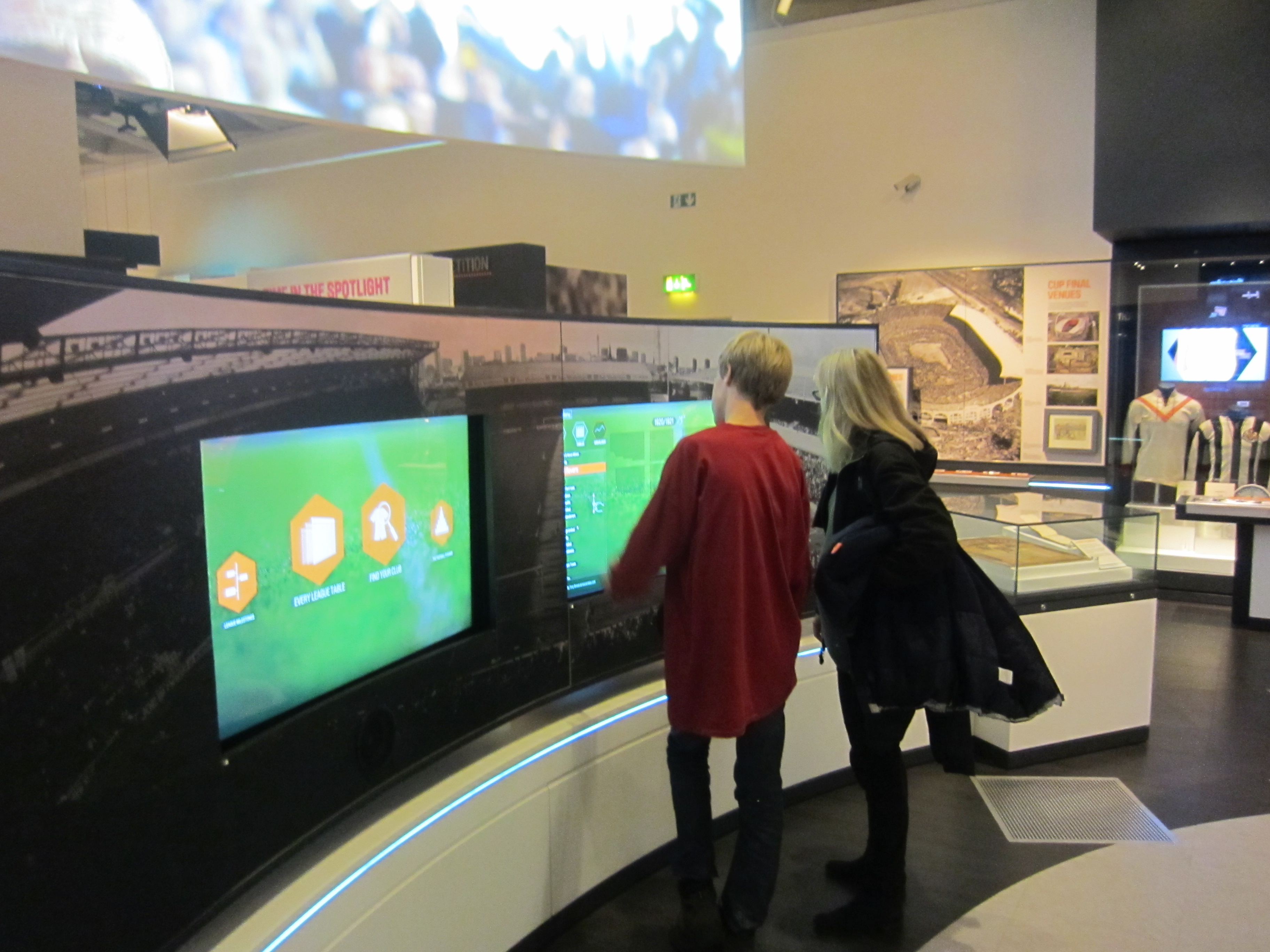
For my daughter, the interactivities were the milestones on her route around the museum. And a lot of effort (and money) has been put into them. Some are basically information stations, where you can find information about clubs, stadiums etc., others are a sort of knowledge game (for instance, linking names and crests or you are the referee), others pure entertainment. They are supplemented by the Football Plus activities. Here you can buy tickets to test your football skills by playing one-twos, passing, doing tricks, testing your reactions – or taking a penalty against a digital goalkeeper.

IMG_9317IMG_9262IMG_9199

The penalty shoot-out has a lot of appeal. You have to outwit the digital keeper and at the same time you want to demonstrate a powerful shot (the velocity is measured and displayed for everybody to see) – and to add a little spice, the goal is from the old Wembley stadium. Compared to this, the other activities (for which you have to pay) are rather flat, especially the “trick session”. You select, for instance, the Cruyff turn as your trick, you see it on a film – and then you are asked to do it yourself. You may do it rightly or wrongly – and after about a minute, your time is up. I must admit, I found it difficult to see the point in paying for that.
The same applies to some of the information desks. For instance, “Around the grounds” is an activity screen for those – like me – interested in football grounds. It is situated next to a text plate on stadium architect Archibald Leitch and his architectural style from the early 20th century – and a couple of relics from these grounds like a seat from Roker Park and an old floodlight bulb from Bradford Park Avenue.
I would have expected to find information about the transformation of Leitch’s football grounds to the modern stadium in the digital information desk, but all I got was a digital model of Old Trafford’s current appearance, information on founding year (1910), current capacity, record attendance – and a photo of the view from the stands. It felt rather flat and disappointing.

In this case, it seems to me that the NFM has been more concerned with making something digital to activate the visitors than focusing on the experience of the visitor – what are you supposed to get out of it? This is, of course, something that happens quite often in museums, and the NFM in general is certainly making better use of these interactivities than most of them. But I do get the suspicion that the designers have recommended a certain amount of interactive stations around the galleries to make them come alive, and that this may explain why some of them seem a bit pointless. If the strategy, indeed, is to have some sort of activity at any theme around the exhibitions, I think the NFM should have done more to engage the audience and invite them to share their experiences. Why not have an interactive ‘station’ by the football grounds, inviting people to share their stories of their first visit to a football ground? Or their memories of now demolished grounds?
To me, the strength of the NFM is its ability to use objects as memorabilia – to evoke good and bad memories for the passionate fan. Memorabilia in this connection are not just souvenirs made for fans. It is tickets, programmes, players’ shirts from matches and moments you remember. These things activate your memories – and make you want to share them with somebody. To accommodate visitors to share their memories would add another layer to the objects and probably open them to even more visitors.
Perhaps this could be an area for the museum to look into, when they evaluate the exhibitions and assess how to develop them. Having said that, there is no denying that the interactivities in general were the highlight for my daughter – and the penalty shoot-out the highlight for my son. In the overall design, they are probably intended primarily for visitors with little or no memories or experiences to share – and make sure that they also have a good time at the museum. But even if the NFM decides not to cut down on the present interactivities, I would recommend that they were supplemented with some story/memory-sharing layers around the exhibitions.

IMG_9201IMG_9192

The objects
To stay with the section on football grounds for a minute, it contained some of the most memorable objects. A turnstyle and a crush barrier. And as mentioned an old, wooden seat from Roker Park. And an invitation for the only wedding ceremony to be performed at Highbury. Some of the other objects in the section are less obvious to link with the theme. Three matchday programmes; one of them from the first match at Old Trafford, another from the last match at the old Wembley. Of course, it is not difficult to see how the curators have linked these objects to the history of famous grounds – and therefore found them appropriate for this section. However, given the use of programmes in their own right in previous sections on fandom, they somehow become a bit distracting here. The same goes for Ian Rush’s shirt from a testimonial match at Anfield. The apparent link to the subject of the section being a quote from a Liverpool supporter, who complains that seating has taken the atmosphere out of football – and longs for the standing Kop. Again – given the number of shirts on display around the museum, this one is more of a distraction from the objects related to football grounds than enhancing the focus on the subject.

IMG_9202

You could argue that the NFM in this case actually do use objects as illustrations to the text. We need to put a bit of Anfield, Old Trafford and Wembley into the showcase. What have we got? A shirt and two programmes? Which goes to show that even if you do decide to give objects priority to “grand history”, you still may have some storylines that define your choices and actually take some of the power out of the objects.

IMG_9230
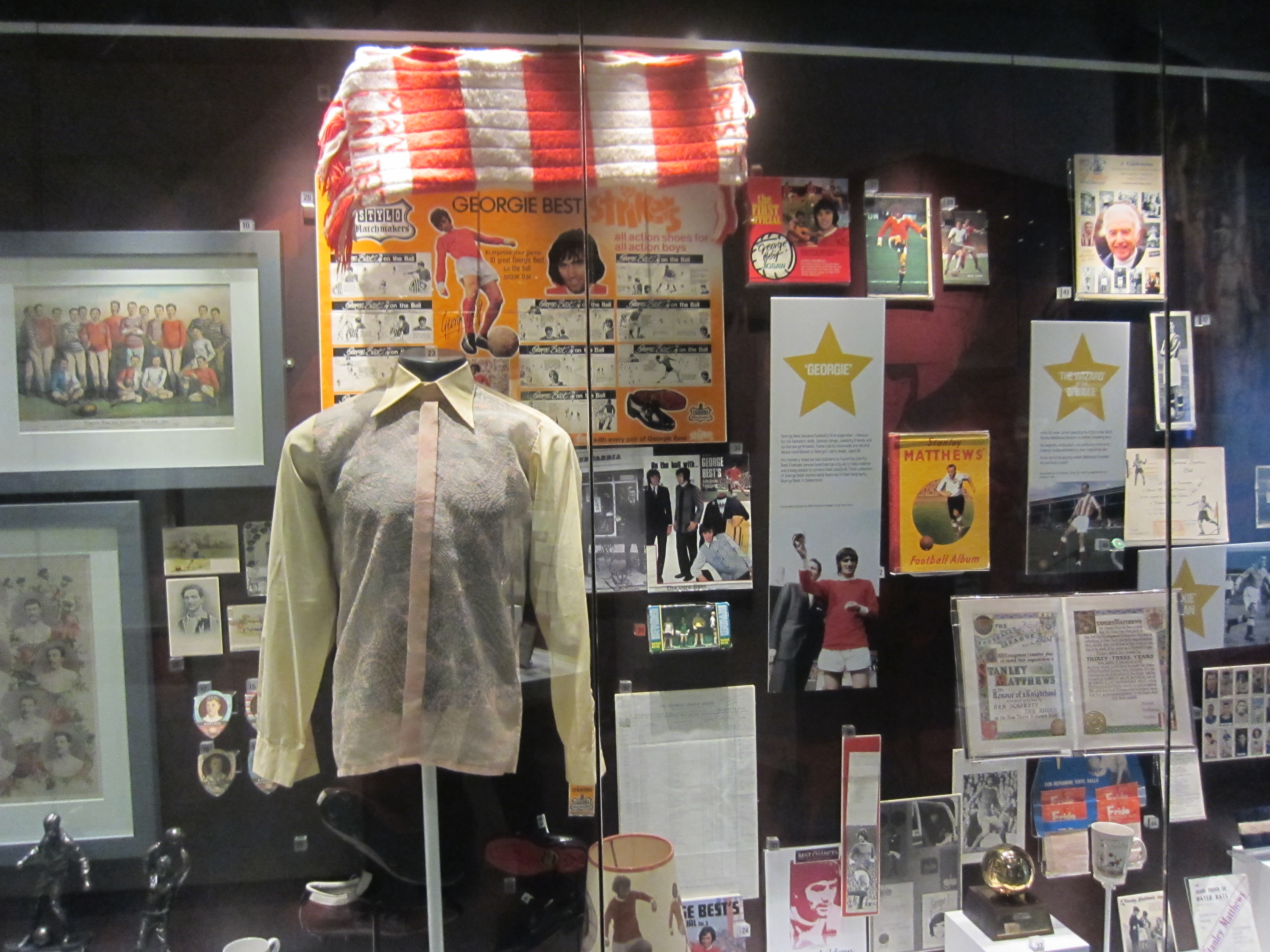
Having said that, there are several displays that are highly successful. I particularly enjoyed the “Got! Not got!”, “A pie and a pint” and “Passport to heaven” with a rich range of programmes, collectors cards, tickets, posters, bottles, memorabilia etc. Which, in fact, are not dissimilar to the display on “players”, where you can find all sorts of George Best memorabilia. Once again, you could argue that the NFM is using the same sort of objects to “illustrate” different stories. But that would be rather academic, because both displays work well. They may, however, not draw the attention of the same visitors. My son, for instance, was drawn to the George Best memorabilia because of the “stardust” of George Best, whereas the director of Liverpool Museums David Fleming in his review of the museum in the Museums Journal is rather annoyed by the many Manchester United–related objects; and probably has preferred the “anonymous” memorabilia displays that my son skipped.
This leads me on to one of the main challenges for the NFM – and indeed any football museum. Football is tribal. Our visit to the museum wouldn’t have been quite as successful if it hadn’t been for the many displayed Manchester United objects. Apart from the penalty shootout, my son highlighted the George Best stuff and the Eric Cantona painting; the information on Manchester United and old United shirts. Even my daughter liked the Cantona painting and some of the other things she “recognized”. I wonder how many objects you would have found, if you were, say, a Stoke City supporter? And how that would have reflected on the overall impression?
That leads to the final point – the location and the building. To me, it seems natural to place the museum in Manchester. Manchester is – at least at the moment – the capital of English football, with United and City dominating the premiership (and a year or so ago, I read an article on Greater Manchester having the highest number of clubs/fans in the UK). This, however, does not go down well with people from, say, Liverpool, as you can see from David Fleming’s review.
The location in Manchester adds to the buzz around the museum. When Ajax played City in the Champions league, their players visited the museum prior to the match; stars from both Manchester clubs turn up occasionally, and apparently former stars do guided tours in the museum – we saw Paul Power of Manchester City guiding a group of kids. It adds to Manchester as a central destination for footballing tourism.

IMG_9078

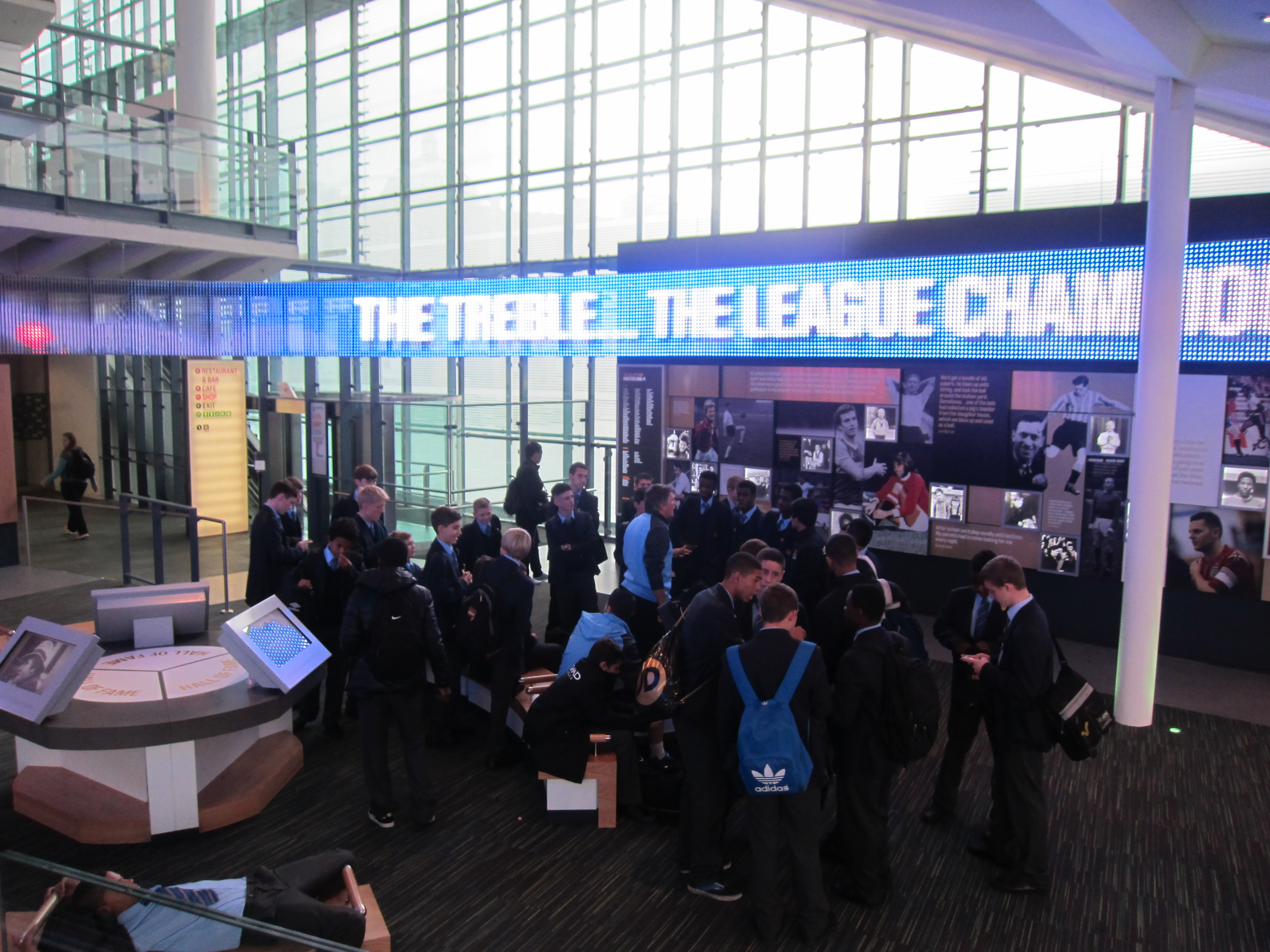
The Urbis building may not be ideal for a museum – but I think the NFM has made the most of it, by providing a distinct experience. The entrance through a tunnel (with great photos of footballing fans through the ages) and past a turnstyle leading to the hall of fame works really well. And the museum is boosted by a great shop and a friendly staff. And a good restaurant and bar at the top of the building with a view over Manchester City Centre.

Favourite object:
With the Stuart Clark photos forming a temporary exhibition, I have to go for something else. Being a football fan, it is difficult not to be biased, but I will try and put the George Best memorabilia aside and instead go for the 1890’s women’s football kit that was “shockingly revealing” – just ahead of the radio, where you can tune into “sports report”. The latter evokes memories of all the Saturday afternoons spent by the radio during my youth; but the former is visually striking – and has spurred me on to read about womens’ football up to and under WW1.

IMG_9250IMG_9194

Character:
So – if the NFM was a footballer, which character would it be? I would probably go for Matthew Le Tissier. A thrilling Saturday afternoon! So much talent, so much skill, so many spectacular moments – not weighed down by defensive responsibilities (such as putting everything in a historical perspective). A source of inspiration that can turn an ordinary team into an exciting spectacle. A brilliant player not in your team that you always looked forward to seeing. A loyal one-club man, sticking to his principles; but in doing that leaving a lot of people wondering what he could have achieved, if he had had a go at the very highest level with the big clubs. My son, however, a bit along the same lines, went for Eric Cantona. Perhaps if the NFM exposes itself through exchanges of opinion with the crowd/audience, I will go for that too. As it is, I will stick with Matt Le Tissier. Which is meant as a compliment – but as he is not in the Hall of Fame, the museum may disagree.

http://www.nationalfootballmuseum.com/

Tagged with: , , ,
Posted in Football museum, Football museums

Enter your email address to subscribe to this blog and receive notifications of new posts by email.
Join 4,517 other subscribers
Follow Football and material culture on WordPress.com