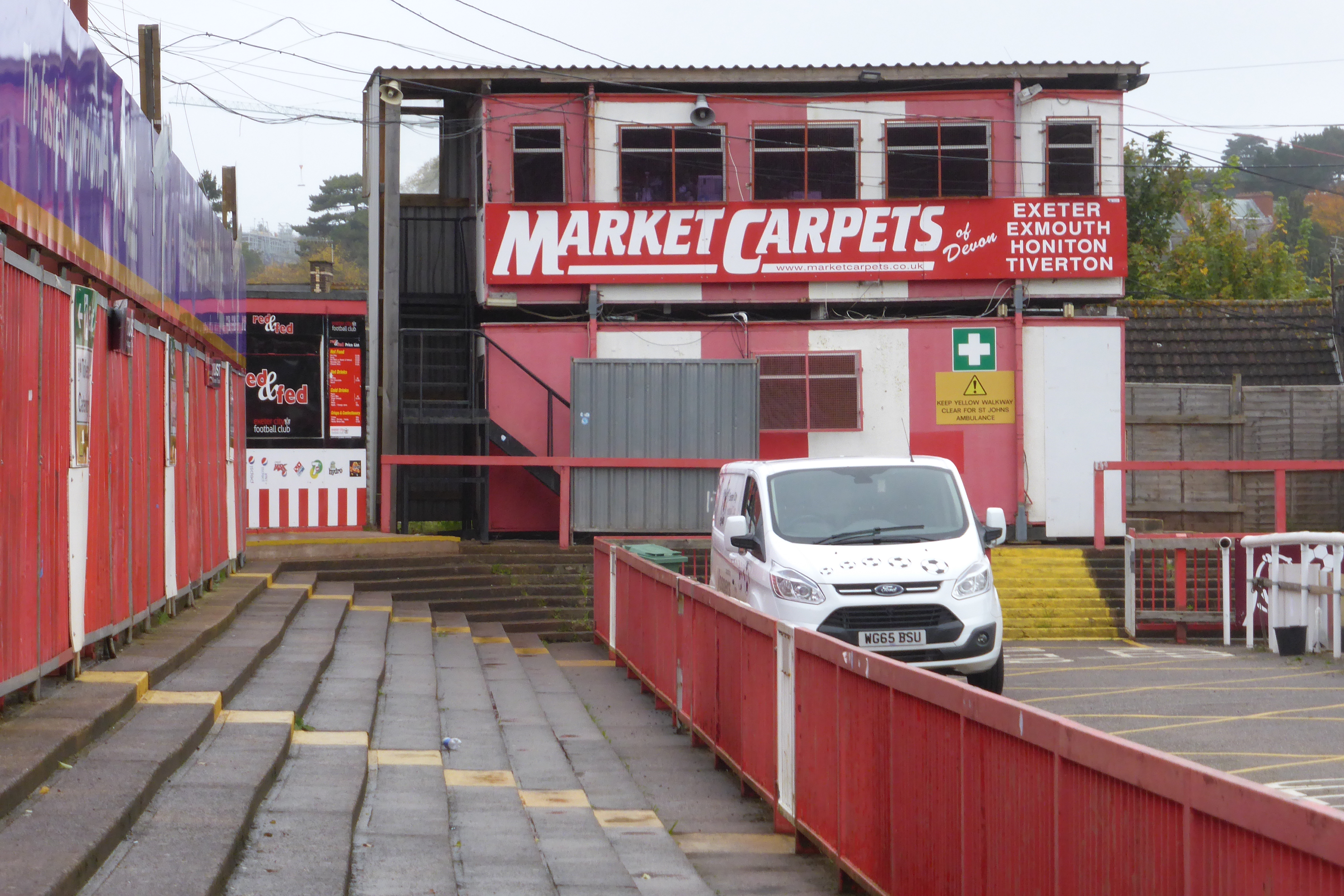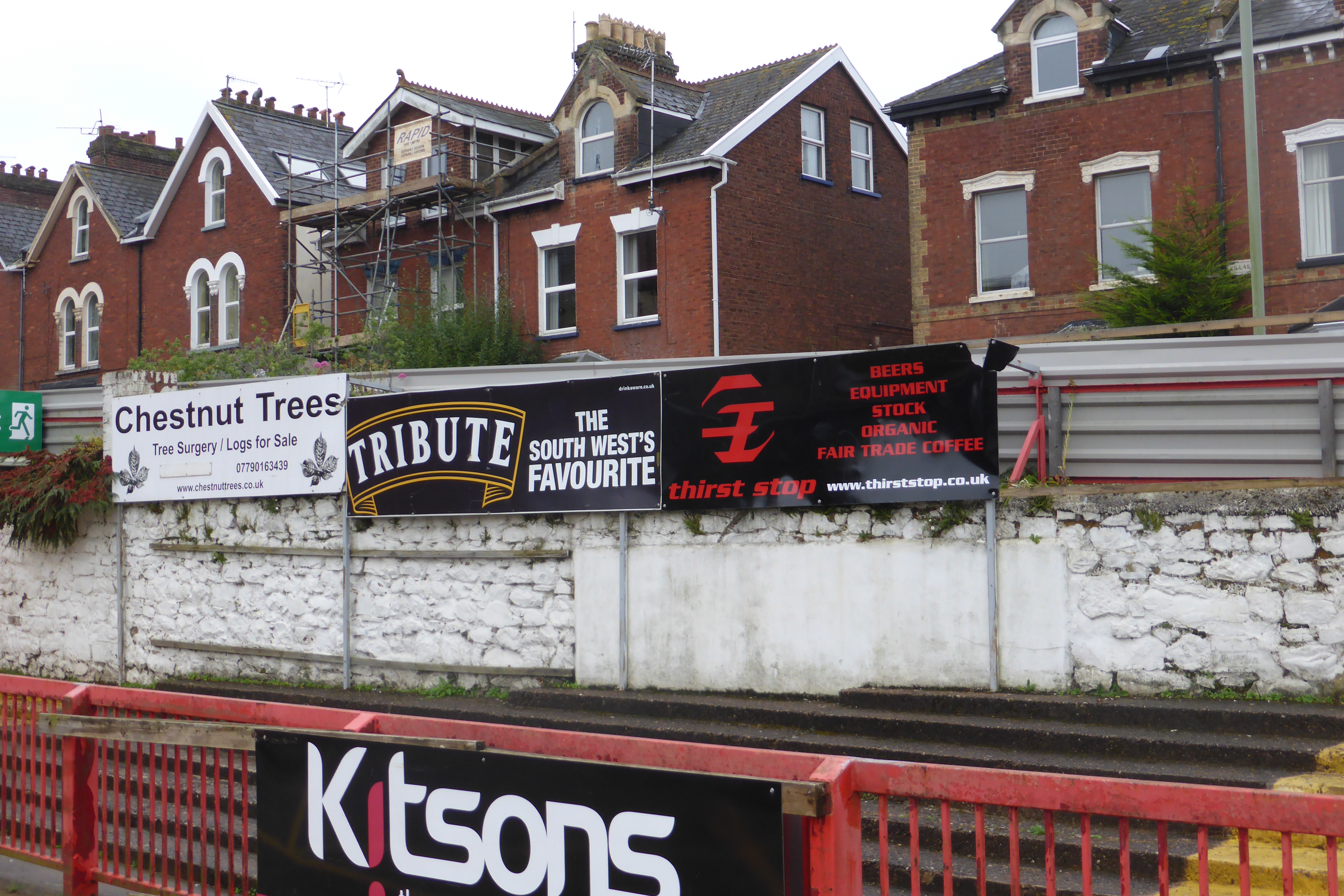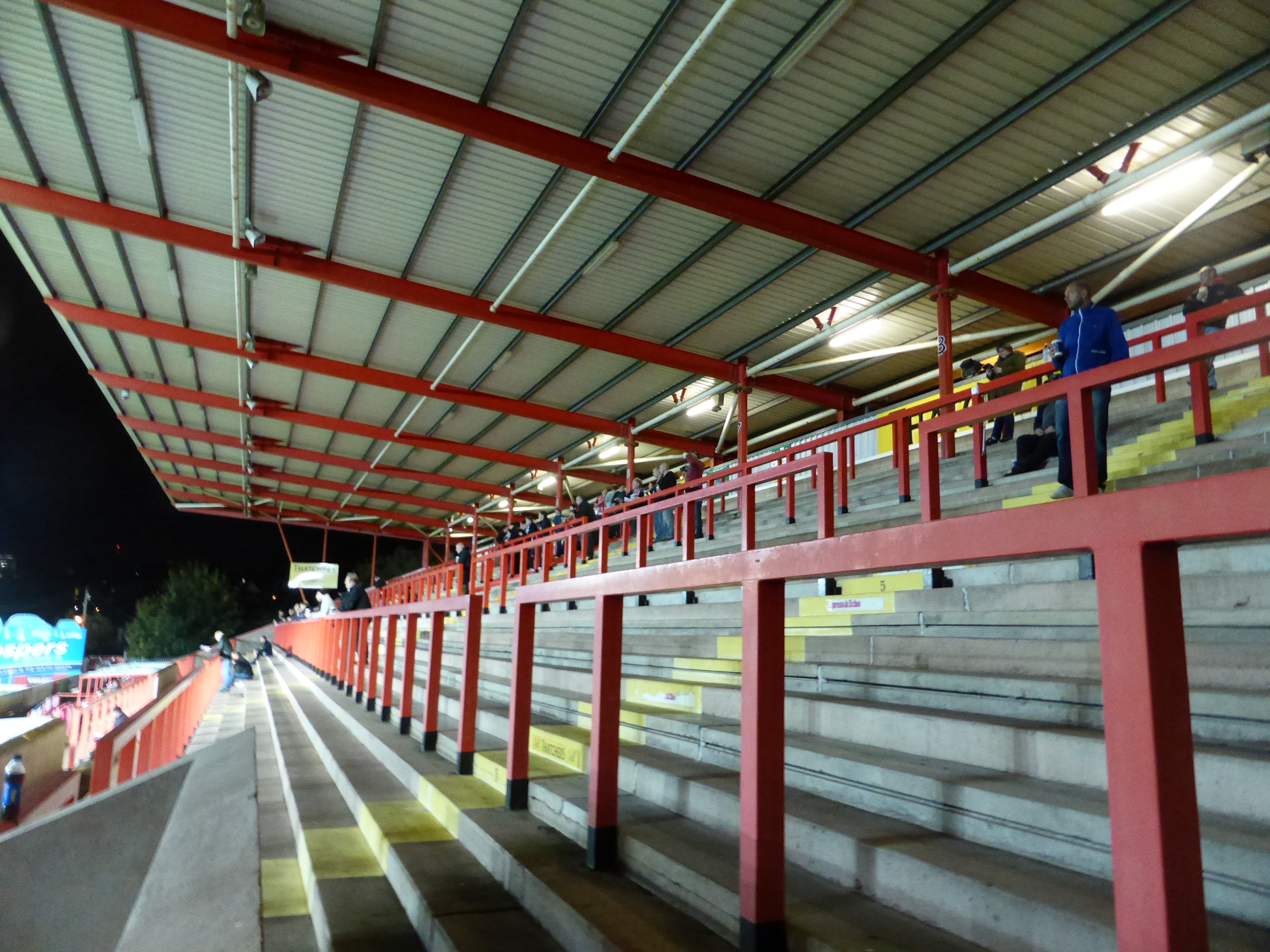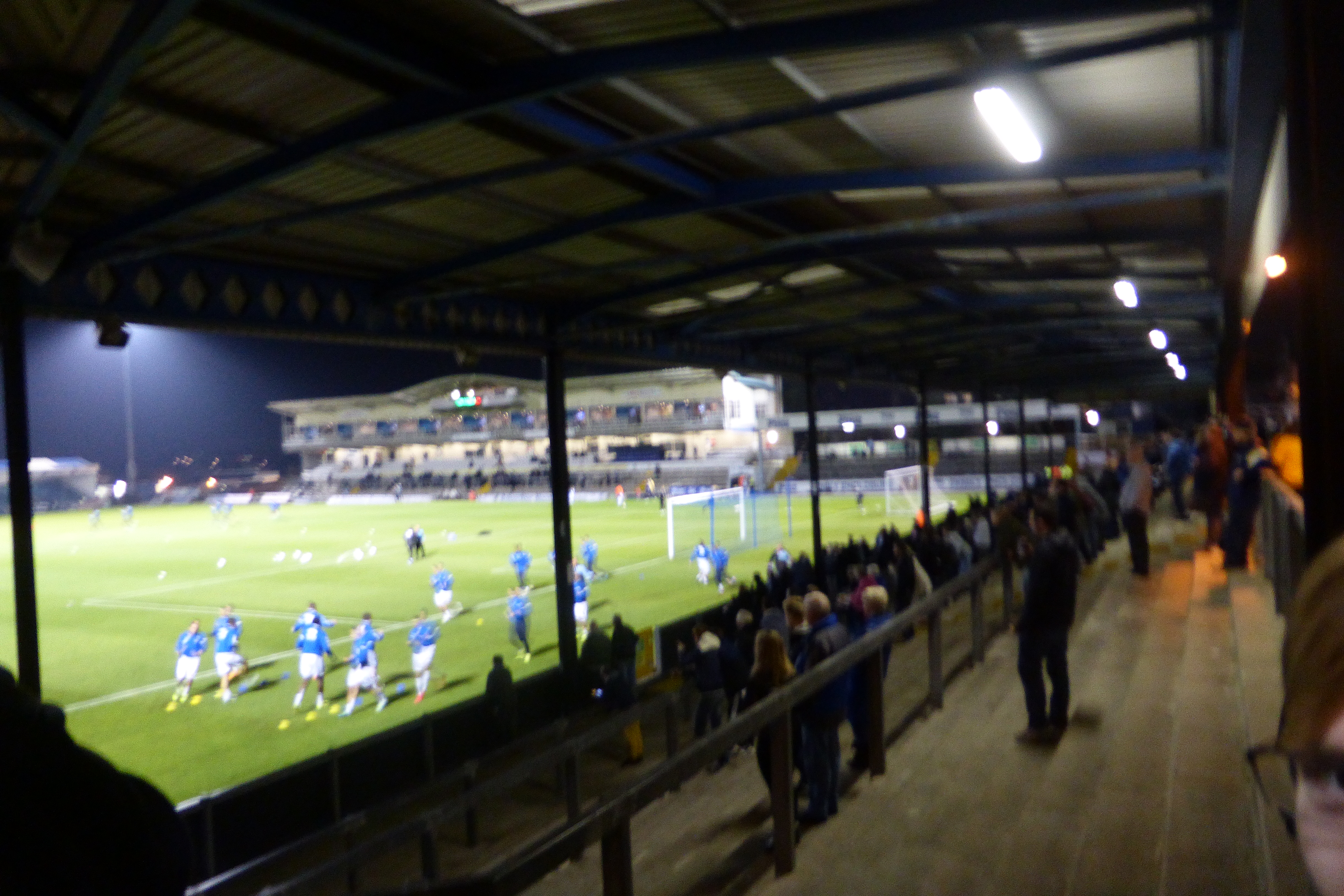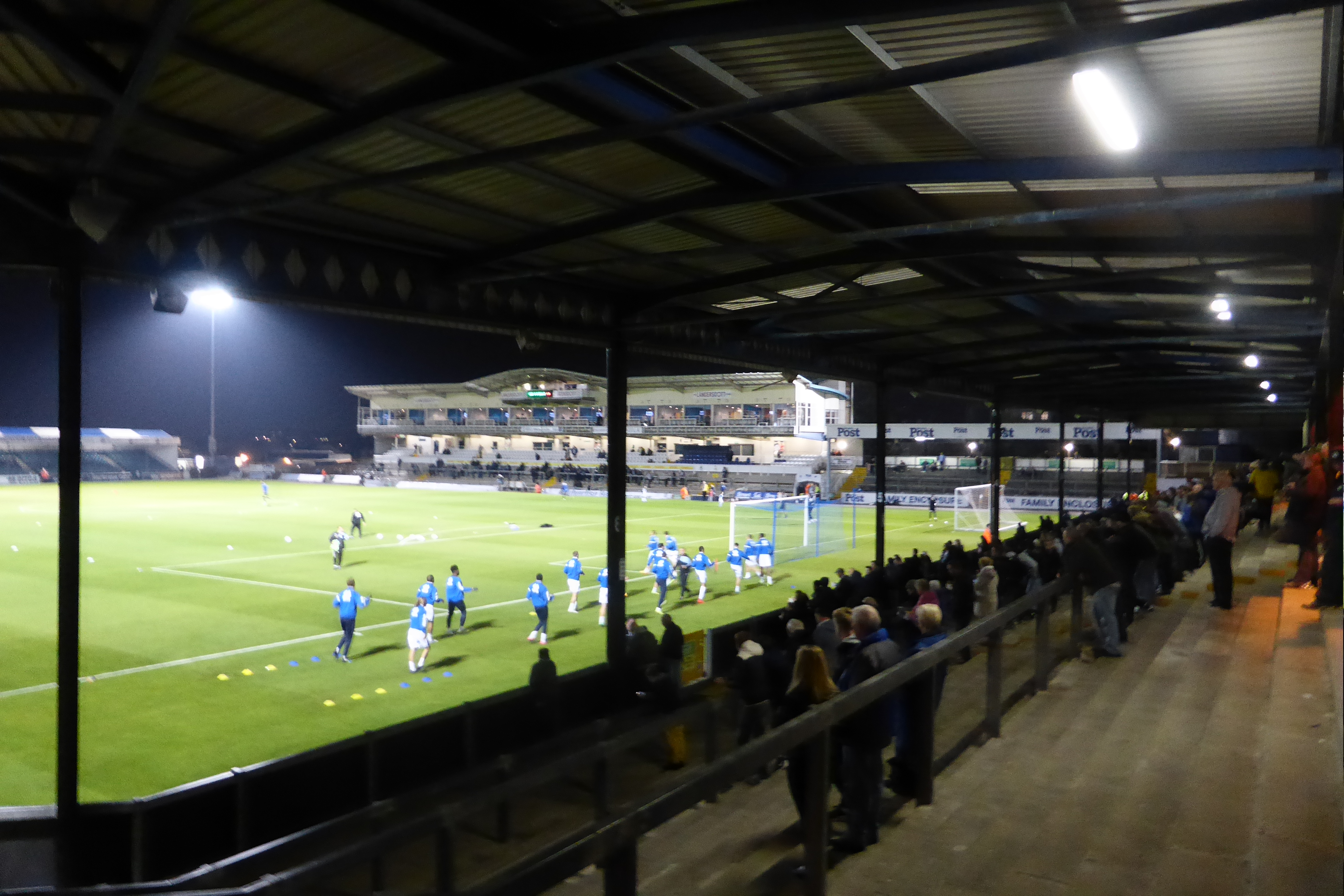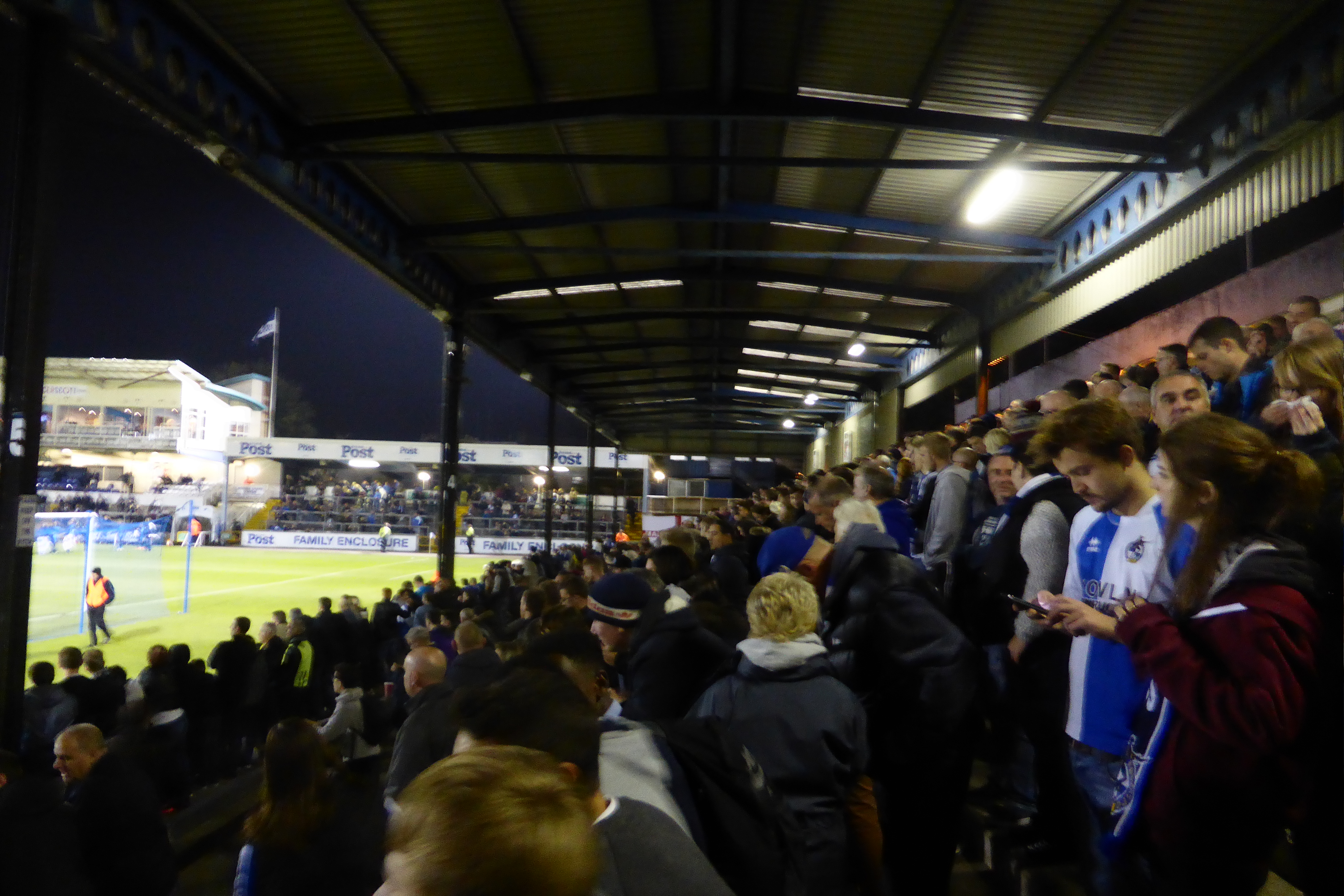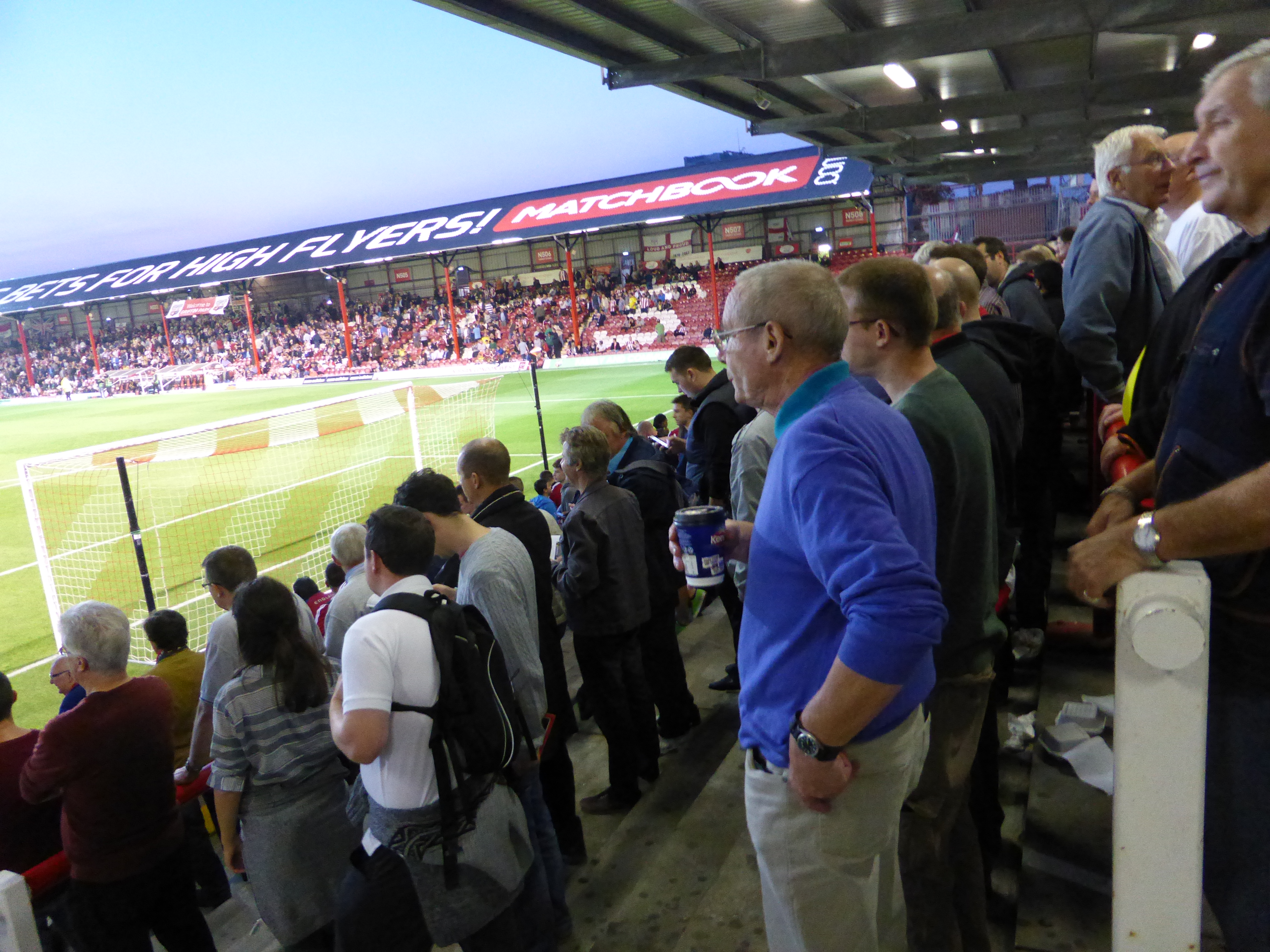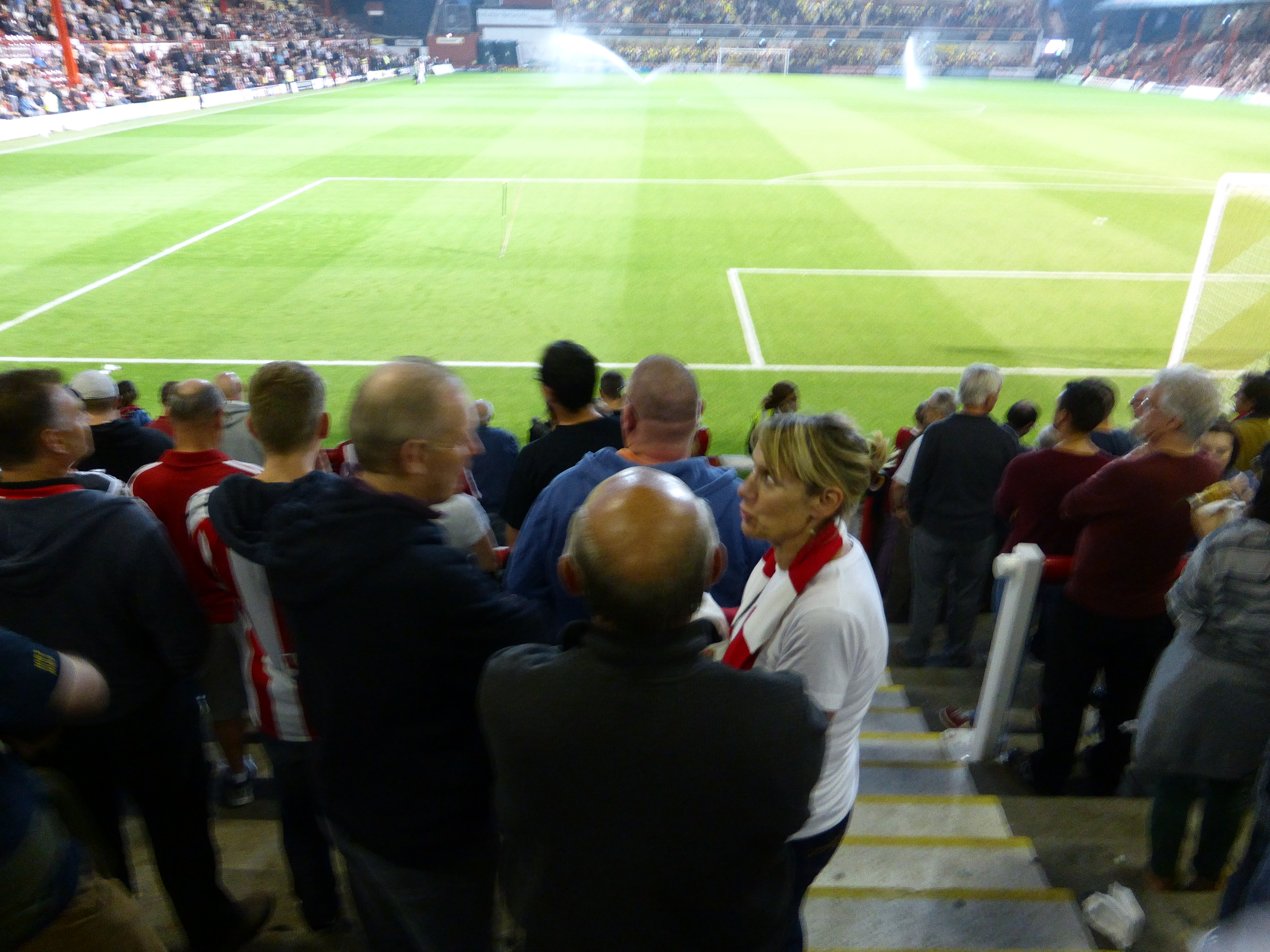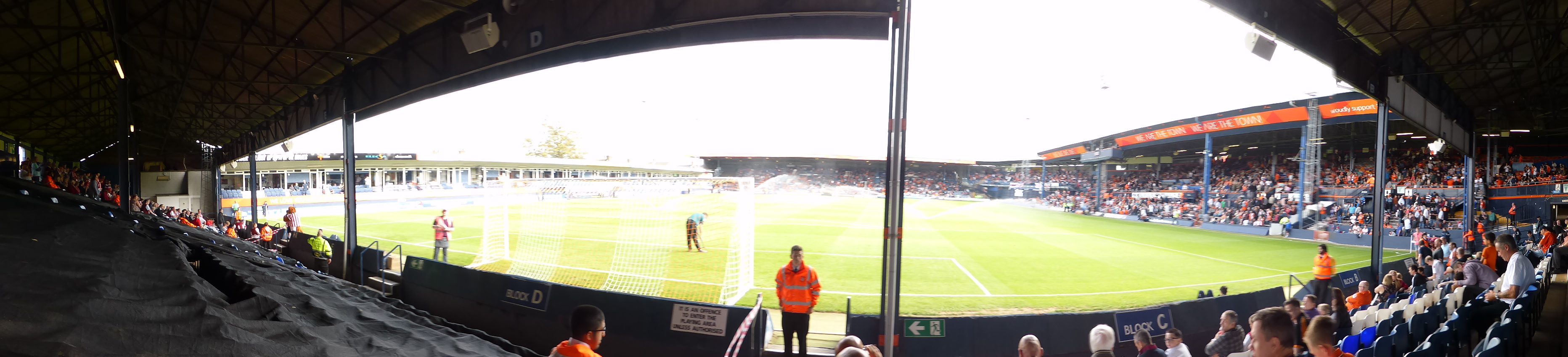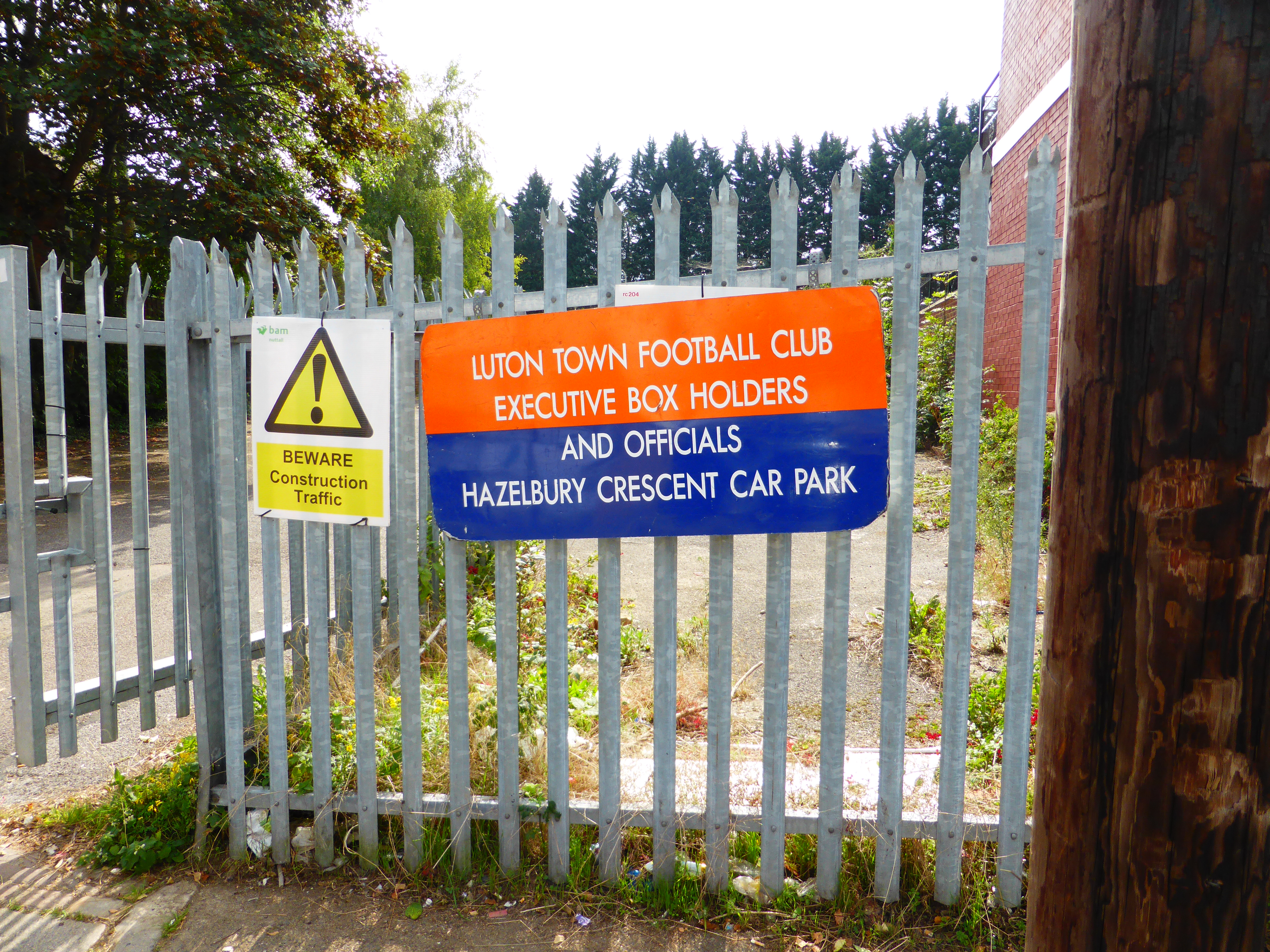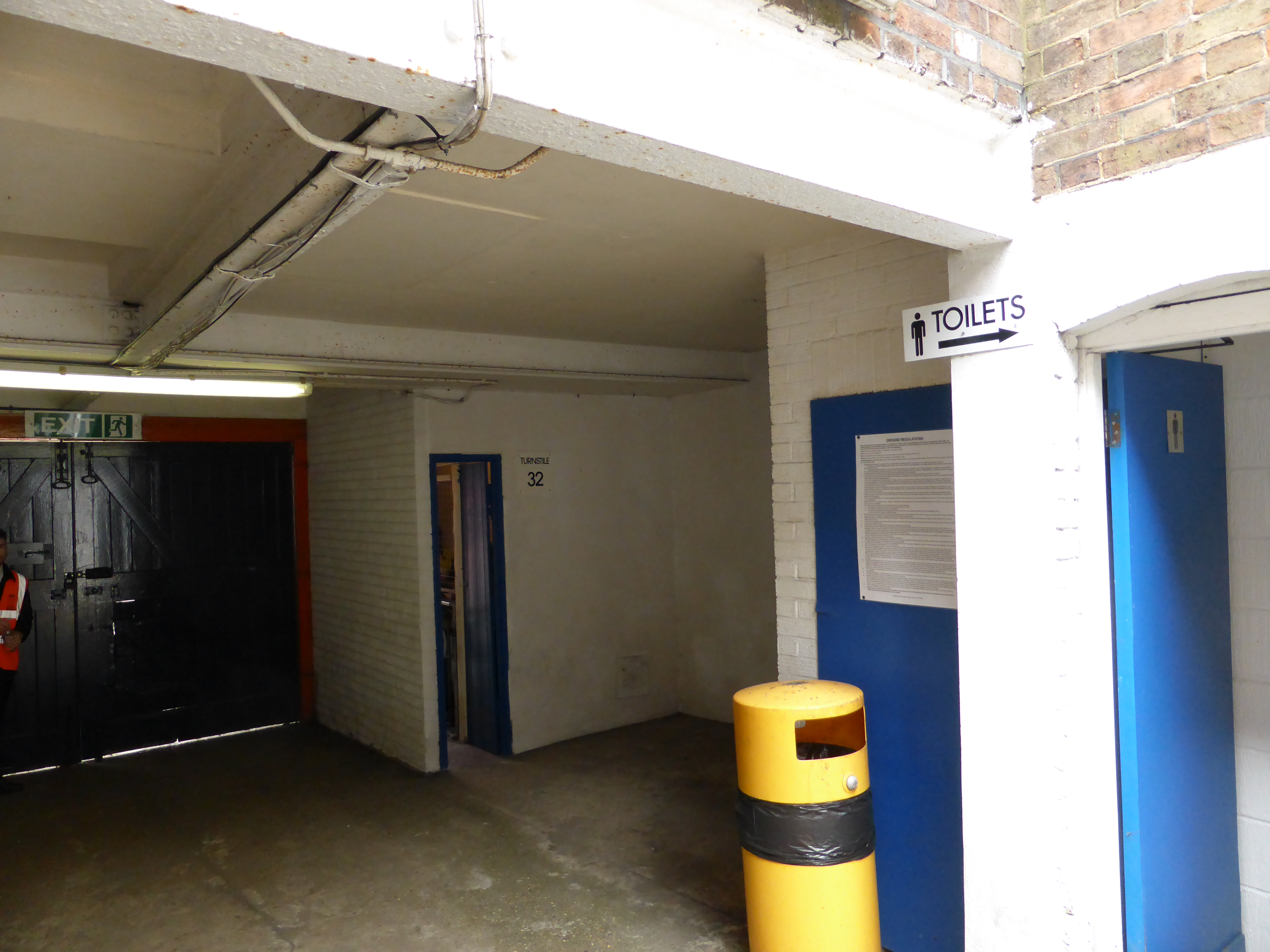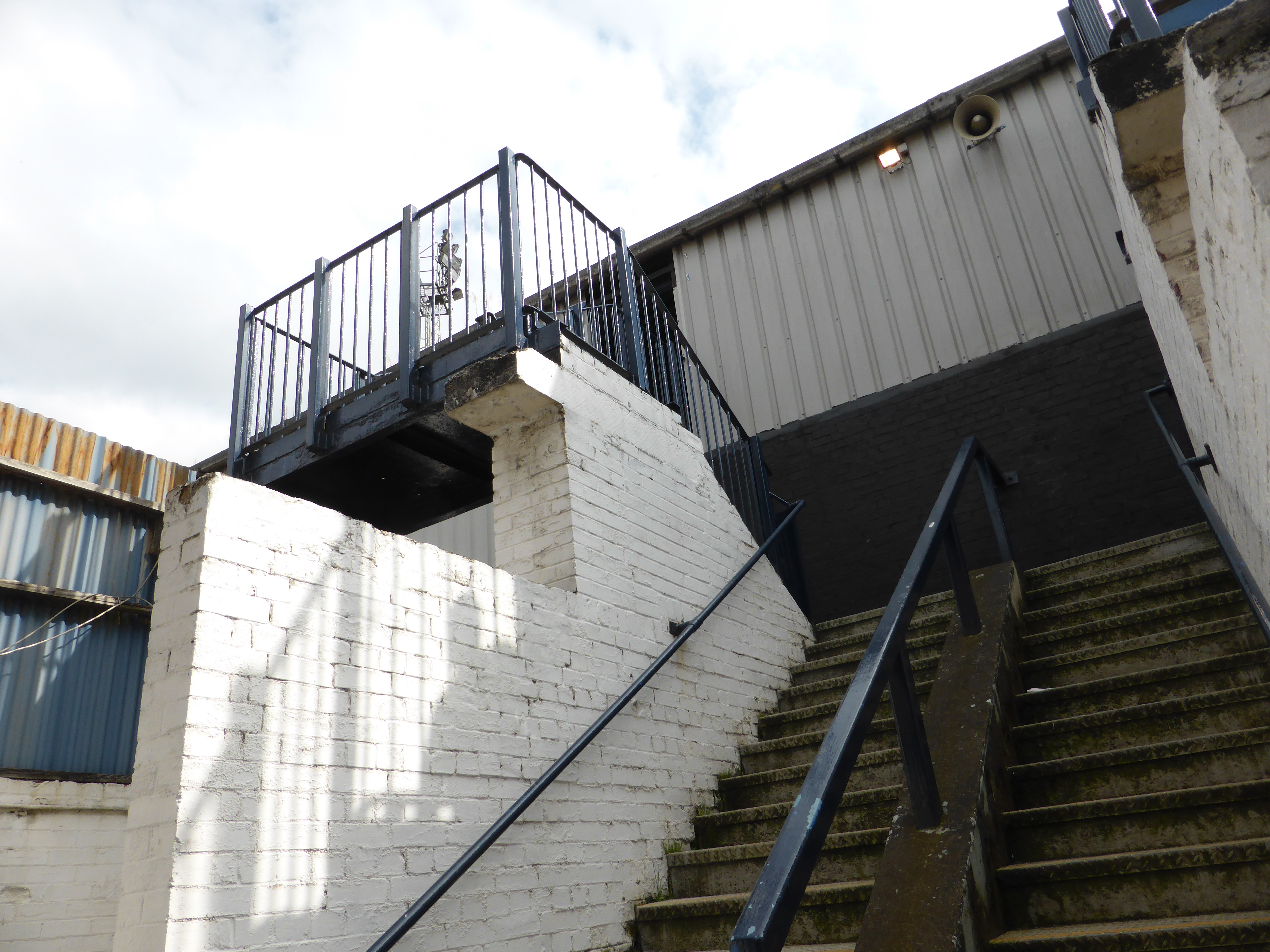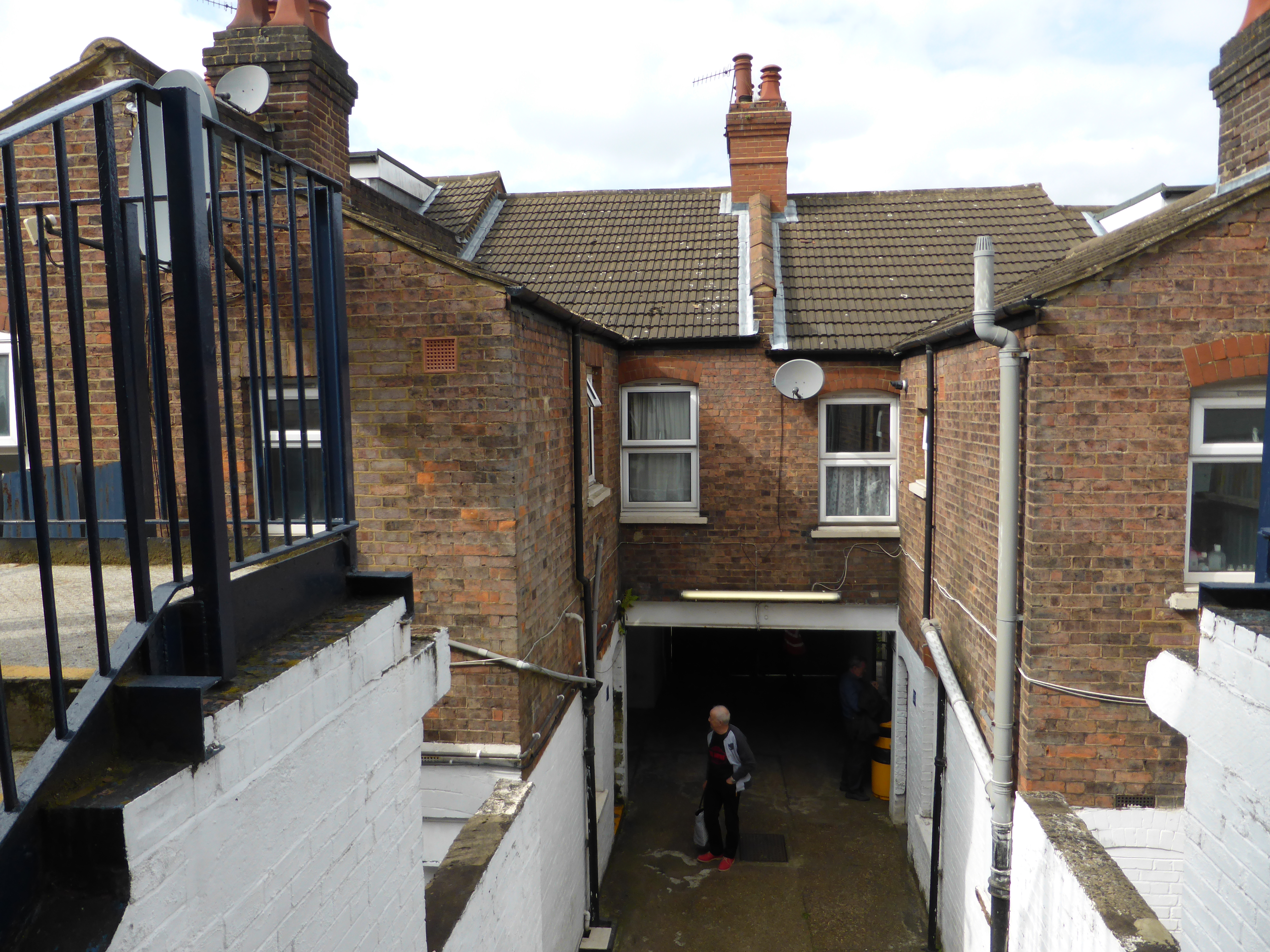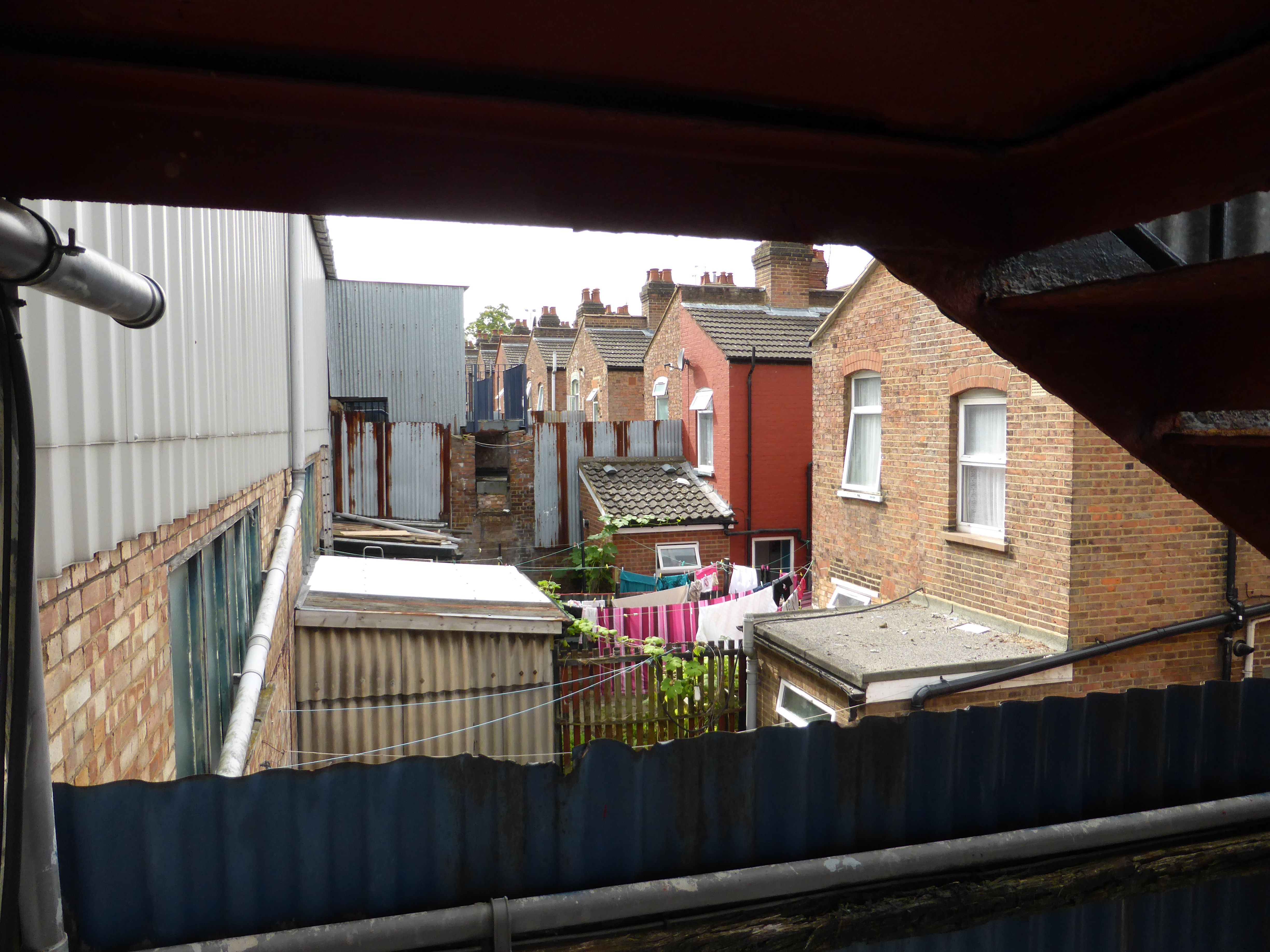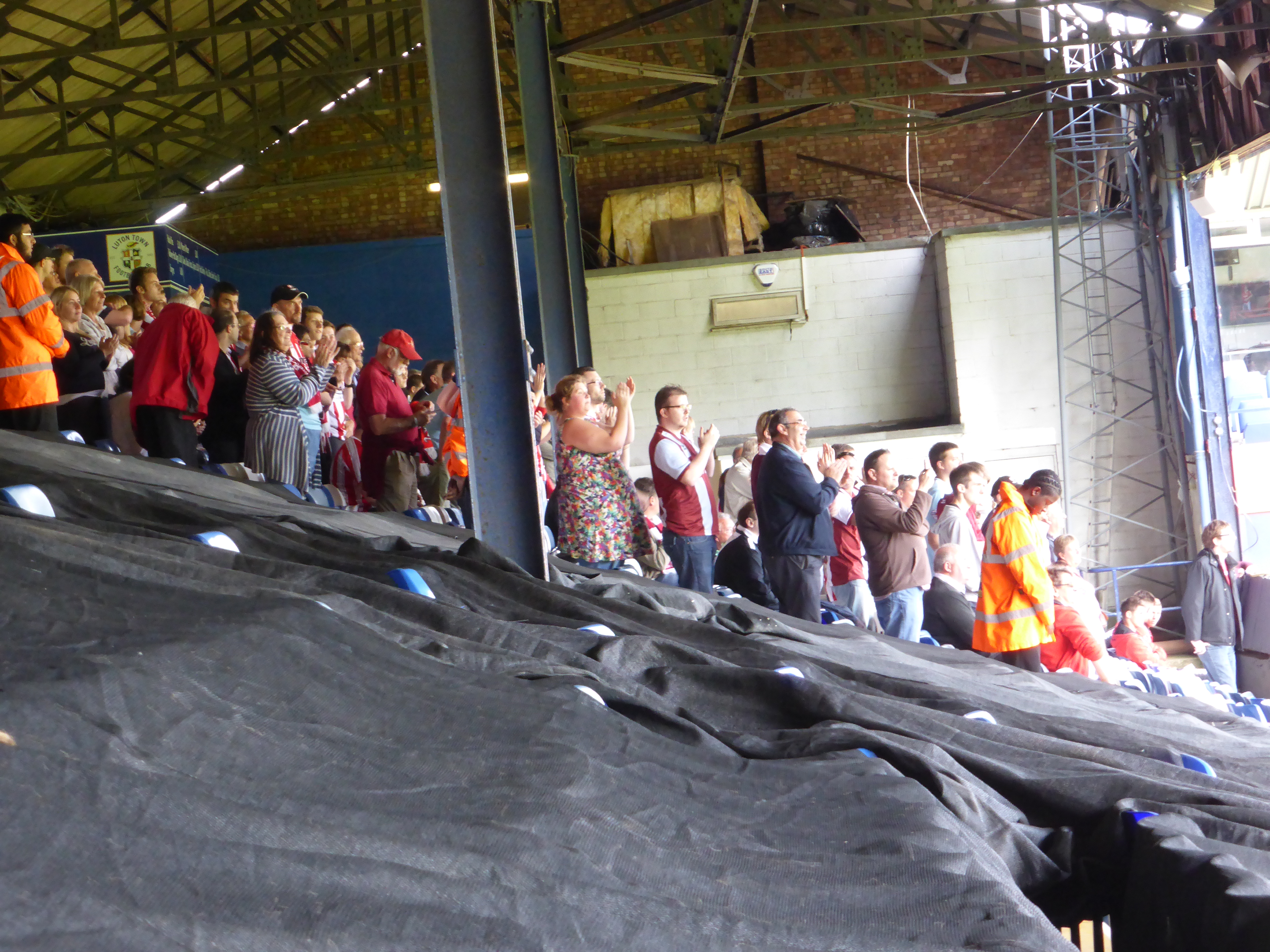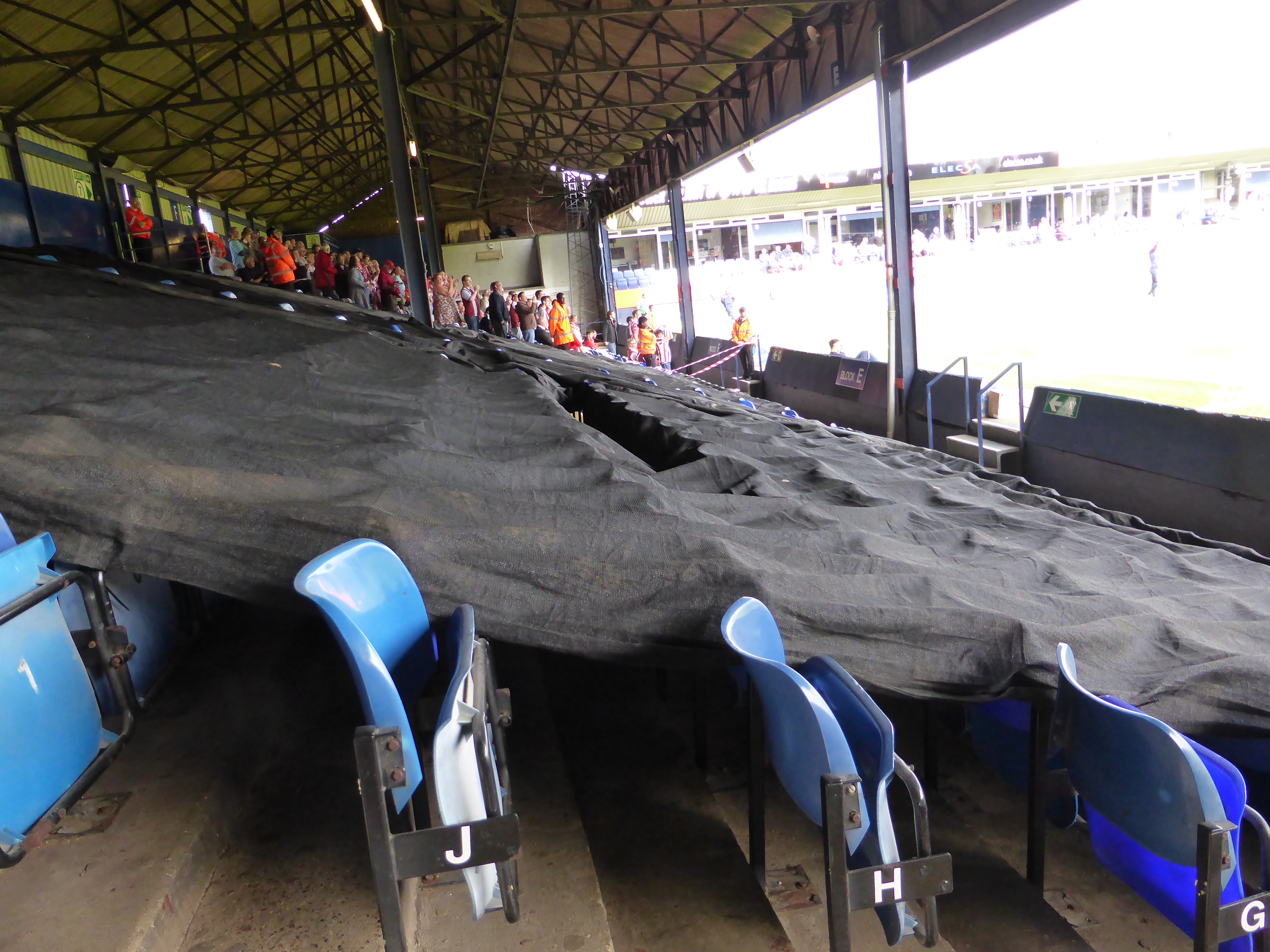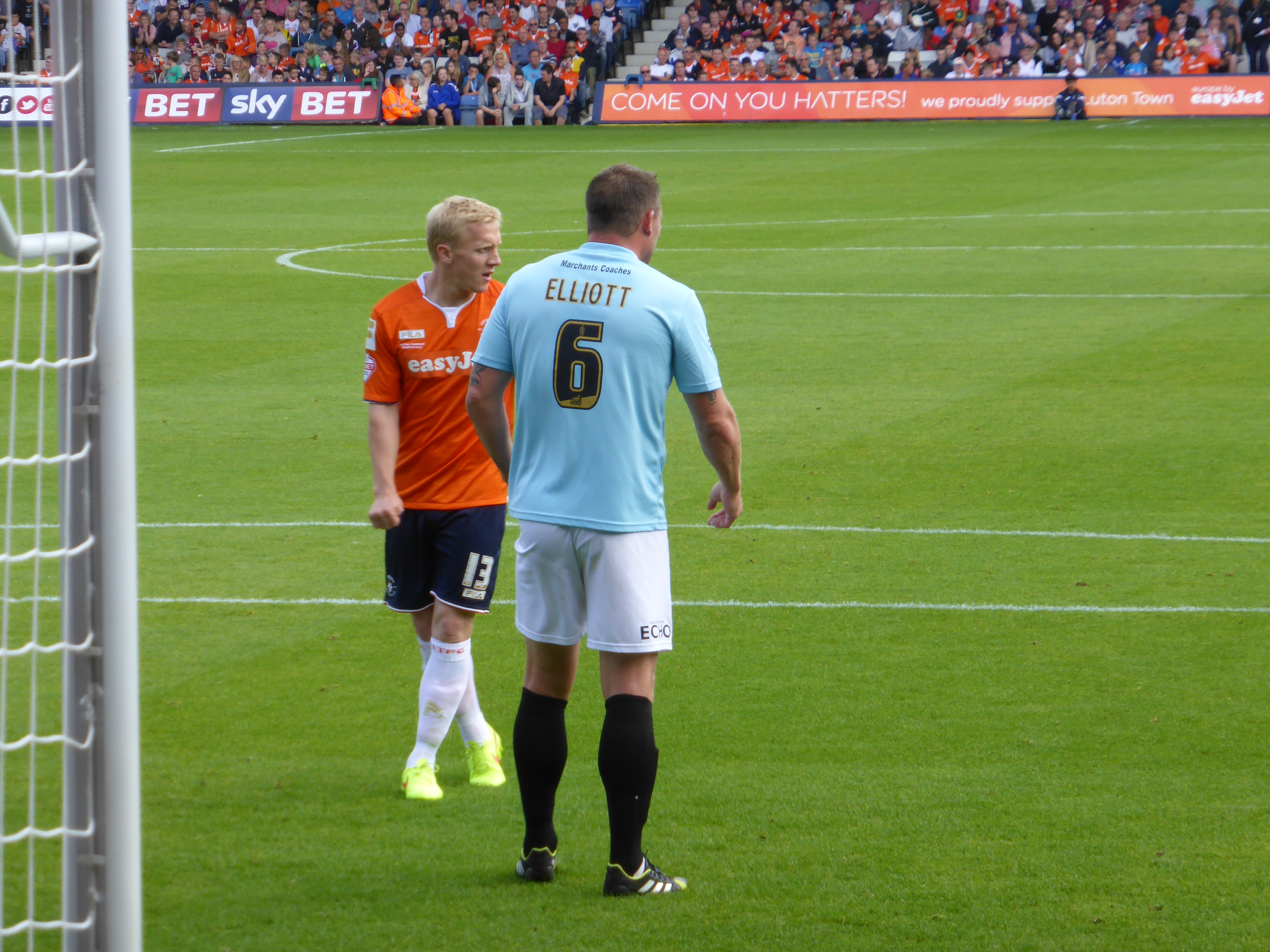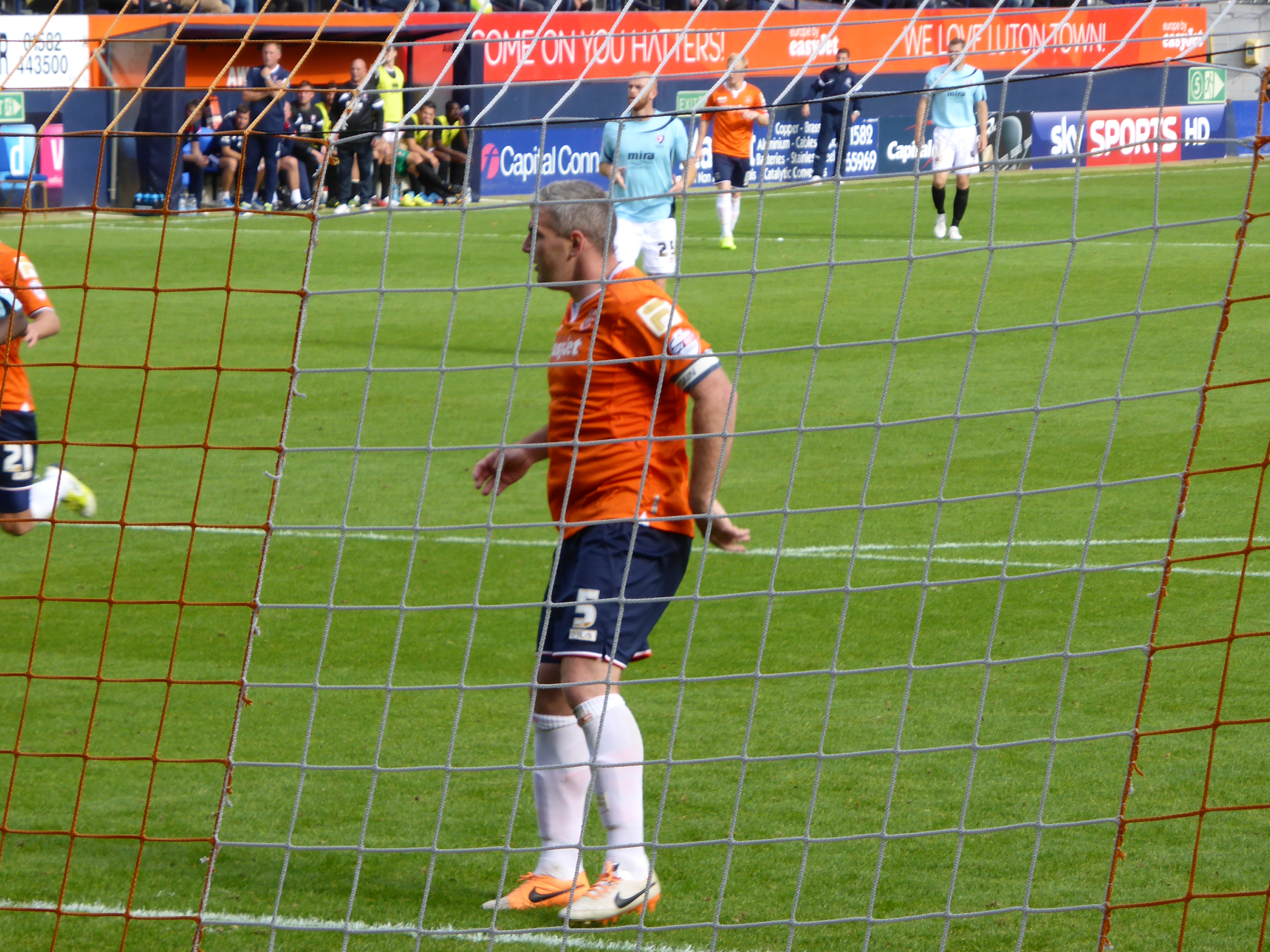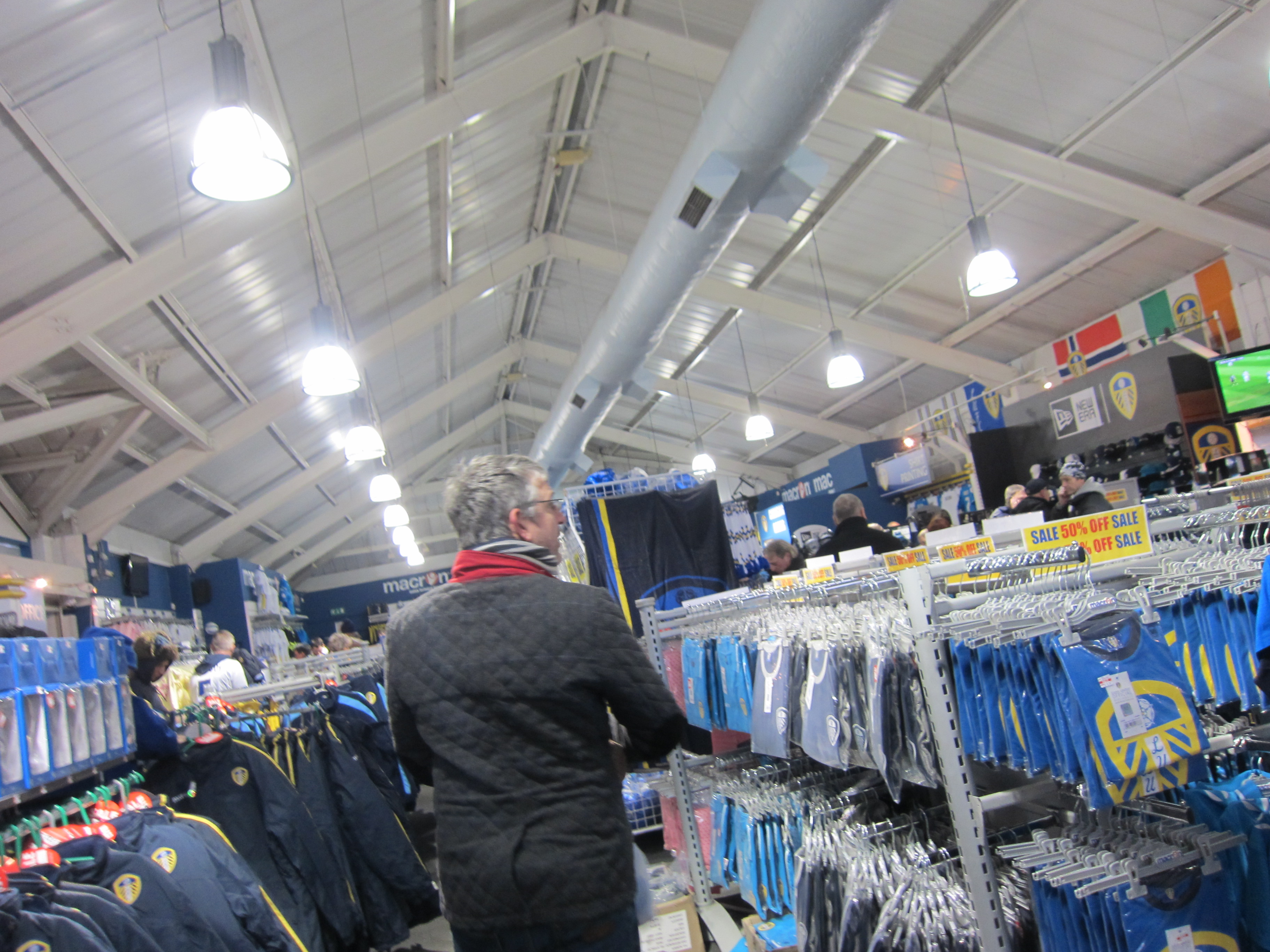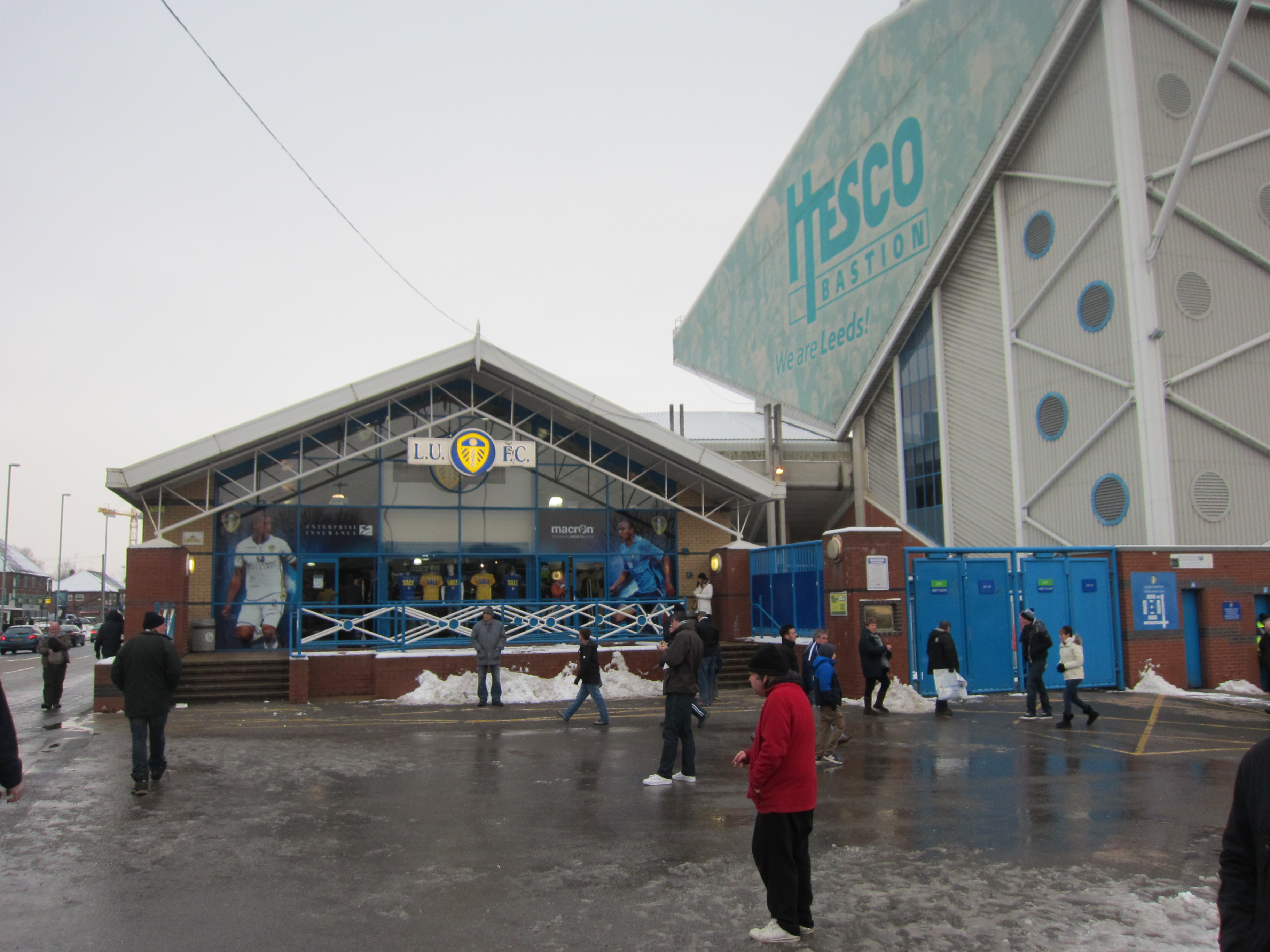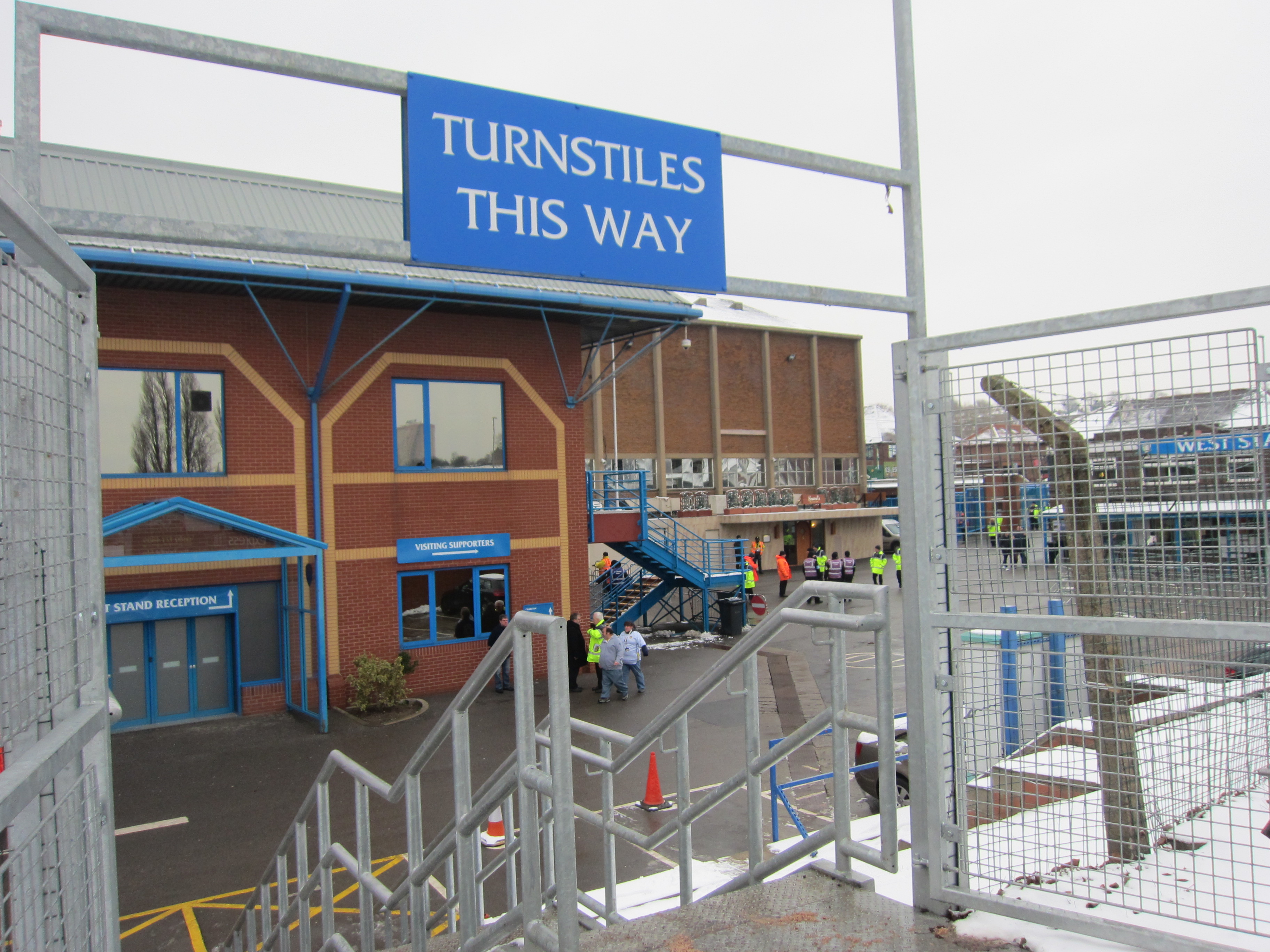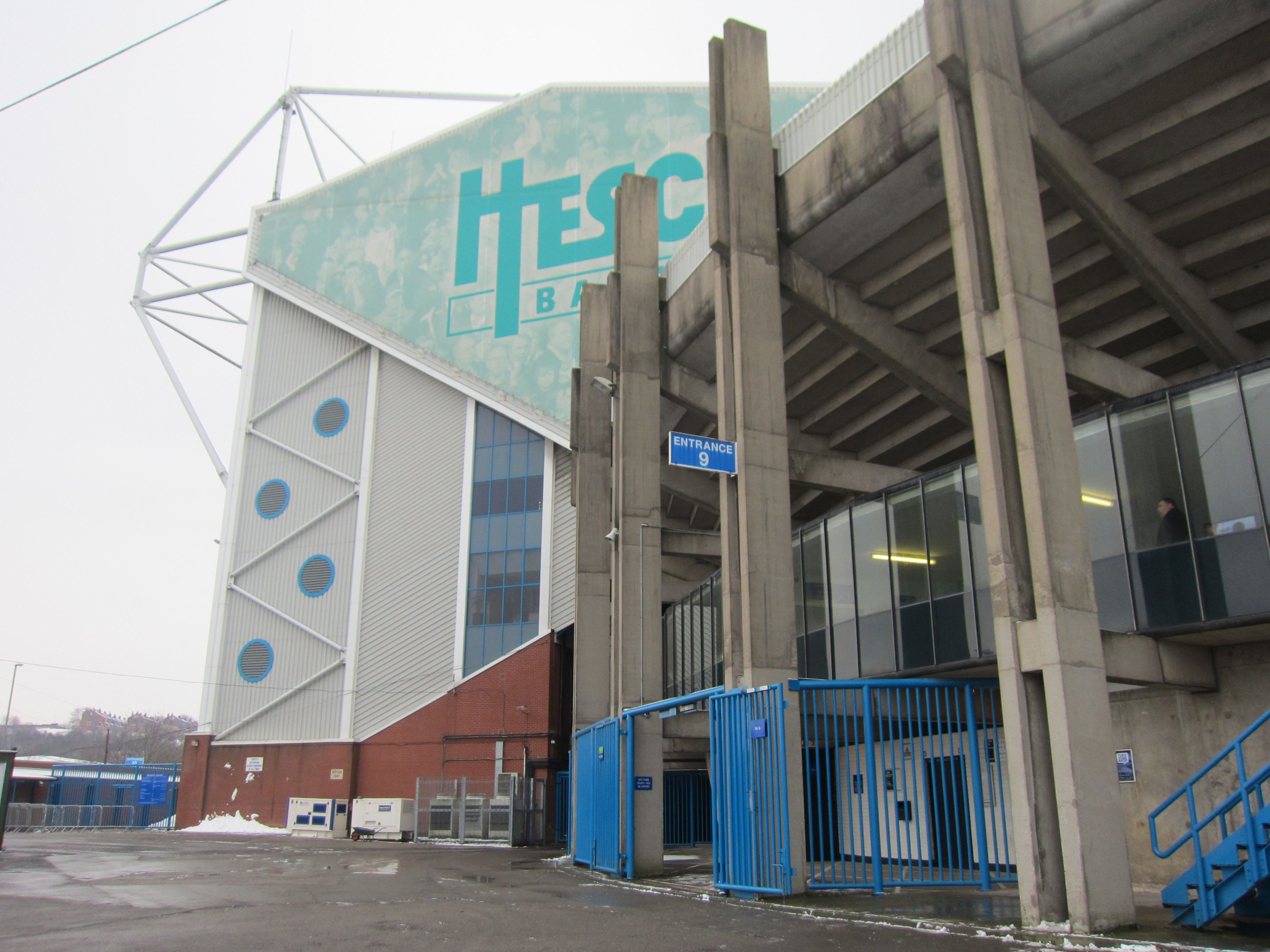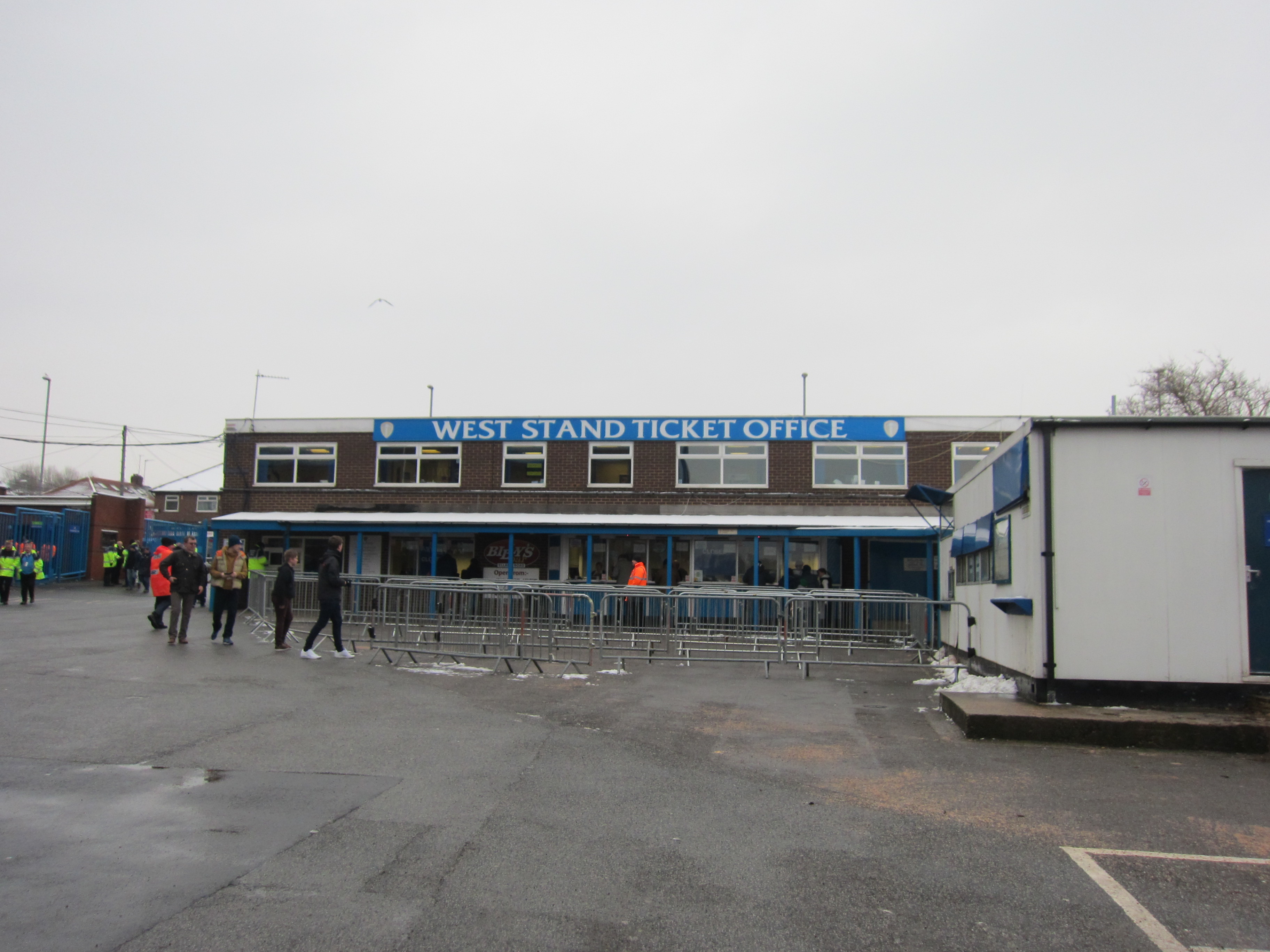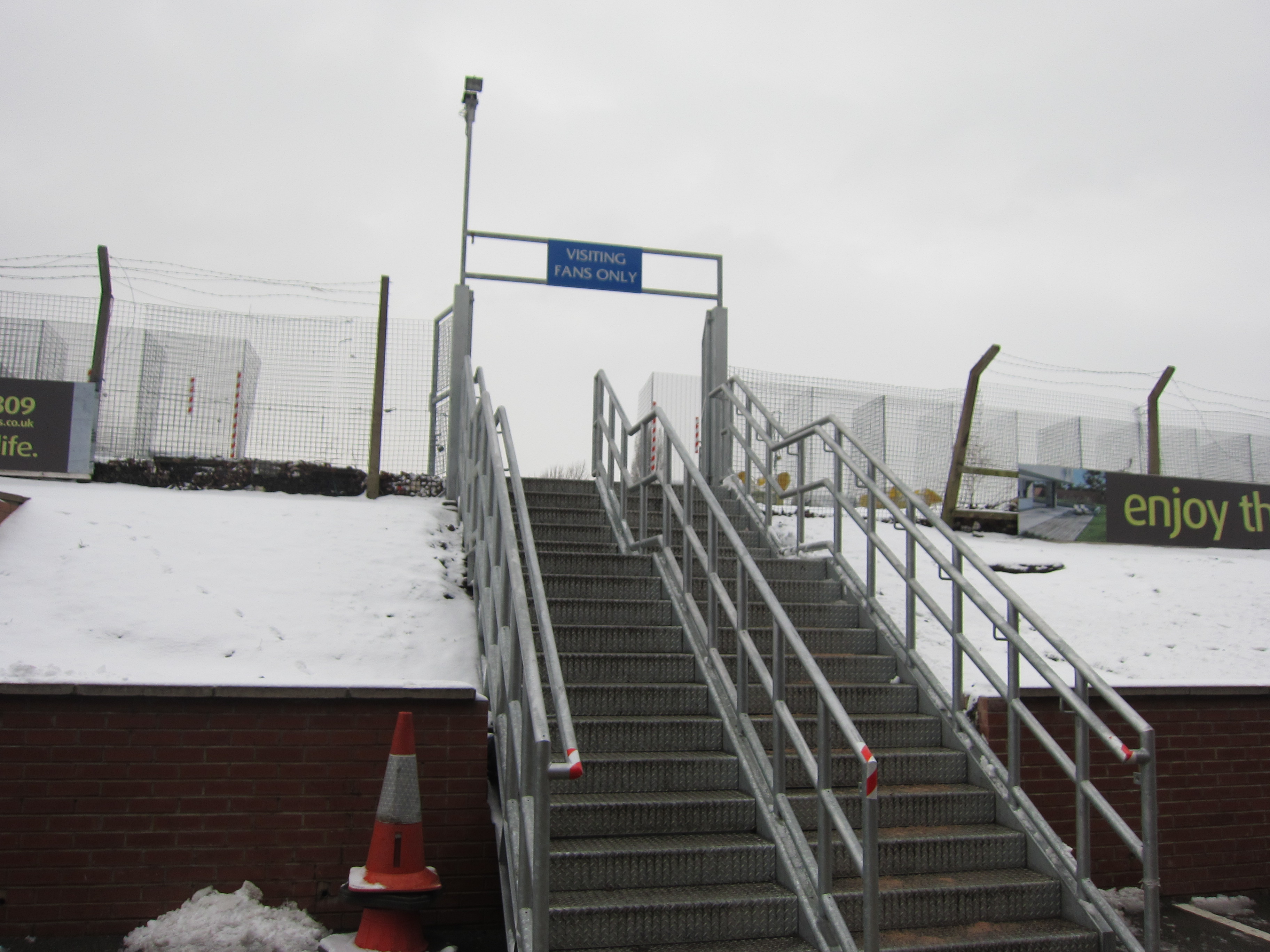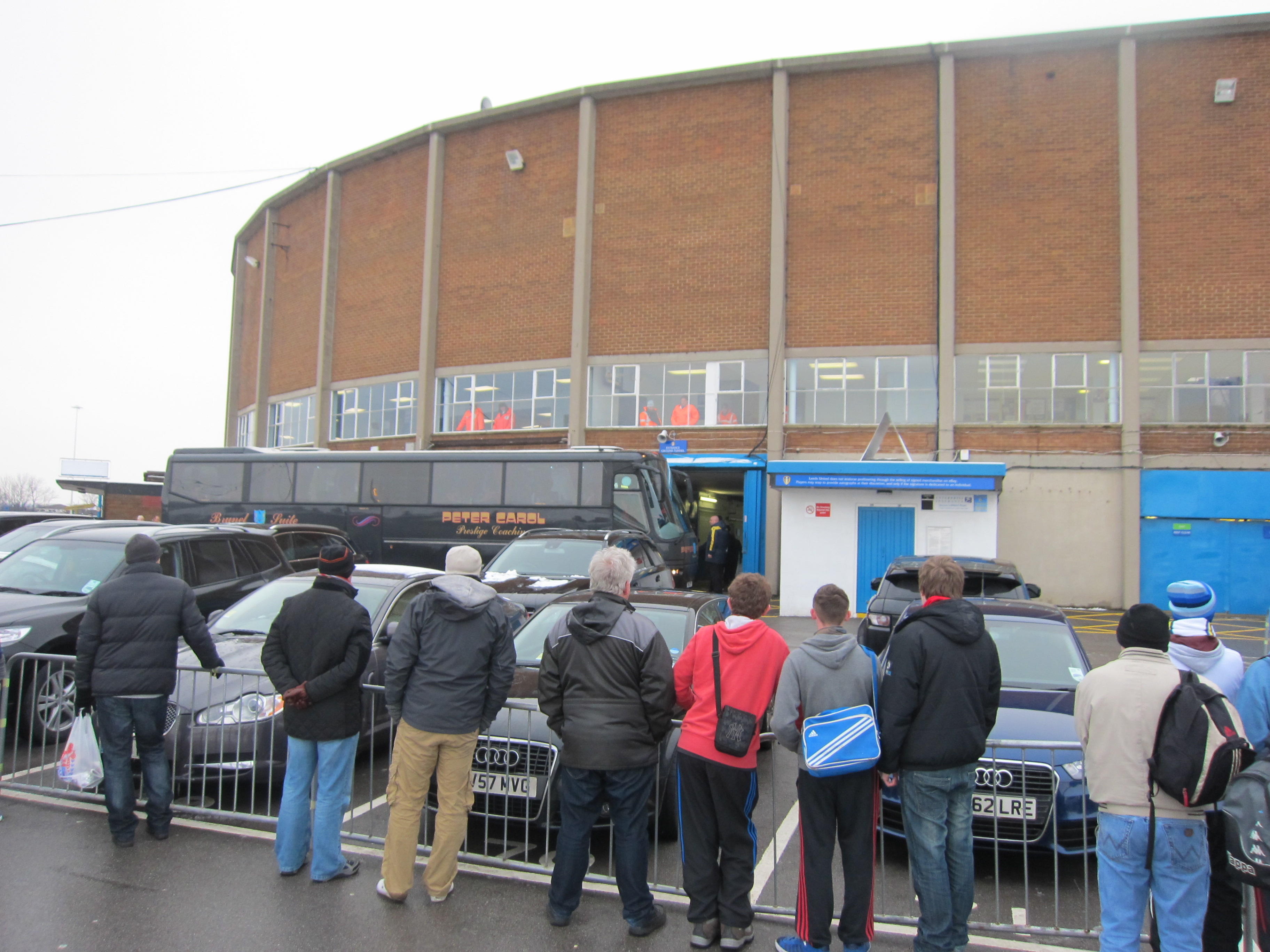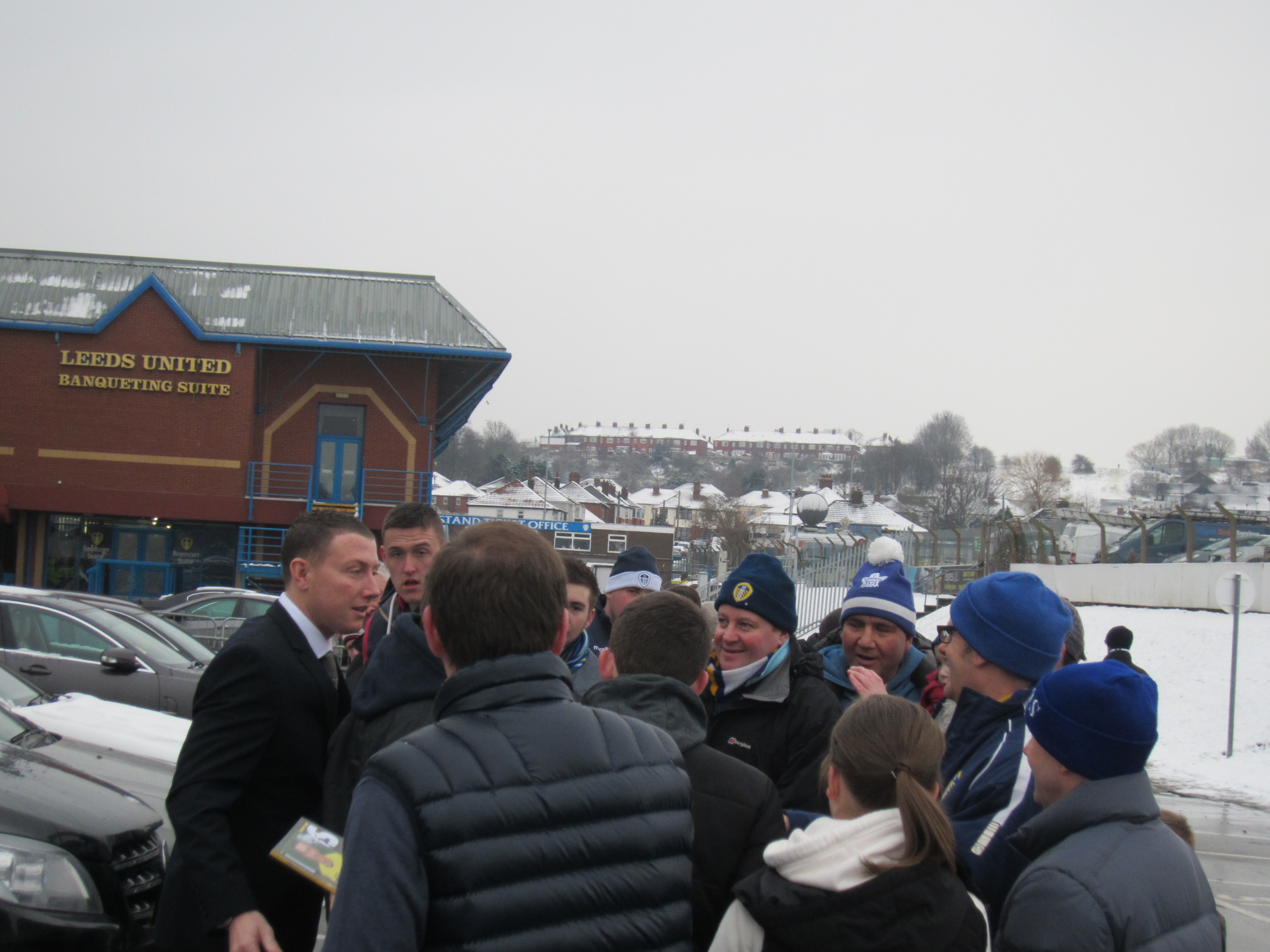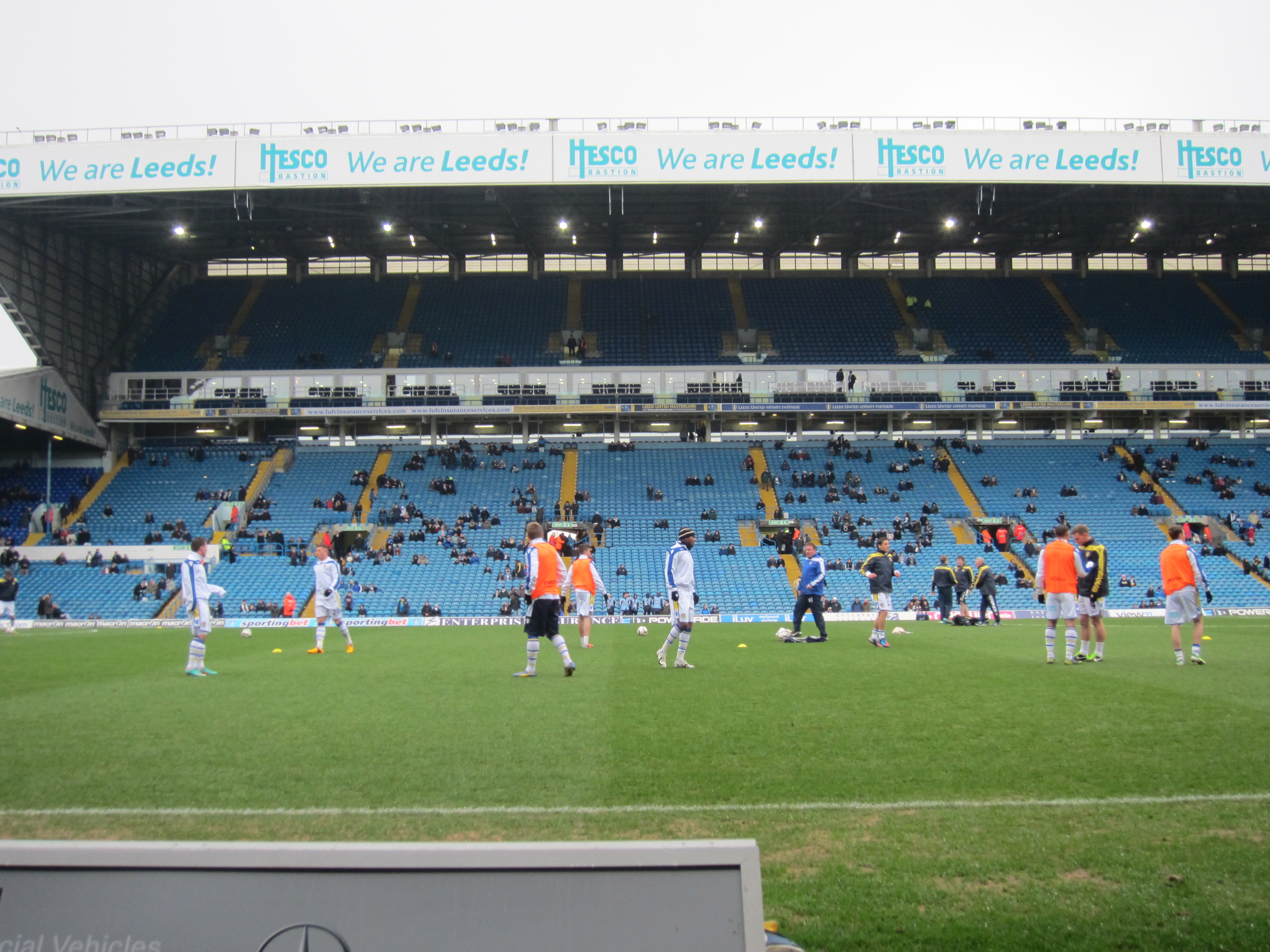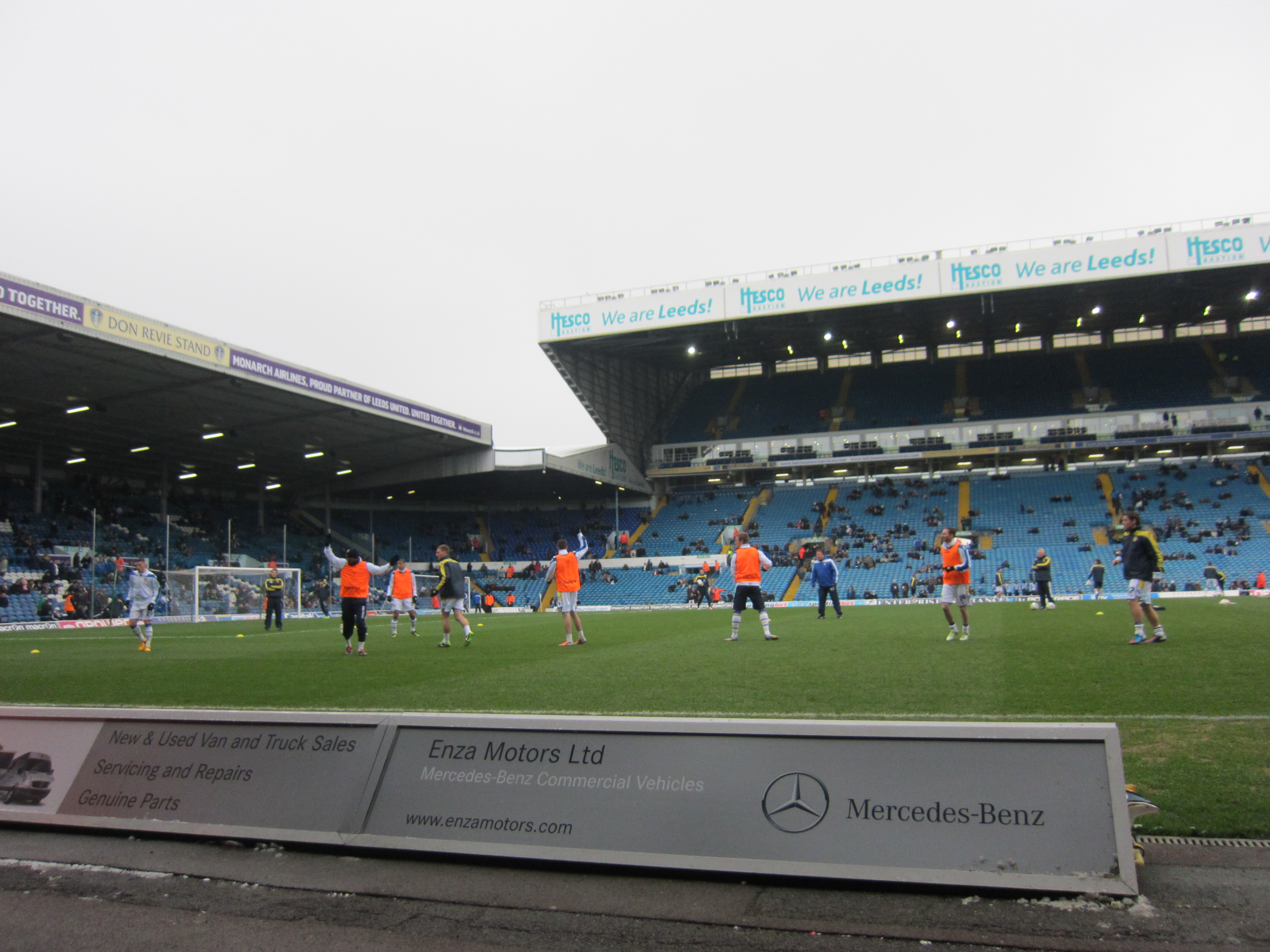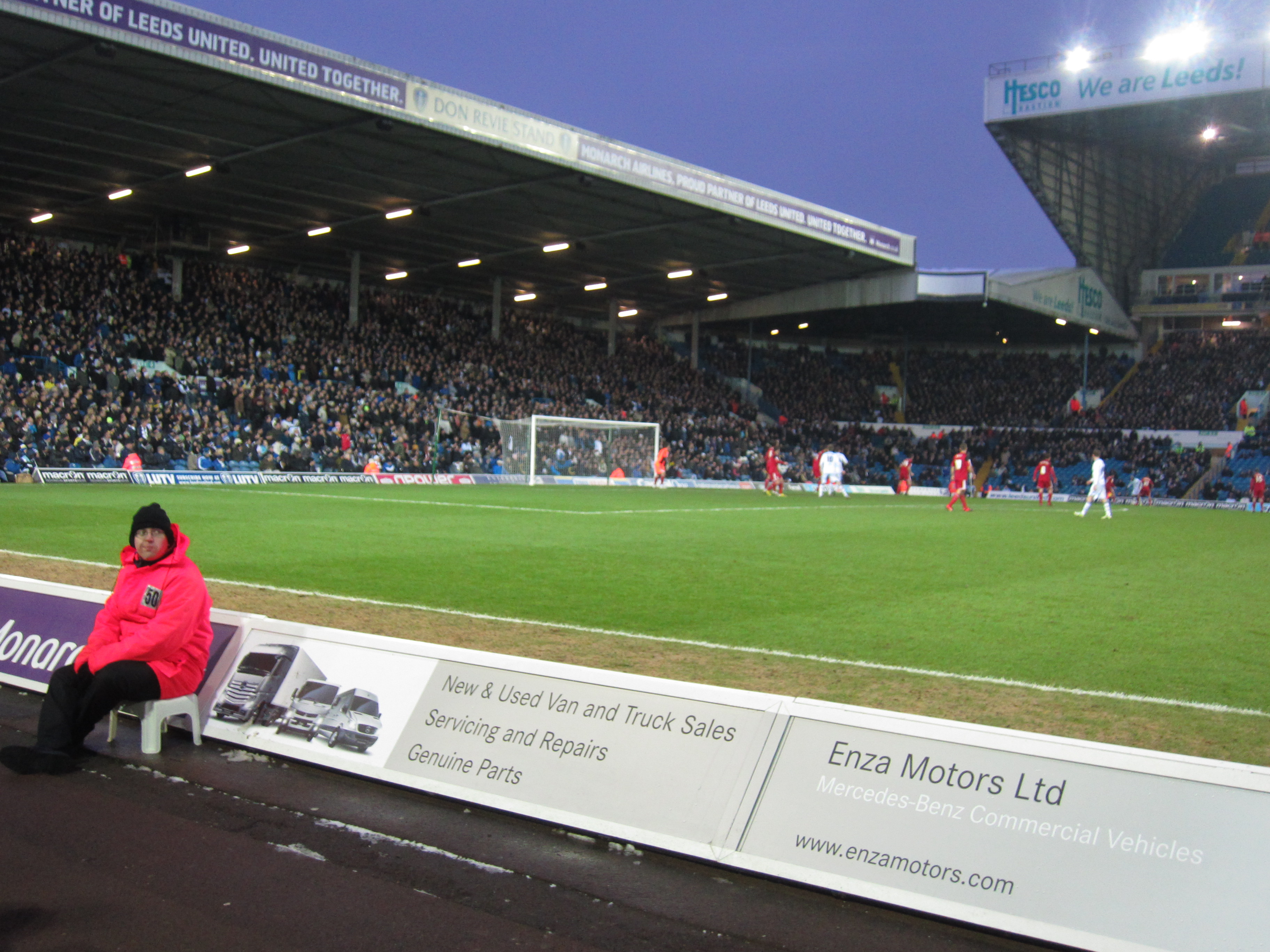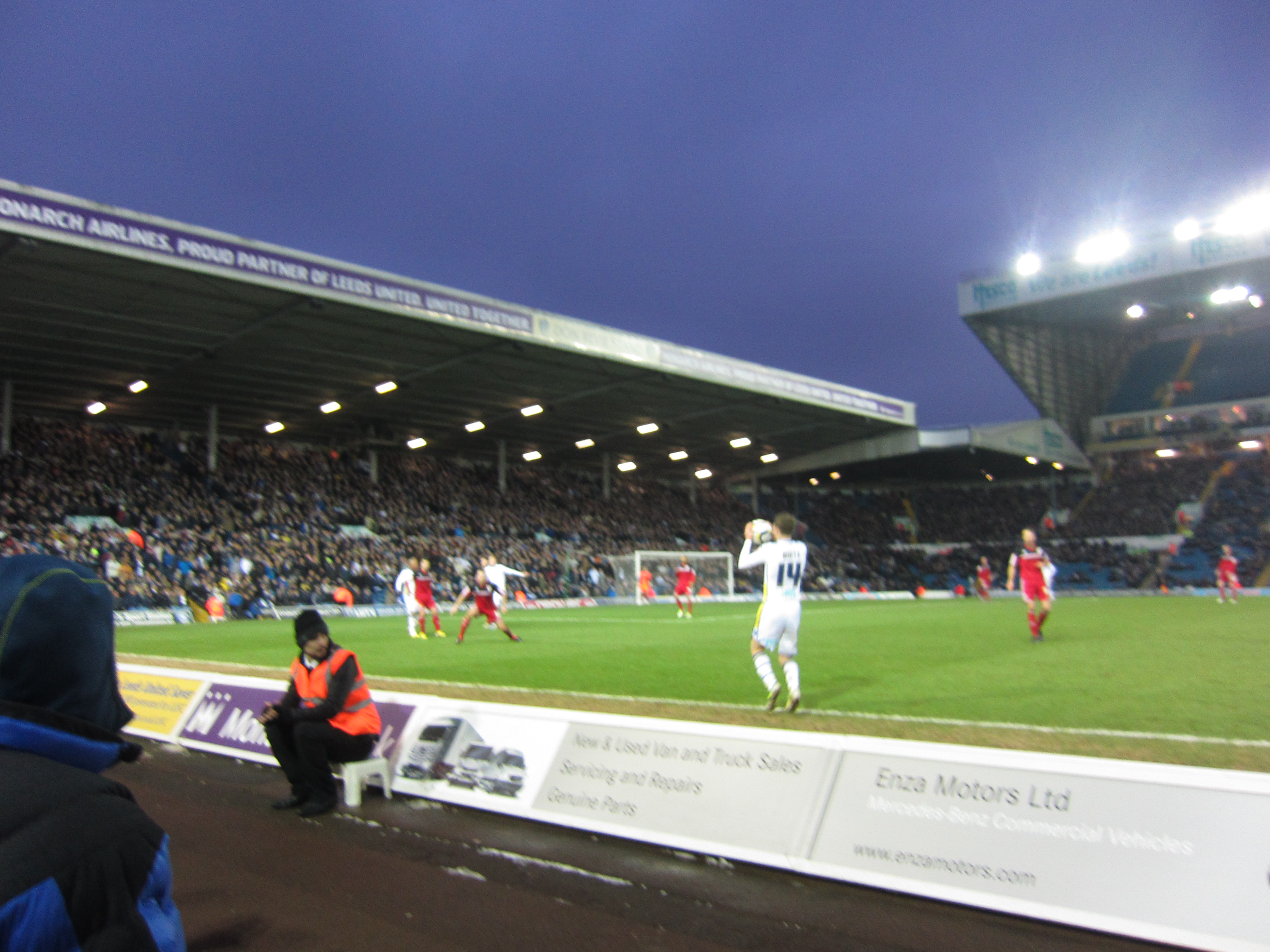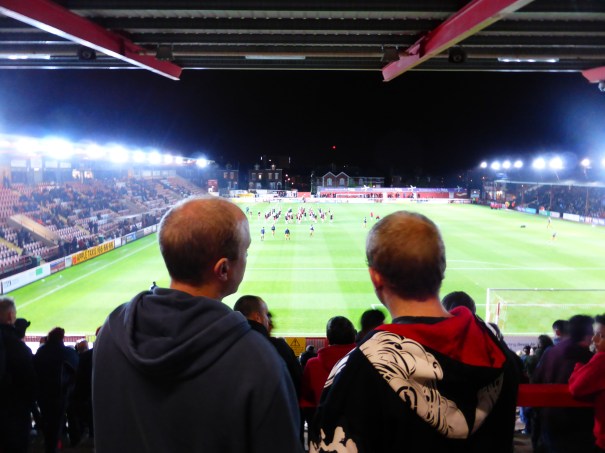

St. James Park, Exeter

P1130099

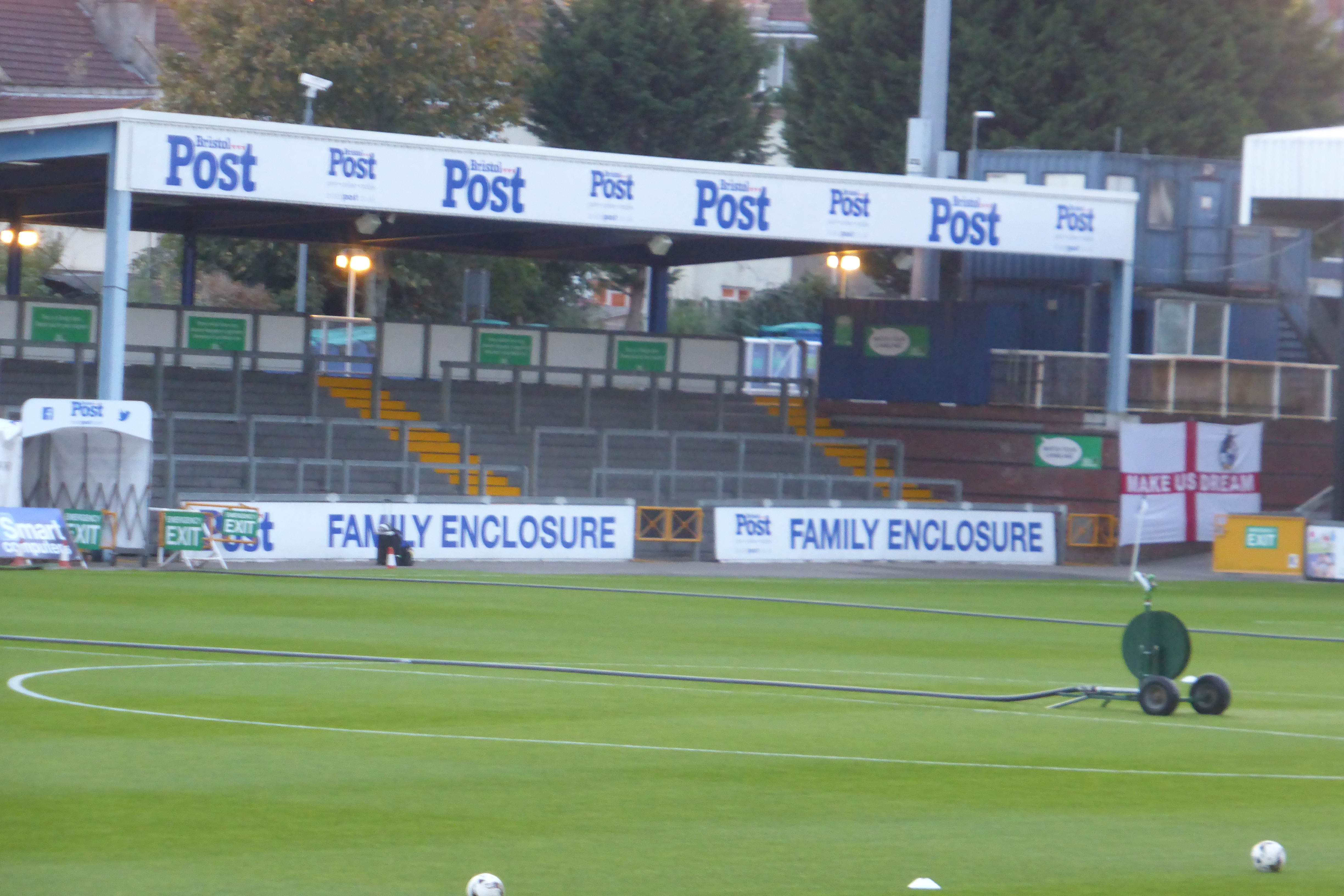
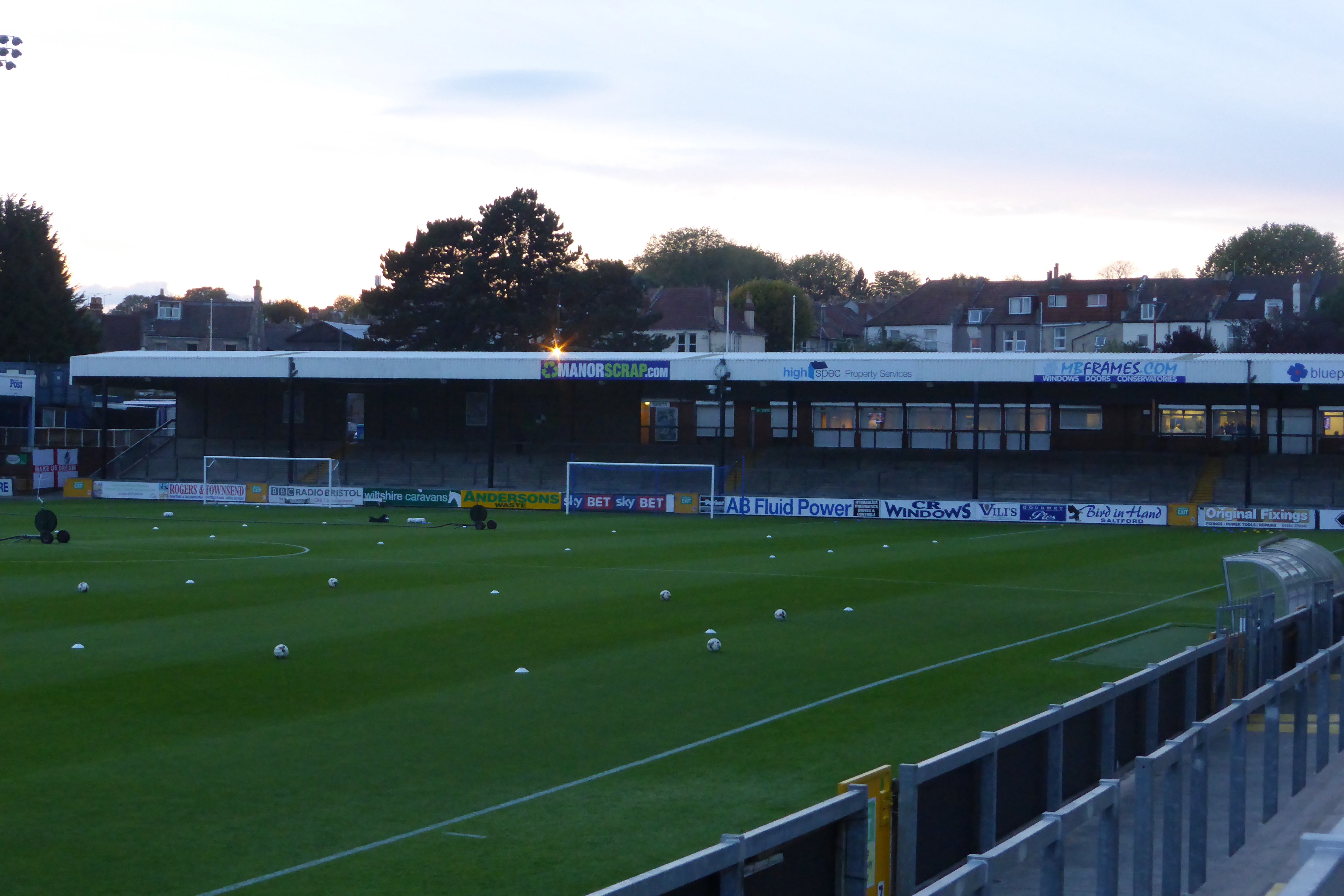
Having visited Bristol Rovers, a “homeless” team on the Tuesday, I moved on to something almost just as extraordinary. Exeter City, a club saved, owned and run by a supporters’ trust.

The story of the supporters’ take-over is quite remarkable. The club had had quite a few troubled times before. It had been hit by sanctions for not being able to field a team and for getting more financial help for ground improvements than entitled to. Still, the club invested in two new stands in 2000 and 2001 – probably not helping club finances.

P1130139P1080056

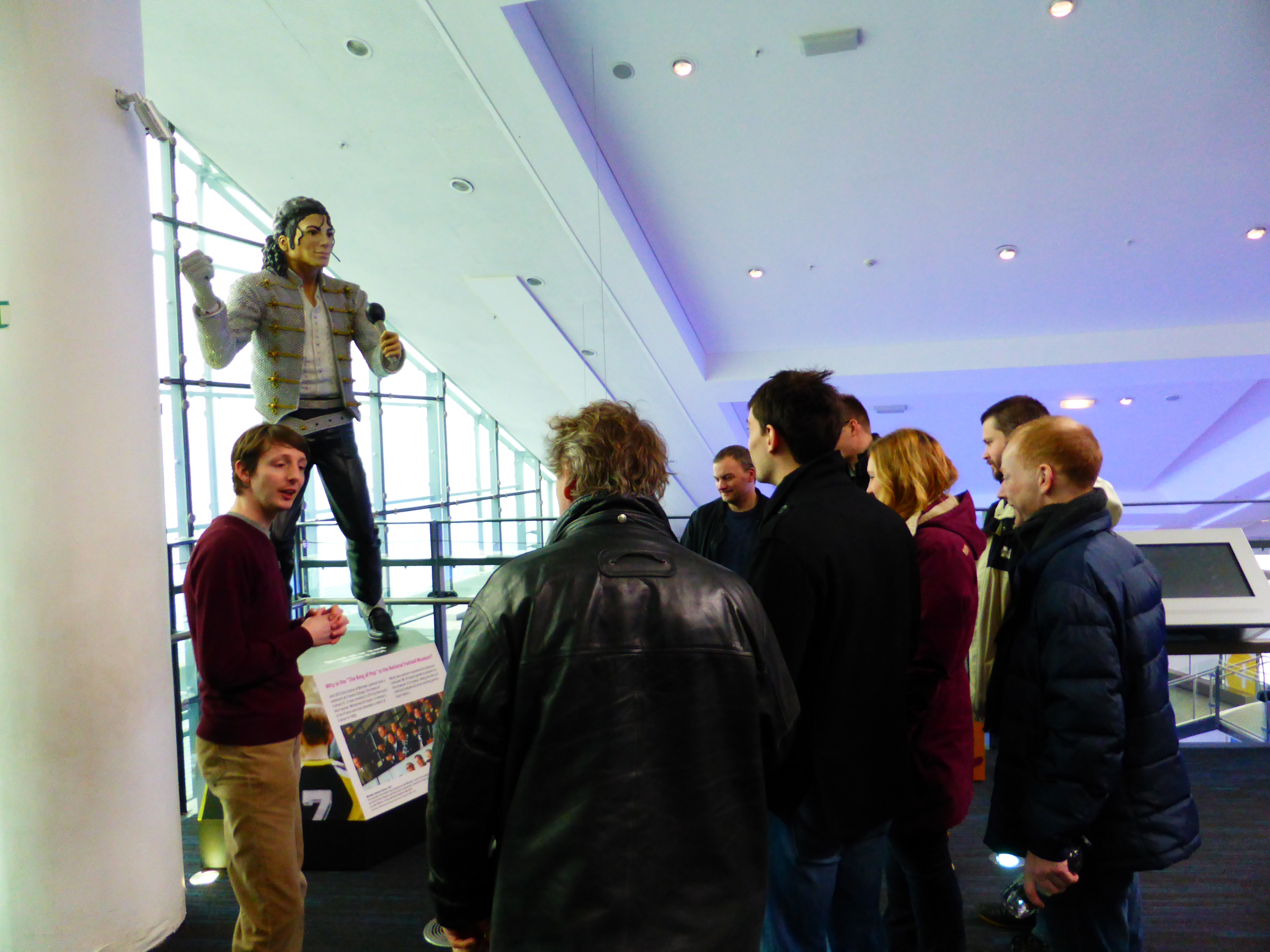
The 2002-3 season turned out to be a bizarre culmination of the problems. Uri Geller had turned an Exeter fan because of his son, and he wanted to help the club out. Allegedly, he put crystals behind the goals to help Exeter in an important match. They lost 5-1. No one can tell, what the scoreline would have been without the crystals, but Geller decided to try and help out with running the club as co-chairman instead. He brought in a couple of entrepreneurial directors, Russell and Lewis, signed the former Manchester United star Lee Sharpe – and persuaded his friend Michael Jackson to give a concert to help the club. Jackson – who had visited Fulham a couple of years earlier (and this, his first attending a football match ever prompted Fulham owner Al-Fayed to have a statue of Jackson erected outside the ground!) – made it a condition that half the revenue should go to charity for children suffering from HIV. But come he did. Along with the magician David Blaine

What happened to the money, is not quite clear. By the end of the season, the two new directors were arrested – and later convicted for fraud. Allegedly, they took match receipts home with them and used them to fund property investments in Croatia. To top it all, Exeter were relegated from the football league on the last day of the season as well. And that was when the supporters’ trust took over.

P1130190

Still, the club was troubled by debt – but then lady Luck appeared. Not in the shape of Michael Jackson, a magician or Uri Geller – but the shape of Manchester United in the FA Cup third round at Old Trafford. Exeter managed a goalless draw and were rewarded with a replay – and along with the two matches lucrative TV-deals. This wiped out the debt with one stroke – although the fight for tickets for these matches allegedly caused some bad feelings within the Exeter community. No wonder there is a Manchester United room in the ExEC 100 Club in the old Stagecoach stand of the ground.

P1130226P1130107

But how does all this show in the ground? Well, first of all, it is very relaxed and friendly. One of the groundsmen went round the ground 3 hours before the match in a 1990’s Manchester United jacket! But then again, United were indirectly the clubs’ biggest benefactor. The players were wearing red hoodies as the arrived at the ground – not the suits that most clubs order them to wear.

P1130133P1130122P1130176

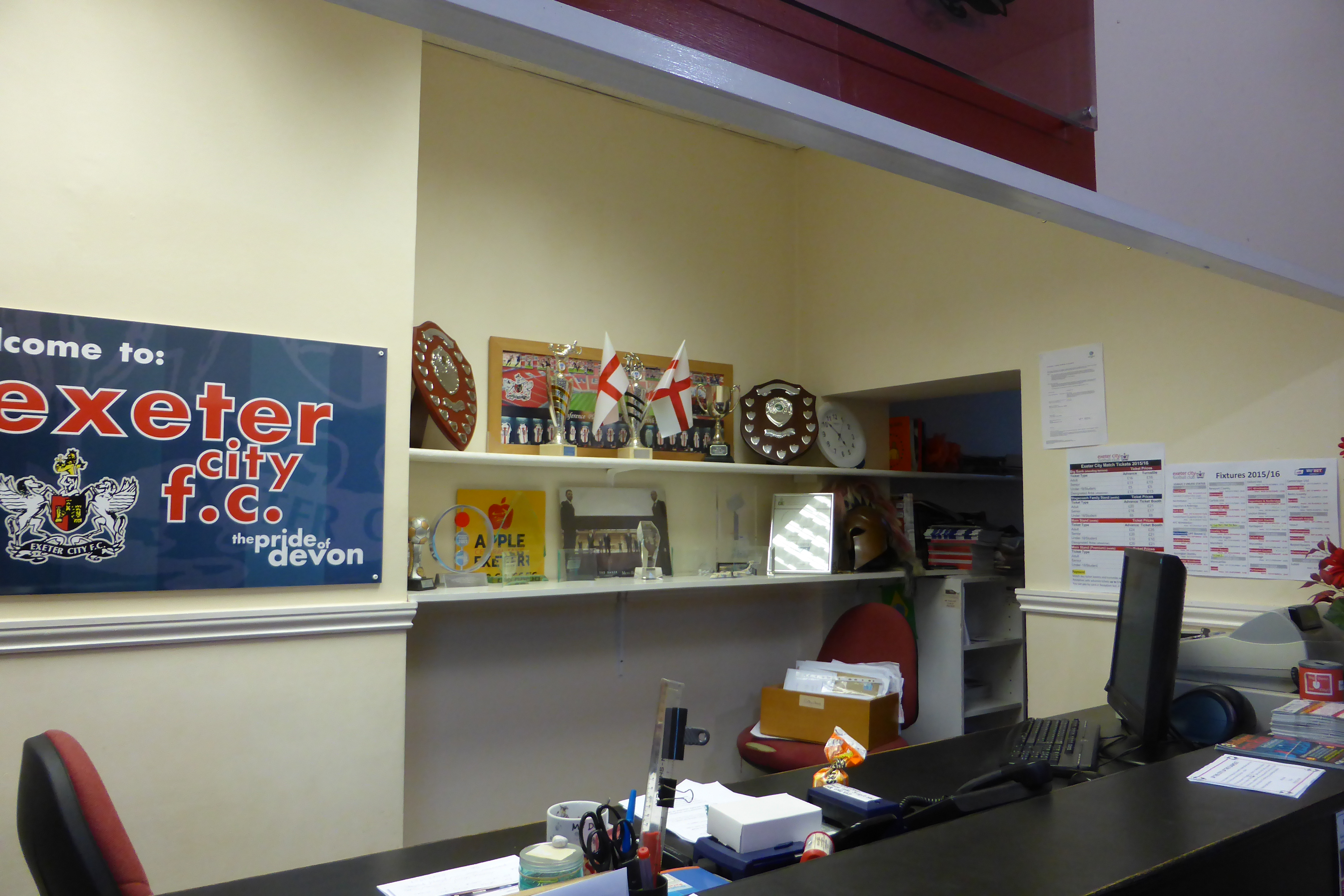
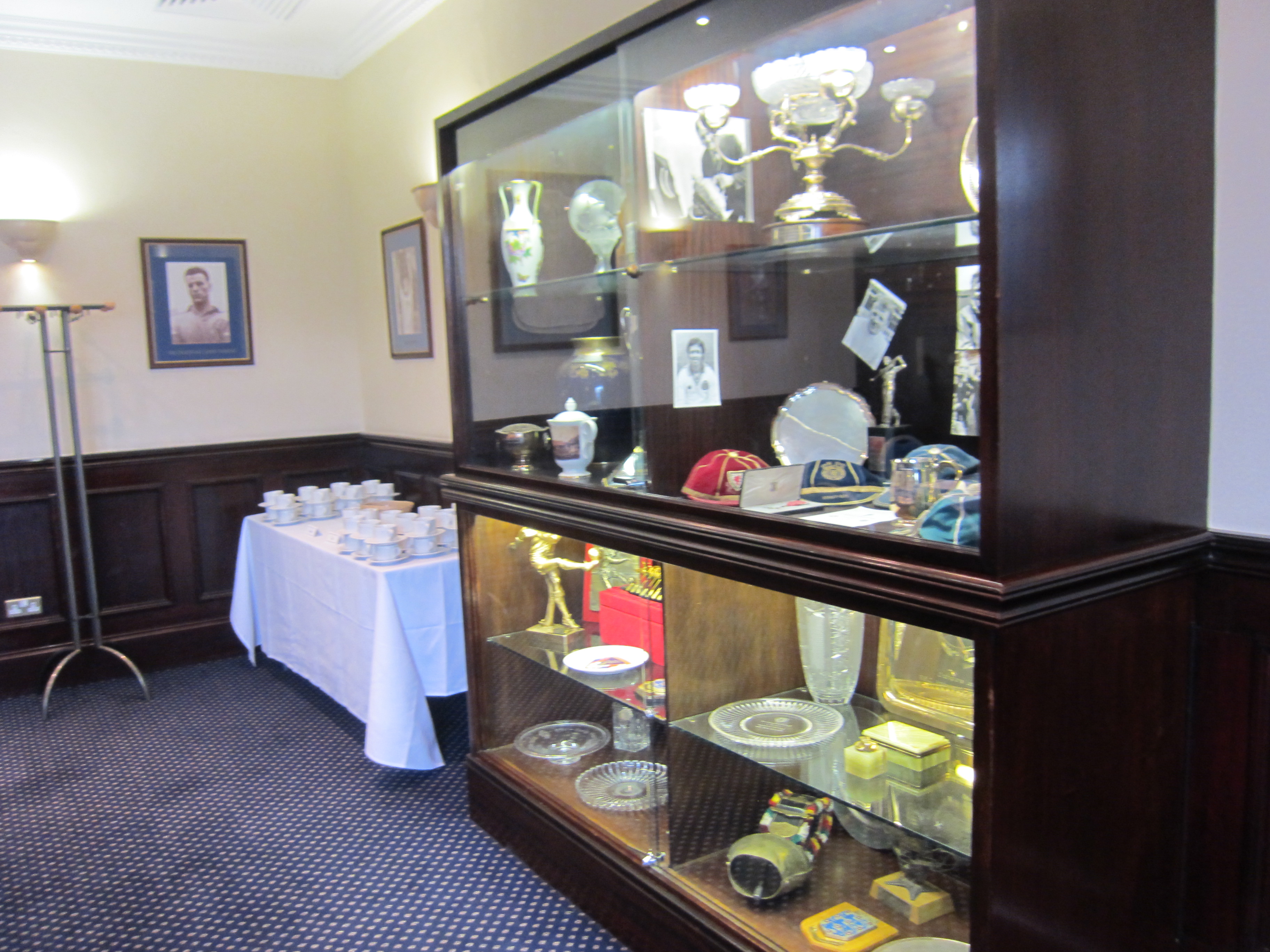
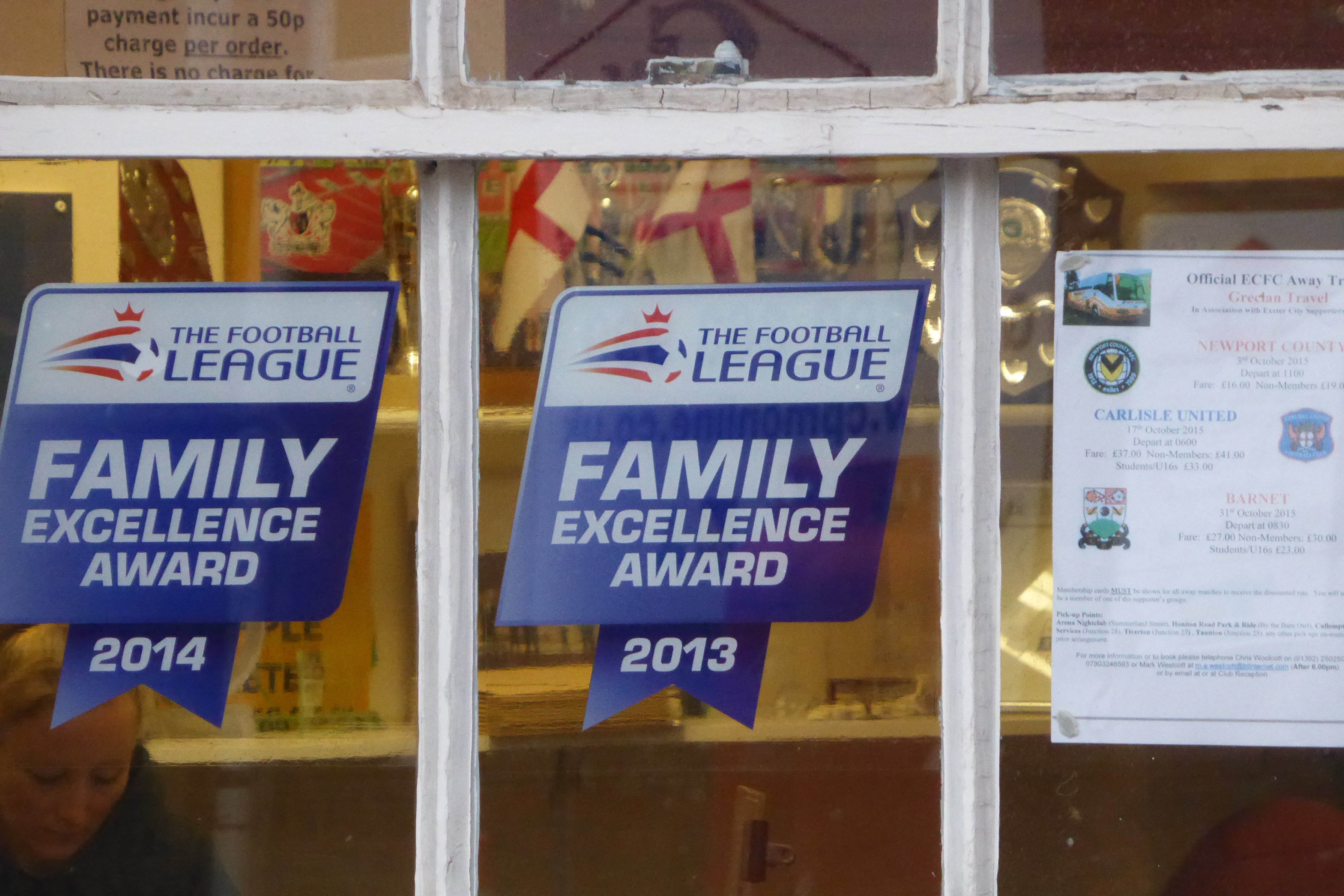
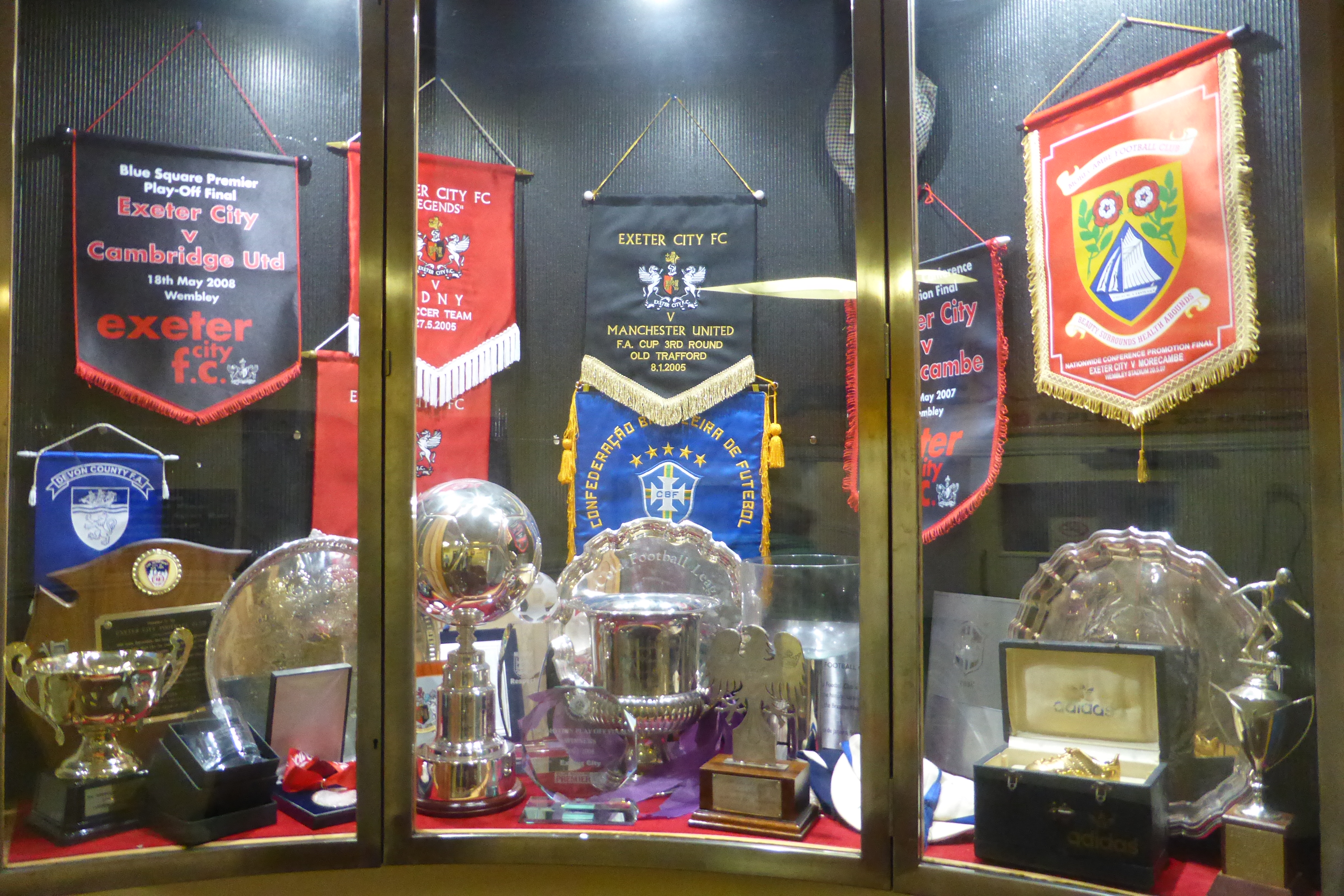
There were no guards keeping people away – only a parking warden. The door for the “Players Entrance” was wide open, and I just walked in and could read Kiera Gould’s fascinating wall-display on Exeters trip to South America in 1914. And when I asked the girl at the reception for permission to take photos of the trophies on display, she called somebody to take me around the ground to see the others as well.

P1130149P1130184 P1130186

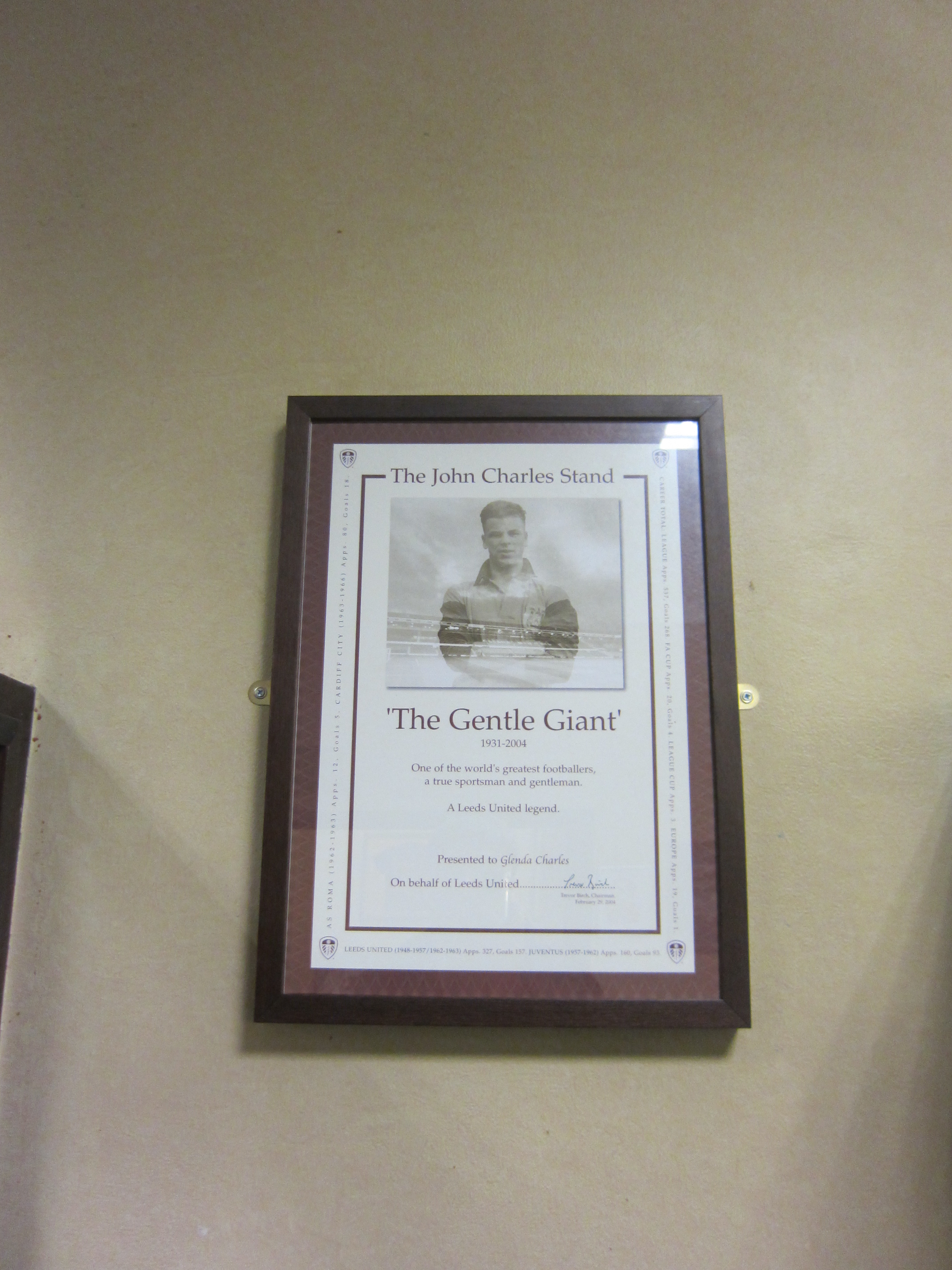
And that leads me to the second point. There is a proud sense of history. There is a memorial for the players, who lost their lives in WW1, but even more noticeably, the club takes pride in the 1914 trip to South America, where they became the first team ever to play a Brazilian national team. There are plaques, displays, Brazilian flags, photos from a centenary match in 2014 – and the clubs centenary match back in 2004. There are signed Brazilian shirts – among them one signed by Pele (sorry about the quality of the photo) – on display in the ExEc 100 club.
P1130192P1130177

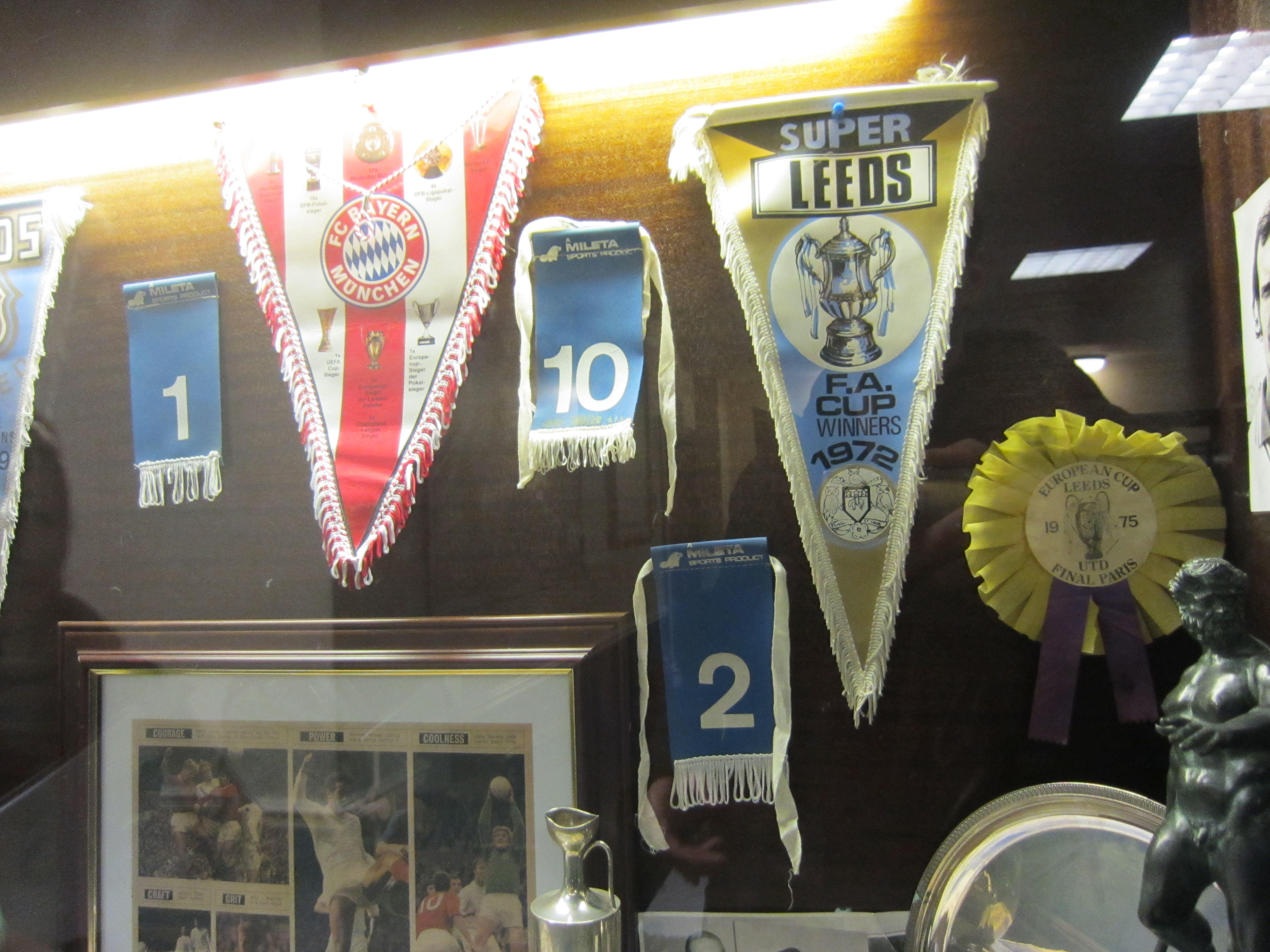
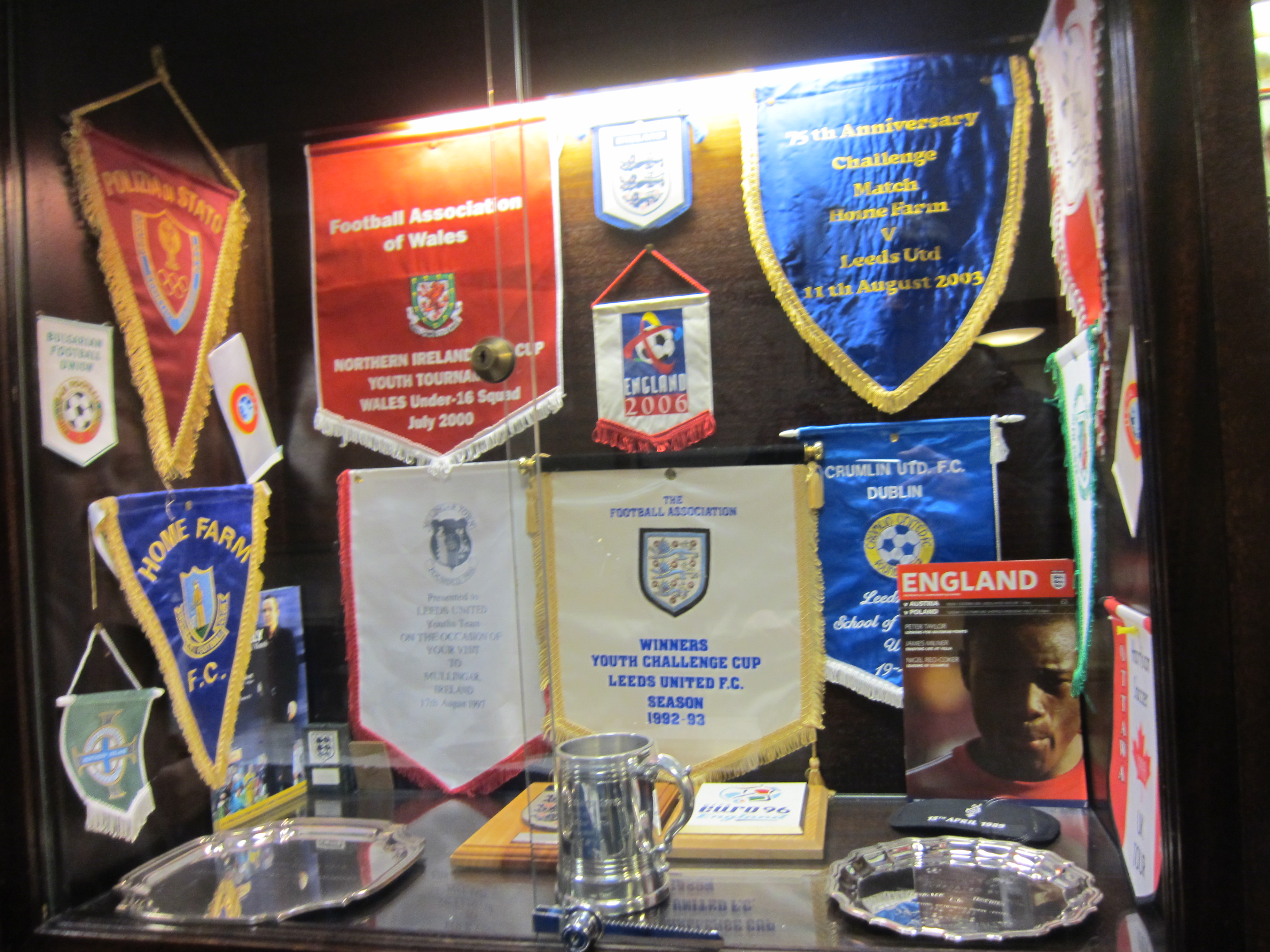
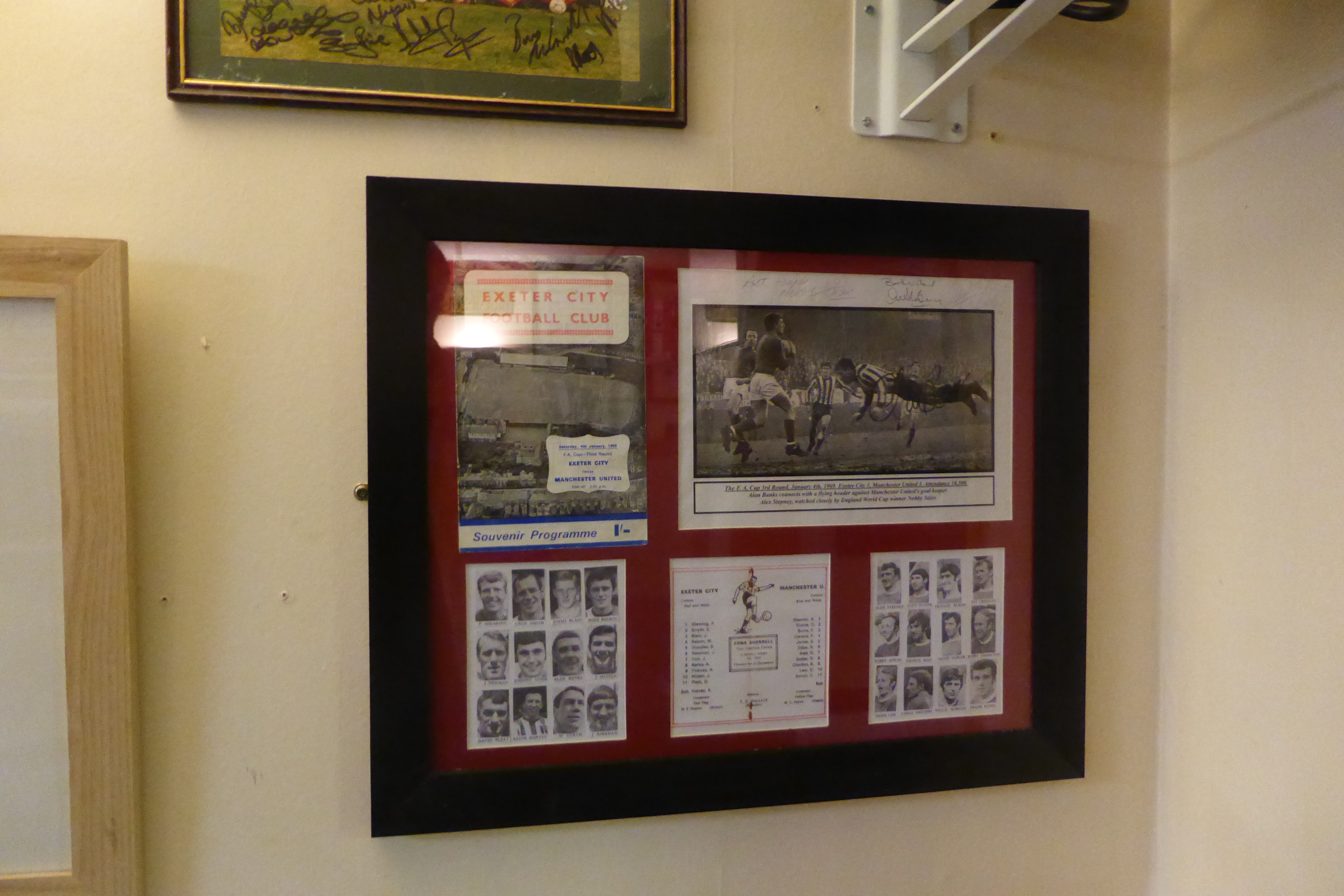
Along with Brazil, Manchester United feature heavily. In the main display cabinet, is a pennant from the 2005 match. In the executive club, there is not just a room with relics from the 2005 matches, there is also a signed programme from Manchester United’s previous visit in 1968. And in a hospitality room, there was a huge photo of George Best in action at St. James Park in that match.

P1130193 P1130194

And as mentioned, The ExEC 100 club have their rooms in the Stagecoach stand – with their own bar – in the place where most top clubs would have a directors’ suite or hospitality facilities.

P1130114P1130118P1130120

Before all the drama of 2002-3, the local council had stepped in and purchased the ground – to make sure that the club could survive. Apparently, the council also helped the club out by giving it the neighbouring building of St. Sidwell school. So offices, corporate facilities and an additional fans’ bar are squeezed into a former school building.

P1130232P1130234P1130125

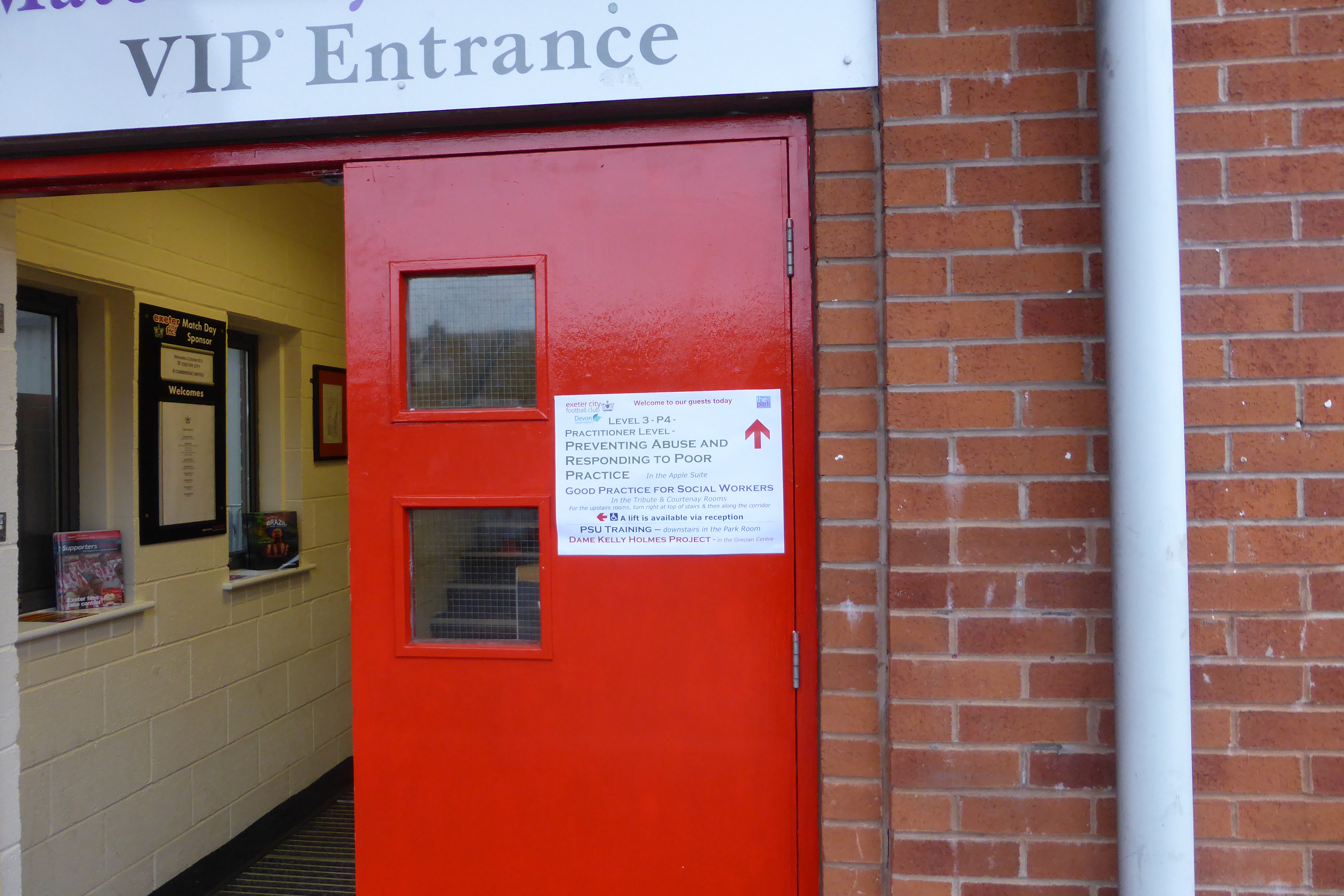
The relaxed atmosphere in the bar is enhanced by the printing of football quotations on the wall. One from the Manchester United match, football pundit (and ex-United player) Alan Brazil pointing out that “Manchester United could only beat Exeter 2-0 … and it was just 1-0 at one point.” And another Alan Ball’s “The important thing is that he shook hands with us over the phone”. This is not about glory; it is about having a good time. Before the match, the corporate facilities are used for courses for social workers

P1130129 P1130158P1130124

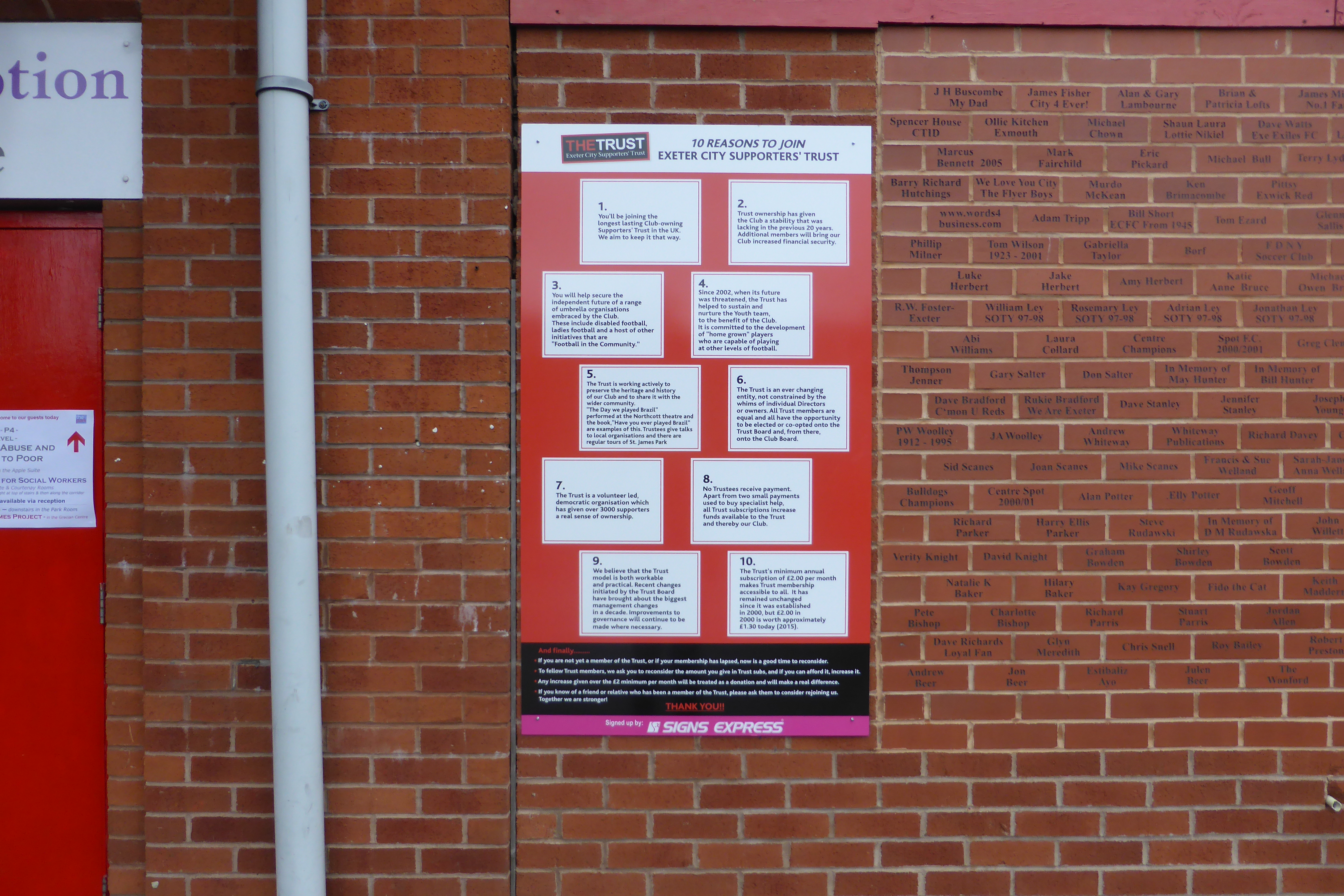
There are several appeals for funding – and acknowledgment of those who have contributed at various times.
P1130142P1130141

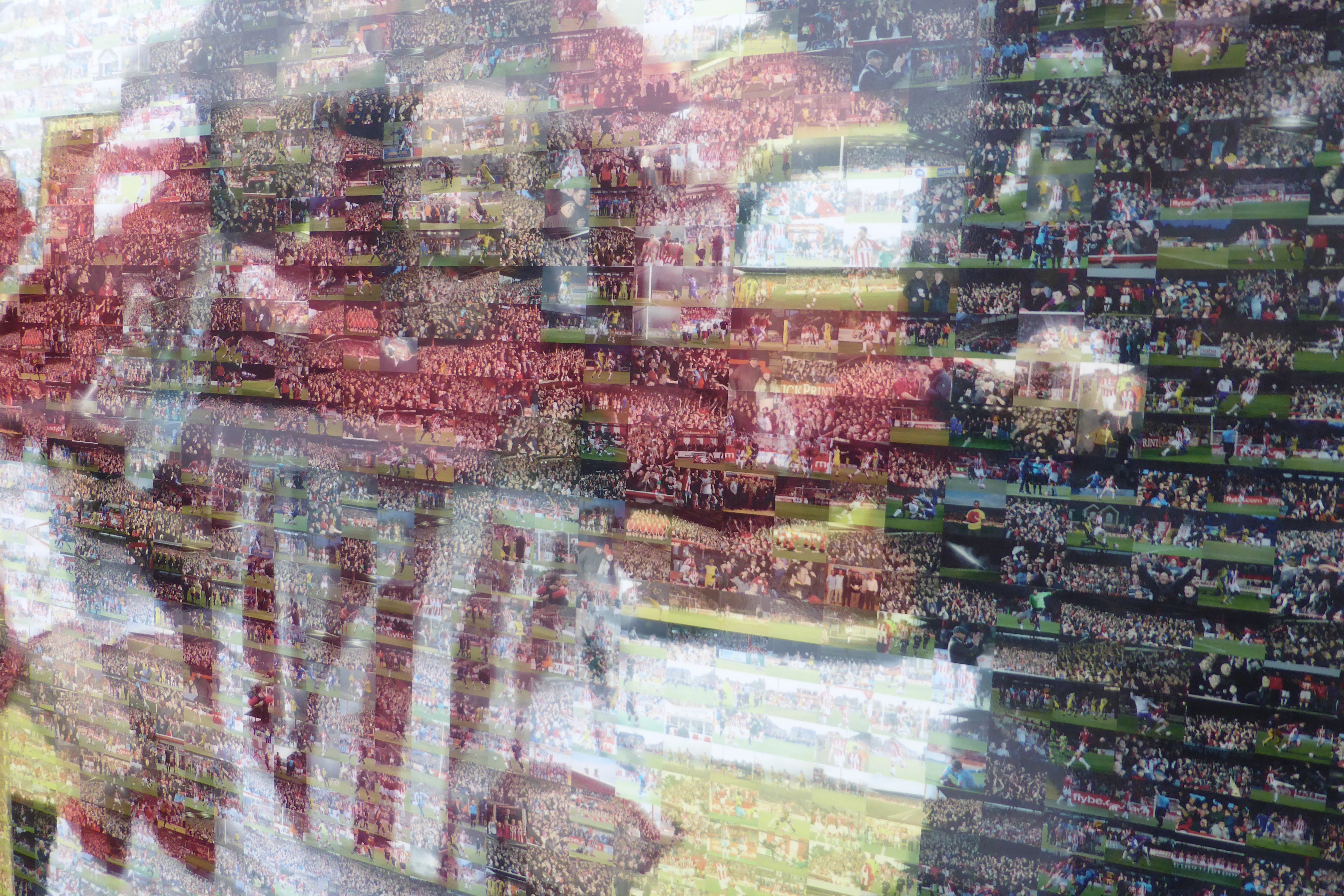
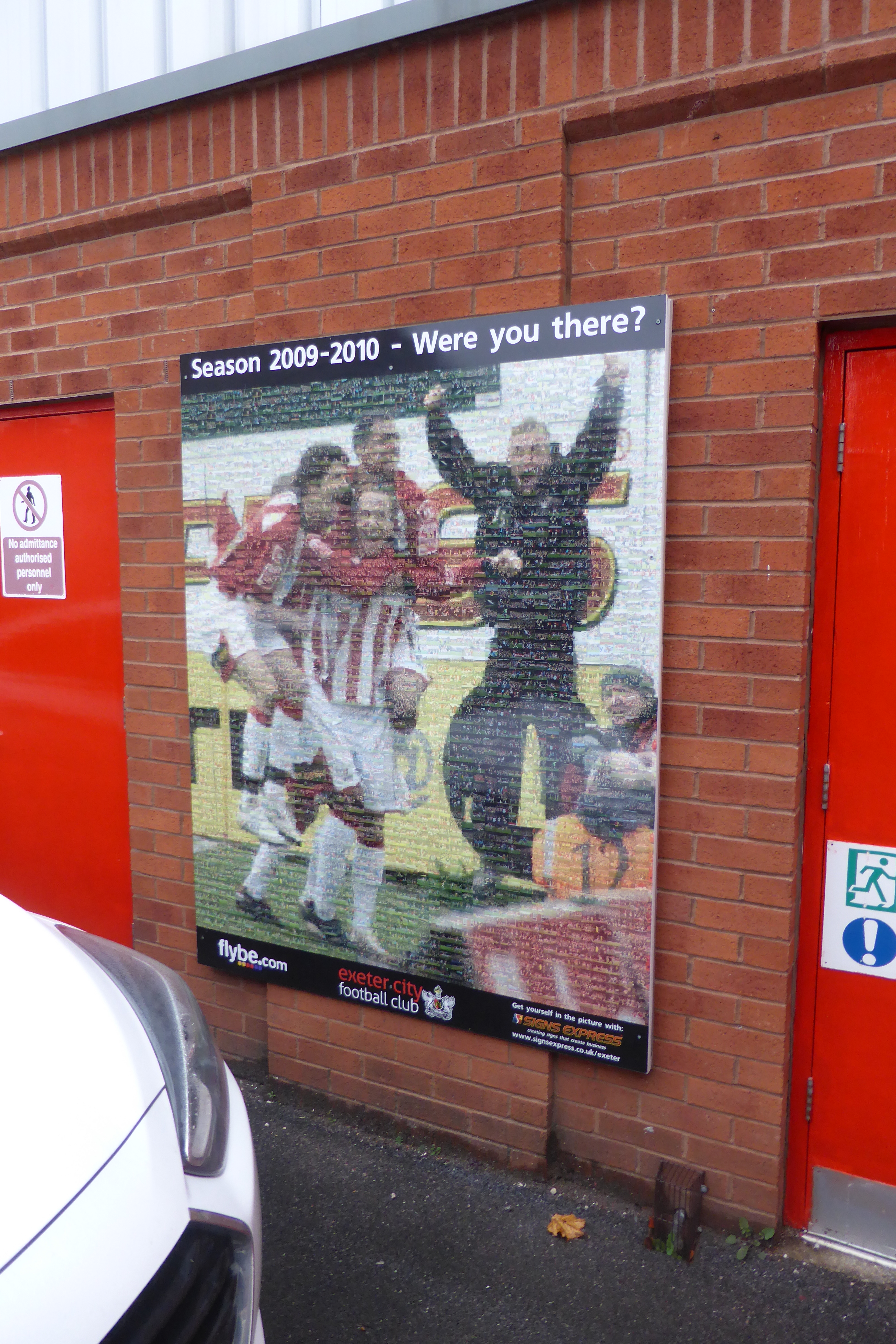
There are also several ways to show photos of fans, players, matches etc around the ground – some of them a bit unconventionel.

P1130127 P1130128

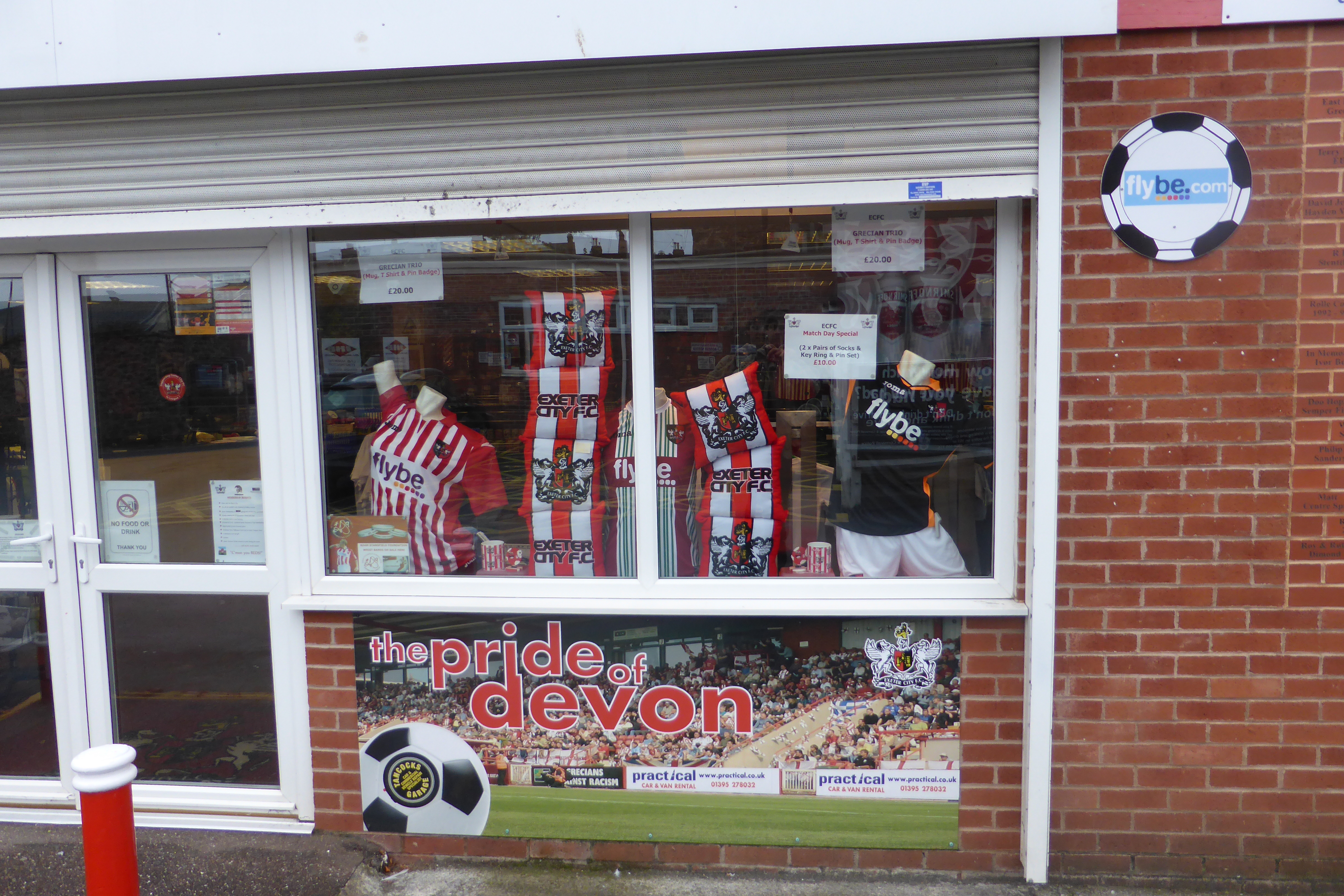
The merchandise on sale in the souvenir shop is not quite as streamlined as in many others.

P1130196P1130200P1130197

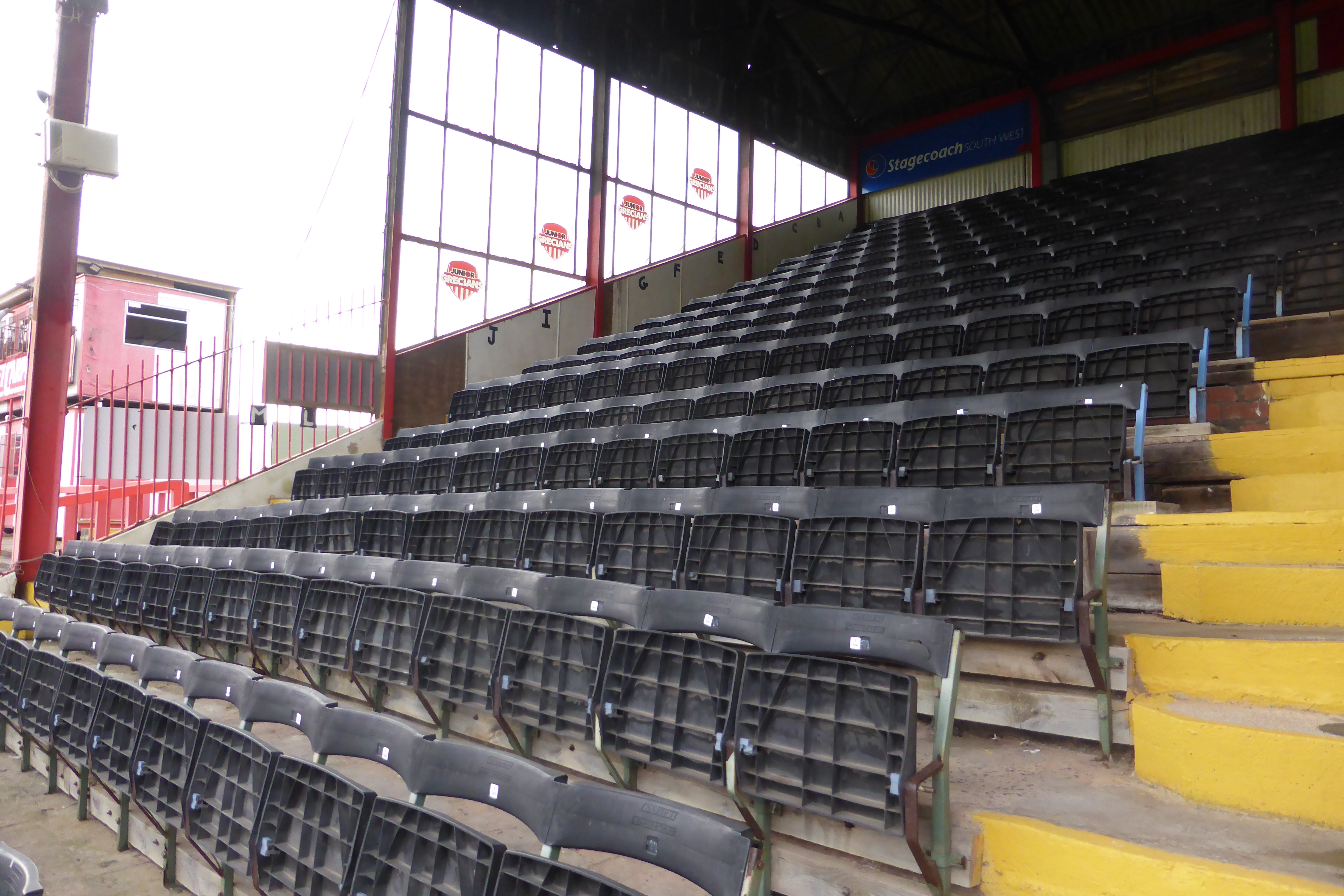
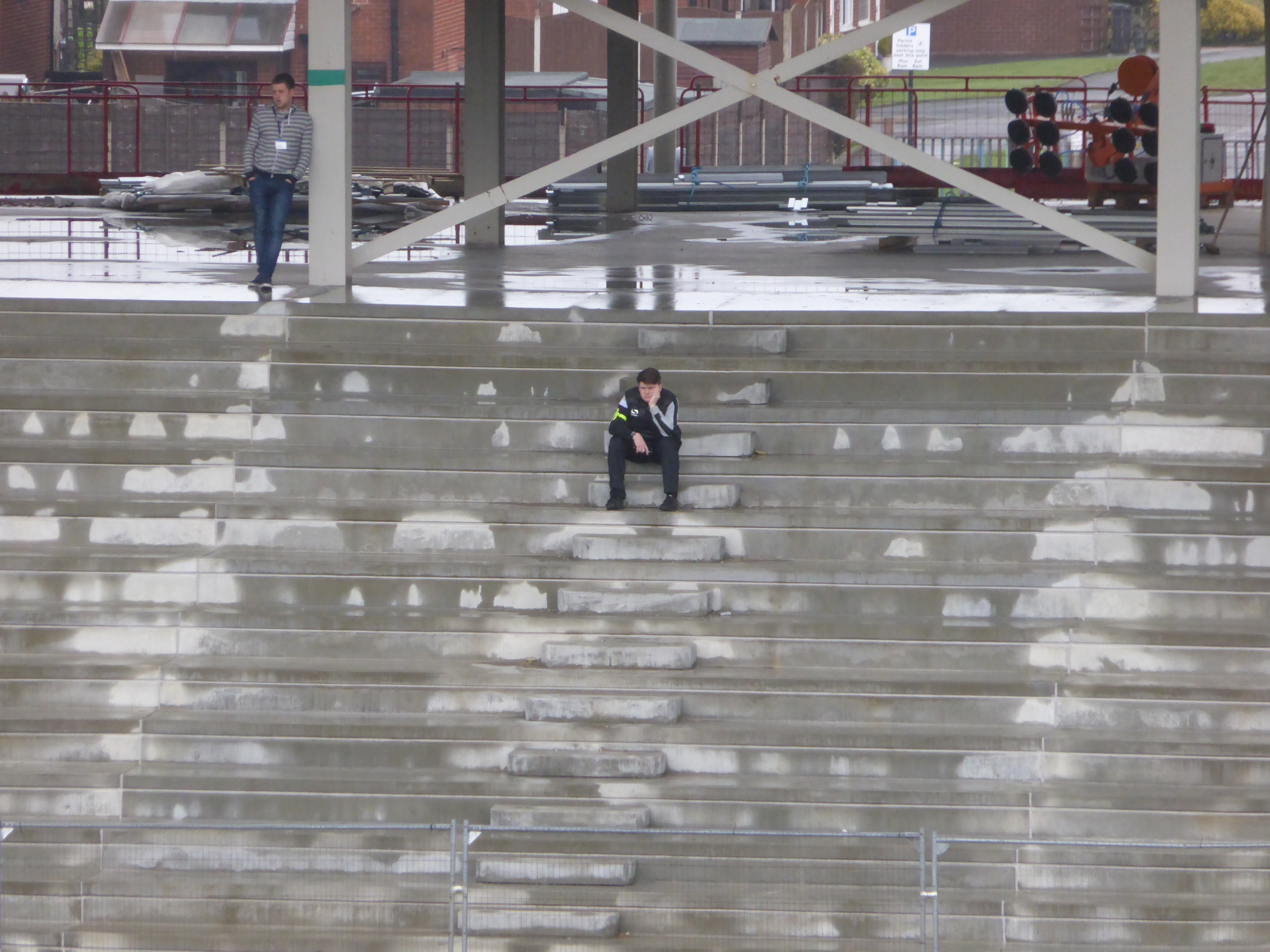
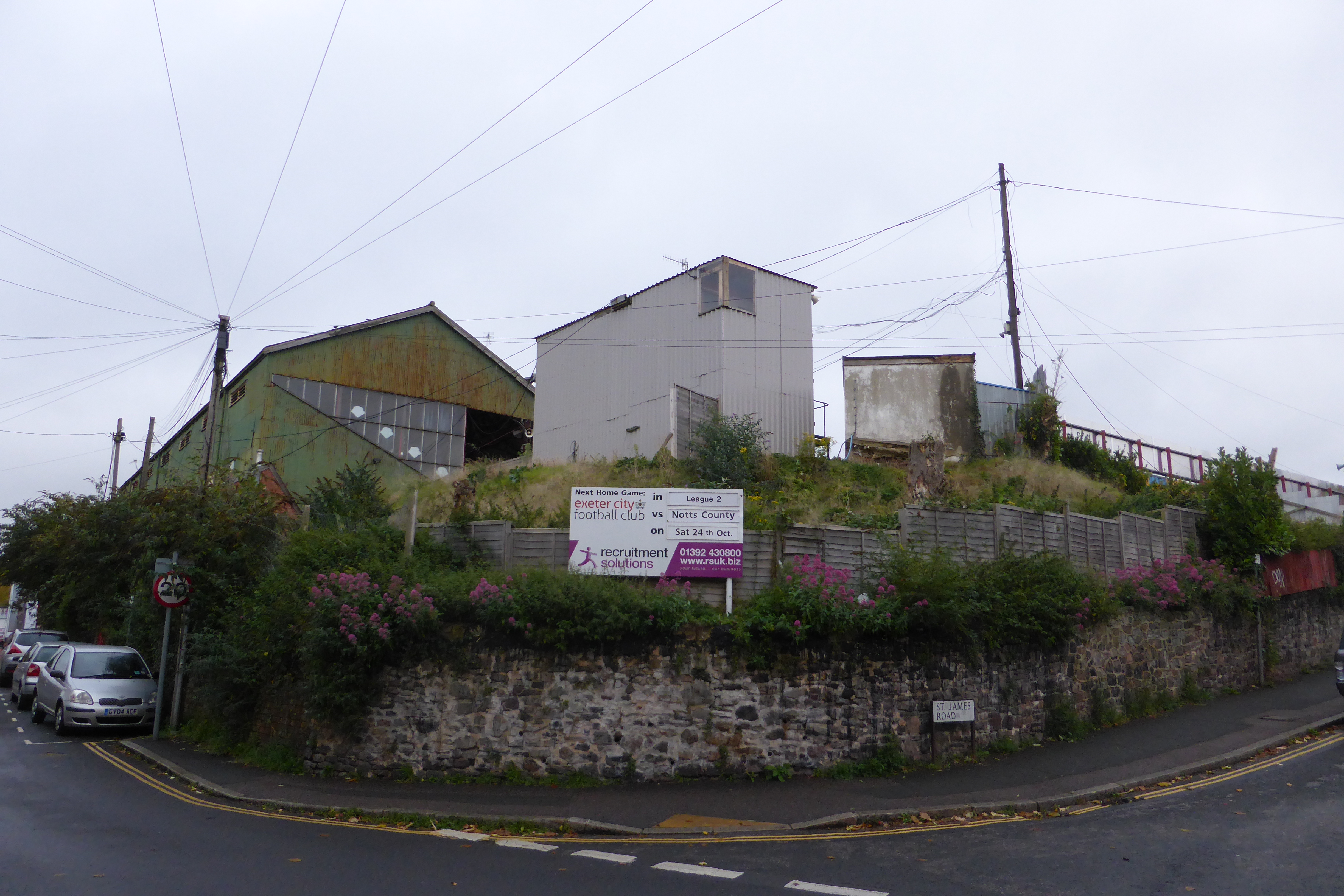
I come just in the nick of time to see the old grand stand from 1926, the Stagecoach Stand. It will be demolished at the end of the season and replaced with a modern one. “It is sad”, my guide says, “But necessary”. The old one costs a fortune each year to get through safety and fire inspections. The seats are placed on wooden decks, which are in a very bad state.
P1130205P1130213

In fact, the stand was built the year after its predecessor had gone up in flames. That was just five years after Exeter bought the ground as they entered the football league. They had been playing there as tennants since 1904 in what used to be a field lended out for fattening pigs, the proceeds going to charity.


P1130227

To show how times have changed, it is no longer revenue from pig fattening that will finance the new stand, but university students. More precisely, the club will sell off some land behind the Big Bank for students’ lodgings. This is quite ironic, because in the early days the ground was too short, and a couple of opposing teams refused to play there because of this. So the club had a benefactor purchasing this land, so the terrace could be moved back and the pitch extended to required standard.
P1130242 P1130244 P1130252 P1130247

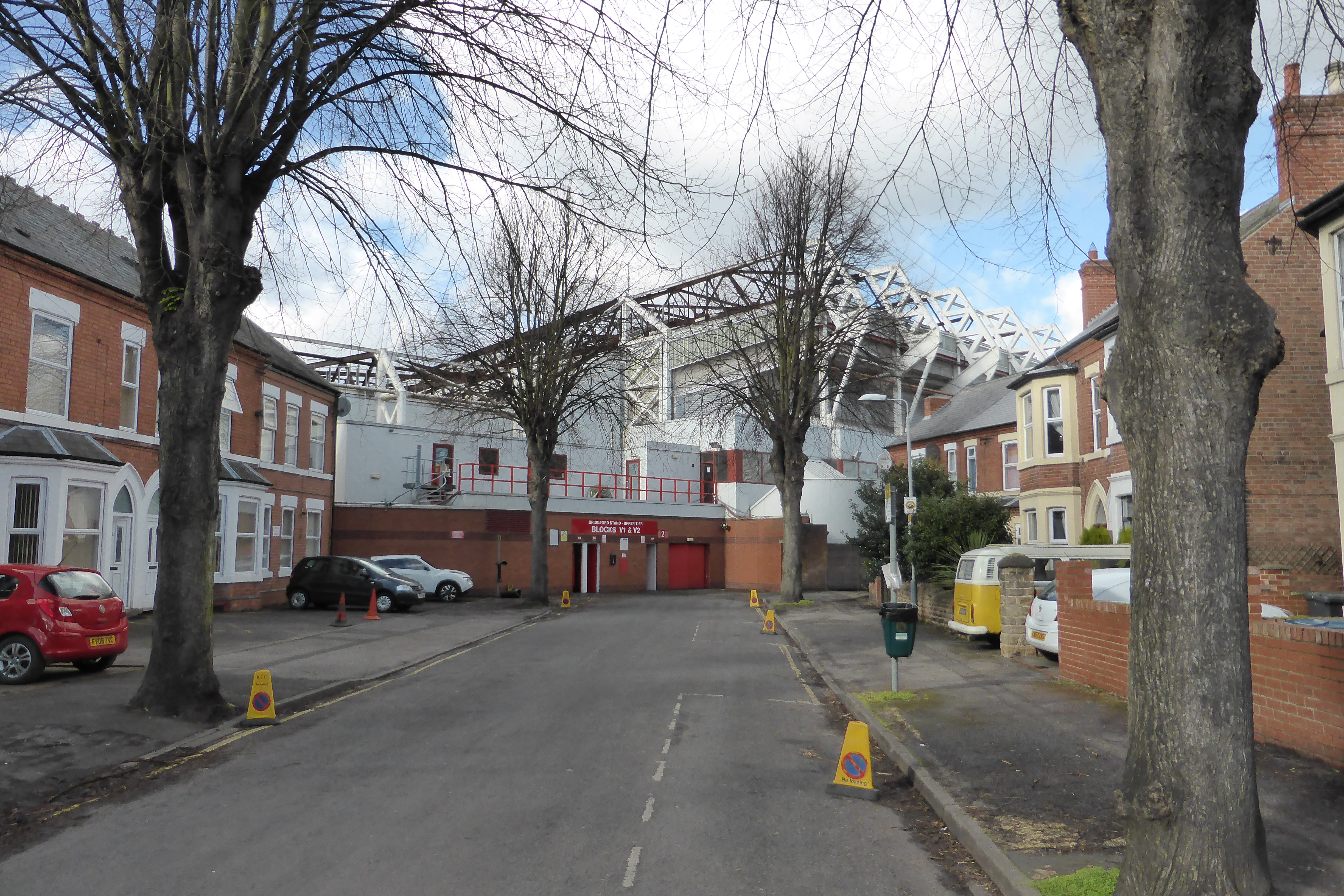
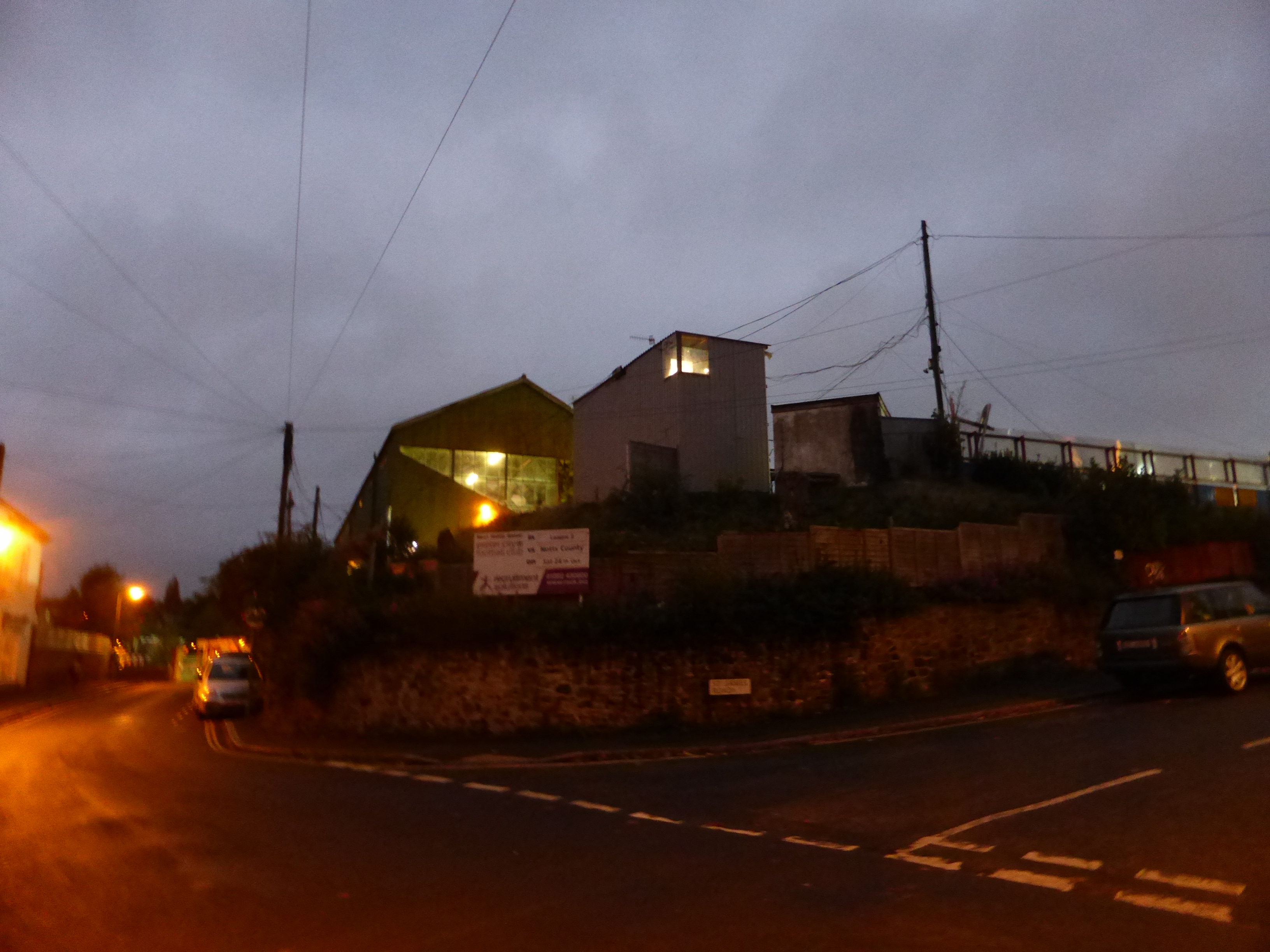
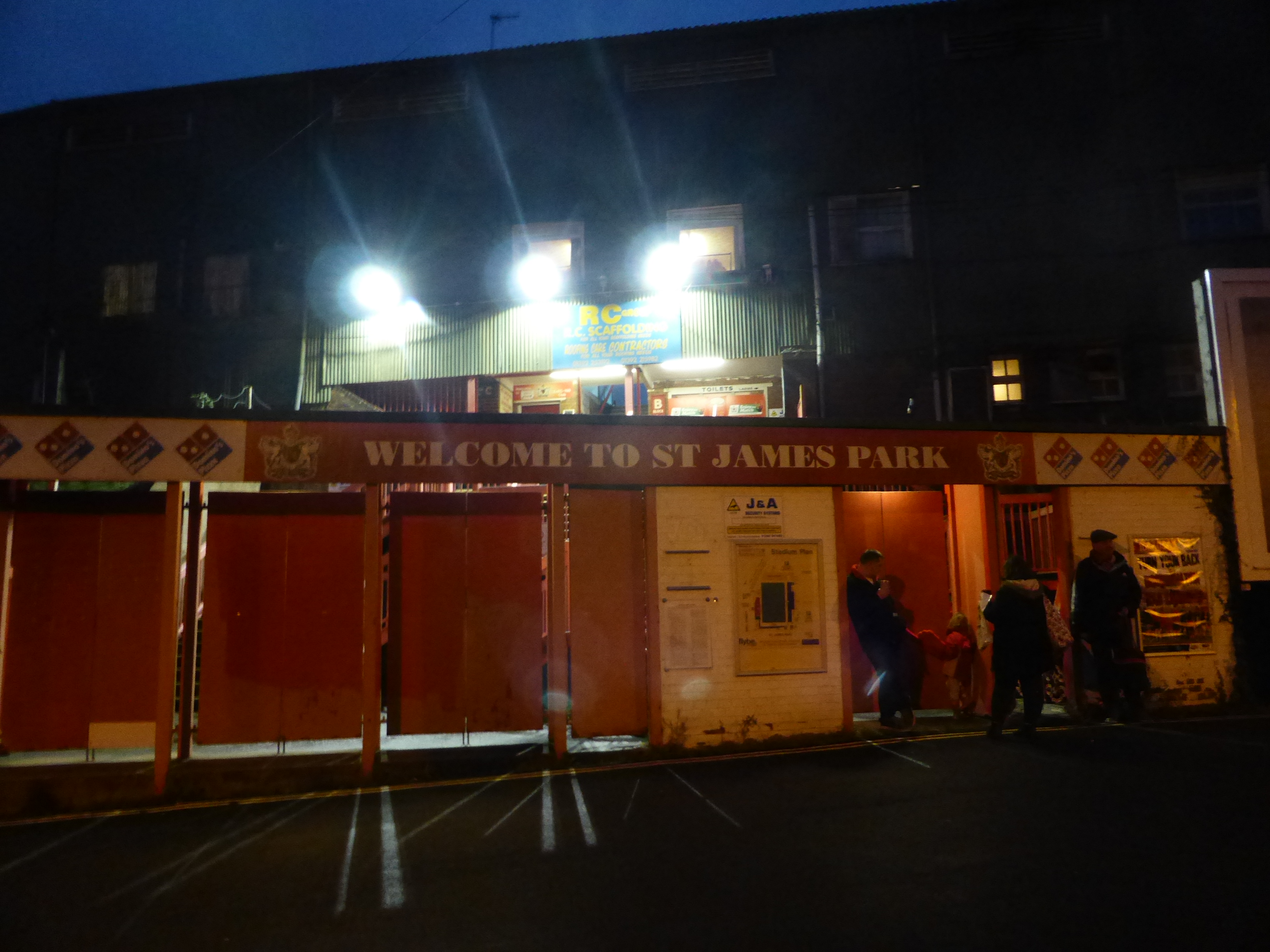
Especially when the floodlights are on, The old Stagecoach Stand looks like an ominous robber castle. It doesn’t extent the entire length of the field, as the ground is squeezed in so close to the railroad behind that there wasn’t room for a “full” stand, once the pitch had been extended to full length.

P1130220

It is features such as this, that makes the ground special, as far as I am concerned. Grounds that have architectually taken shape after the surroundings – that have grown up organically within a neighbourhood. Like Griffin Park, Brentford or Kennilworth Road Luton.
 

P1130097  P1130103 P1130104  P1130106

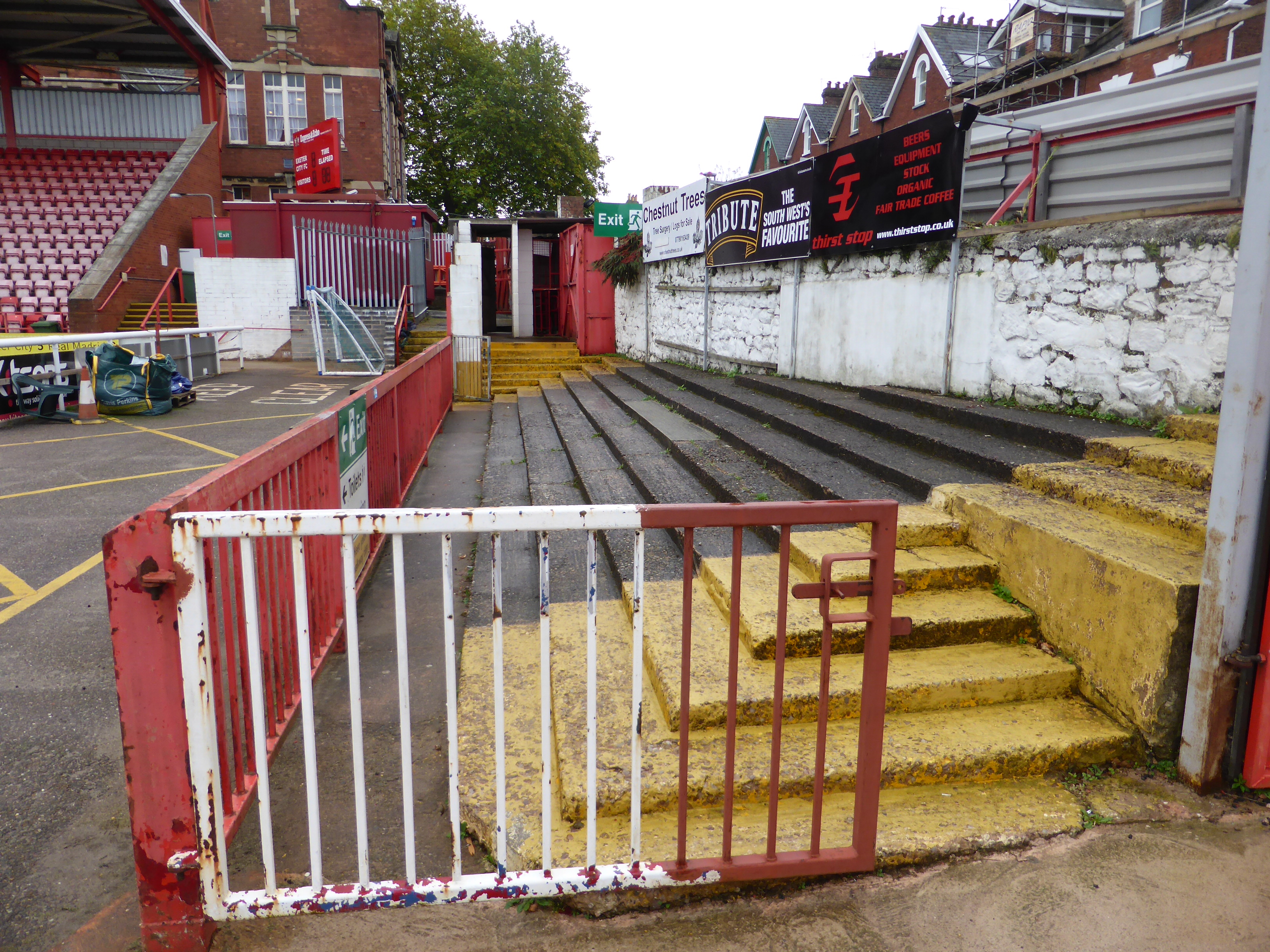
The neighbourhood-element also features heavily in the away end, as there is only a 9 step terrace holding 700 fans, enabling the houses behind it to have a perfect view of the pitch. For the visit of Manchester United, people offered huge sums to watch from the windows.
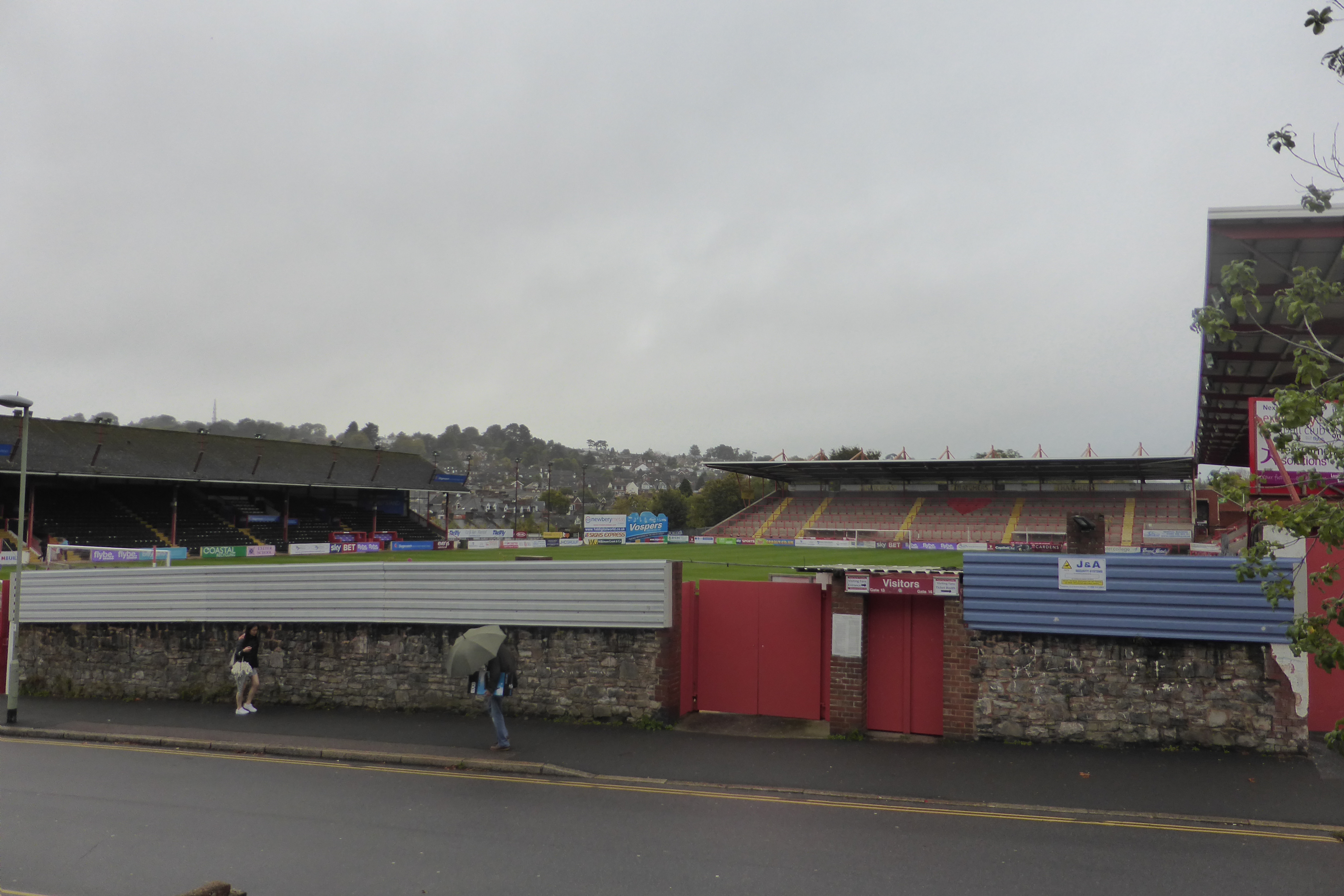
P1130111

This is how the ground looks from the front door in one of the houses.
P1130108 P1130284 P1130272

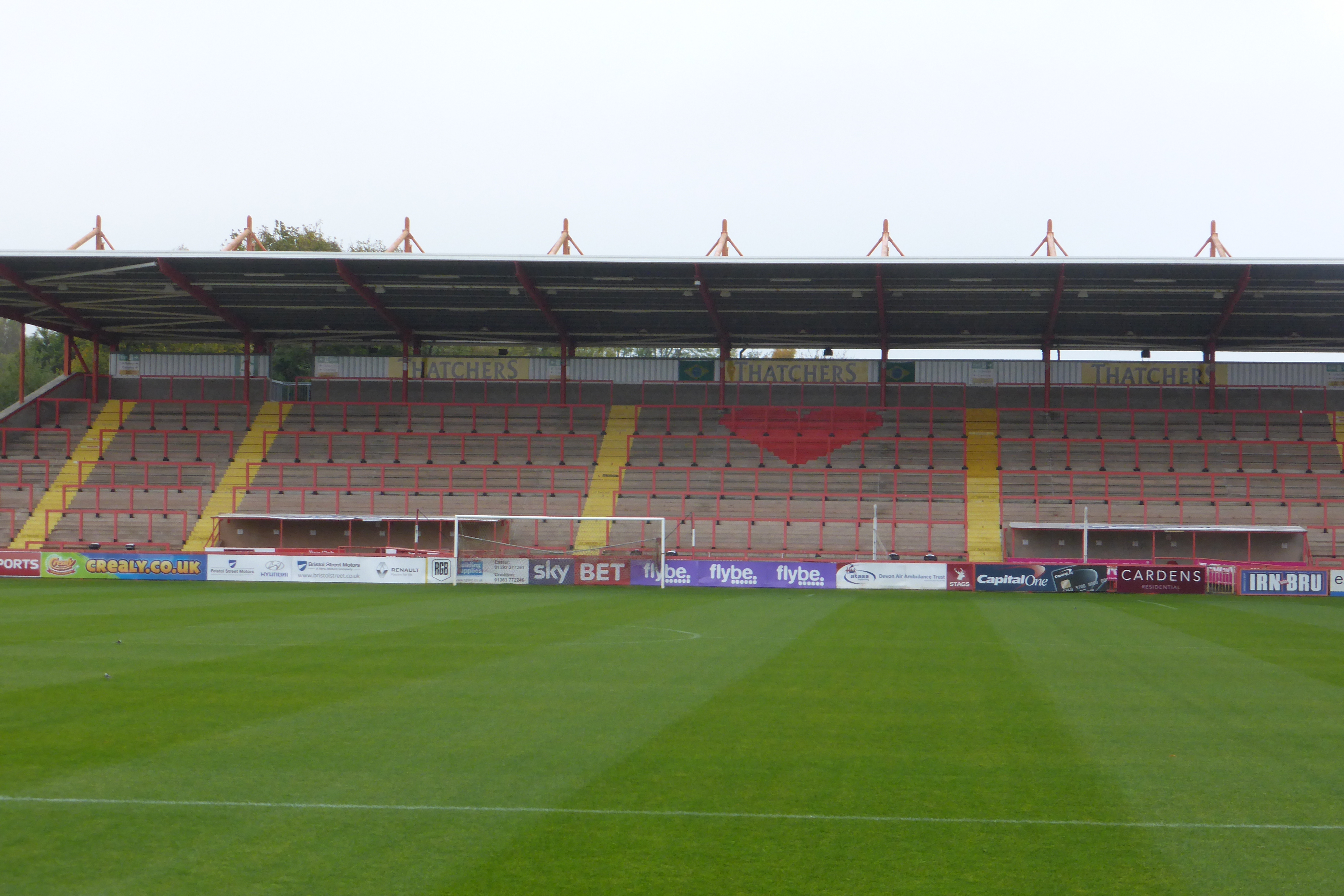
Modern stands cannot quite match this. But the Thatchers’ Big Bank from 2001 is still a throw-back to the all days, being currently the biggest standing terrace in the league with a capacity of 4.000 fans. It is, of course, a far cry from the Kop at Hillsborough in it’s prime with well over 20.000. But still, it is fine. Although it turns out that with no stand down the other end, the cold wind blows directly into the stand, making it quite cold. And then, of course, to someone my age, the name “Thatcher” doesn’t fit a supporters owned club’s main stand.
 

P1130165P1130235

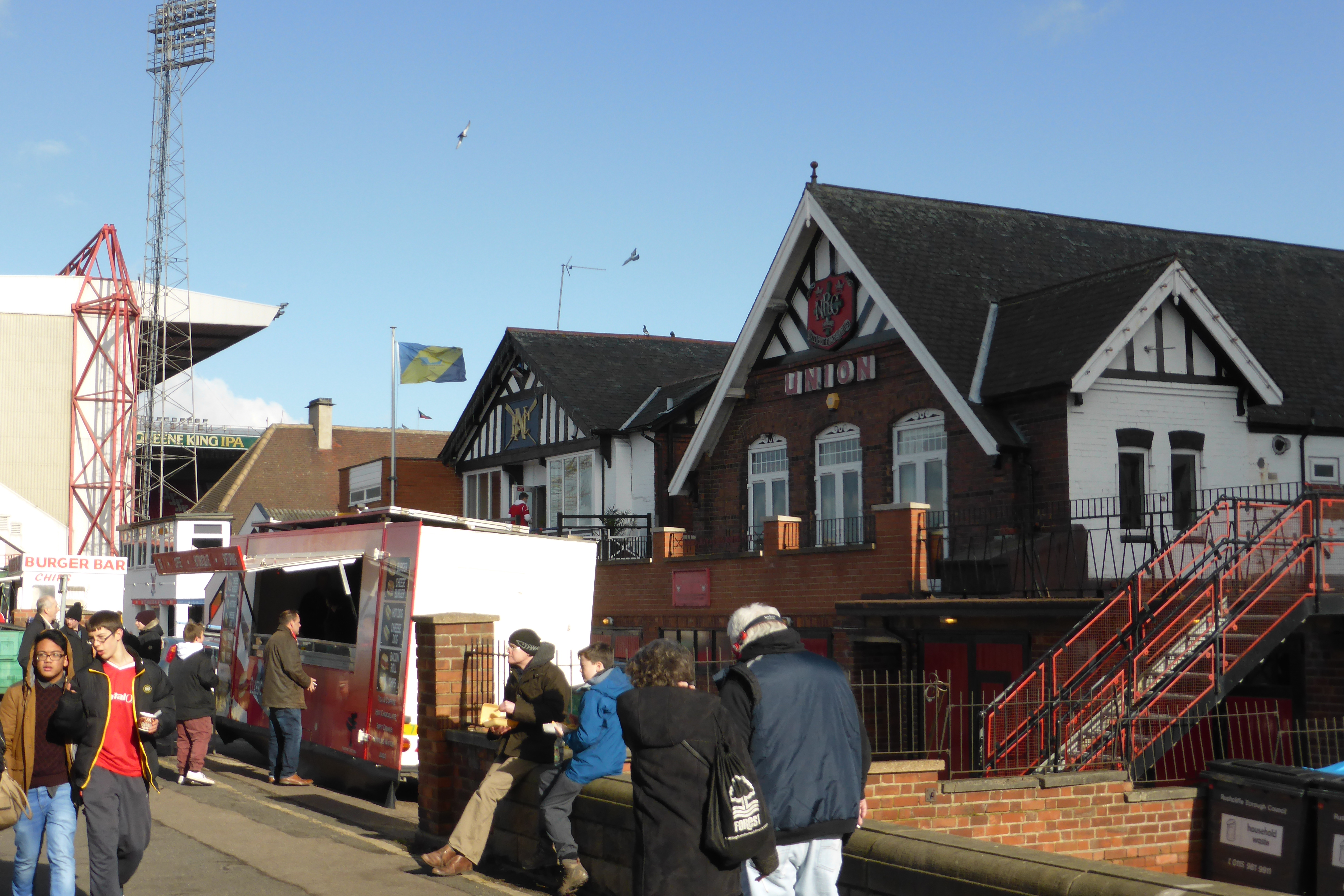
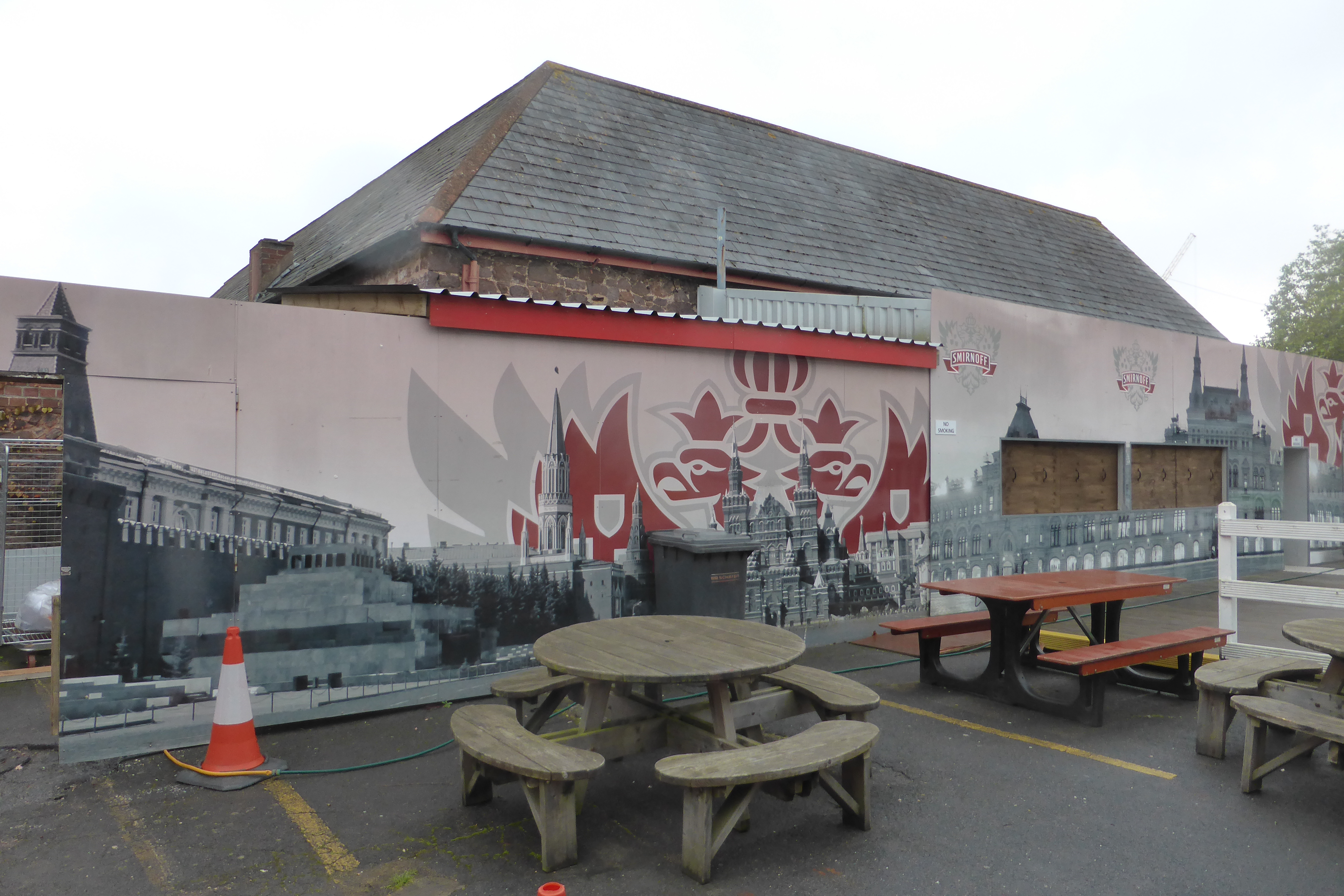
As matchtime approaches, I take a look at the food on offer at the Kenniford Farm Kitchen – and then opt to rush to an Indian restaurant round the corner for quick curry instead. I just don’t feel like burgers, which seems to be the only food on offer.
P1130287 P1130270

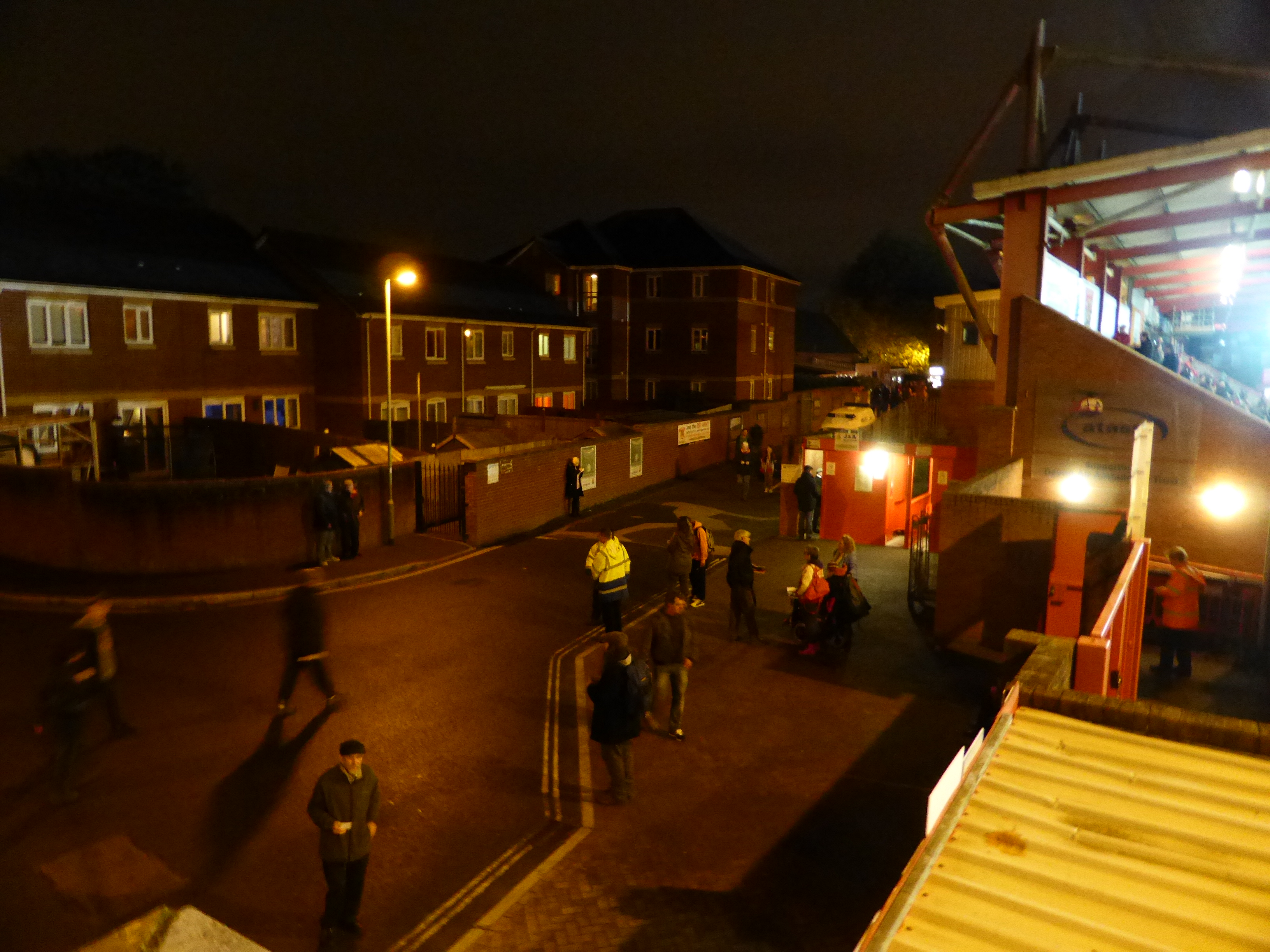
When I get back, there is more life around the ground – but not that much. The crowd is just under 3.000. I do my standard count of a random 100 fans, who pass me. 100% white, 81% male. I have to admit, though, that I didn’t count the 60-80 teenage girls who passed me to go to the players’ entrance. They were to dance on the pitch before kick-off – and seemed to hurry down into the dressing room rather than into the stand after the match.

P1130298

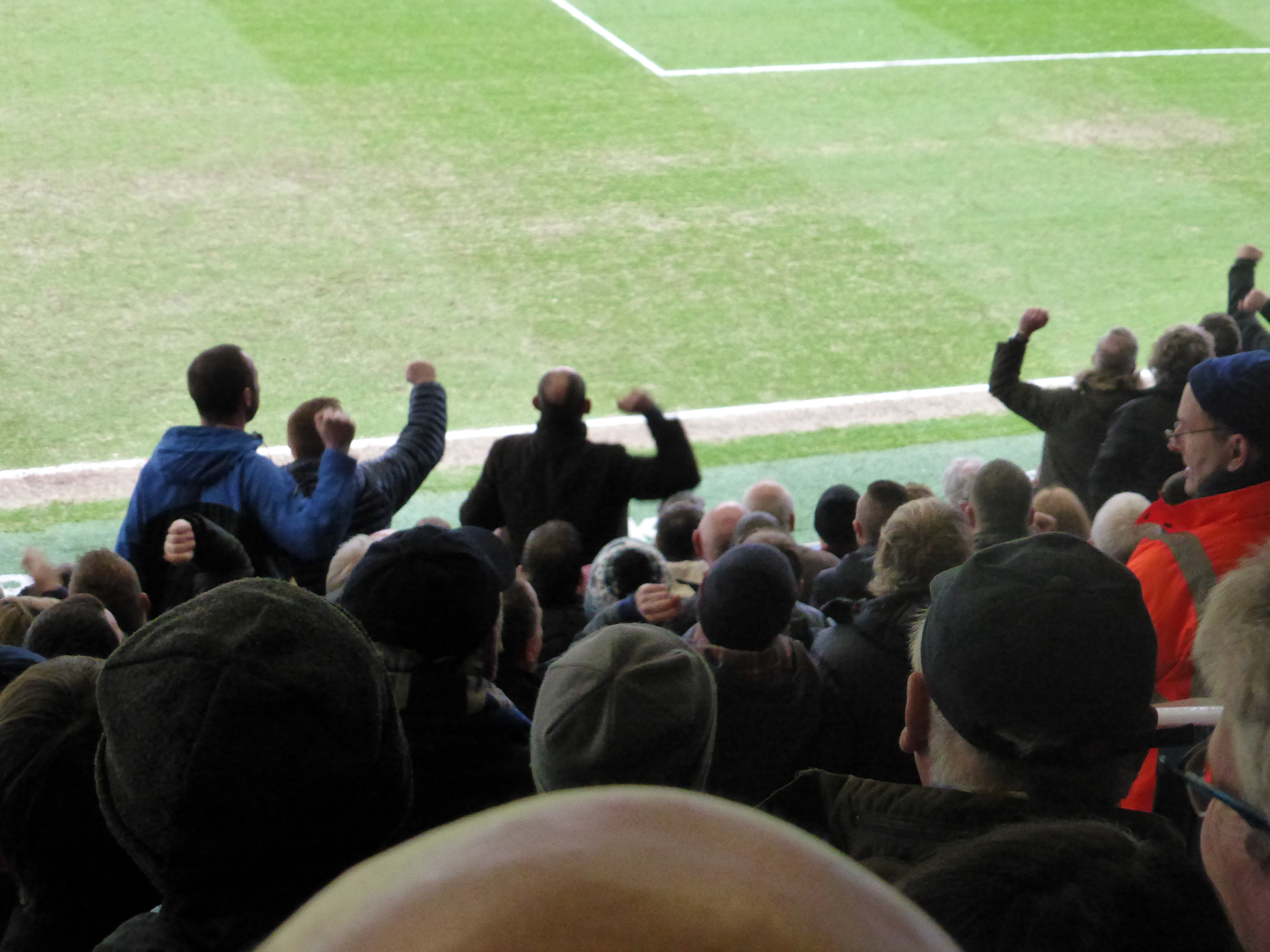
Of the 3.000 fans, I guess half them were at the Big Bank. Here the percentage of men was even higher than the 81 – and there were at least a hundred teenagers with drum and all in the centre. As Exeter got off to a great start with an early goal, they made quite a lot of noise. But as Exeter failed to build on the goal, the sound of chatting voices took over. In the second half, they tried to rally for about 20 minutes of constant singing, but as their energy didn’t transfer into the team’s efforts, they gradually faded again. Maybe, also because of the cold.
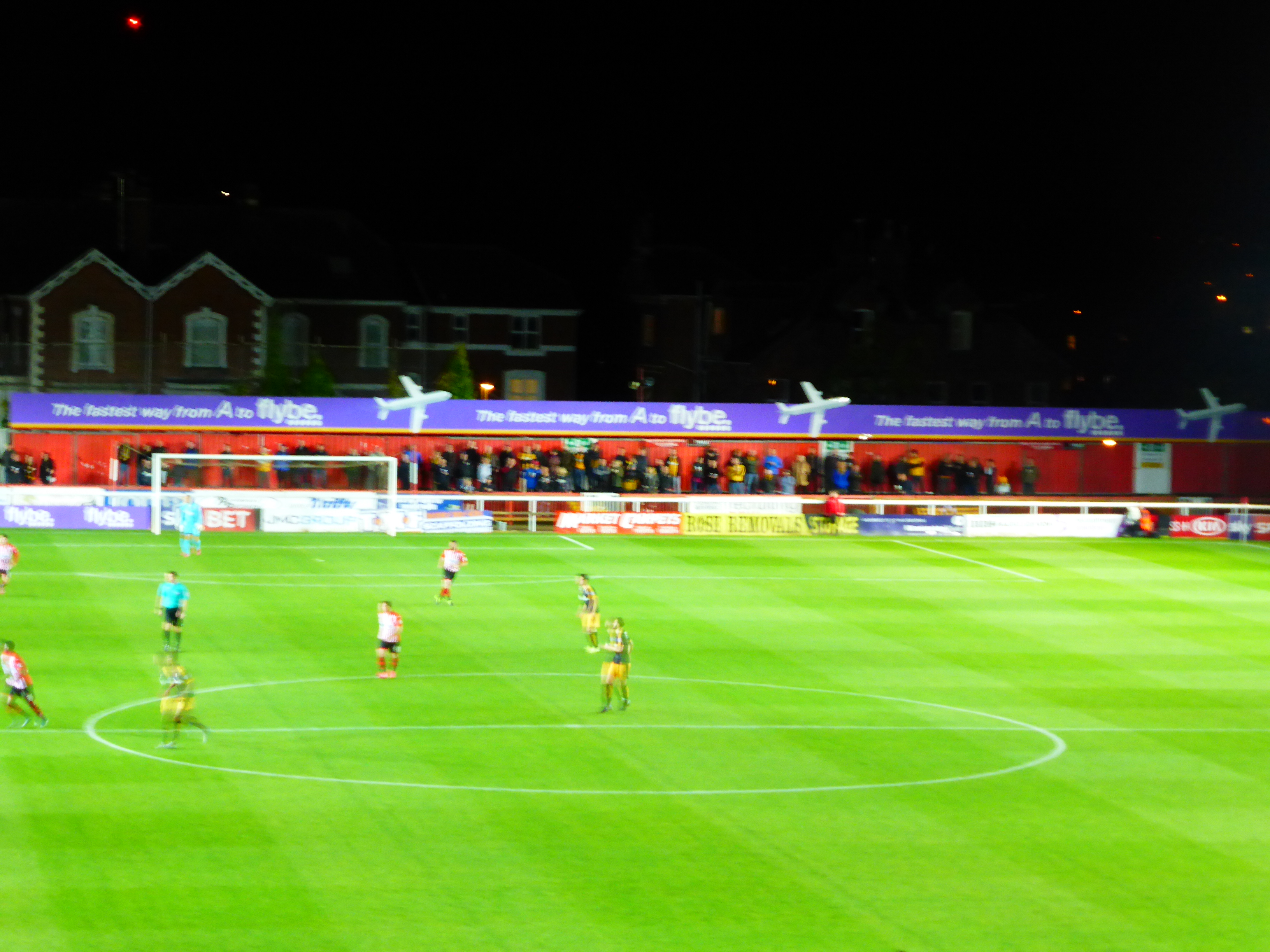
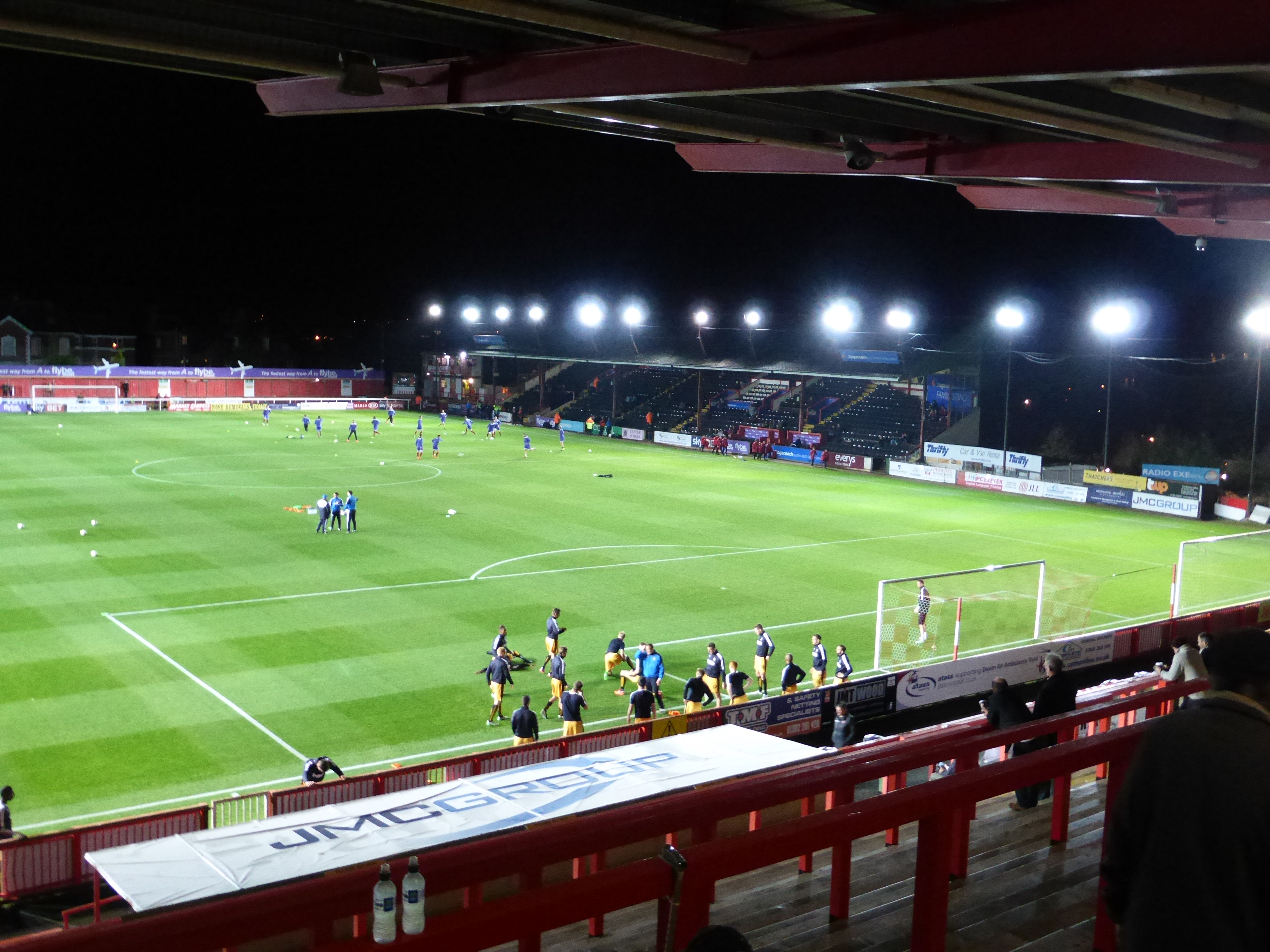
P1130308 P1130292

Down the other end, there were hardly more than a hundred Cambridge United supporters. We could only hear them a couple of times in the second half – but a group of them took part in a new fashion on flashing and waving mobile phone lights during the match. Well, it may not be new, but I haven’t really noticed it before.

P1130317 P1130300

The match ends with a 1-0 win for Exeter. Compared to the Bristol Rovers – Notts County match the day before (also two mid-table League 2 teams), the standard of play is extremely poor. It is littered by mistakes and bad passes – and both teams take to good old-fashioned kick-and-rush football as a consequence. And as the defenders look rather shaky, it does generate a goal and more chances than the good flowing match the previous day. In the second half, Exeter survive a handful of goalmouth scrambles – but maybe they showed a bit more of energy to make them deserved winners.

I head back to my hotel room – from where I stare down into the courtyard of the county prison. Despite the poor match, it had been a good day out. And I feel privileged that I got to see the Stagecoach stand before it will be demolished. I can only recommend fellow groundhoppers and football fans to hurry to Exeter to experience it this season.
 

Tagged with: , , , , , , , , , ,
Posted in Football grounds, Uncategorized

Memorial Stadium – Bristol

P1120938

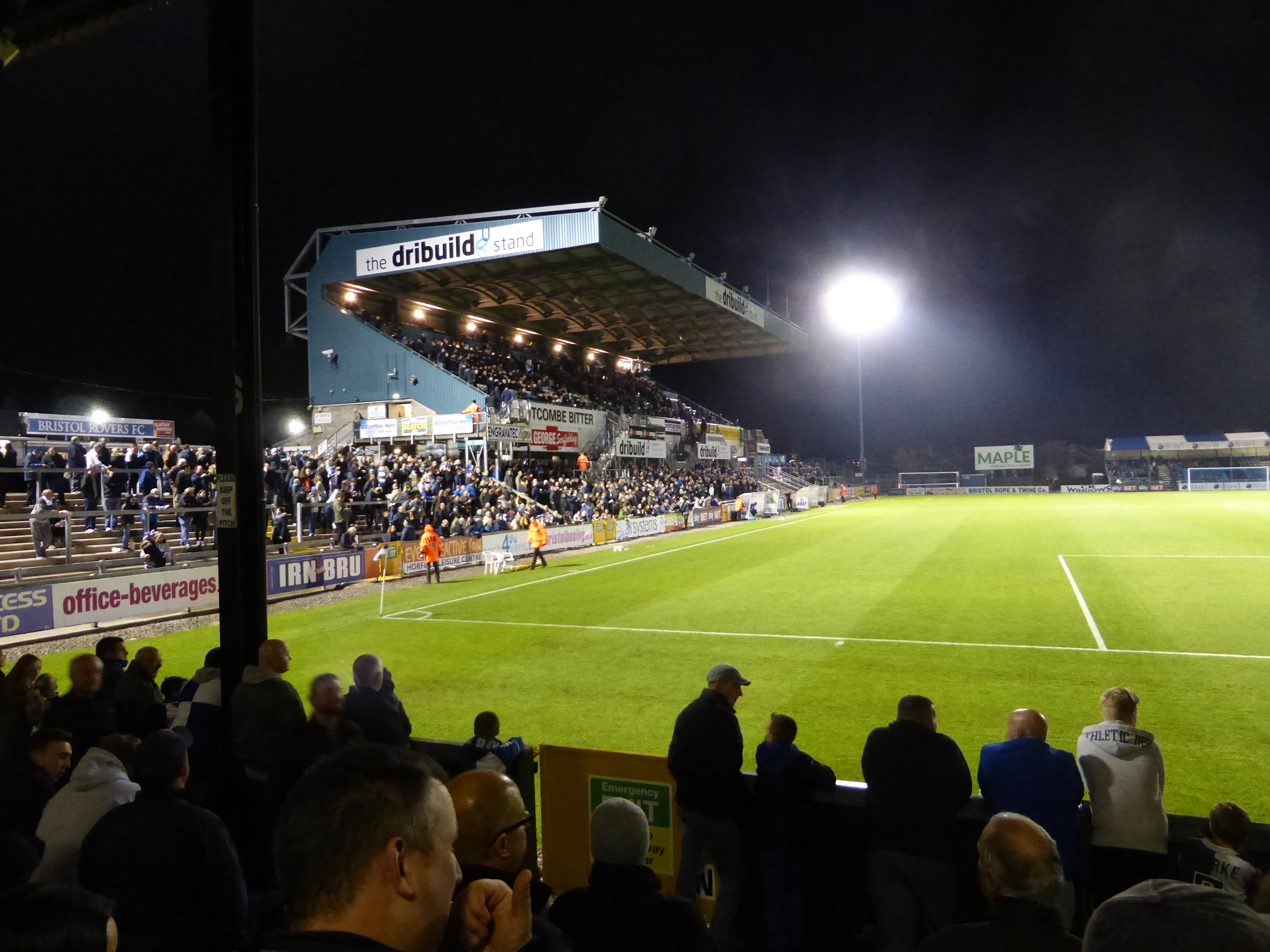
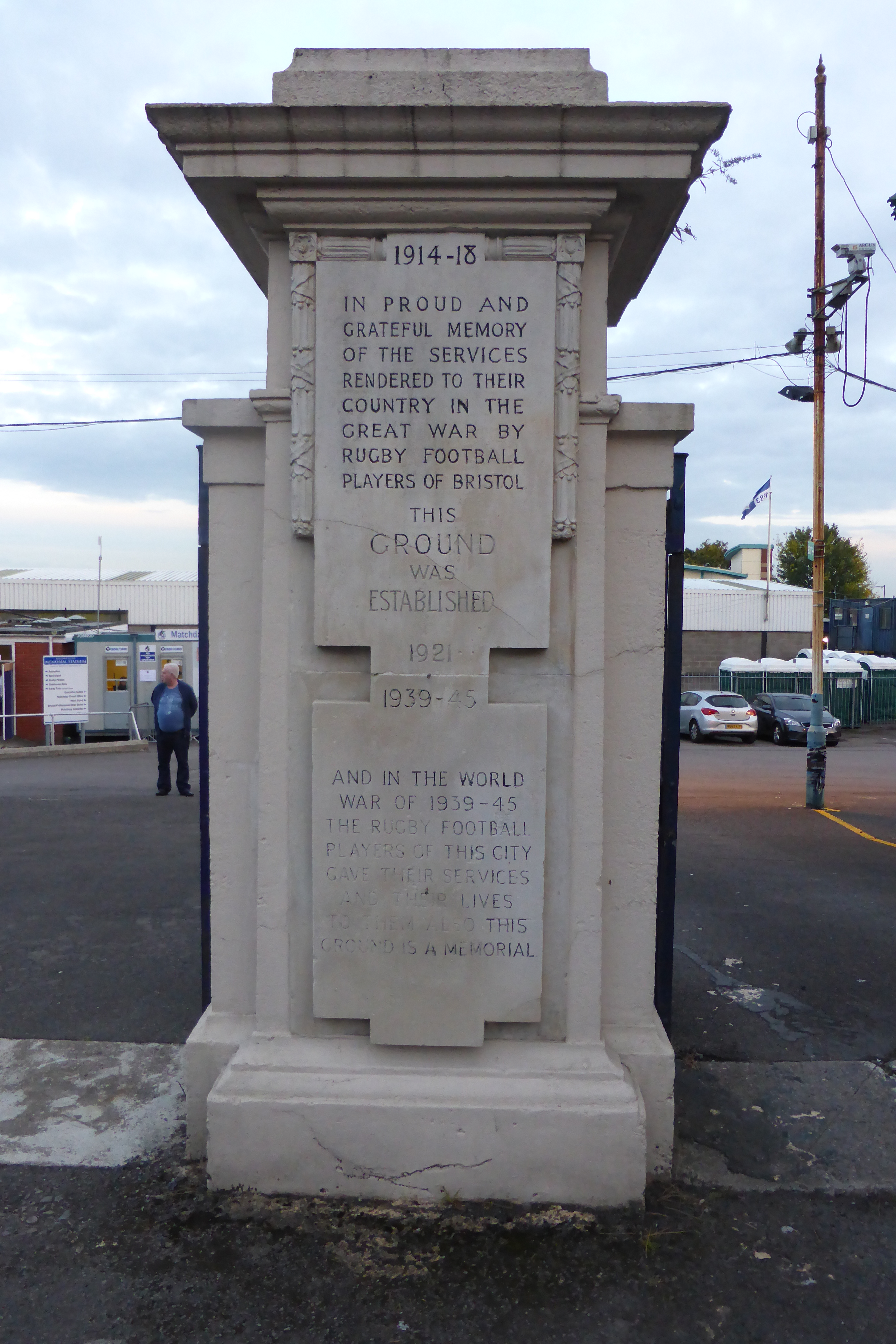
I had several good reasons to make the Memorial Stadium in Bristol my next destination. First of all, I do work in a WW1 museum, and the Memorial Stadium was – as the name indicates – built as a memorial for the Rugby players of Bristol who lost their lives in the Great War.

P1120933P1120935

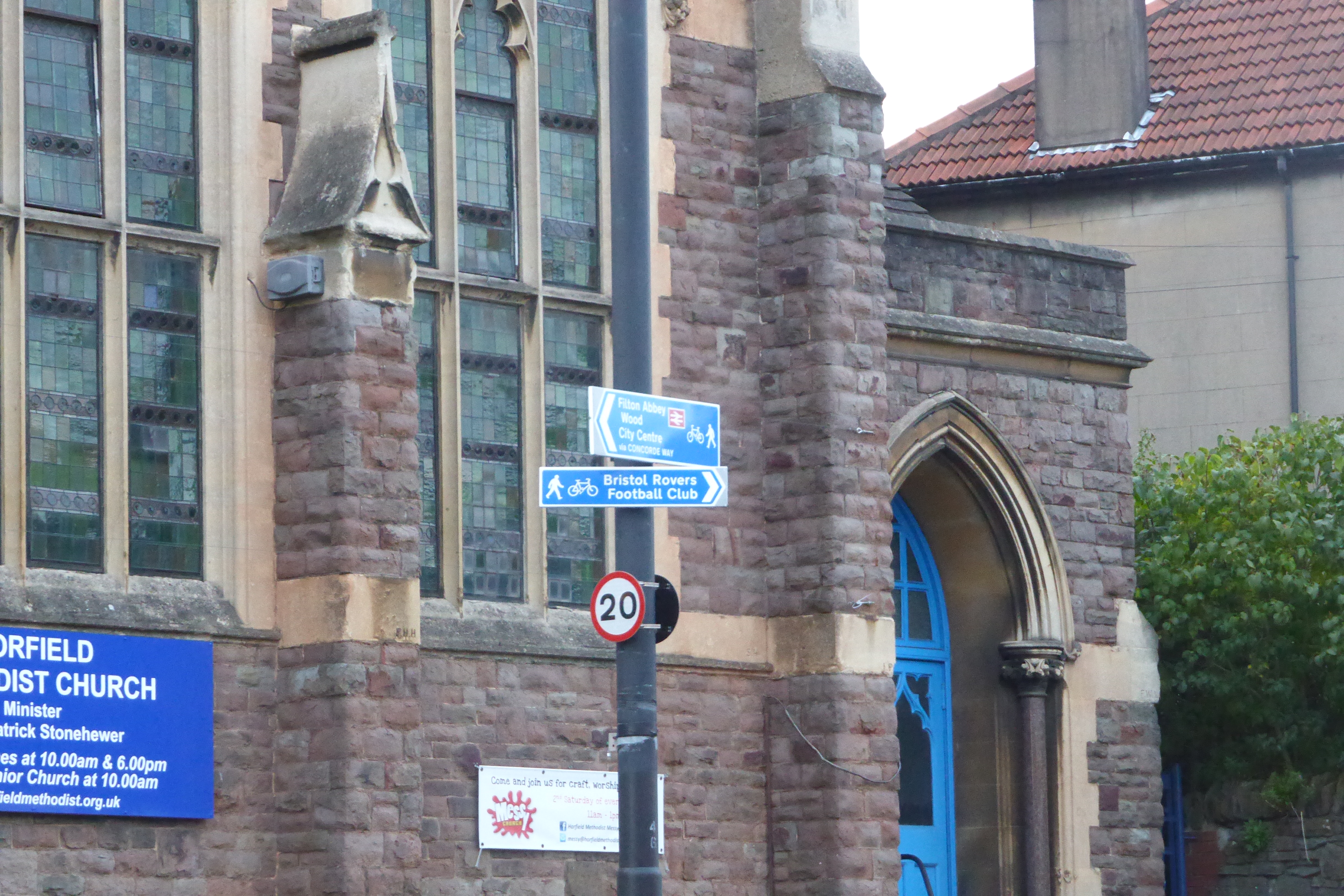
Fittingly, the first two indications that you are approaching the ground, when you walk down the Gloucester Road are two signs by a church on the other side of the road.

P1120937P1120939

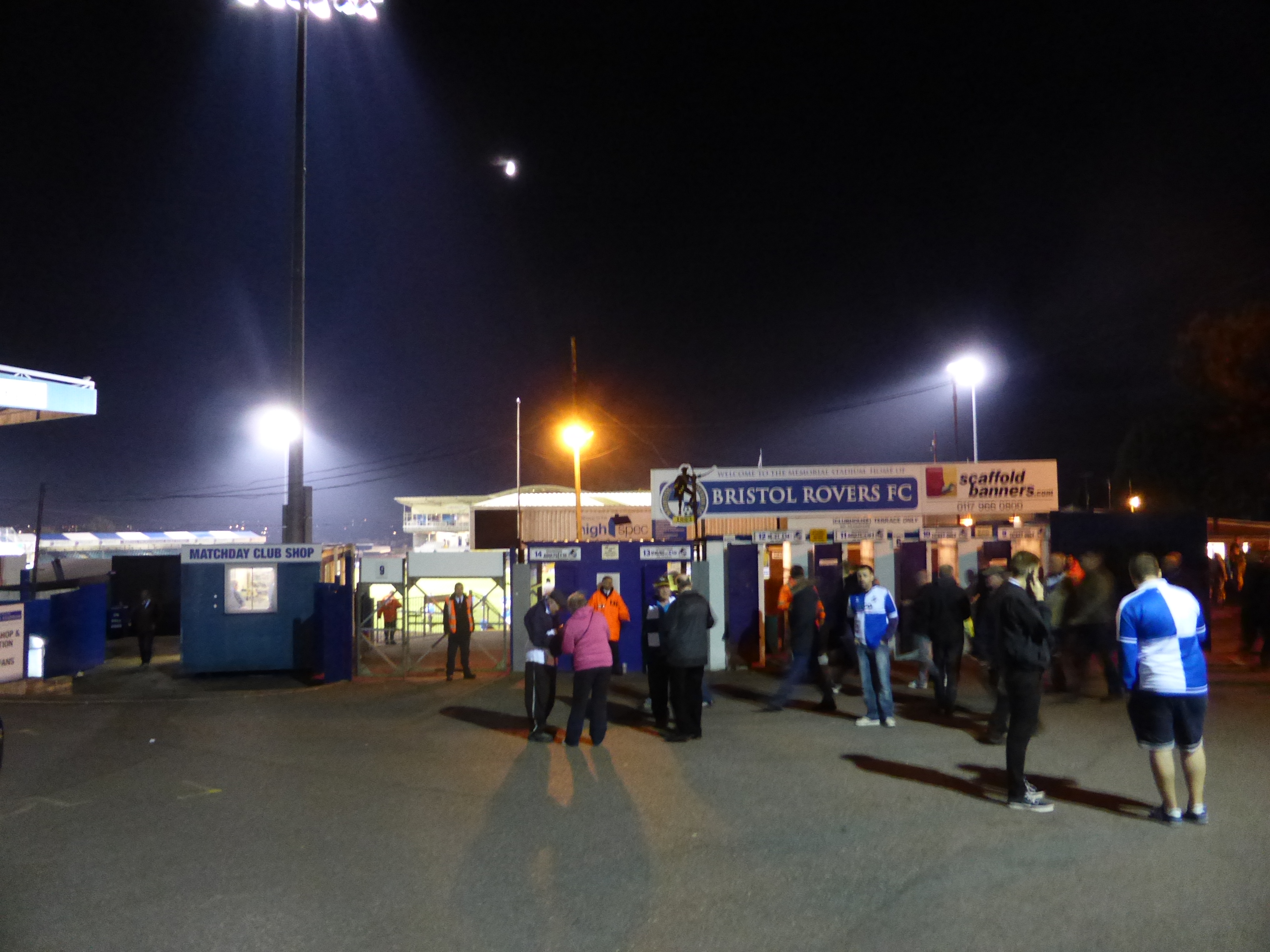
And fittingly you have to pass through the memorial gate to get to the stadium. I have read that there is a ceremony at the home fixture closets to Remembrance Sunday and on Remembrance Day. But, alas, my visit was a week or two too early for that.

P1120934P1120932

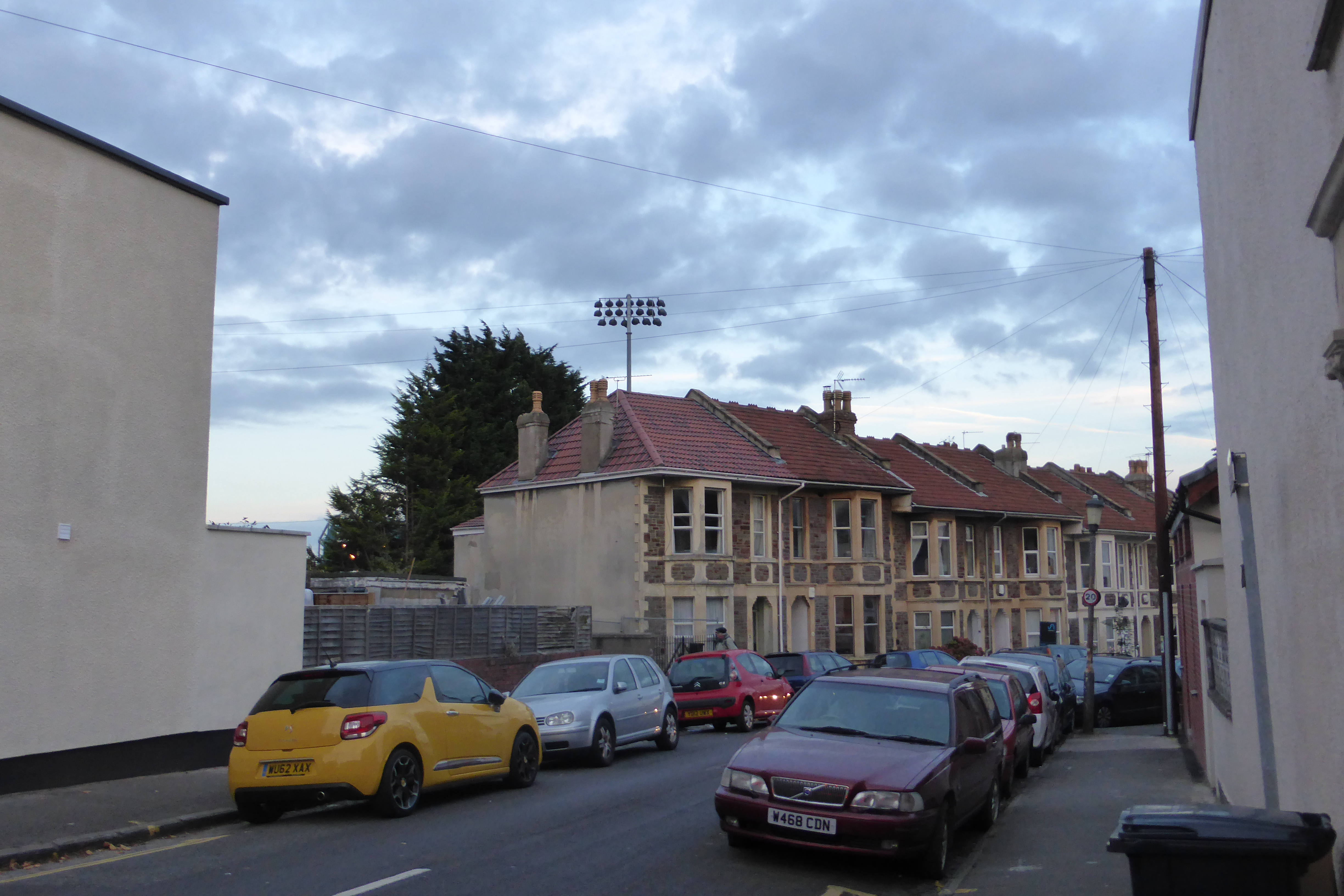
Secondly, I am currently doing research on the emerging entertainment industry in the late 19th and early 20th Century. And the stadium was actually built on the Buffalo Bill ground, where his Wild West Show performed in 1891. Not that there are any traces of it. But having walked the long way down Gloucester Road to get here, you cannot help wonder what the place looked like in those day. Was it way out in the countryside? When was the the terraced housing next to the ground built?

P1120958P1120943

Thirdly, Bristol Rovers – although owners of the ground – consider themselves homeless (even though the scarf I bought said “Memorial Stadium – Home of Bristol Rovers”). Founded in 1883, the club moved to Eastville Football and Cricket ground in 1897. It was located next to the Stapleton gasworks, which is why Rovers are still called the gasheads or the gas, even though they seem to officially use the nickname “The Pirates”.

Rovers entered the football league in 1920, but couldn’t quite match the gates of rivals Bristol City. Therefore they decided to expand the ground – moving the end terraces back – to accomodate a dog track, giving them a steady income. Still, they struggled financially, and in 1939 sold the ground to the greyhound company to pay off their debts. That came back to haunt them in 1979, when the lease of the ground came up for renewal. They were not prepared to meet the demands of the greyhound company, and to add insult to injury, the main stand containing all the club records burned down.

Negotiations finally broke down in 1982 – and Rovers made a deal with Bristol City in stead. But then City went into liquidation, and the new earners wanted to double the rent. Rovers had to go back to the Greyhounds, before in 1986 setting up a deal with Bath City. They had 10 succesfull years there, but it was not in their hometown, and an 1996 they got the opportunity to join the rugby team at the Memorial.

P1120949

Then the rugby club hit financial problems, and Rovers bought the ground to help them out – only for the rugby team to move to rivals Bristol City in 2014. Still, Rovers seemed to have found a way to turn the ownership of the Memorial to good use, as they made a deal with Sainsbury to buy it – and this would finance the building of a new stadium at the university grounds. Once the plans for the new stadium were approved, however, Sainsbury pulled out of the deal. And they are still battling that one out at the courts.

So – the big question – what is the home of a homeless football club like?

P1120962

The fourth and final reason why I had to choose the Memorial was that my nephew is currently in Bristol as an exchange student. I took him to his first match in Denmark more than 15 years ago. It was quite memorable. We were standing on the end terrace enjoying a pre-match sausage with plenty of ketchup, talking, when a stray shot from the players warm-up hit us. The ketchup splashed all over us. We spent ten minutes in the Gents’ room trying to wash it off. But I never managed to get the red stains off my clothes. I wonder, what was in that ketchup. Now was the time to take him to his first match in England.

P1120945P1120983

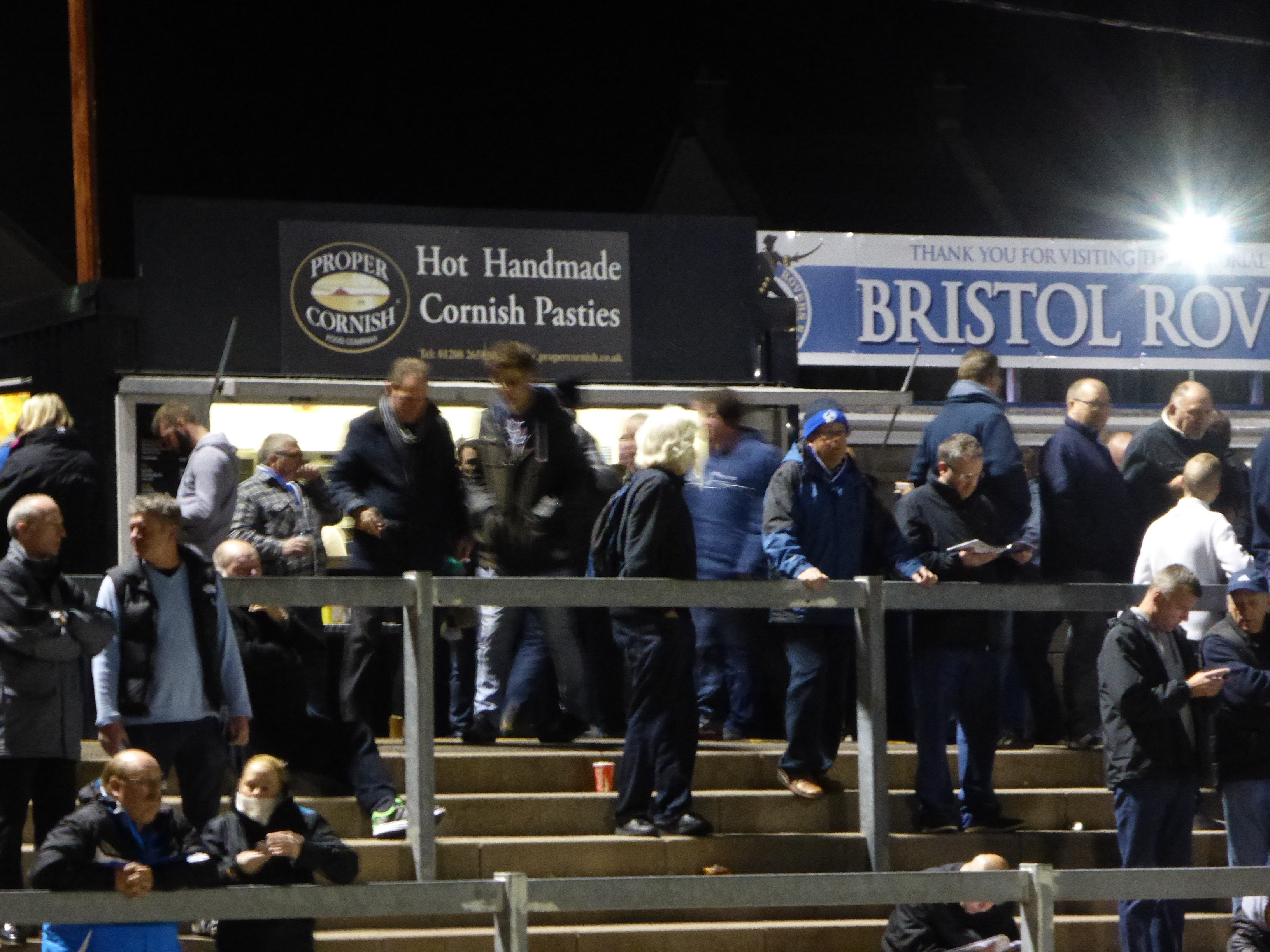
To take the food, and the ketchup, first, we went inside the small stadium pub/café to try Irene’s kitchen. It sounds promising – Irene’s.

In fact, Goodnight Irene is the anthem of Bristol Rovers. We read a quite funny story of how it came to be so. Back in 1950, Plymouth Argyle visited Eastville and brought along an accordion player, who played top hits of the day prior to the match. One of them “Goodnight Irene”. When Plymouth took the lead, they taunted the Bristol supporters with the song. But then Rovers hit three goals in 10 minutes, and now the Rovers fans sang “Goodnight Argyle” – and it stuck.

P1120984

Alas, Irene’s cooking leaves a lot to be desired. You can understand the lyrics:

“Sometimes I live in the country, Sometimes I live in the town,
Sometimes I have a great notion, To jump in to the river and drown.
Irene goodnight, Irene goodnight,
Goodnight Irene, goodnight Irene,
I’ll see you in my dreams.”

P1120986

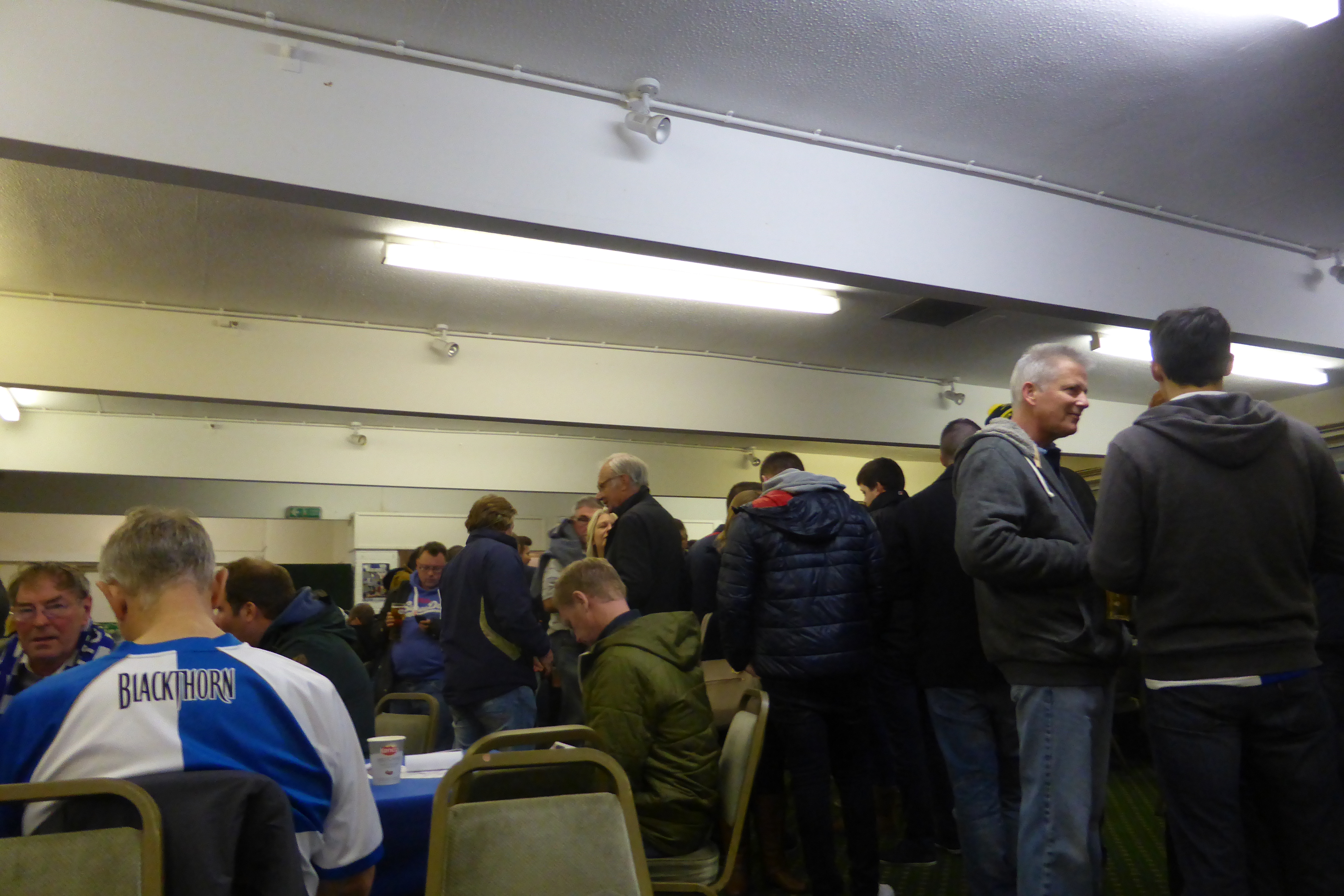
But the atmosphere in here is good. I do my routine count of the first 100 people who passes by me. 91% male. 100 % white. The impression inside the ground is roughly the same.

P1120990

We spend some time in the matchday souvenir outlet, chatting with staff and supporters. They are mainly interested in discussing Danish beer, but I want to know what they think of their “home”. “It is not our home”. The answer is quite clear. “Young fans might feel different. But Eastville is our home”. So to them, the deal with Sainbury cannot be solved quick enough. “We had some tremendous years in Bath, but it was their ground”.

P1120969P1120992

Later, inside the ground, we chat with the Bristol supporter next to us. He agrees. It is not a home. It is not proper football ground. It is a rugby ground – that actually looks a bit like a cricket ground. He went to Eastville as a kid, but not long enough to develop a strong “home feeling”. Still, he is a bit mixed about the stadium plans. New stadiums are all the same. And they are all-seater. Here at the Memorial, you have terraces, in fact, of the 11.000 capacity, there are only 3.000 seats. And that you will loose in a modern stadium. And that is what football is about.

P1120970P1120971

On the other hand, you won’t get families and corporate deals to the ground with the current facilities. And that is the way to generate revenue in the modern game. And that is what you have to do to survive.

Our new friend comes from a family that have been Rovers fans for generations. In fact, his father and sister are among the stewards for tonight’s game. He could never support another team. Not having a proper home does not come into the way of a strong club identity.

P1120988

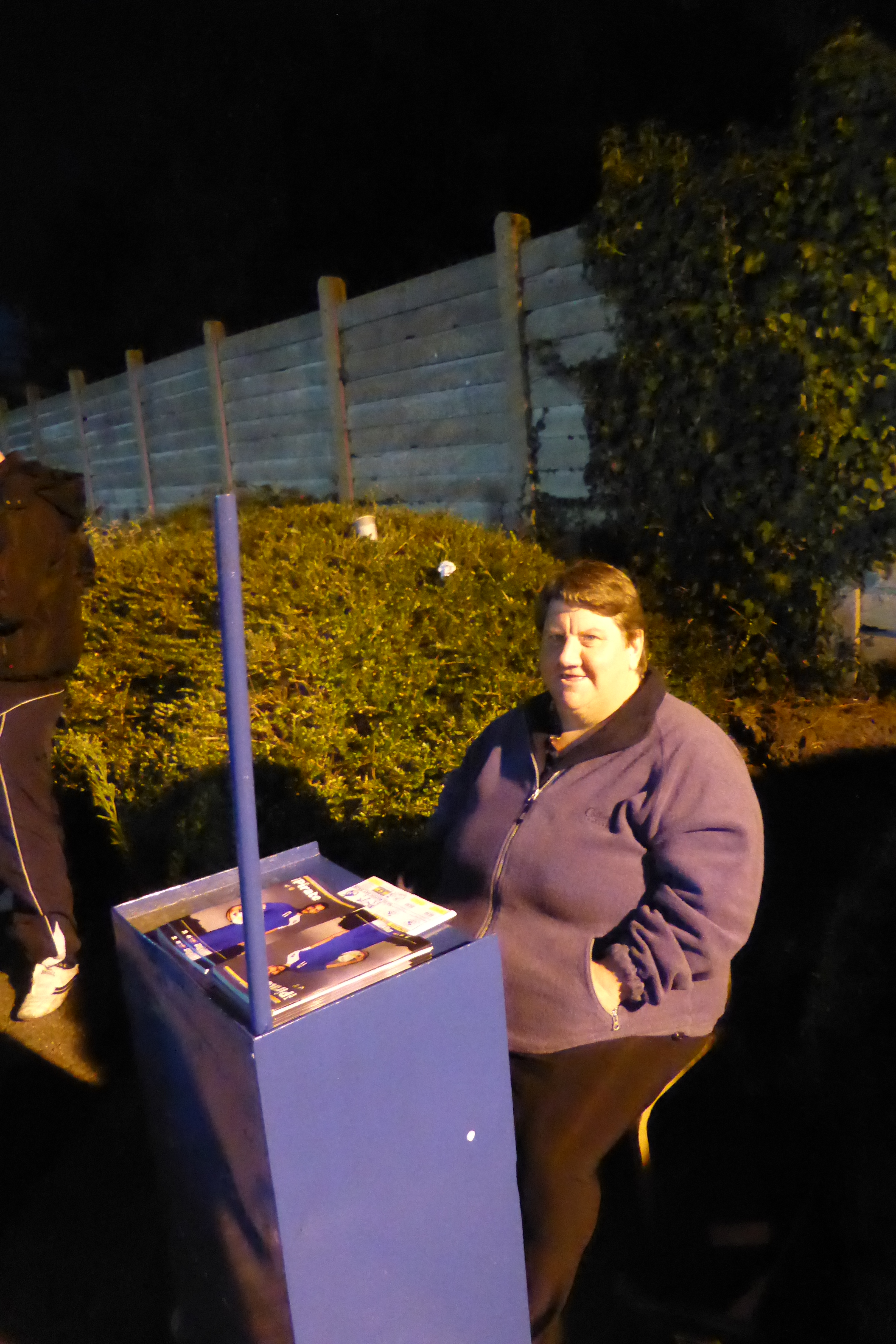
And there is a homely feeling to the ground. For instance, the programme seller. She met when we arrived before the match, and as she now sits in a programme stall, I choose that one for purchasing my programme. “Why are you taking those photos?”. “I am writing a blog on football grounds.” “Put a photo of me on that blog” – here you are!

P1120981P1120982

We also see the players arriving. It is not like the big premier league grounds, where you are kept away from them by barriers and stewards. A girl is waiting for them with her family. She gets all the autographs – and ask the players for a hug afterwards. Almost all of them oblige.

P1120995P1120997

P1120998P1130004

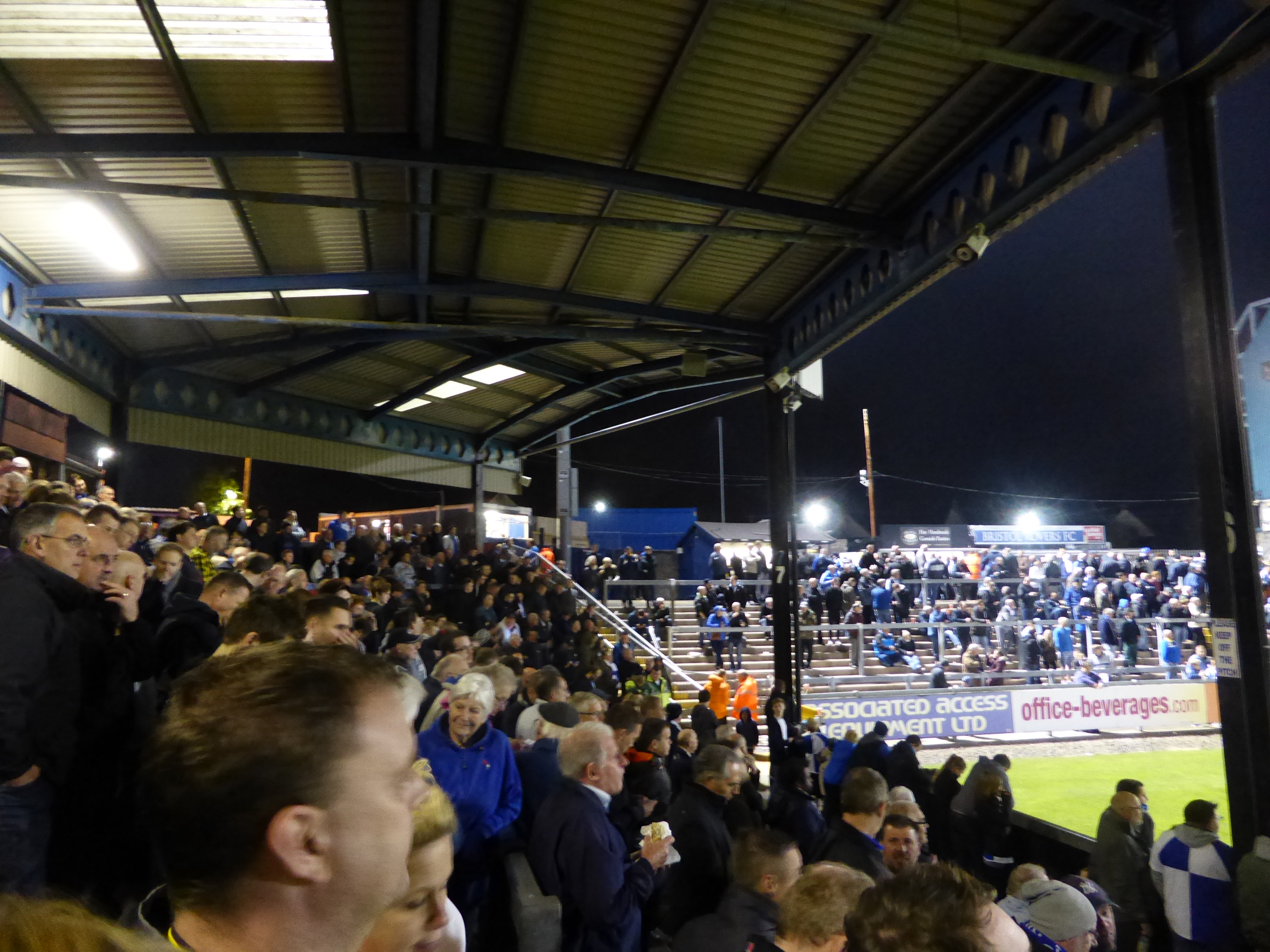
It might be that it doesn’t look like a football ground with the random stands around the ground – but I really like it. Standing on terraces just generate a better atmosphere. PEople are chatting all over the terrace, standing next to their mates. In all-seaters, it is so quiet when the game is not calling for ooohhs and aaahhhs. Here, there is all the time the sound of talking and banter. Next to me, there is about 10 teenage boys. Jumping around, pushing each other, making fun. They wouldn’t have such a good time if they were seated next to each other in a row.

P1130008

The away support is not very big. And it is hidden on a small terrace without roof on the other side of the big seater-stand. Down that end, there is very temporary looking seater-stand behind the goal. But a big gap right at the corner. It looks odd. And it doesn’t generate the bowl atmosphere. But still, the atmosphere in the north bank, where we are standing is quite good.

P1130013P1130027

Unfortunately, we don’t get a goal to lift it further. I am really impressed with the football played by Bristol Rovers in the first half. It is quick, controlled, good movement, overlaps on the wings, direct aggresive runs from midfield – and they play themselves out of awkward situations at the back. And only a couple of time do they loose possession by poor control or passing. It certainly is above the League 2 football I saw last season, where the warming up for the defenders was heading or kicking away crosses. It is all quite delicate. One of the centre backs is perhaps not quite up to technical football at that level – I really identify with him! – but is very good at deciding, when he has to whack it up field. Only a couple of times in the first half, more often in the second. But the closest to scoring, is a shot from 10 yards against the underside of the crossbar.

In the second half, Notts County take the sting out of the match, and also create a couple of good chances themselves. So – perhaps – it is fair that they get away with a point.

P1130030P1130063

We leave the ground and walk the long way back to the city centre. Only two other fans walk all the way.

It is strange how you come to sympathize and indentify with a club, once you visit and chat with their fans. Somehow, I got the feeling that perhaps not despite but because they don’t have a home – but a history of homelessnes – the Bristol Rovers fans have such a strong club feeling.

It is a far cry from the Premiership – and glory hunting fans. And maybe far better.

Posted in Uncategorized

Boundary Park, Oldham – or the SportsDirect.com Park

P1090114 P1090115

Telling people of my groundhopping project, many have adviced me to go to Boundary Park in Oldham. So being in Manchester on Good Friday, it was the obvious choice. Although some of the gloss was taken off my trip, as I discovered that Boundary Park has been renamed SportsDirect.com Park in a sponsorship deal. SportsDirect.com Park. It just doesn’t sound appealing.

P1090119

Anyway, I made my way to the ground with my teenage son on a grey, rainy Friday, and seeing a couple of other men get off the MetroLink at Freehold, we correctly guessed that they were on their way to the match too. It turned out that they were groundhoppers as well – two brothers from Switzerland. This was their match number 32 – just as it was my ground number 32 in England.

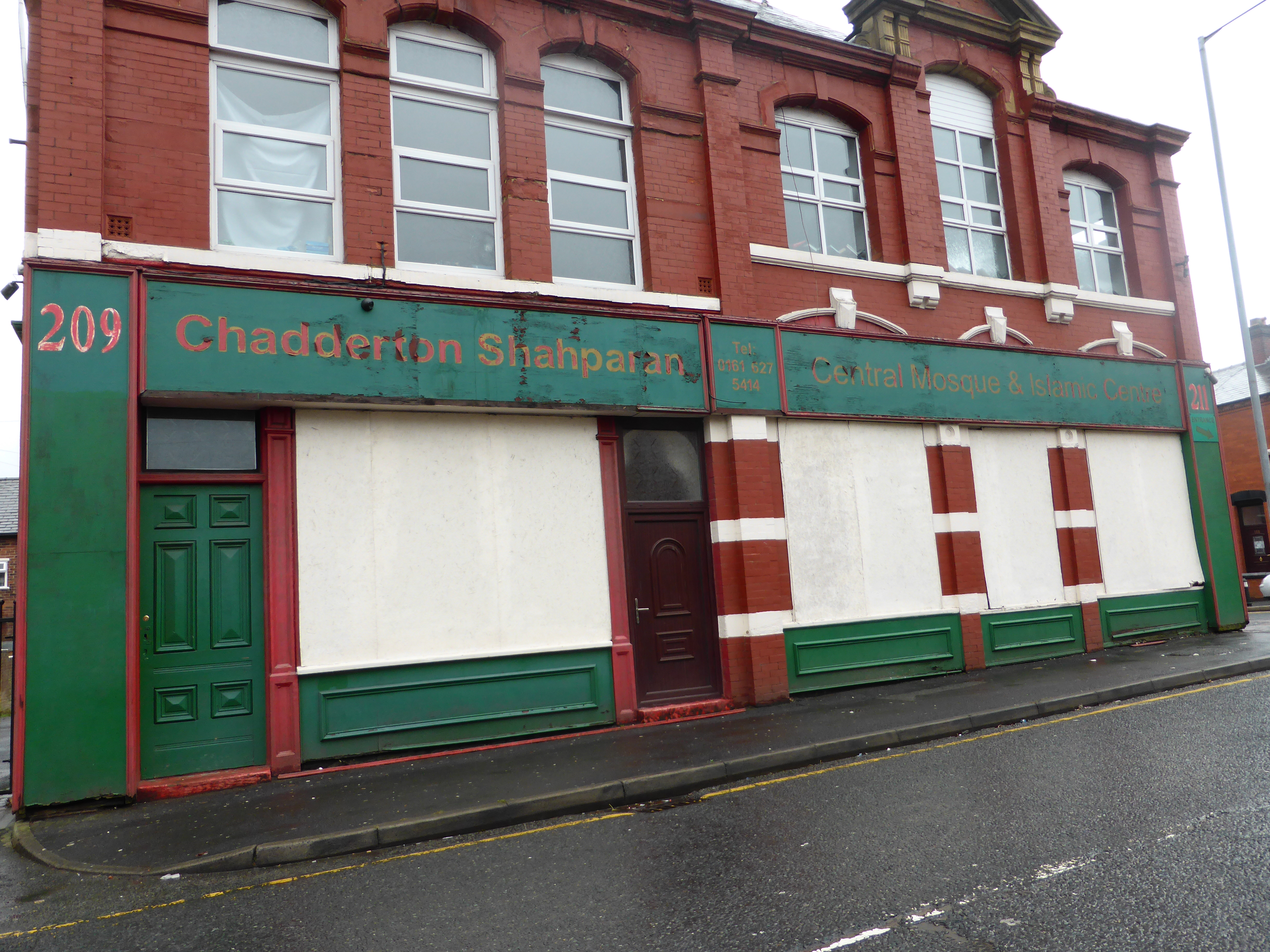
So we added a bit of international flavor to what (with the exception of a contingent of Bristol City supporters out to enjoy their team’s march towards the Championship) seemed a very local crowd. Or, perhaps, local is a wrong word. On our way to the ground we saw a mosque, and most of the people in the street were Indian/Asian. But as we got to the ground, almost everybody was white. I have started making a statistic on the first 100 people walking past me inside the football grounds. In this case the result was 83% men and 17% women – and 100% white. Looking around the ground, I managed to spot 5 people of other ethnic background among the 4,500 people there. But the percentage was definitely less than one.

P1090108P1090107

As well as being predominantly white and male, the average age was also pretty high – with a group of around 50 youngsters in the ZenOffice stand (what a name!) behind the goal forming a notable exception. These youngsters were also exceptional when it came to their looks, as at least some of them had allowed their hair to grow. As my son remarked, he and I seemed to have more hair than the rest of the men in the main stand put together …

P1090232

In many ways, I prefer the traditional grounds and the atmosphere. And although I am an outsider myself, I can understand the Manchester United supporters who moan about the daytripping tourists who take up so many seats in Old Trafford, buying half-and-half matchday scarves as a token to prove that they have actually attended a match. No such things at Boundary Park. No selling of souvenirs at all, let alone matchscarves.

P1090411(Photo taken outside Old Trafford)

But at Old Trafford, my counting has come up with 9 and 8% people of other ethnic background on my past couple of visits. And the number of women is about 25%, higher than in any other ground, where I have done the counting. It is not that I have been in sections full of Asian daytrippers. There are, in fact, quite a few locals of Asian descent inside Old Trafford as well.

P1090289

The atmosphere at Boundary Park and most other grounds somehow seem excluding. Not that I don’t like it. But I somehow feel embarrassed for the clubs that they have so little contact with the local communities. It is not just Oldham. I saw the same in Luton, among other places. And according to an article on the BBC website, it is the same at Burnley (http://www.bbc.com/news/uk-england-manchester-21893570). These places are like time warps, transferring you back to the 1980’s, before the Premiership and the transformation of the game.

When you walk around Boundary Park (I can’t get myself to use the sponsored name again), it seems hard to believe that Oldham actually played in the premier league in the 1990’s. It is not just that the ground is small, the current capacity being just above 10.000, it is also that it is just not geared for the glittering premier league life.

P1090125

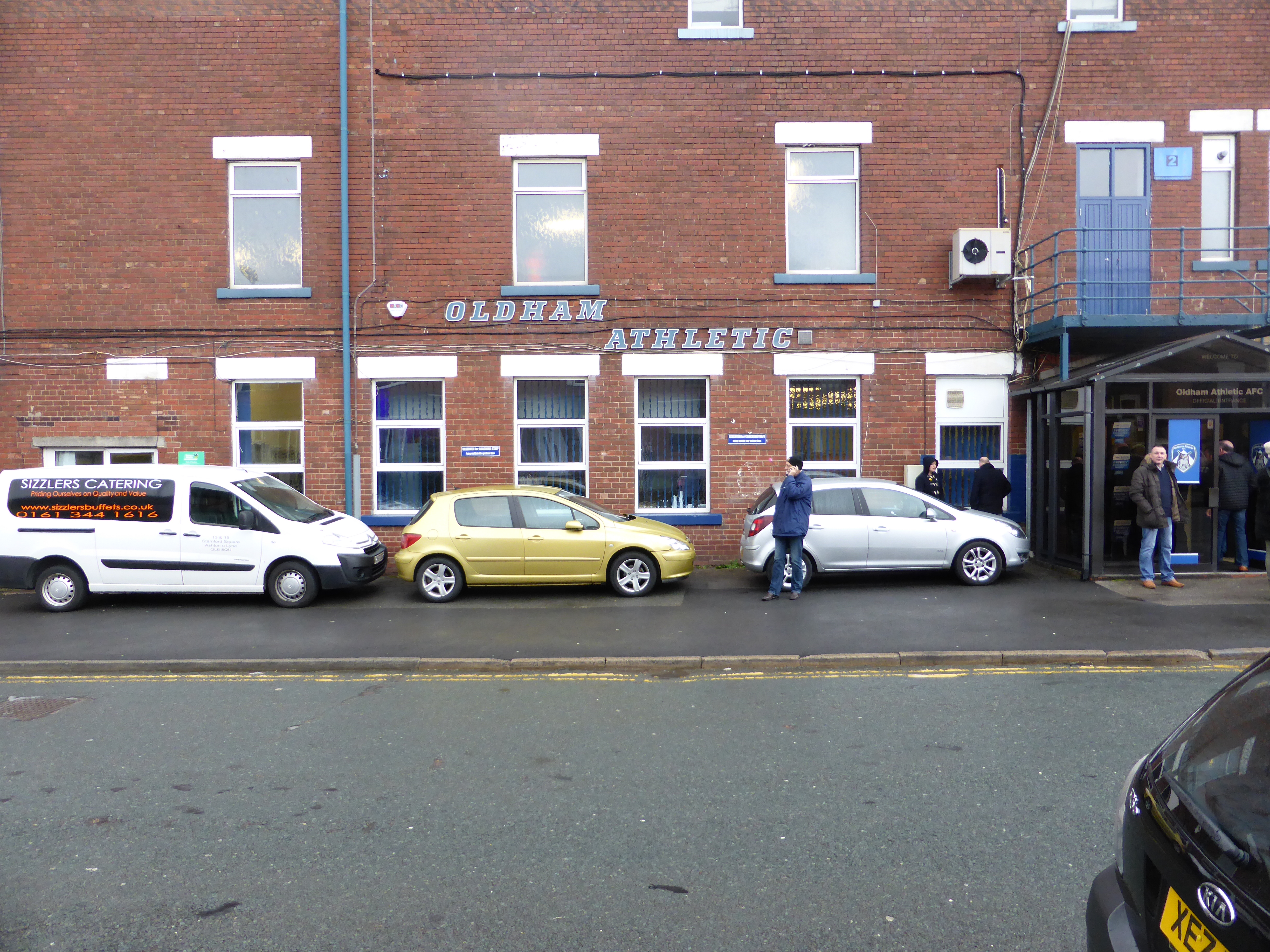
Take the players entrance. It is barely possible to distinguish it from any other entrance in the ground.

P1090128 P1090129

Take the small parking slot for members of the coaching staff in front of the old main stand, the George Hill stand. Nothing star-studded about that, and, in fact, nothing start-studded about the cars that happened to be parked there.

P1090130

Take the modest size of ticket office and (closed) souvenir shop. This is not a multimillion pound business.

P1090131

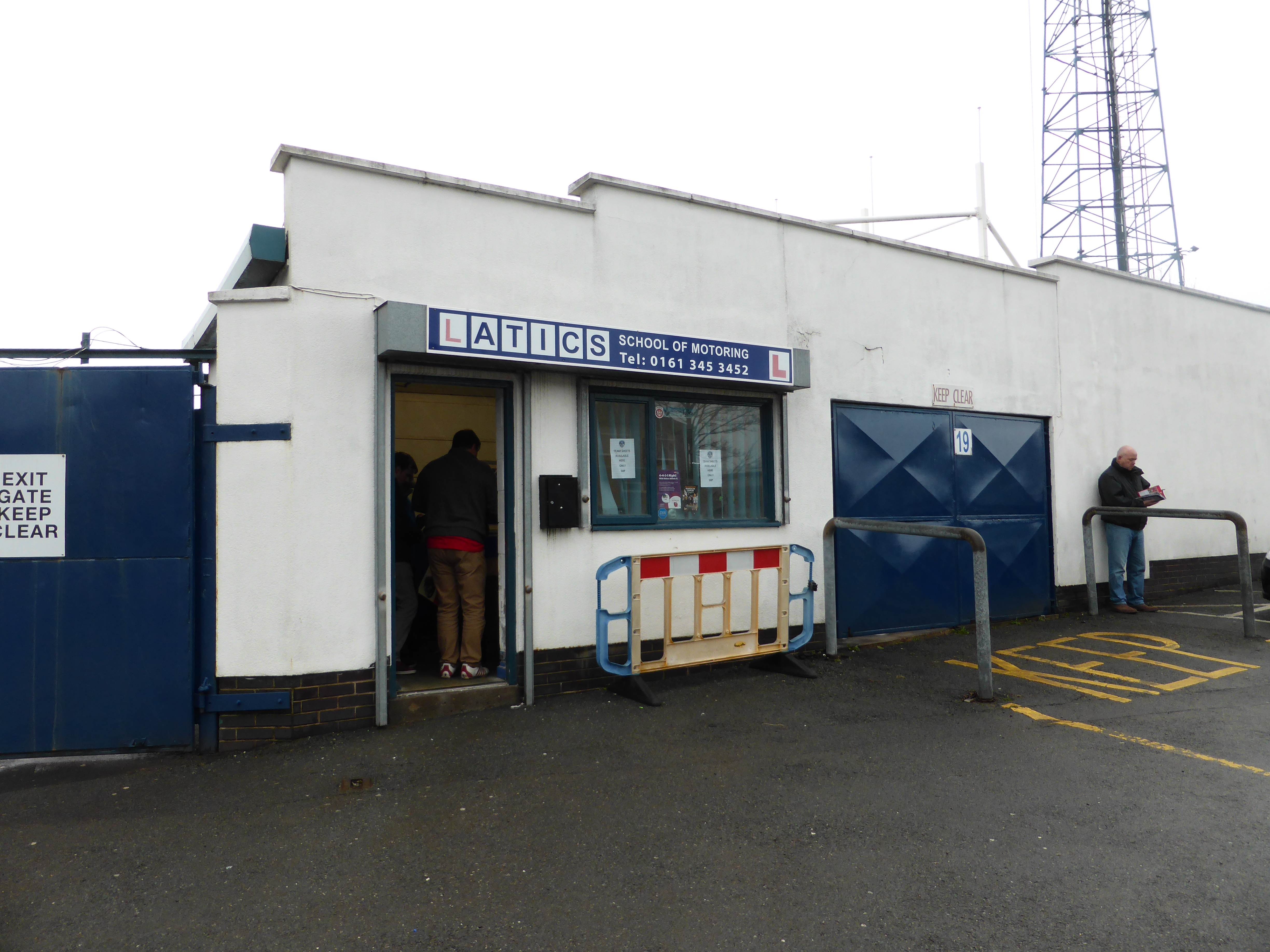
And how many premier league clubs would prioritize a motoring school on their premises? In Oldham’s case, there is the added irony that their kitman bumped into three of the players’ cars outside the ground a couple of years ago. So perhaps, it is a good priority.

P1090151 P1090152

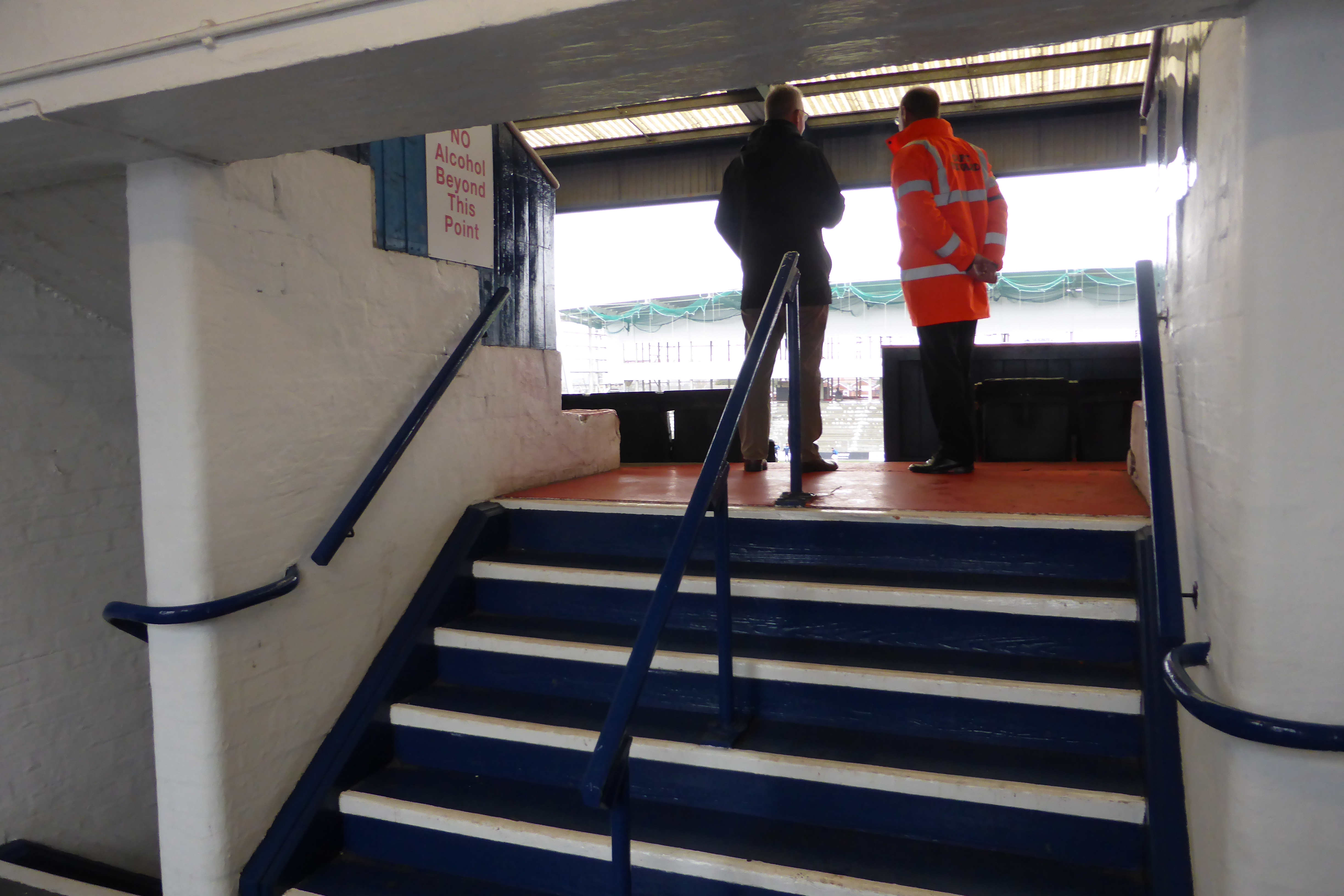
But maybe because it is so different to the glass and concrete structures of modern grounds, it looks quite charming. The same can be said about the interior. The corridors with catering and toilets are small and narrow, with brick walls, wooden doors, and small notices to the fans.

P1090158P1090157

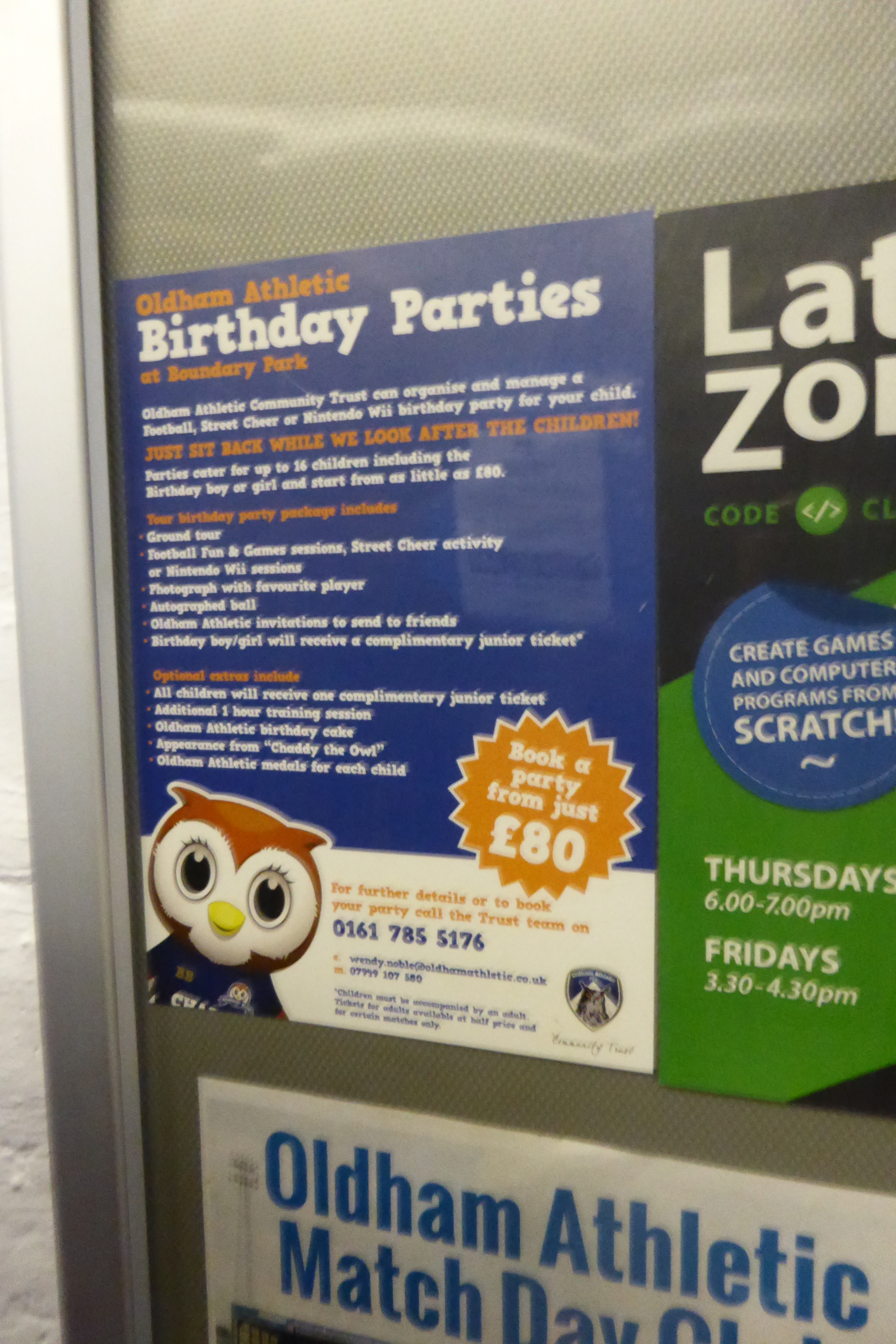
Season ticket holders of Oldham can get to see neighbouring Rochdale and Bury for just £ 5.00 – and vice versa. You can host a birthday party at the ground with a player attending and autographed footballs at prices from £80!

P1090180P1090144 P1090178

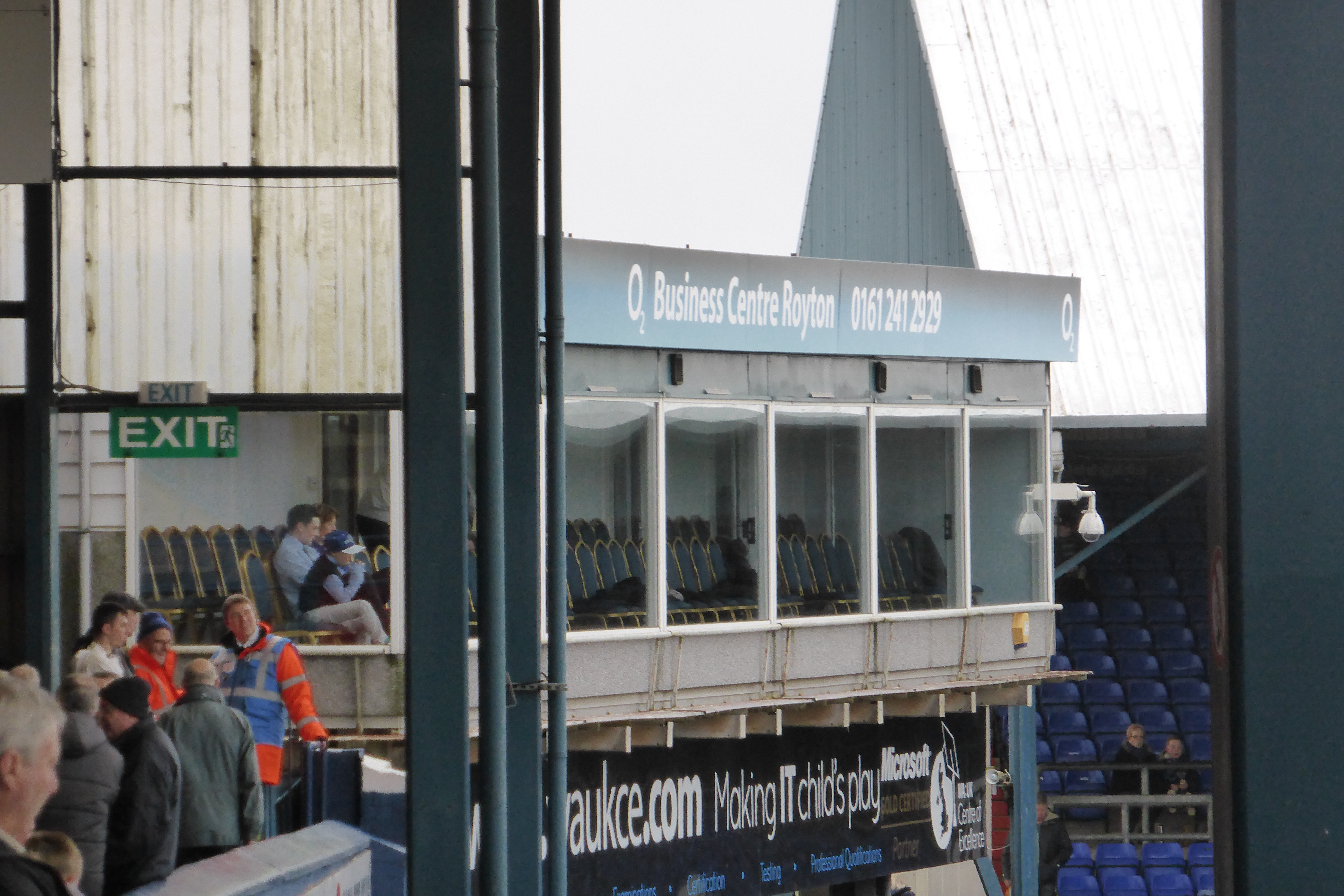
There is still a small, unused area of standing terrace on the right side of the stand, and on the left side, a small building with corporate seats have been added – looking very oldfashioned.

P1090159 P1090169

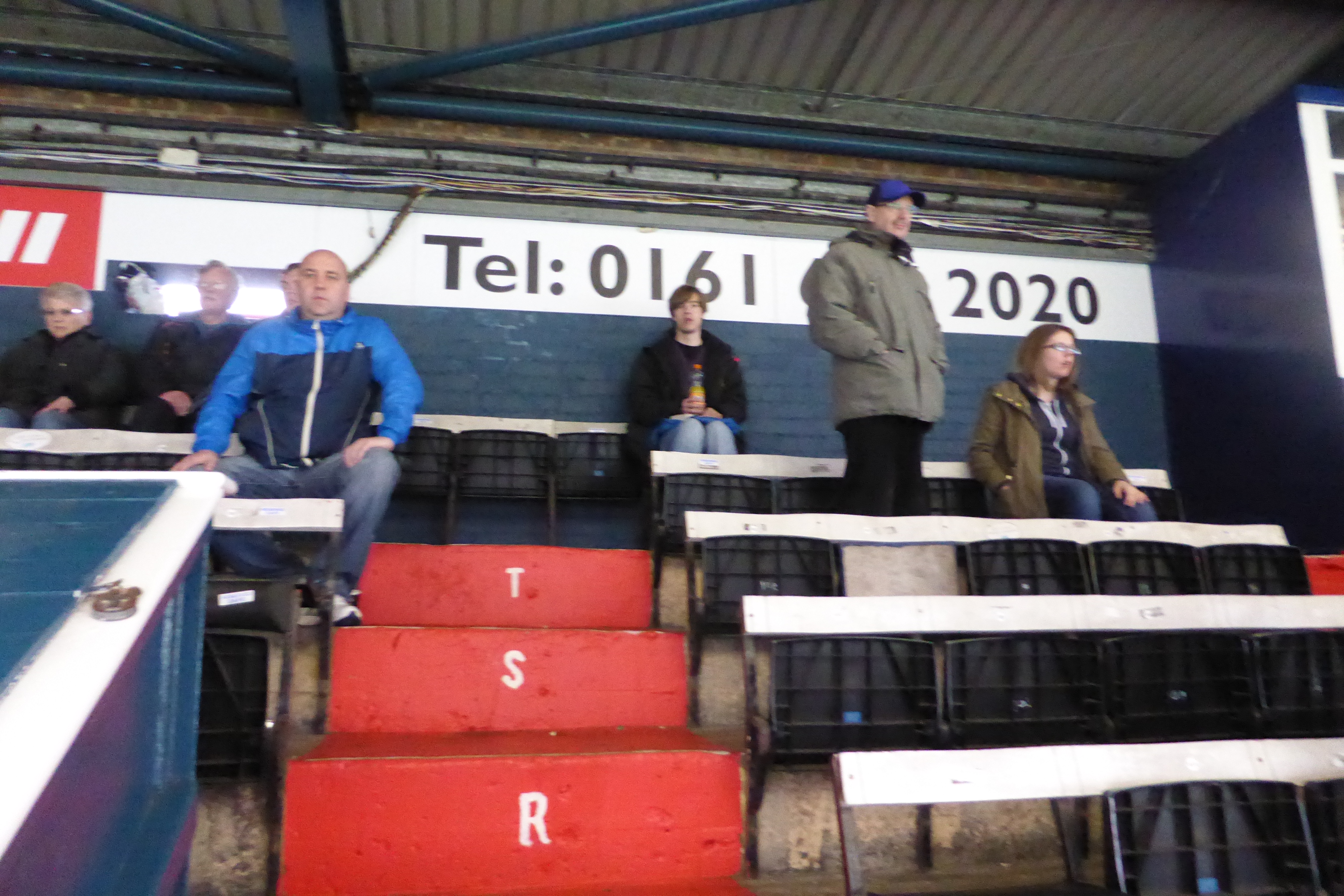
A far cry from the parking house architecture of modern grounds, where fans are mainly seen as customers. But it is a bit narrow inside. And even worse in the stands. My son and I had to twist into our seats – and twist ourselves out again. The seats in front of us really cut into our shins. A Ryan Air-experience. Never mind the partly obstructed view. It was the seating that made me consider, whether I would prefer the new stand on my next visit.

P1090197

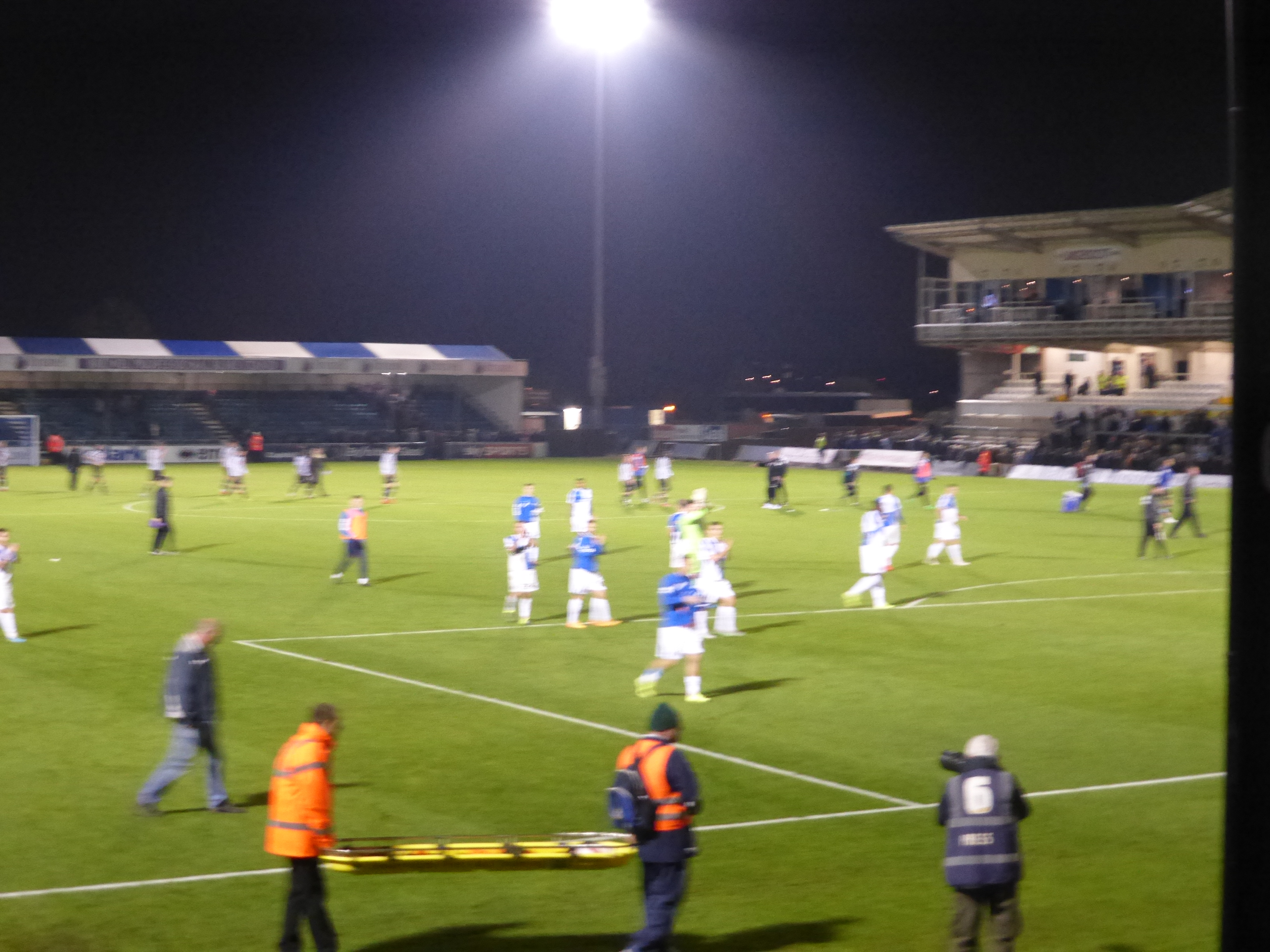
For Oldham are in the process of building a new stand, 7 years after the old north stand was closed. It is not huge, and it seems that it will fit in well with the rest of the ground, once it is ready next season. It will also upgrade the facilities for the coaching staff, a retail sale etc. But having a building site on the opposite side of the pitch rather than a stand full of supporters, perhaps, contribute to a rather flat atmosphere in the first half.
P1090208P1090271

Bristol City have brought quite a few away supporters, placed to our right in the relatively new Rochdale Road stand. But they are surprisingly quiet as well. It is just the small group of teenagers in the Chadderton Road End (or ZenOffice) at the opposite side of the ground making a bit of noise with a drum to direct their chanting.

During the break, I make my way downstairs for a coffee. It is surprisingly easy to get, but that is probably due to Oldham having separated beer from the rest of the catering. And strictly speaking, there is no need for something warm this dat, as Boundary Park fails to live up to its reputation as being cold and windy, located on the edge of the Pennines. Despite the rain, it is relatively warm.

P1090255 P1090261

In the second half, things liven up on as well as off the pitch. Bristol City take the lead, but out of nowhere, Oldham’s Carl Winchester belts in a long range effort for the equalizer. Oldham seems to be in the ascendancy, tempers flare on and off the field – but when Oldham are reduced to 10 men because of injury (having used all substitutes), momentum swings back to Bristol, and Oldham are happy to see out a draw.

P1090339

We exit the ground and make our way back towards Freehold. A couple of Bristol City supporters have told us that there is a station closer by (we have put our trust in the Football Ground Guide), so maybe that could explain that there are hardly anybody heading the same way. But when we enter the metro, it is nowhere near full. In that sense, Oldham is a local club – even though the local community is not reflected very well in the crowd.

All in all, a nice day out. I wouldn’t mind going back one day.

Tagged with: , , , ,
Posted in Football grounds

The DW stadium, Wigan

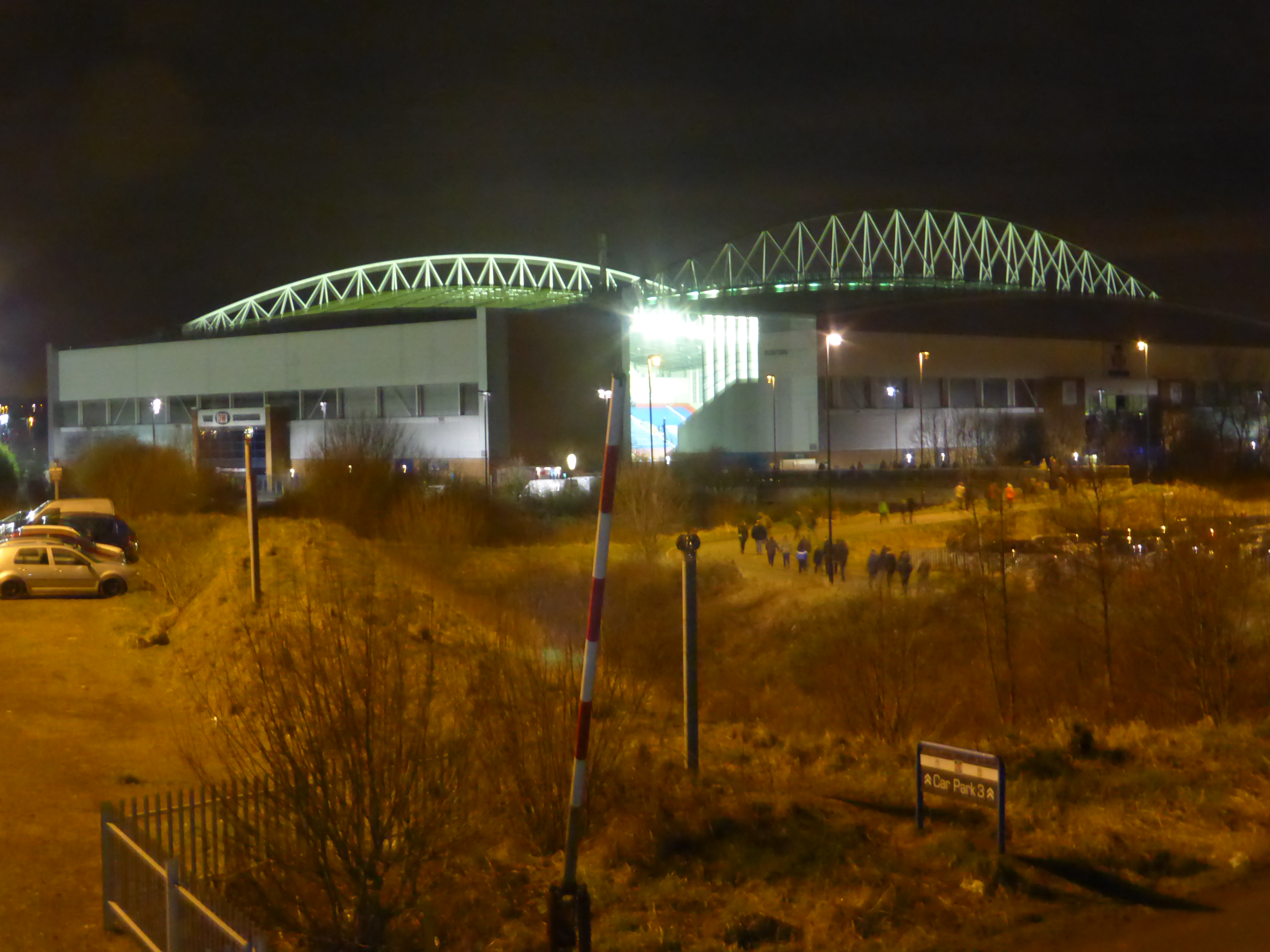
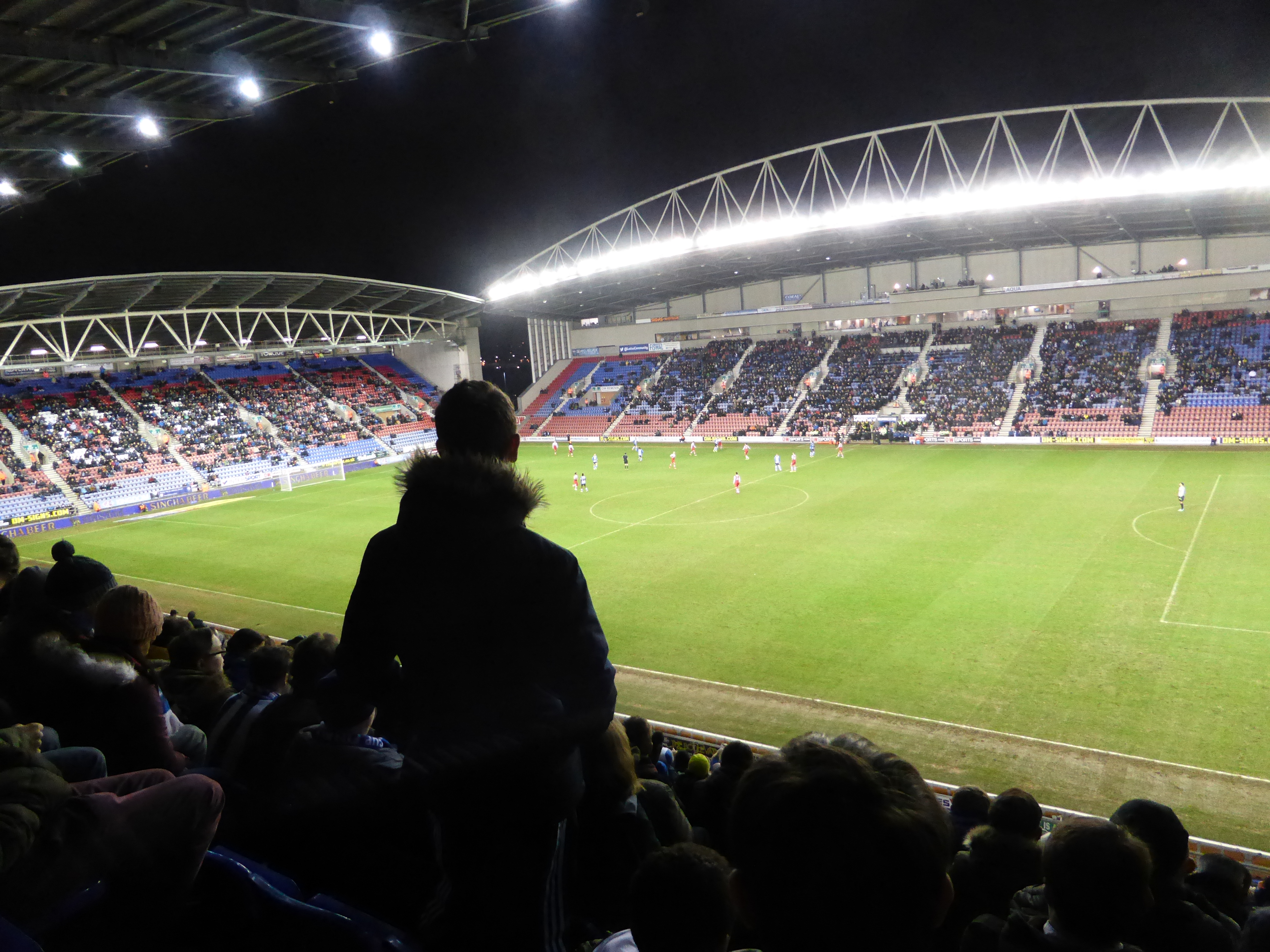
I must admit that the DW stadium in Wigan wasn’t on my top 10 of stadiums to visit. It is one the stadiums of the 1990’s and there is no immediate danger of it being demolished. There is, though, a very immediate danger that Wigan may be relegated from the championship, so perhaps it was last call to see football at that level at the DW.

P1070092 P1070100  x

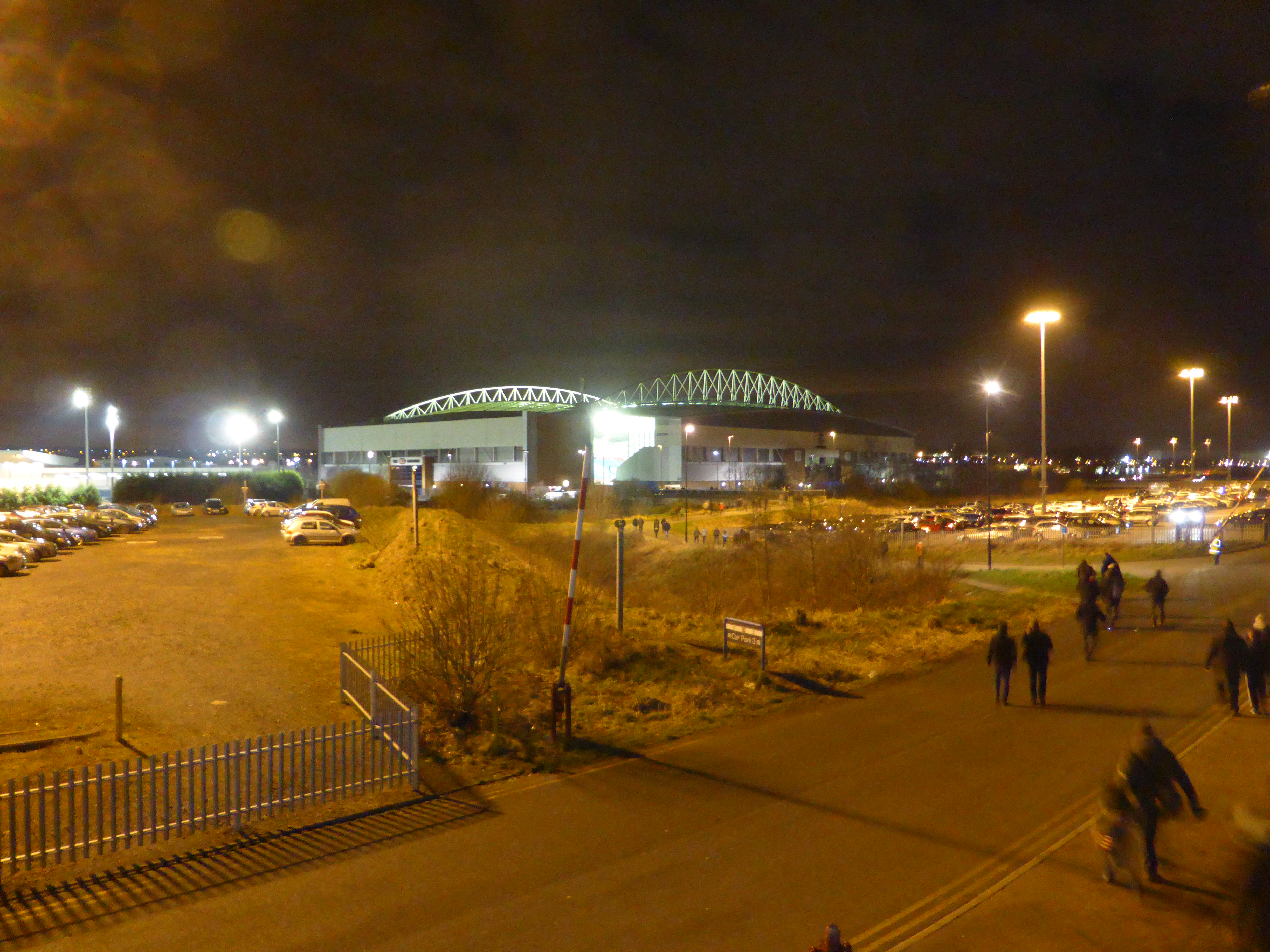
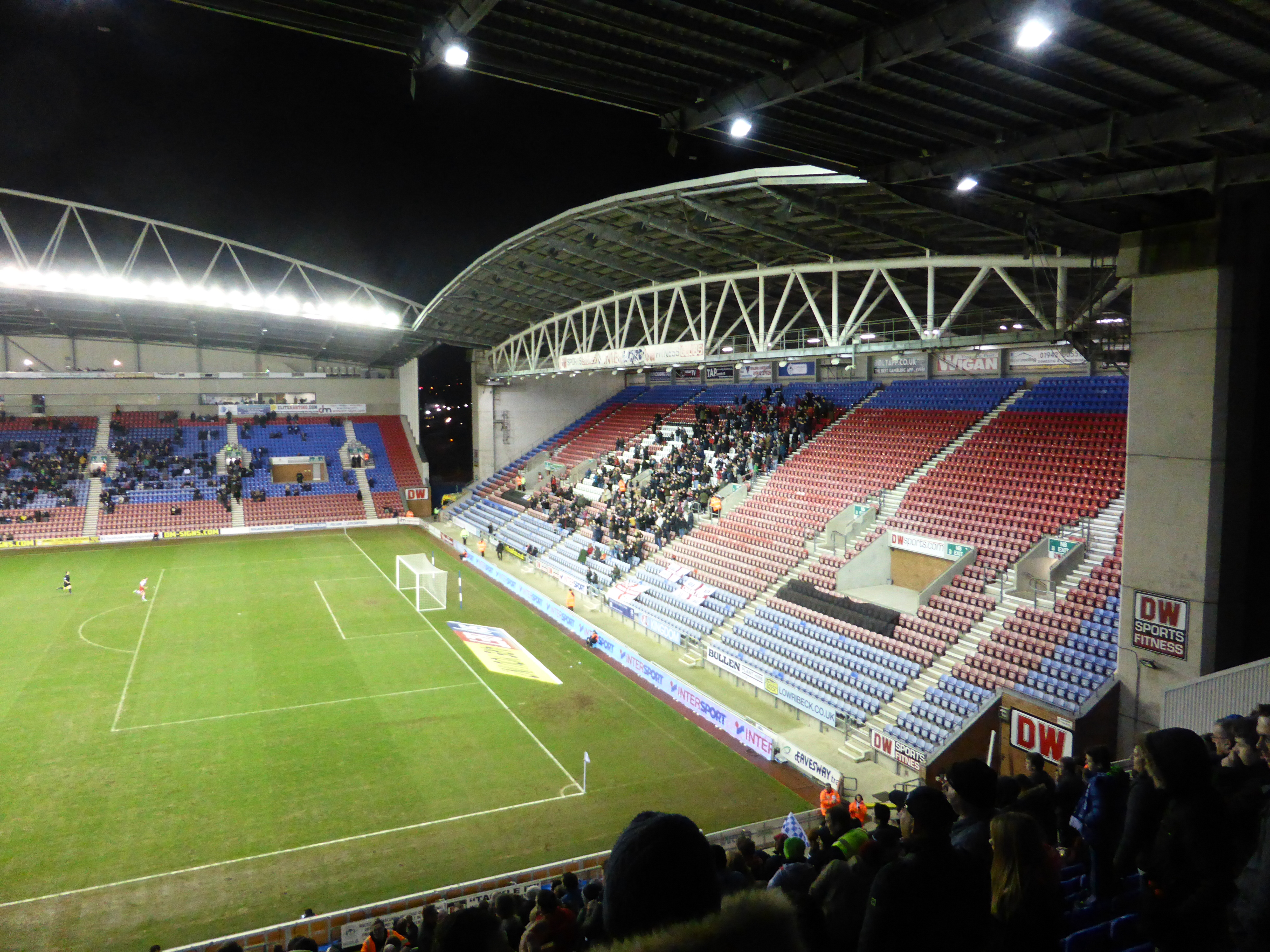
I must also admit that I am no great fan of the stadiums from that decade. They were built after the Taylor report, so they are designed as all-seater stadiums, they are designed to give a decent view of the field from every seat. As much as I like, for instance, Upton Park and Goodison Park, the view from the seats that I have had, has been rather poor – at Upton Park away in a corner almost beneath the pitch, at Goodison Park with a pillar in front of me. Well, no such complaints about the 90’s grounds. But they were built before money really became big in football, and that really tells. They may be functional externally, but they are so drab. Standardized concrete and grey corrugated iron. You could just as well be in a parking house. It pretty much looks like that.

P1070171

The distinguishing features of the DW are basically the curved shape of the roofing on the main stands and a Wigan crest put on the outside wall. That is just about it.

P1070111P1070113

Like most grounds from that decade, the four stands are separate buildings with gaps between them, allowing the wind inside the ground, whirling around. Fortunately, this was not a windy night, but I know how bad it can be, having been in Stoke on a windy day. In this way, the Wigan ground distinguish itself from the ground of their neighbours and rivals Bolton, whose ground is two years older, but with a little more characteristics and a bowl shape. But there are common features, such as the grounds change their names with sponsors and owners, and have been built on what was probably cheap land. The stadiums are not attached to or grown from a residential area. Bolton’s (and Stoke’s for that matter) look like aMcDonalds or a service station dropped along a highway. Wigan’s – like Millwall’s – look like they have taken over a piece of land nobody else wanted, tucked away behind carparks or garages. The lack of a living neighbourhood and a proper name must, I imagine, make it difficult for the fans to develop the same passionate relationship with the ground, as they probably had with their old ground. Craven Cottage, for instance, oozes history and tradition. The name, the cottage, the stand. Just the mentioning of the name unfolds a long tradition. The way the ground has developed to adapt to new modes of consuming football materializes that history. And along with that memories of a life time for any fan who has attended.

P1070091

Speaking as a Manchester United supporter, I find it in many ways sad that the ground has been altered completely. But most of the surroundings are the same as when I visited first time some 40 years ago. And whenever I walk to the ground, memories come flooding back. I have (so far) never lived in the same place for more than 15 years, never worked or gone to school in a place for more than 13 years. The only two places that have constantly been part of my life for the last 40 years are Old Trafford and Valby Idrætspark in Denmark. Therefore they entail a narrative of memories from childhood over youth to being middle-aged. Attached to the names and to the roads leading to the grounds. To me, it must seem so barren to have your ground relocated to a wasteland, with a changeable sponsor name attached to it.

P1070102

Anyway, Friday night in Wigan! I am a bit late, as I get off the train at Wigan North West – less than an hour to kick-off. A kid with a Wigan jacket and four adults look like they are on their way to the ground, and I ask them if they mind me following them. John, a journalist, is actually a Sheffield United supporter and two of the others support Tottenham and Liverpool respectively. But they have agreed to offer their beleaguered Wigan friends some much-needed support. I tell about my groundhopping project – and when I ask them about the grounds they like, I get the impression that they agree wth me. For apart from Bramall Lane, White Hart Land and Anfield Road, they mention Goodison Park and Upton Park.

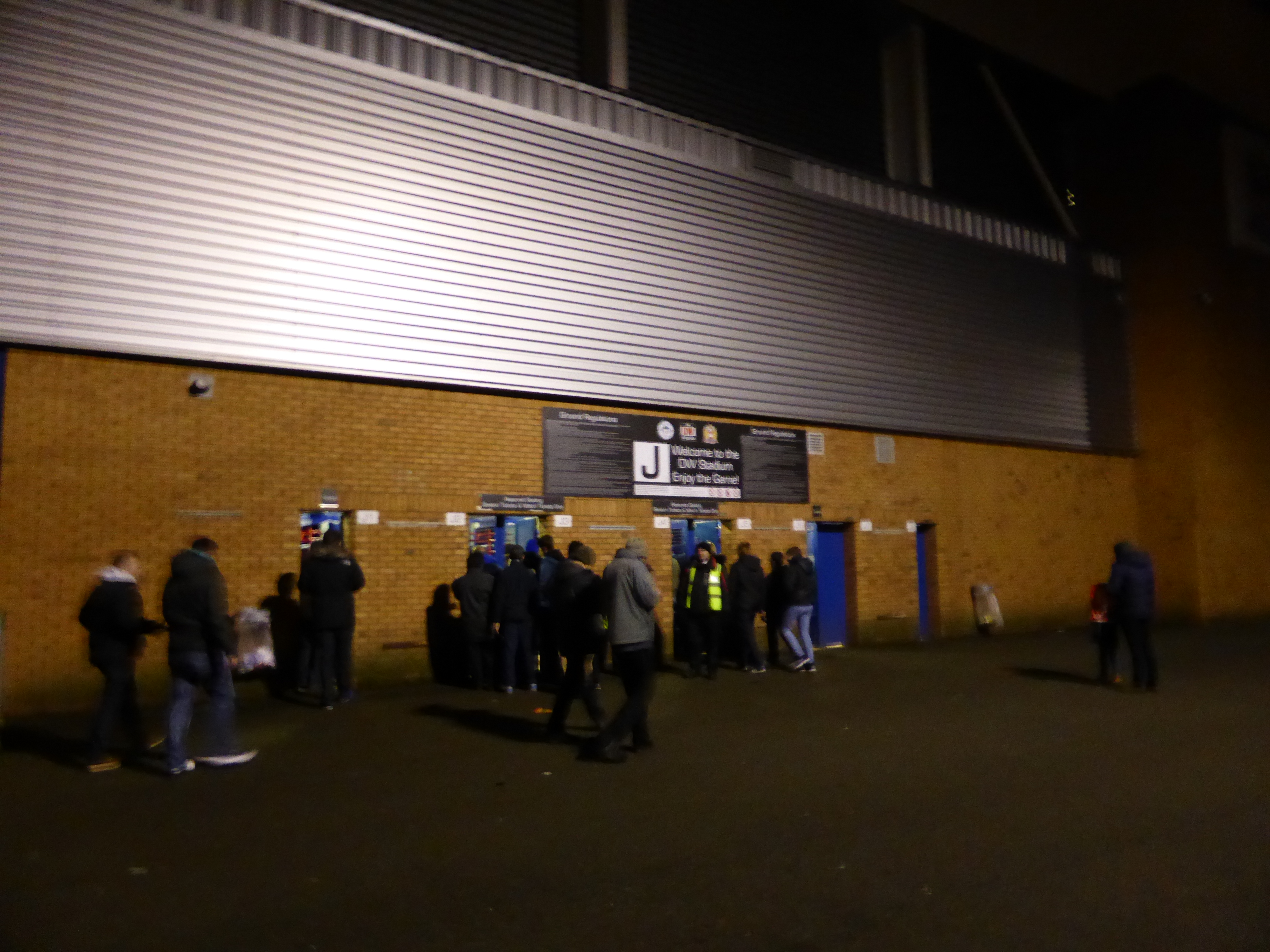
They stop for a drink in a pub close to the ground, but with only 30 minutes to kick-off and still without a ticket I go straight to the ground – and straight to a very slow moving queue for the two boxes that sell match tickets. I eventually get my ticket with less than 10 minutes to kick-off, so there is neither time for a snack outside or the obligatory look inside the club shop.

P1070109

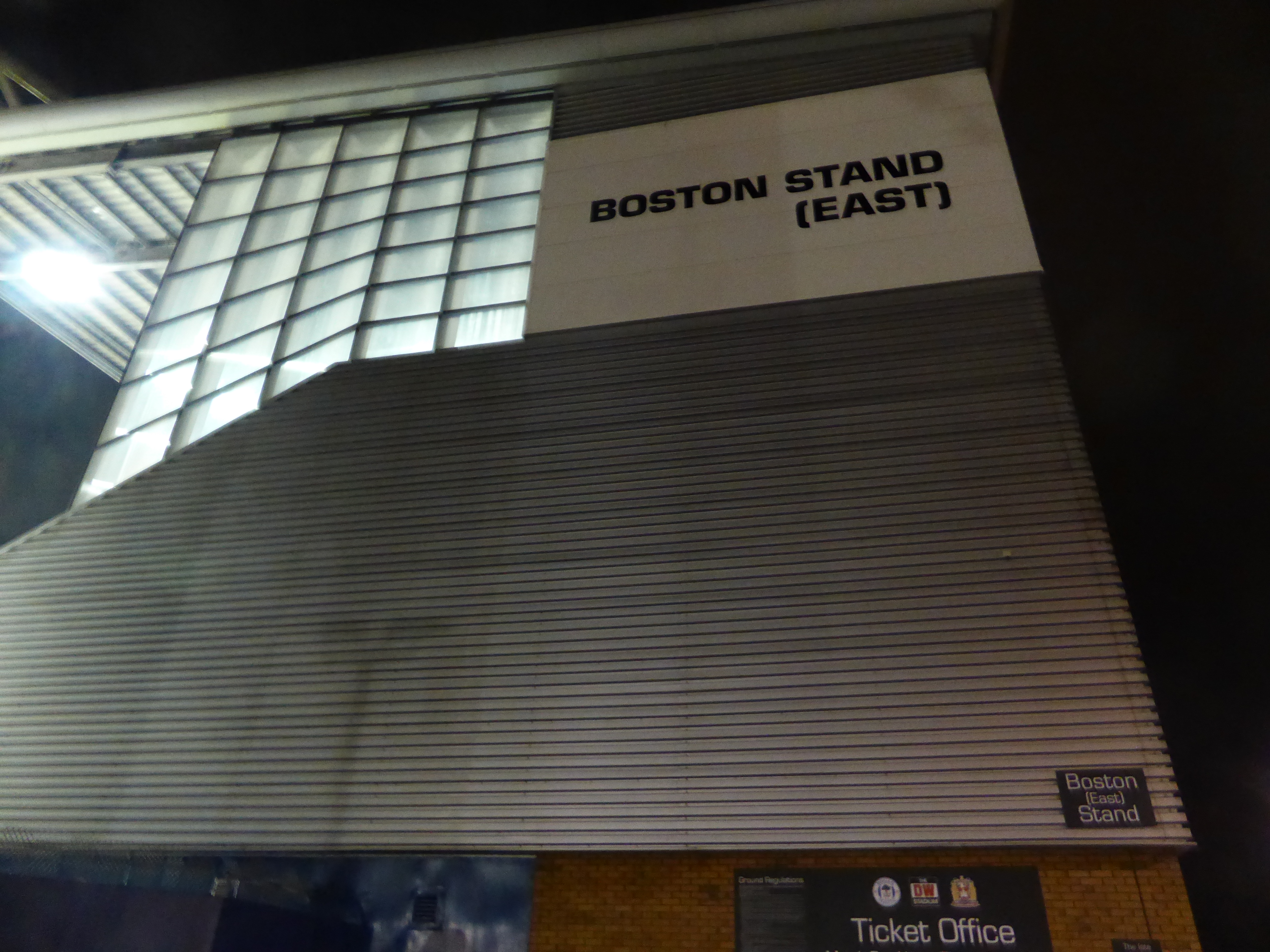
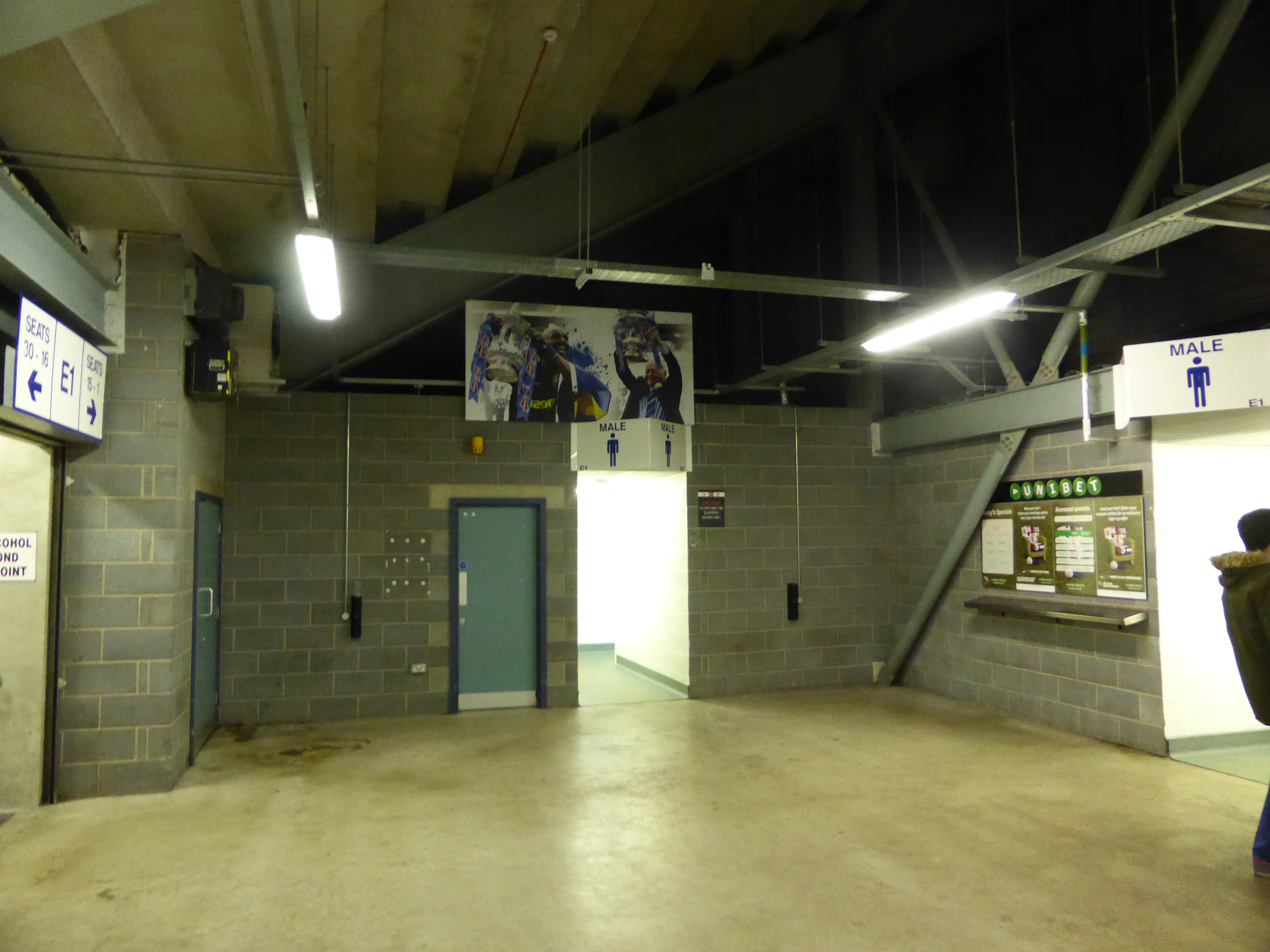
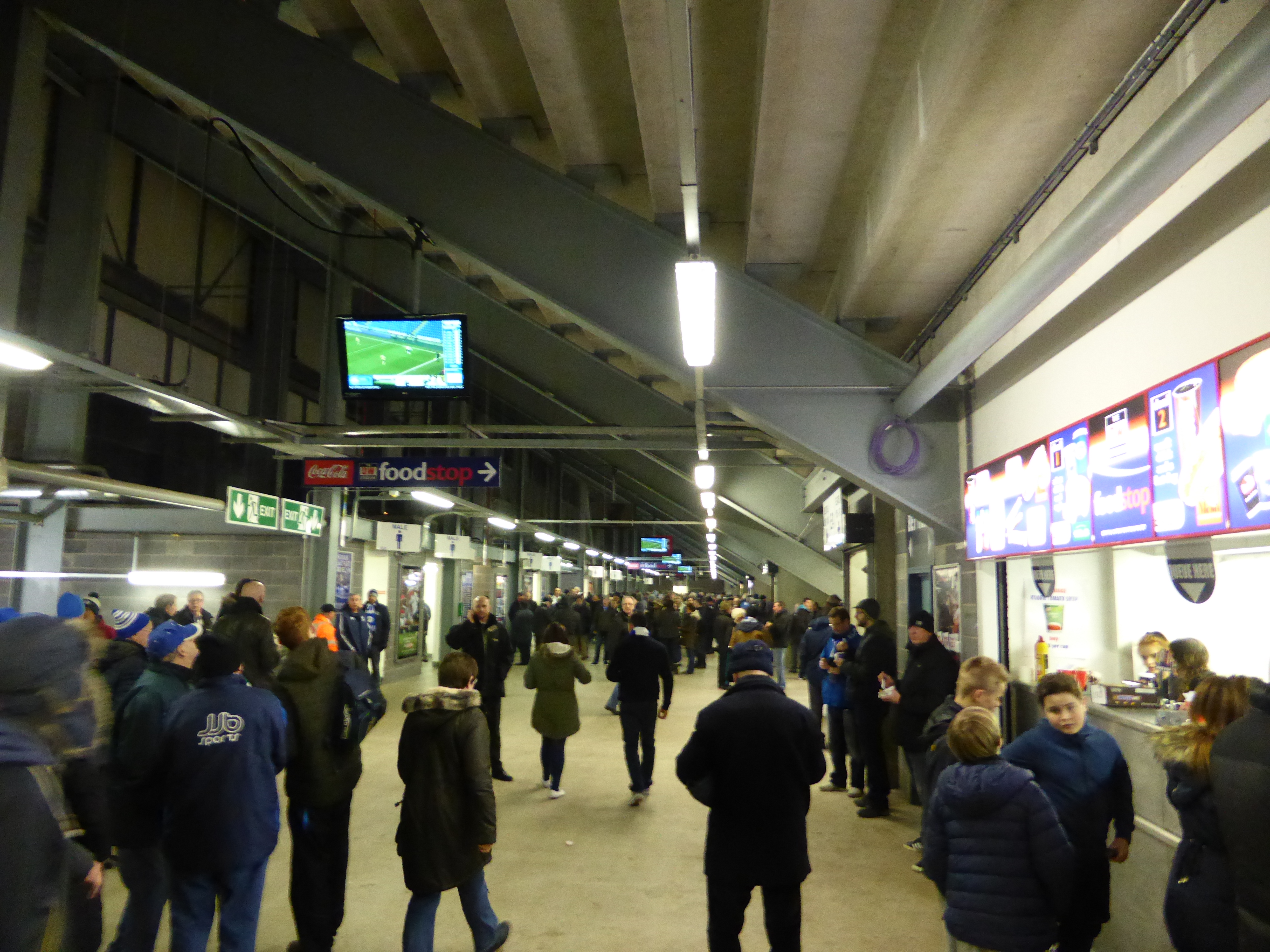
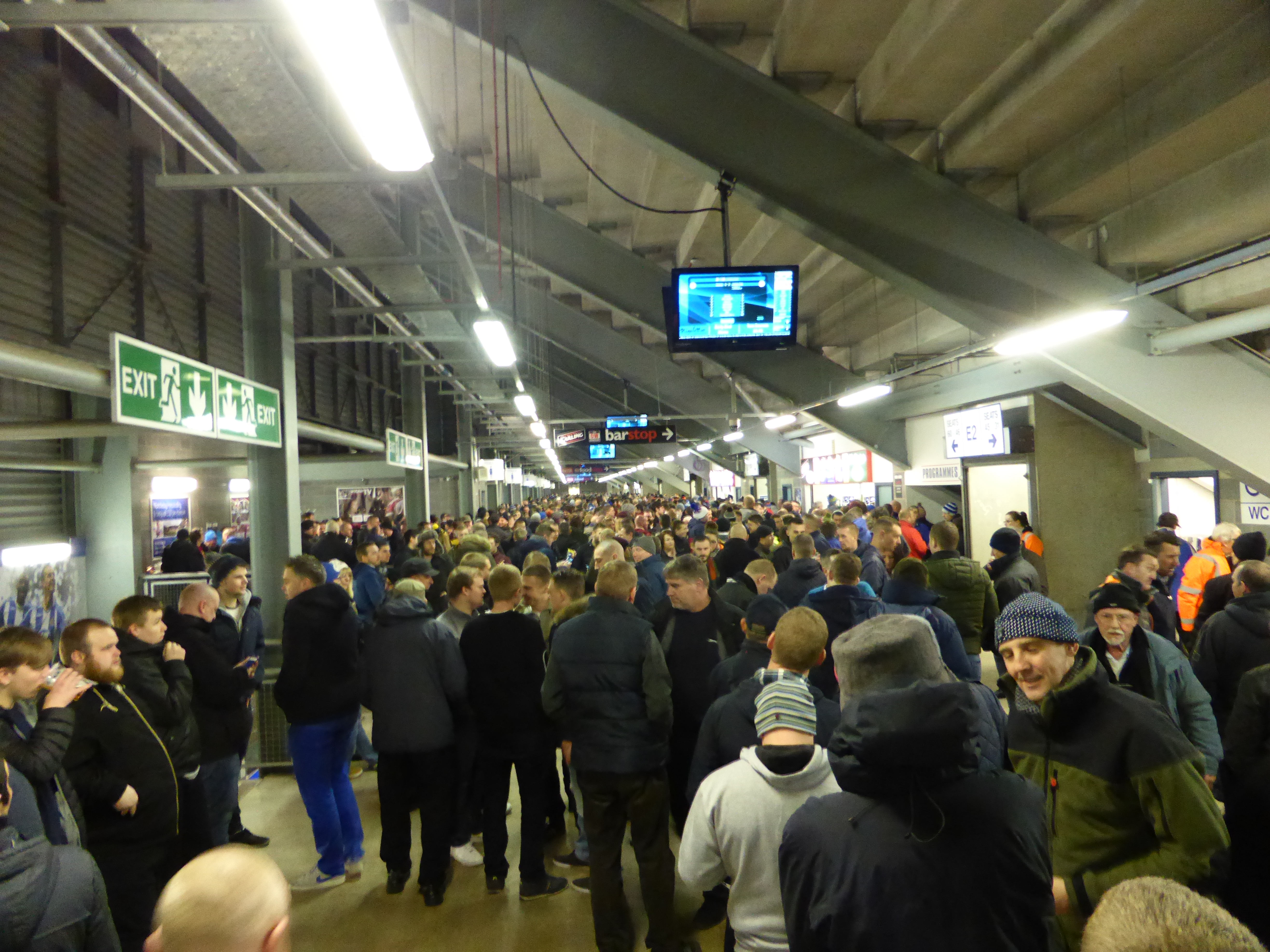
My ticket is for the East Stand. There are two entrances to it, but once you are inside there is one single, spaceful, throughgoing concourse with two snack-outlets and two beer-outlets. I like it, even though it is very sparse and strictly functional. No decorations, no ceilings, no attempt to make it feel like a special space for Wigan fans.

P1070118 P1070122P1070171

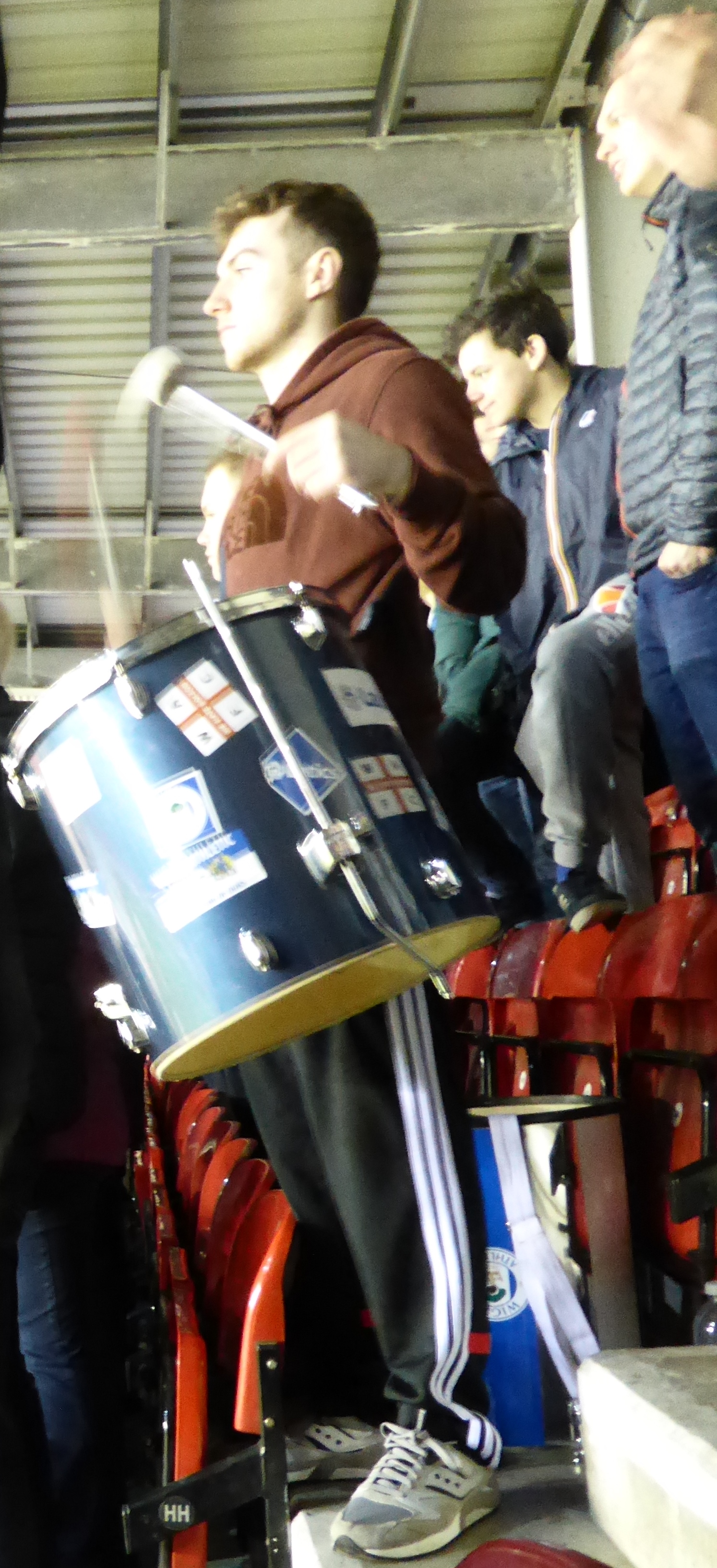
As there is no queue, I grab a steak ‘n ale pie to take with me in the stand. And I just manage to get to my seat high up in section ES2 as the players line up for kick-off. I had asked the girl in the ticket office to be located in the most vocal part of the ground – and only 3 seats away from me, two guys are standing, leading the singing and chanting with their drums.

drummer

And they and everyone else to my right are standing, whereas just a couple of seats to my left, people are seated. It seems that I have got a place in the hardcore section. There are a lot of teenagers, but the dominant feature is that it is white men – with a few women mixed in. We are close to the 3-400 Charlton supporters who have made the trip from London. They have the entire North Stand to themselves.

P1070128

The Wigan fans certainly are quite vocal at the start of the match, singing “just can’t get enough” and chanting “blue army”. And the two-syllabled w-chants here are less offensive than in other grounds.

P1070131P1070178P1070150

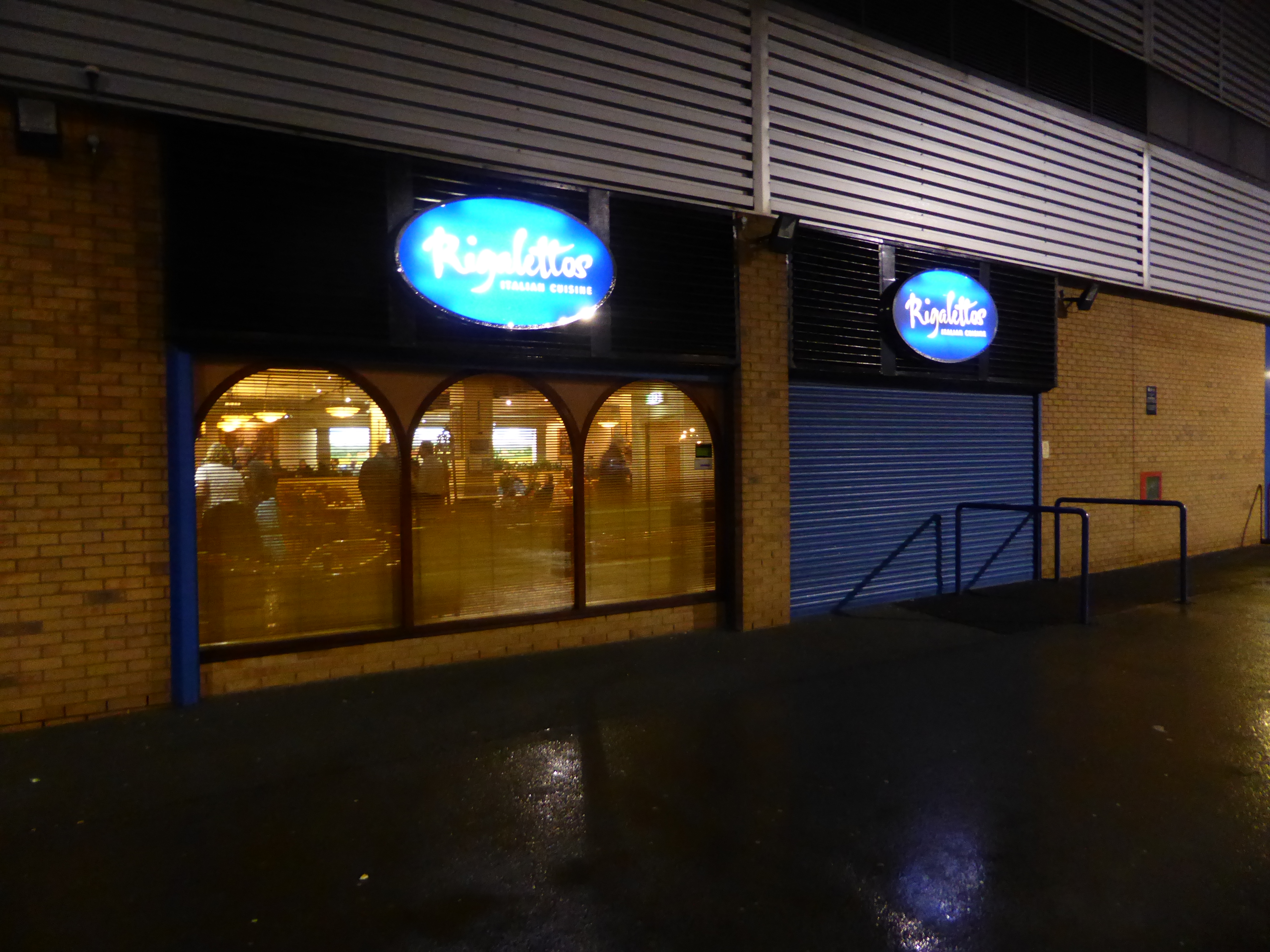
Somehow, the ground doesn’t look quite as dull as some of the other 90’s grounds. Remarkably there are no hospitality boxes (although they do have a fancy Italian restaurant with entrance from the street), but they have made platforms for disabled in all sections of the ground, and not just in one place, which is a nice feature.

P1070146

After a first few scrappy minutes, Wigan start to dominate. Plenty of possession, a few nice moves, and plenty of pace and penetration from nr. 18 Ojo down the right flank. They carve out quite a few good openings – but either the final pass is astray, a Charlton defender gets in a late tackle, or the finishing is poor. And after 17 minutes Wigan midfielder William Kvist goes down injured in a challenge, Charlton break and score from their first meaningful attack.

Plenty of frustration around, but it is quickly forgotten in the 23rd minute, when everybody gets to their feet and applauds Wigan’s number 23 Juan Garcia who is suffering from leukimea. It is, however, by now evident that Wigan are a team near the bottom, lacking in confindence. They stil retain possession, but the frequency of unforced errors is higher now – and you sense that they are vulnerable on the break. And in first half injury time, Wigan again loses a tackle in midfield, Charlton breaks, the ball is put into the box, where a single Charlton player outjumps three Wigan defenders and heads it in. A fan in the row in front of me is about to explode. He rips off his shirt and is about to hurl it away, when he probably realizes how cold it is. He stops in his tracks, and in stead he pushes his way out, down to the concourse, cursing and swearing. It is too much to bear. 66% possession. Charlton have had only two meaningful attacks, both on the break after poor challenges – but still, you are somehow not surprised.

P1070160

I go down for some warmth and a snack during the break. Nobody really seems to believe that Wigan can get back into this one. Everybody seems to be doing a post mortem. The second half gets under way, and as a Wigan player makes a slip, the Charlton fans sing “that’s why you’re going down”, and a couple of slips later, the Wigan fans sing “that’s why we’re going down”. And as the Charlton fans become increasingy boyant, the Wigan fans sing: “we lose every week, you’re nothing special, we lose every week”.

P1070154

Most of us sit down now. The guys with the drums make a few halfhearted attempts to get the crowd going, but realize that right now, everybody is looking for their own way of coming to terms with defeat and probable relegation. Some are just silently watching in disbelief, some leave the ground midway through the second half, some are angrily telling each other what is wrong – others cheer the team and especially their goalkeeper ironically.

P1070168

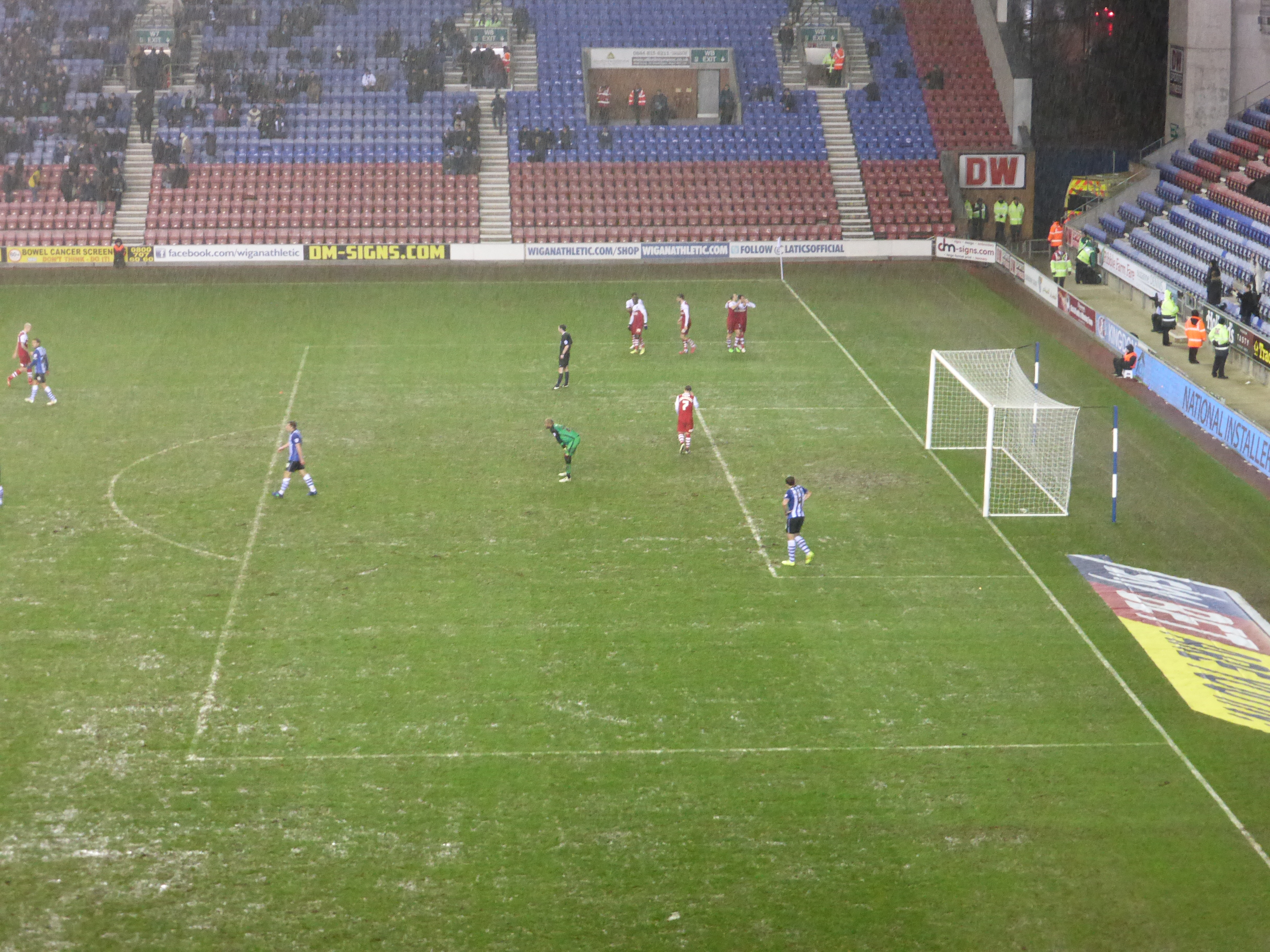
To top it all, the rain starts to lash down. The Charlton fans in the front rows hurry further up the stand for shelter. That is really the worst thing about seating at football matches; when the seats are not protected from the rain. Now it is the rain that makes most of the noise, banging against the roof. On the wet pitch, Charlton look increasingly dangerous on the break, and two minutes from the end, Chris Eagles makes its 3-0.

P1070169

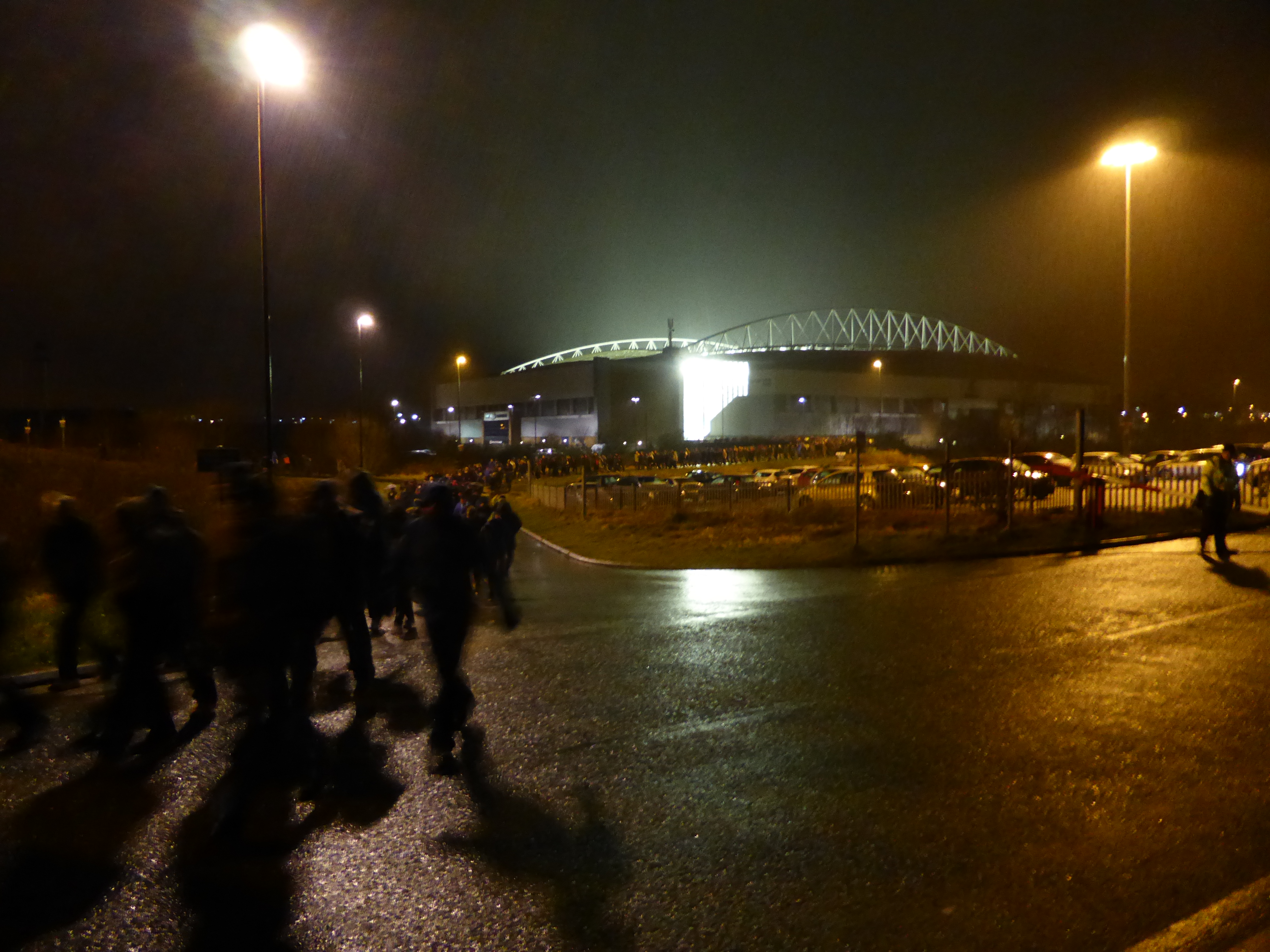
As I didn’t have time to go to the souvenir shop before the match, I make my way around the ground to visit it. But it is closed. Everything seems to be closed. Wigan seem to be closed. At least the rain has stopped, as I cross the bridge on my way away from the ground. A Wigan supporter behind me tempts fate when he asks his mates which would have been worse; that Charlton had got a fourth goal or the rain still had been lashing down. Before they can answer, the rain starts to lash down again. As I reach a public road, a taxi approaches. I run towards it from one side, two Wigan fans from the other. “Did you get it first?” they ask. “Where are you going?” I ask back. They are going to the town centre, so we share. And at least we don’t get soaked like the other fans.

P1070181P1070182

There is an hour before train departure. I look for a place where I can have a warm coffee, but on a Friday night, only night clubs seem to be open in Wigan, so I sit down at the station. A few soaked, teenage Wigan fans arrive at the ground. They sit there in their wet replica shirts, somewhere between defiance and despair. That is the making of true fans. Sticking out for your team despite cold, rain, defeat and potential relegation.

The waiting room is gradually taken over by other football tourists. A couple of Norwegians, a contingent of German speaking fans, a group of Asian visitors. Just before train departure, the group, I met on my way up, arrives. I nod – but somehow I feel that it would be intruding to talk to them. I know how bad you can feel in defeat. And in that situation, you don’t want to chat to some stranger, who might hurt your feeling by asking stupid questions. A sad day. But a part of the game – and the ones that make the good days feel great.

Posted in Uncategorized

The City Ground, Nottingham

P1070245

If football had been invented today, Nottingham wouldn’t have happened. Two top football grounds only separated by the River Trent. And – on the Notts County side admittedly also a carpark. Today, they would have gone for one club and either built a parking house or a shop/and shirt printing centre. But there they are, two grounds crammed in close to the city centre. Notts County’s ground, Meadow Lane, was in fact completely rebuilt in the 1990’s. It shows – massive, ugly, grey constructions. But compared to other new 90’s stadiums, they have somehow managed to keep their own identity

P1070185P1070212

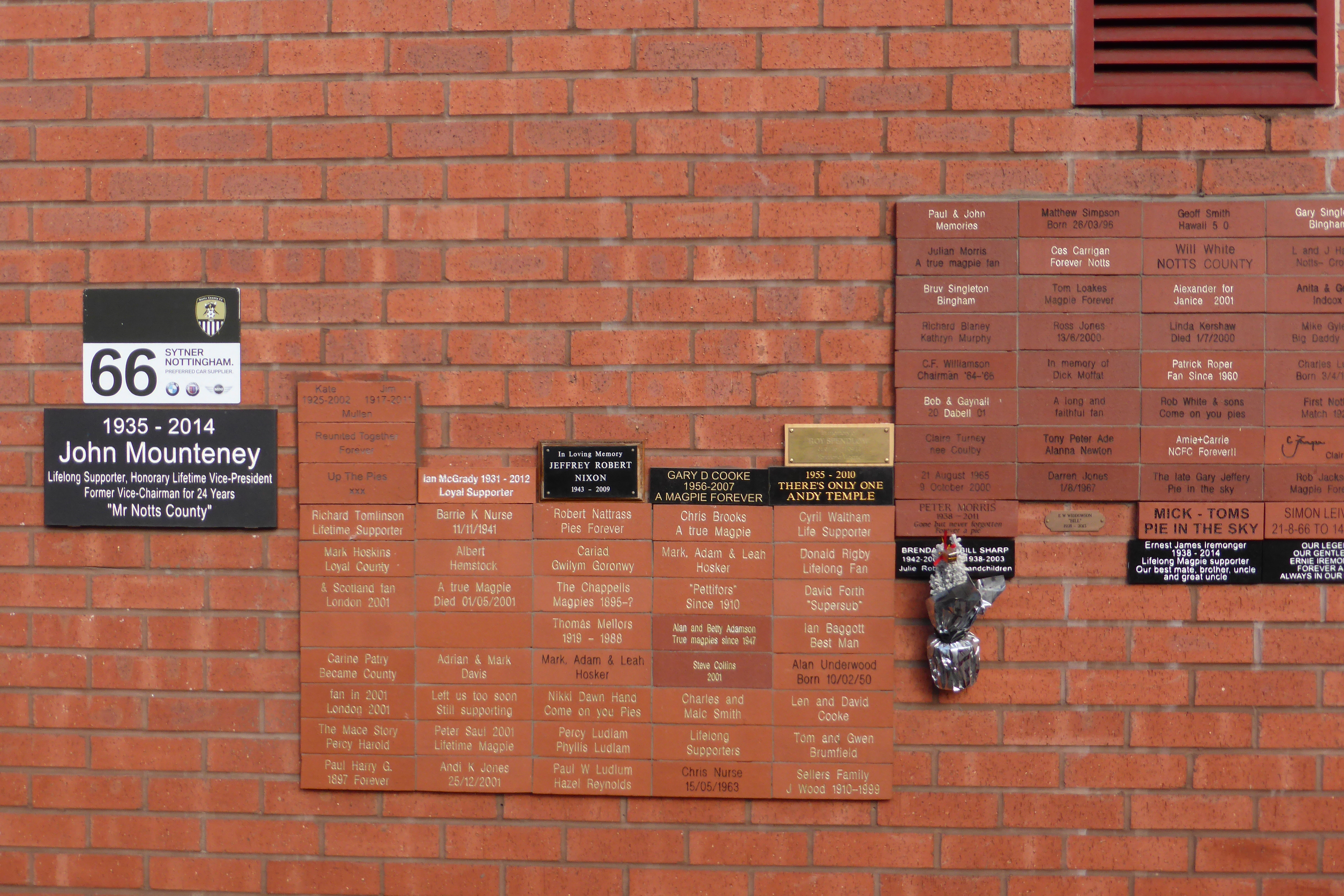
They have put up the text telling that this is the oldest football league club. They have kept a foundation for the Spion Kop end that indicates what a kop-stand used to be. And they have memorial plaques for deceased fans on the stadium wall

P1070198 P1070224

P1070227

You get a sense of history, of tradition. Notts County fans have been here for more than 100 years. The exterior may look different, but there are historical roots here.

Even though the two Nottingham clubs have not merged, they have realized that there are benefits of cooperation. The Notts County car parks are hired out to Nottingham Forest fans when they are playing. And Nottingham Forest fans are aparently having a drink in the Notts County pubs.

P1070250 P1070251

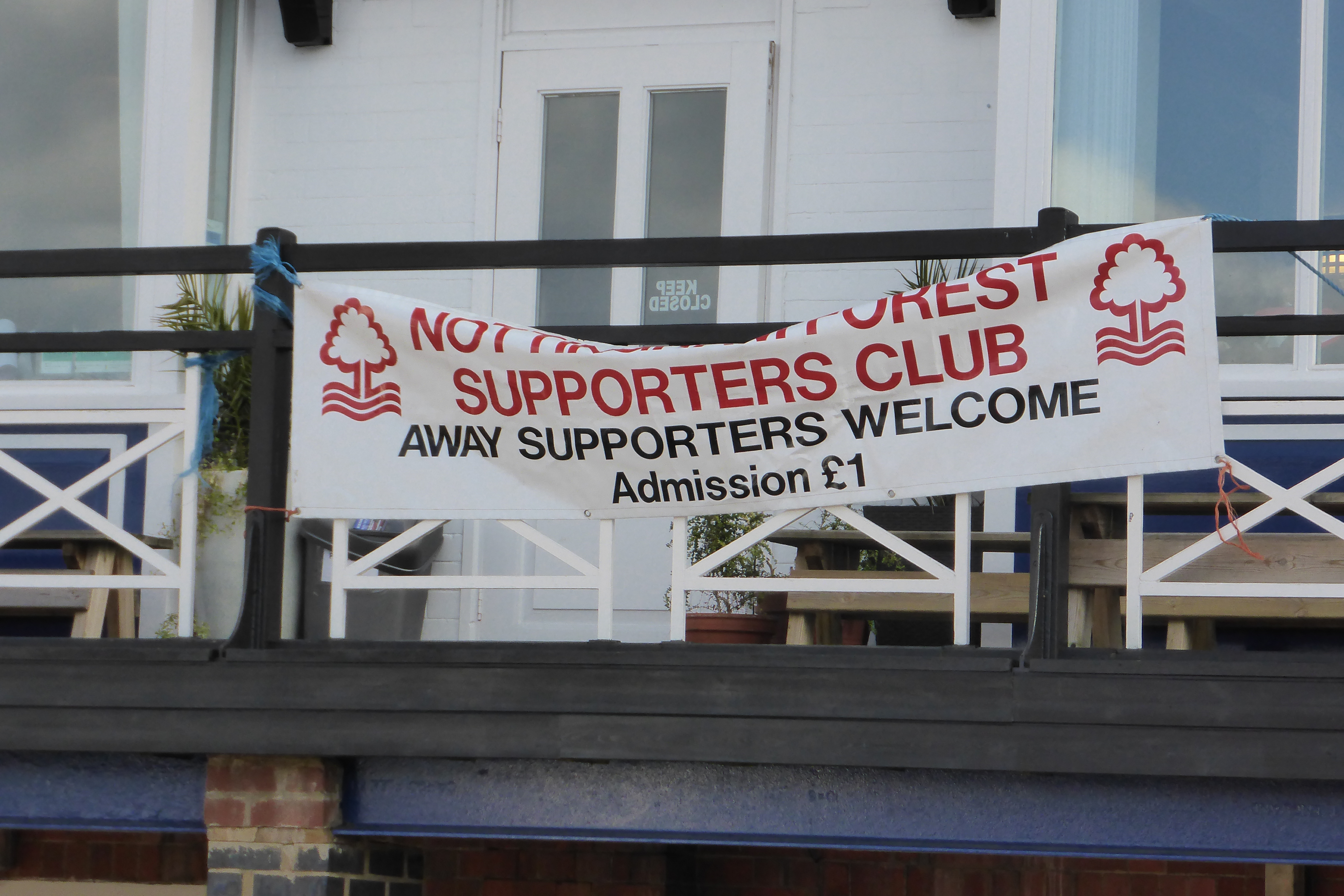
And, in fact, the Nottingham Forest supporters club welcomes visiting fans inside.

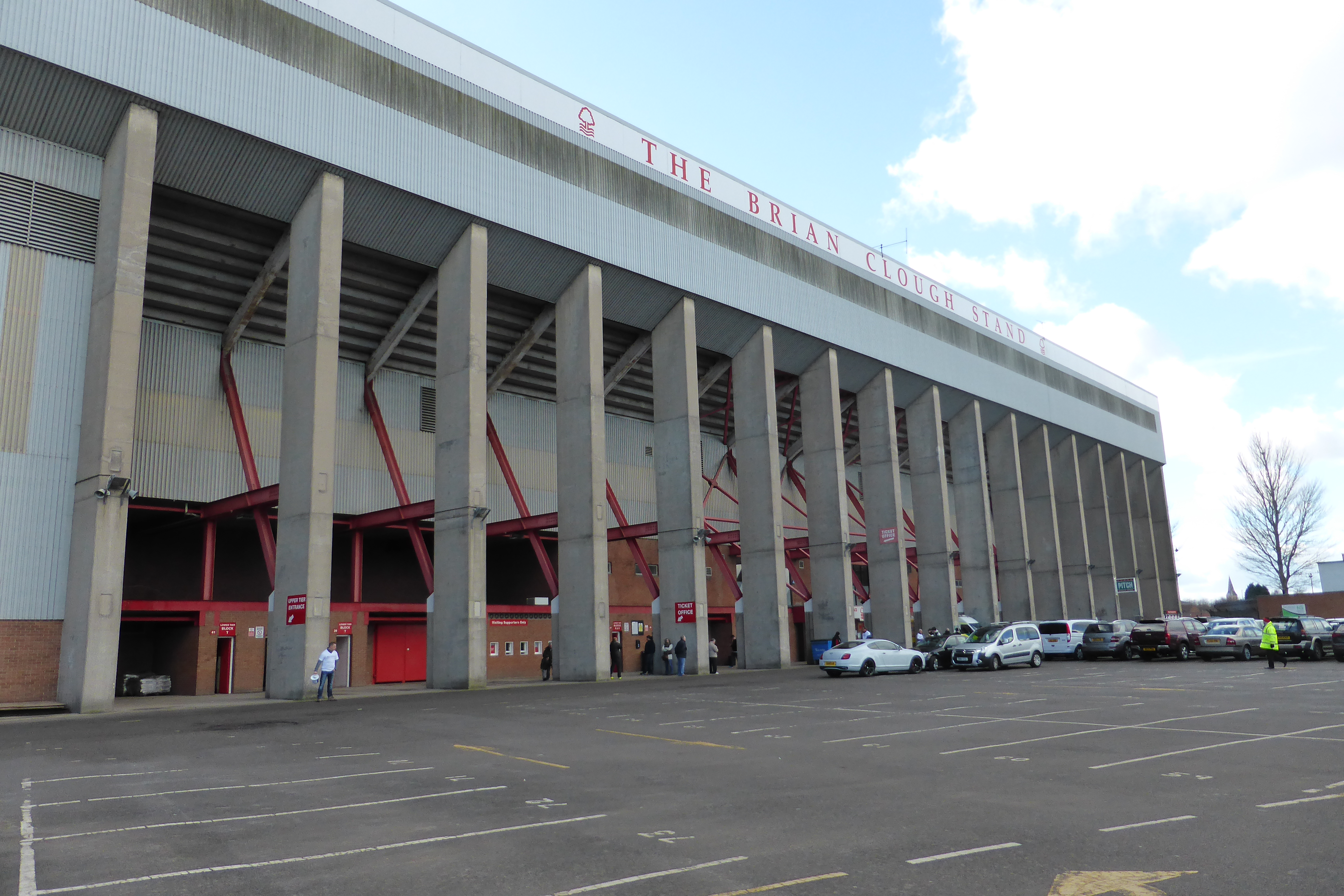
Nottingham Forest’s City Ground is arguably one of the most beautifully located grounds in the country. Right on the banks of the River Trent, The Trent End stand has also been built in the 1990’s, but it still looks good from the bridge across the river, whereas the Brian Clough stand, which is also from the 90’s is rather drab looking.

P1070244 P1070259

The Bridgford Stand and the main stand are not quite as drab looking, and what is more, there is plenty of life around.

P1070263  P1070272

Pubs, shops, houses, stalls. The stadium and the surroundings are organically connected – certainly compared to modern grounds built in the middle of nowhere.

P1070248 P1070252P1070269 P1070267 P1070265

You sense that Forest is a big club. The stuff sold from the stalls, old supporters with badges, pins and scarves seventies-ish style. And it is really a social event. People know where to gather to chat with friends.

Normally, I would go for the fish n’ chips, but the queue is so long – and I stay in Crewe with the best fish ‘n chips shop I have visited – so I go for a beef burger near the ground. While I eat, I decide to make a completely unscientific research into the crowds demographics. I look count the first 100 fans to pass me according to gender and etnicity. Result? Exactly 90% male and 10 female. 100% white. A random test – but I have seen nothing to suggest that it is widely off the mark. I think Manchester United and Arsenal are the only grounds I have visited, where it has not been the case.

P1070277 P1070279 P1070280

I have asked for a ticket to the part of the ground with the best atmosphere, and I am put in the Bridgford Stand that used to be for visiting supporters only. Now half of it has been allocated to home fans. I am put almost in the front line towards the Bolton fans. There are two tiers in the stand.  A net is hung to prevent supporters from the upper tier throwing missiles at the away supporters.

P1070296 P1070298

Most of the supporters in this section are young (and white male! – although not all of them). I guess that they have ‘just moved’ in and now constitute the avantgarde in relation to the away supporters. Certainly, in the second half as Forest are safe with a three goal cushion, there is a bit of banter between our section and the section nearest to us in the main stand, also Forest supporters. Like us, they are standing throughout the match.

P1070513

“You’re not famous anymore”, our section sings towards them. I cannot hear their reply, but they get a “A stand, sing us a song, A stand, A stand, sing us a song”. That there is a generational devide is the chant “we pay your benefits” towards them.

That, however, was in the second half, where the Bolton support had resigned to defeat. Three goals down, down to ten men with their captain sent off, their goalkeeper and one defender stretchered off – and former Forest favourite Emile Heskey in an unlike position as central defender. “Englands, number five, England’s England’s number five” is the chant toward him. More provocatotive are the chants “Heskey, give us a wink” from the Forest fans that he actually responds to.

P1070428 P1070410

Forest had taken an early lead – a lead which was doubled by an incredible solo effort from Forest star Antonio, running half the length of the pitch, beating three men in the process, before belting the ball into the top corner. So the atmosphere is brillant in our section. Singing all along, chanting at the Bolton support in the first half, and the A stand in the second.

P1070328 P1070333 P1070361 P1070474 P1070497

With Forest winning 4-1, the sun even shining for part of the half, plenty of good actions, a phantastic ground,  and a 20.000+ crowd , the ingredients were there for a brillant footballing day. And it didn’t disappoint.

P1070535

Posted in Uncategorized

The County Ground, Swindon

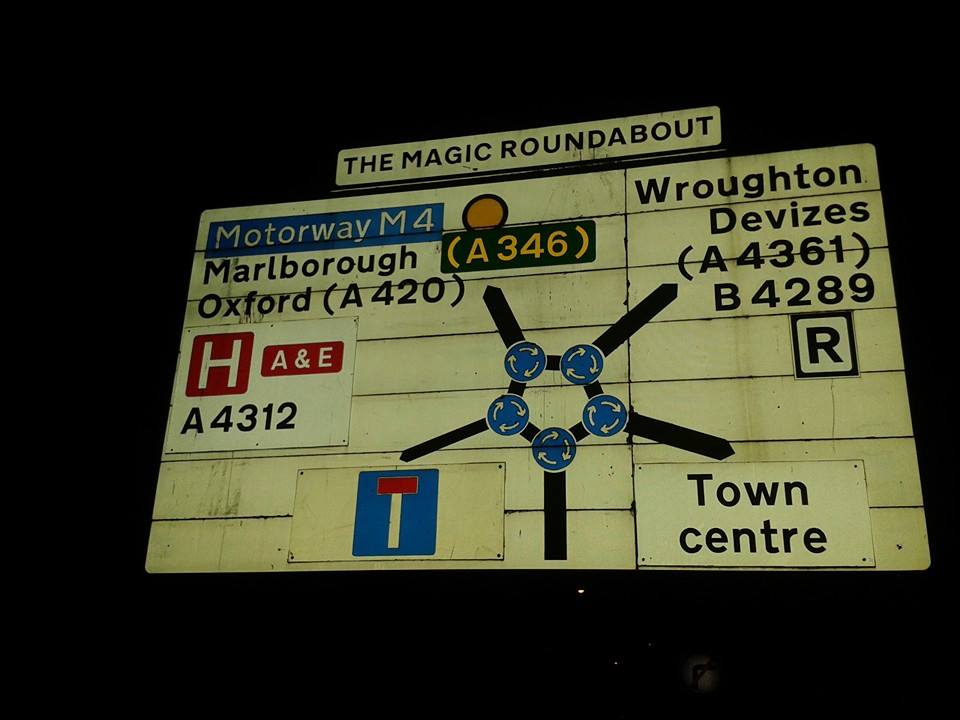
The magic roundabout. One roundabout consisting of five roundabouts. That was what swayed me to prefer the longer trip to Swindon rather than the shorter one to Reading on a dark November evening.

magic roundabout

And to get the roundabout out of the way. It really was amazing. How on earth there were no crashes while I was watching is beyond me. Cars were stopping and starting all around me with no apparent pattern – such a stressfull sight that the memory card in my camera broke down as I tried to capture it. So alas, no photos from the County Ground. Which is a pity. Because it is – the roundabout apart – quite beautifully located. There is a cricket and athletics ground next to the football ground, and open green spaces with football pitches, where the local kids presumably play in the summer.

Walking from the station, you first pass nice mixture of residential houses, restaurants, launderettes, betting shops, grocerys in Manchester Road, and then terraced houses in County Road, before you get to the County Ground Hotel. Swindon flags outside the hotel, show that is a home supporters’ pub. Several boards tell you of the connection to the Arkell Brewery, which helped finance the first stand in the ground in 1932, and the main stand of the stadium is still called the Arkell Stand, even though the current stand is from 1971.

Arkells

It is 4 in the afternoon, and I take a walk around the ground to have a good look before it gets dark.

It is what you can call a generic ground. Stands have been built when need and finance have been able to find some common ground.
Behind the hotel/pub there is car park, almost completely empty 3½ hours before kick-off. There are a couple of barracks to the left of the car park, proclaiming that they are the “Swindon Town Football in the Community Trust”, also looking empty.

The Town End stand facing the car park is very small, in fact, if the players shoot over the top of the goal, the ball is likely to end up in the car park. They must have a few ball boys out here during the match. Tickets are sold from this stand, but the sale has not even started yet.

Adding to the generic look of the ground, one of the floodlight pylons come up through the roof of the Town End Stand, whereas the pylon at the other end is placed next to the stand. It looks quite peculiar.
Whereas the stand is painted a bright white, the souvenir shop in the corner of the stand is a relatively new red brick building. It makes the adjourning Irwell Stand in grey concrete from the 90’s look really old (and ugly, but then again, it is ugly, but fortunately it is partly covered by trees in front of it).

The other end of the ground, the Stratton End, also has a generic look. The houses of Shrivenham Road borders right up to it. Apparently, the club had planned to build a new stand in 1994, but the project was delayed by protests from the residents in the houses. And when the club finally got the permission to build, the club had been relegated and neither had the need nor the money for a new stand.
Fences and barbed wire on top of the wall (with a Swindon Town FC mural) makes the ground look like a prison camp from here – and, in fact, the ground was used for prisoners of war during the second World War.

It has grown dark, when I walk along the Arkell stand, where officials start to arrive and enter.

I decide it is time for my pre-match meal and enter the County Ground Hotel – but they do not serve food on a match day. I had noticed a fish ‘n chips shop by the magic roundabout and head for that. There are quite a few residents buying take-away meals for the entire family, it seems. I get my fish ‘n chips – and have never had such a big bag of chips with it. I can only get half through it – and really feel the need for beer.

So I head back to the pub. On the way, I see the ticket office has opened. I tell that I am doing groundhopping and the guy in the office, which stand he would recommend. For a good view, the Arkell and Irwell stands are equally good. For atmosphere, the Town End is best. So I go for a ticket in the Town End.
Inside the pub, there is a quiz show on television. There are only about 10 people inside, and all of them follow the show with great interest. I have a pint and a look around. There are a few framed players shirts. And a few photos of teams and individual players. One of them is from 1904 and features Bob Menham. A great photo. During a commercial break in the quiz show, I ask the bartender if he minds that I take a photo of it (the roundabout had not worked its magic on my memory card yet).

He calls for the manager, and I explain that I am from Denmark and doing groundhopping. The manager is nice. He not only gives me permission to take photos, he tells me about his purchases for the pub. His best coup was a Swindon shirt signed by the League Cup Final hero in 1969, Don Rogers, who scored the winner against Arsenal. He bought it framed and all for £40. It is not Rogers’ shirt – it is just an ordinary replica shirt, but, as the manager tells me, those shirts cost at least £45.

A guy at the bar desk has followed my conversation with the manager and offer me a drink. I don’t catch his name, but we are soon engaged in conversation.

He points to the photo from 1904 of Bob Menham and tells me that Bob’s great grandson, John, will be here soon. Although he is in a bad condition in a wheel chair, and although he drinks heavily, he goes to all the matches. In fact, he tells, former Manchester United player and Swindon manager, Lou Macari, has devoted a couple of pages to John in his autobiography. Lou Macari was a renowned tea-totaller, but John Menham was as the only person allowed to have drinks in his office.

In fact, when I check the biography, Macari writes: “After home games they would wheel him into my office. I would go doen to the boardroom and stock up with beers just for him. At six o’clock his parents would collect him and wheel him down to the local at the end of the road – where he went most nights, incidentally – and leve him there until closing time. He could shift eight or nine pints no trouble … Wonderful lad. Swindon without John Menham would not be the same. John and people like that are a club’s lifeblood. He is still there now, as far as I know, and still going strong.”

My friend adds that Lou Macari later invited John to sit in the dugout at Wembley for a match with one of his later clubs.

As we await the arrival of John, we share views on grounds we have visited. His favourite ground is Ewood Park, Blackburn – and ask me: “How many Shearers have played for Blackburn?” I sense it is a trick question – I can only think of Alan Shearer. Triumphantly he says: “Two. Duncan Shearer was a prolific goal scorer for Swindon, and Kenny Dalglish signed him up just before Blackburn were due to play Swindon.” My friend had gone to a home supporters club in Blackburn, and he had won drinks from all the Blackburn supporters on that one. So when he moved to Blackburn a couple of years later, he was recognized in the pub.

I offer my new friend a drink, but he insists that he buys the next round as well, since I have travelled from Denmark to see his team. He is not going to the match himself – too expensive – but ask me, which stand I will be in. When I tell him, that I am in the Town End, he calls Andy over. Andy is one of the leaders in that part of the ground. He is about my age, skinhead. He asks me if I am the Norwegian Swindon supporter that had been featured in a local paper (claiming to be the only Swindon Town supporter in Norway), but when he hears that I am a groundhopper and not a fan, he somehow cools a little bit. He goes to the jukebox and says “let’s play some music for out Scandinavian visitor”. It’s Sex Pistols beaming out.

The pub is getting quite full now. A car pulls up in front of the pub. “It’s John”. My friend go outside to help him out of the car. I take the chance to chat to a guy who has been standing listening to our conversation all night. I ask him if he is going to the match. “No”. He hasn’t gone since 1969. In that year, he had joined the army and travelled the world for the next 25 years. “And then you can’t start again”, he explains. So he only attends the pub on match days.

John is wheeled into the pub and greeted by bartenders and fans alike. He has cerebral palsy and is reliant on assistance. My friend takes off one of John’s shoes and pull out a £20 note. “His carers are not supposed to know how much he is drinking. He always has 4 double brandys before a match”.

My friend tells John that I am doing groundhopping – and ask him, how many grounds he has visited. I can’t hear John’s answer, but my friend interprets it as “80”. “I bet the best one was the Wembley dugout with Lou Macari” I say, and John gives me big grin.

My friend spot a big, skinhead fellow. “That is Charlie. You have to meet him. He was our topscorer in our record season, when we got 100 points. That is Charlie’s shirt hanging up there”, he says and points to one of the framed shirts. Charlie is very popular in the pub, and by the time he gets over to us, my friend has learned, much to his amazement, that I am 51 years old. “Charlie, this is Hans from Denmark. And would you believe it? He is older than you!”. “Yeah, and taller. I bet you are either a central defender or goal keeper”.

Charlie Henry also gets a special mention in the Lou Macari autobiography – as “a Paul Scholes prototype”. Praise indeed. But checking his record, I find out that he actually is one year older than me.

This is what football does better than anything else. Bring people together. We start with sharing memories of grounds. Then my friend start talking about great players who have played for (or managed) Swindon. Most of which I know. Establishing a common ground, we also get to talk of other things in passing. He learns that I am curator and have worked with military history, and he is sure I will be allowed to see the local historical artillery collection, although it is not open to the public. I learn that he is builder, who after moving to Blackburn with his wife, now lives on top of the pub. I give him my card, and he promises to write to me, so I can contact him on my next visit. He asks me when the last train to London is. It is just under an hour after the match. “Then there is plenty of time for another drink after the match” he says.

The match is against Preston North End, who are top of the table at the start of play. The match is very tight with chances few and far between. We can hardly hear the couple of hundred Preston fans down the other end. They are in the Arkell STand, not the Stratton End, which apparently isn’t used unless it is a capacity crowd.

Everybody at the Town End is standing. There are a few oohs and aahhs, and “Come on you reds” and “Oh when the reds, go steaming in”, but the atmosphere inside the ground cannot quite match the atmosphere inside the pub. During halftime, I go to buy a pie in the tiny stall which is squeezed under the tiny stand.

As the match seems to be heading for a stalemate, I think of my meeting the next morning in London. And decide that rather than risk missing the last train, I will leave the match five minutes before the end to catch the last train but one just to make absolutely sure I get back to London. Which I regret. Because Swindon score a late winner. And I don’t get an email from new friend – who probably expected me back at the pub after the match.


Tagged with: , , , , , ,
Posted in Football grounds, Uncategorized

Griffin Park, Brentford

P1010690P1010617P1010620

In the match programme for the night’s game against Norwich, the Brentford chairman Mark Devlin wrote: “Most teams we face have not been to Griffin Park for a number of years. The throwback to an old, traditional stadium, with its terracing and the obvious attrations of the four corner pubs menas that we can expect sell outs in the visitors stand at almost every match this season.”

Precisely. A throwback to a traditional stadium with terracing at both ends. The way the stadium is tugged behind terraced housing with the remarkable feature that there is a pub at each of the four corners of the ground. That is why Brentford was high on my list of stadiums I wanted to visit.

Nevertheless, the club is about to start building a brand new 20.000 all-seater ground close-by. So much for the attraction of being a traditional stadium. Judging from an image of the planned Lionel Road stadium, the new ground looks just as soulless as most modern stadiums.

Of course, a modern ground has advantages. Toilet facilities. Executive boxes and possibilities to generate income from corporate events. A bigger souvenir shop and batter catering facilities (although most catering facilities within football grounds sell crab food anyway. In fact, the best pie I have had in a football ground was at Fulham, one of the oldest grounds, so new facilities do not mean better standards). As Brentford were in deep financial troubles some years ago, I guess that the move must be seen as part of a strategy to secure a more viable economy.

Perhaps just as importantly, Griffin Park does not live up to Premier league standards, if Brentford should succeed in winning promotion from the championship. The current capacity of about 15,000 will, far from being big enough for the premiership as such, have to be dramatically reduced, if the ground is converted to an all-seater stadium (In fact, the capacity was slashed from 37.000 to 9.500 during the 1980’s). But on the other hand, a 20,000 capacity in the new ground would also be too small, if the club was to win promotion (although there apparently is an option to expand it to 25,000). And then again, Brentford may go down to League 1 rather than up to the Premier League. And in that case, the current facilities seem adequate.

Anyway, with only a couple of seasons of football left at Griffin Park, I can only recommend football fans to go there, while it is still possible.

According to Simon Inglis, the really incredible about Griffin Park is the fact that the houses in New Road and Braemar Road had been there for some 20 to 50 years, when Brentford in 1904 rented the ground from the local brewery and built the stadium.

P1010678P1010679P1010684P1010683

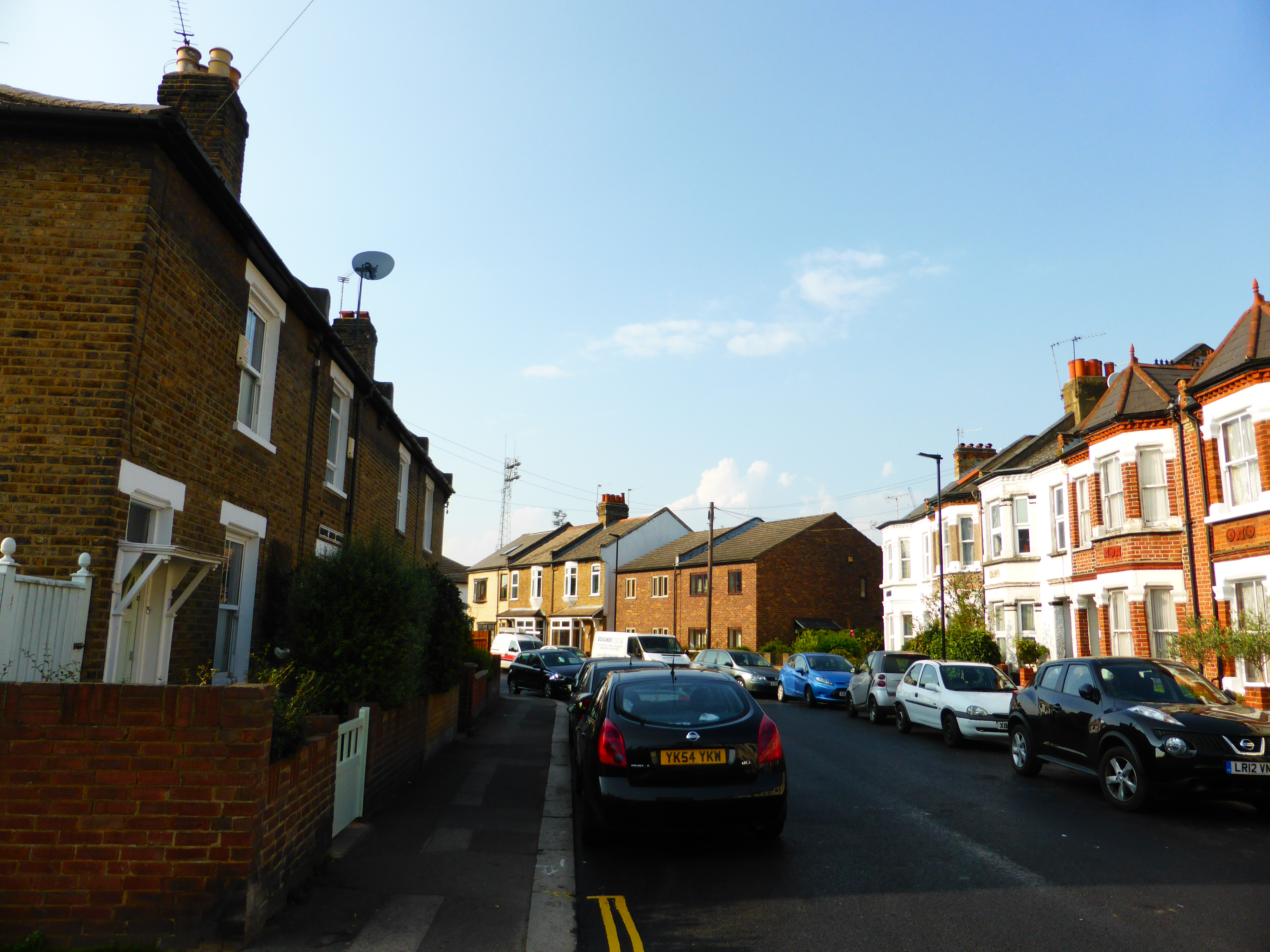
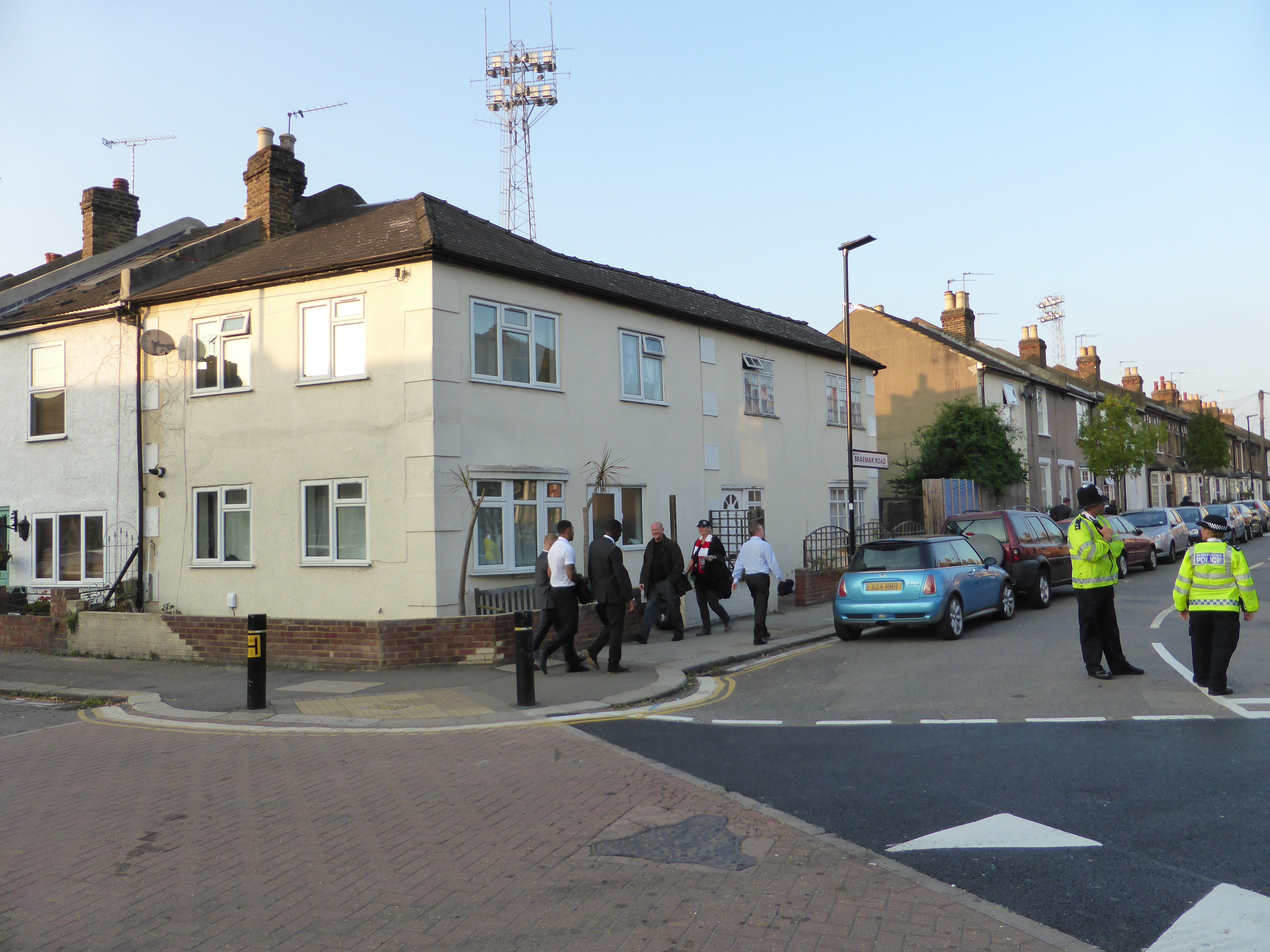
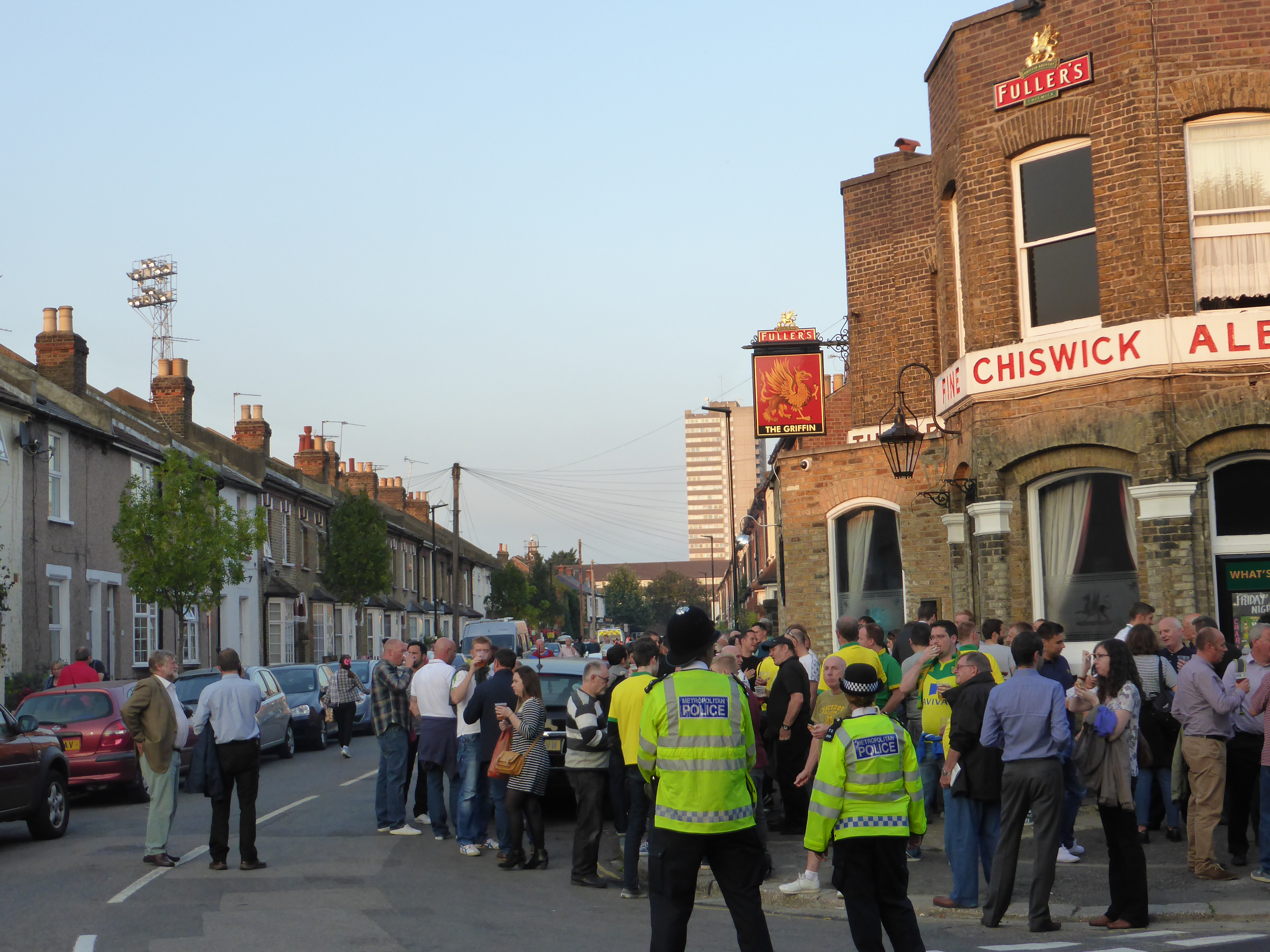
The floodlight pylons are the only indications of a football ground, when you look up Braemar Road from Brook Road. That is untill a couple of smartly dressed footballers arrive for the match with football boots in their hands, and a couple of policemen take up their position.The number of visitors to the Griffin pub on the corner of the street gradually increases, with canary clad Norwich supporters mixing with the home supporters.

P1010622P1010630

When you proceed down the road, the stadium suddenly appears, as apparently a couple of houses have been torn down to make the ground visibile and to create a forecourt for people to gather. And in one of the next houses, a souvenir shop also indicate that this is not just a residential area.

P1010632P1010635

On the corner of Braemar Road and Ealing Road, you find the next pub – the Princess Royal. Proceeding down the Ealing Road, there is no entrance to the stance, only an exit gate paved between the houses.

P1010638P1010647

On the next corner – of Ealing Road and New Road, you find the The New Inn. Again, there is hardly anything that gives the stadium away except the pylons. On the side of the road opposite the ground there is an old methodist chapel.

P1010642

P1010640P1010641

In the middle of New Road, another house has been sacrificed to create an entrance to the ground. They have not – like in Kenilworth Road or the old Filbert Street opted to make the entrance through the house. But if they had, it is likely that nobody would notice the ground at all.

P1010649P1010666P1010658P1010650P1010652P1010656

I get to the last corner and find the Royal Oak. And suddenly the scenery changes. Two blocks of modern flats look completely out of place at the Brook Road end. There used to be a carpark, but as half the Braer Road main stand was destroyed by a fire in 1983, the club had to sell it off to raise money for the rebuilding. Still, though, it is hard to see the ground, apart from an entrance for the away supporters (who take up the Brook Road end) and a small car park for flats. Here you can see a red steel skeleton of the rear of the stand, whcih was dismantled in 1986. It looks like it is trying to keep the encroaching houses in New Road at bay. All adding to a bit messy but very charming appearance.

P1010683

Having walked round the ground, I take a drink at the Griffin. A local supporter tells me that this is the only ground with a pub on each corner. “Yeah, I have been round to see the four of them”. “Well” he tells me, “you are supposed to have a drink in each one before the match”. I do not have time for that, though. My cousin and his wife are coming around for the match, and we are to have pre-match meal. The Griffin seems to be the best bet with burgers being grilled in the back-yard. And they are, in fact, quite good.

P1010687 P1010689 P1010692

Having entered through the turnstyles to the forecourt, my cousin and I opt for a pancake for dessert before making for the Ealing Road stand. I had purchased my ticket for the standing section before knowing I would have company for the match. And I really relished the thought of standing on a good old-fashioned terrace again. But as it was my cousin’s wife’s first match, perhaps it would have been more convenient with a seat.

P1010698P1010700P1010703P1010705

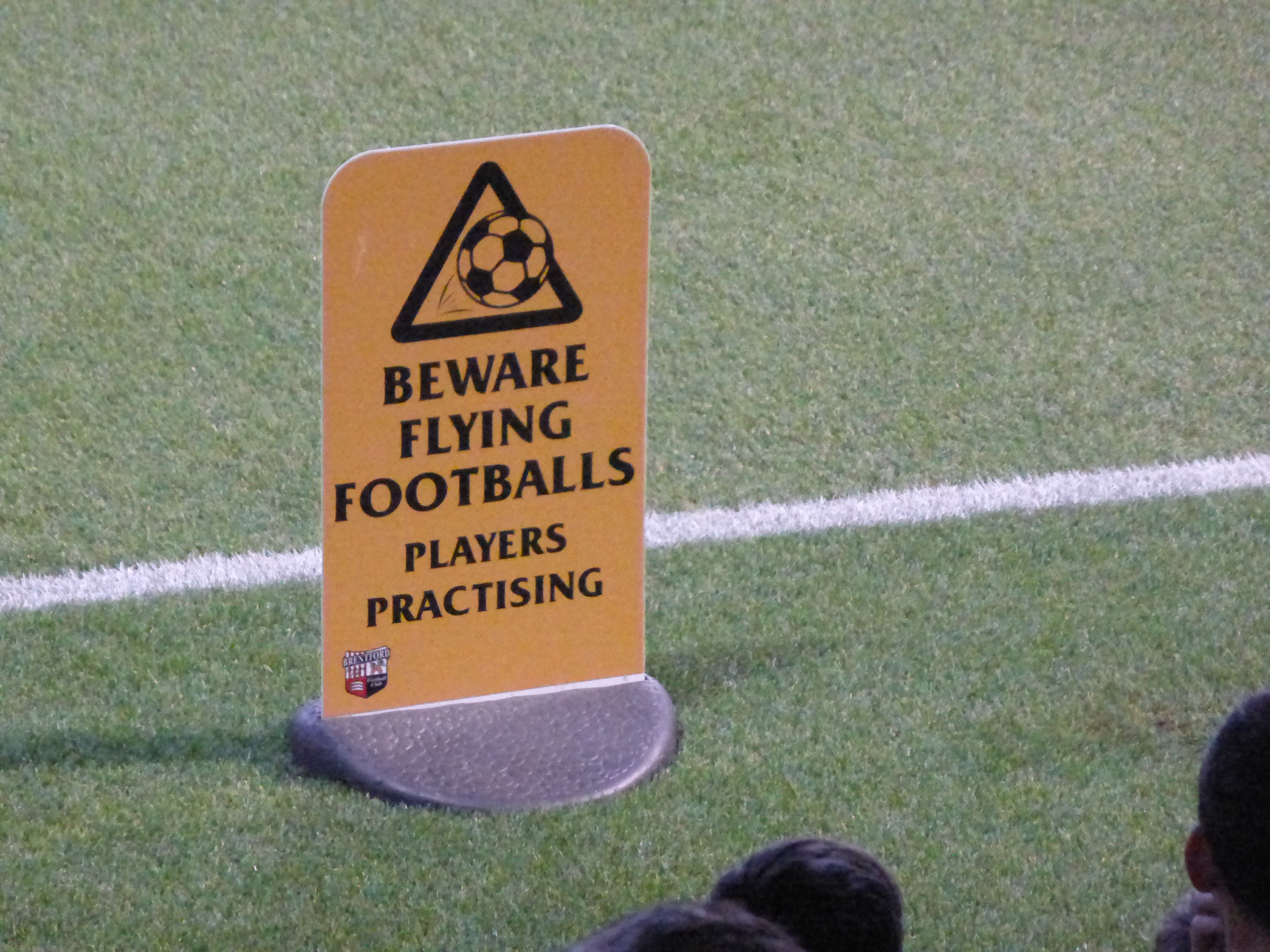
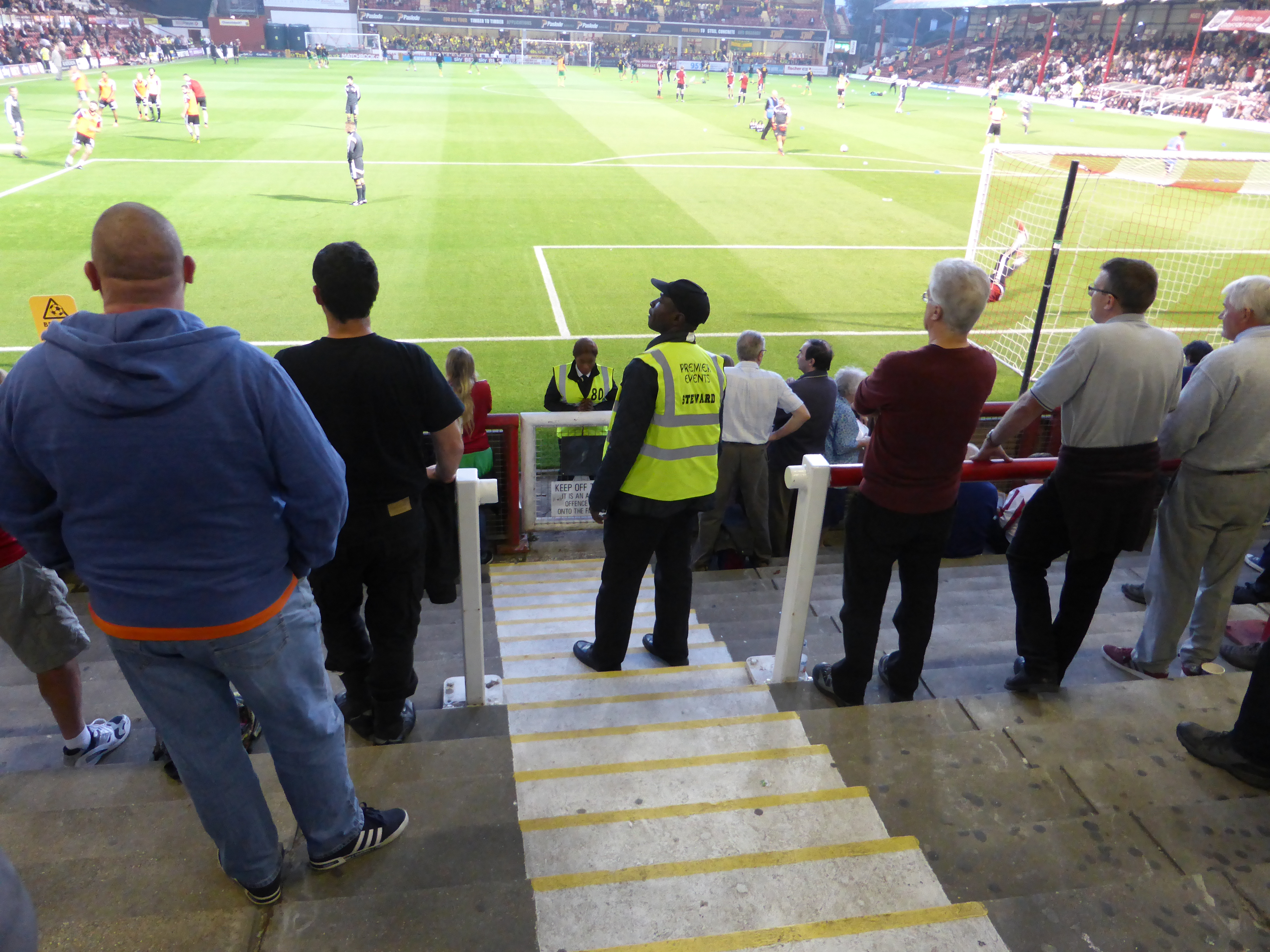
When we get onto the terrace, all the places along the cruch barriers have been taken. Giving people something to lean onto. There is a very intimate atmosphere. The ground is small, you are close to the pitch – and standing up make you feel even closer. “Beware flying footballs. Players practising” a sign tell us. And it is right. The crowd behind the goal is being peppered by wayward balls. No net to protect the spectators in the seats. We are part of it.

P1010707 P1010710 P1010713

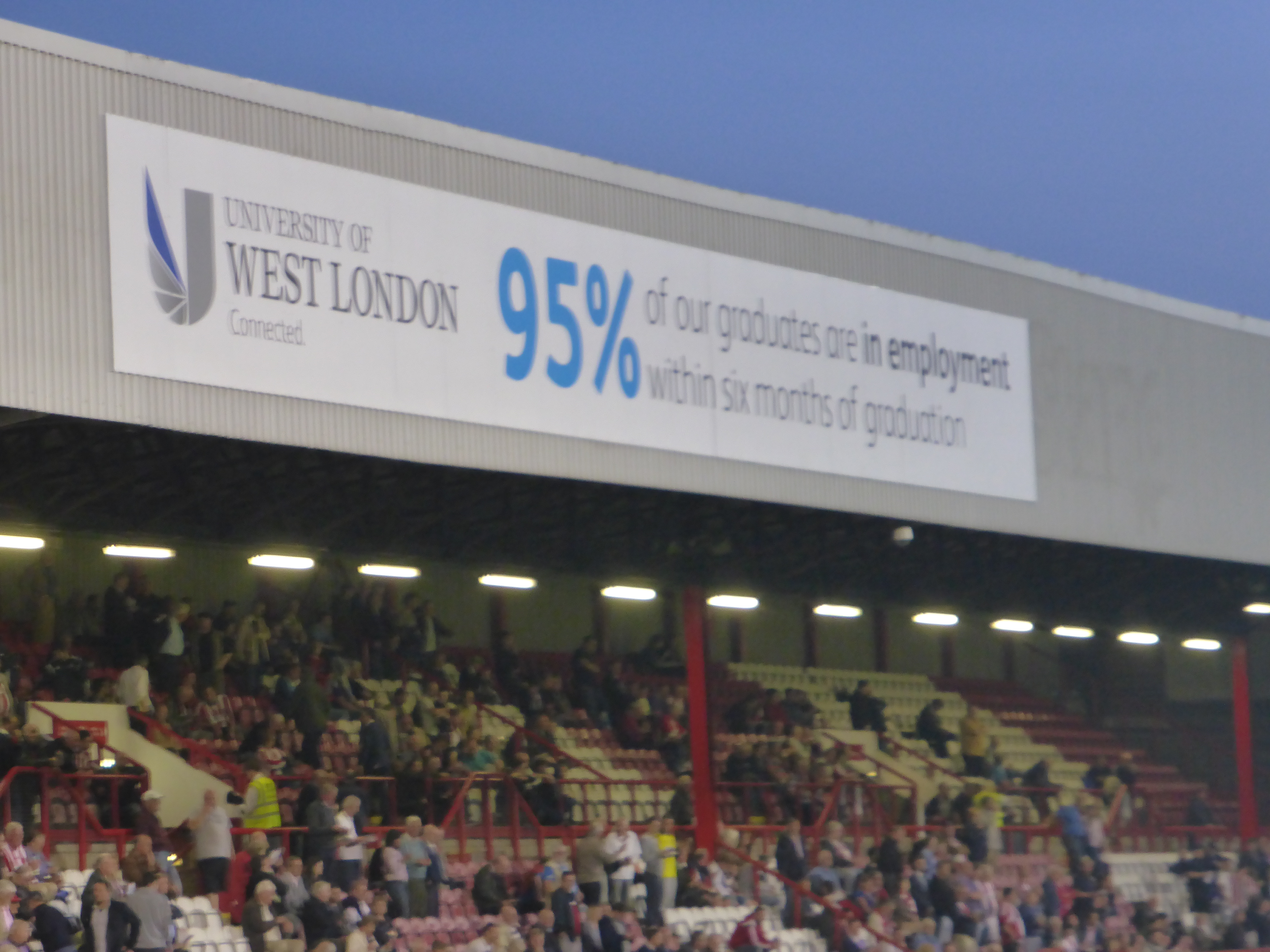
The stewards are quite strict that you are not allowed to stand in the gangways. I try to lean on the corner of a crush barrier, but as one my toes touches the white paint in the gangway, a steward tells me to move. Griffin Park is famous for selling huge adverts on the roof of the stands that can be seen by flights approaching Heathrow. The one roof, I can see, is taken up by a betting company. I cannot see the advert on the other roof top, but on the front it is the University of West London. A stark contrast to The Den, where the corresponding place is taken up by the local undertaker. Perhaps it tells you that we are in a more well-off part of London.

P1010714 P1010717 P1010720 P1010726

Apart from being recruting ground for universities, the crowd look a family crowd, with a number of women. Still, when the match kicks off, I find that although we are a long way from Millwall, we are also a few miles from Fulham that I visited recently. At Fulham’s Craven Cottage, the groaning home crowd was shouting “oh no!”. Here at Griffin Park, it is “For fuck’s sake”. When a home player made a mess of things at Craven Cottage, he was treated to a “You tosser”. At Griffin Park it is “you wanker”. Especially Norwich’s Swedish full-back is treated to this chant after he appears intent on kicking a Brentford player but stops in his tracks in the nick of time and escape a sending off. Boos and jeers whenever he is close to the action. And it seems to affect his came as he puts a couple of simple passes out of play. Which encites the home crowd to turn up the volume against him.

P1010732 P1010741 P1010748 P1010749

As the match kicks off, the lights in the stands are turned off. Maybe it is just my imagination, but the atmosphere seems better for a crowd this size than in an all-seater stadium. Part of the reason is that friends are standing close to each other, chatting – and groaning together – instead of being spread out on seats around the ground. But you somehow feel closer to the action. Also because of the lights in the stand being turned out. And I am pretty certain that a home goal will send the entire stand jumping with joy bringing us even closer to each other.

P1010729

Unfortunately, it is only the away support down the other end, who get the opportunity to jump for joy. Three goals in the final 20 minutes see them win 3-0, which is a bit unfair. Just before Norwich’s second goal, Brentford have a shout for a penalty turned down. The crowd is furious. “You don’t know what you are doing”, “wanker”, “you’ve better run for the tunnel”, “2-0 for the referee” are just some of the chants coming up.

P1010759

As we leave the stand at the end of the match through the passage to Ealing Road, I pass a sign thanking me for my vocal support – and then it tells me to be quiet now, as this is a residential area. Most of the Brentford supporters are pretty quiet now. But I guess that wouldn’t have been the case, had they won the match.

This is football in the traditional way. Hurry to Griffin Park before it is too late.


Tagged with: , , ,
Posted in Uncategorized

‘Proper museum’ or branding platform? Club museums in England.

Here is a chance to read my article on English club museums in Soccer and Society.

http://www.tandfonline.com/eprint/kHRSJBF5sYMqnbzxX2Rb/full#.VGYXX8lRwtU

Be aware that only the first 50 readers will have access!

Tagged with:
Posted in Uncategorized

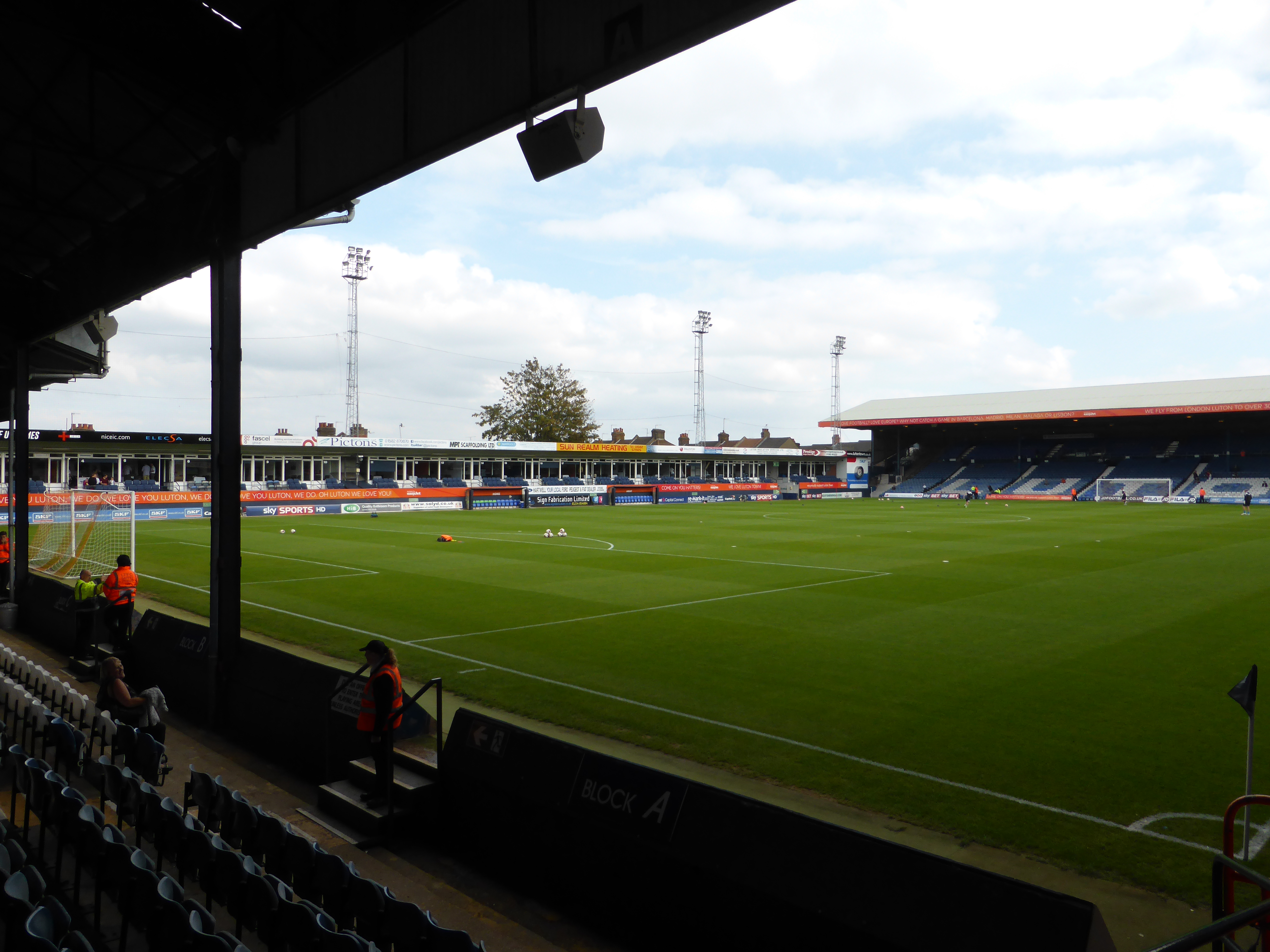
Kenilworth Road, Luton

P1000969

Saturday morning in London. I come across hundreds of Arsenal supporters in their red “Emirates” shirts, on their way to an early kick-off against Manchester City. Finally, at Sct. Pancras, I also spot an orange “Easy Jet” Luton shirt. And as Luton is my destination today, I follow shirt and owner to the train to take me north of London. I have only been to Luton once, when I flew with Easyjet to Luton airport back in the nineties. As the train stops at the airport, my guiding Luton supporter gets up and leaves the train. “Is this the stop for the football ground?” I ask him. “No, next station”. He seems to prefer easyjet to Luton Town F.C.

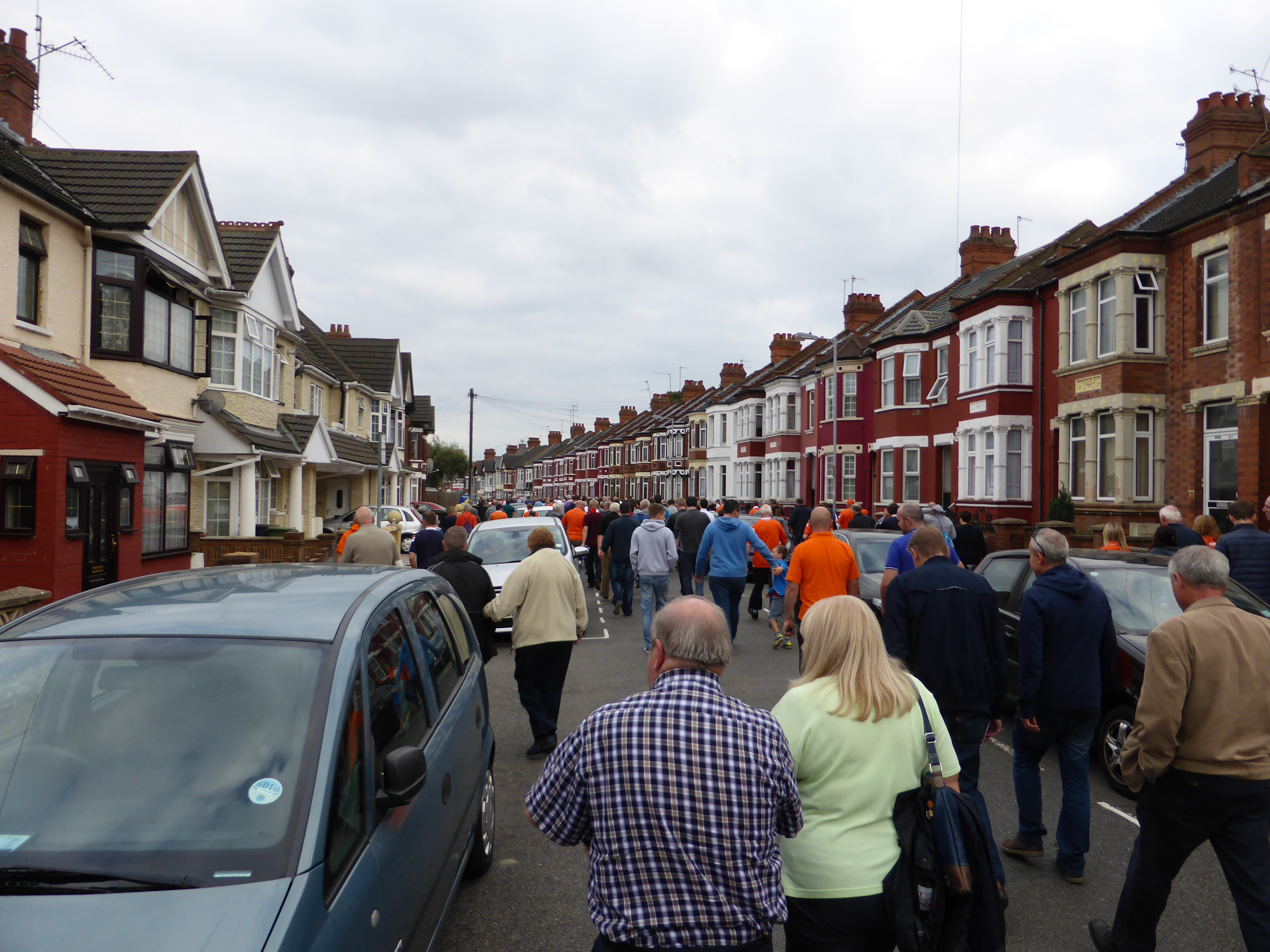
I have not really checked the map for the way to the ground, as I usually just follow matchgoers from the station. But there are none to be seen, so I have to check on my smartphone.

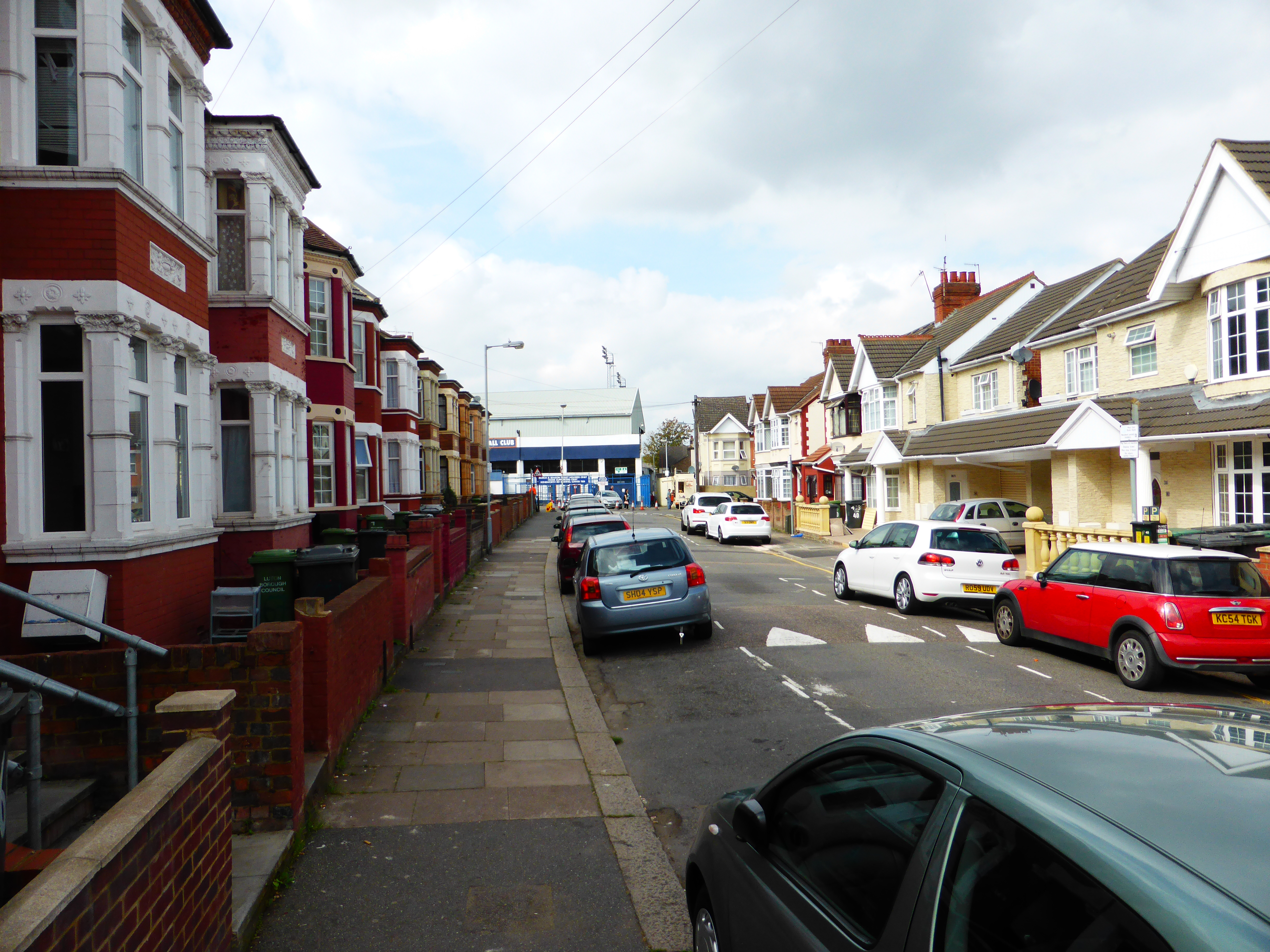
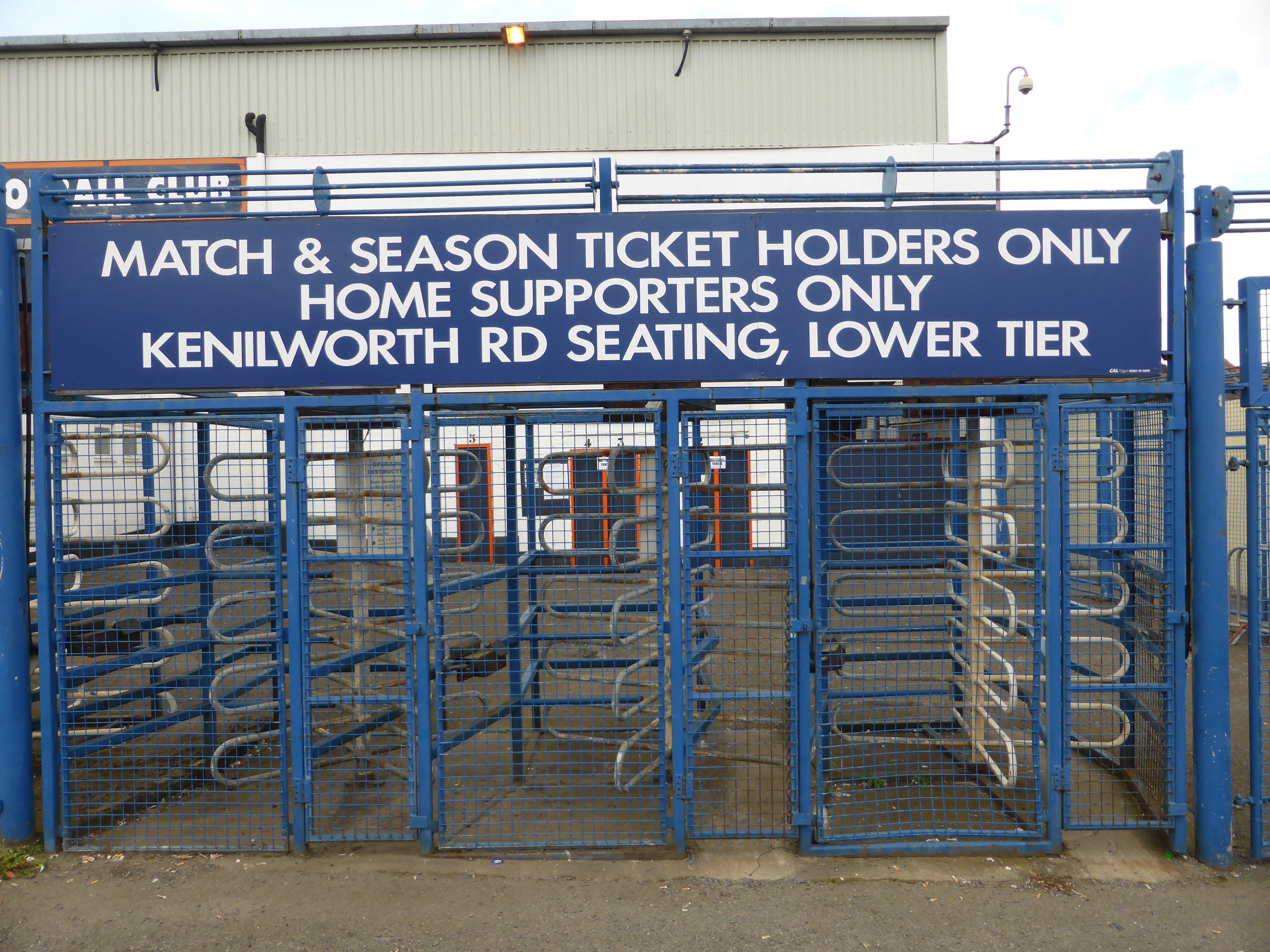
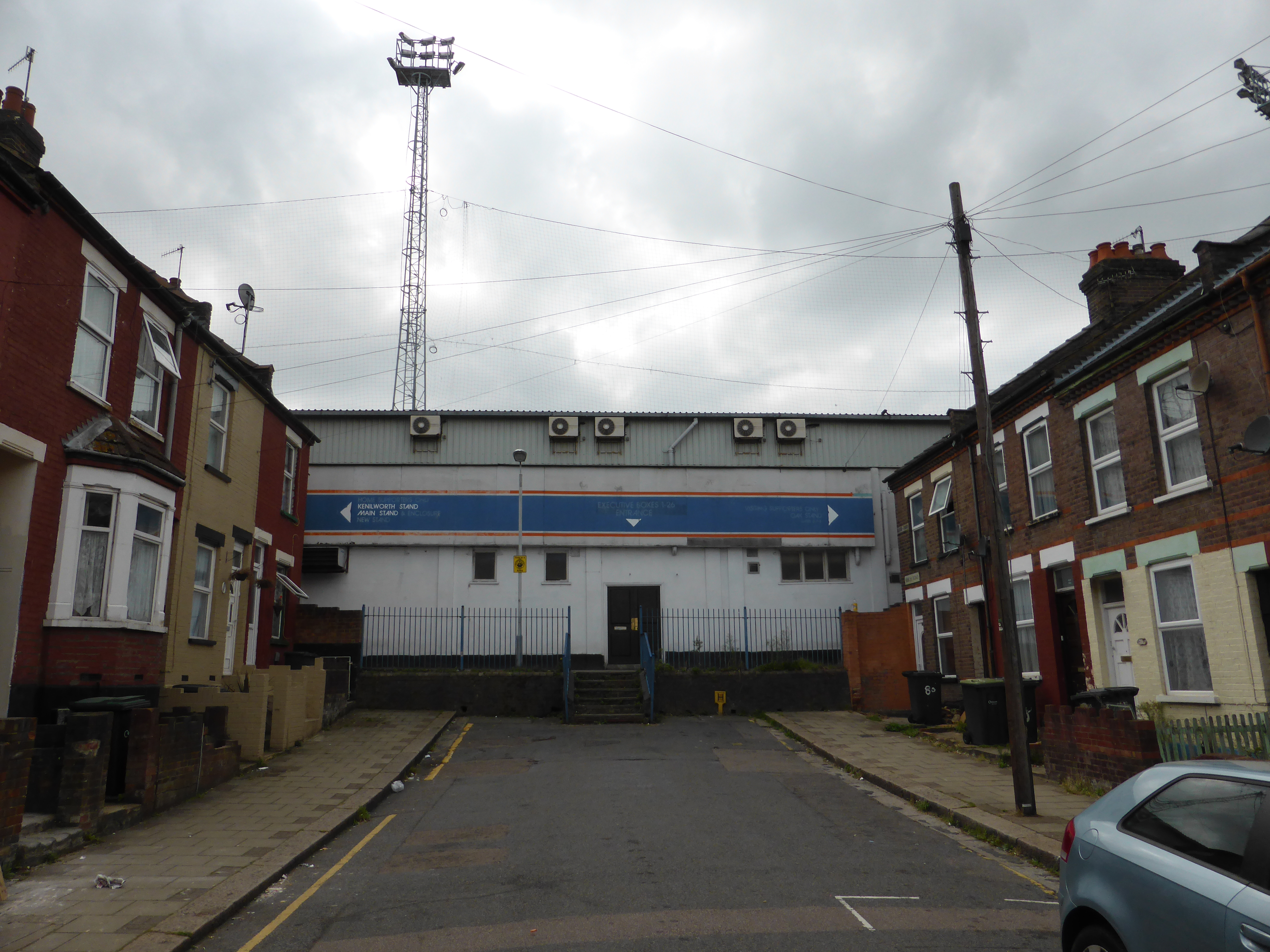
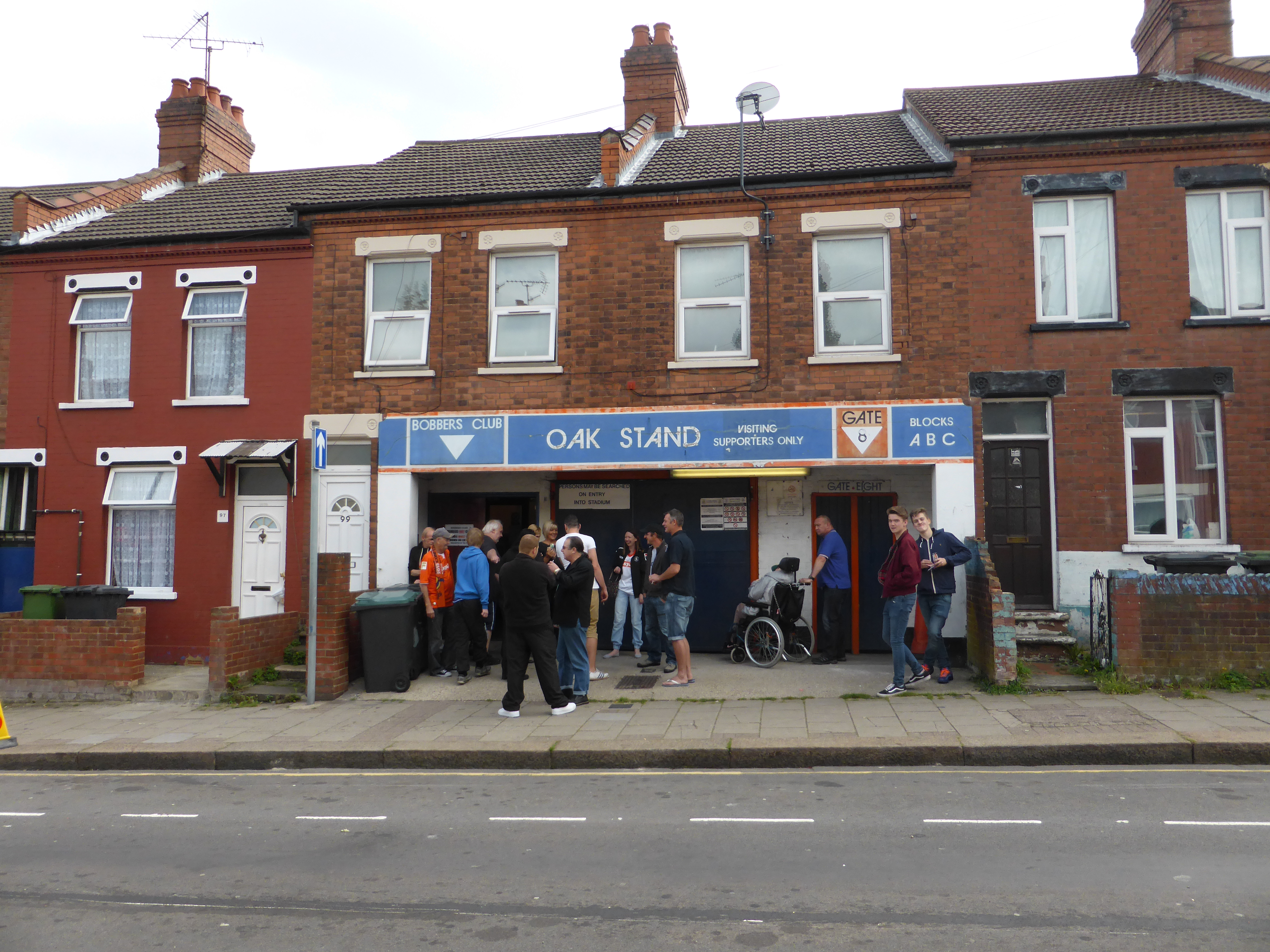
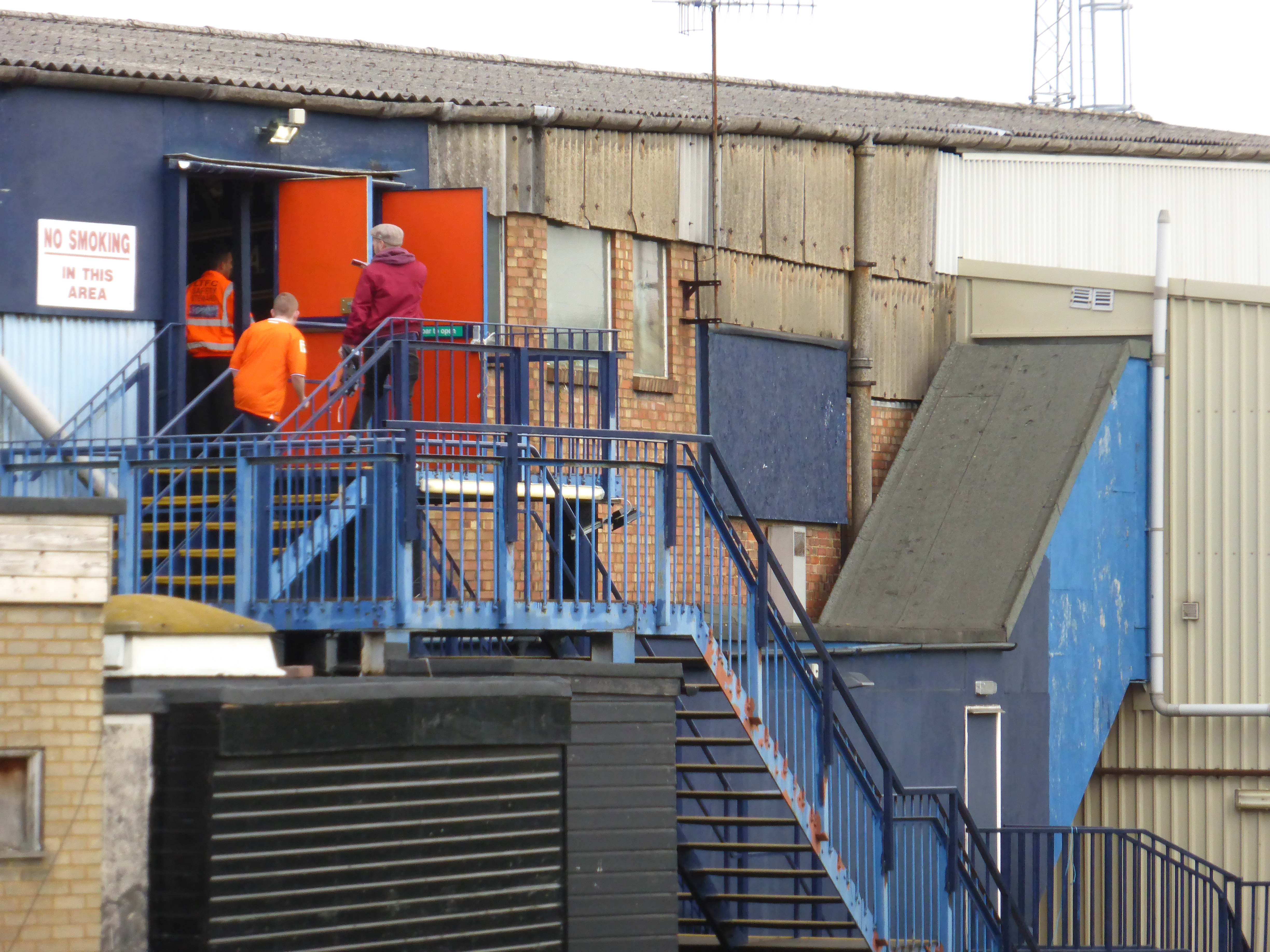
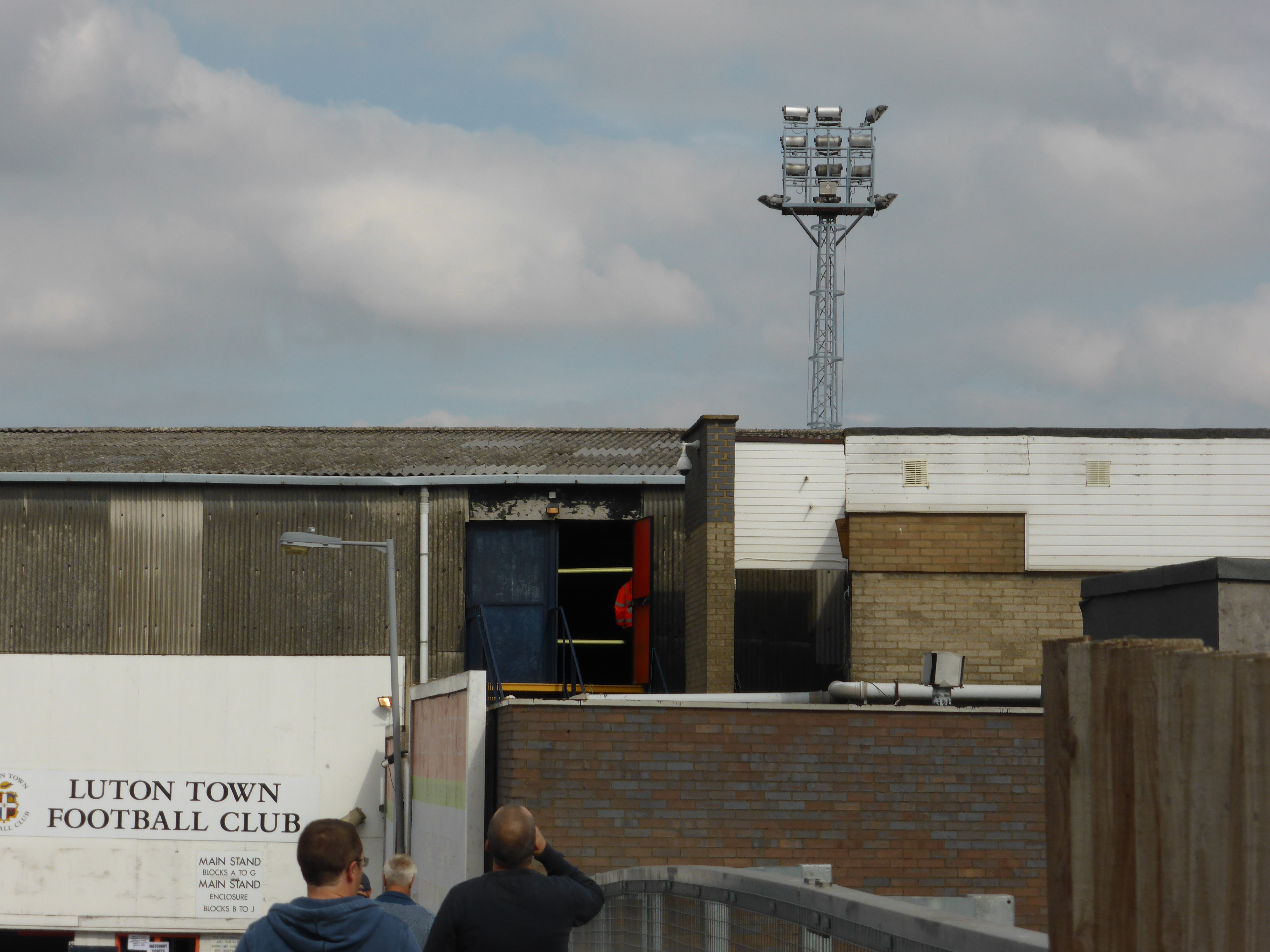
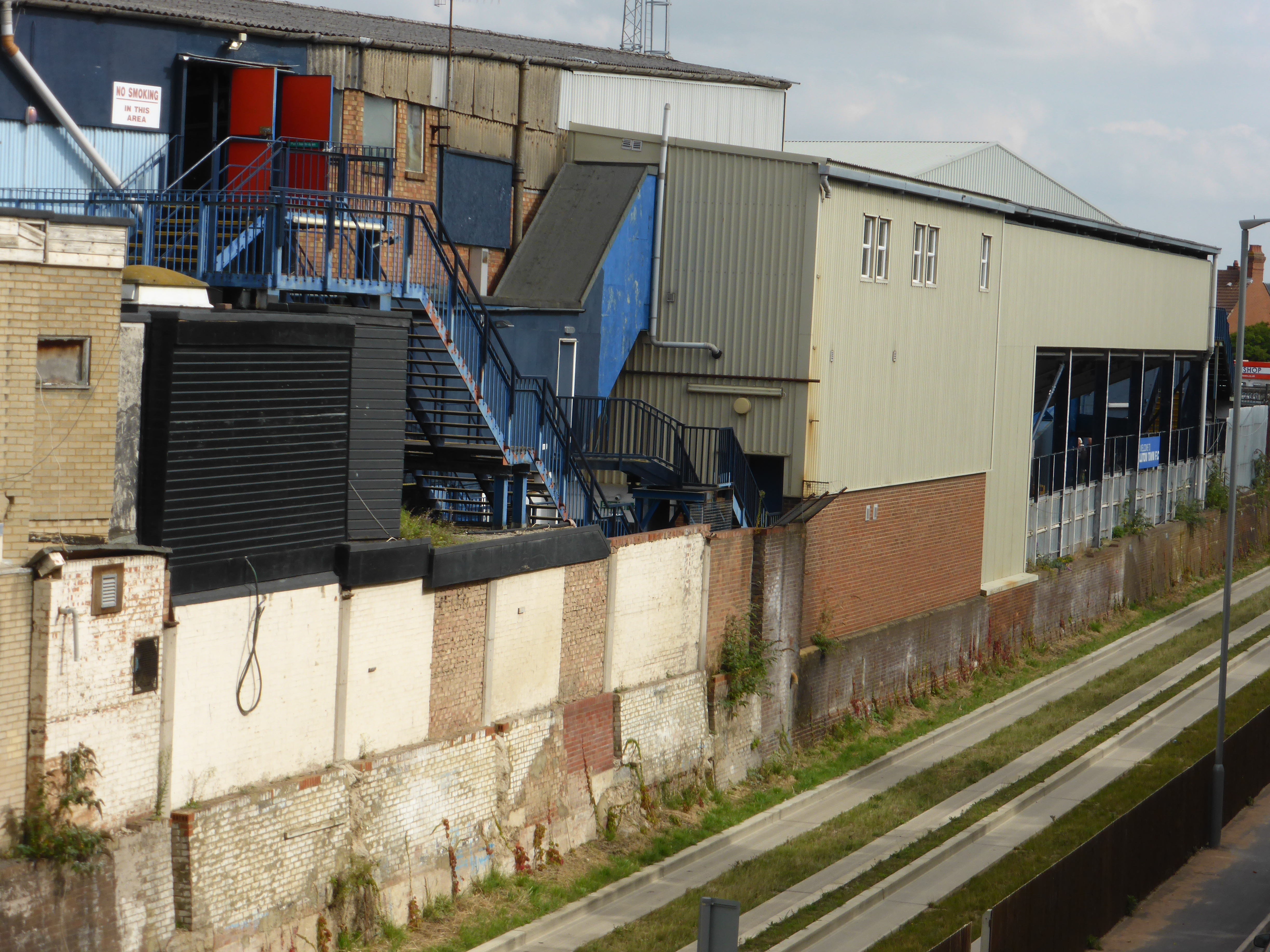
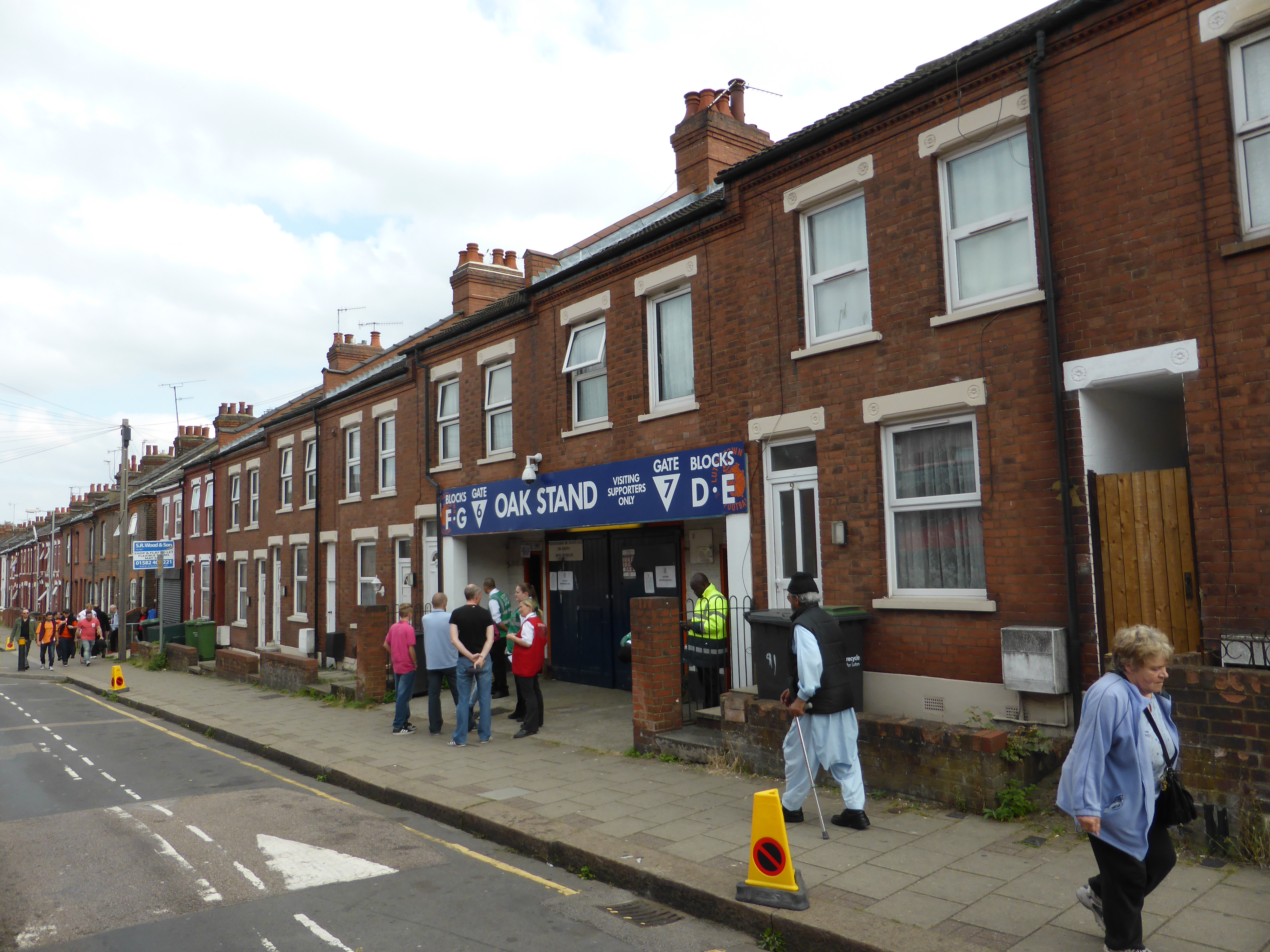
Luton is not a place that people in general travel from abroard to visit. When I told my English friend Charlotte that I planned to go, she looked at me in disbelief. Luton? Probably most reknown for the English Defence League emerging from the town. A town with tension and conflicts. But they have a traditional football ground. With entrance through terraced housing in one of the stands. And that is what has lurred me to make the trip.

P1000866 P1000868 P1000869

First sign of a football ground is the carpark for executive box holders. It does not look of much, and I have to remind myself that Luton last were in the topflight before the introduction of the Premier League back in the 80’ies. Since then, they went from bad to worse before being relegated from the football league. But this summer, they won promotion back to League 2, the fourth tier of English football. They have not benefitted from television and sponsorship money like the top clubs.

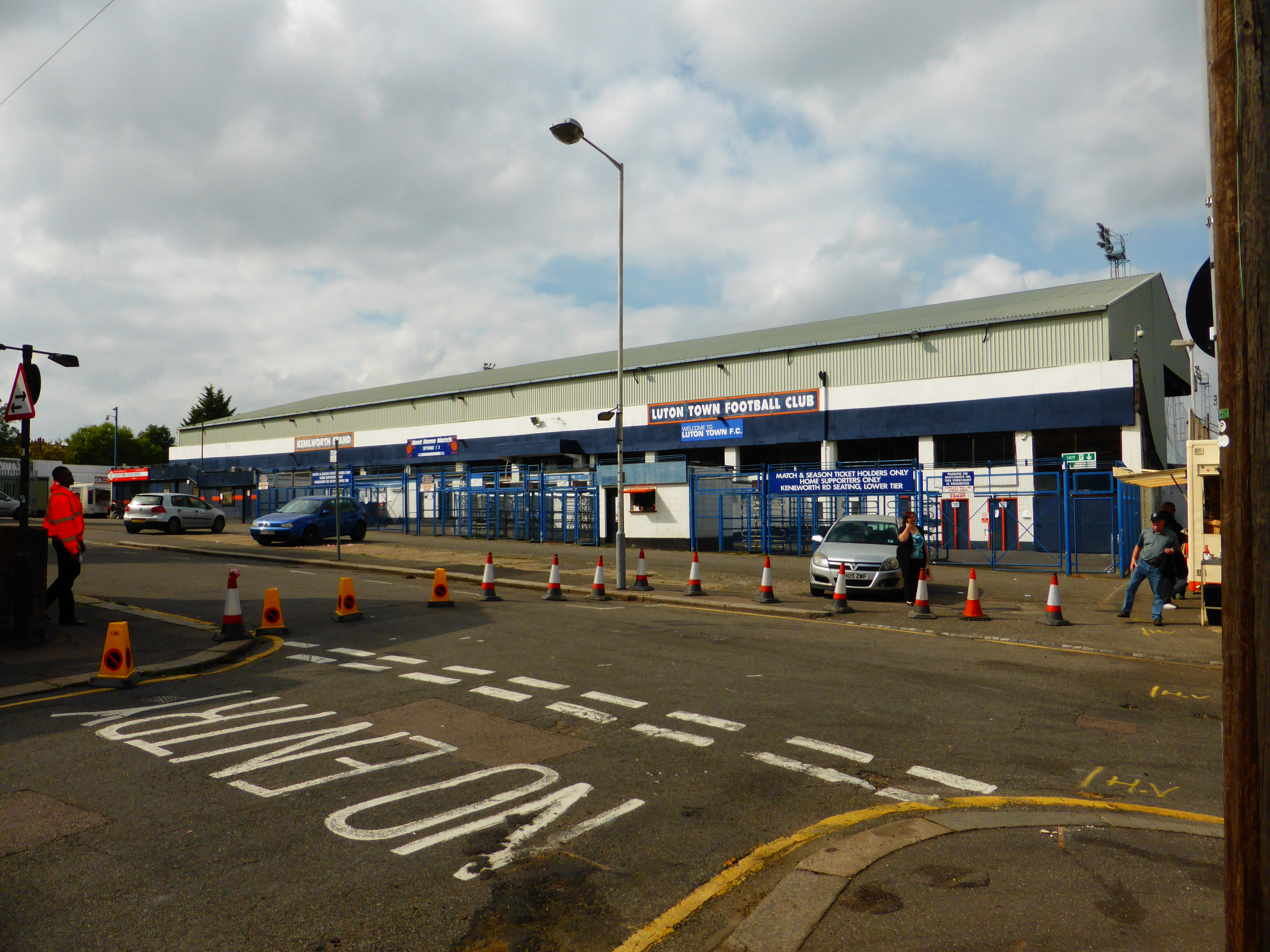
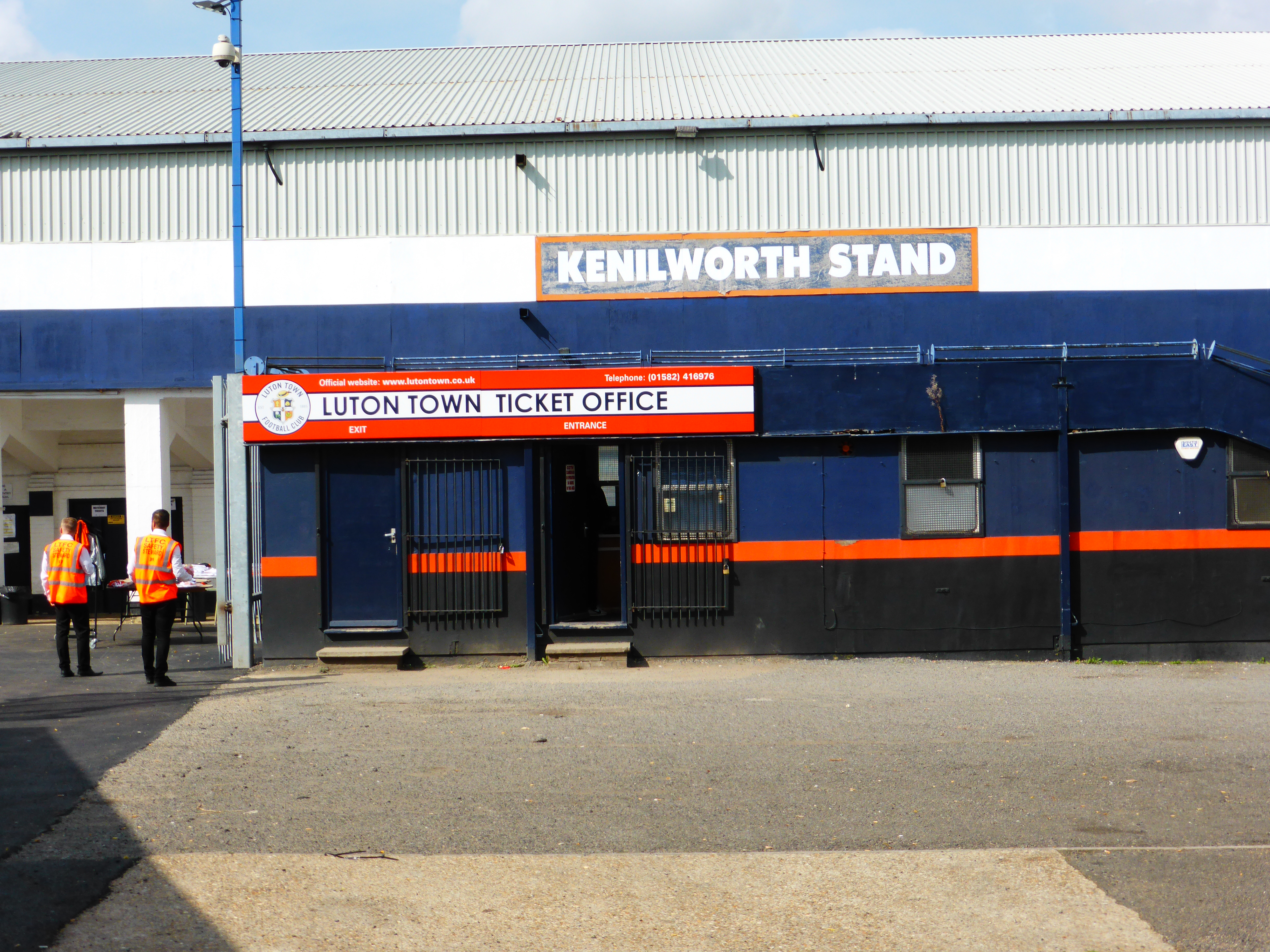
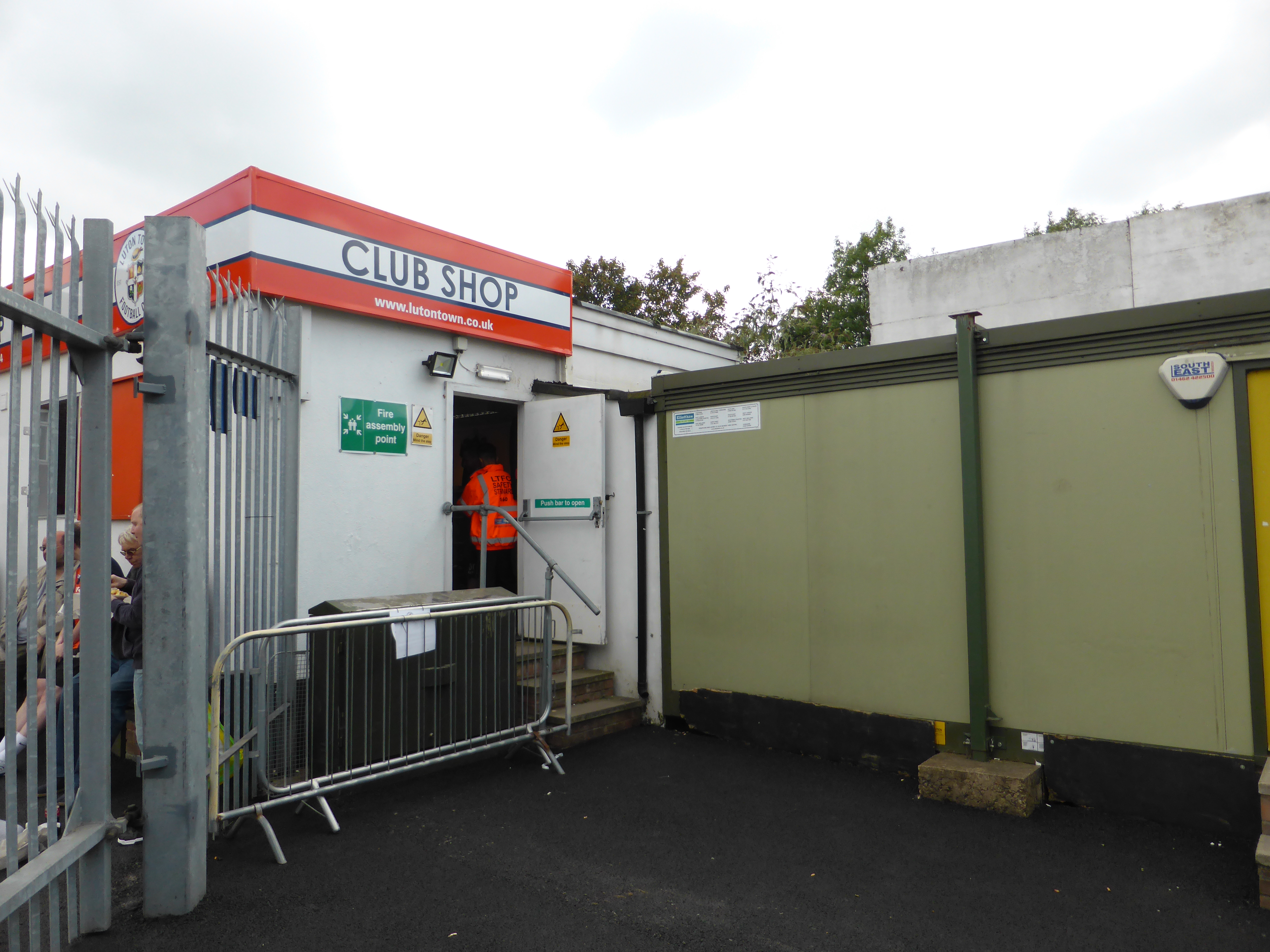
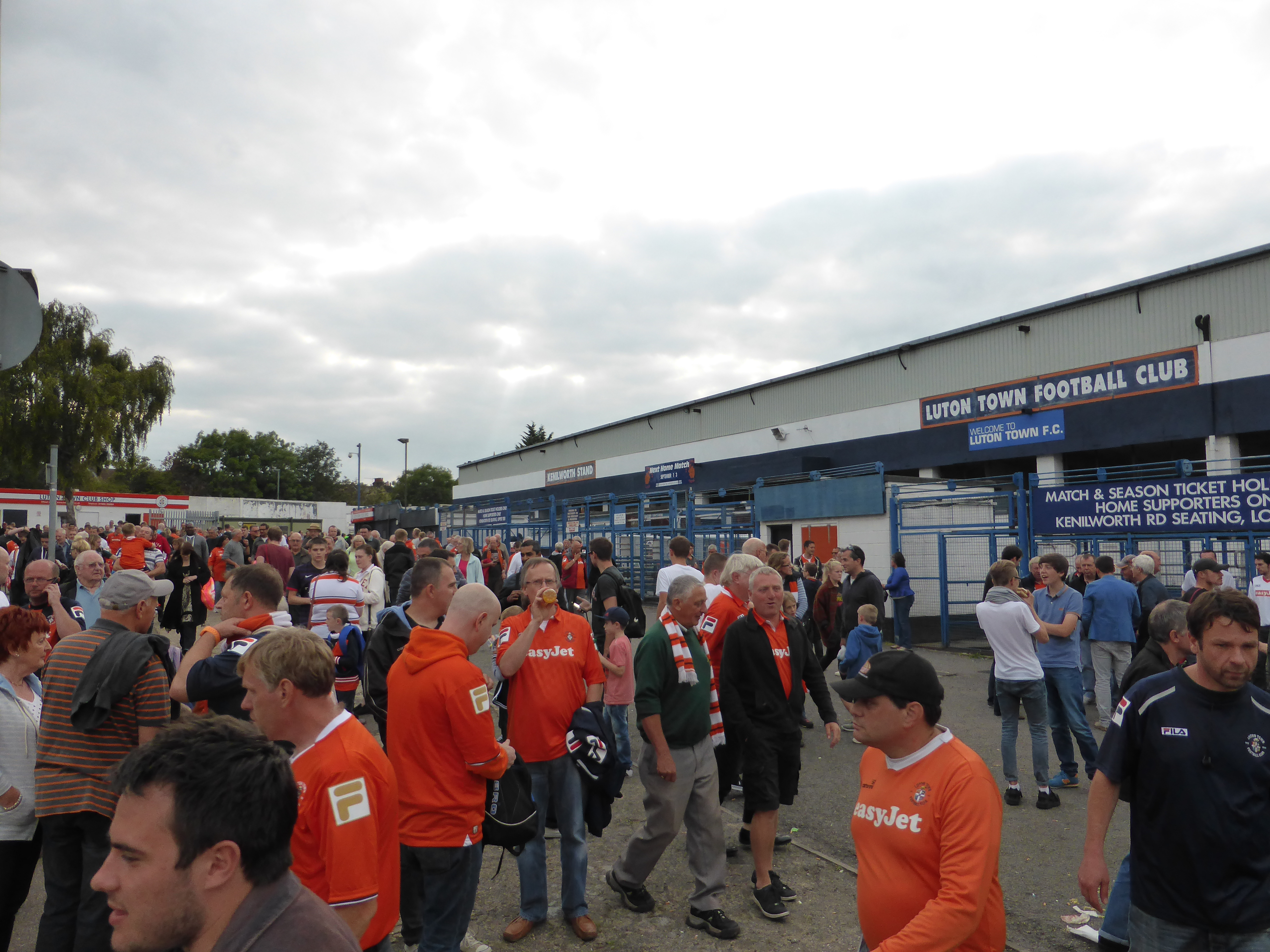
At the end of the road, I can see the Kenilworth Road stand emerging. This is the “centre” of the ground. The ticket office, the club shop, the few burger stalls are all here, just as you have to enter the main stand either from here or the other end of the ground, Oak Road.

P1000872 P1000874 P1000876 P1000879

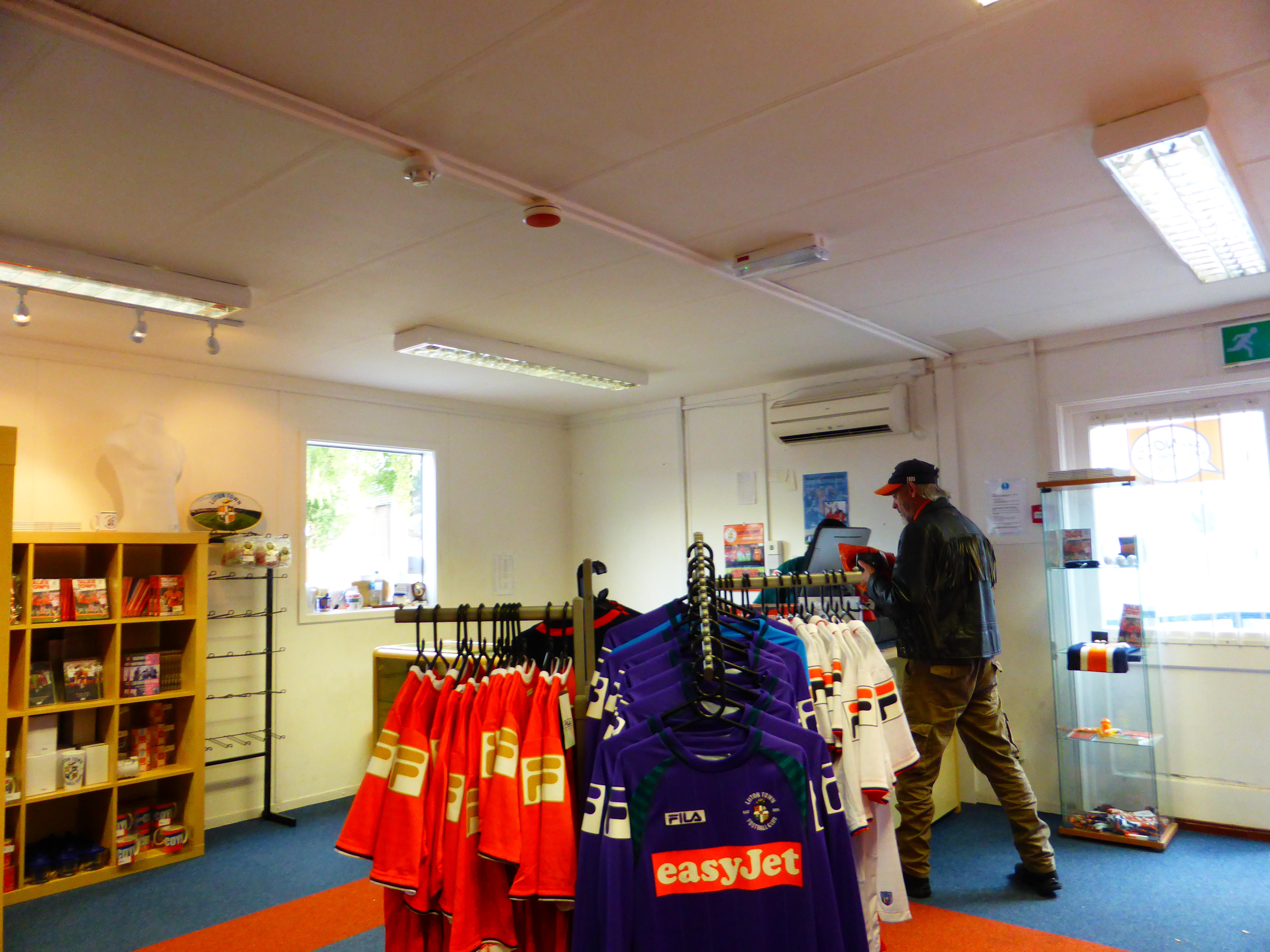
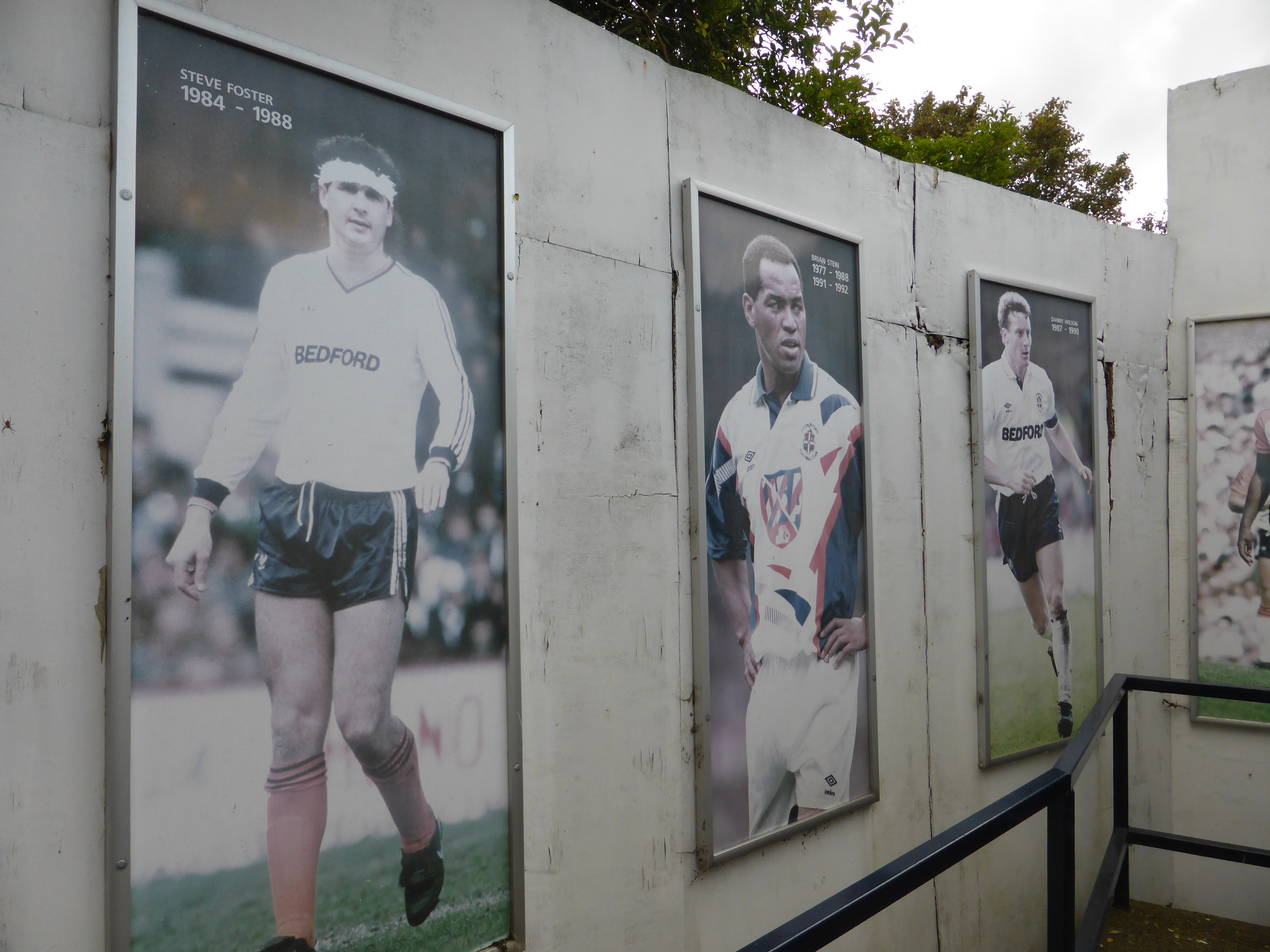
Ticket office as well as club shop is very tiny and interimistic. Outside the shop, faded photos of some of the heroes from the eighties remind visitors that there hasn’t been that much to cheer since then. With two hours till kick-off, there are very few fans around.

P1000880 P1000881 P1000883

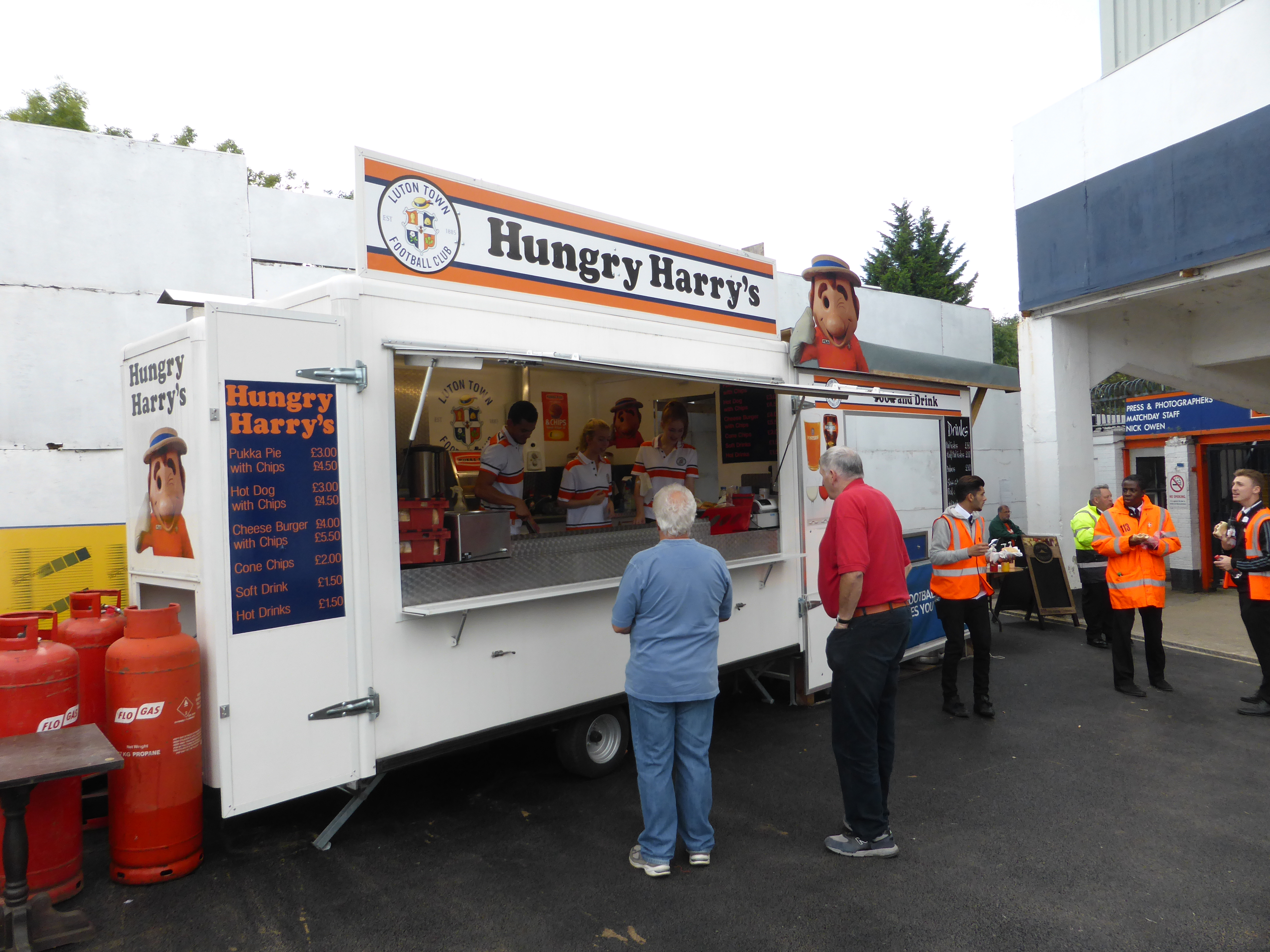
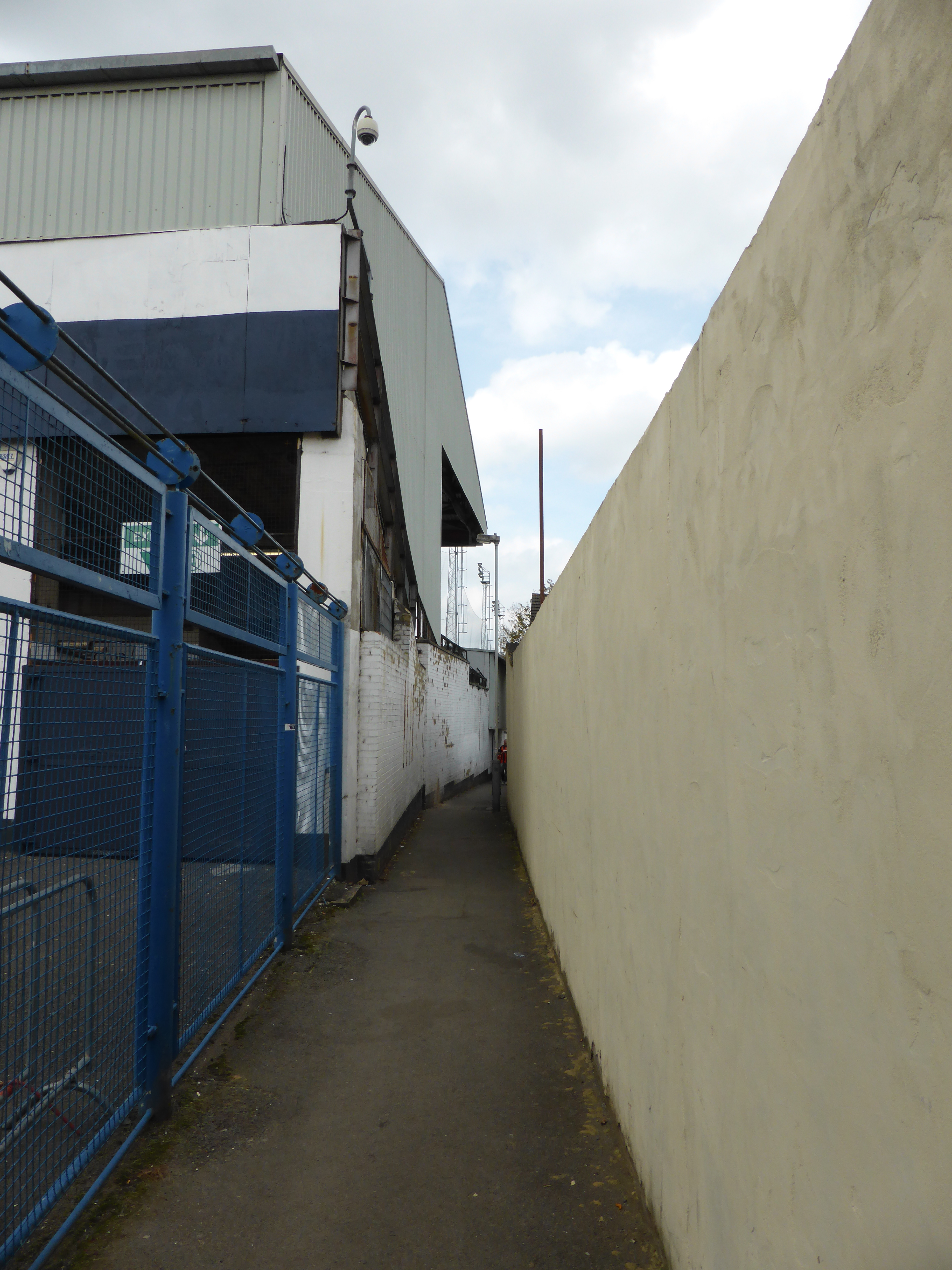
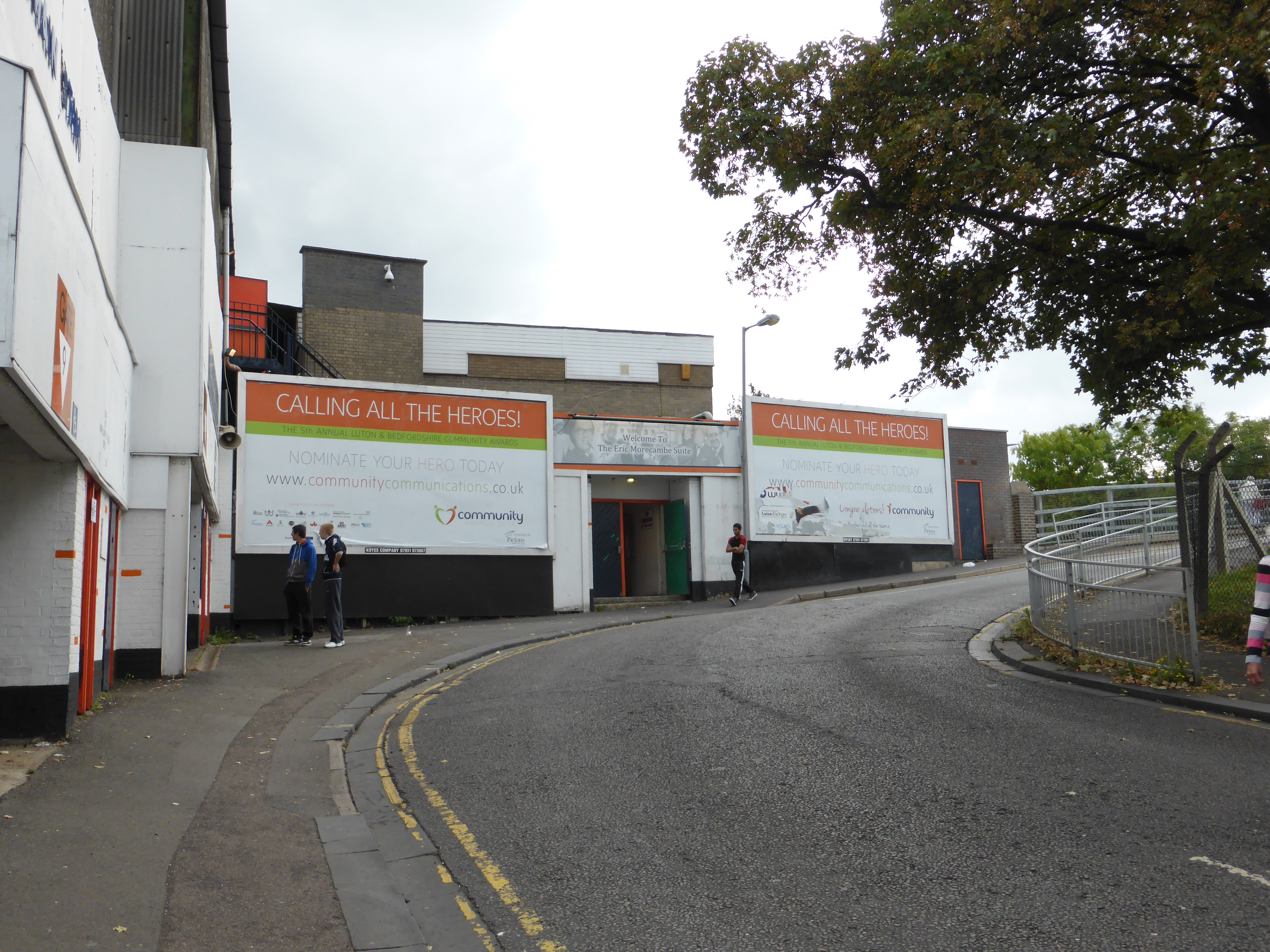
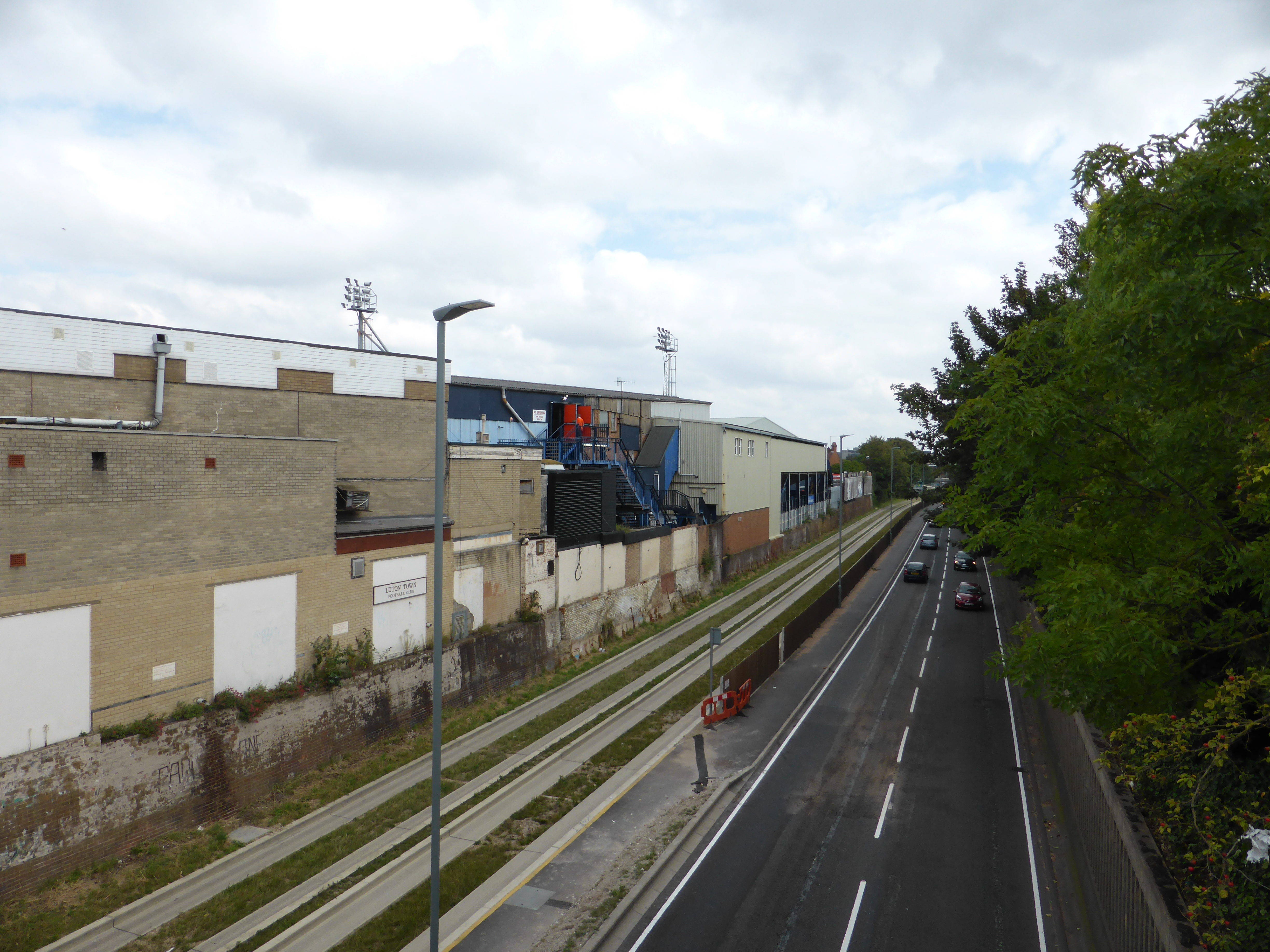
I do not really fancy “Hungry Harrys” burgers, and make my way round the ground, hoping to come across a better offer. The Kenilworth Road end is the only fully accessible stand in the ground. The main stand to the left of it, with the oddly added David Preece stand in the corner, is cut off by a tram way. Hence the need to enter it through one of the end-terraces. On the other side, what used to be “The Bobbers’ Stand” is now only tiny executive boxes, each with two rows of seating attached to it. A one meter broad passage leads along this stand.

P1000884 P1000890 P1000894

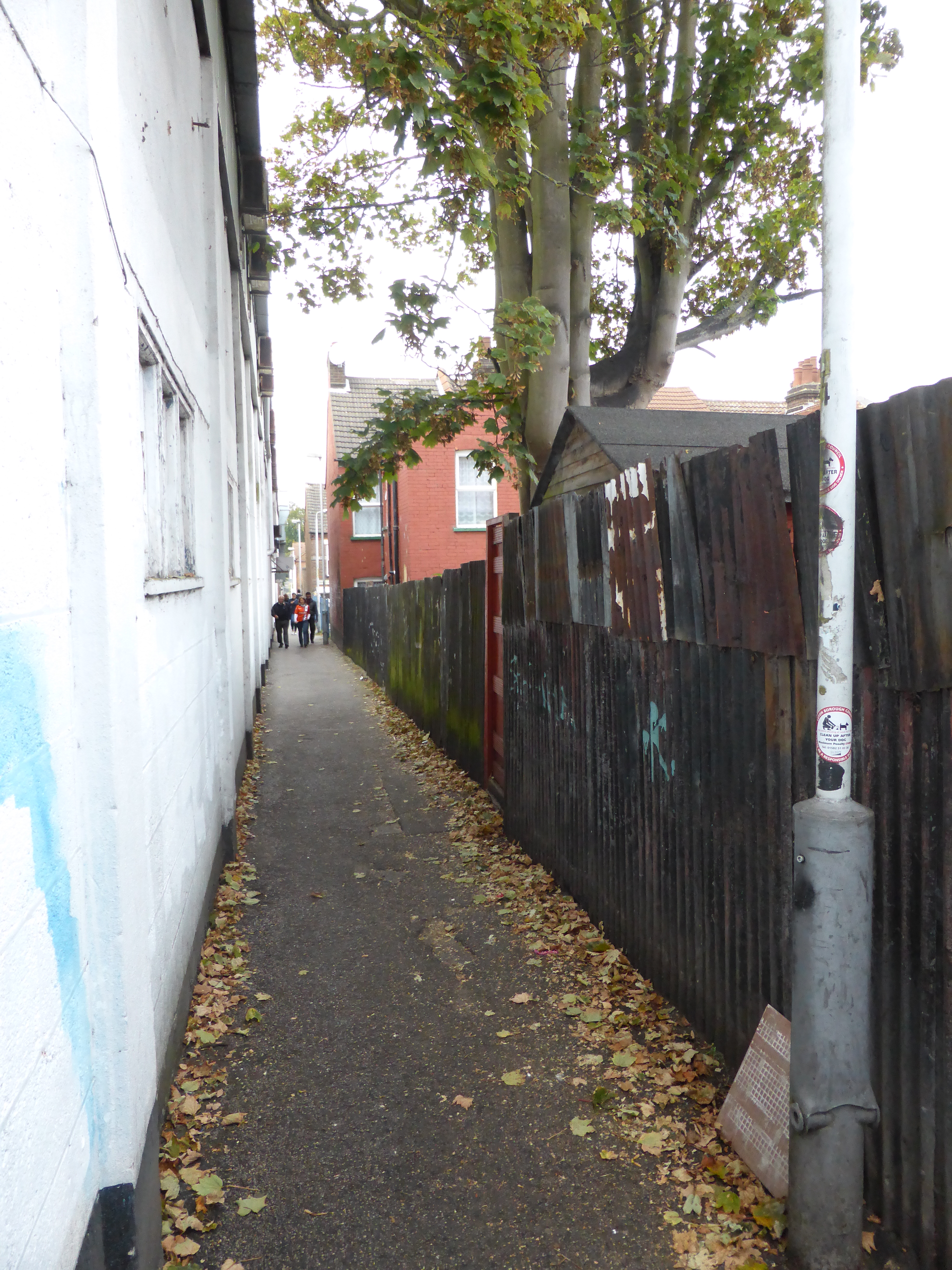
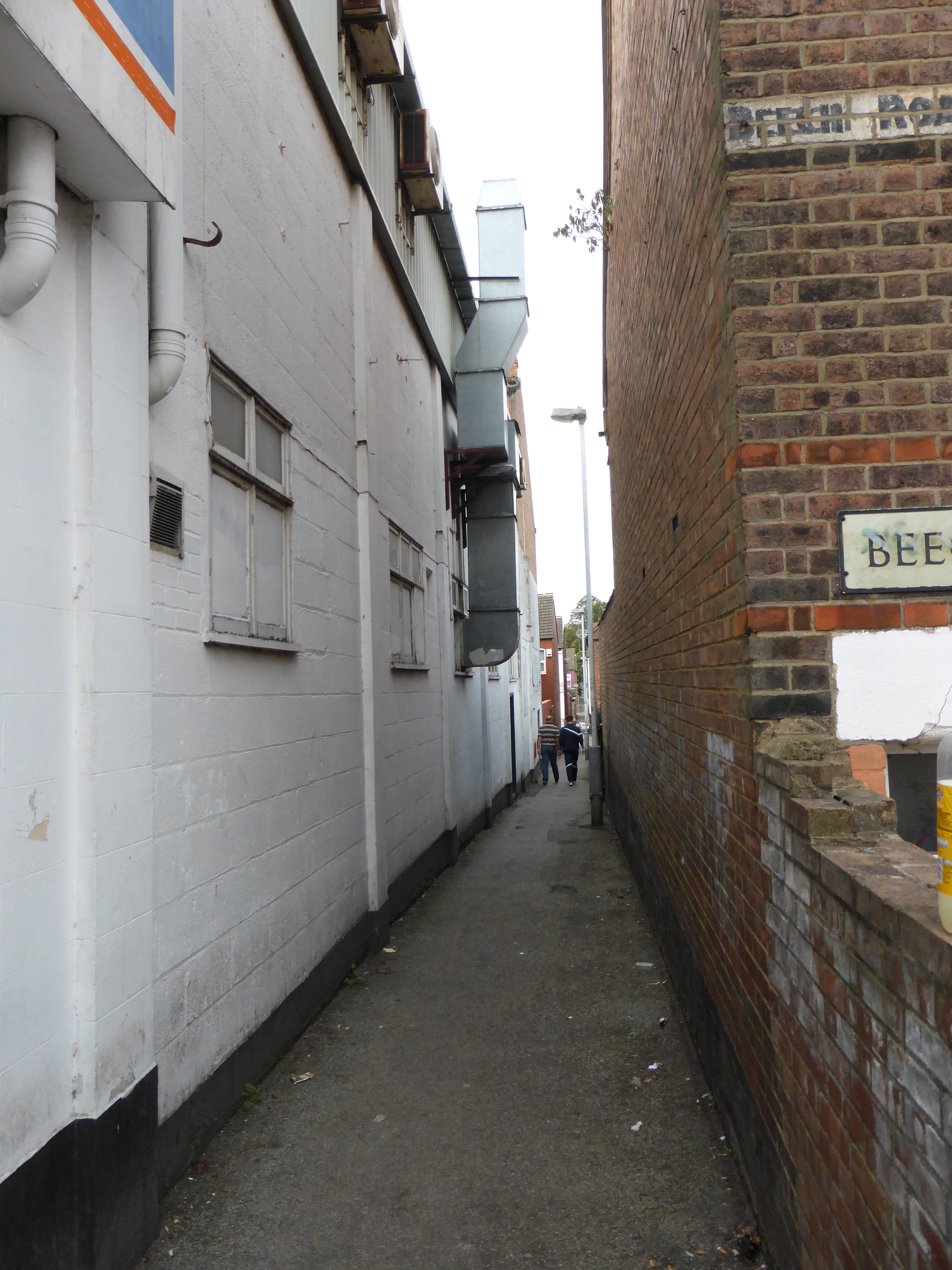
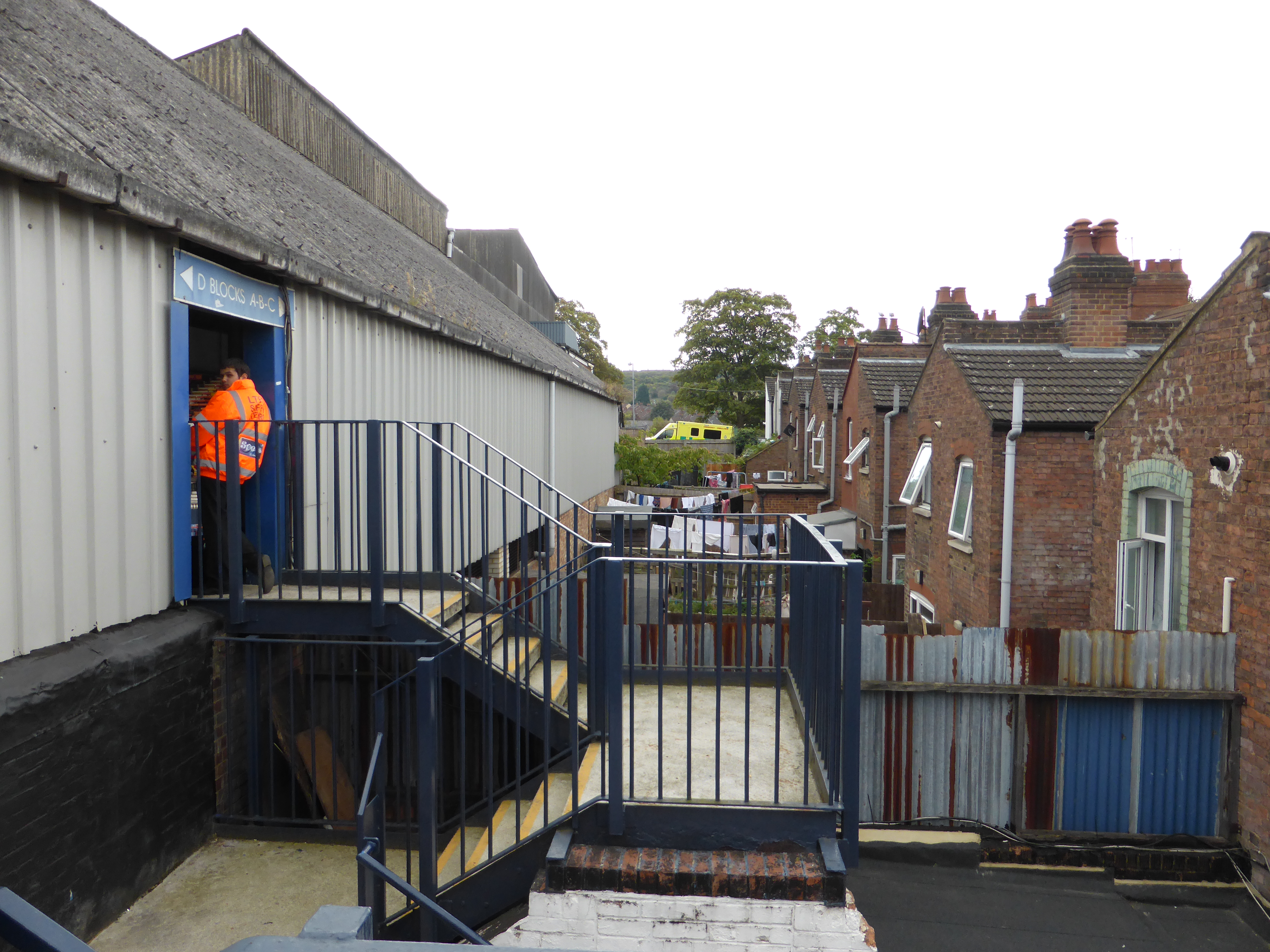
In some ways, it is almost reminiscent of walking the tiny alleys in Venice. In other ways, the grim passage could hardly contrast more to the romance of Venice. Intermittently, the passage is opened by adjacent roads leading up to it. Here you can get a view of the stand – and see that netting has been suspended between the floodlight pylons to stop wayward footballs to be lost in the streets and gardens behind the stand.

P1000892 P1000893 P1000895

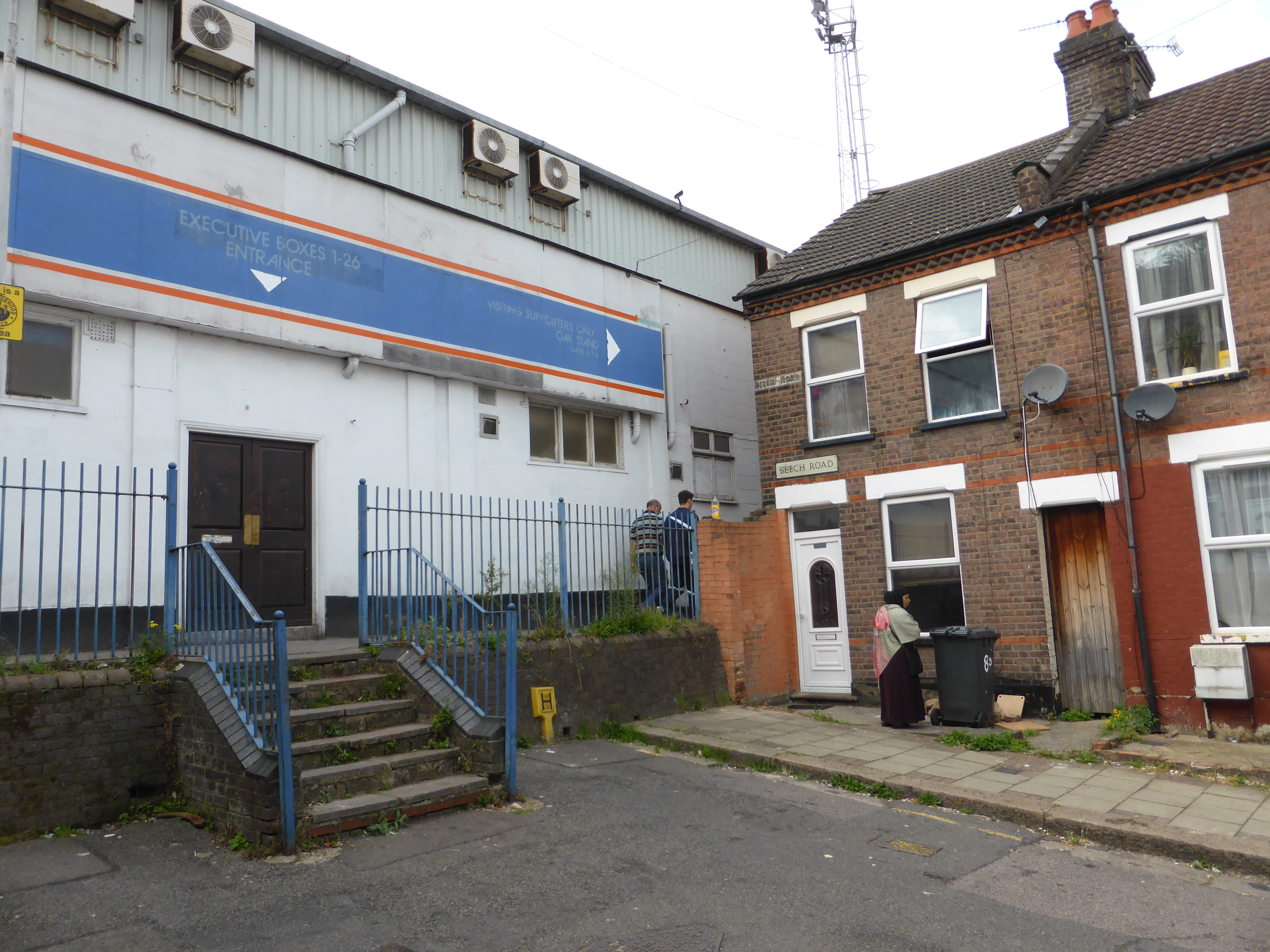
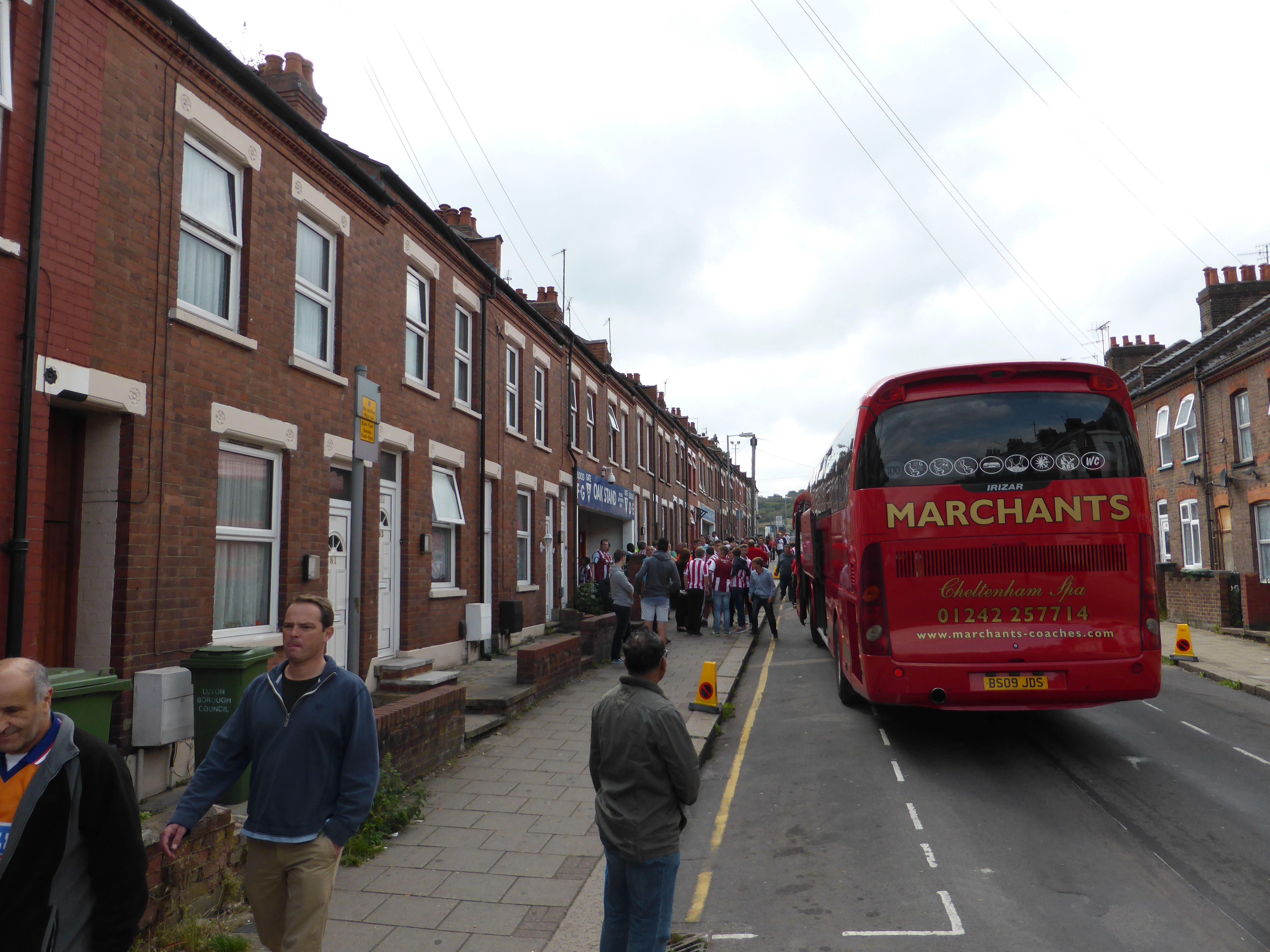
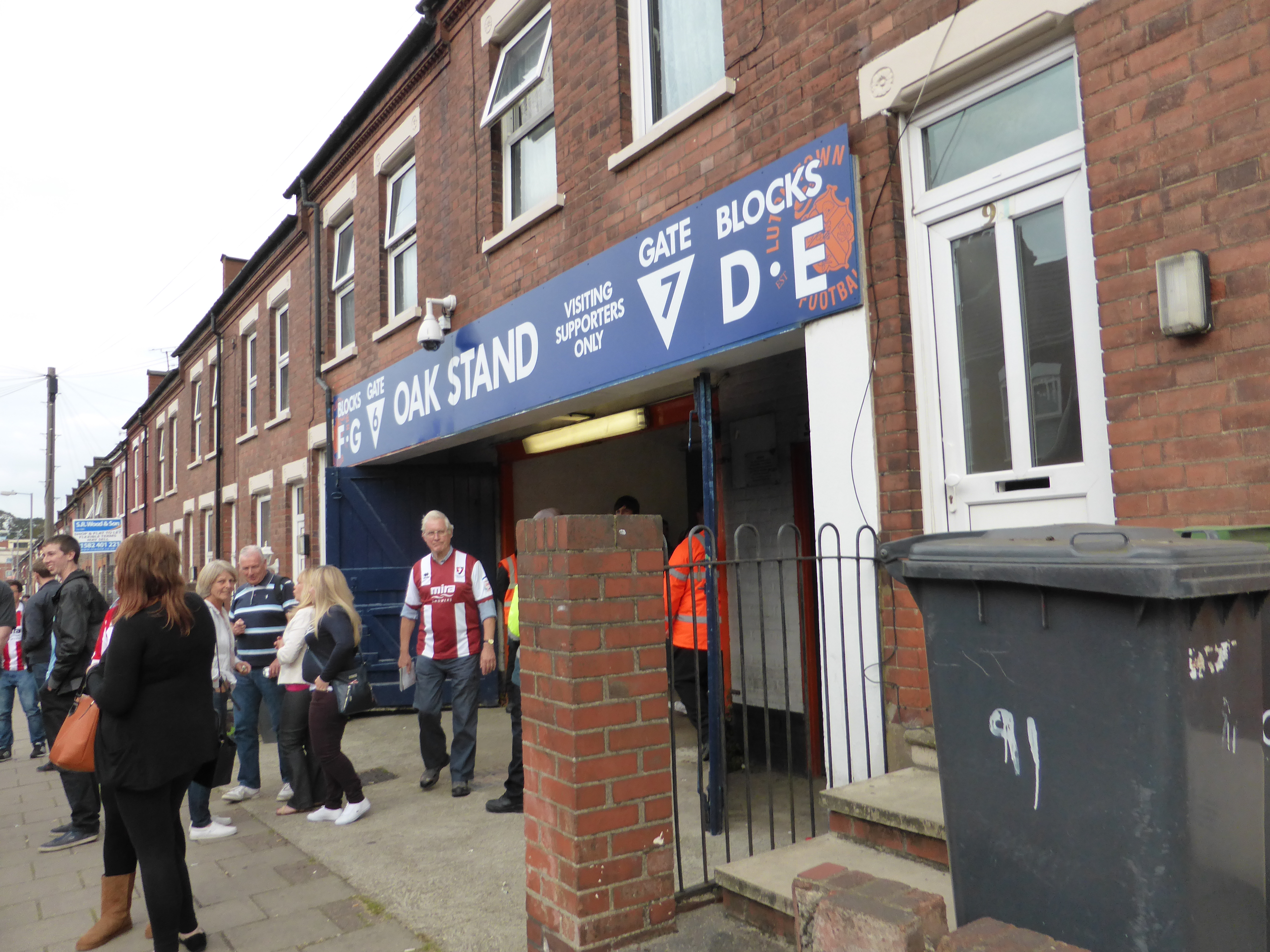
The passage leads to Oak Road – and it is here that the two entrances for away fans go through the terraced housing. As I get there, two coaches with Cheltenham fans arrive. It is only the away supporters who enter through the houses, although the Luton supporters also have an entrance for their “Bobbers club”.

P1000896 P1000897

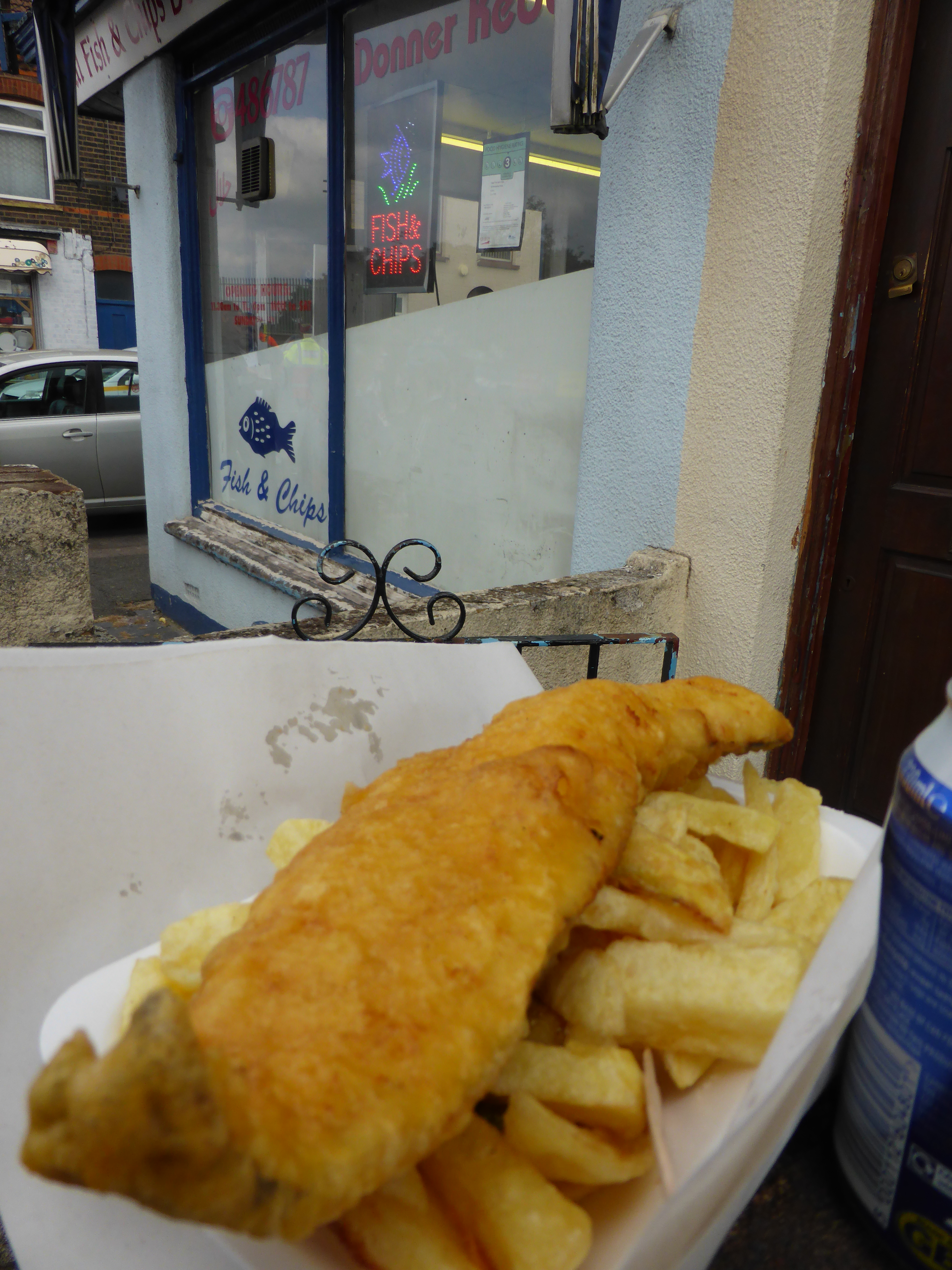
Right now, I am chasing my pre-match meal. I hear a local guy telling some visiting supporters that there is a chippy across the bridge. So I cross the tramway and the road – and sure, there is a chippy, a Doner Kebab chippy. According to the sign in the window, it has got a food hygiene rating of 3 out of 5. Perhaps not enough to attract visitors from afar, but enough to make me dare take my fish ‘n chips here. A group of young boys with a couple of fathers also go for their meal here. It is ok. Not the greatest I have had, but ok.

P1000904 P1000909 P1000911

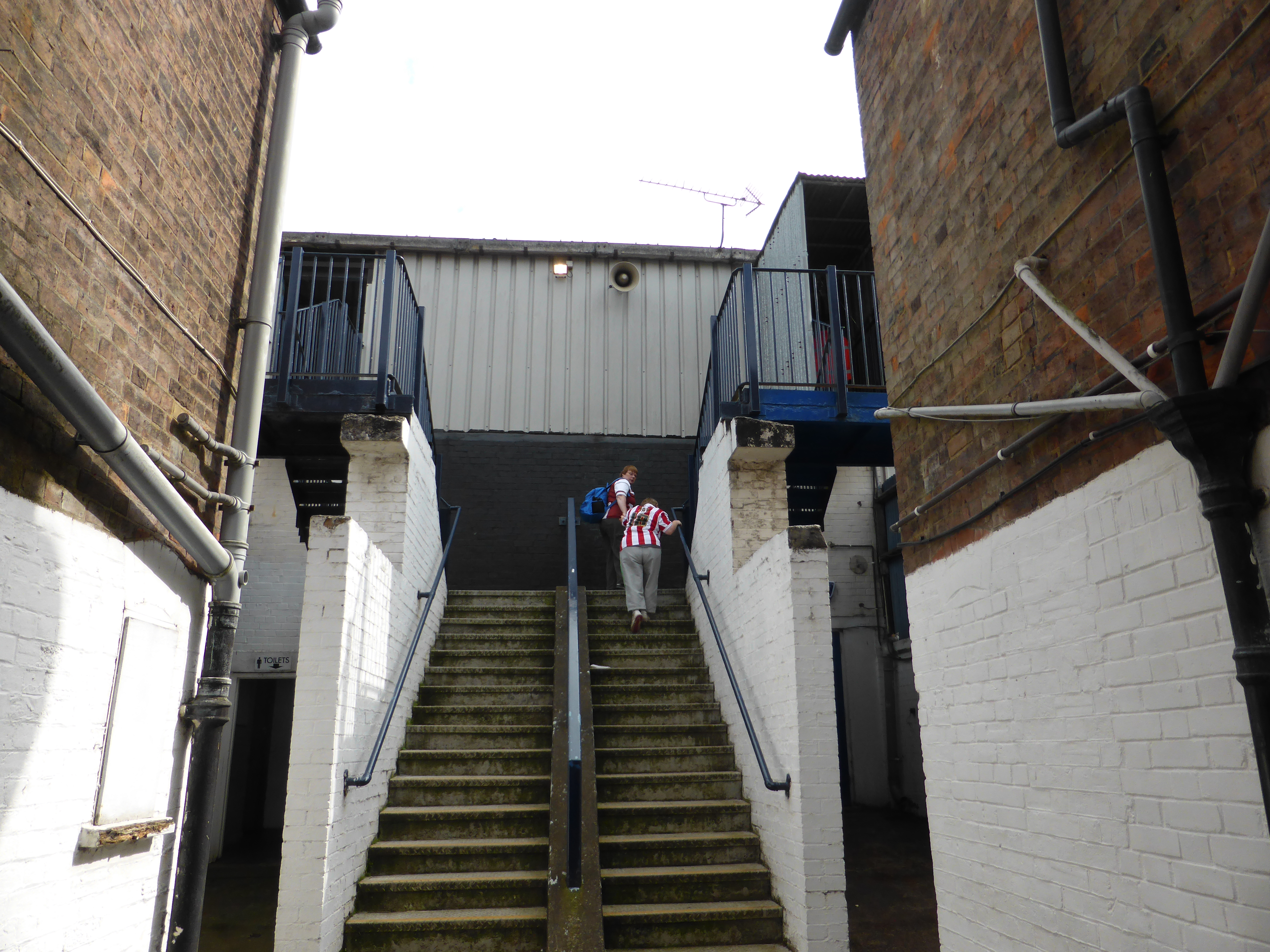
Having had some food, I focus on the look of the main stand as I cross the bridge again. Really, it looks like a bewildering mess. I can see fans suddenly turn up in the middle of it through a hidden stairway; only to disasppear again immediately. Extraordinary.

P1000908 P1000914 P1000916

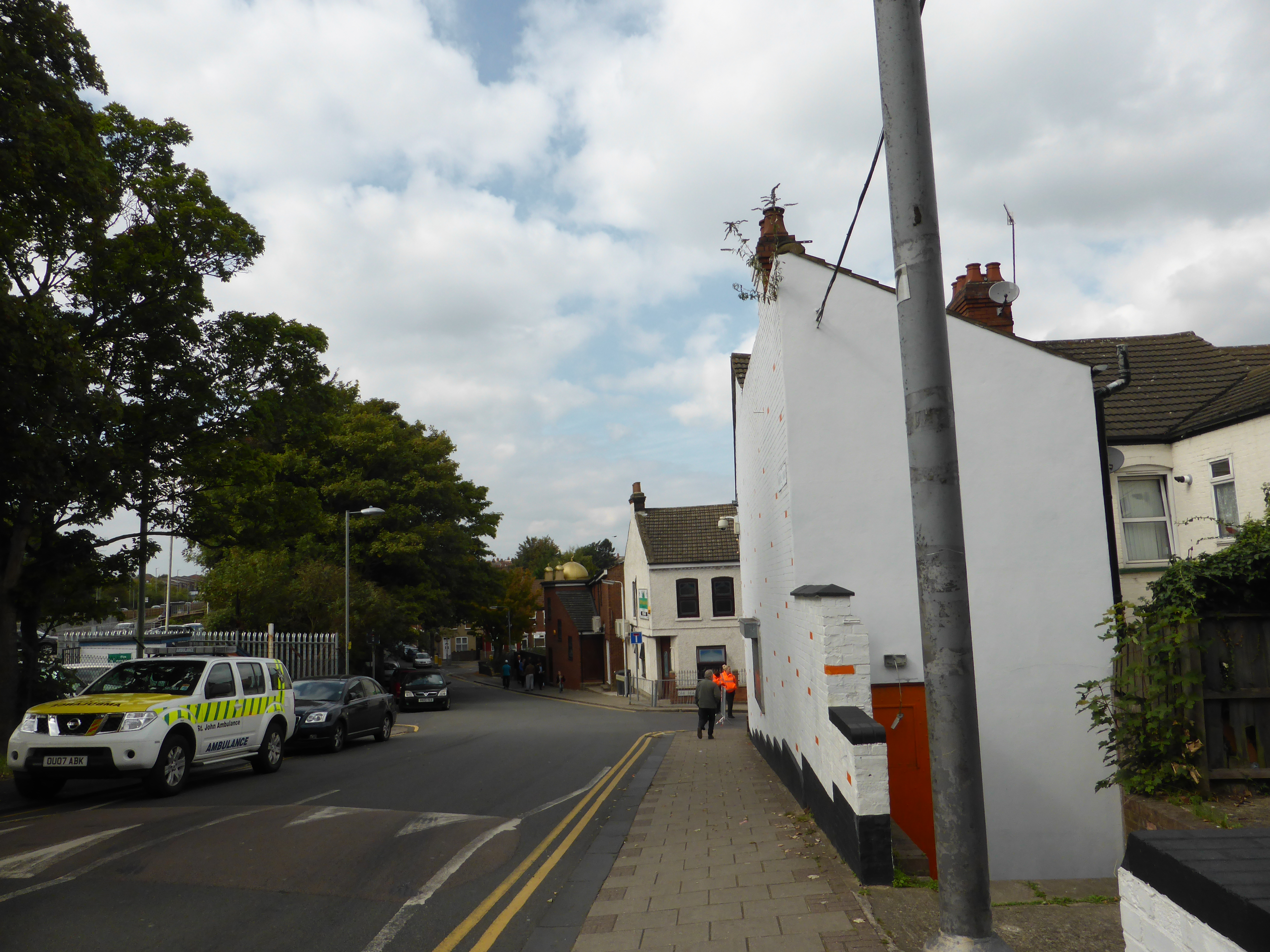
As I walk towards the Oak Road, I see the Madinah Masjid mosque on the corner. I have seen a number of muslims around the ground, all finely dressed. But none of them have been heading for the football ground, and inside the ground, I later notice that just about everybody is white British. I know that Luton is not a tourist attraction, but it is very rare that I can’t spot fellow Scandinavians inside an English ground.

P1000917 P1000921

Later on my trip, I read Daniel Gray’s book on “Travels through England’s Football Provinces”. He is not very fond of Luton, and describes how security wouldn’t allow him to write on his ipad inside the ground, as he doesn’t have a presscard. Fortunately I have got one. I approach the security in front of the away supporters entrance and ask, if I can be allowed to enter to take photos for my blog. They ask the supervisor, and she allows me to do so.

P1000922 P1000923 P1000924 P1000925 P1000926 P1000928 P1000930P1000902

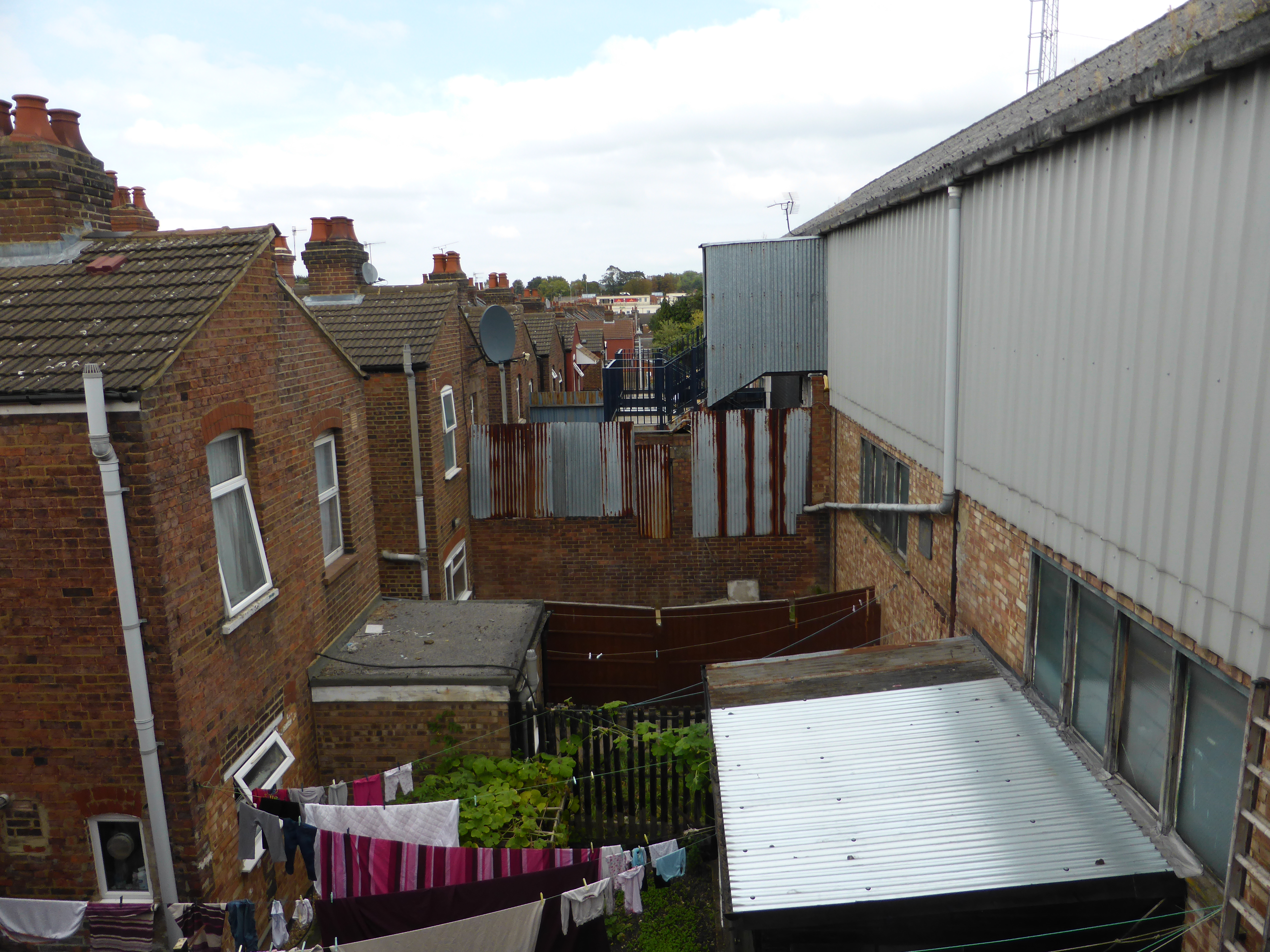
To me, it is really fascinating. There is something about a football ground that has organically grown out of – or into – a local community. Right in peoples backyard. That was where you were most likely to build a football ground. Now they build them in desolate docks or by ringroads. In stead of looking where people live, you now look where there is convenient parking. Probably most people living in the houses, would prefer to get rid of the ground. And most fans struggling to find parking would prefer to move somewhere else. But to me, this is one of the little pockets, where you actually feel that you can TOUCH history, touch the time gone by.

P1000935 P1000936 P1000937

I leave the away supporters’ entrance – and go to the main stand at the corner of the street to enter the Oak Road end through a long tunnel.

P1000938 P1000939


P1000950 P1000951 P1000952

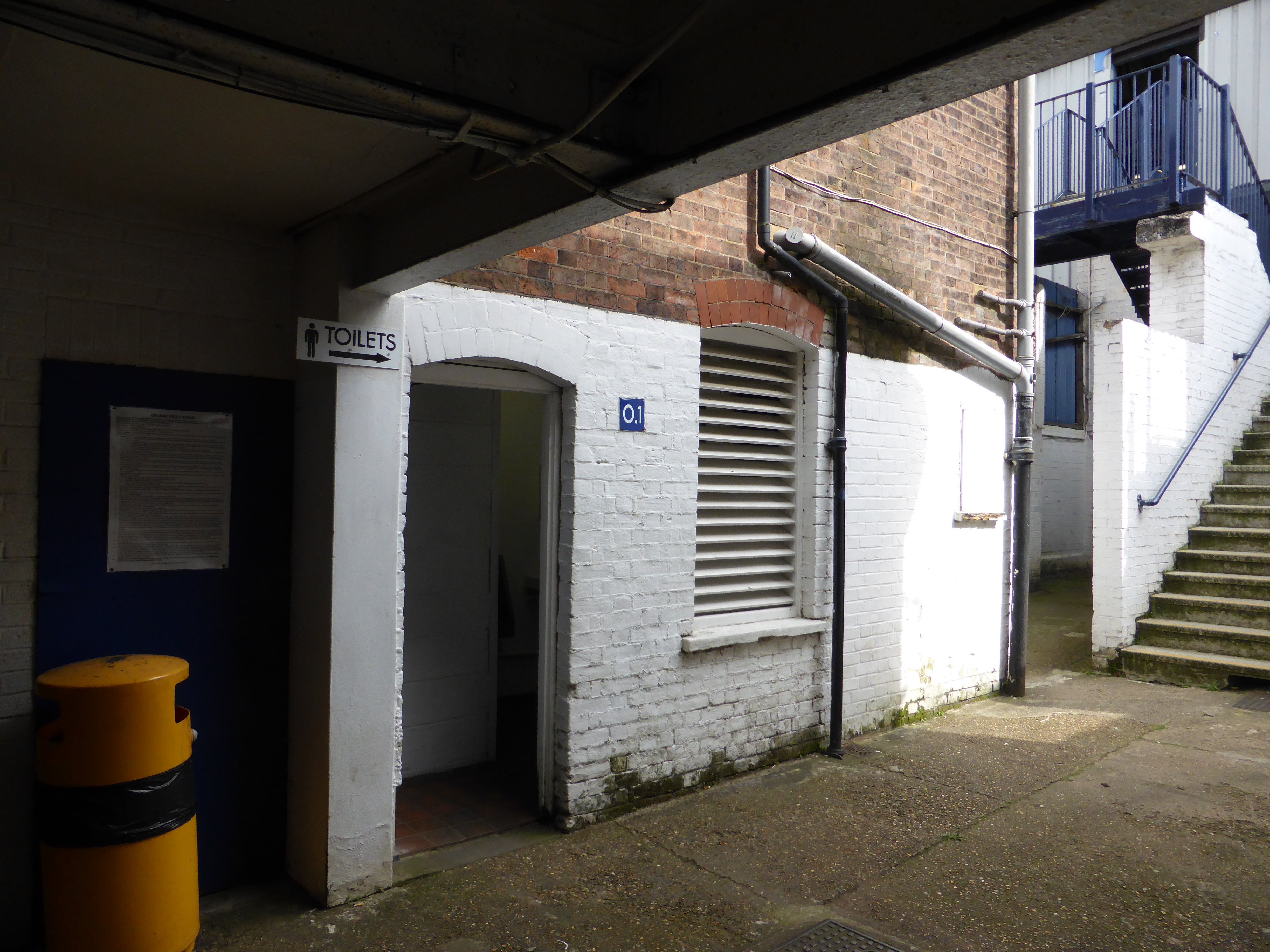
When you have walked round a rather grim, old ground, the grass always seem even greener than normal, fascinating. Inside, the Oak Road end looks just as old as from the outside. Pillars hinder the view – although rows of seats have been thrown in on top of the old terrace steps. I discover that you can leave the stand from staircases down to the housing in Oak Road, where the toilets are located. As I take a photo of it, the security man comes over to me. I tell that I travel round football grounds. So does he. He works at Wembley, Craven Cottage, Upton Park, The Den – as well as here. “Getting paid to watch football!” he says triumphantly. He seems a nice guy. He stresses that if there is one thing that he doesn’t tolerate, it is racism. That soon leads him to describe vividly some of the ways he has pacified troublemakers – not at football matches but at pubs and shops. I dare not ask him about trouble at football matches, because I may miss the first half if I do.

P1000958 P1000959

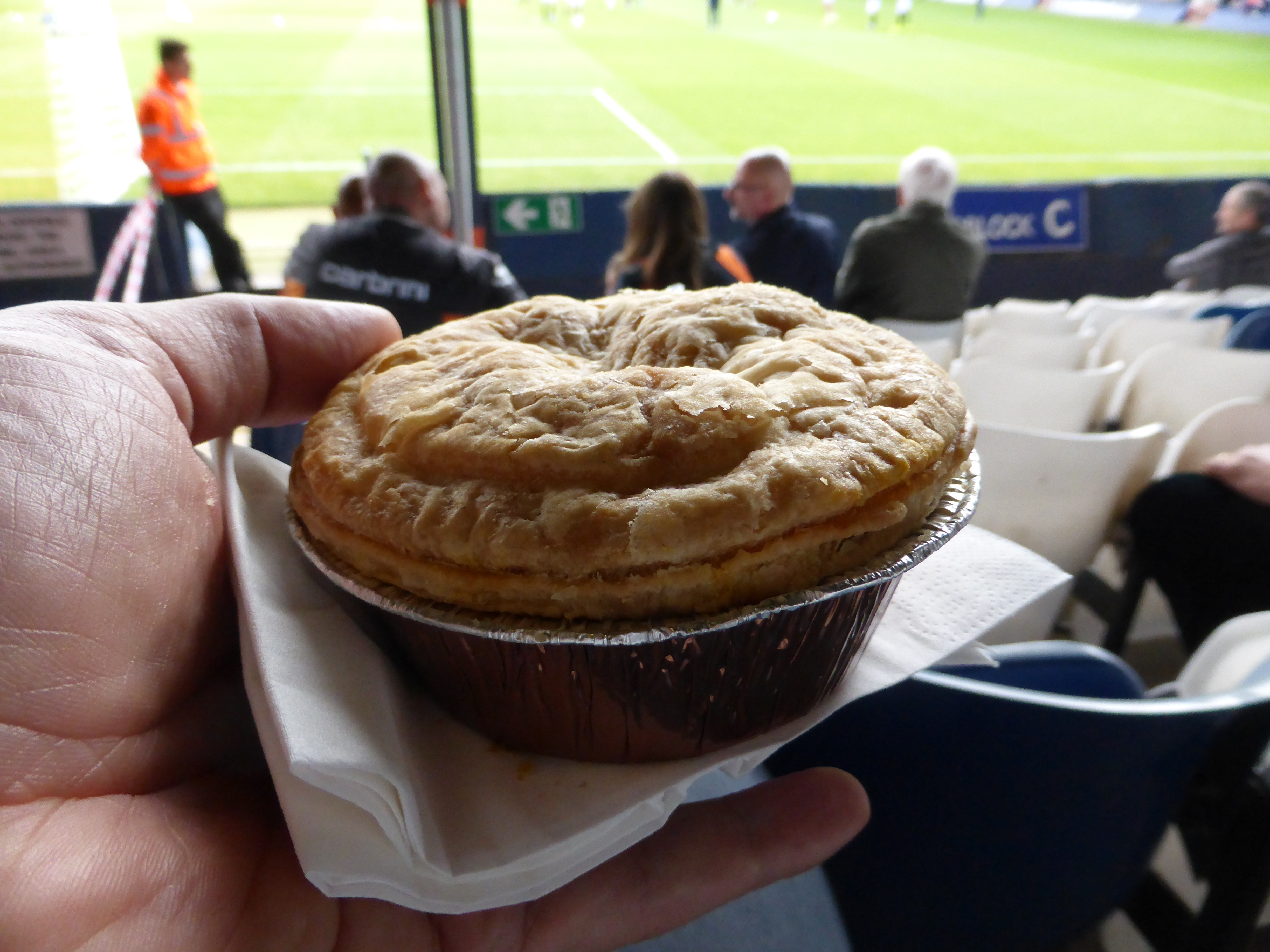
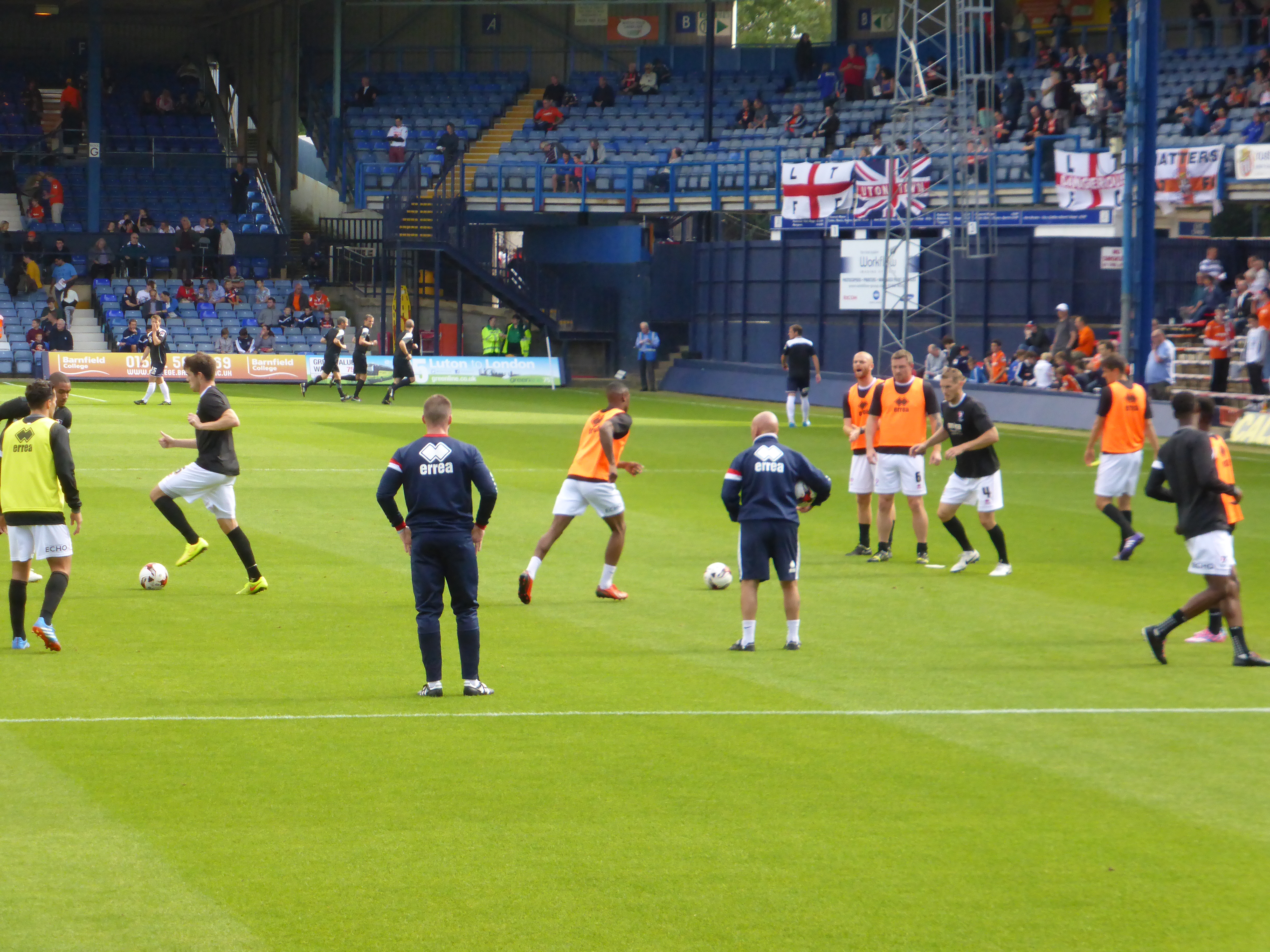
I get to see the last of the warm-up – and I also get the chance to get a pie. It is a standard Pukka Pie, nothing special.

P1000940 P1000941

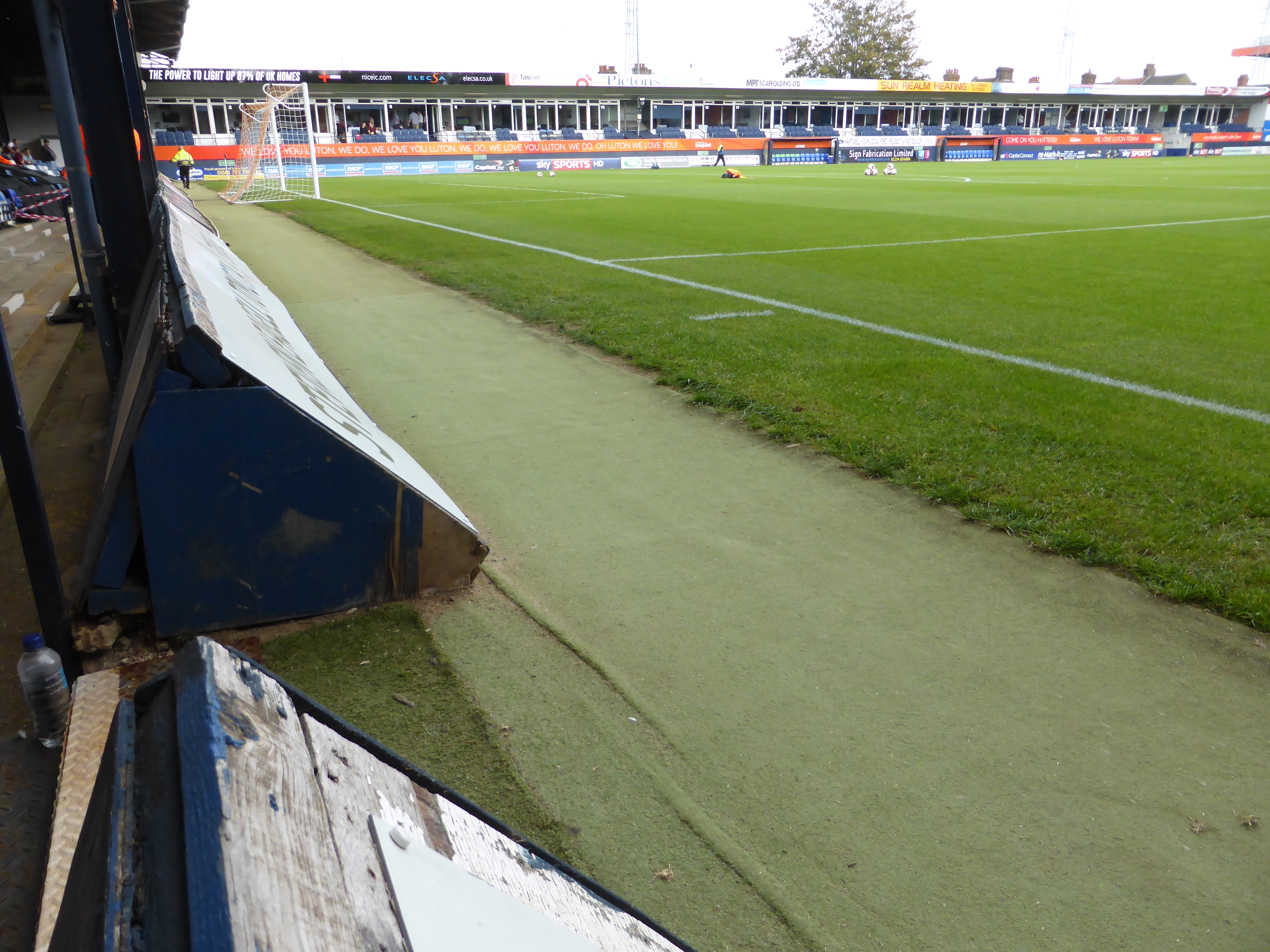
Kenilworth Road is probably mainly famous for two things. For introducing Margaret Thatcher’s identity card scheme for away fans; and for opting for an artificial pitch back in the 80’s. You can still se the remains of the articifial pitch, whereas the identity cards probably are long gone.

I can now concentrate on assessing the main stand.

P1000961 P1000972 P1010019

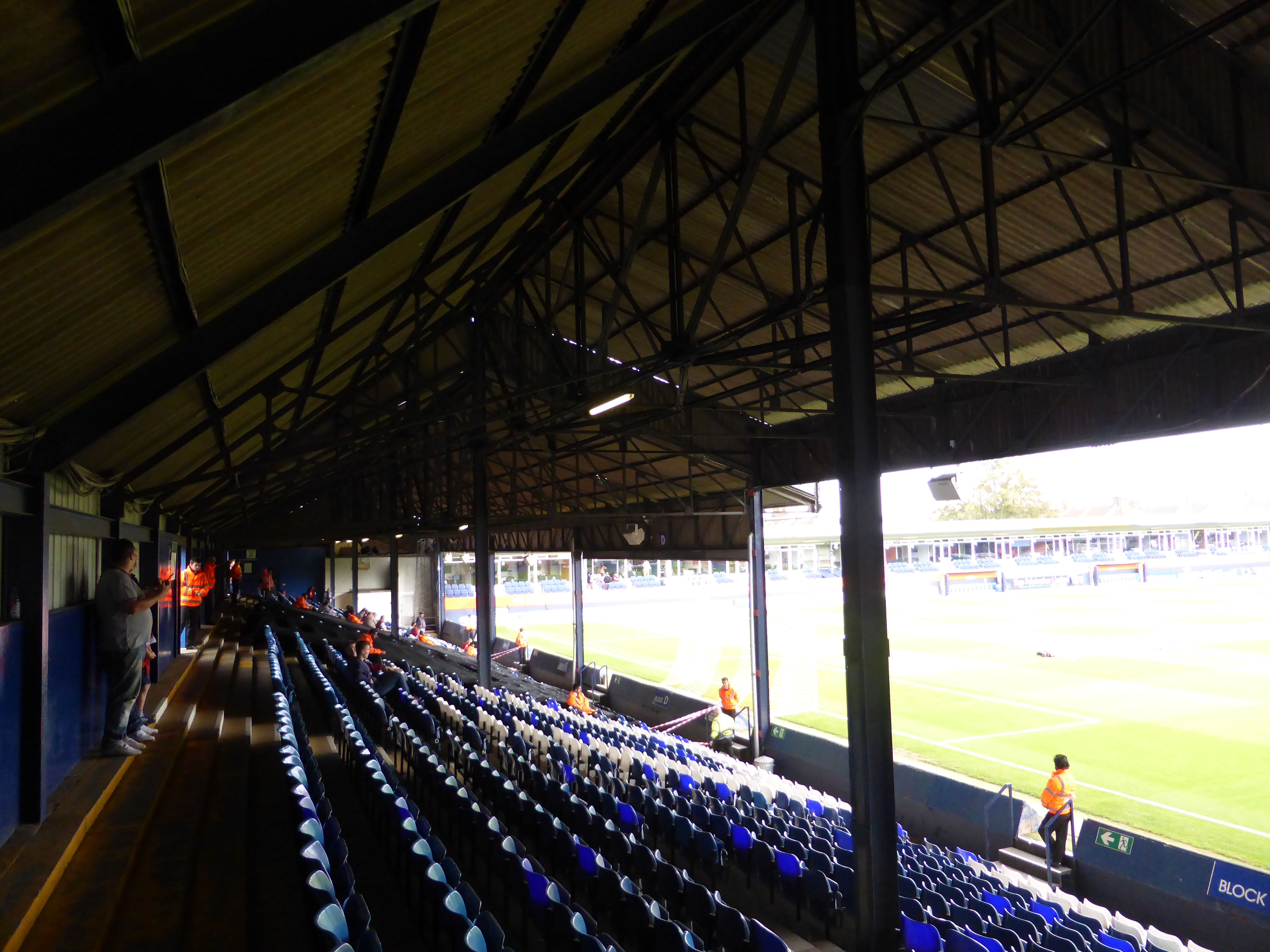
Compared to the relative small size of the ground, they have got a gigantic set of signs for the toilets … More interestingly, the lower section of the stand – the old standing terrace – only has benches. Perfect for getting up to stand. Most of the people enter from the top of the stand – from the labyrith of stairways on the outside of the stand. A fence makes it possible to use the entire Oak End for away supporters.

P1000955 P1000963

On the other side, beneath the suspended netting, are the hospitality boxes. Each of them has two rows of four seats attached. There are a few families there, but a lot of them are standing empty. When I look again some 10 minutes into the match, I notice a middle-aged man and a young blonde in one of the matches that previously was empty. They don’t notice what is going on in the match. They seem absorbed by their food and their conversation. With the television set in the background probably overshadowing the distractions from the football field. When I look again at halftime, they have gone – and in the second half, some of the stewards take the seats inside the box. A venue for business meetings? Or for dating?

P1000978 P1000982

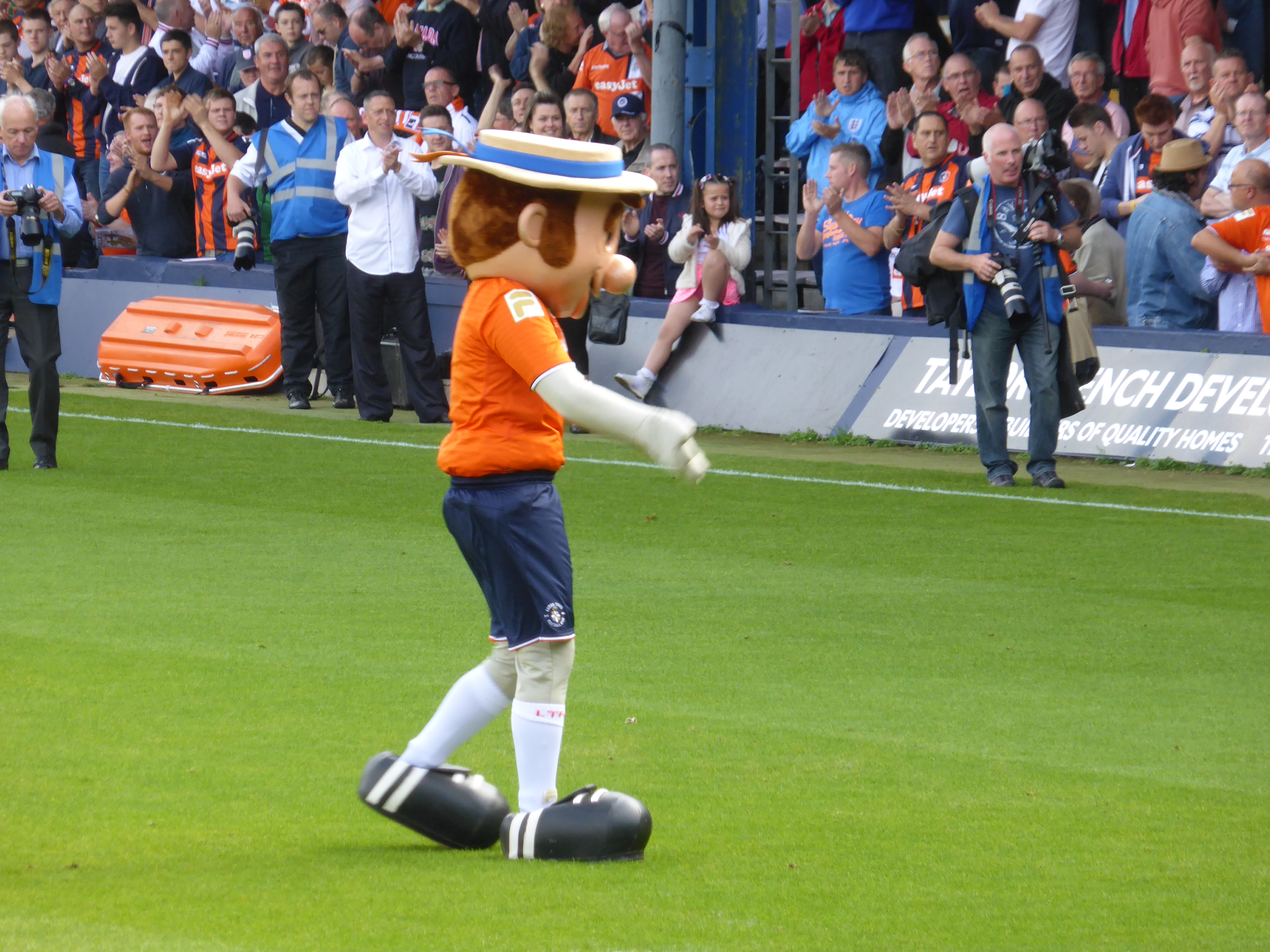
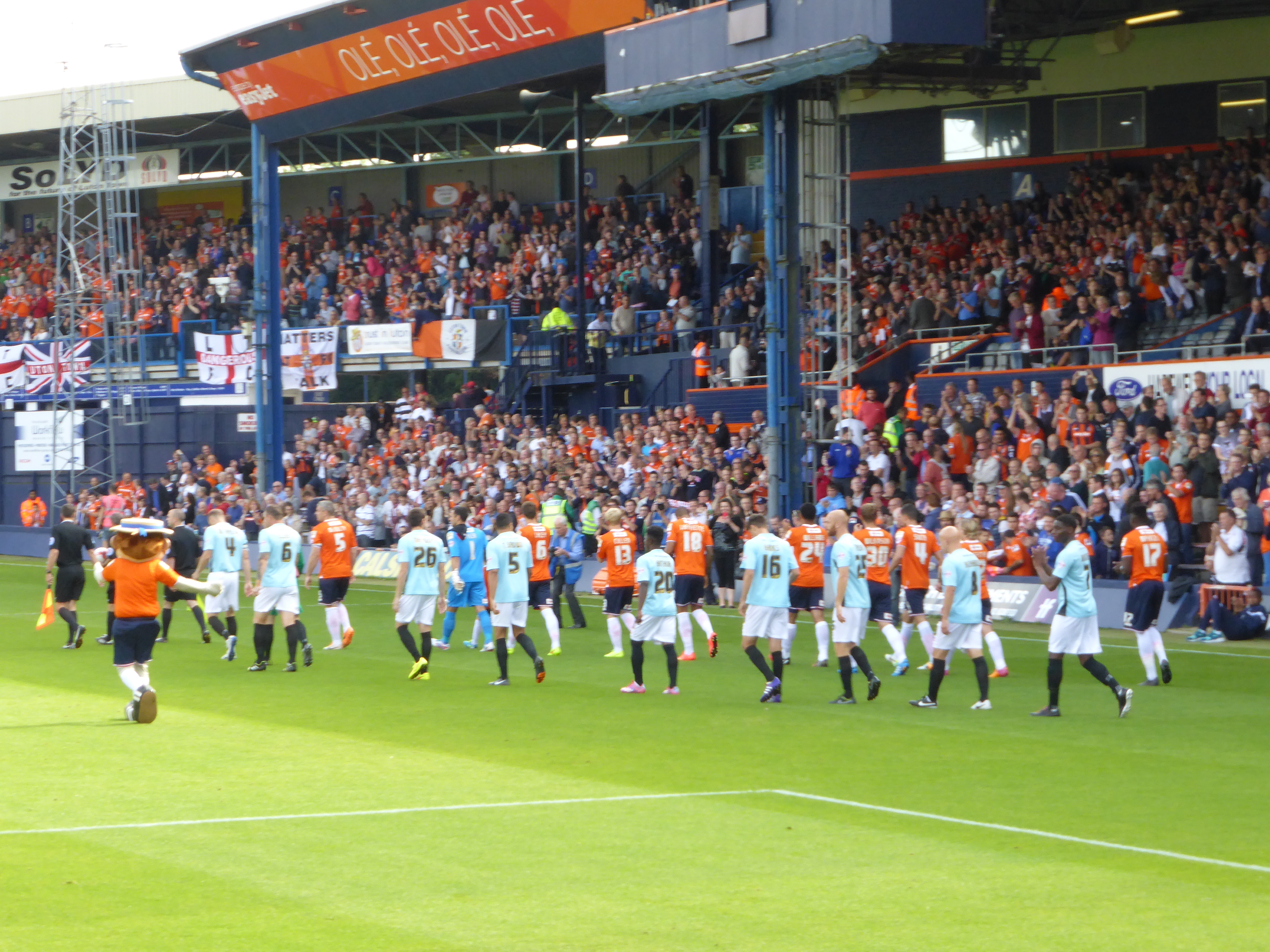
The players finally enter the field, greeted by a mascot hatter. The strawhats were apparently the trademark of the town back in the early 20th century, hence the nickname “The Hatters”. I stand right next to Cheltenham’s away support, only seperated by a black sheet covering a section of seats – and a few stewards.


P1000983 P1000984

The crowd is just under 8.000 – not bad for a League 2 clash. But you sense that Luton, despite never being one of the great clubs, feel that they belong higher in the footballing hiearchy. But today, it is Cheltenham, who start as favourites, unbeaten in second place of the league.

P1000993 P1010020

Much to my delight, I notice that both teams field a classic, British centre-half. Big and tough, ready to put his head anywhere. The Peter Kay no-nonsense “Have it” type, ready to belt the ball away to safety. Elliott is a playing coach at Cheltenham, McNulty captain of Luton. I should have played my football in England – then I might have got further than the D-team!

P1000997 P1010002 P1010003

The crowd starts off in pretty good voice, helped on by a Luton goal after about 10 minutes. But gradually it fades out. Thre crowd gets caught up with the tension of the match, which is pretty close and fiercely contested. There are good play and decent chances at both ends, but Luton manage to hold on to the win.

P1010046 P1010051 P1010053 P1010056

The disappointed Cheltenham supporters make for their coaches, the Luton supporters start to walk towards the city centre. Only a few of them – like me – head for the station. It is really a local crowd. Considering the bad reputation Luton seems to have, I have really enjoyed the afternoon. No unpleasantries, no hostile atmosphere. So for supporters who like to visit a traditional football ground, Luton is worth the trip. I even came across a welcoming Hatter-dustbin as I left. Still, though, the contrast between the all British white crowd inside the ground and the muslim community around the mosque just outside it, is remarkably stark and thoughtprovoking.

P1000919

Tagged with: , , , , , , , ,
Posted in Football grounds

Elland Road, Leeds

IMG_1118 IMG_0310

Approaching Leeds by train from the west, it is hard to overlook Elland Road, as the massive, cantilevered East Stand from 1992-94 rises above everything else in sight. At the time of construction, it was the biggest cantilevered stand in the UK, a swift response to the Taylor report’s call for modern all-seater stadiums. Perhaps a marker put out to the rest of the football world to underline that Leeds United had returned to the top of English football, winning the last pre-Premier League title.

Success, however, was rather shortlived. After a couple of mediocre seasons, Leeds seemed to have returned to the top by the end of the 90’s, but rather recklessly, Leeds then calculated on Champions League football in their budgets. As the team failed to deliver that, the club was weighed down by it’s debt, before collapsing financially and going under administration in 2007.

Relegation to the third tier of English football followed, but in 2010, Leeds managed to win promotion the Championship, generating optimism and belief in a return to the Premier League. And probably because of this new belief, the club started planning a museum, employing a curator for it, Helen. And a very inspiring presentation of her visions for the museum at a symposium at the National Football Museum, convinced me that a trip to Leeds would be worthwile. And that was the reason why I got off the train in Leeds on a cold, frosty day in January 2013.

The taxi from the station drops me off by a pub opposite the ground on Elland Road, The Old Peacock. The sloping hill on this side of Elland Road is full of small alleys with terraced housing; whereas industrial plants and the ringroad make the other sides of the ground rather un-welcoming. But on this cold day, even the alleys seem deserted.

IMG_0308

I head straight for the reception in the East Stand, and within a couple of minutes Helen comes and takes me for lunch at the stadium pub in the South Stand, facing Elland Road.  “Billy’s Bar” it is called, named after Leeds legend Billy Bremner, of course. There are quite a few people there, but compared to the Anfields, Emirates, Stamford Bridges and Old Traffords of this world, it seems very local. Not that Leeds don’t have lots of followers abroard. They certainly have quite a few in Scandinavia. And it is not that Leeds as a city is not worth visiting – with a nice city centre, museums and some amazing 19th century industrial complexes. But the lack of exposure in televised top matches has prevented mass football tourism from developing around the club.

IMG_1144IMG_0315IMG_0307

Maybe the club owners had this in mind, when they employed Helen to get the museum going. That a museum combined with stadium tours would attract people to the ground throughout the year and not only on matchdays. But Helen seems to be more engaged in the thought of making the club museum a focus for development of local identity. To raise local pride in the club and its achievements, and to use the interest in the club to generate community engaging projects.

IMG_0306IMG_0319IMG_1122

After lunch, Helen takes me on a tour of the John Charles Stand, the oldest stand in the ground, built in 1957 after a fire had destroyed its predecessor the previous year. To finance the building, the club had to sell their biggest star, John Charles, so it was somehow ironic that the stand was named after him, when he died in 2004. The stand houses a lot of suites for meetings and match day hospitality, as well as the board room. And these suites are currently the display area for the clubs collection of memorabilia. Helen has so far registered over 5.000 objects, and she estimates that there are another 10.000 still to register.

IMG_0328 IMG_0326 IMG_0324

The rooms are rather small, the corridors narrow, the showcases crammed into them are stuffed with objects. Lots of trophies. Presents from teams abroad. Autographed shirts and international caps. Old photos and newspaper cuttings, matchday pennants as well as souvenir pennants and rosettes from the 70’s, the classic stocking numbers worn by Leeds in the 70’s, matchday programes, old boots and footballs. You keep coming across stuff related to Don Revie, Billy Bremner, Paul Reaney, Jack Charlton etc. It is, in a sense, quite fitting that the suites and lounges have the same 70’ish atmosphere, rather than being open spaces in a modern stand with a lot of steel and glass around.

IMG_0346 IMG_0339 IMG_0350

The tour takes us through the players’ tunnel to pitch-side. We walk around the pitch to the East Stand, where all the objects not on display in the lounges are stored, before ending up in a meeting room called “Away team”. Helen shows me some of the drafts for an exhibition, and we discuss them. It is a stimulating challenge. On the one hand, the sixties and seventies stand out as the golden age of the club, shaping the identity, with lots of great moments and memories. On the other hand, football clubs are so much about present success, and highlighting the golden days make the current plight of the club seem rather sad.

IMG_0355 IMG_0359 IMG_0363

Less than a month before my visit, Leeds United was taken over by new owners with the ominous sounding name GFH Capital. Helen is a bit uncertain what implications this take-over will have for the museum plans. And rightly so. The following summer the plans are scrapped, and Helen moves on to another museum, before an attempt to buy out GFH Capital collapses. The club ends up being bought by the president of Italian club Cagliari, Massimo Cellino’s family consortium.

IMG_0368 IMG_0370  IMG_0372

It is a great pity. It would have been interesting to see a club museum that did not compete with the big four clubs in staking claims as to being the “greatest” or “most succesfull” or “best supported” football club in the world, but rather focused on local identity. A bit like the Wolverhampton Wanderers museum, which, alas, is not very inviting to the local fans with a very high admission fee and few opportunities for active participation from the visitors.

Three days later, I return to Elland Road for a match. Leeds United are playing bottom-of-the-table Bristol City, and my museum colleague from Leeds, Layla, has promised to purchase tickets for us. At first, she says that she will get tickets for the Kop. Despite not being a Leeds United supporter, and knowing that Elland Road in general and the Kop in particular can be very hostile, I am quite excited at the prospect. But in the end Layla’s husband persuades her to buy tickets for the John Charles stand instead, as everybody on the Kop is standing throughout the match and will make it difficult for her to see very much.

The weather has turned even colder than three days before, in fact, there are doubts whether the match will go ahead because of the wintry conditions. Many people choose not to brave the weather to go to the match, and the cold probably puts a dampener on those who do turn up.

IMG_1169IMG_1119

I decide to go to the ground early to have a look around. There are a few stalls along Elland Road, but not the usual build-up of anticipation around the ground, although “Billy’s Bar” and the “Old Peacock” seem packed for the match. I decide to buy my pre-match fish ‘n chips from “Gravely’s award winning Yorkshire fish ‘n chips”. It is not the greatest, but it is ok, although it is difficult to find a comfortable place to eat it. I have difficulties keeping my warmth despite wearing my Scandinavian winter gear. And I look in amazement on the local Leeds fans who turn up for the match in T-shirts!

IMG_1157IMG_1160IMG_1165

Having had my meal, I take a walk around the ground. The stand-out place is the corner of the South and East Stands which not only feature the clubs souvenir shop but a coloured statue of Billy Bremner with clenched fists, looking towards the terraced housing on the slope across Elland Road. Somebody has wrapped a Leeds scarf around his arm, and there are wreaths on front of the statue.

IMG_1152IMG_1164

Walking along the East Stand (which contains a nursery), I come to a less prominent statue of Don Revie, surrounded by memorial plates for deceased fans. Covered in snow, it looks rather gloomy, but memorials such as this certainly give stadiums soul and identity.

IMG_0312IMG_1141 IMG_1142

Although there are very few Bristol City fans, who have braved the weather, the police is still present in numbers, as they always are. They seem to have their headquarters by the East Stand.

IMG_1155 IMG_1138

The souvenir shop used to be positioned further down Elland Road, but the old building is now standing empty, looking condemned. The new one, on the hand, has a distinct air of “temporary facility”. Still, it is a lot warmer than outside, so I spend some time wandering around looking at books, scarves, shirts etc. Perhaps because fans do not feel tempted to turn up early in the cold, the shop is not particularly busy. Although I spot a few fellow Scandinavians, it also seems pretty local.

IMG_1121IMG_1147  IMG_1154

Walking further around the ground, the East Stand looks rather dull and depressing, but outside the John Charles Stand (with an attached hospitality building and ticket office), there is much more life. The coach with Bristol players arrive, and the last few Leeds United players arrive for the match in their cars, stop and sign autographs for the fans. Of course, there are not that many fans waiting for autographs, but nice to see that the players reward those who have braved the weather; that doesn’t happen everywhere.

IMG_1123IMG_1135 IMG_1125 IMG_1126 IMG_1162IMG_1133


I get a text from Layla that she is on her way, and we meet by the Billy Bremner Statue before making our way back to the John Charles Stand. We head straight for our seats, front row near the half way line. The Leeds players do their warm-up routine right in front of us. There is a strangely subdued atmosphere. A lot of people have stayed away because of the weather, most of the people who have turned up stay inside the stand for a drink even longer than usual; and those who have entered the stands are concentrating on keeping warm.

IMG_1170IMG_1172

The Kop – or rather what used to be a giant, sloping Kop-stand on a crescent, until a modern allseater stand was build in 1994 with what is said to be the most advanced ground control box in the Europe, recording and monitoring everybody inside the ground – is arguably the most densely populated part of the ground. But even this part of the ground seem rather subdued. There is a playback of the 1972 FACup final tune “marching on together – Leeds, Leeds, Leeds” before the match, and people join in around the ground. In contrast to most club anthems that go to the tunes of popular songs, this is a song written for Leeds United. There is a lot of 70’ish nostalgia about it – but it is also fair to assume that it would have been forgotten decades ago, if it had to be judged purely on its musical quality. As it is, it is another reminder of the great days of the club in the 70’ies.

IMG_1245IMG_1262IMG_1268

The match is like the weather. Something to endure. Everybody has turned up expecting Leeds to thrash the bottom-of-the-table side, but Leeds huff and puff to put together a decent move, and, in fact, Bristol City look sharper and more crisp on the break. Frustration grips the home growd, with groans over every misplaced path; and sitting next to the touchline, we can almost sense how the groans affect the players. At half-time we hurry down to the very narrow and jammed concourse under the stand to get a coffee and some warmth. It is not like the open space that I saw under the East Stand, during my visit three days earlier. Had the first half been good, it would probably have been brimming with excitement, as the local fans are jammed together. But on this day, I sense the frustration hanging even more thickly in the air.

IMG_1203

Leeds do get a breakthrough late in the second half, and record a 1-0 win. But it is too late to win over the crowd. After the final whistle, we hurry to the car park outside the ground. With the crowd a mere 15.000, we do manage to hit the road fairly quickly and head for the warmth of a pub.

I leave Leeds with a strange feeling. You can look at it positively and say that the heritage of the club is still alive; or you can take a more negative look and say that the club lives in the shadow of the 60’s and 70’s. On this day – maybe because of the weather or the disappointing match – the past certainly felt like a heavy burden. And somehow the gigantic West Stand looks like a symbol of great expectations that have failed to materialize, contrasting sharply to the surroundings. But I guess it will look a lot different on a warm, sunny spring day with a big crowd and a great game. I will have to go back and check it out.


Tagged with: , , , , , , , , , ,
Posted in Football grounds, Football museum, Uncategorized

Enter your email address to subscribe to this blog and receive notifications of new posts by email.

Join 4,517 other subscribers
Follow Football and material culture on WordPress.com