Craven Cottage

Image


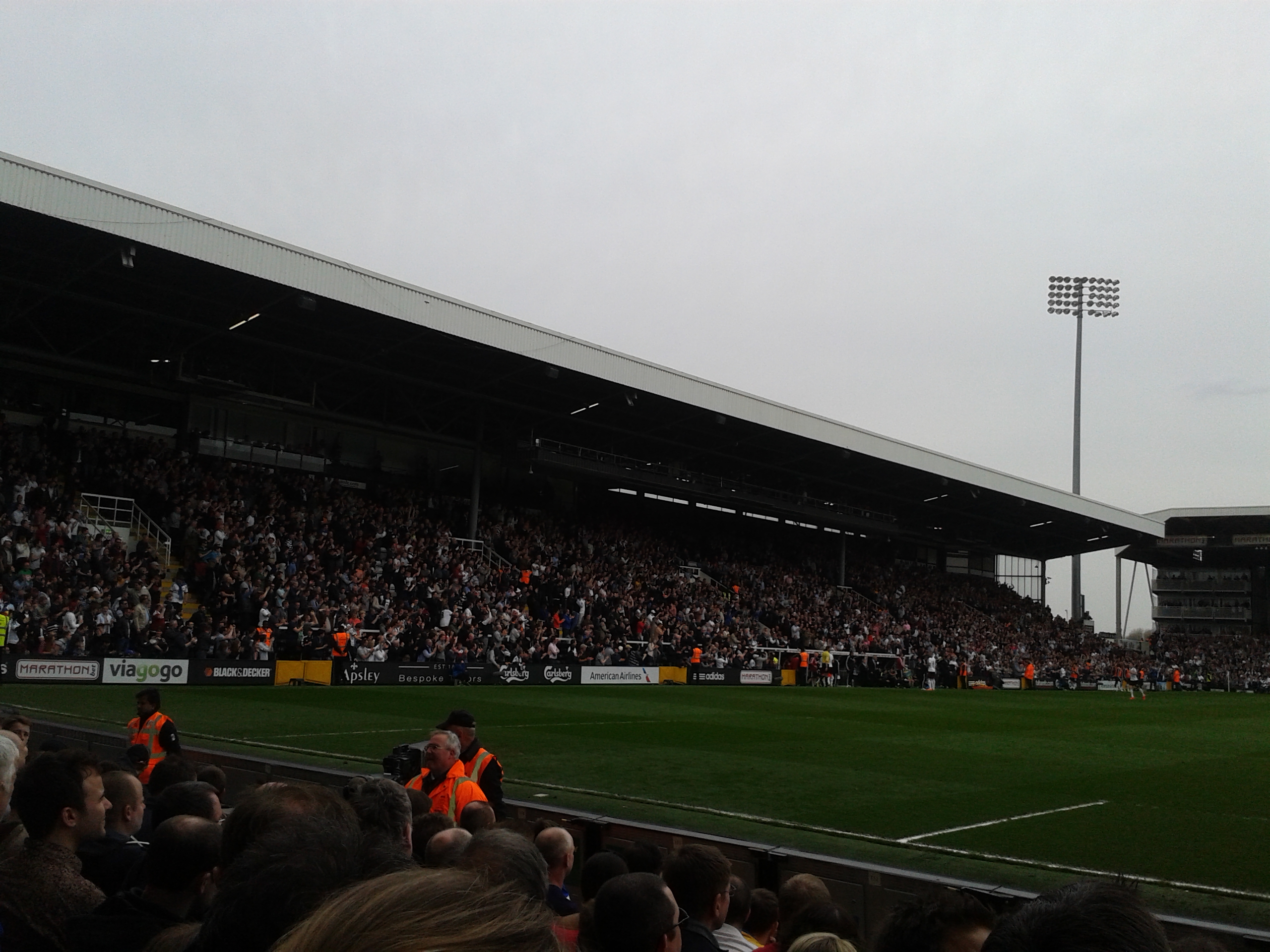
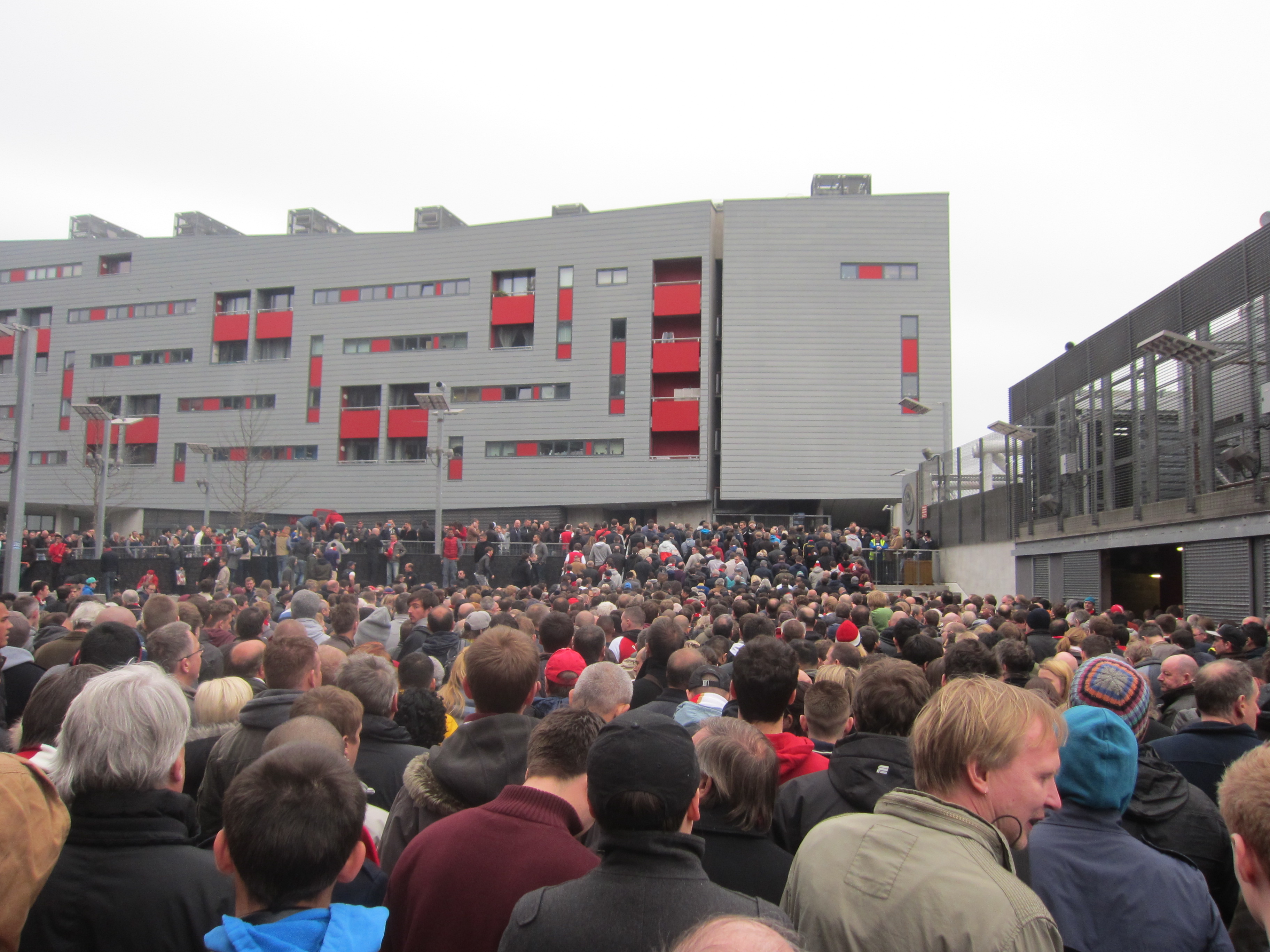
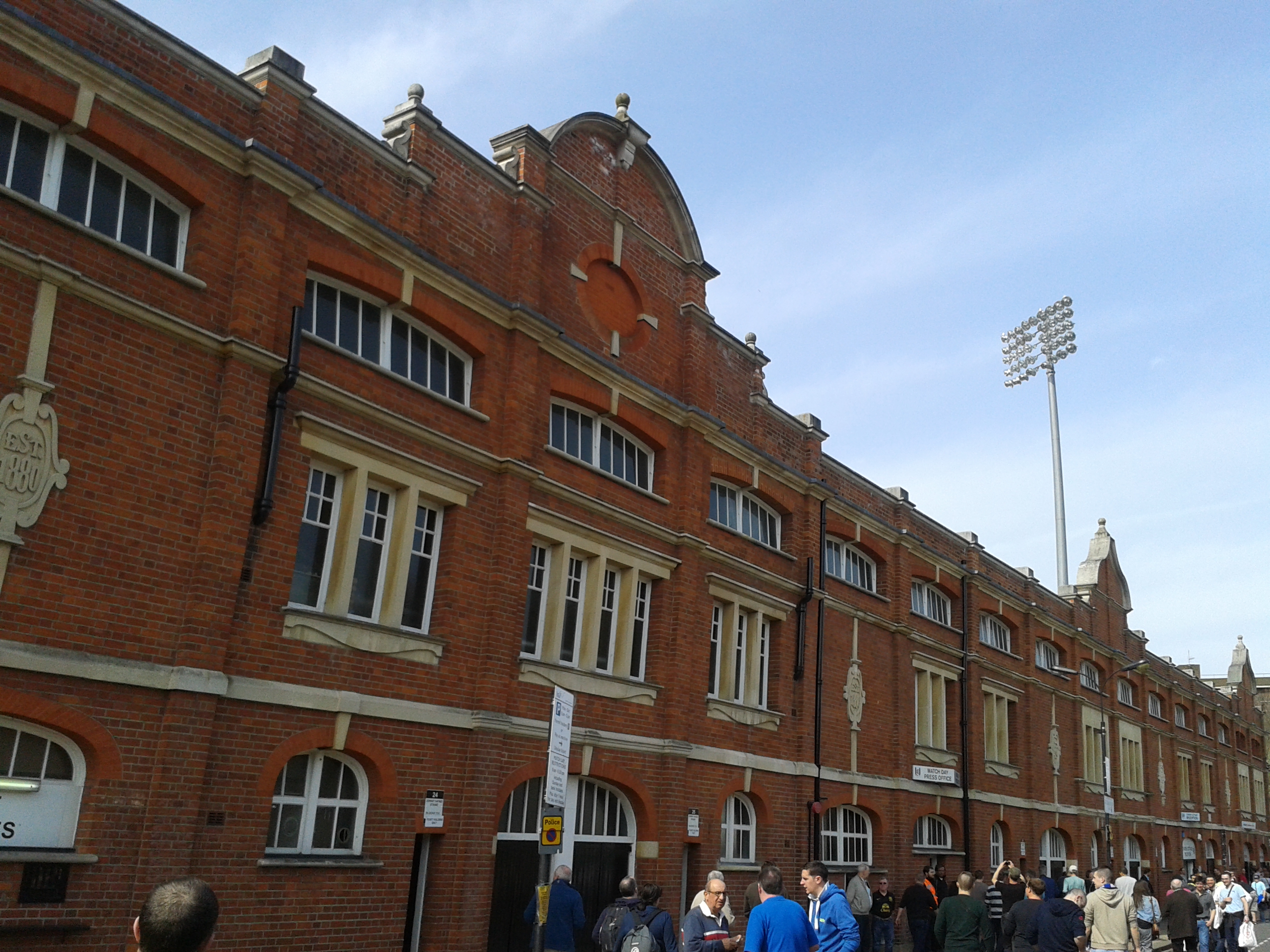
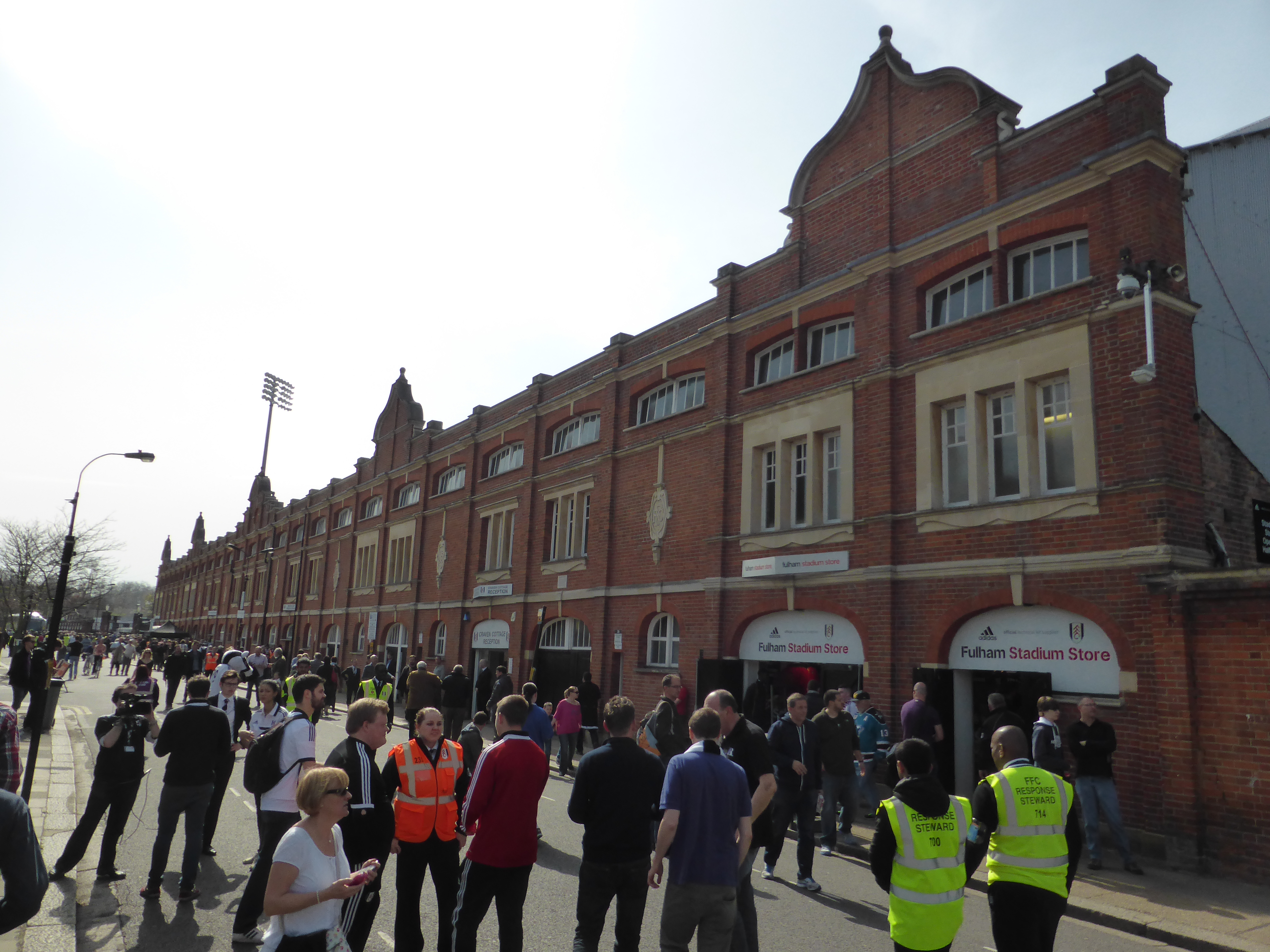
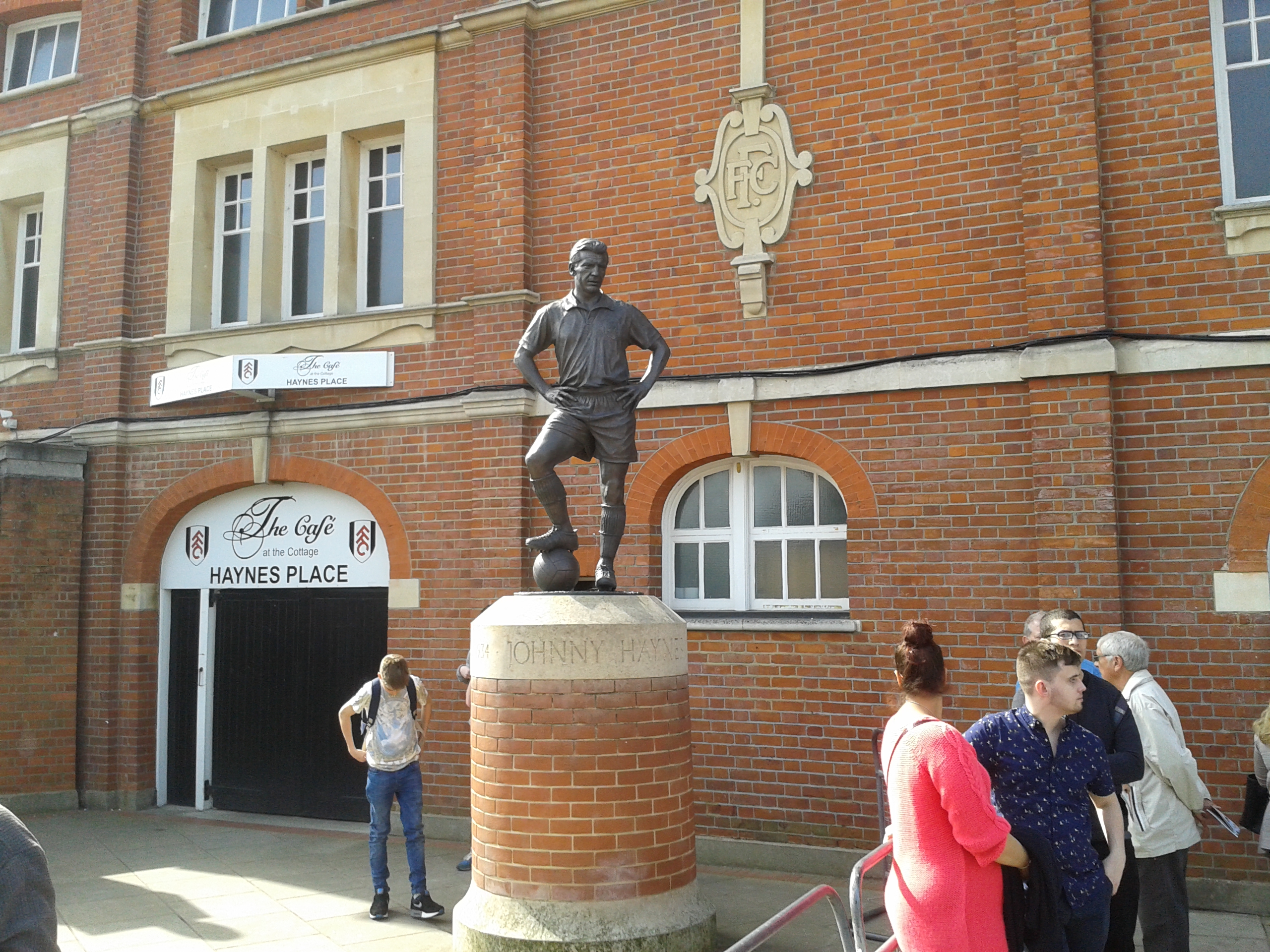
What a contrast! The day after visiting the rather grim Den of Millwall from the 1990’s, I went with my son and my cousin to Fulham’s Craven Cottage. Beautifully located on the north bank of the Thames, in the middle of a a network of nice little streets with semi-detached houses and flowering fruit trees. A bit like Loftus Road. But what makes Craven Cottage really special is the architecture of Archibald Leitch from 1905. The Stevenage Road (or Johnny Haynes stand as it is now called after the first player in England to earn £100 a week back in 1961) has a distinct brick facade with white cartouches and gables. The facade was restored a few years ago by a supporters’ group, whereas another group of local residents were campaigning to see the club move to another site, while the owner Mohamed Al-Fayed planned to sweep away the old ground and build a new all-seater stadium. Fulham went to play their matches at Loftus Road in 2002 – expecting to return to a new ground after 2 years. But the plans, fortunately, did not materialize, and instead the old Cottage was upgraded, and Fulham returned back in 2004. All that Al-Fayed came up with in the end was a Michael Jackson statue outside the ground, and even that had been removed a few months before our visit (and seems to be on its way to the National Football Museum).

ImageImage

The story behind the building of the ground is quite interesting. The previous year, the entrepeneur Gus Mears had bought Stamford Bridge, intending to turn this athletics ground into a football ground and therefore needing a football team. Stamford Bridge was ideally located next to the railroad as well as the tube, whereas Fulhams river side ground was not very well connected to the transport network. A move for Fulham seemed to be the only logical outcome, but the Fulham director Henry Norris did not want to be number two to Mears, so Mears had to form his own club, Chelsea. And Archibald Leitch ended up working on the two competing stadium projects!
 

ImageImage

Craven Cottage really is as a far cry from the modern glass facades of the Etihad, the Emirates or Old Trafford that give the grounds such a modern, corporate, anonymous look. Craven Cottage oozes history and atmosphere. This is no cheap carpark architecture brushed up by some glass. It cannot hold the big crowds of the new stadiums. But the Stevenage Road stand really has its appeal to a 17th century historian like me!

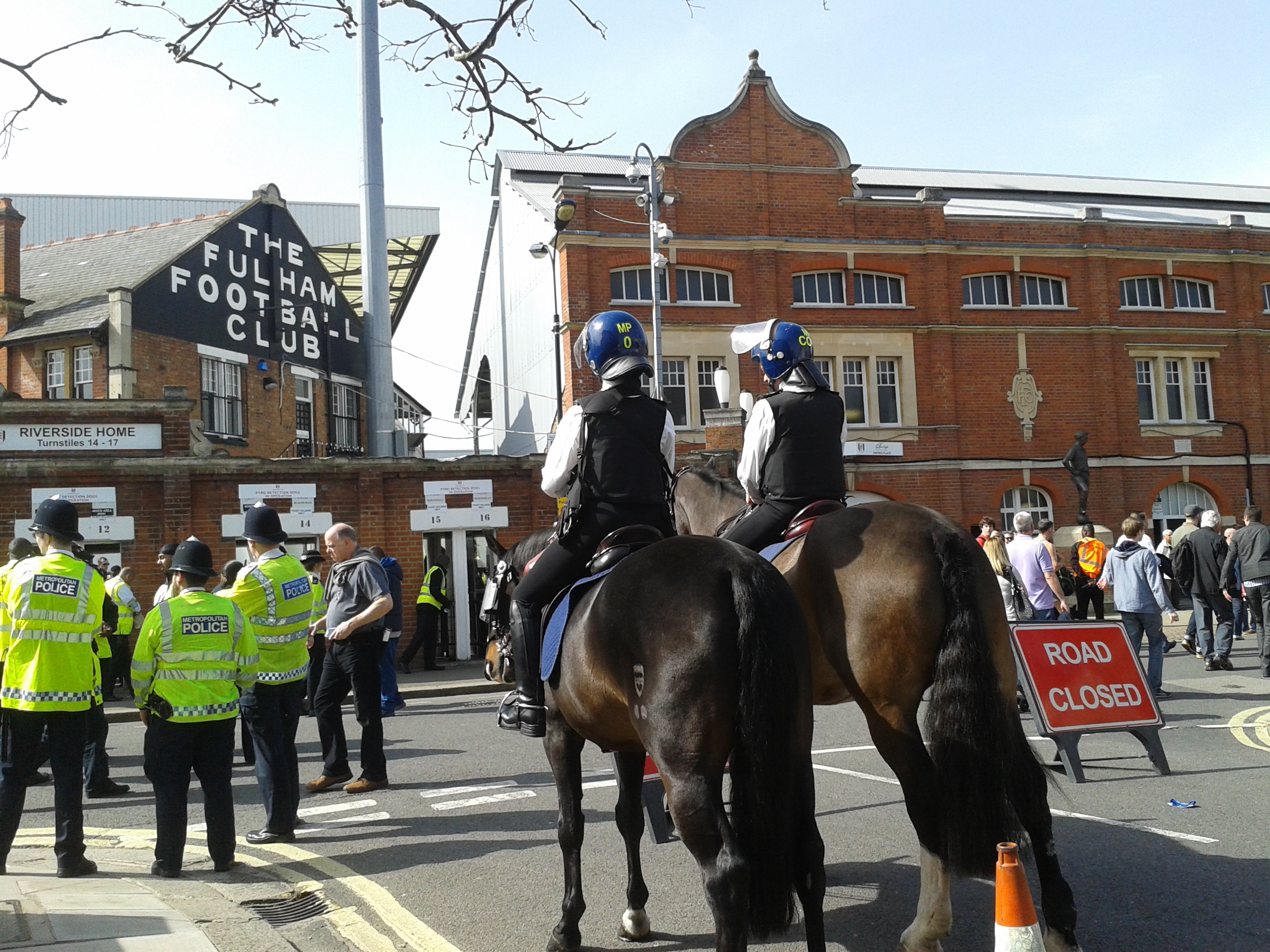
The stand is not very big – and probably not that convenient either. Even though it is quite small, it still has pillars restricting the view. But it also has a rooftop gable with club logo facing the pitch. And – there are good, oldfashioned floodlight pillars in each corner of the ground. Our tickets, though, were for the Putney End, so we didn’t get to try it out.

ImageImage

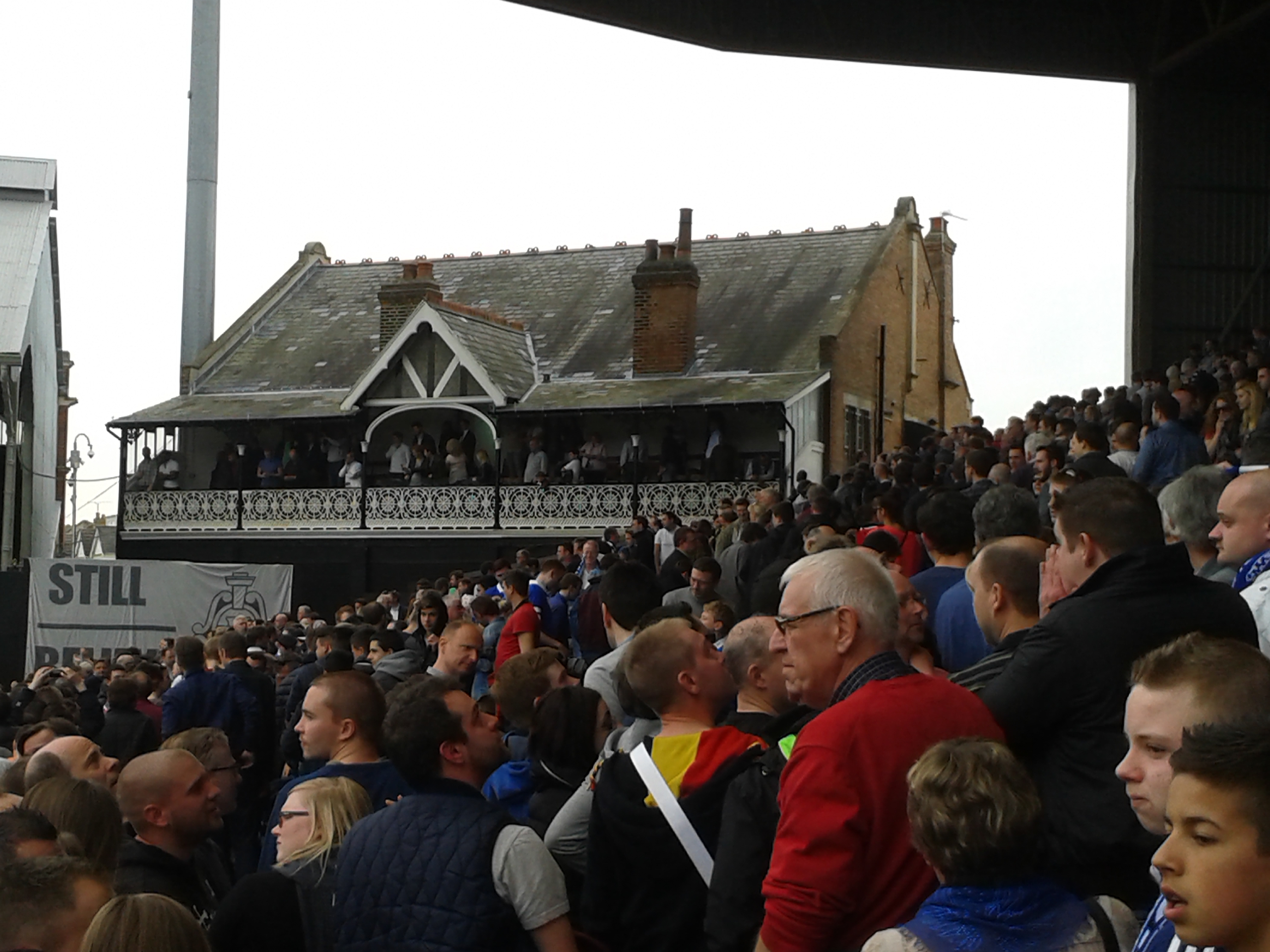
The most distinctive feature of all at the Craven Cottage is, though, the Grade II listed cottage – the pavillion in the corner, built because there was not enough space to make the Stevenage Road stand deep enough to incorporte the planned facilities, which not only included club offices, dressing rooms a billiard room and card room but also a one bedroom flat for the caretaker. A flat, which in the 1920’s was occupied by the club captain and his family! A balcony was added to the cottage, from where Directors would follow the game, but now it is used by players and their guests.
ImageImage

ImageImage

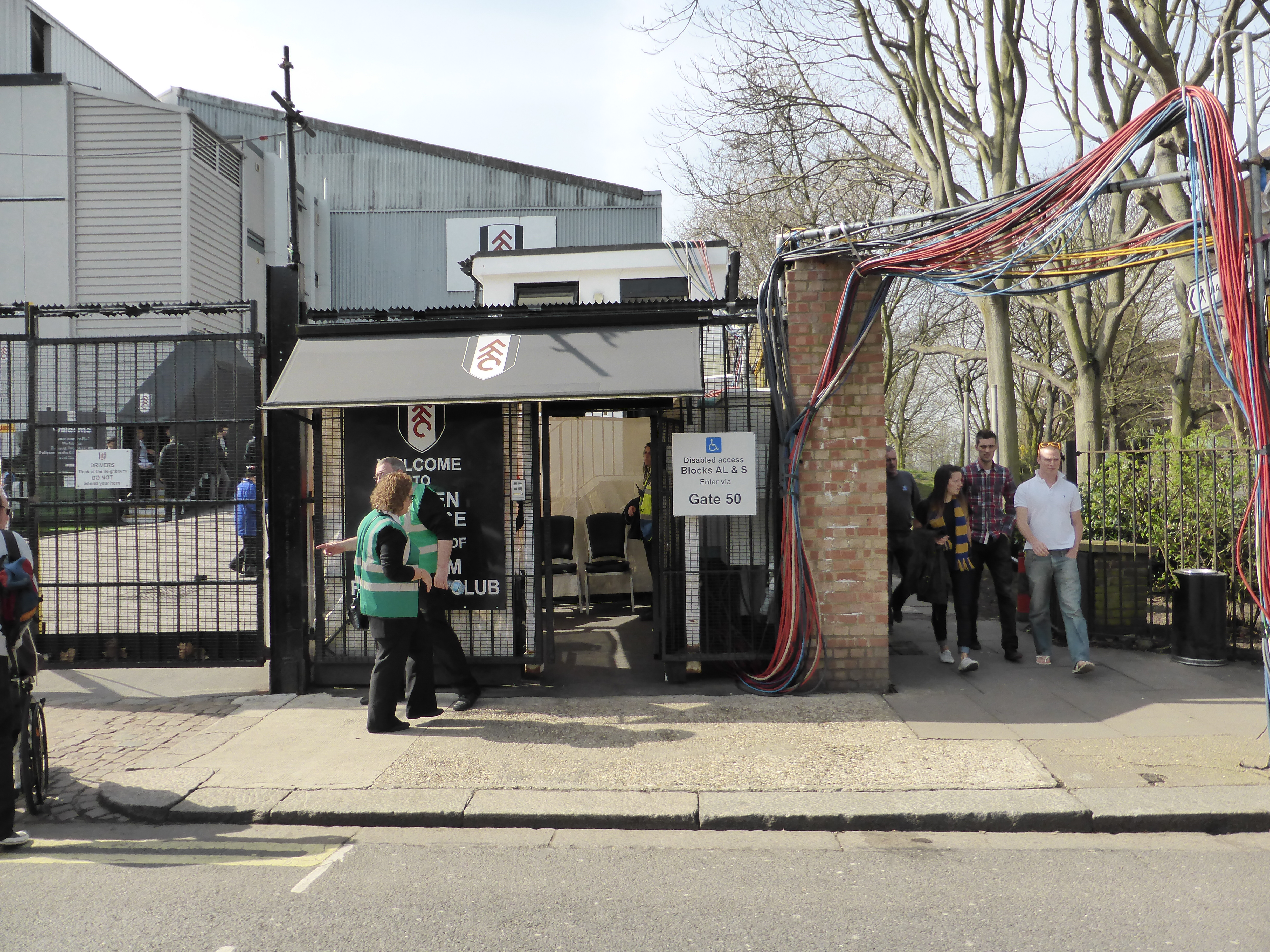
Of course, Craven Cottage has adapted to modern football. The Riverside Terrace was roofed in 1972 and the Hammersmith End is from the 1960’s, whereas the roofing of the Putney End is less than 10 years old. Particularly the Hammersmith End is in stark contrast to the Stevenage Road stand. And I could easily understand why there was a floodlight failure last season when Fulham played Manchester United, looking at the electricity work …

ImageImage

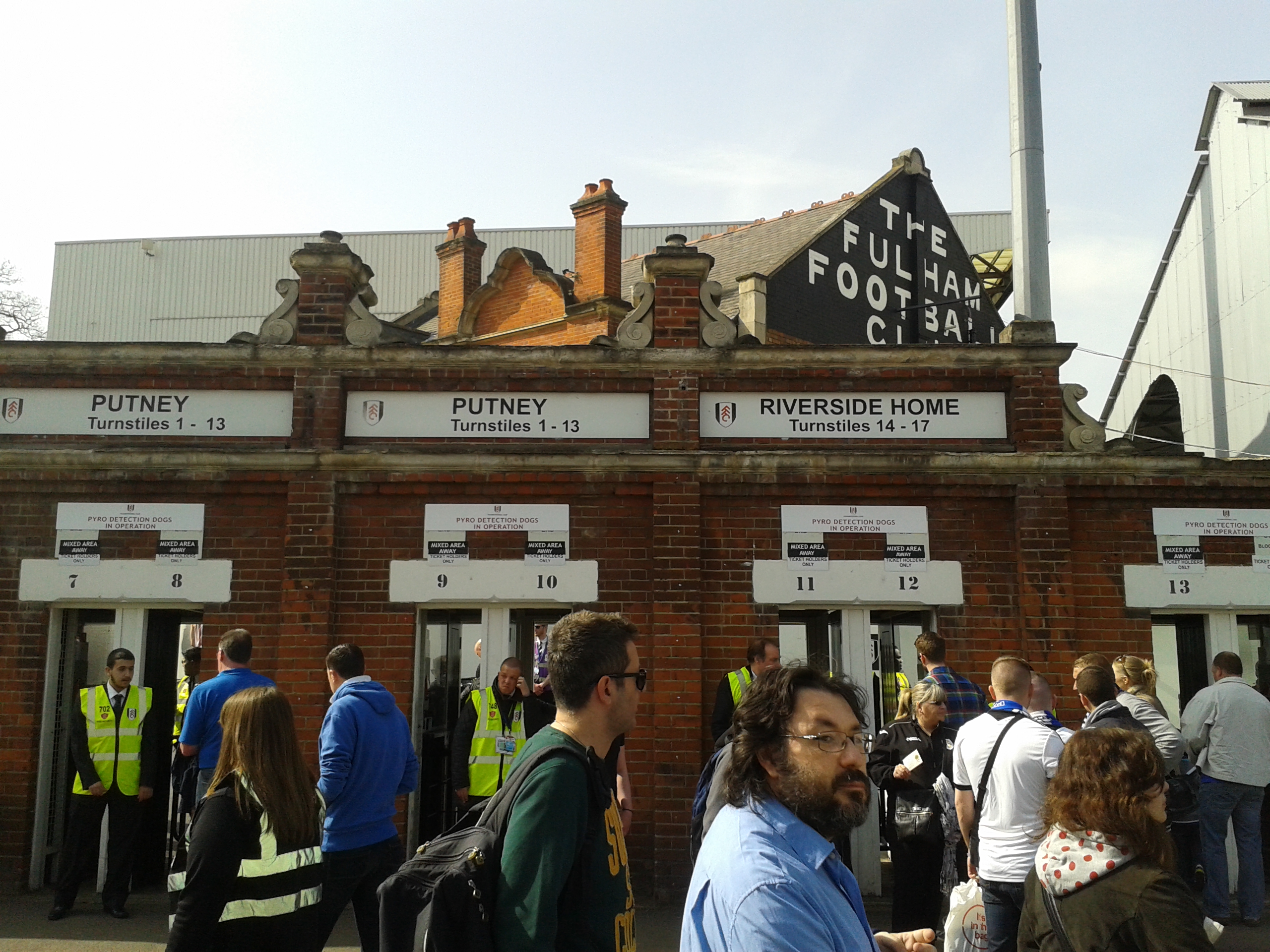
The Putney End, where we had our seats, is quite unusually a mixed area with away fans, neutrals as well as a few home fans.

ImageImage

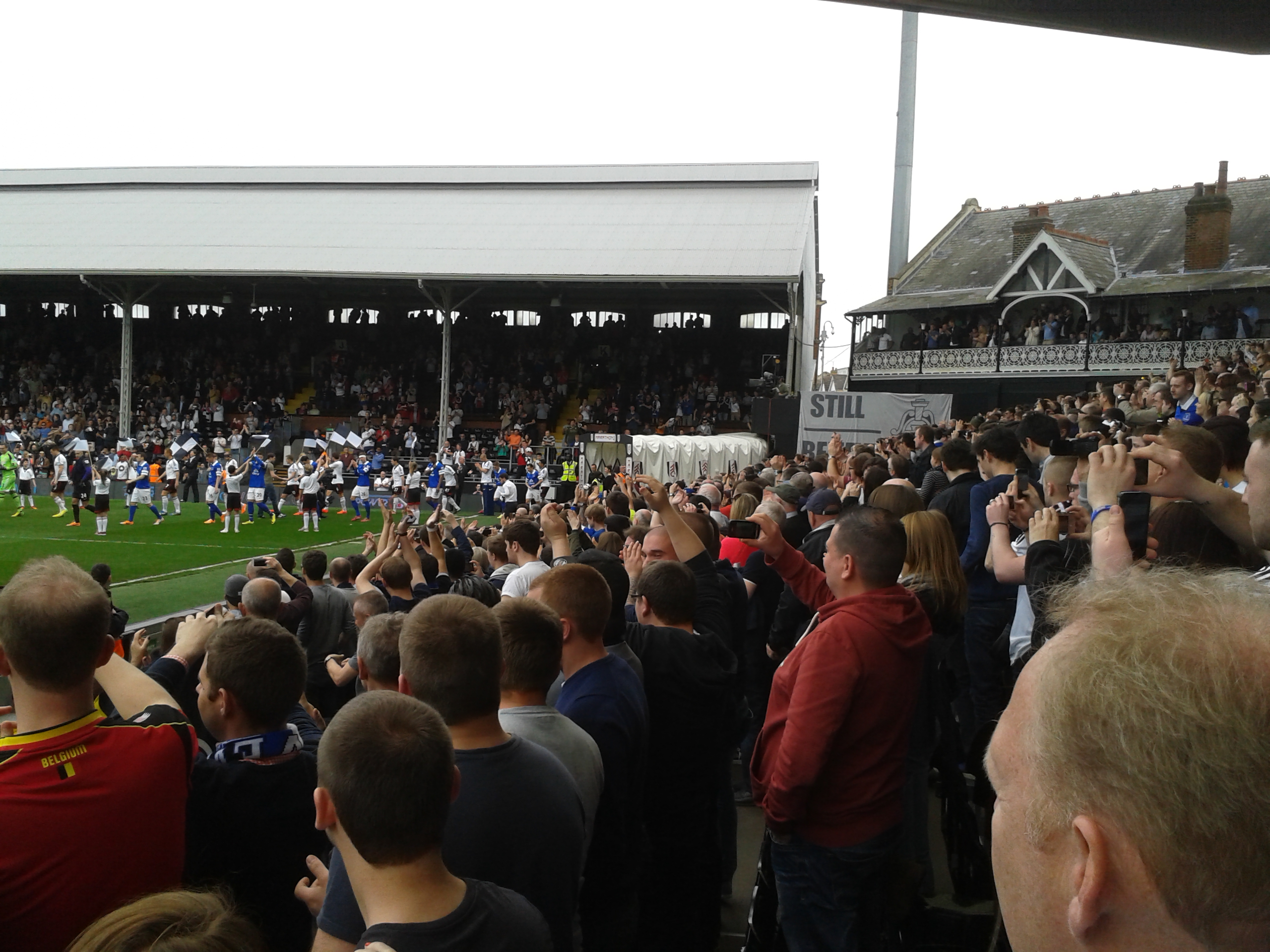
The Everton fans were in the majority, but they were surprisingly quiet, despite being on their best run for years. They could only muster a few chants in the first half, in which Fulham did surprisingly well and carried the most threat. It was not until Everton took the lead from a rather fortuitous goal in the second half that the Everton fans found their voice – and they were silenced again when Fulham equalized, only for Everton to retake the lead some 10 minuttes later. Not that the Fulham supporters were special, but being at the foot of the league table that was a bit more understandable. And when they did find their voice, it was rather unimaginative “come on you whites”-like chants they came up with.

Still, the atmosphere was quite good. It was surprisingly friendly – there were no ill feelings among the supporters in the mixed-area. And the match was quite entertaining, ending with a 3-1 win for Everton, which was a bit harsh on Fulham. And entertaining matches always generate a good atmosphere.
ImageImageImageImageImage

Even the catering at Craven Cottage is something special. We had a really delicious Cottage Pie for pre-match snack, arguably the best one I have tried in a football ground. In a recent survey, the BBC stated that Craven Cottage has the most expensive pies of all the English football grounds. But the price does reflect the quality.

ImageImage

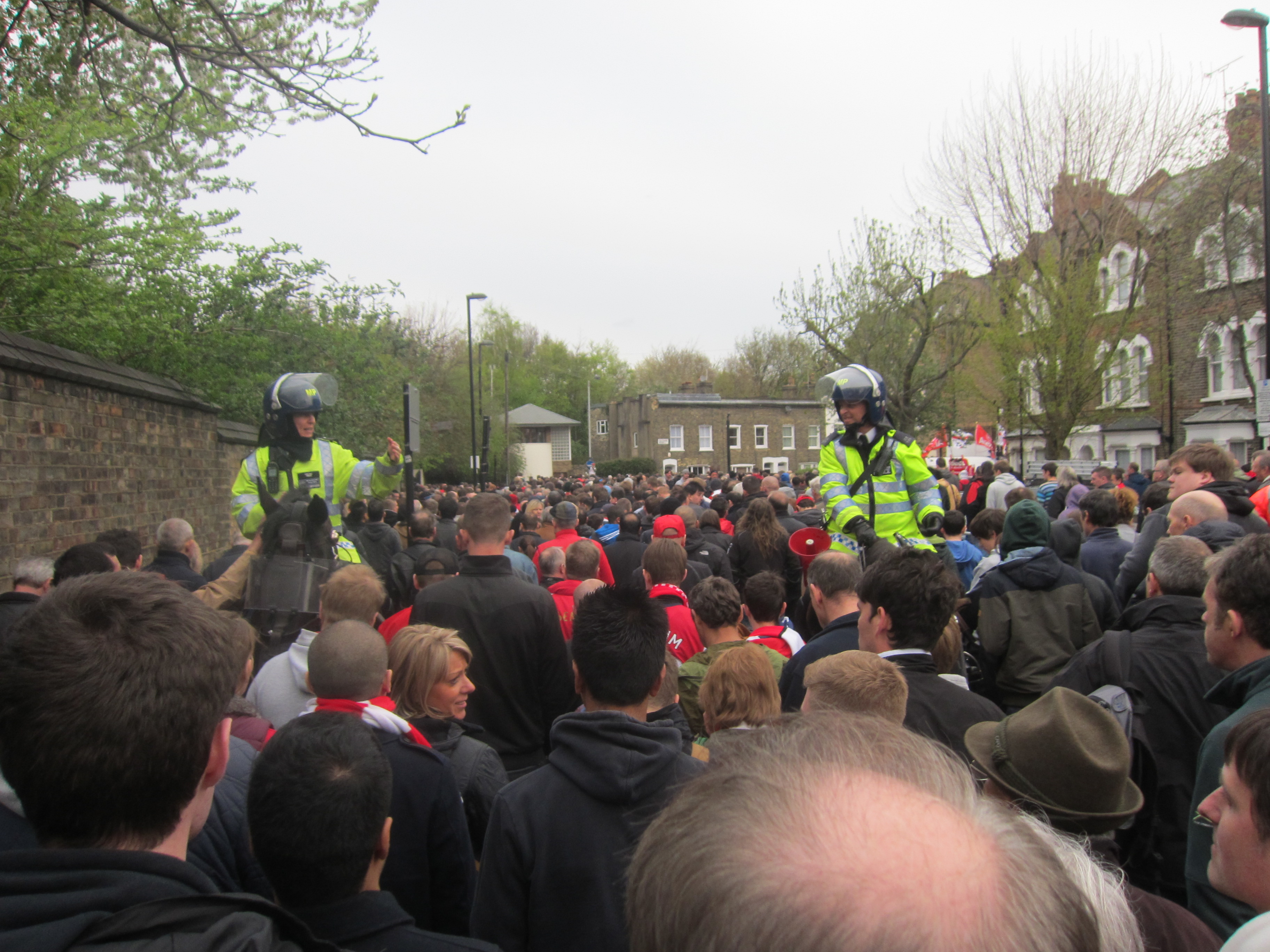
After the match, we marched through the gardens along the Thames. The downside to the nice location by the river and the tiny streets, is that there are no car parks or public transport in the immediate vincinity of the ground. It was not just the locals who made their pedestrian way to Putney like us, several Everton fans did that as well. Either because they live in London or because parking near the ground is impossible.

ImageImageImageImage

All in all, a great day out! Of course, sunny, warm spring weather, good company and an entertaining match all played their part in making it such a good experience, but I will at least for the moment put Craven Cottage in my top 3 of current football grounds. Top marks for Craven Cottage.
Tagged with: , , , , , , , , , ,
Posted in Football grounds, Uncategorized

The Den, Millwall


P1040857

The first two cabbies wouldn’t take us, when I told them our destination. The Lions’ Den – home of Millwall F.C. Back in the 70’s and 80’s, Millwall really had a bad reputation – I remember reading about “Dangerous Alley” with no escape routes leading to the ground. But in 1993, Millwall became the first club to move to a brand new all-seater stadium( after the Taylor Report in 1989).

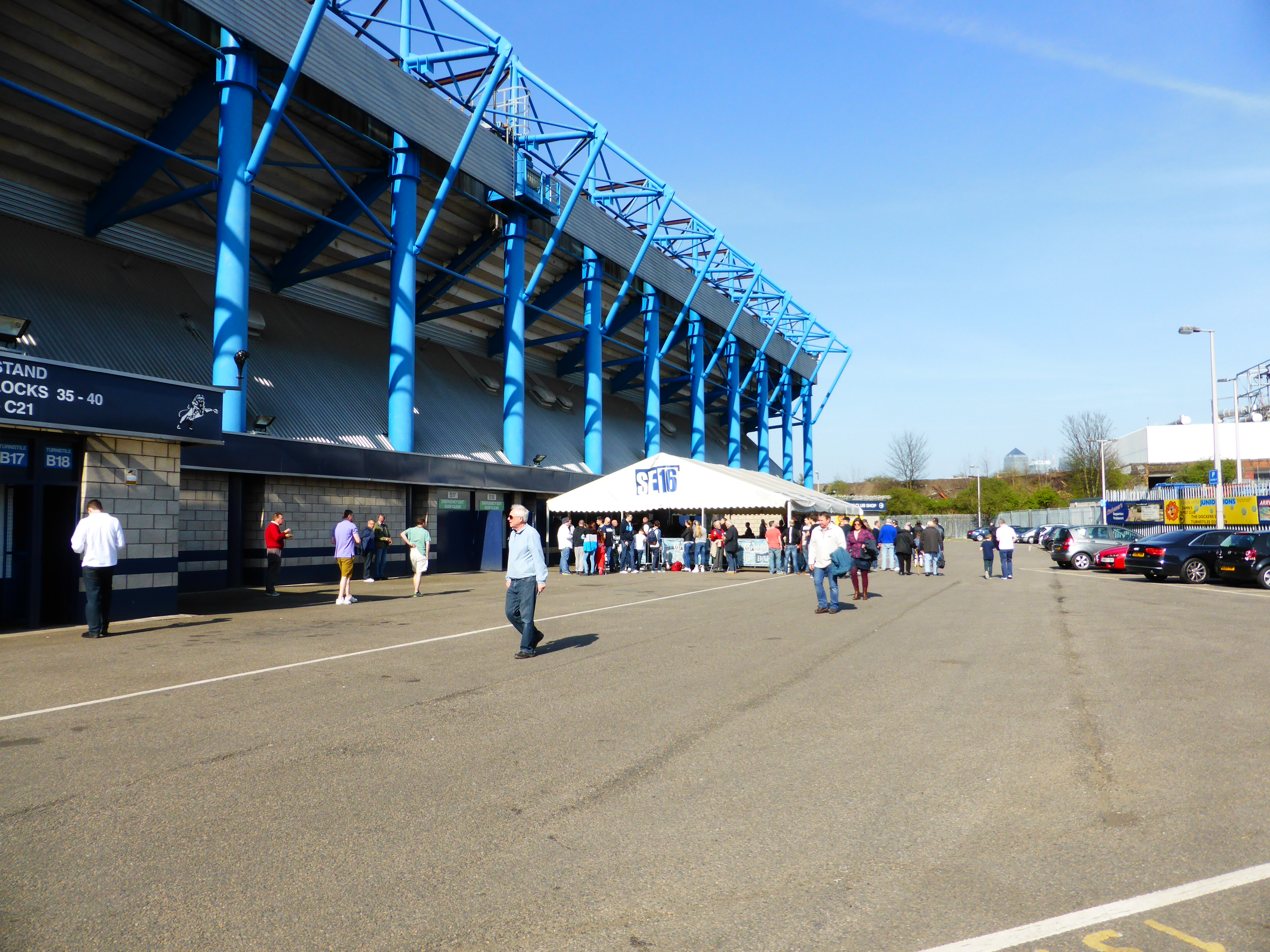
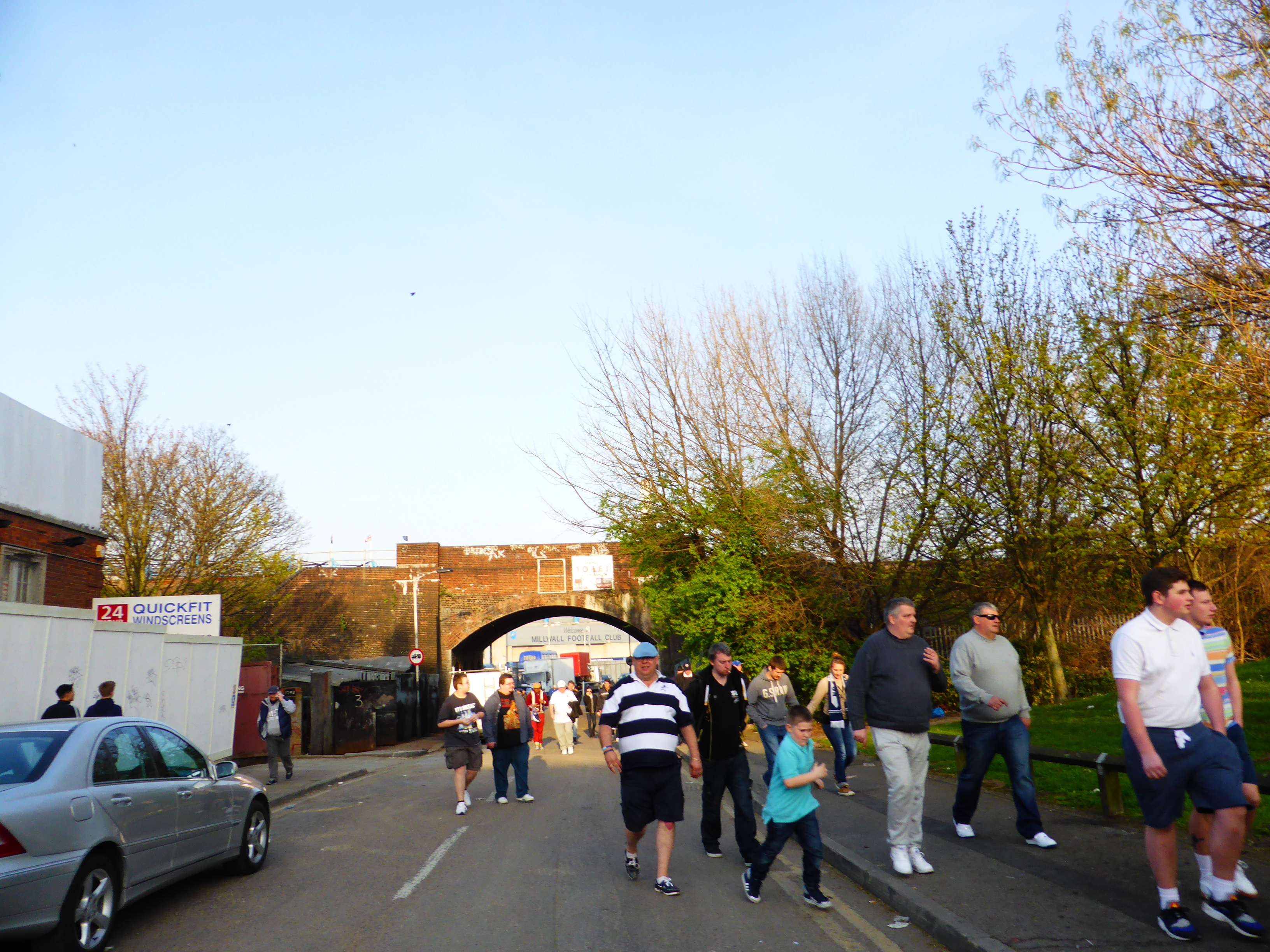
The new Den is just a few miles down the road from the old one – and I must admit that the combination of the cabbies’ reluctance to take us and the desolate industrial buildings we passed as we approached the ground, made me wonder whether it was right to take my son to this game. Compared to, say Loftus Road or Craven Cottage, the Den is situated in the most uncharming way, right in the middle of the intersection of two railroads. P1040858P1040846P1040859

We headed straight to the ticket office and asked for a couple of seats in the most vocal area of the ground. That would be either behind the goal or above the halfway-line. I asked for the former tickets, but it turned out that the guy in the ticket office had given us seats at the halfway line.

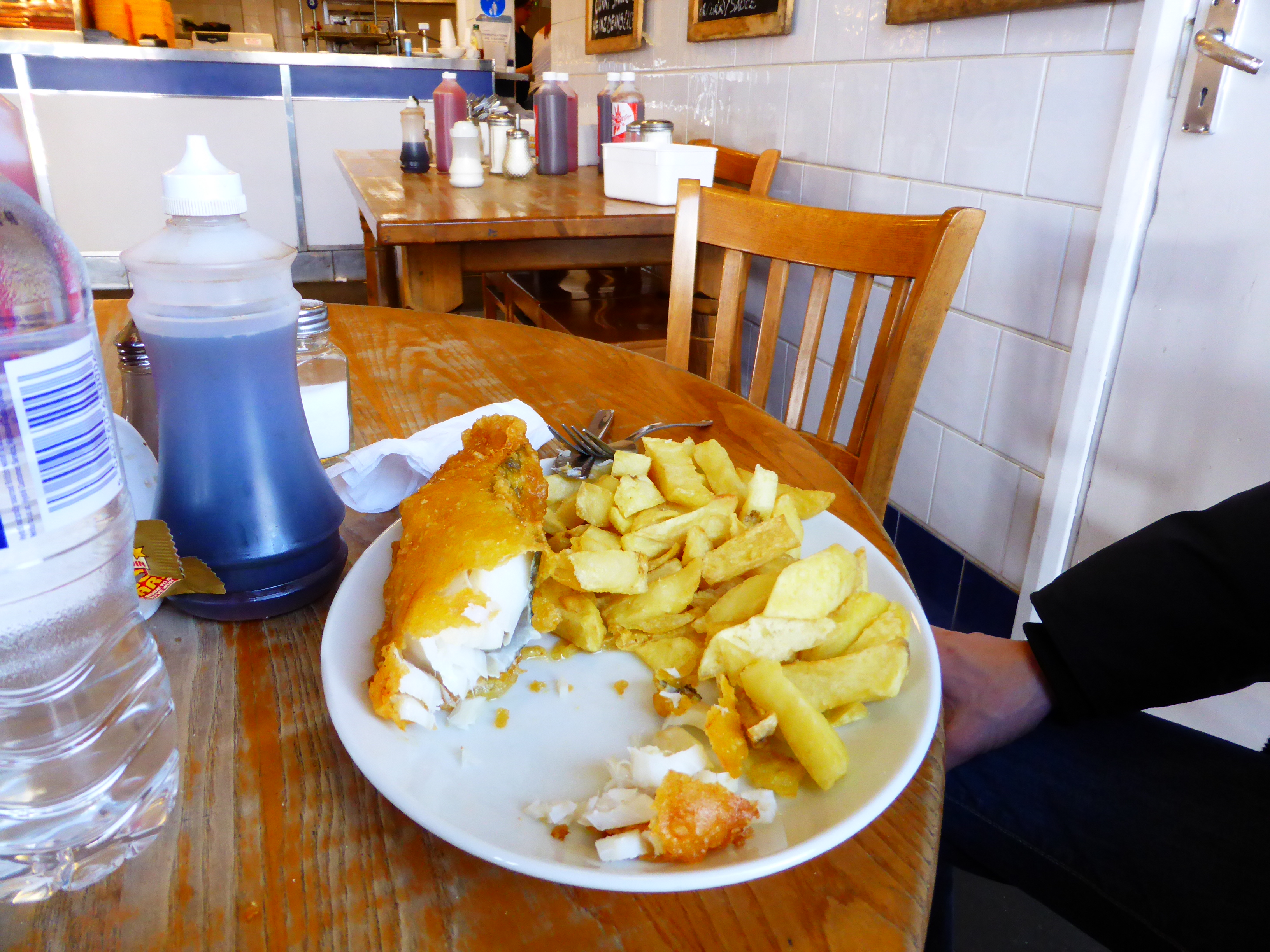
From the ticket office, we went to the Millwall cafe – part of a garage complex next to the ground. At the big premier league grounds you won’t get the possibility of walking  straight into a club cafe 90 minutes before kick-off for lunch, but here we could. We got our fish ‘n chips and sat down at a table with a senior Millwall supporter. He had gone to his first match back in 1946, having to crawl over bombcraters to get to the ground, which was also in a poor state. And he had been going ever since. Recently, though, the neighbourhood had become quite fashionable, and that had changed things. I asked him about the move to the new ground. “Well, it is still plastic” he said. But added that there was something special about the old 20.000 capacity ground, when 30.000 people were packed inside it. He asked to see our tickets, and then shook his head. No, we should have gone to section 8, 9 or 10. That were best sections in the ground. We promised to go there, next time around. He was quite resigned to going down into League One – and in general pessimistic about the future, fearing a collapse like Portmouth has suffered.

P1040847  P1040850 P1040852P1040855

Looking around the cafe, the FA Cup final appearance in 2004 was clearly the latest highlight in Millwall’s history. There were a lot of memorabilia from that final. And, like all other true fans, the Millwall fans cherish their history. In the car park around a purple doubledecker bus, people were gathering, and suddenly former players appeared in the area, signing autographs and chatting with people. Which attributed to a nice atmosphere. There was nothing aggressive, and in fact, Blackburn supporters had been seated in the cafe alongside Millwall fans. The most striking aspect was the almost 100 % white crowd; apart from a number of stewards, I didn’t see anybody of another ethnic background.

P1040862 P1040864 P1040867P1040868

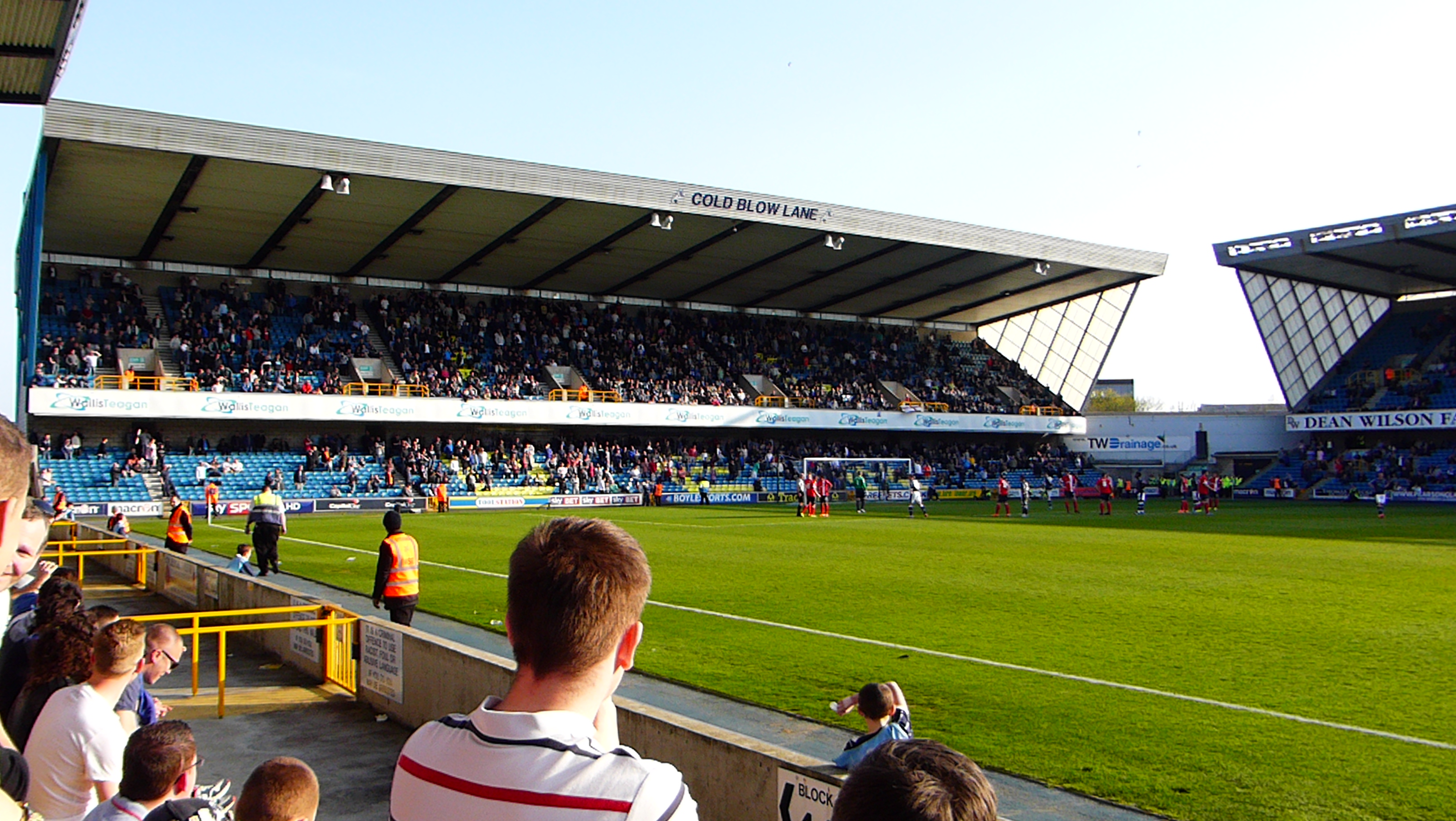
About half an hour before kick-off, we went inside the ground to find our seats. Being twenty years old, the ground in some ways resembles the old grounds from the middle of the 20th Century, with four seperate stands instead of the modern bowl shape. Not very charming, with the barren surroundings not making it any more pleasant. But still, with a bit more character than, for instance, the Reebok in Bolton. And with a more “English” feel to it.

P1040873 P1040874 P1040878P1040914

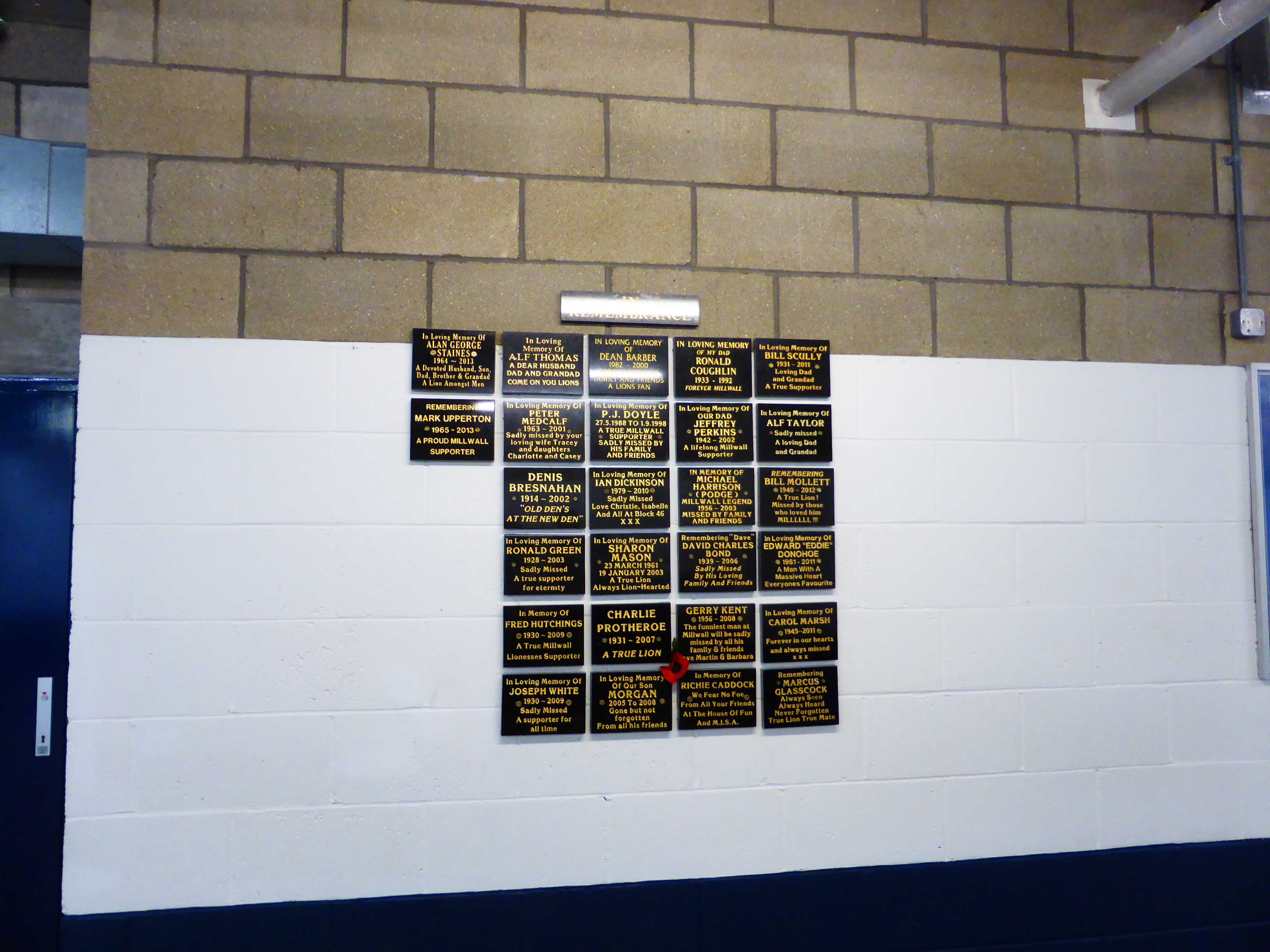
The concourse was rather boring, despite a few attempts to ‘personalize’ it through photos of former players and memorial plaques. But the things that stood out were the freshly baked pies. Not the same industrial products you find in most grounds. Even though I had had my fish ‘n chips, I just had to try one of them at the halftime break – and it didn’t disappoint.

P1040882 P1040887 P1040891 P1040892 P1040894

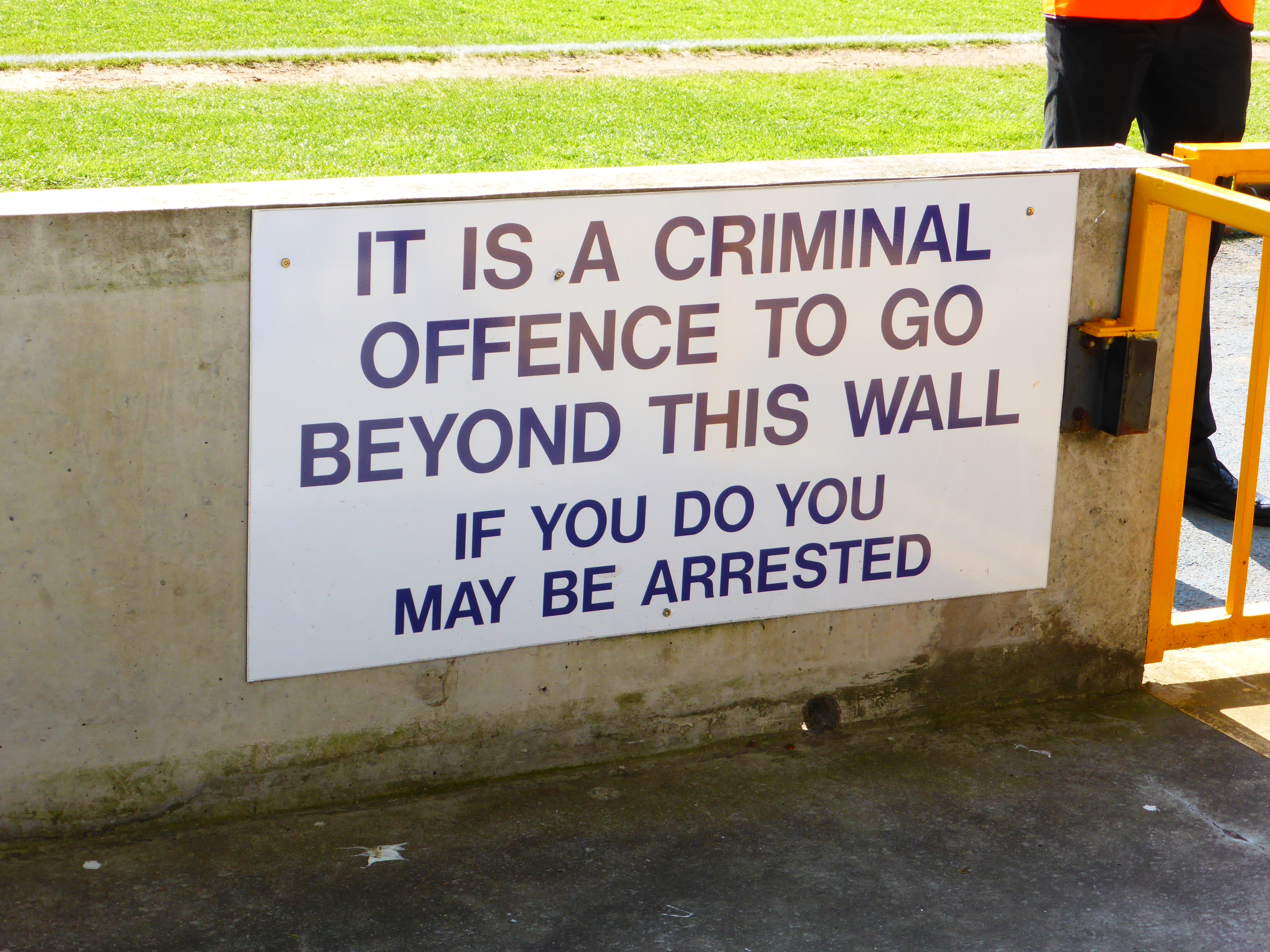
Our seats were in the third row, very close to the pitch. But then there were no more than 7 or 8 rows in the lower section of the stand, the upper stands apparently holding most of the crowd. Between the upper and lower tiers, there were executive boxes all along the ground, although most of the guests in boxes apparently preferred to watch the match outside rather than inside the boxes. In general, they didn’t look like the corporate segment that you find at premier league clubs, more like “real” fans. One of the main sponsors judging from the advertise hoardings was “Dean Wilson funerals. Our Family Caring for Milwall Families 24 Hours A Day”. Along with the many signs warning of criminal offences, the funeral advertisement added to the feeling that Millwall still has a lot of branding work to do to get back to the top flight.

P1040897 P1040898 P1040907

When you are at the foot of the table, and fans, manager and players alike seem resigned to going down, it is, perhaps, hard to generate a vibrant atmospheshere inside the ground. Less than 9000 turned up, but it was not just Millwall fans staying away. This is the second time I have seen Blackburn away in the Championship, and they must have the poorest away support of all, with no more than 200 travelling fans.

Although Millwall started the match quite positively, the chants from the home support were rather few and far between. But we did get to hear their trademark “No one likes us, we don’t care” to Rod Stewarts “I’m Sailing”. And “MMMM”.

P1040921 P1040923 P1040935

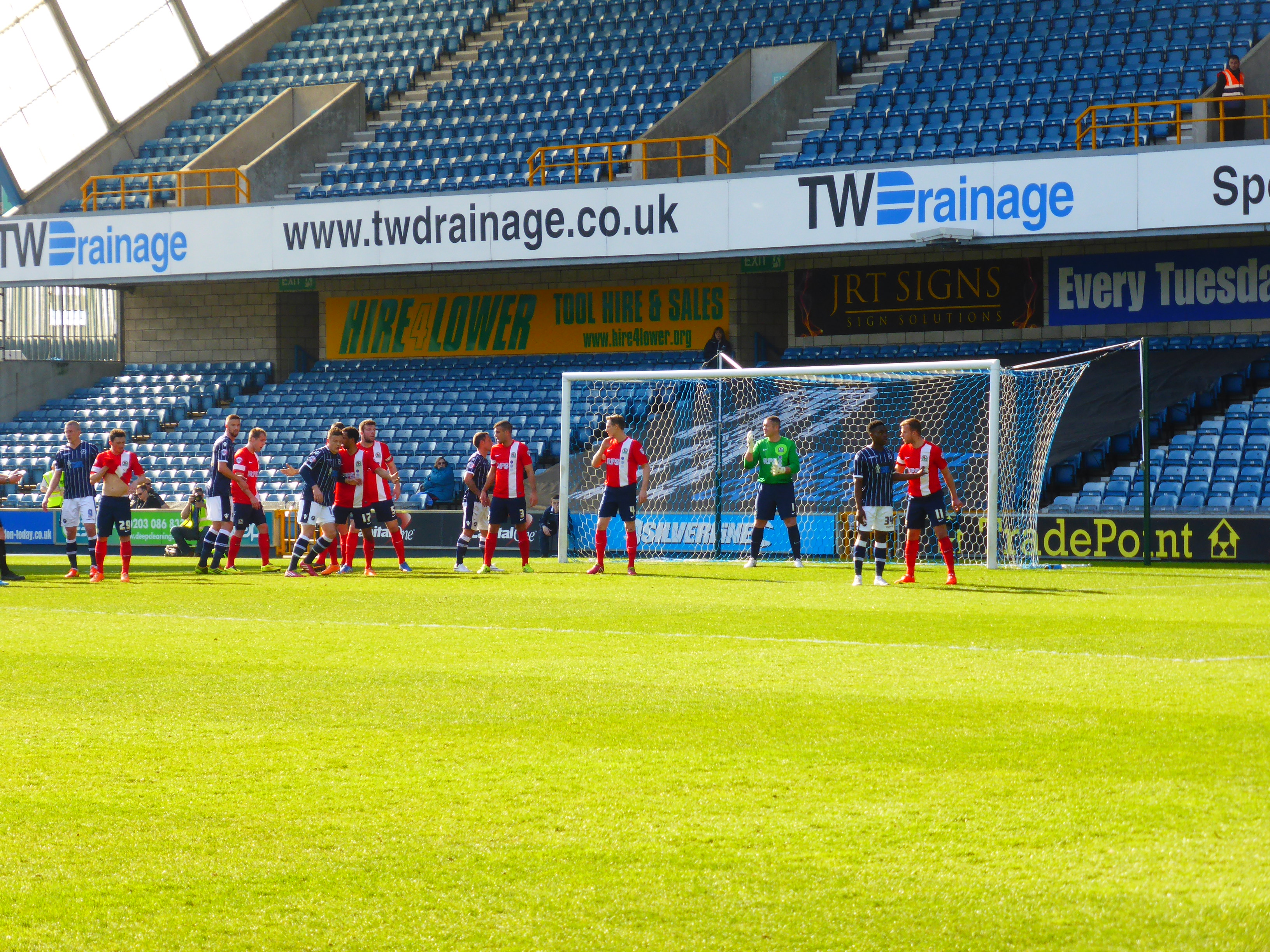
In the second half, things really livened up. Millwall took the lead from a penalty, which also saw Blackburn having a man sent off. The Millwall fans, sensing a possible win, found some voice, only for Blackburn to equalize from a corner. Groans of frustration started to fill the ground – my son has never heard as much swearing and foul language! But two minutes from time, Millwall got a second penalty and regained the lead. Only for Blackburn to pull off another dramatic equalizer 2 minutes into injury time. Cue more swearing and frustration.

P1040937 P1040941 P1040944

Still, although the “Wise security” (anything to do with Dennis Wise?) prepared for a pitch invasion, there was no trouble at all. Only frustration. After the match we went looking for a cab. But couldn’t find one. Which perhaps shouldn’t have surprised us, considering how difficult it was to find a cabbie who would take us there. Finally we caught a bus to the city centre after quite an entertaining day. Still, The Den is not really a welcoming place, the location and ground design having a lot to do with it. A collectors’ item for a groundhopper – but not really a place to take your family to have a pleasant day out.

Posted in Uncategorized

Villa Park – Birmingham

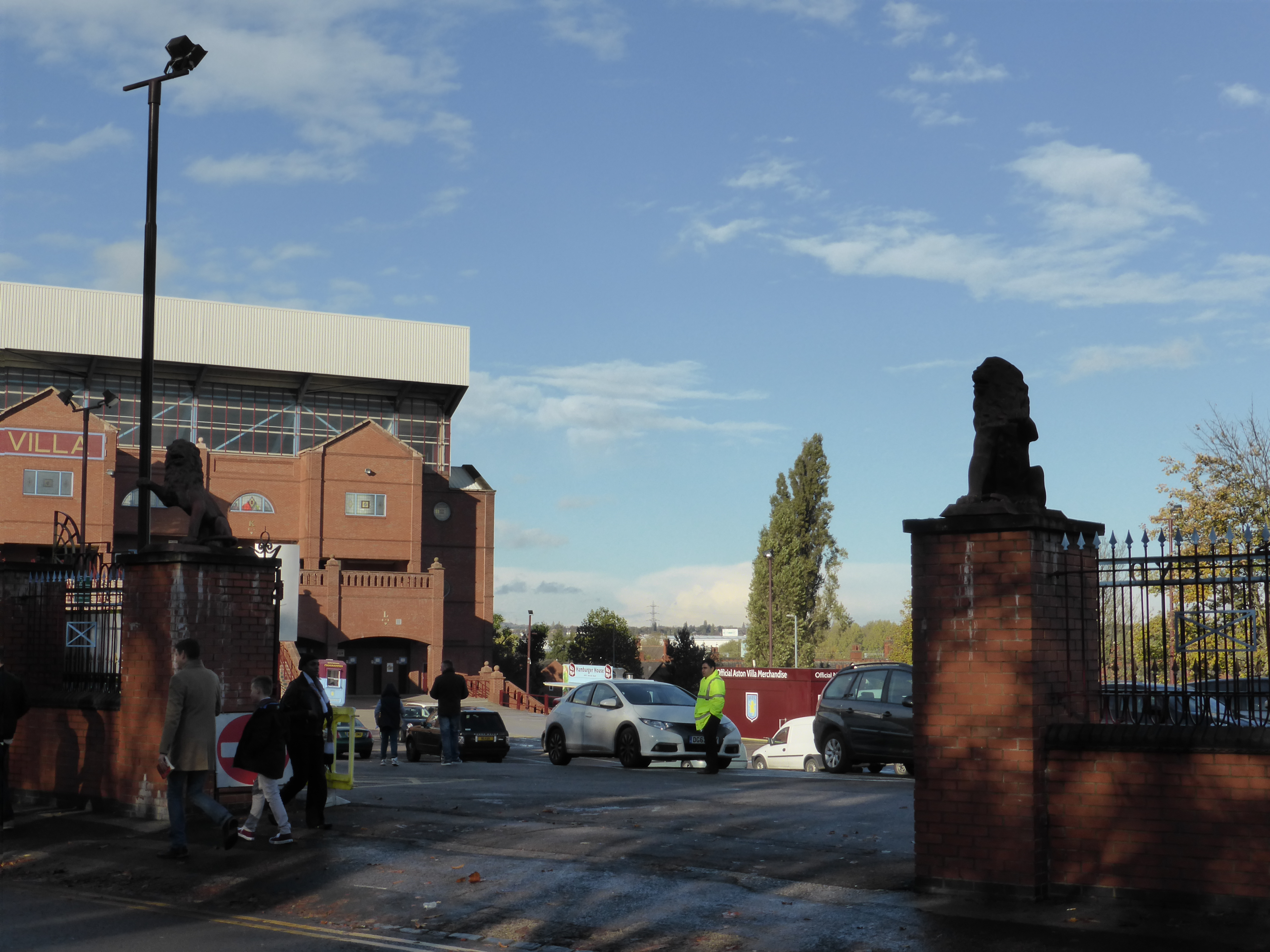
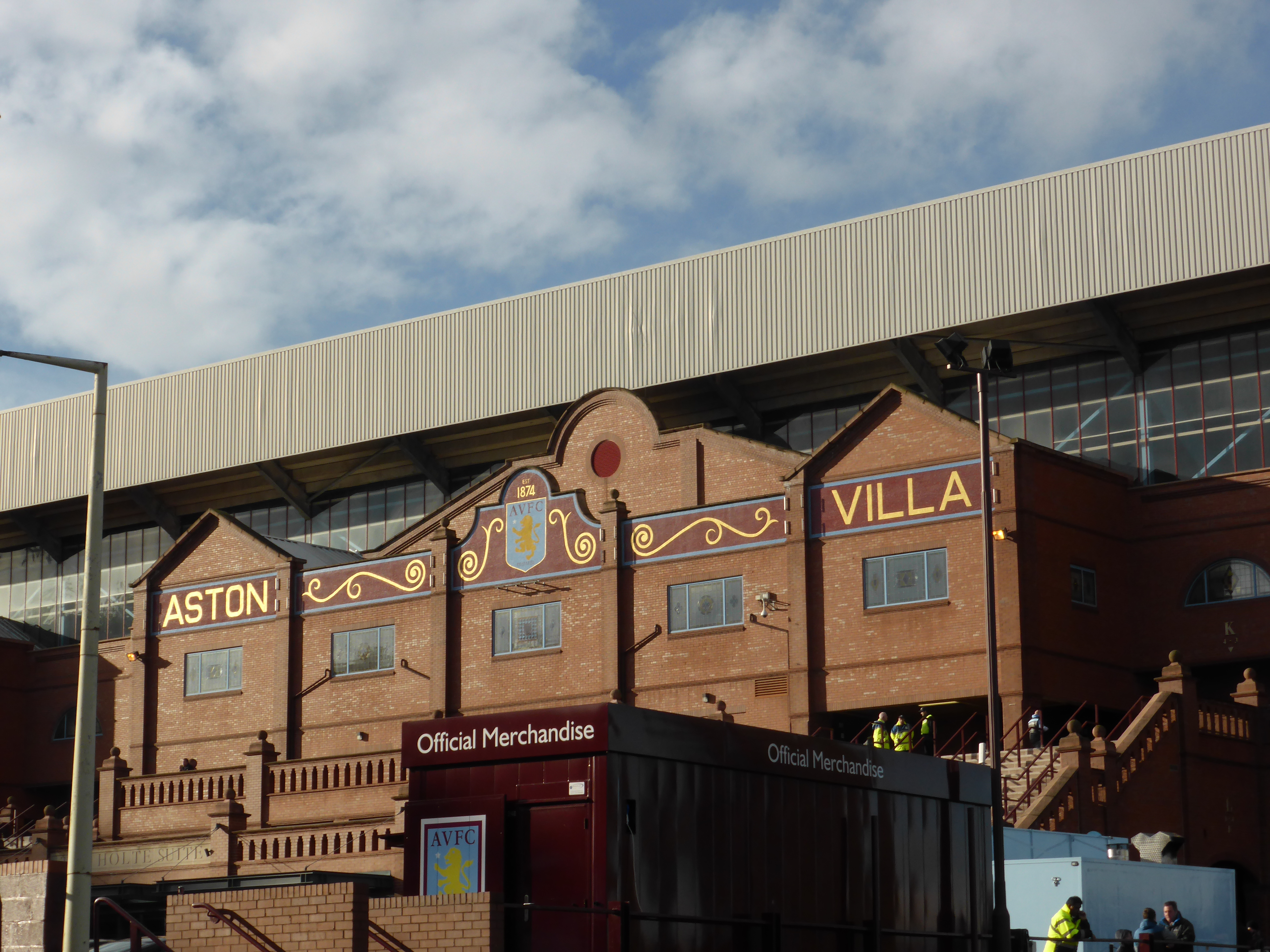
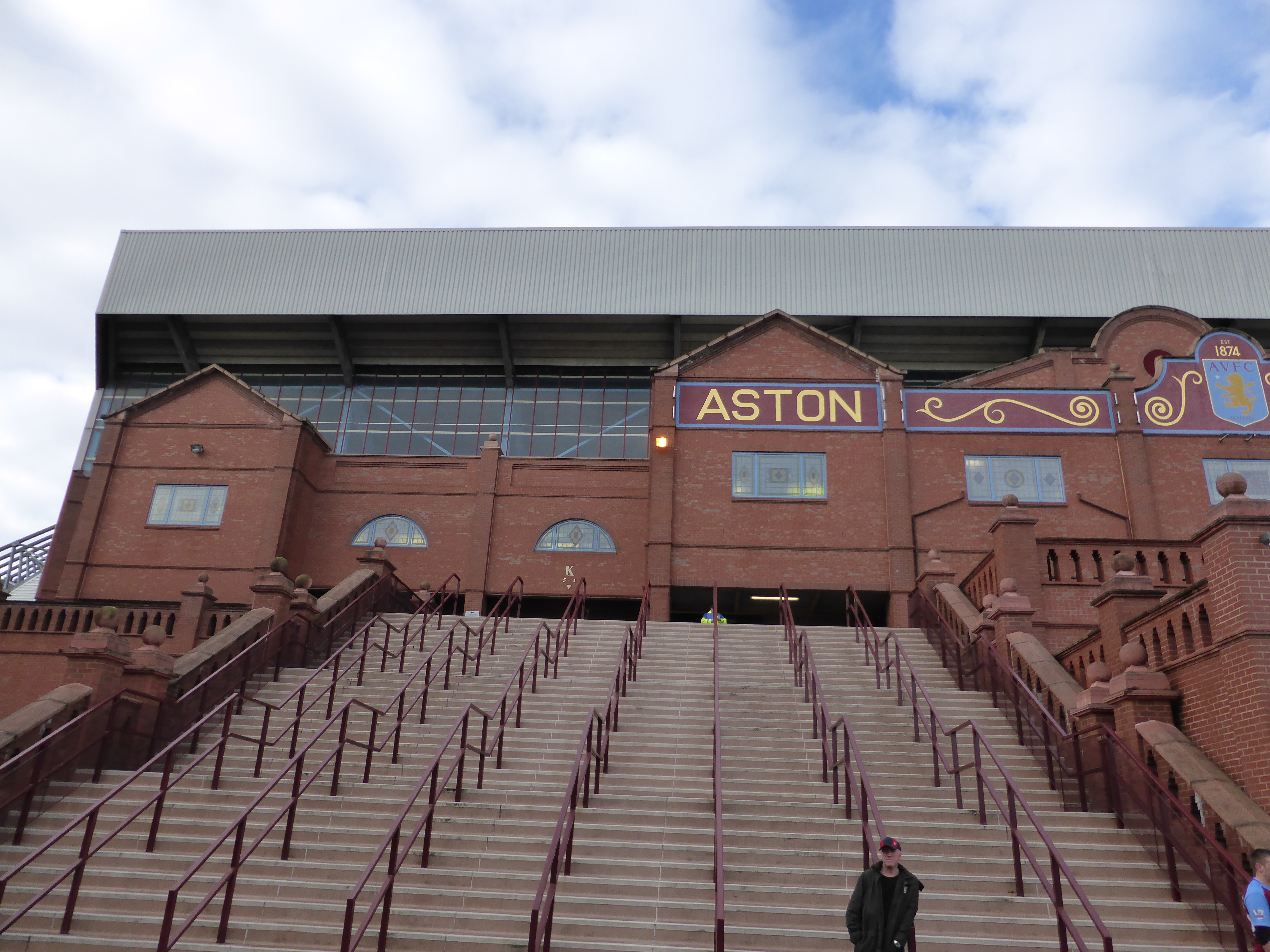
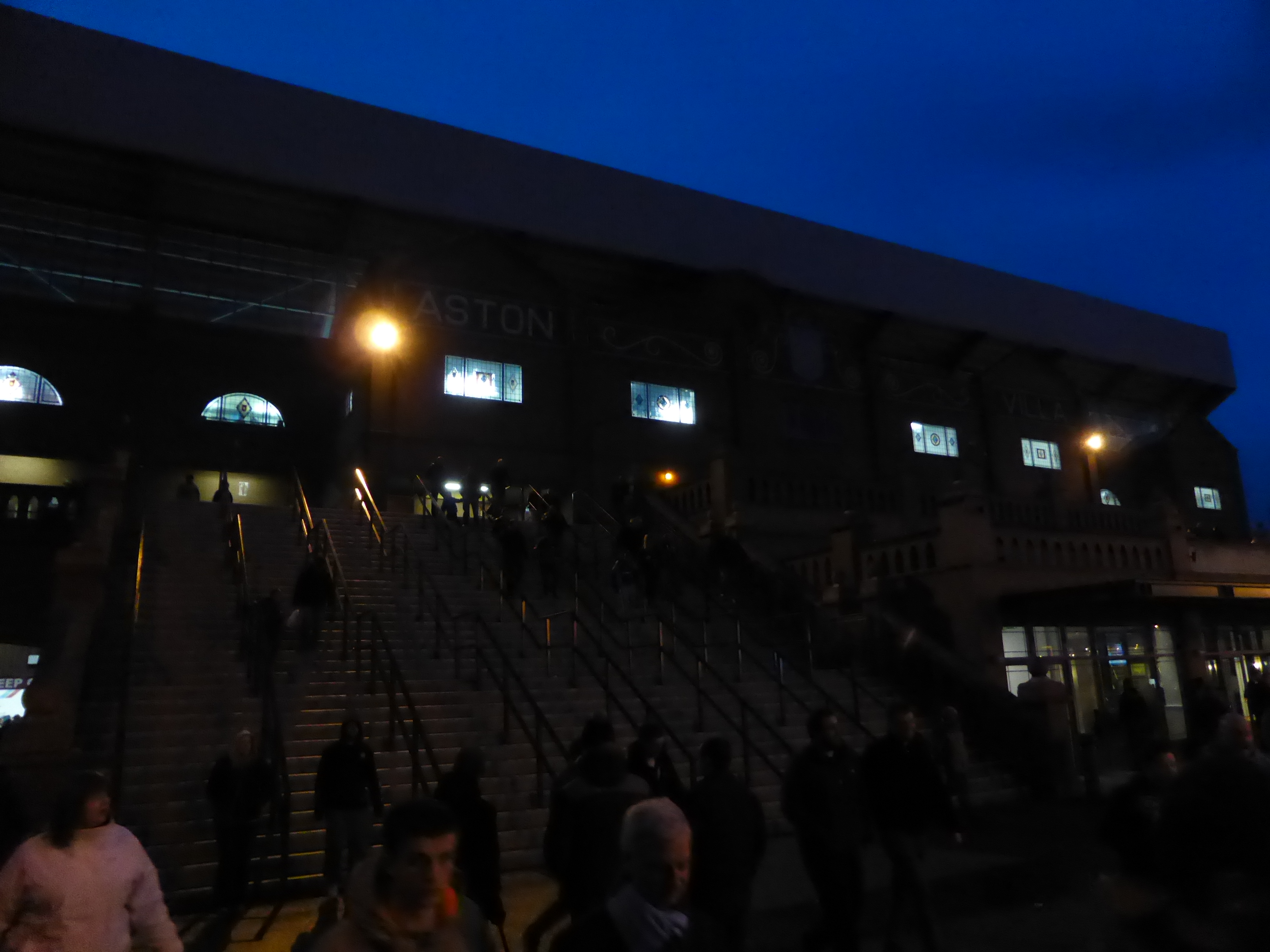
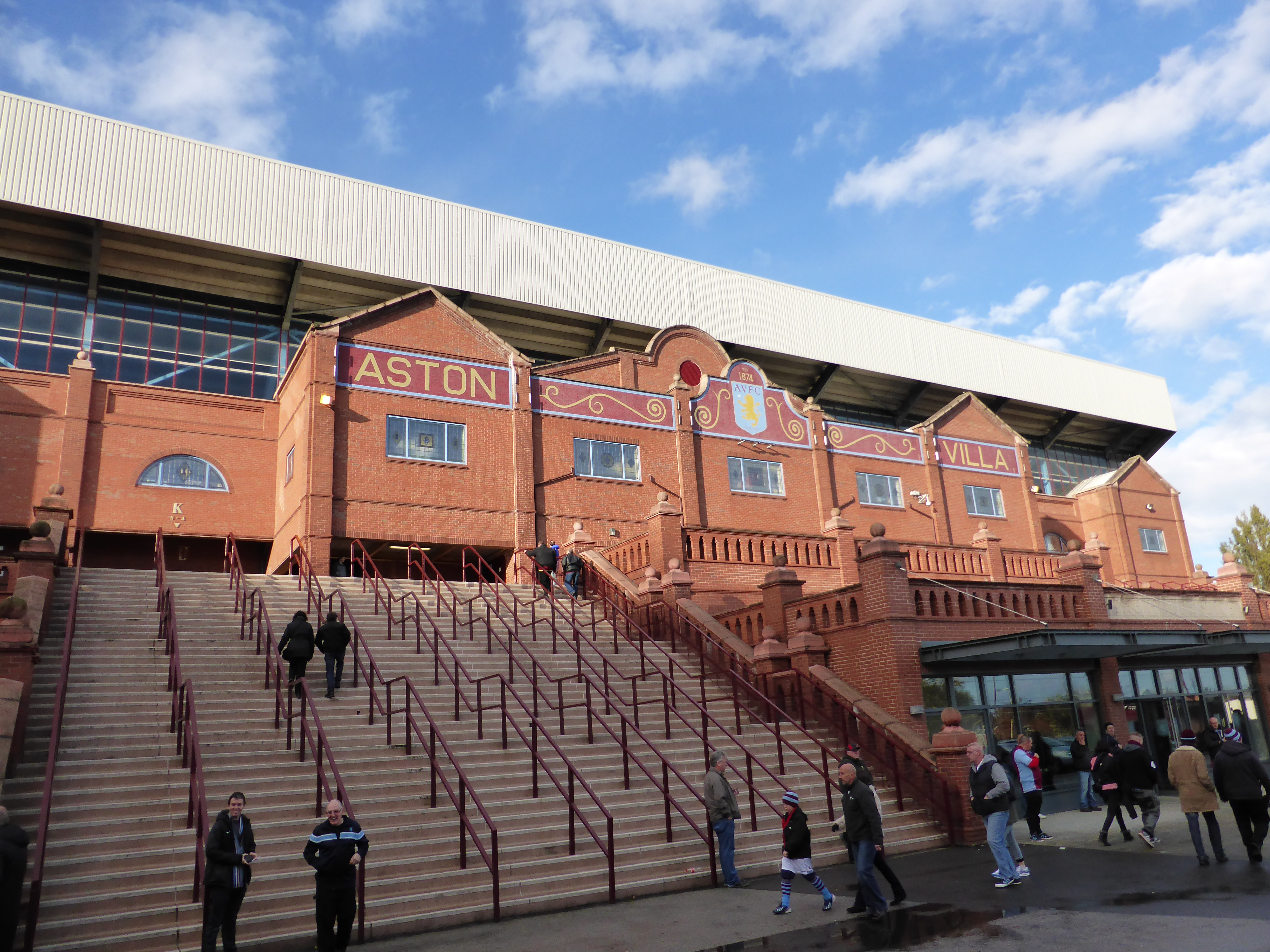
Villa Park! It certainly has a special ring to it. Aston Villa, one of the great pioneers of English football. Villa Park – built by the master architect of football stadiums, Archibald Leach. Venue of so many thrilling cup semi-finals and other great matches. Sadly, Leitch’s landmark stand, the Trinity Road was demolished in 2000 – and his other stand, the Holte End,  in 1994.

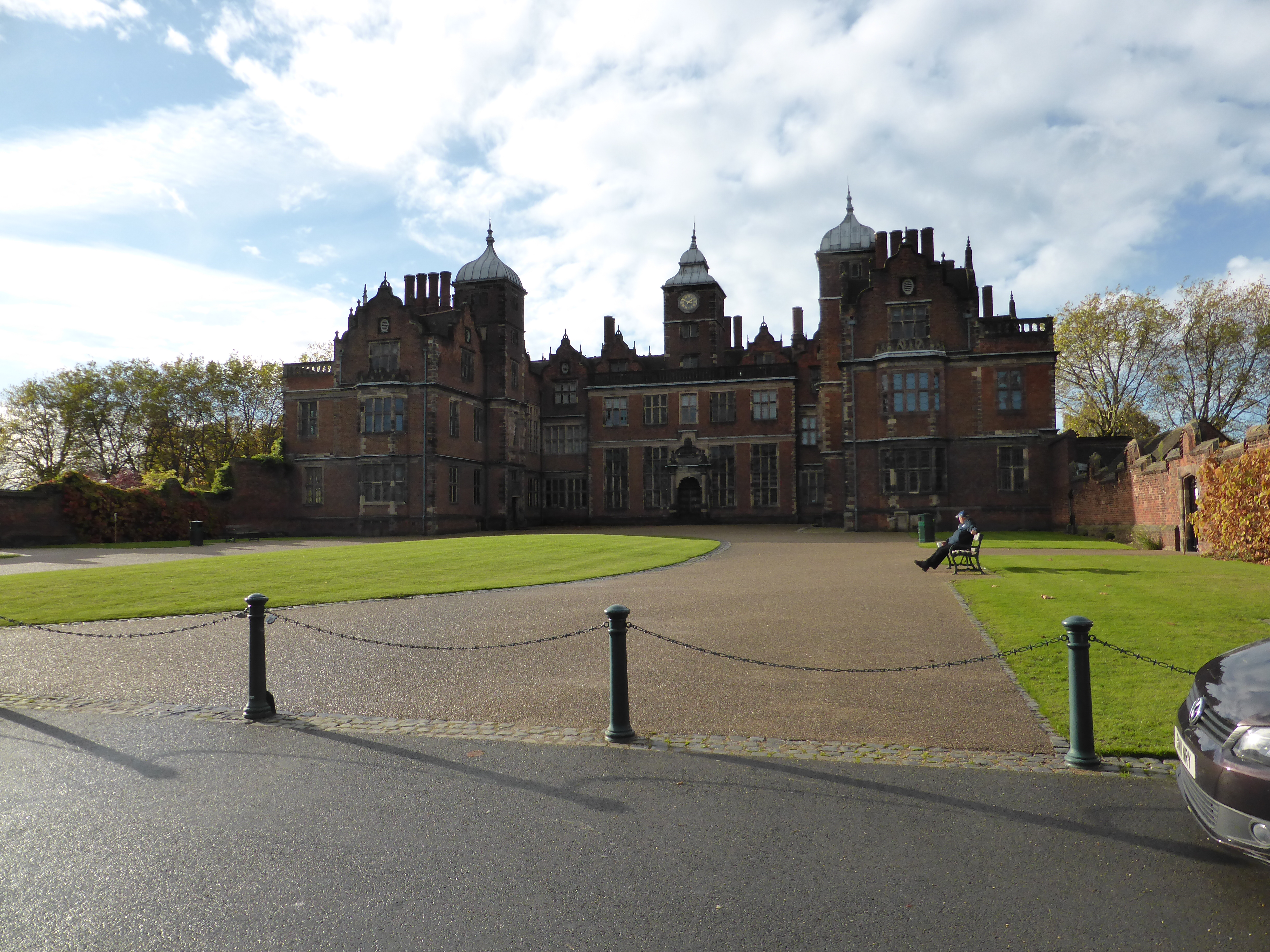
Getting off at Aston Station, I went down the Lovers’ Walk towards the ground, situated on the former grounds of the near-by 17th century Aston Hall, which is still overlooking the area from a hill top. At the foot of the hill, you find the parish church of Saint Peter and St. Paul.

P1000995P1000992_1P1000934

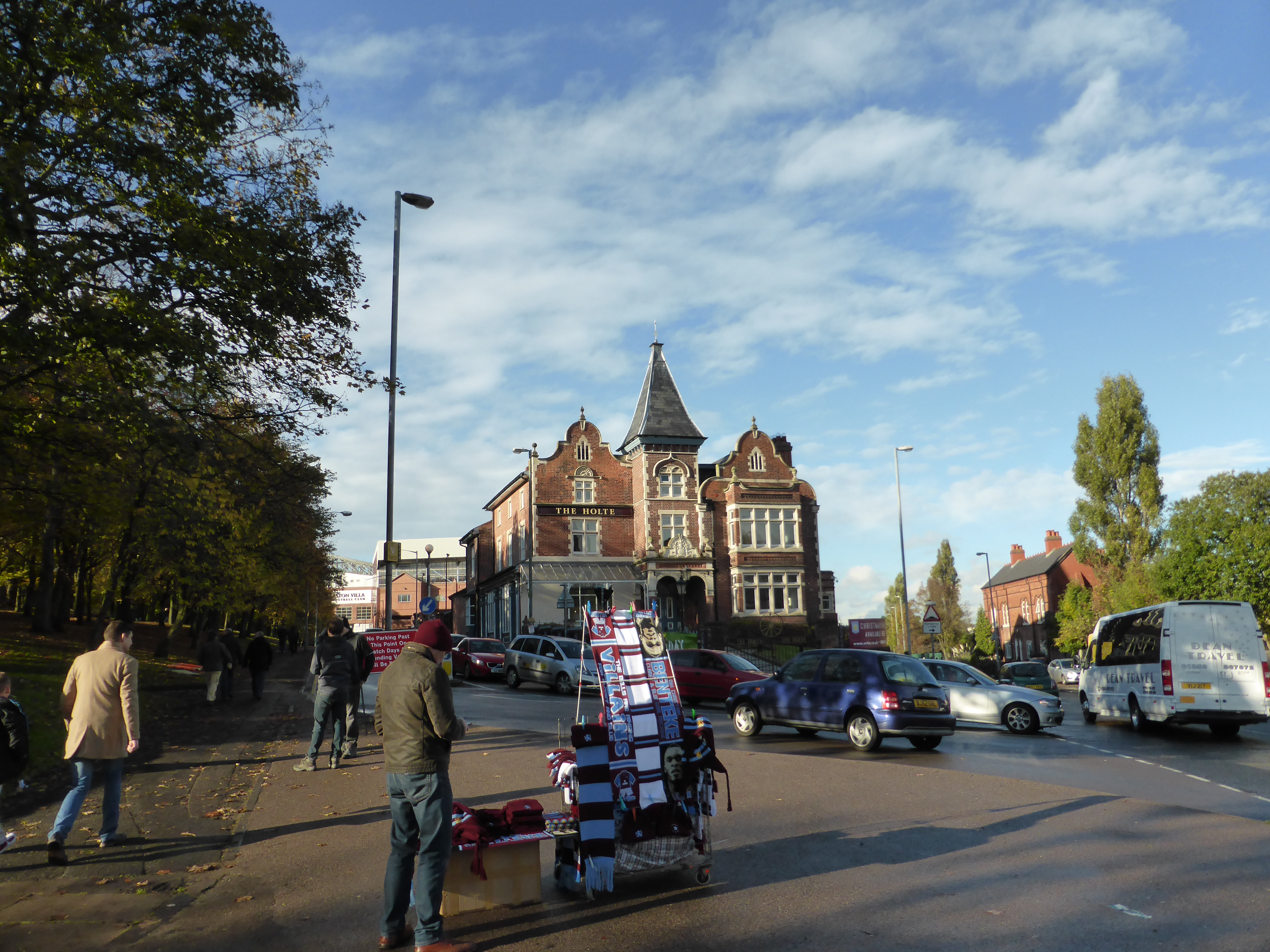
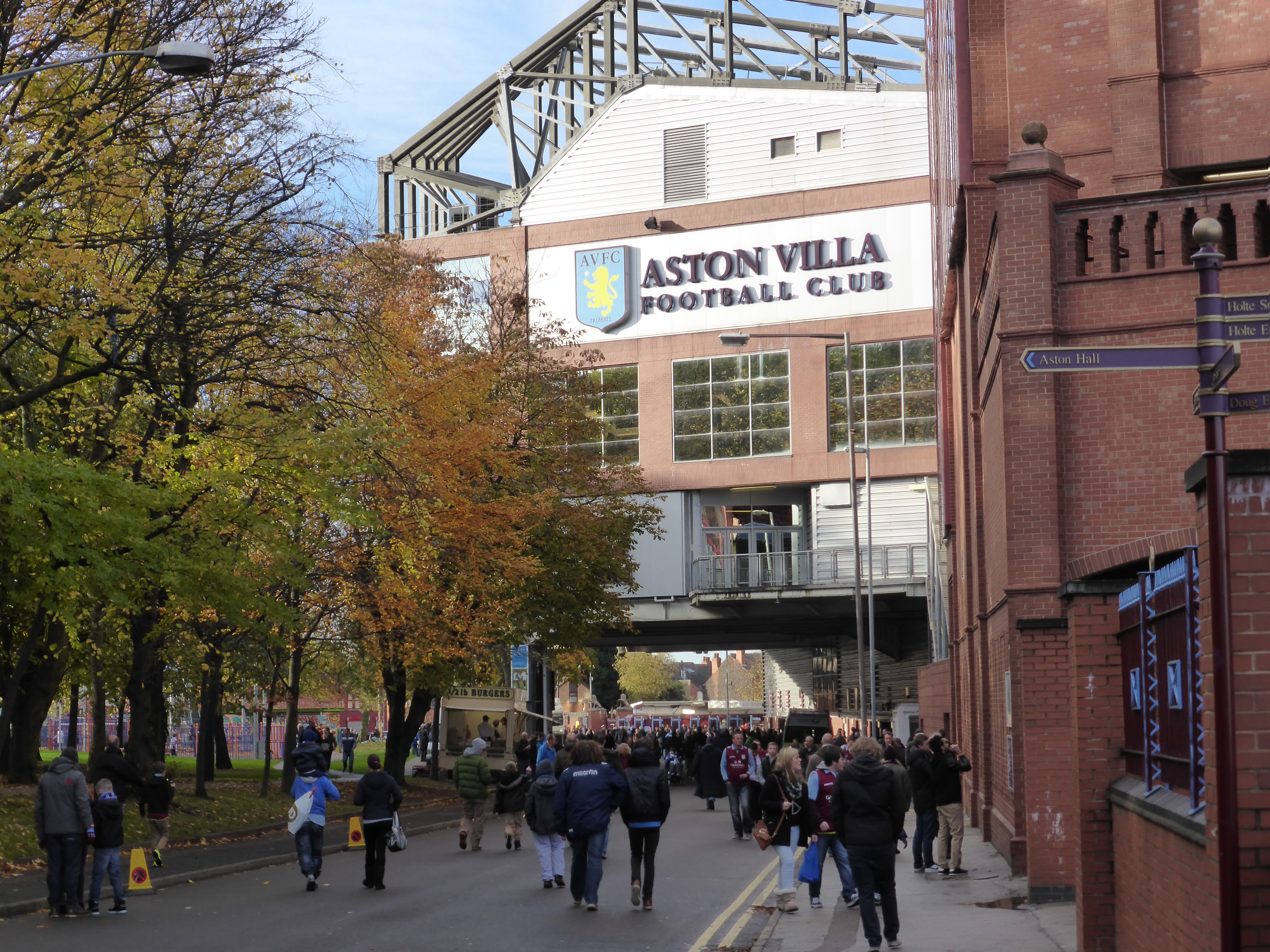
The axis between the hall and the church is cut over by the Witton Lane, which a bit further north is divided into three roads; the Witton Lane, the Trinity Road and the Holte Road. At this junction you find the Holte inn, named after Thomas Holte who built the hall more than 4 centuries ago. Behind the Holte Inn, you can see Villa Park impressively rising, built on the outskirts of a Victorian amusement park.

Image

This combination of noble estate, church, inn and entertainment gardens with an exceptionally distinguished football ground must have been quite elegant, untill first the A38 was built on huge pillars over the Witton Road and then modern brutal stadium architecture replaced the Trinity Road stand of the football ground. You still sense the grandour of the old layout in the new brick-stand of the Holte End from 1994. And the fences with the sandstone lions also give you a feeling of distinguishness.

P1000939_1P1010003P1010012_1

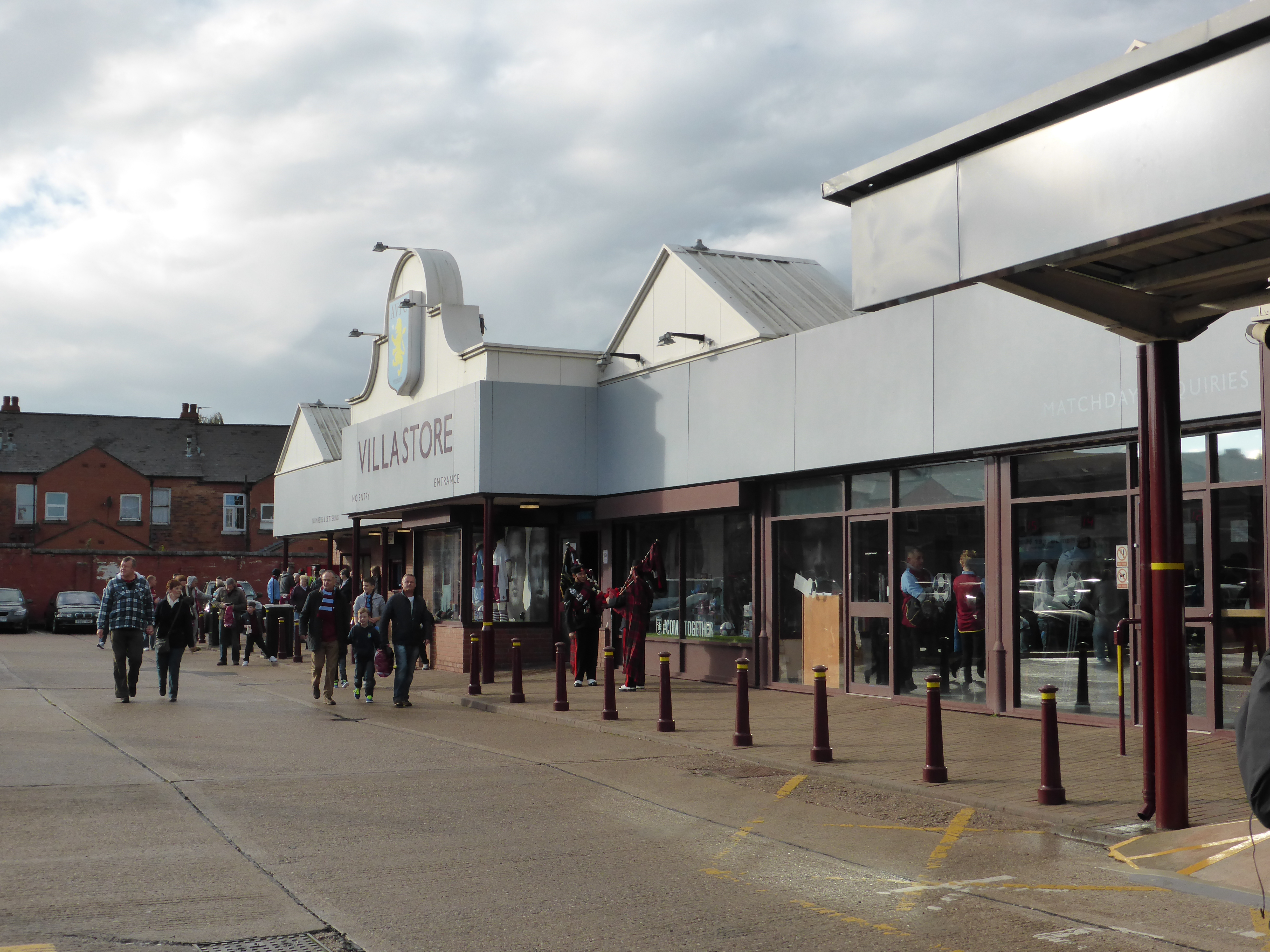
But once you walk past the Holte End, you are either confronted by the ugliness of the new Trinity Road stand to the left, or the ugliness of the Doug Ellis stand and North Stand, if you move to the right. And if you somehow have managed to maintain the illusion of either the gardens of a 17th century estate or Victorian amusement park. the souvenir shop and ticket office building makes sure that you are brutally awakened.

P1000950P1000955P1000958P1010011

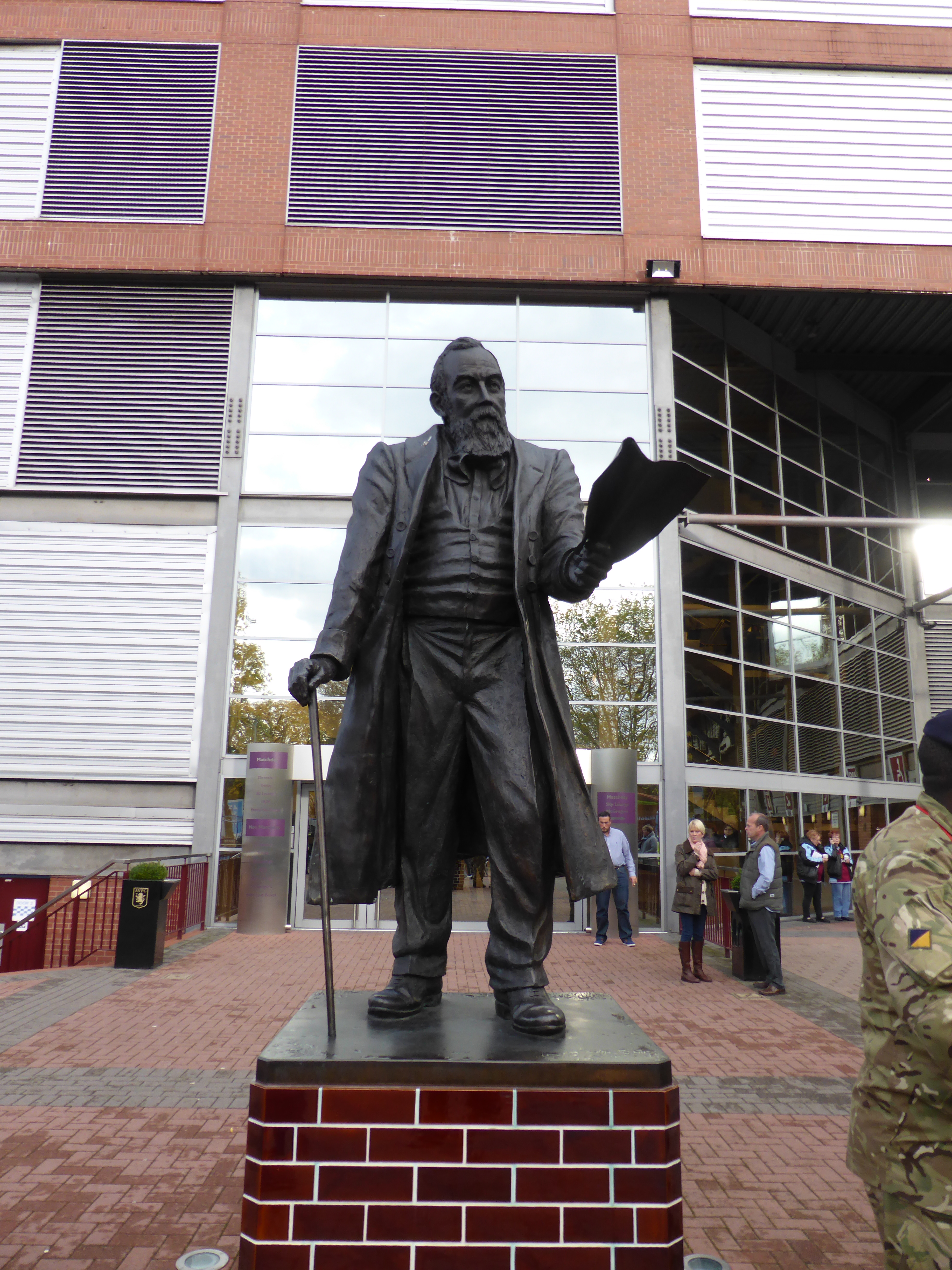
Although Aston Villa apparently have abandoned plans to built a club museum, and have destroyed the remarkable architecture of Arthur Leitch, they still do something to hold on to their great history. Outside the ground, you find a statue of William McGregor, the  Aston Villa chairman who was one of the founding figures of the football league.

P1000966_1 P1000967_1

I am here in Remembrance weekend, so the atmosphere outside the ground is quite good. Representatives of the armed forces are playing bagpipes, displaying their tanks, selling puppies. And the Aston Villa fans are expecting some much needed joy against newly promoted Cardiff after a disappointing start to the season. I get my ticket at the box office for the Holte End – and have a look around the souvenir shop before going looking for some lunch after flying over from Denmark early in the morning. The range of food choice is bitterly disappointing. No pies, no fish ‘n chips, no curries on sale outside the ground. Just extremely flat-looking burgers.

I take a walk up to the Aston Hall, once again around walk around the ground – and decide that the Lions and the Holte End from 1994 still make Villa Park a much better place to visit than the modern grounds like the Reebok in Bolton, the Emirates in London and the Etihad in Manchester – and then I enter the ground at the Holte End, hoping to find some decent pre-match meal.


P1000972 P1000975 P1000985

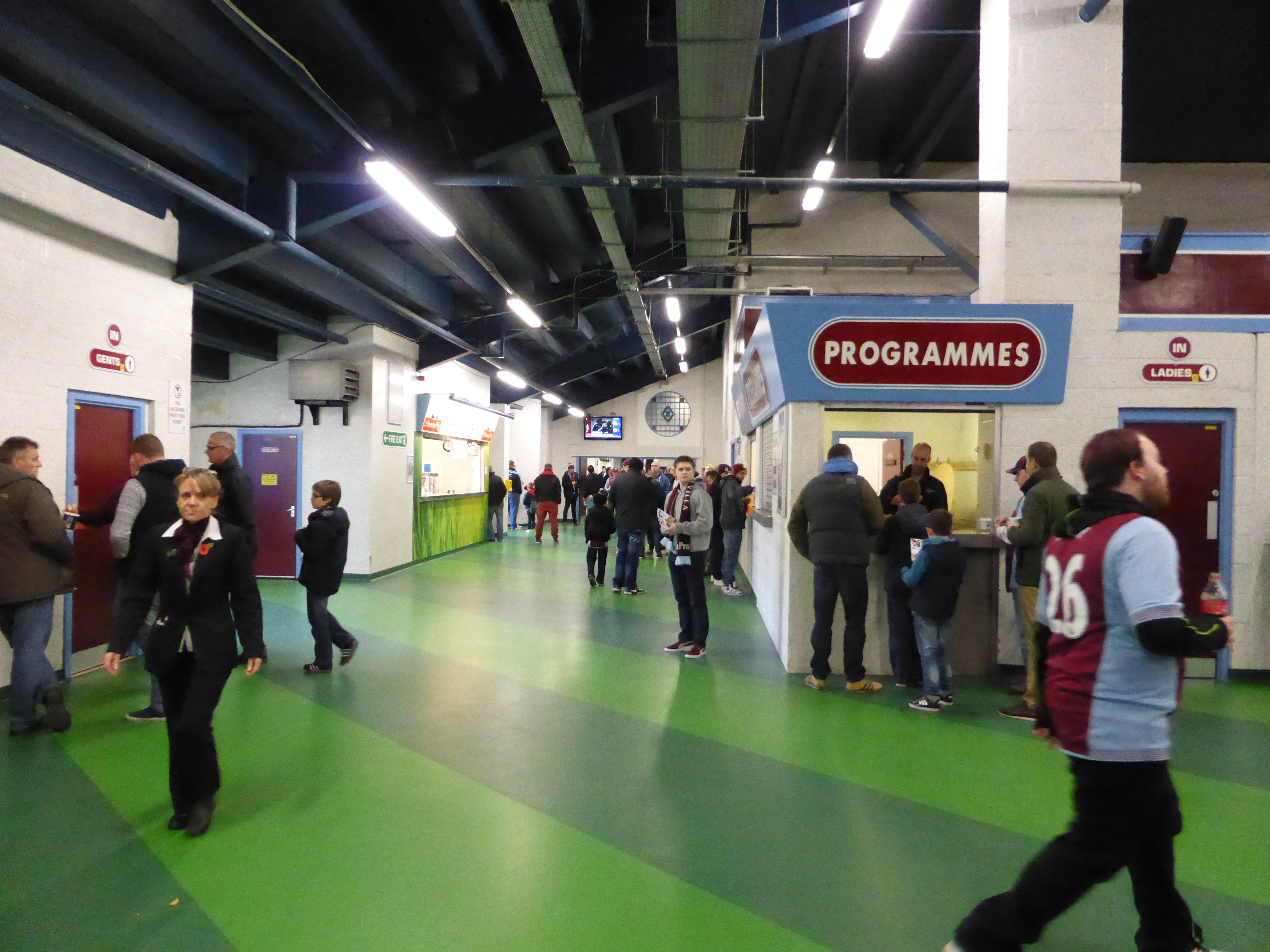
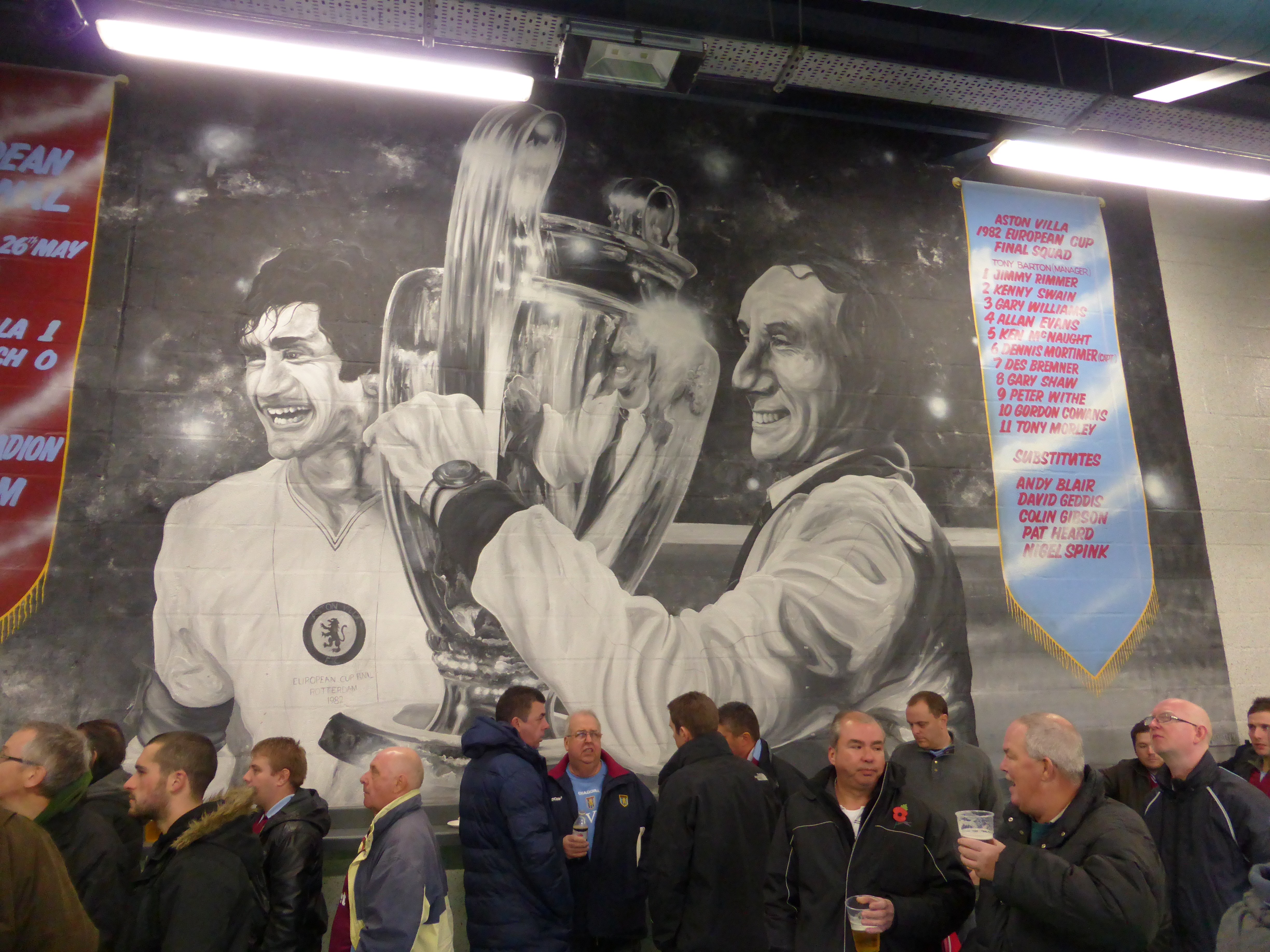
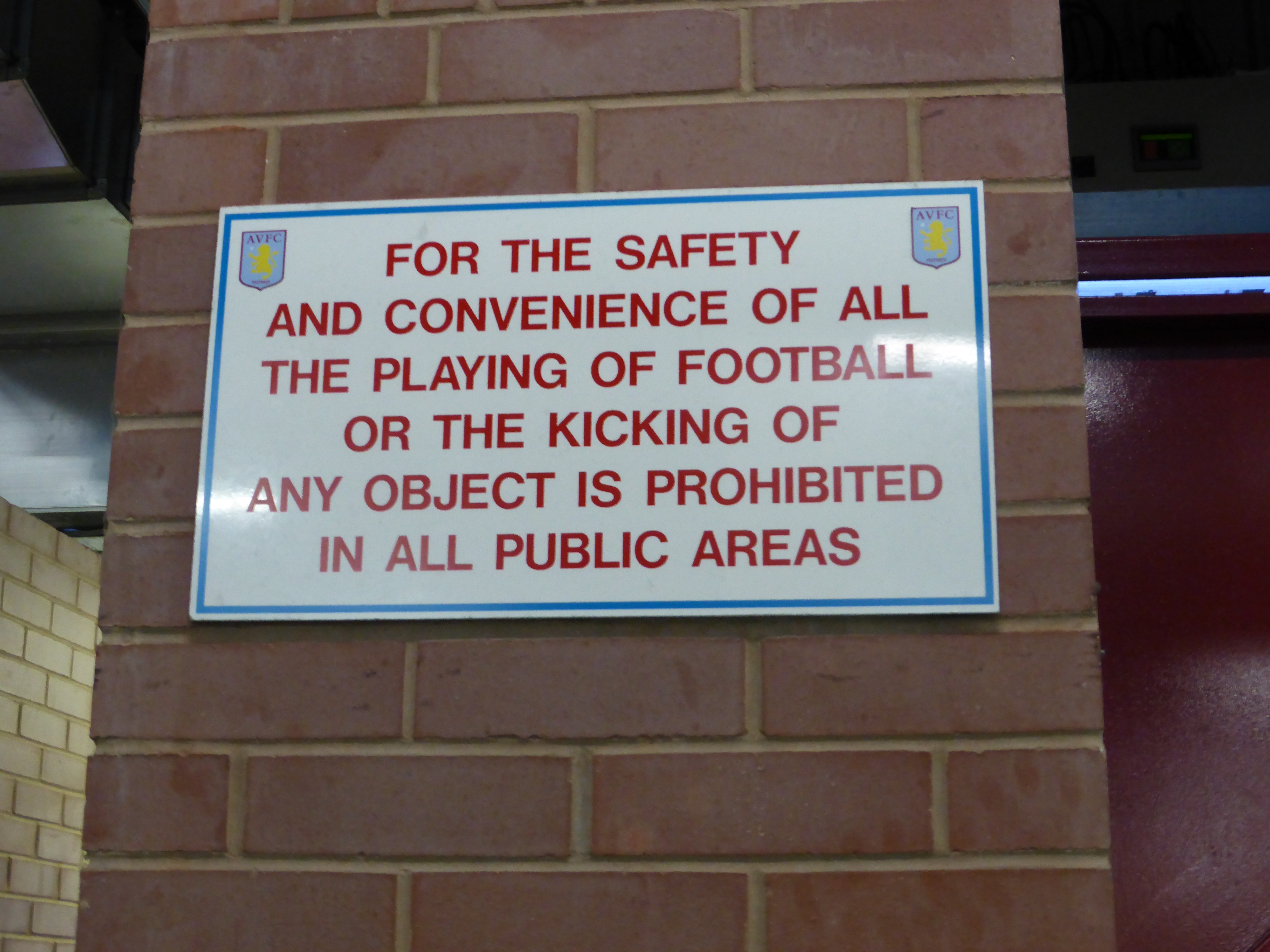
I quite like the concourse inside. Spacious with plenty of catering, reminders of Aston Villas European Cup glory in 1982 – and I really liked the signs prohibiting “all the playing of football” in all public areas. No wonder Villla are struggling at the moment! I get the standard pies that you nowadays find inside most grounds and a pint – and then go to find my seat inside.

P1010015 P1010024_1 P1010028

A couple of months before, I had heard a presentation on Aston Villa and their supporters at a conference at the National Football Stadium. Apparently, all the “old” Villa supporters have moved away from Aston, and the area is now dominated by ethnic minorities that do not identify with the club. To remedy this, the club had made trials of special sections of the ground as non-alcoholic and non-pork-meat areas, to make the “new locals” feel at home. According to the presentation, some people had attended – but a lot of “old” fans had been enraged of this attack on the central ingredients in their match day experience – the pint and the pie. At the Holte end, the crowd is almost exclusively white, whereas the staff is ethnically very mixed.

Villa Park consists of separate stands – so you don’t get the bowl feeling of the modern stadiums. Or like White Hart Lane or Upton Park, where there is hardly any open spaces in the corners. Still, it is not like Stoke’s Britannia, where you the corners are huge spaces, giving you a view of the town miles away and a very cold, blustery wind. Or maybe I am just lucky that – although it is cold – the winds are not that heavy. Still, it has more character than the  modern bowls, although I can’t help wondering what it was like 20 years ago.


P1010045_1 P1010072_1P1010077_1P1010070

I am seated in the Holte End, where the hardcore Villa fans are supposed to be located. I have seen Aston Villa a couple of times at Old Trafford, and have liked their distinct “yipi-ay-ey, yipi-ay-ou” song, and look forward to experiencing it at close hand. Maybe it is because I have van Gogh’s ear for music, but I had never been able to figure out the original tune, untill “Ghost riders in the sky” is played on the PA (to my defence, I made it a quiz question in my own football club, Dynamo Birkerød, the following weekend, and although we have a few professional musicians, they couldn’t figure it out either).

For the opening 5 minutes the Villa fans are in pretty good voice, but as their team fails to deliver, they grow quiet and frustrated, and you hear more and more of the Welsh contingent down the other end. To my surprise, Cardiff look the better team in the first half – and there is absolutely nothing for a Villa fan to cheer. In fact, it is during the half-time interval, you get the first proper cheer of the afternoon. A Villa fan further up the Holte End gets the PA and screens in the corners of the ground to publish his proposal to his girl-friend. The cameras zoom in on them – she says a “yes”, but then covers her head for the cameras to the first real cheers of the afternoon.

P1010074_1 P1010076_1P1010082

Although the match is a bit flat, and the Villa fans a bit disgruntled, I quite enjoy myself. The Villa fans around me know each other well, exchange frustrations – and a big skinhead guy in particular doesn’t conseal the torment he is going through. That is till Villa get a free kick about 15 minutes from full time. As the ball is teed up just in front of me – I get this inevitable feeling that is bound to be a goal. And it is! The skin head guy goes absolutely mental next to me.

P1010087_1 P1010088P1010092 P1010091

And who can blame him. Villa had only scored in one of their previous four home fixtures (in a 3-2 win against Man. City of all teams). And within a couple of minutes they repeat the feat. Two-nill. I hadn’t really seen that coming. But it lifts the atmosphere emensely.

P1010095_1 P1010101_1 P1010102_1 P1010105

So when I leave the ground in the dark November evening, the mood all around me is fantastic. And I get carried away as well. Untill I find out that more than half of the trains leaving Aston station have been cancelled due to lack of staff. A sobering experience to wait there – and miss my connection up to Manchester.

P1010107

Despite the flaws – mainly the knowledge that the modern anonymous Trinity Road stand was build on the ruins of an Archibald Leitch masterpiece – definetely a great experience. The area with the church, the Aston Hall, the Holte Inn, and the references in the architecture of the ground to the glorious past, still gives it a special feeling. And although the “yipi-ay-ei, yipi-ay-ou, Holte enders in the Sky!” song wasn’t song that much, the atmosphere was ok, considering the rather poor performance on the pitch. So all in all, Villa Park, definetely worth visiting.

Posted in Uncategorized

The new Liverpool FC museum

When I visited the Liverpool FC museum back in February 2013, I really liked it. Perhaps too much text, perhaps a little worn-down, perhaps the layout a bit dated. But there was plenty of passion, and there were thick descriptions of Liverpool FC in different decades.

As a Manchester United supporter, it was hard to get through the seventies and eighties without ever even being close to winning the league – and at the same time to see Liverpool win it over and over again. Somehow the exhibition revived my boyhood memories of Liverpool as something special.

Liverpool

I was so fortunate to meet Liverpool curator Stephen Done after my visit in February, and we seemed to be on the same wavelength as to what was fascinating about football museums. So my expectations were quite high, when Stephen not only told me that the Liverpool museum would be relaunched in October 2013, but also send me an invitation to the opening with Brendan Rodgers (Unfortunately, I coudn’t fit in an Engand visit at the time, but managed to make it a few weeks later).

P1010457 P1010458

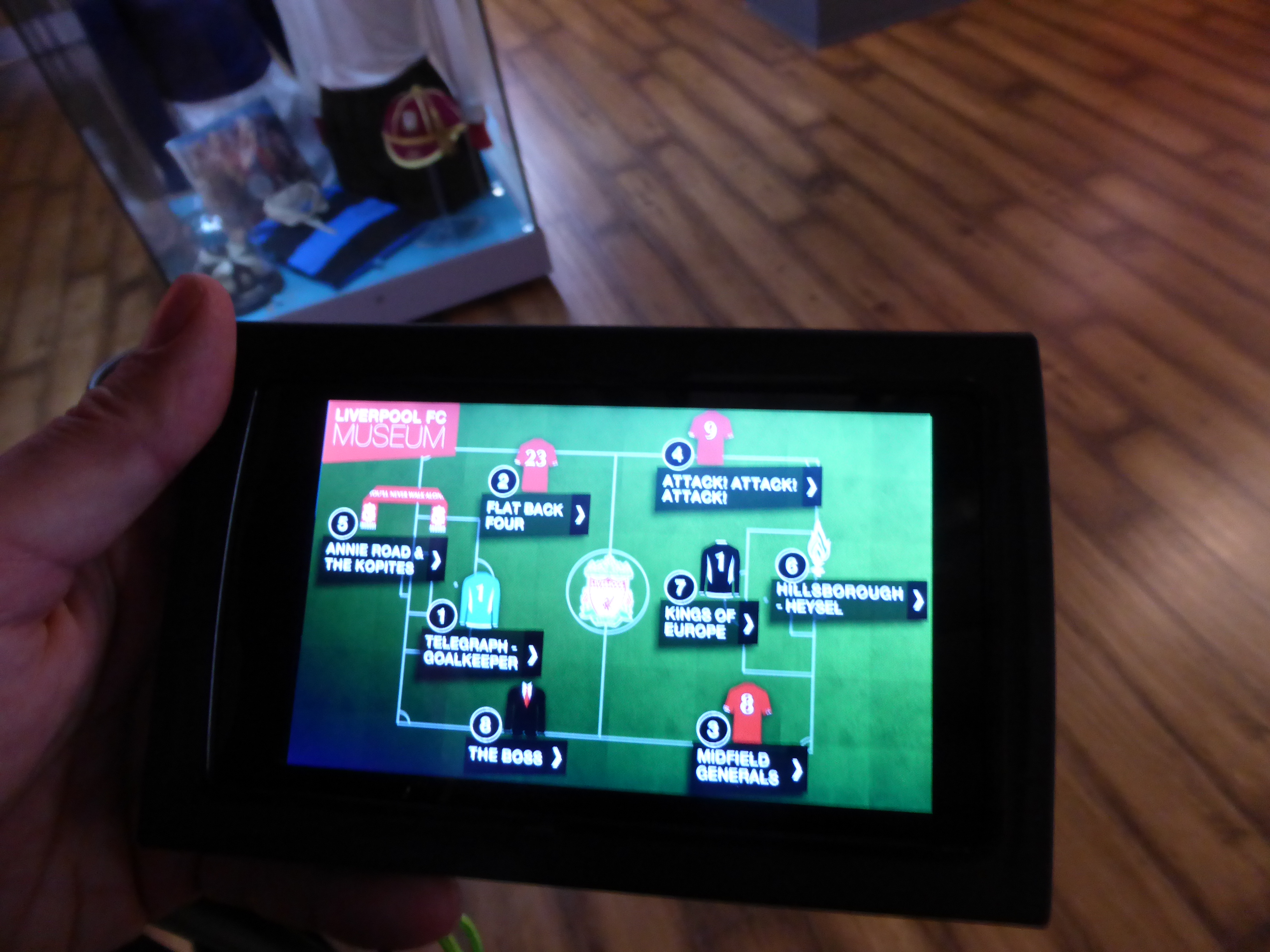
Alas, the new Liverpool museum doesn’t live up to those expectations. The graphics and layout has been modernised, there is a new digital guide, where you can get little stories and comments from Liverpool legend Phil Thompson. But more importantly, the entire structure of the exhibition has been changed.

P1010354P1010378

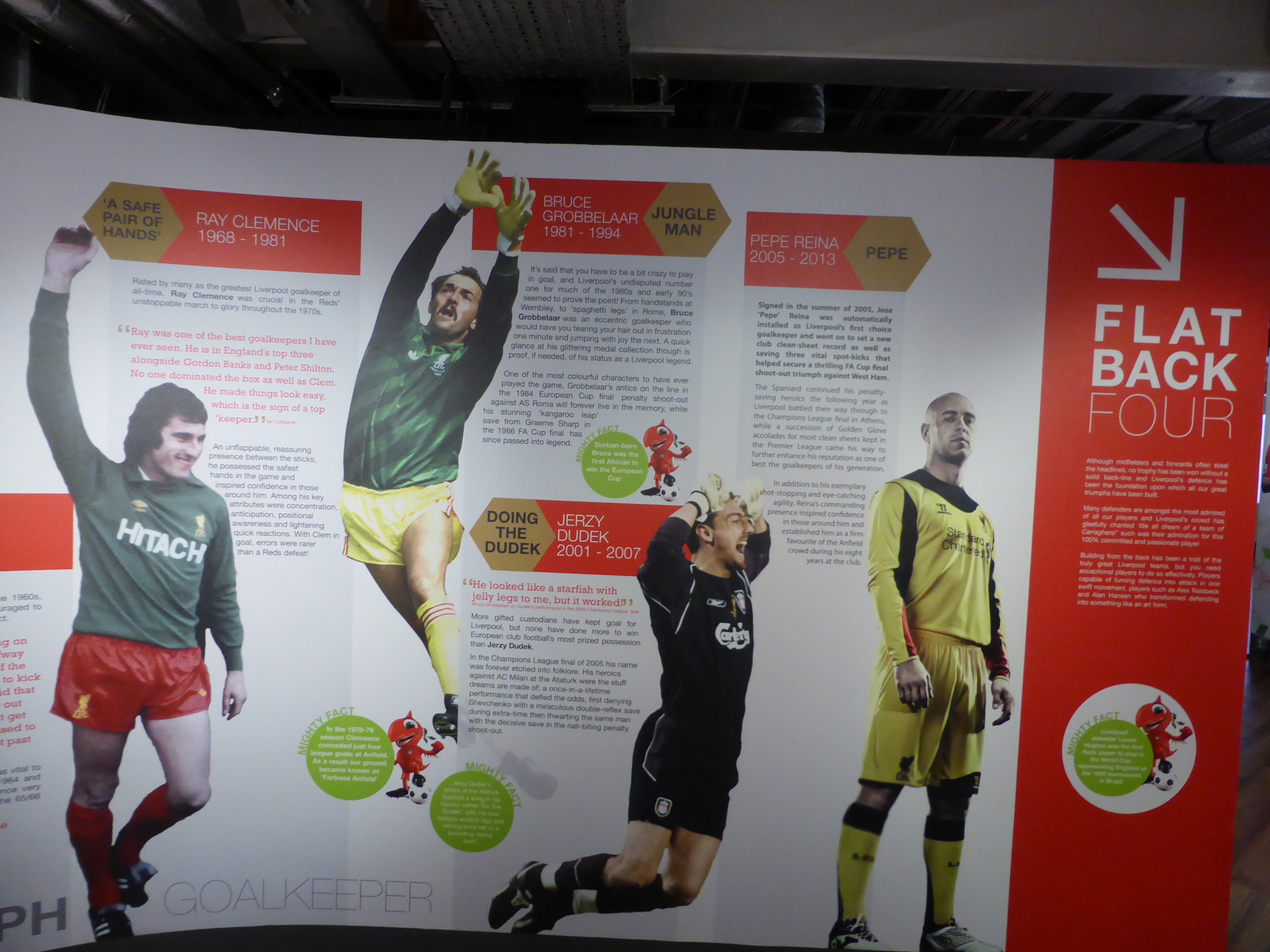
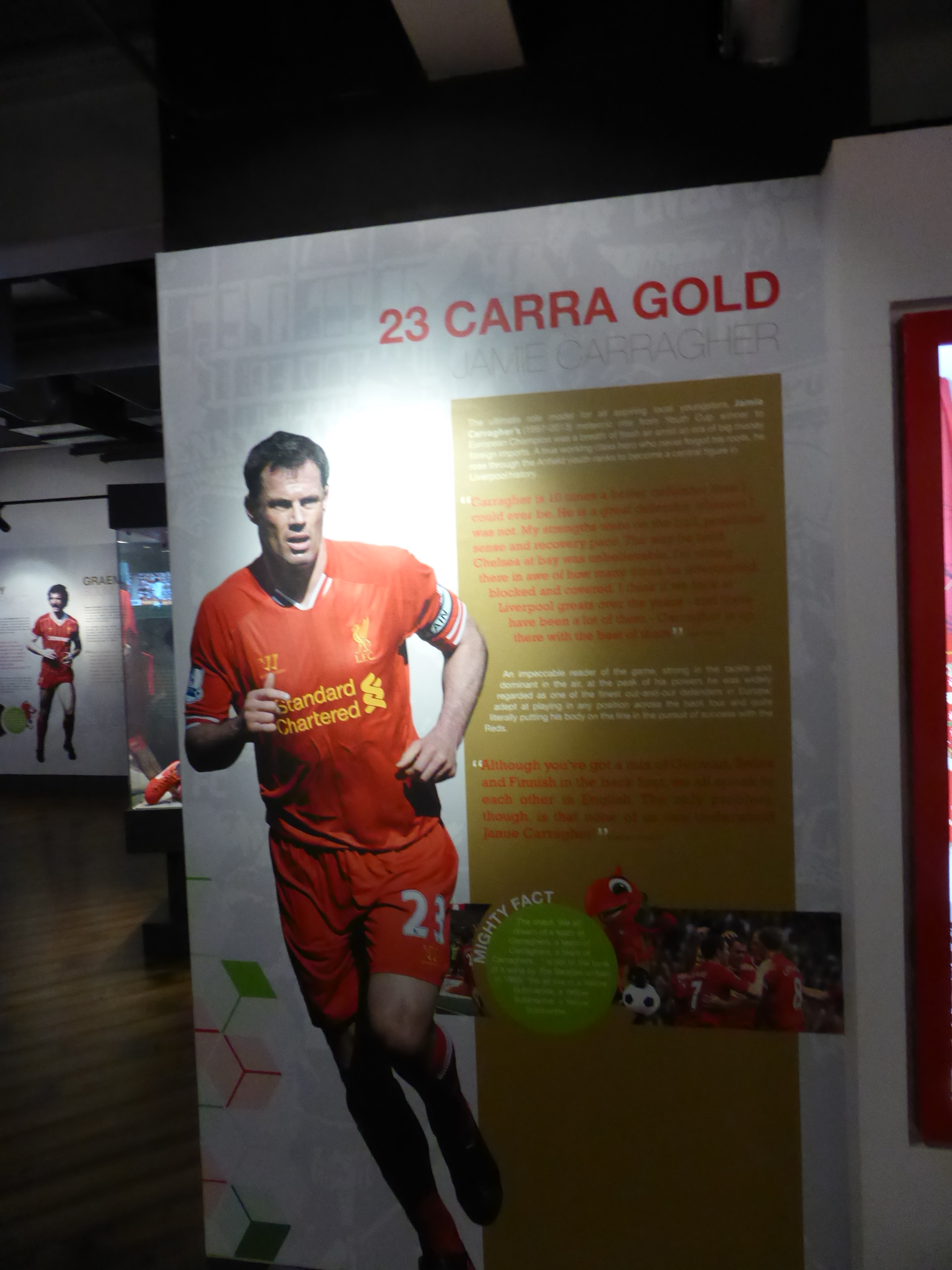
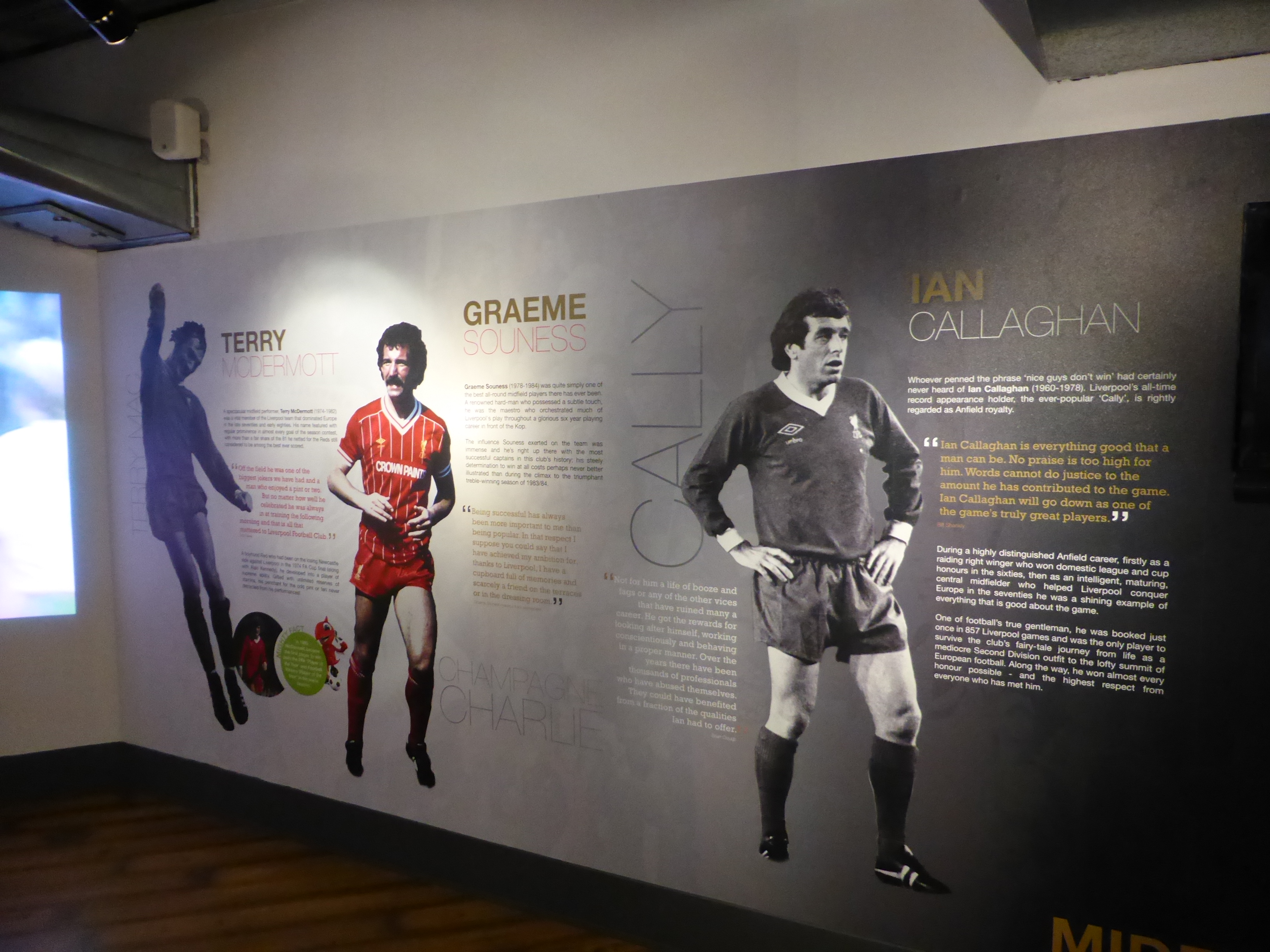
From being primarily a chronological exhibition, with very long descriptions of football at the start of the 20th century, in the 1950’s and the 1970’s, the museum is now predominantly a ‘hall of fame’. After the first few displays on the story of Liverpool FC being founded to replace Everton, who had moved from Anfield, most of the space in the museum is taken up by huge photostats on great goalkeepers, great defenders, midfielders and strikers, followed by the managers and triumphs in Europe.

x P1010377P1010386 P1010390 P1010391 P1010396

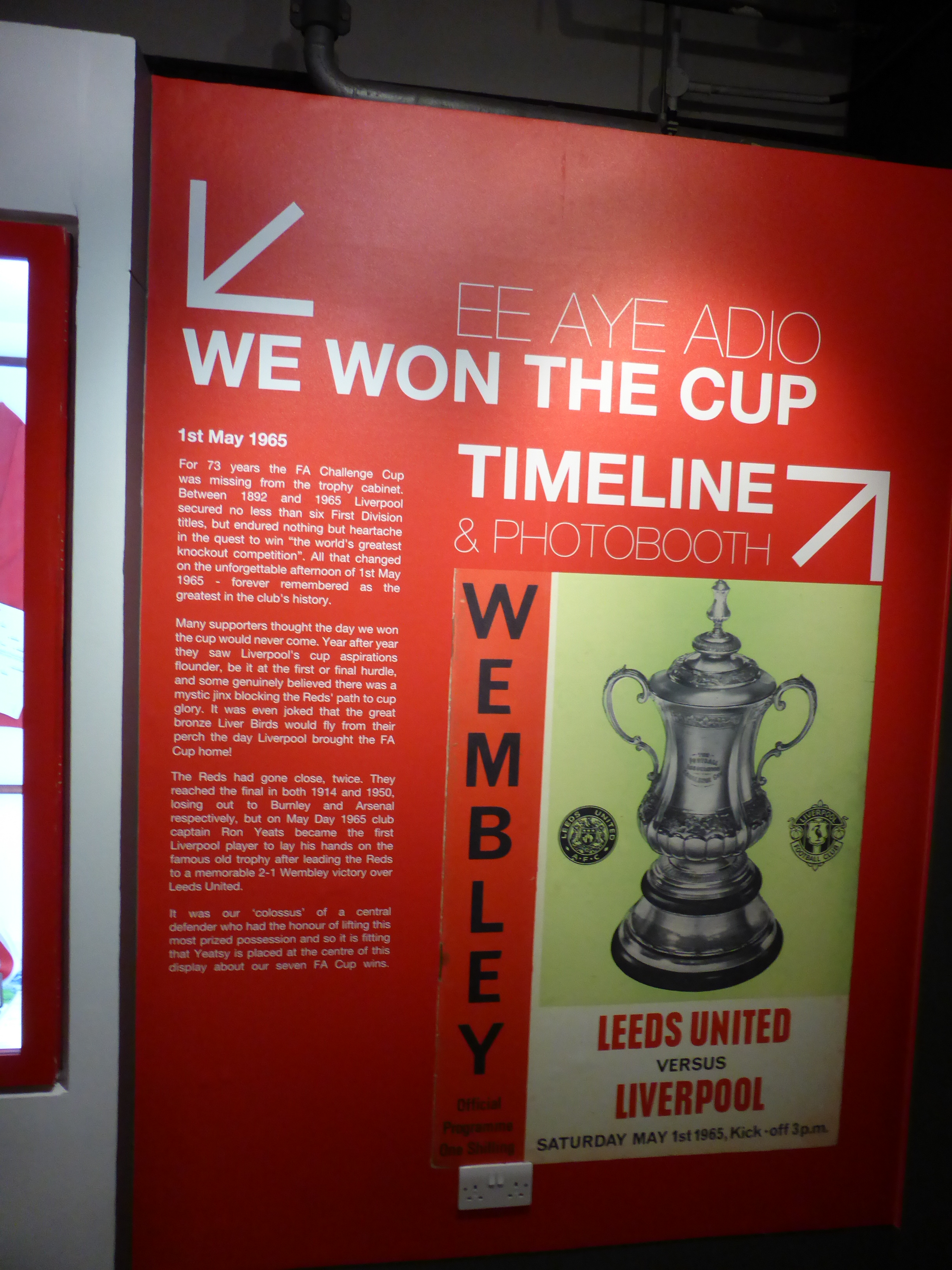
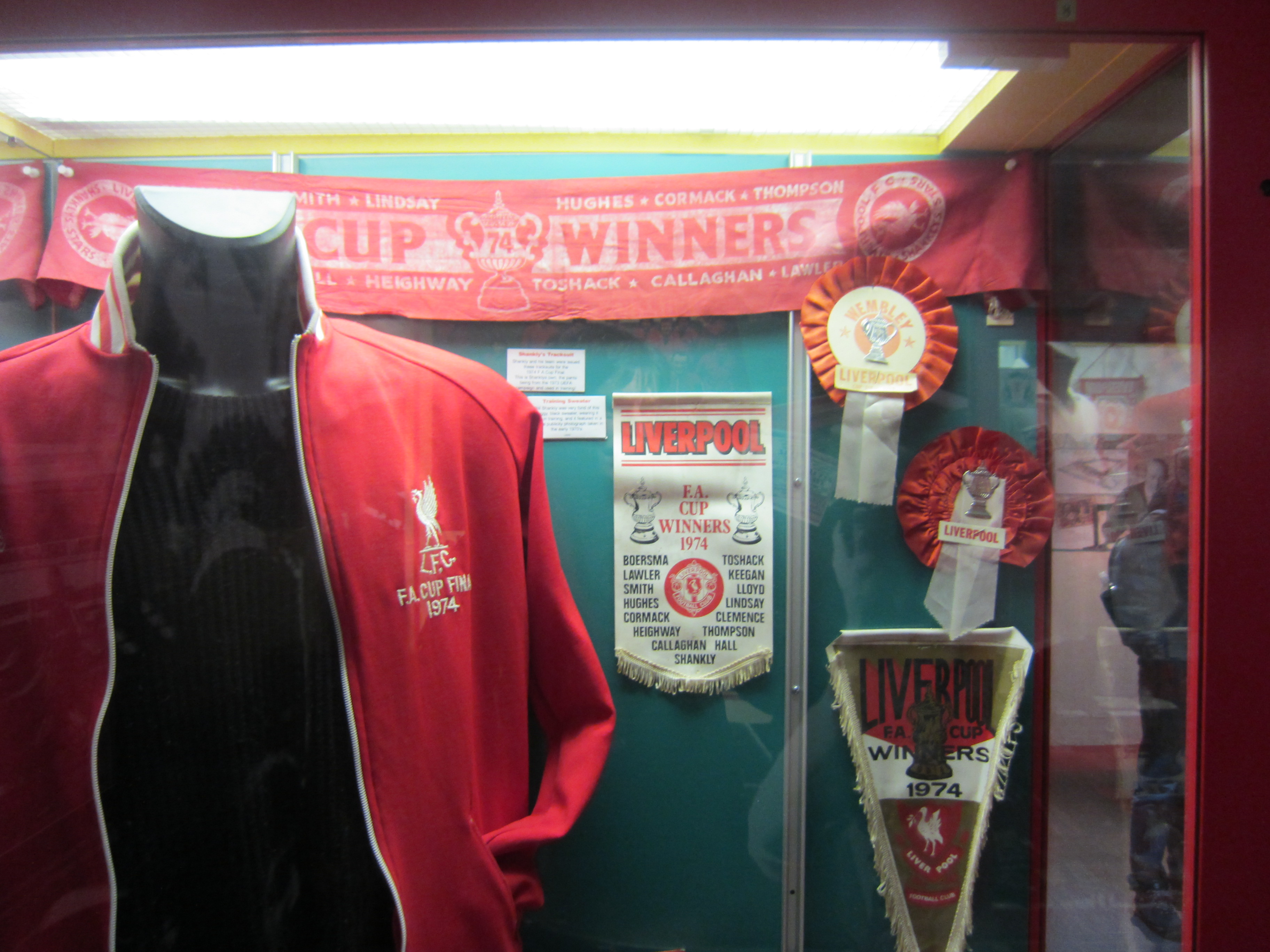
There are a few detours to the fans and the ground – and there is a timeline listing the triumphs. Defeats are hardly mentioned in this, almost exclusively wins. Relegations in 1895 and 1904 do not feature, neither does the match fixing scandal in 1914. Whereas the old exhibition featured the 1950 FA Cup final defeat to Arsenal with an entire showcase and elaborately detailed description, it is now barely mentioned in the FA cup section of the new exhibition. The objects on display in the FA Cup section are only from wins.

P1010359P1010374

Moreover, in focusing on heroes and trophies, the new Liverpool museum becomes very ahistorical. Players are only interesting because of their number of games, goals, medals – and particular style of play. They are not seen in their historical context, let alone used to shed light on this.

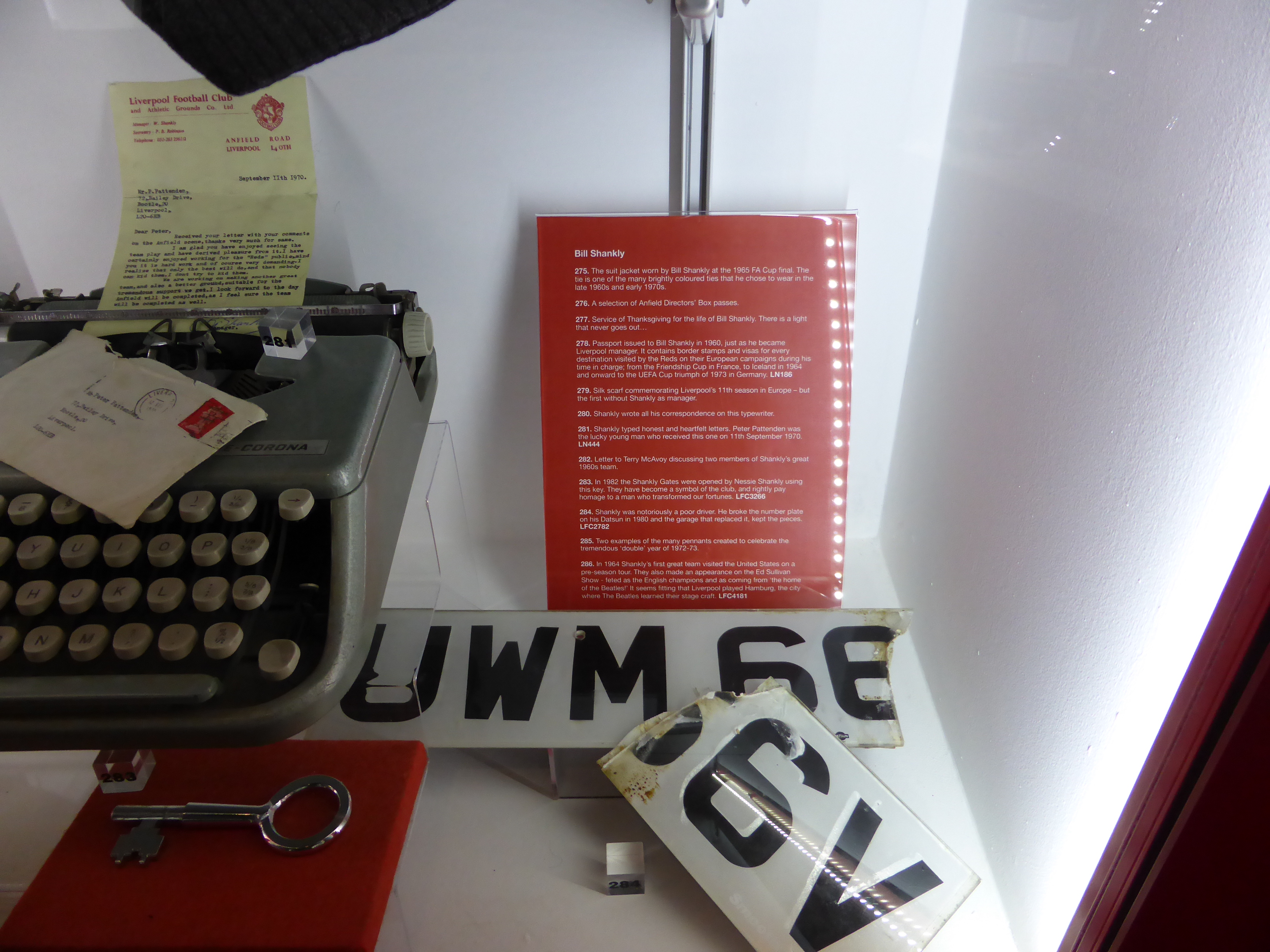
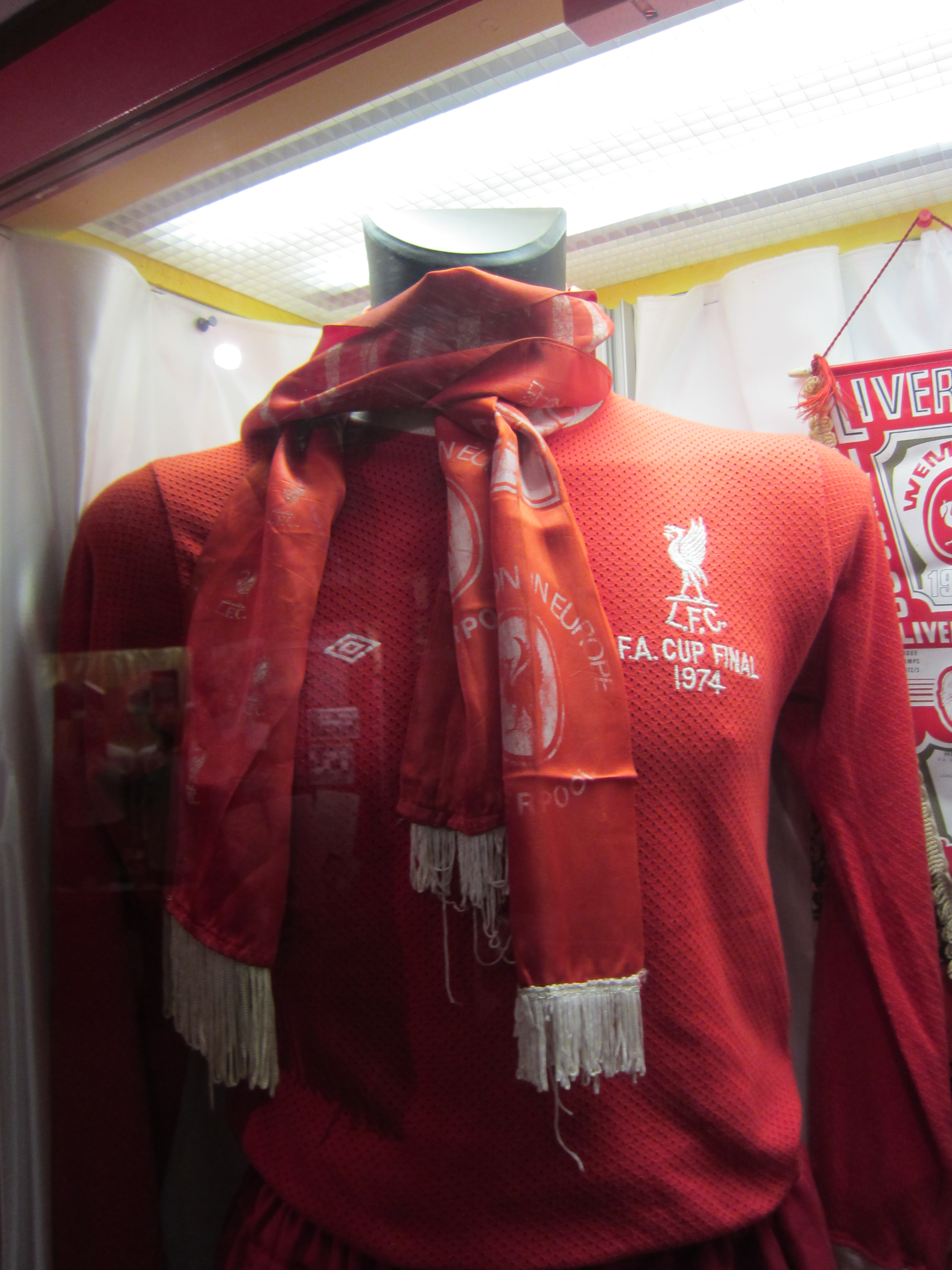
The Liverpool museum possesses several objects from the early days of the club. The “birth certificate”, a tender for building the first stand, a director’s walking stick with the Liverbird from 1892, a turnstile, crush barrier and a brick from the old Kop, a WWI rattle found under the Anfield Road stand with the inscription “You Will Hear Us Every Saturday”, old scarves and banners, Bill Shankly’s typewriter, one of his broken number plates (proving that he was a notoriously bad driver), and a selection from Bob Paisley’s travelling medical kit.

P1010345P1010496P1010408

But the objects are not really used to tell about how Liverpool has developed nor to relate to wider societal developments. Instead the museum tries to distillate a timeless essence of the club.

P1010403P1010350

“A football club is nothing without its supporters and, as it’s been proved on countless occasions in the past, Liverpool FC can genuinely claim to have the best in the business! Since our formation in 1892 you have been the heartbeat of this club, standing by the team through thick and thin, in triumph and tragedy, at home and away. Universally known as the ‘12th man’, there’s an endless supply of stories about how the Liverpool crowd have come to the team’s rescue down the years, roaring the Reds on to victory when defeat seemed inevitable. Famed for their ingenious banners that have set the benchmark for wit and humour, such fanatical backing has often been described as akin to a one-goal lead. Whether from Kirkdale or Kuala Lumpar, you are a special breed and together have ensured that the directors, managers, coaching staff and players of this club have never walked alone.”

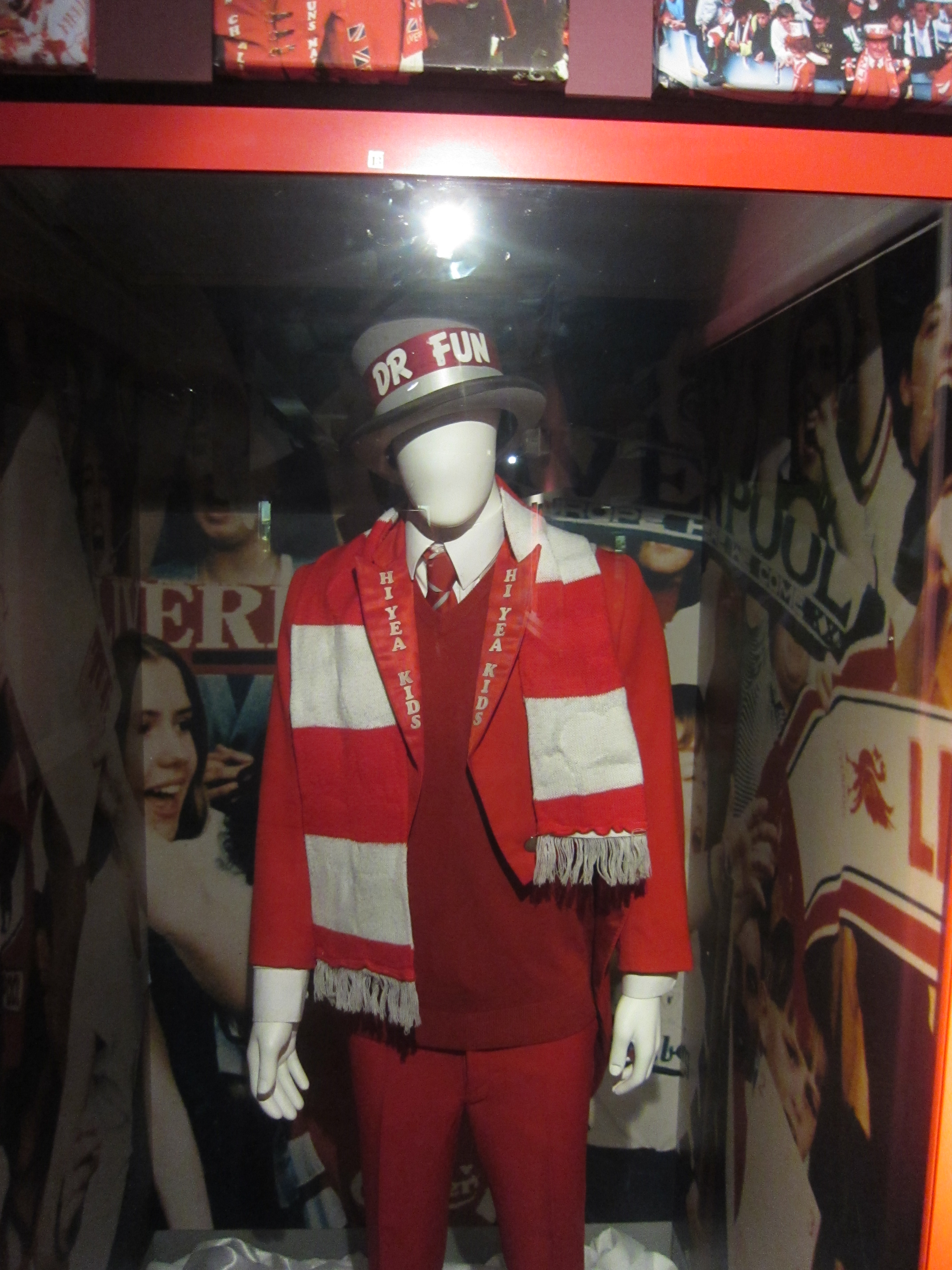
Just like in the “old” museum, the text is still long, but instead of giving a ‘thick’ historical description, it delivers a universal branding appraisal. Why not tell the story of the development of terrace songs in the sixties? Or the “ingenious banners”? Or about how the crowd has changed as the supporters of Kuala Lumpar take up more and more seats, leaving the local kids outside the ground? In the old exhibition, showcases about the different decades contained fans’ scarves, banners, rosettes, rattles etc. to show how the consumption of football has developed together with the game – and the rest of society.

P1010360P1010363

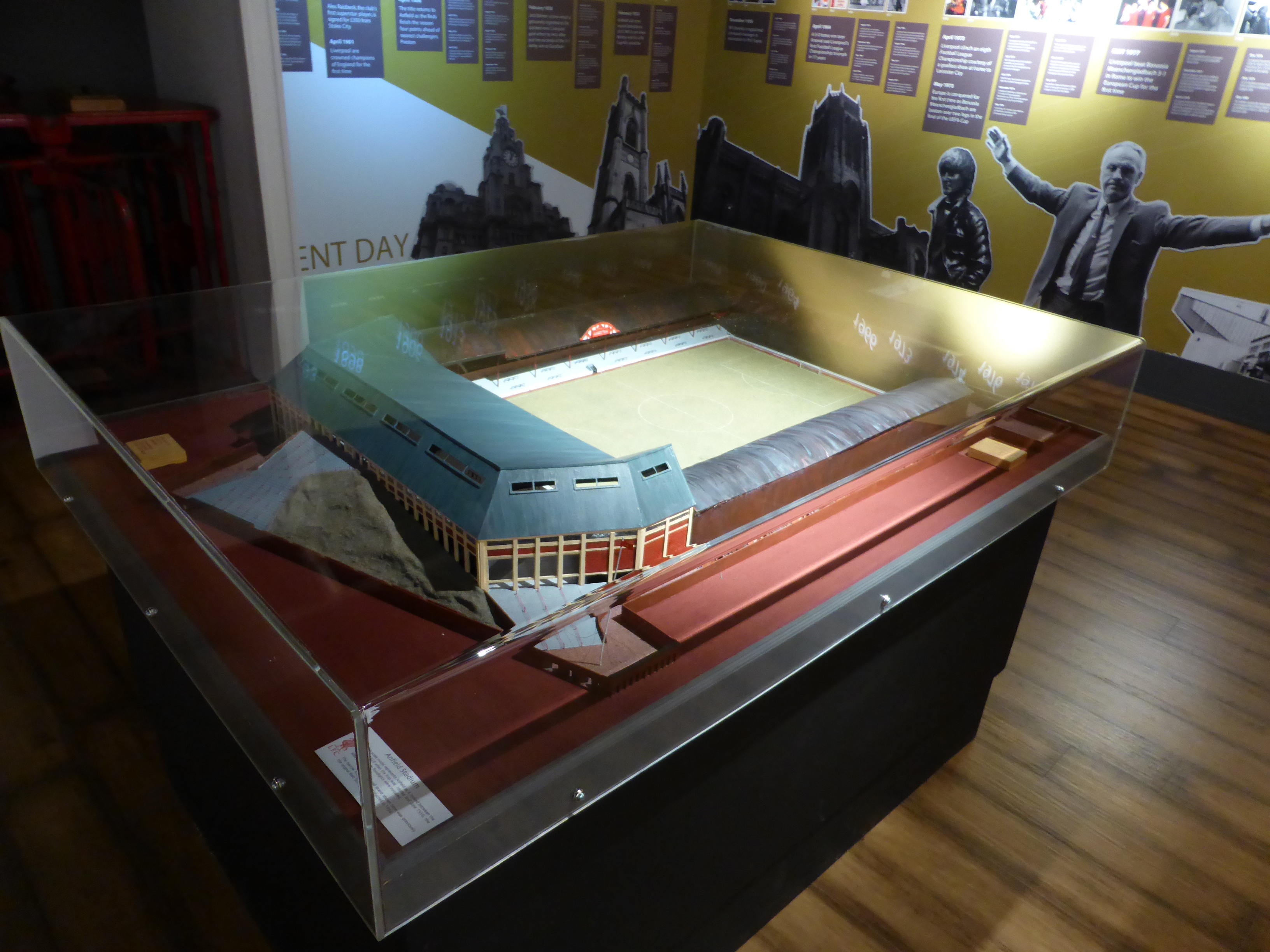
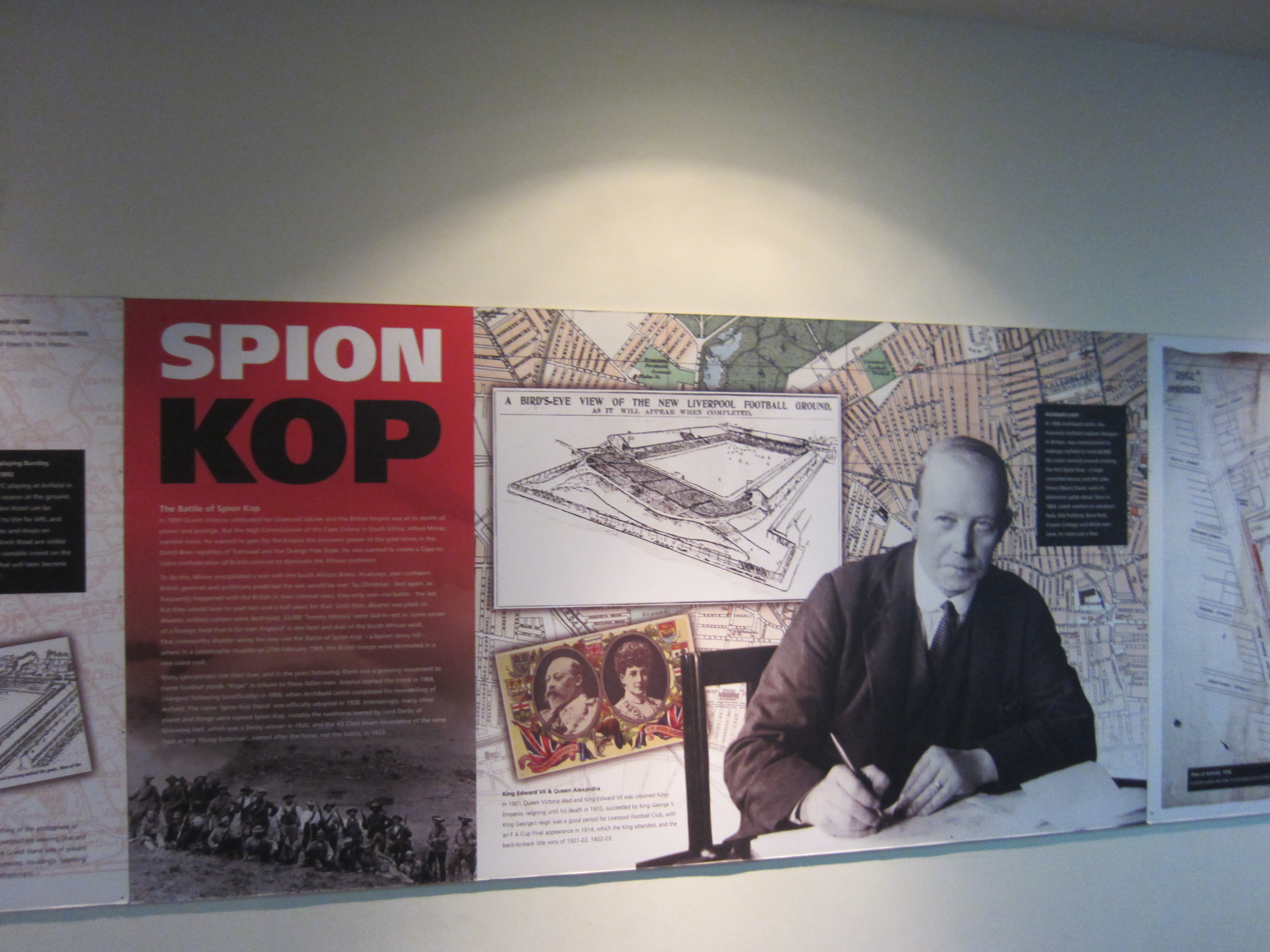
Another example is the way the impressive model of Anfield Road 1928-56 is presented. Previously a fantastic series of photos of the ground and the surroundings through the decades were displayed on huge photostats on the walls of the room. For instance, there was a photo from 1893 showing the street life with children playing in the streets – a photo taken to prove that children were being used to fetch beer for their “drunken” parents! The series went on with the stadium plans of Archibald Leach, the story of the Spion kop, the rebuilding in the swinging sixties on to the modern all-seater stadium. In the new museum, this has been replaced by a timeline telling about Liverpool’s wins. There is, admittedly, a new timeline about the stadium in a passage from the section on the Liverpool fans. But this is more a matter-of-fact line about replacement of old stands than a passionate description of what going to Anfield was like in different decades.

P1010425

It is not that the Liverpool museum shy away from controversy. There is a very moving section marking the Hillsborough and the Heysel tragedies as two equally tragic events – in contrast with the National Museum of Liverpool that only focus on the Hillsborough tragedy.

P1010428 P1010432 P1010434

But overall, the dominant focus on star players’ achievements and trophies without connection to the historical context has changed the place from being a museum of interest for football fans to a hall of fame for Liverpool supporters. And perhaps a branding platform for casual touist visitors who will the impression that you are guaranteed success as a Liverpool supporter.

To me, as a historian and museum professional – as well as a football fan  – that is a disappointing direction for one of the best football museums to take.

Posted in Football museum, Football museums, Uncategorized

The National Scottish Football Museum

I remember my late father telling about Hampden Park. He had been to see Denmark lose 3-1 to Scotland in front of a mere 75.000 in 1952. But the imposing terraces of Hampden left a lasting impression on him. Perhaps that is why I have always been fascinated by pictures of the enormous and ominous, sloping terraces of the old Hampden Park.

So I was almost shivering with anticipation when I got off the train to visit Hampden and the National Scottish Football Museum in November last year. Normally, it is quite easy to find your way to a ground from the station. The stands usually tower above the neighbouring  buildings – but not in the case of the new Hampden Park. (Well, maybe it wasn’t that different with the old one, as the ground is hidden in a “hole” behind the local housing. But at least you had the high floodlight columns to look for in those days).

IMG_9828

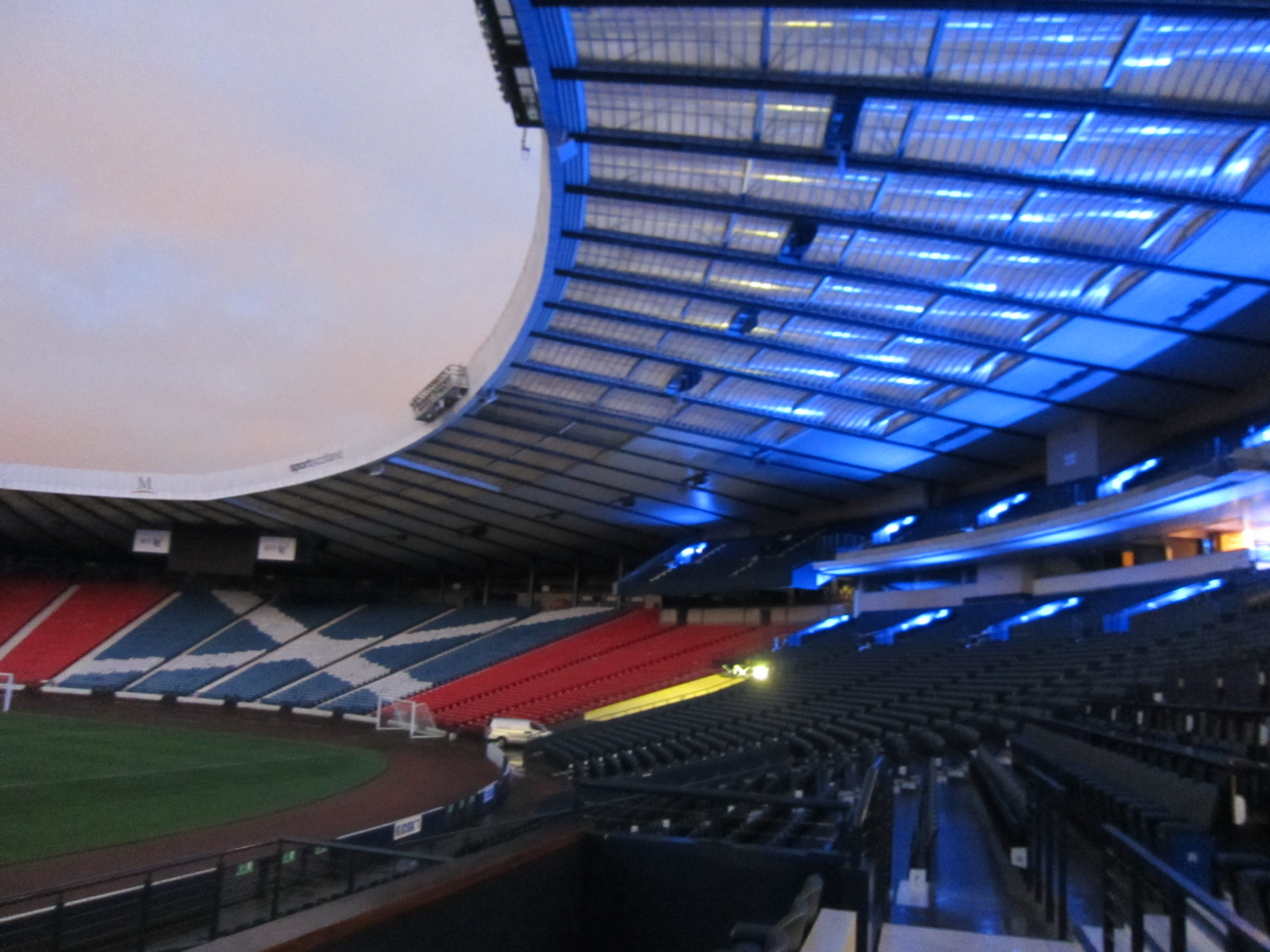
Although the new Hampden has imitated the two towers of the old one, it didn’t quite live up to my – admittedly very high – expectations. It didn’t seem fearsome or awesome. Not so much different from other modern football stadiums. And in fact, inside the ground, it almost seems “nice”. Of course, I wasn’t there on a match day. Later in the evening, I went to Celtic Park, where Celtic was playing Barcelona – and there I found some of the fearsomeness, I missed at Hampden. Perhaps it was the crowd that made the difference.

IMG_0077IMG_9833

The football museum inside the stadium is owned and run by the Scottish Football Association. The museum is a source of pride to the SFA, a place to show visitors the proud and impressive tradition of Scottish football. And the evidence for this is almost overwhelming.


The exhibition is devided in chronological sections:

  • 1867-1902 when football developed from a hobby of gentlemen to the most popular team sport
  • 1903-45 – when football became a passion
  • 1945-66 – the golden age of Scottish football
  • 1967-79 –new pressures with international competitions, economic challenges, nationalism and hooliganism
  • 1980-now – the modern game with a changing image

The chronological display is followed by small thematic sections on Scots abroad and in England, football games, memory lane (a huge selection of photographer Charlie McBain’s 3.000 photos),and  juniors – sections that go across the chronological divisions. Finally the exhibition is rounded off by the SFA’s Hall of Fame.

Each of the chronological sections carries a wealth of stories. There is no fixed pattern, but generally the sections cover the way the game was played (rules and equipment), the fortunes of the national side, the developing domestic club rivalries (and the league structure), the consumption and the economics of the game, along with descriptions of dramatic events such as the Ibrox stadium disaster in 1902, the Hampden Riot 1909, the Ibrox disaster 1971, trouble in Barcelona 1972 etc.

The sections are very thorough in their presentations and try to put events and trends in historical perspective. For instance, in the first section the Irish Catholic origins of several clubs are described and the battle over professionalism, and in the second section, the role of football during WWI and the depression are described.

IMG_9845IMG_9855IMG_9874

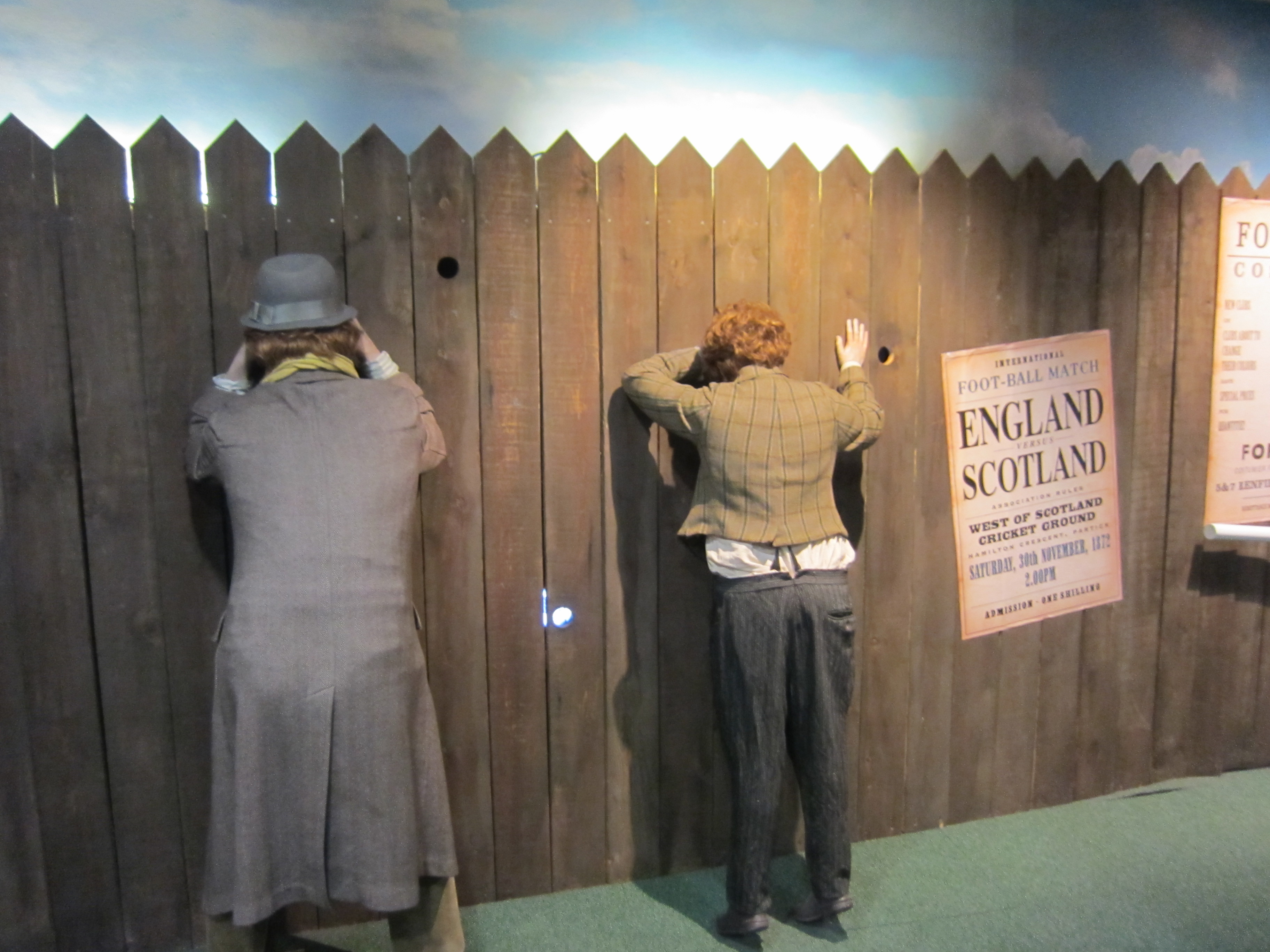
It is very much the script – the written story – that dictates the rhythm of the exhibition. Objects, graphics, and dioramas serve to illustrate it. In the first section, figures clad in 19th century clothes peep through a hole in a wooden fence to follow an international between Scotland and England – and entering the second section you pass through a gate and turnstyle from the old Hampden and are met by a slope with a crowd on the top

IMG_9840

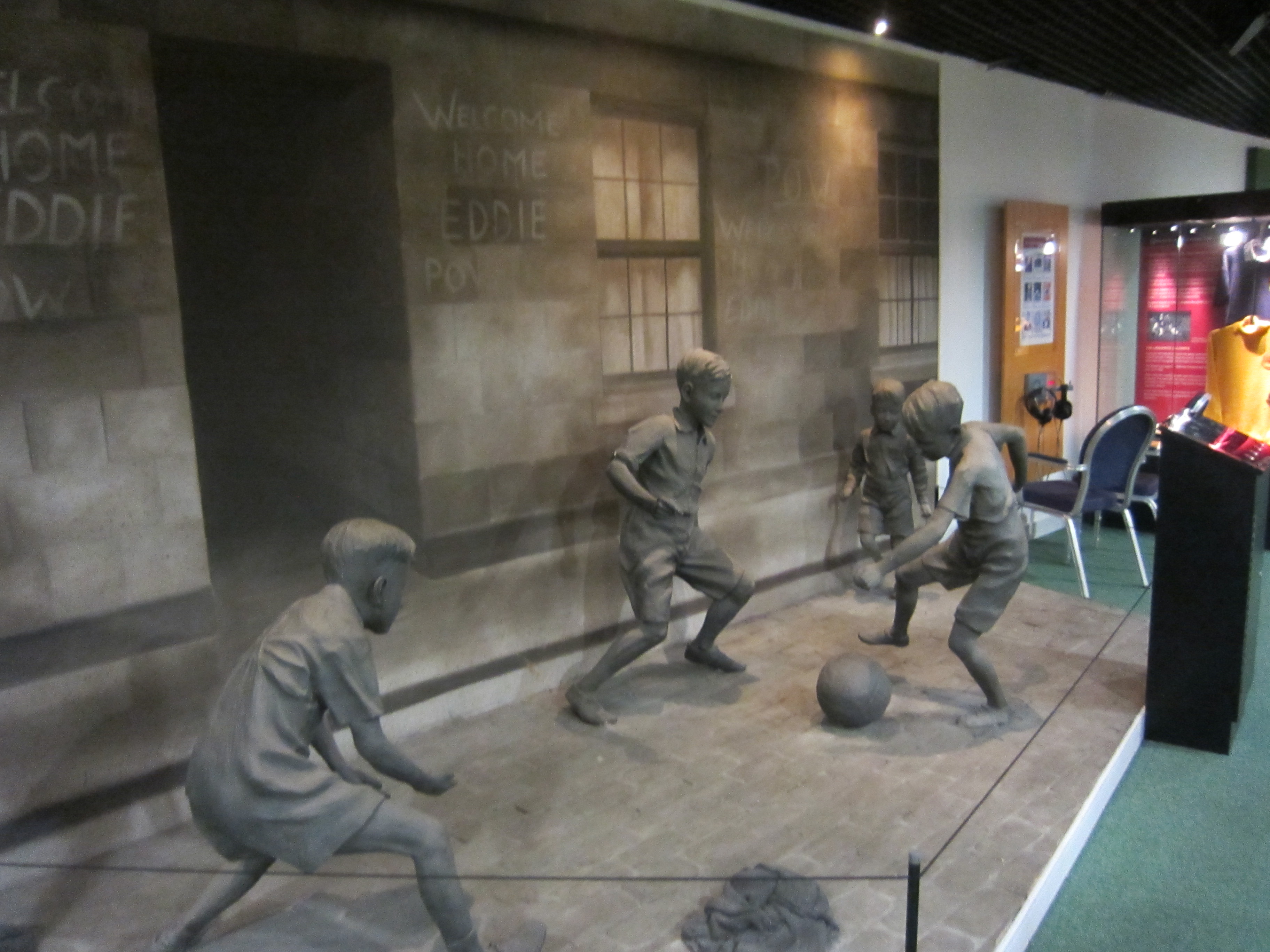
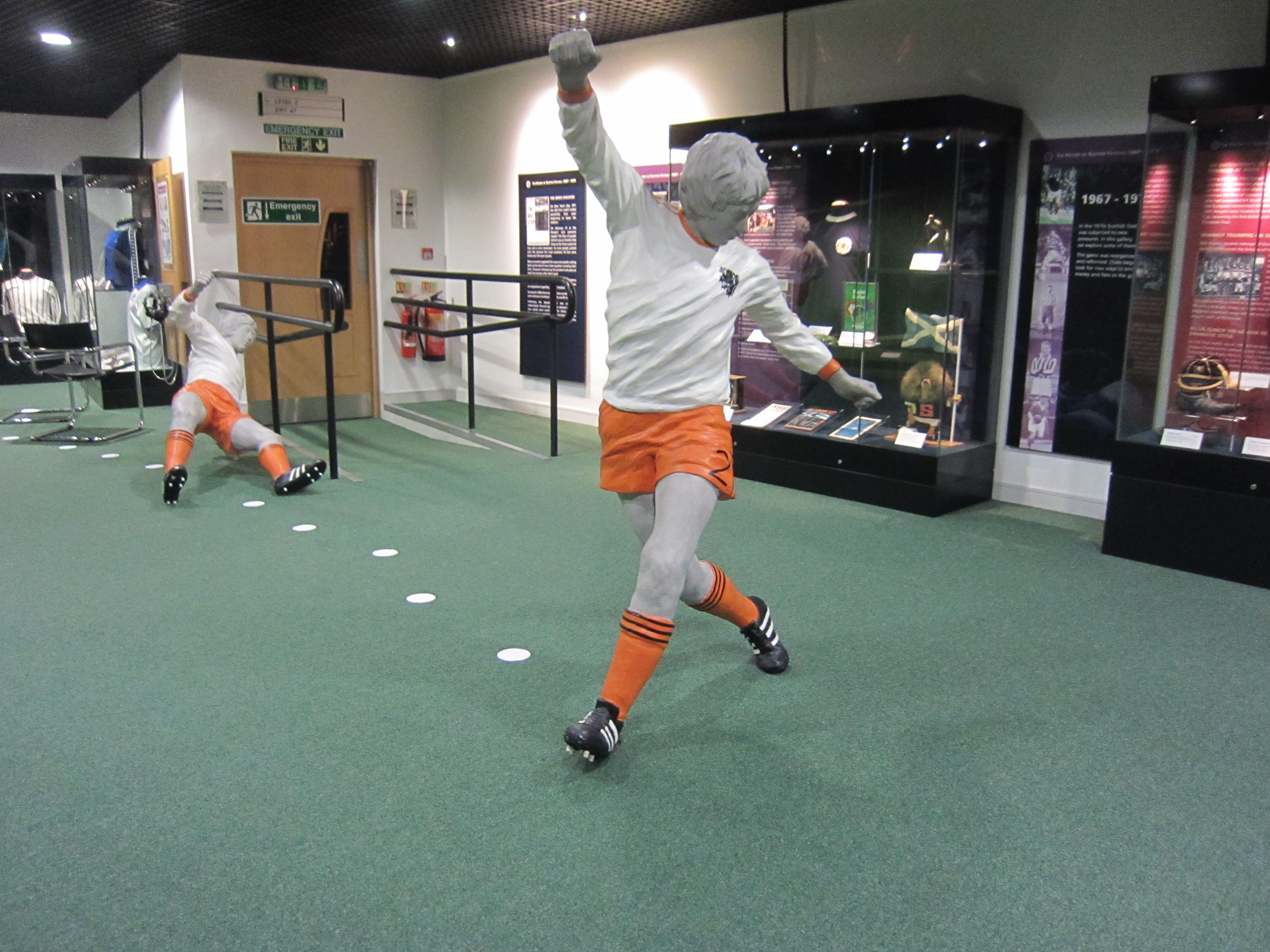
In other sections, you can see kids playing tanner ball, and quite originally, Archie Gemmil’s route through the Dutch defence in the World Cup match 1978 is marked in the green carpet – and Dutch defenders are standing there as statues.

IMG_9931IMG_9935

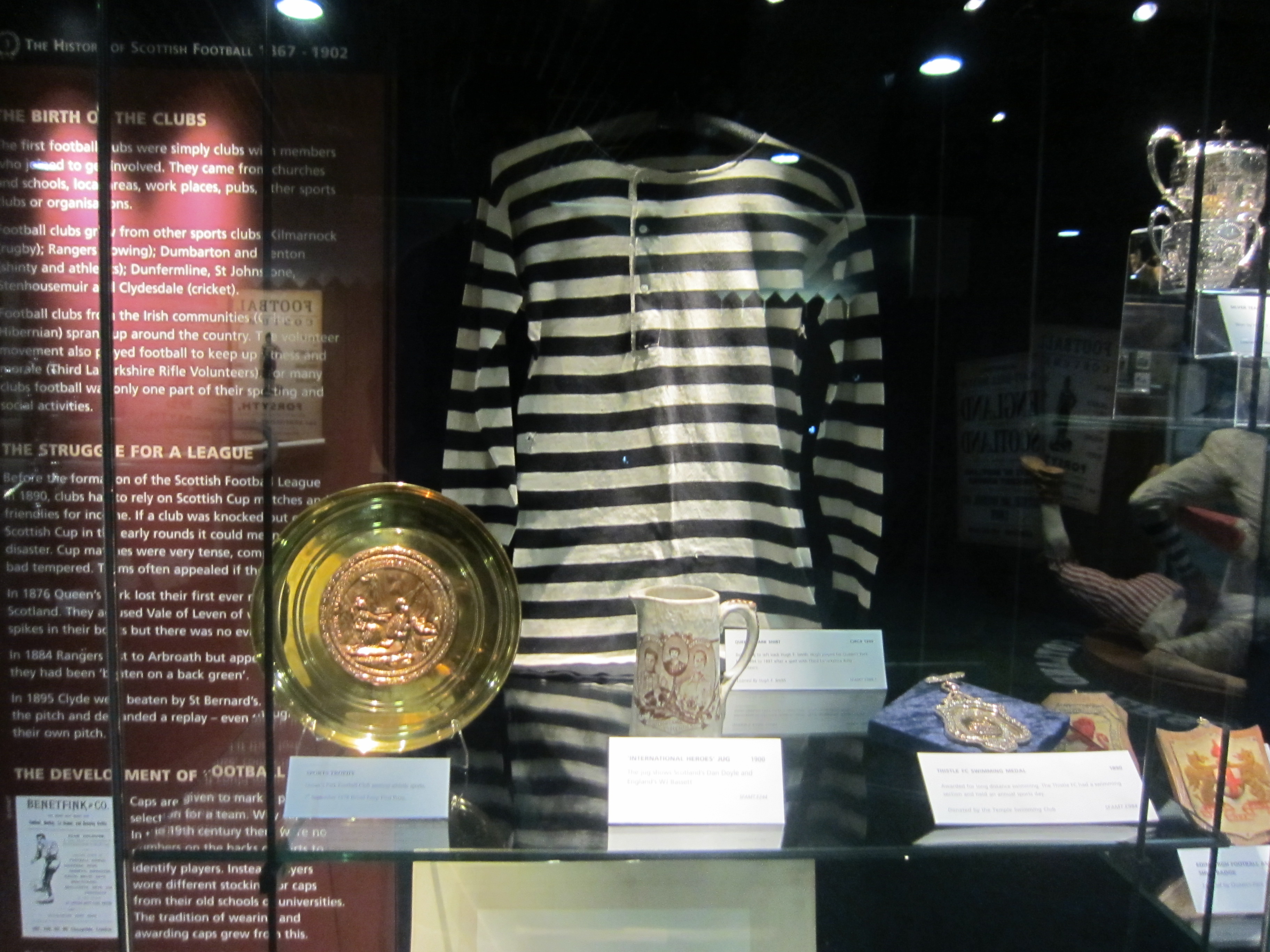
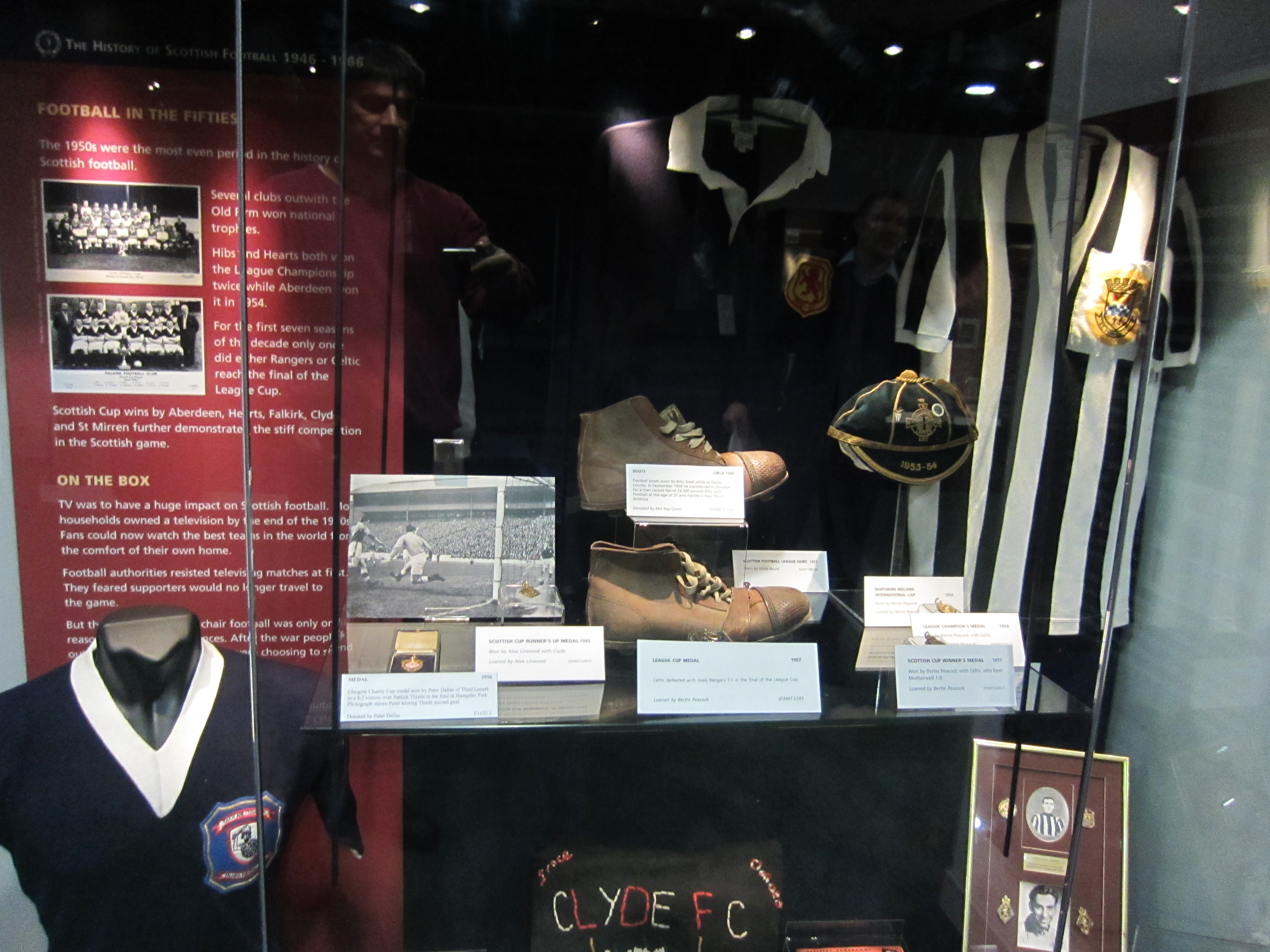
The dioramas are supplemented by showcases, filled with objects relating to the storyline. In some showcases, the objects are mainly letters, in others cups, caps and badges. In some instances, the texts work well with the objects, for instance the explanation of the tradition of awarding caps in the showcase on players’ kits, which is dominated by caps. But the distance between text and content can also be quite big. For instance, the text on the transition of the game from amateur to professionalism in the 1880’s does not really tell a story of the displayed objects. There are some tickets, a tiepin, the Queens Park chain of office, a scrapbook and medals and a couple of caps.

IMG_9972

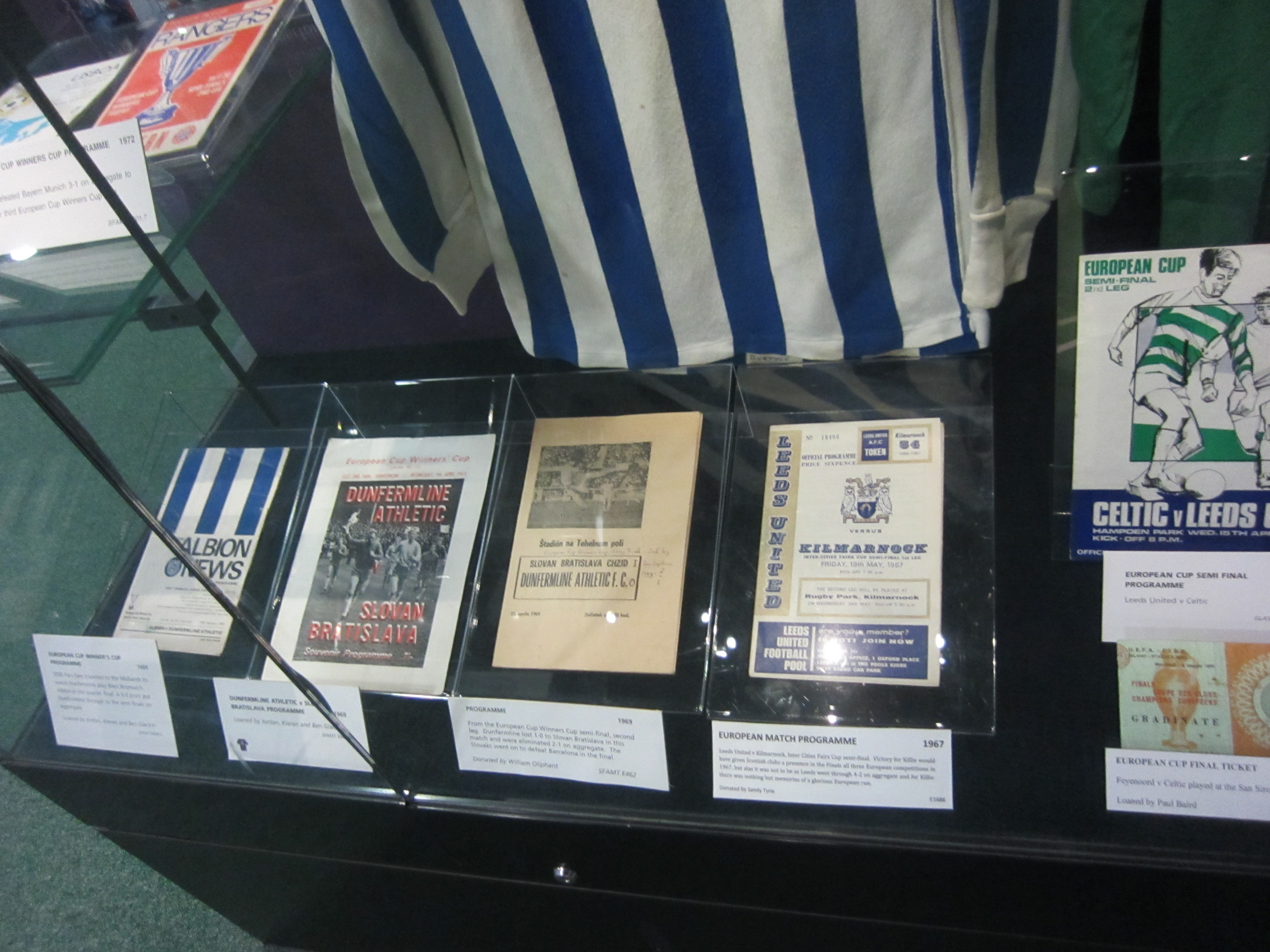
In other showcases there is a relation between the objects and the theme. In the showcase on Scottish clubs in European competitions in the 1960’s, there are several programmes on display. The labels don’t tell about the programmes, however. They tell about the matches. The objects serve just as hooks, on which to put the story of the matches, which are the real ‘objects’ on display. The programmes could be replaced by tickets or something else match related with hardly any difference.

IMG_9939

Most objects seem to be displayed in this way, basically as a link to a significant event or trend.  In this way, the museum is quite traditional, and if you don’t follow the story line of the text, the showcases tend to become monotonous with small variations over the same theme of a selection shirts, programmes, tickets – with the odd outstanding object thrown in.

IMG_9955

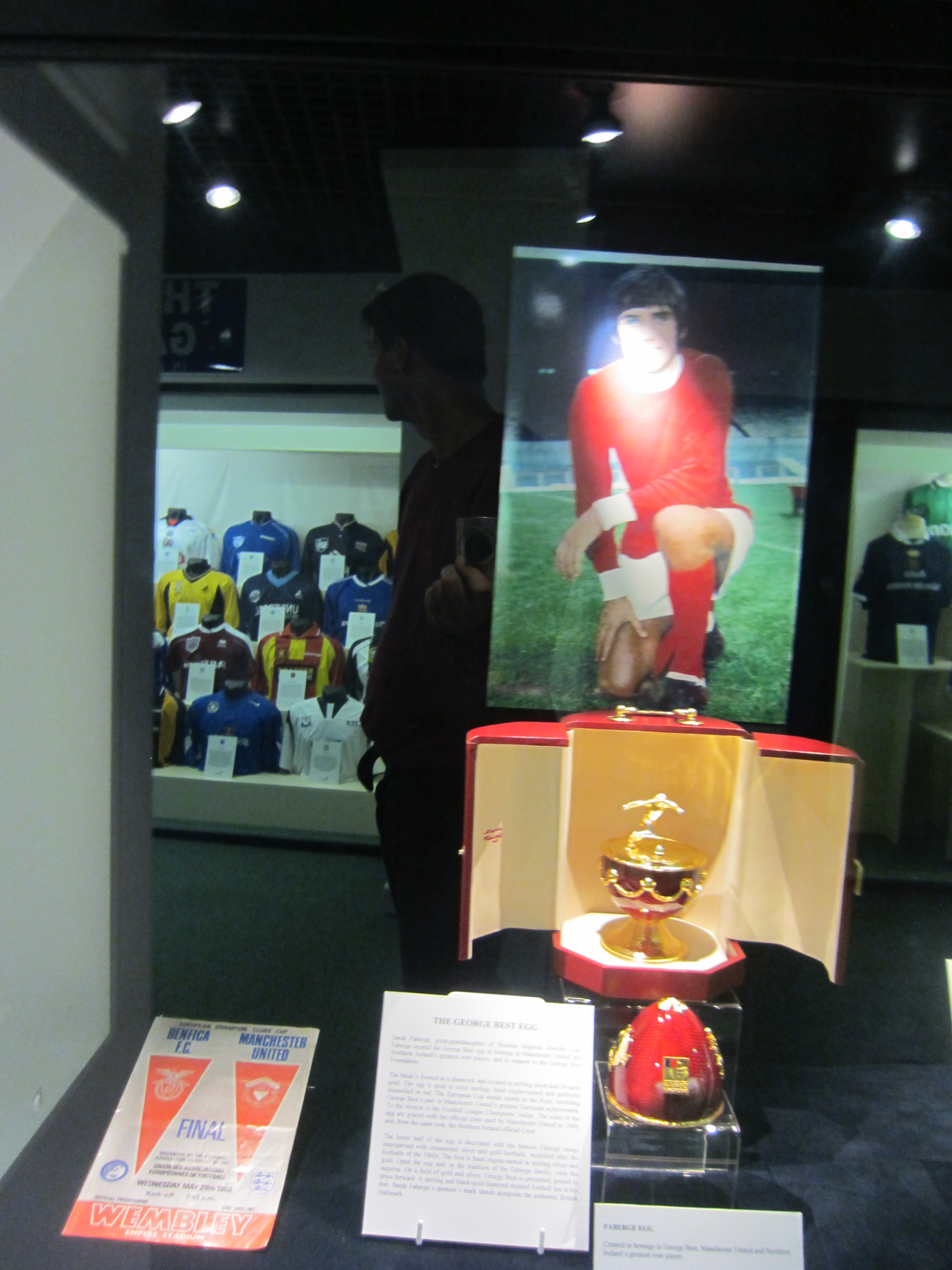
Some of these, however, are really outstanding. The centre spot from Wembley 1977, torn up by the invading Scottish supporters, for instance – or the Fabergé George Best and Jimmy Johnstone golden eggs.  Or the Scottish cup – the oldest national trophy in the world.

IMG_9851

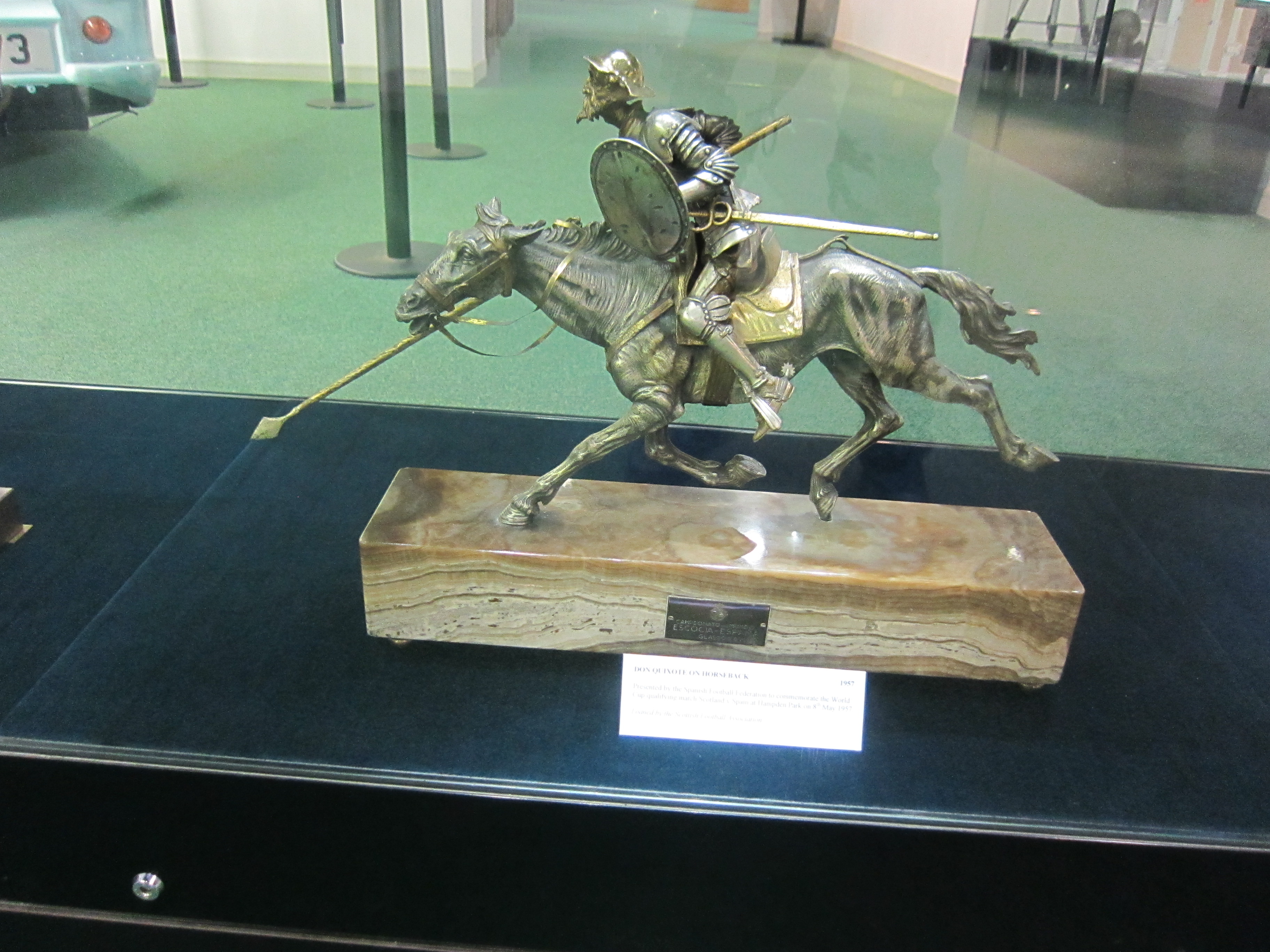
Others are perhaps not spectacular, but add variation to the standard ingredients. A floodlight lamp from Dunfermeline’ s East End Park from the 1960’s, a crush barrier from Hampden Park, an invalid car, representation gifts from international matches in the shape of a Don Quixote statue from Spain 1957 and an Italian footballer giving a fascist salute from 1931, and a Dundee Christmas Card from the 1950’s. But you have to look hard to find most of them.

IMG_9968IMG_0007IMG_9977IMG_0009

In the final thematic sessions, some of the showcases, however, differ radically with all the present Scottish Premier League shirts in one showcase, and football games from various decades in another.  And it is rounded up by the Scottish FA’s Hall of Fame. Here the visiual power of the showcases clearly correspond with the presented story, making it much more easily accessible.

Altogether, there is plenty of exciting stuff to see in the exhibition as well as a lot of information and knowledge to pick up; and I thoroughly enjoyed my visit. I am, however, not sure that my family would have enjoyed it, if I had brought them. If a visitor doesn’t follow the text driven story line, it may be difficult to find out what to focus on in the many showcases.  Obvious object driven stories like the development of equipment such as boots, balls and shirts have to be pieced together by the visitor across several sections and showcases. Points about the changes in fans’ consumption of football are equally difficult to piece together. It is not that a football museum has to do that, but such thematic showcases that make comparisons obvious are more appealing to visitors, who are predominantly visual.  At the same time, the storyline is extremely complex. Separate, focused exhibtions on the national team, on Scottish league football, etc. would probably have made it more accessible (I am thinking of the Wolves museums as a good example of a well-working storyline based exhibition). There are not many interactive ingredients either, making the exhibition overall very traditional.  The dioramas go some way in making up for it, but compared to more modern interactive elements in other museums, they underline a “static” impression of a classic museum exhibition, albeit a good one.

IMG_9918

You sense that the exhibition works brilliantly for the SFA, whenever they have official visitors from other countries to show around Hampden; or for settings such as inaugurations to the Hall of Fame. But it does not really have the playfulness of, say, the English museum. Some of this, of course, has to do with the English museum being able to invest heavily in interactive installations. But I think that the story line dependence vis-à-vis the pure thematic approach at the English museum is just as telling a factor.

IMG_0054IMG_0059IMG_9905

Favourite object: Well, I must admit that the George Best golden egg ought  to take the prize. Who would have expected to find that in a Scottish football museum? But if we look at the Scottish objects, it goes down to a battle between the Wembley centre spot, the crush barrier – and the Italian fascist sculpture. And perhaps the last one should take it for its ability to link football to a wider historical context.

IMG_9989

Character: I think I will go for current Scotland captain, Darren Fletcher. He is not the crowd-pleasing, flash individual; no fancy tricks on or off the pitch. It is not that the young kids fight to be Darren Fletcher when they play in the school yard. But to older people like me, it is always reassuring to see his name on the team sheet. To have a solid player with a tremendous work rate, intelligent positioning, total commitment. One for the few to talk knowingly about, while all the youngsters drool over the Ronaldos and Messis of this world. In other words a must for the connoisseur. As for the football interested kids, it will beat most museum experiences hands down; but it will still feel like a “museum”.


Posted in Football museum, Football museums

The Liverpool Museum

When I met the curator of Liverpool F.C. museum, Stephen Done, back in February, he told me that he hoped soon to be able to go over the exhibtions, which still looked very much the same as they did in 1998, when the museum opened. The reason why Liverpool decided to built a museum inside the Kop at Anfield in the first place was that the increasing number of Irish and Scandinavian fans travelling to matches had requested something to fill out their weeked in Liverpool.

IMG_2646

So the main target group of the Liverpool museum was originally the die-hard supporters from out of town, who spend a lot of money travelling to matches – and to whom an additional £10 does not make that big a difference to the overall expenses of going. And I think this shows. In a positive way. Compared to, say, the Arsenal or the Chelsea museum, both of which seem to try to persuade innocent London tourists to become supporters with their boastful focus on uniqueness and unparallelled success (which, in fact, could be questioned), it is assumed that you are a die-hard Liverpool supporter, when you enter the Liverpool museum.

IMG_2655IMG_2658

On the one hand, there seems to be a lot of knowledge taken for granted, on the other hand, the exceptionally long texts in the musem take it for granted, that visitors have come to share a common history. And therefore are genuinely interested in it. To give you an example, here is a description of Liverpool’s first match:

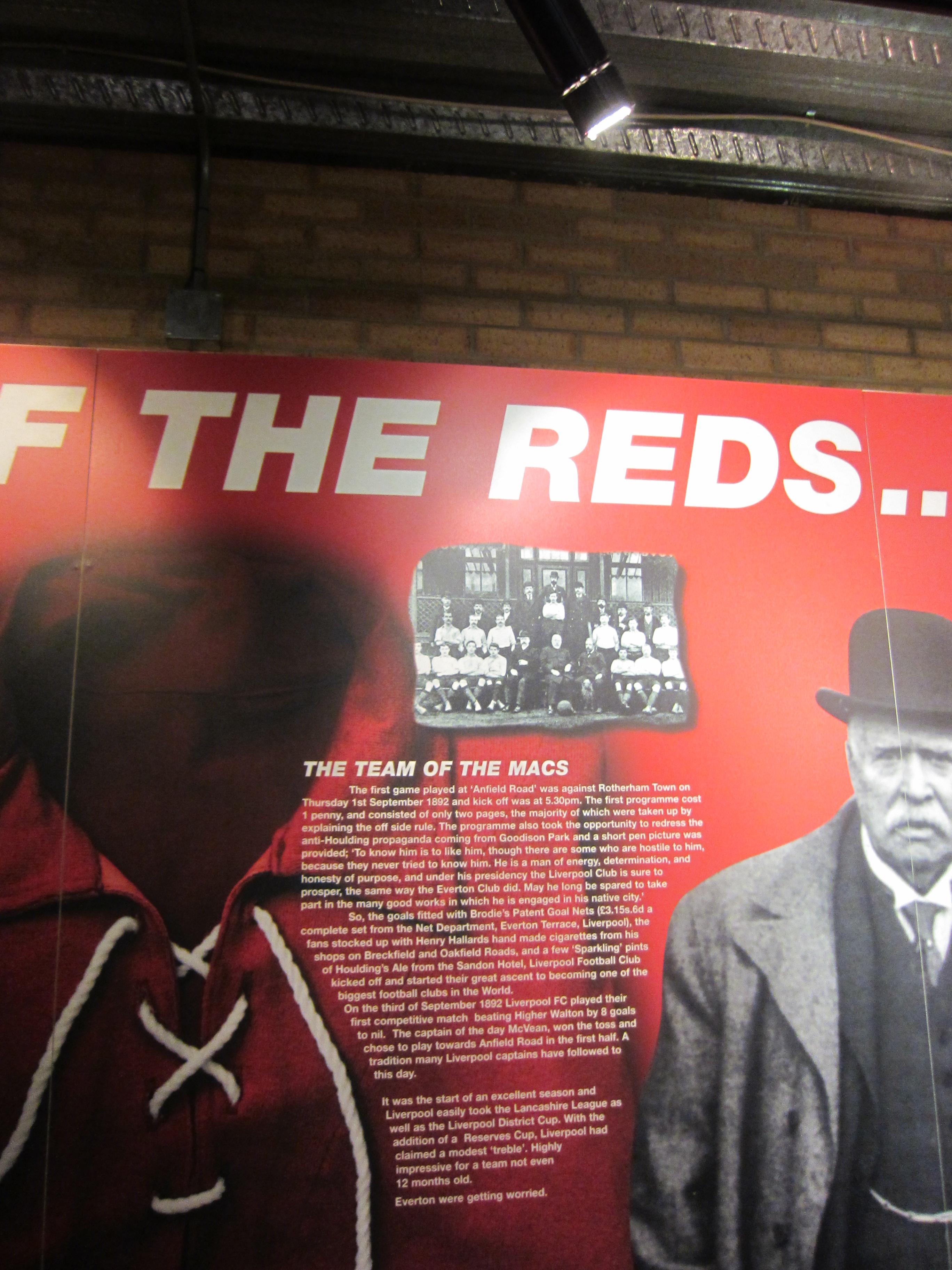
“The first game played at Anfield Road was against Rotherham Town on Thursday 1st September 1892 and kick off was at 5.30 p.m. The first programme cost 1 penny, and consisted of only two pages, the majority of which were taken up by explaining the off-side rule. The programme also took the opportunity to redress the anti-Houlding propaganda coming from Goodison Park and a short pen picture was provided: “To know him is to like him, because they never tried to know him. He is a man of energy, determination, and honesty of purpose, and under his presidency the Liverpool Club is sure to prosper, the same way the Everton club did. May he long be spared to take part in the many good works in which he is engaged in his native city.” So, the goals fitted with Broadie’s Patent Goal Nets (£3.15s.6d a complete set from the Net Department, Everton Terrace, Liverpool), the fans stocked up with Henry Hallards hand made cigarettes from his shops on Breckfield and Oakfield Roads, and a few “Sparkling” pints of Houlding’s Ale from the Sandon Hotel, Liverpool Football Club kicked off and started their great ascent to becoming one of the biggest football clubs in the world”

IMG_2665

Some will say it is old fashioned. Others that it is a blatant case of “putting-a-booklet-on-the-walls”. And very few museums manage to get away with it – without heavy critique. When I do courses with museum professionals on exhbition concepts, one of the basic rules is “be aware of the medium”. An exhition is not a book or booklet cut to pieces and hung on the walls. The text should not carry the exhibtion, but support it.

IMG_2682

But somehow, I think it is great here. And I am not even a Liverpool supporter! I think that the Liverpool museum shows, that it takes the passion and the interest of the target audience seriously. As a Liverpool supporter, you would want to learn new stories about the club, when you visit. You know that they are great – so the museum should not waste time and space telling that to visitors. It may be all right to “innocent” tourists, who have not yet found their footballing allegiance. But I doubt that these people go to Liverpool as tourists in the first place, and if they do, then that they go to Anfield in the second. Because the Anfield neighbourhood is not a pleasant area – it feels a bit like a warzone with hundreds of condemned houses standing empty.

100 099

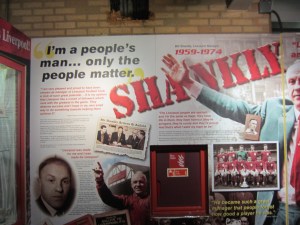
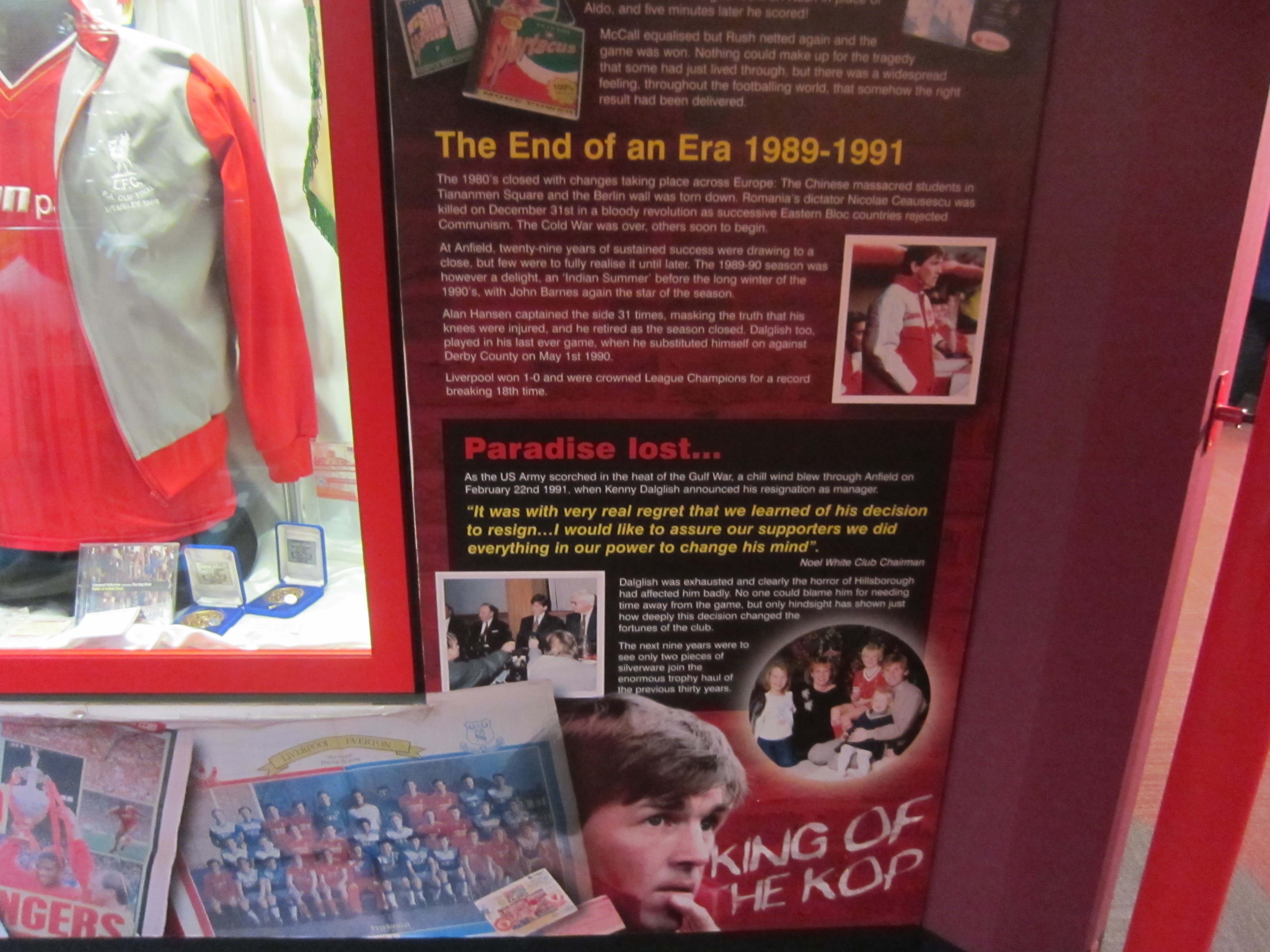
Basically, the exhibition is a chronological story of Liverpool F.C. With a bit on the birth of the club, a bit on the early success – but it is the Shankly era from 1959 to 1974 that takes up most of it. That is followed by the glory years till 1989 – and then it rather fades, with 1989-91 labelled “The end of an era”, and the following years up to the opening of the museum labelled “Paradise lost”. Ok, there is a cinema for the amazing 2005 European Cup Win as an inescapable add-on.

IMG_2692IMG_2780IMG_2805

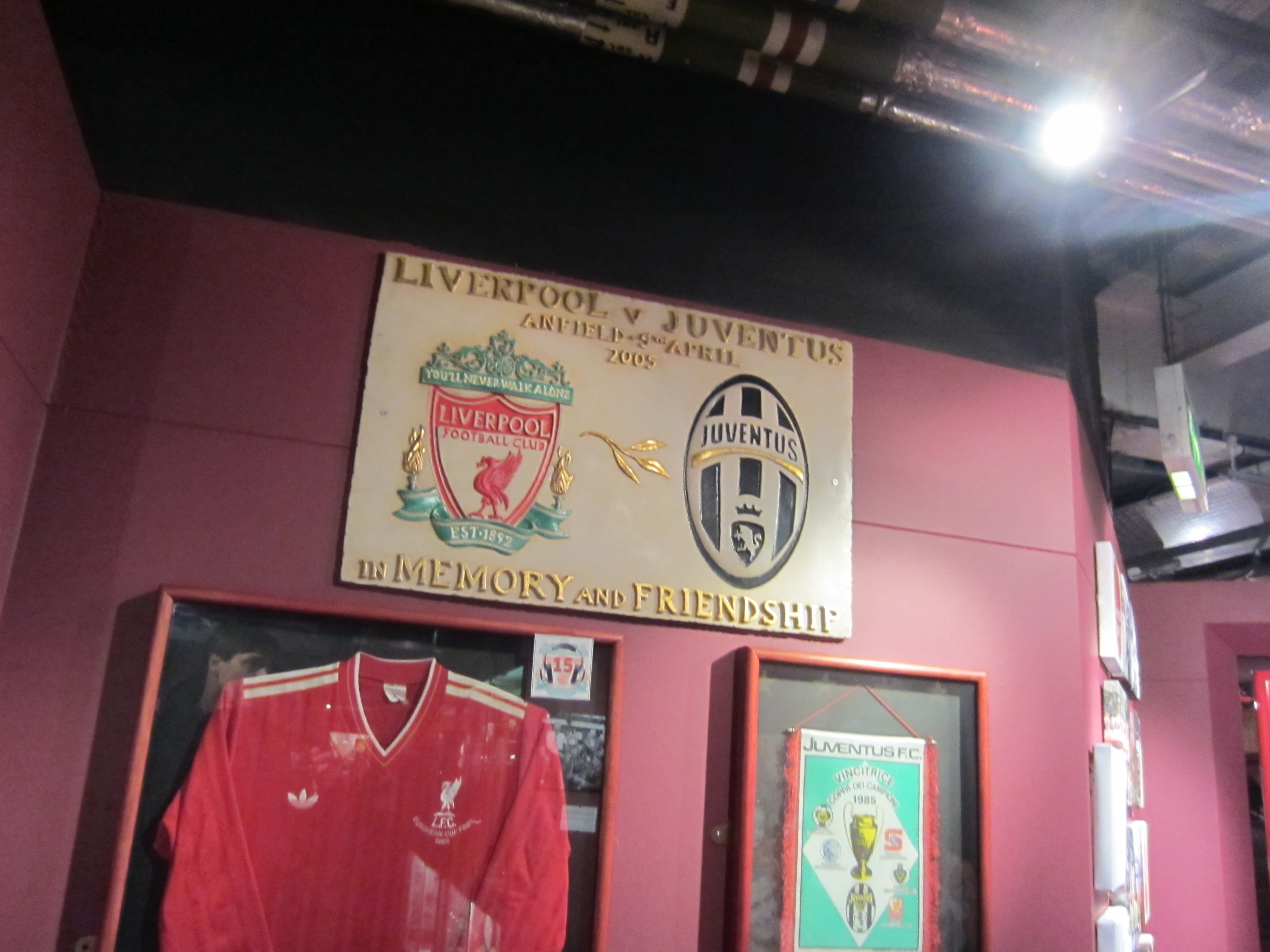
Predictably, it is the golden years and moments that dominate the storyline. And, for instance, the Heysel disaster is not pencilled out. But it is there. Along with the “Paradise lost” feeling for the post 1989 period. It seems natural here (whereas the National Museum of Liverpool erases Heysel 85 of the story, making the great emphasis on Hillsborough 89 a bit hollow). It sort of disrupts the storyline, making the overall impression a bit chaotic. Certainly I lost the plot a bit in the last part of the exhibition.

IMG_2804IMG_2764IMG_2817

The exhitibion does not integrate the (relative) recent downs of Liverpool in a positive way like the Wolverhampton museum does. It is a partisan view. But it is not just a list of “unique selling points” as you find at Arsenal and Chelsea.

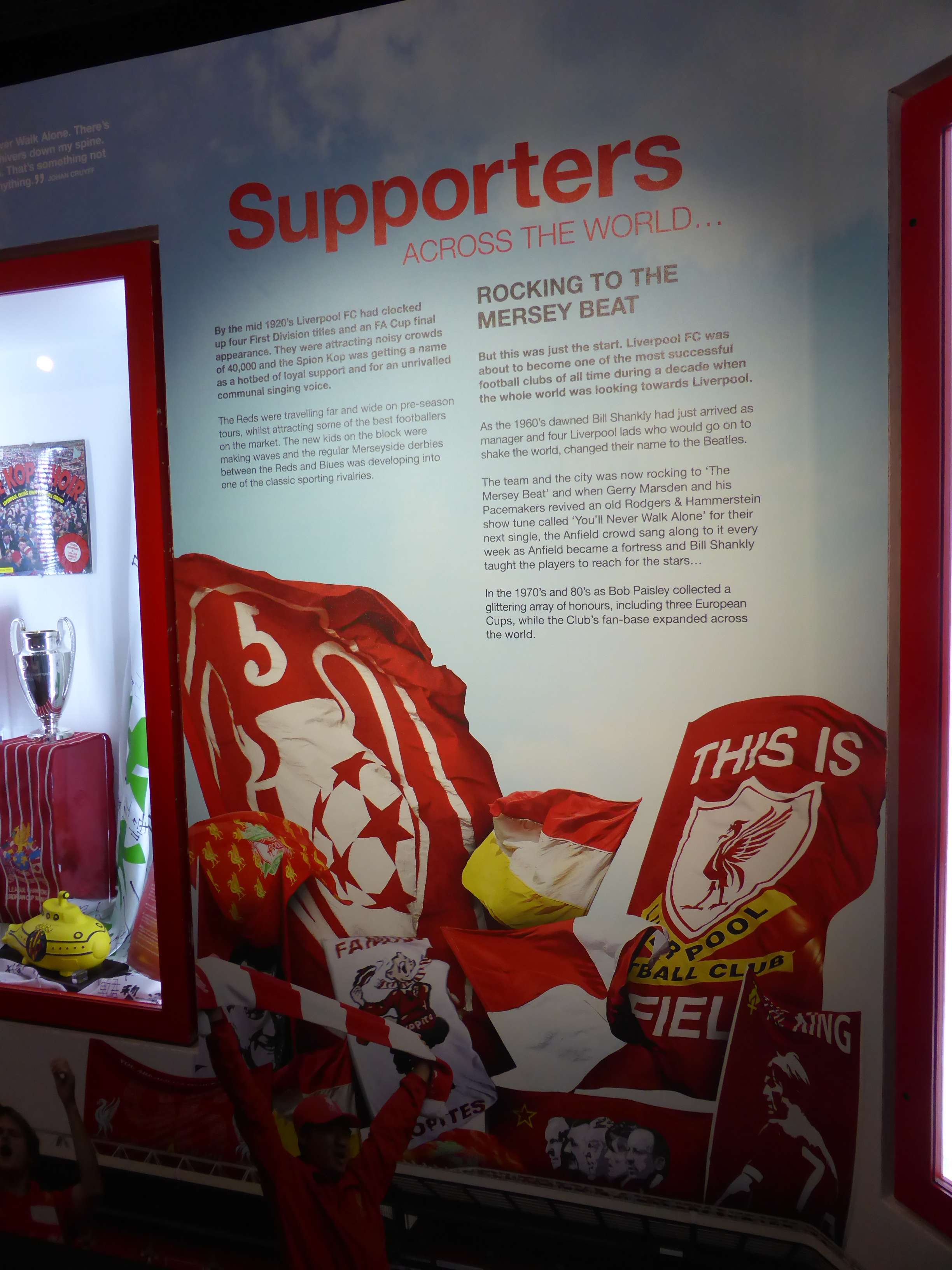
Admittedly, the layout is a bit dated, and the museum in general a bit worn down. And as I said, this is not something you should try at home! But I like the storytelling of the long texts. Just like the Chelsea museum, the Liverpool museum also puts great emphasis on their ground, Anfield. A room is dedicated to a huge model, where you can see the sloping hill of the Kop under the terraces before the rebuilding. On the wall, there is a screening of a TV documentary with Mark Lawrenson in South Africa, visiting the Spion Kop – the battlefield from the Boer war that made several English football club rename their main, sloping terrace. On the walls – well, there is even more book-on-the-walls, which upset a couple of my visiting colleagues. But the fantastic photos and the sheer joy of the narrator describing it made it the highlight in the museum to me. Although as a visitor, I would like to get the dramatic deterioation of the neighbourhood adressed.

IMG_2730IMG_2732IMG_2717IMG_2718

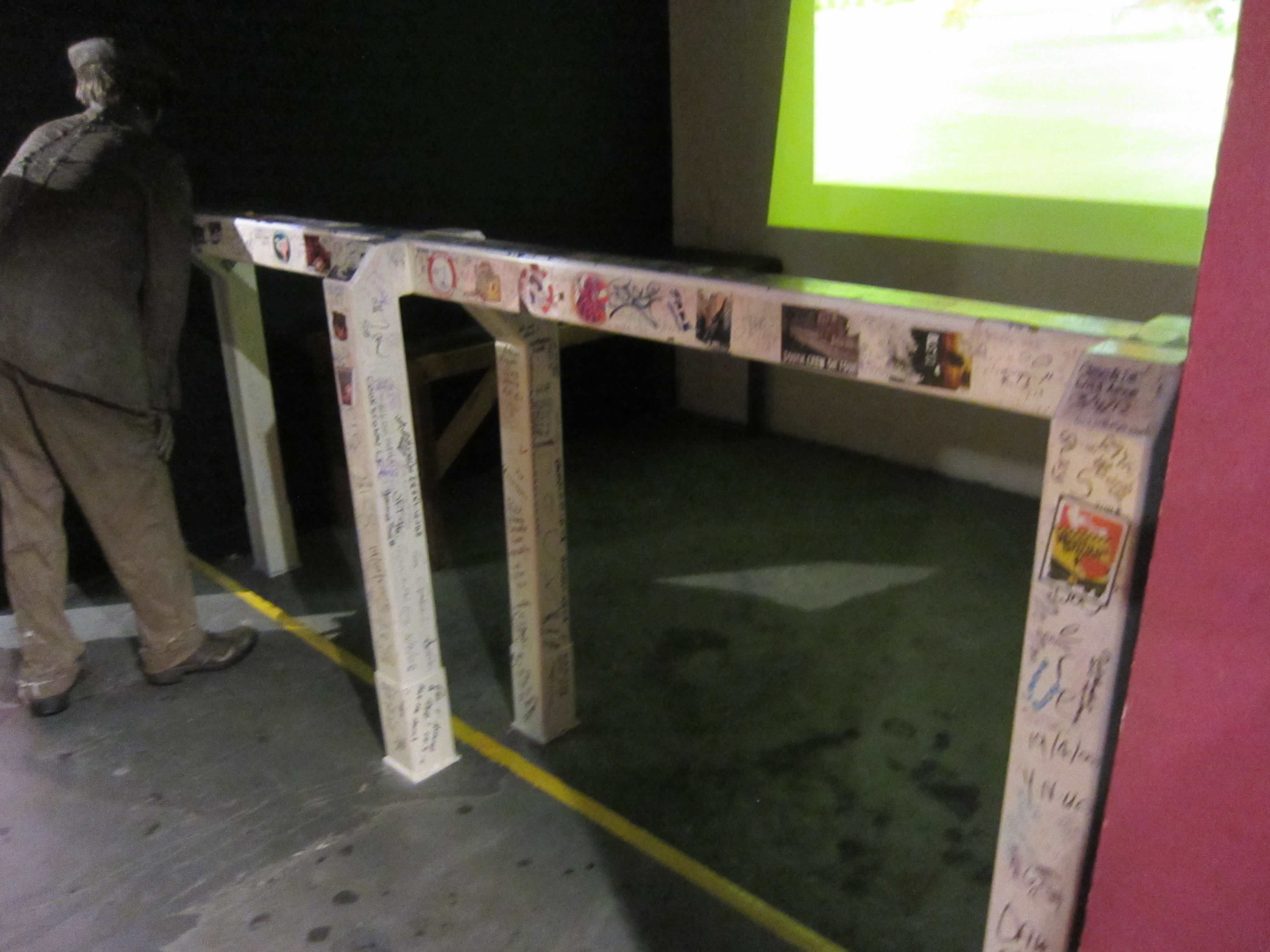
Another highlight is that they have had the foresight to collect and exhibit a crush barrier from the Kop. It often amazes me, how little has been done to preserve the heritage in connection with the rebuilding of the English football grounds. Well, the crush barrier here really is a gem, bringing back memories to older fans – and giving young fans an impression of what terraces were like.

IMG_2752

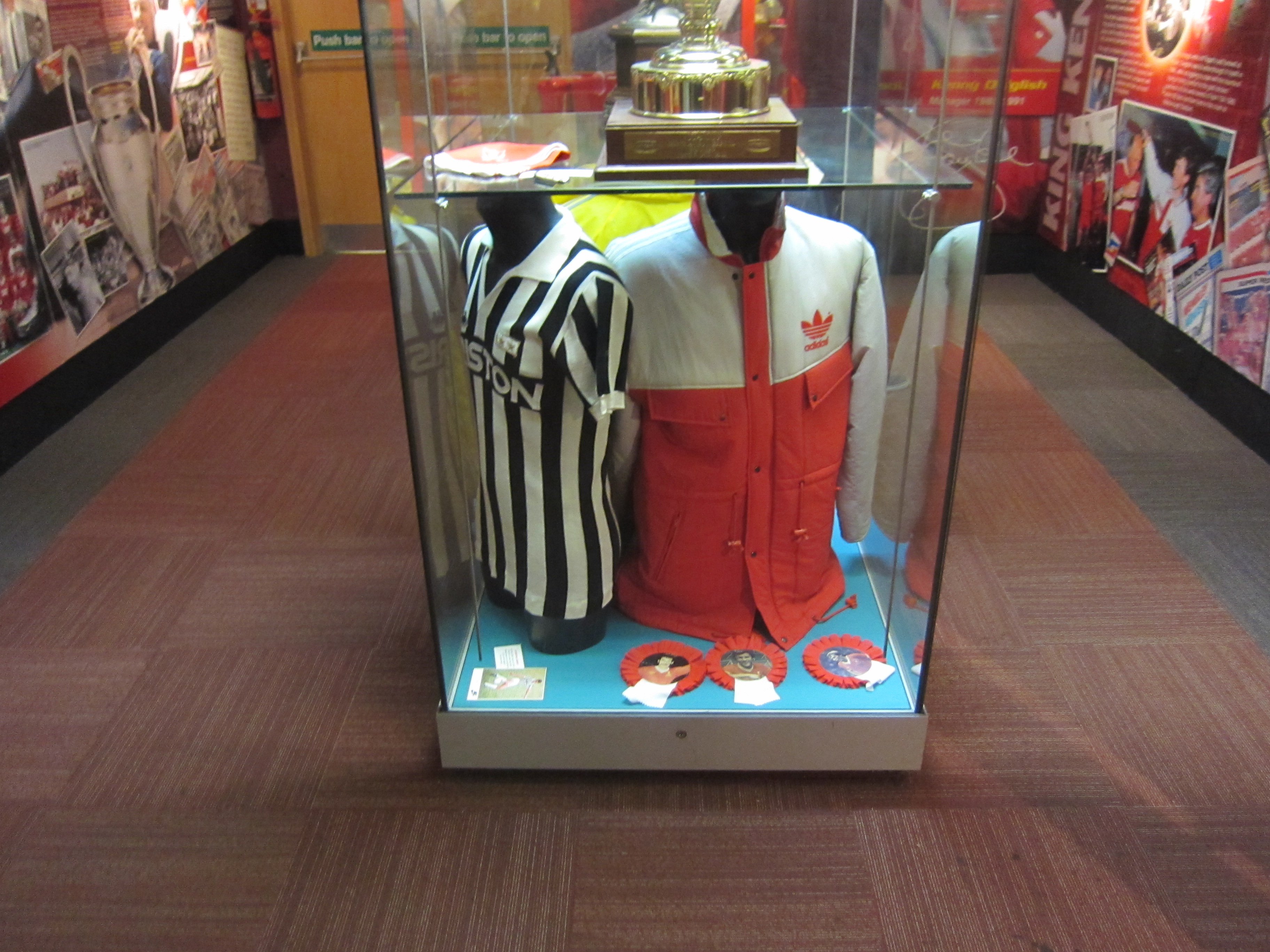
Another aspect I really like about it, is the general integration of fans’ culture in the showcases. There is a predominance of shirts, caps, medals, programmes. But in most showcases, contemporary fan culture is also present. An old rattle, a hat, plastic pennants, satin scarves, rosettes etc. Fans and fan culture is not something separate. It is just as much part of the story as the players. And again – even if I am a Manchester United supporter, these objects awake such strong memories of the seventies, eighties etc. that I actually want to read the text. In a way the more clinic display of player-related-objects in other museums doesn’t.

IMG_2710IMG_2698IMG_2702IMG_2748

It will be interesting to see, what happens if the museum as planned is redeveloped. Will it be influenced by the new trends set by the Arsenal and Chelsea museums – or will it manage to hold on to its qualities? Will it find new ways of telling the many stories? Or will it become a modern, flashy, superficial branding platform?

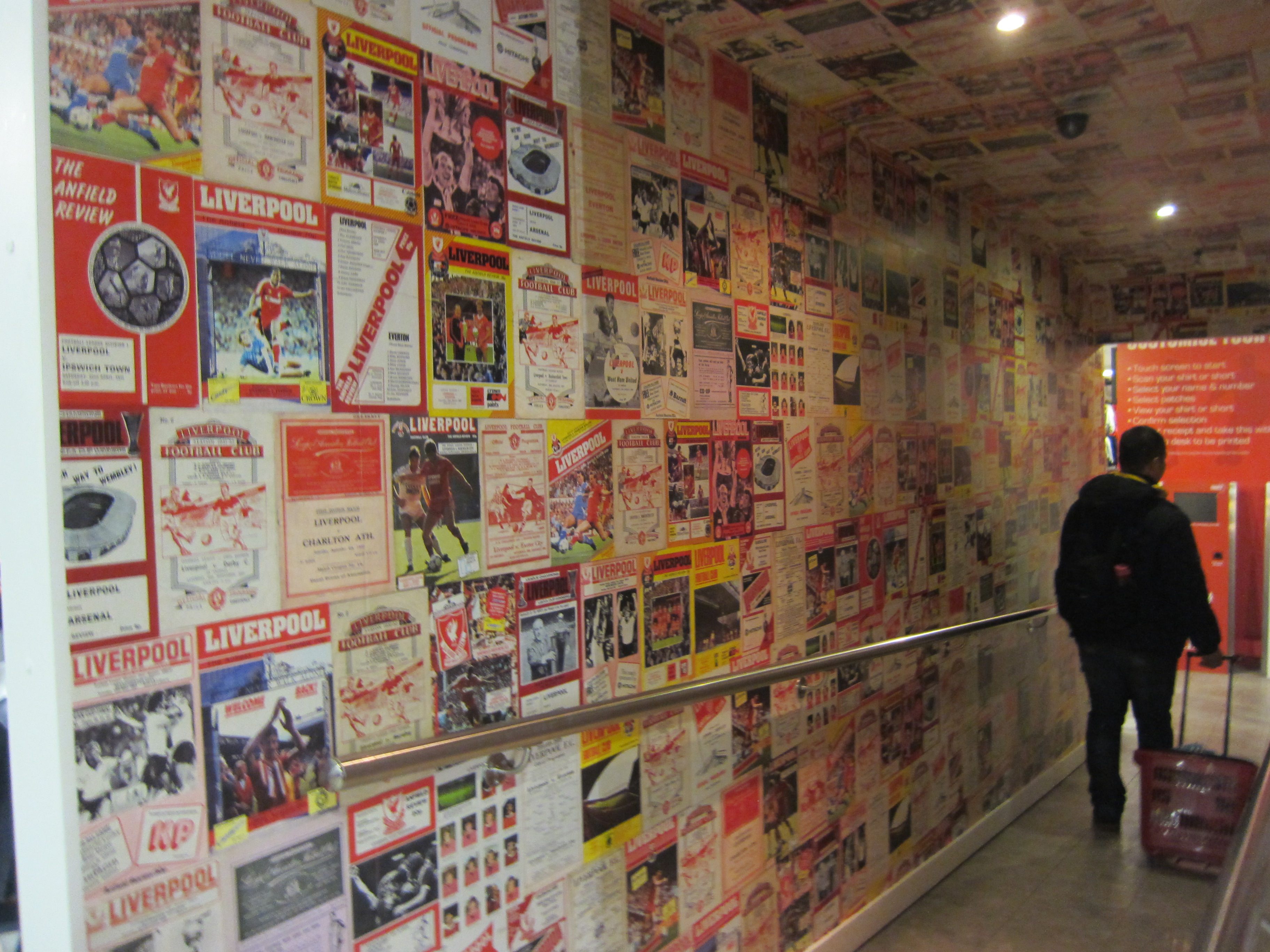
Of course, Liverpool F.C. is also a business, and you go by the souvenir shop as you leave the museum. But also in here they have done really well, using old programmes as wall papers in a tunnel.

IMG_2824

Character: Passion, dedication – for the die-hards. Looking at a list of the top 100 players, Tommy Smith is described as “he essence of Scouse distilled and poured into a Liverpool shirt”. In technical museological terms it is not elegant, and it may not convince museum professionals that it is worth visiting. But it is to Liverpool fans. So, Tommy Smith it is.

Posted in Football museum, Football museums, Uncategorized

The Arsenal Museum

IMG_5557_1

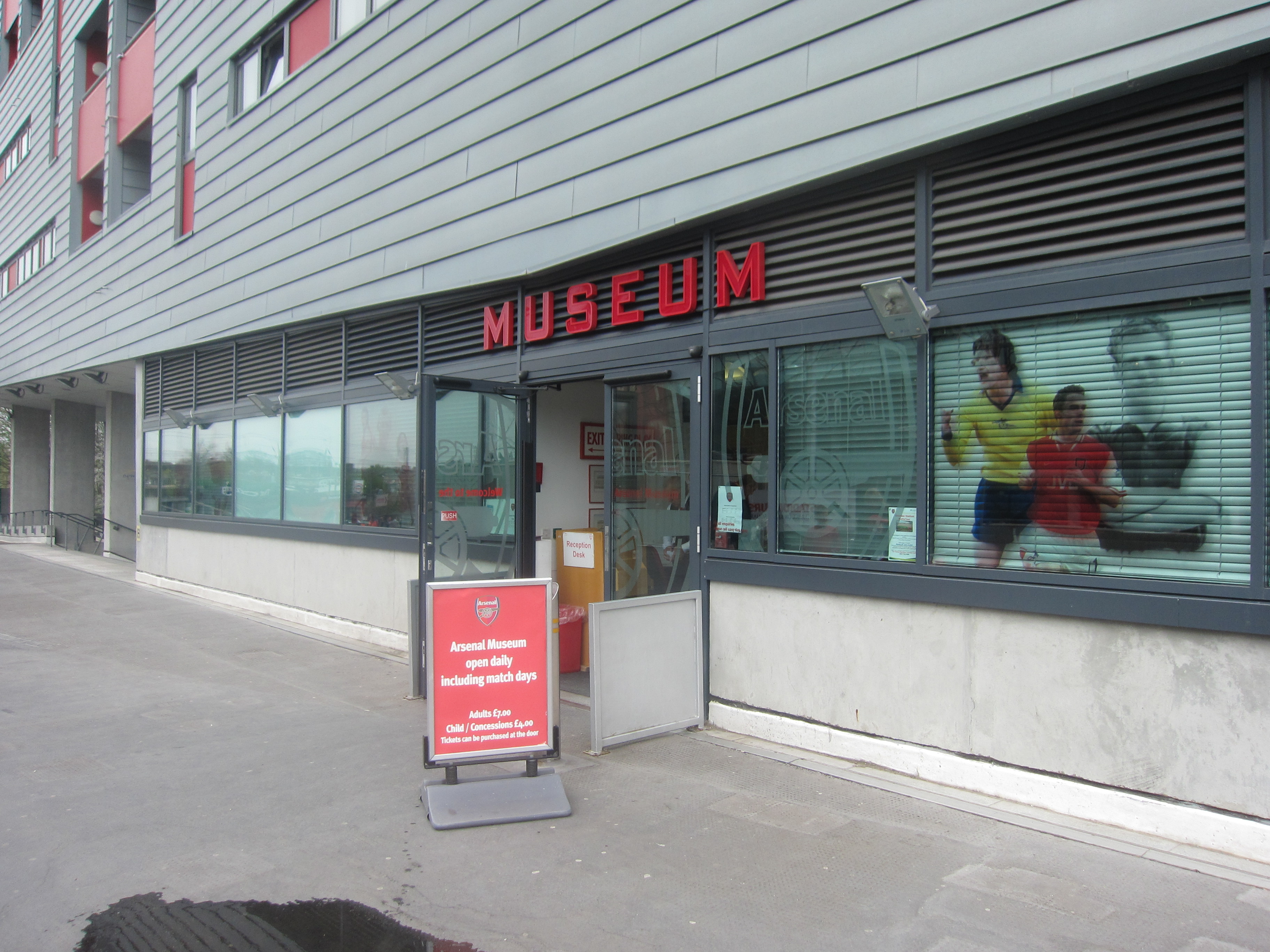
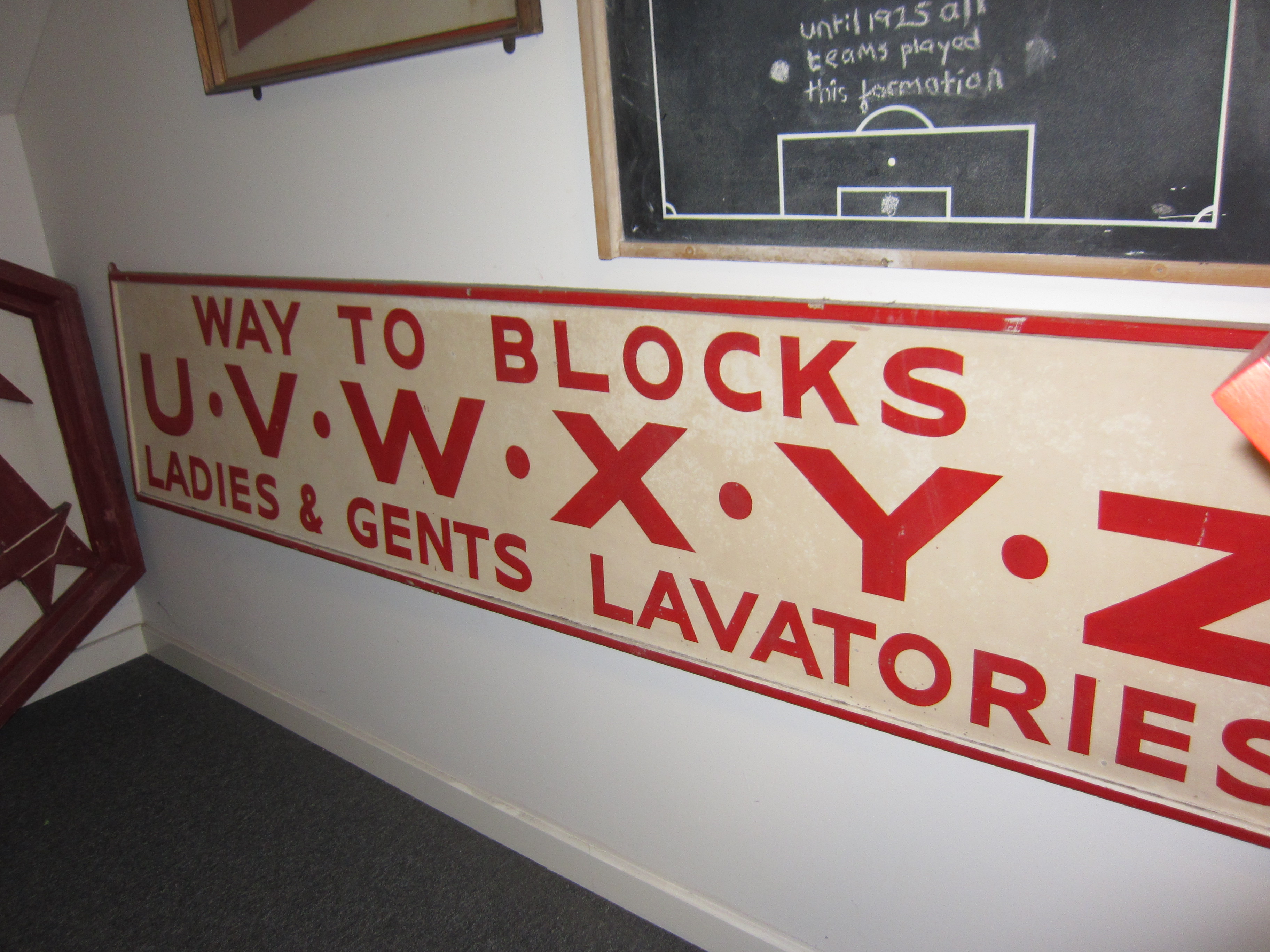
“It is interactive” I am assured as I purchase my ticket for the Arsenal Museum. The museum is located in the basement of a building next to the Emirates, and the entrance is not very impressive. The staircase downstairs is promising, however. Here you find old advertising boards, signs, crests from the old stadium Highbury. It gives the impression of a strong historical awareness.

IMG_1294IMG_1297IMG_1300

The exhibition downstairs is divided in two “halfs”. The first half “serves to honour those who have made Arsenal the institution it is”, the second half focuses on the “landmarks” that shaped Arsenal’s reputation, that is matches and moments of victory.

IMG_1303

So this is not a museum that intends to describe the ups and downs of a football club, to assess critically the good and the bad. It serves to honour heroes and celebrate moments of victory. Failures and defeats do not have their place here. You can say that most club museums do that – focus on victories and great moments. And, for instance, the Chelsea museum is very boastful in many of it’s claims. But I have not seen any other football museum as onesided as this. In fact, what makes the Wolverhampton museum one of my favourites is that it is highlighting the lows as well as well as the highs, in this way giving a true representation of what football is all about. Because highs do not become highs, unless they occur after a low. And the Arsenal museum seems to give the impression that life as an Arsenal fan is one continuos high.

IMG_1358IMG_1437

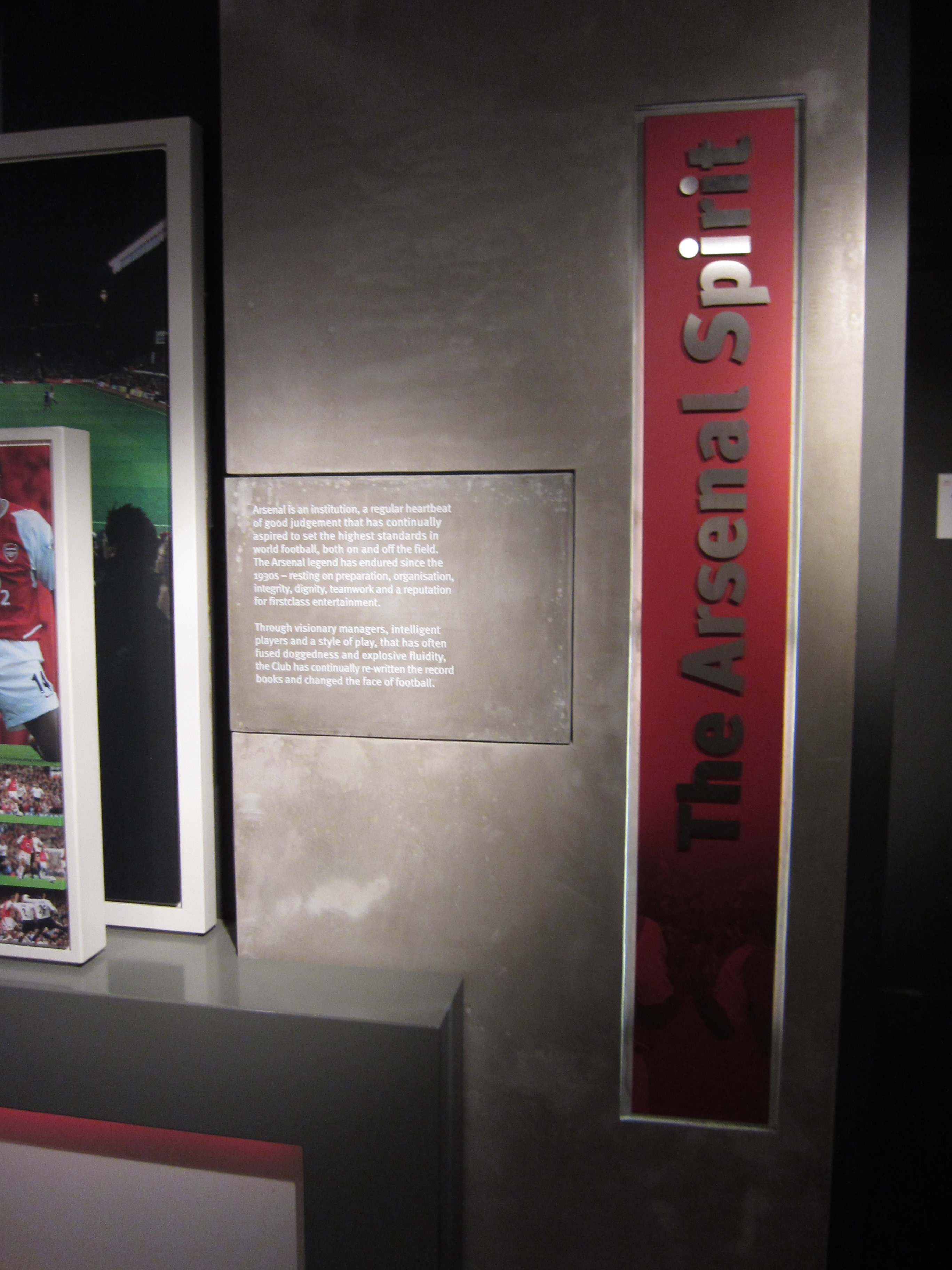
“Ever since its formation as an amateur club, Arsenal has built a reputation for assured judgement, dignity and consistently high performance” claims the welcoming text. Or “It was with the same pioneering spirit of the men who developed Highbury, that the Club, nearly a century on in 2006, took the short but bold journey to the Emirates Stadium, a modern home steeped in the values and spirit of the Club where Arsenal can continue to progress”. “All that is intended here is to pay tribute to the type of men who have made the club what it is”. And you can find many similar statements in the texts. “The Arsenal legend has endured since the 1930’s – resting on preparation, organisation, integrity, dignity, teamwork and a reputation for first class football. Through visionary managers, intelligent players and a style of play, that has often fused doggedness and explosive fluidity, the Club has continually re-written the record books and changed the face of football.”

I wonder what Arsenal fans think of this. Do they only remember heroes and victories? Do they also perceive life as an Arsenal fan as a continous high? Or are they so frustrated with the recent lack of trophies that they want nothing but dwelling on past success, when they visit their museum?

Or perhaps the hard-core Arsenal supporters are not the target group. Most of the other visitors when I was there, were foreign tourists. Are they, perhaps, trying to convince them that becoming an Arsenal fan will be a continuos celebration?

IMG_1307IMG_1378IMG_1409

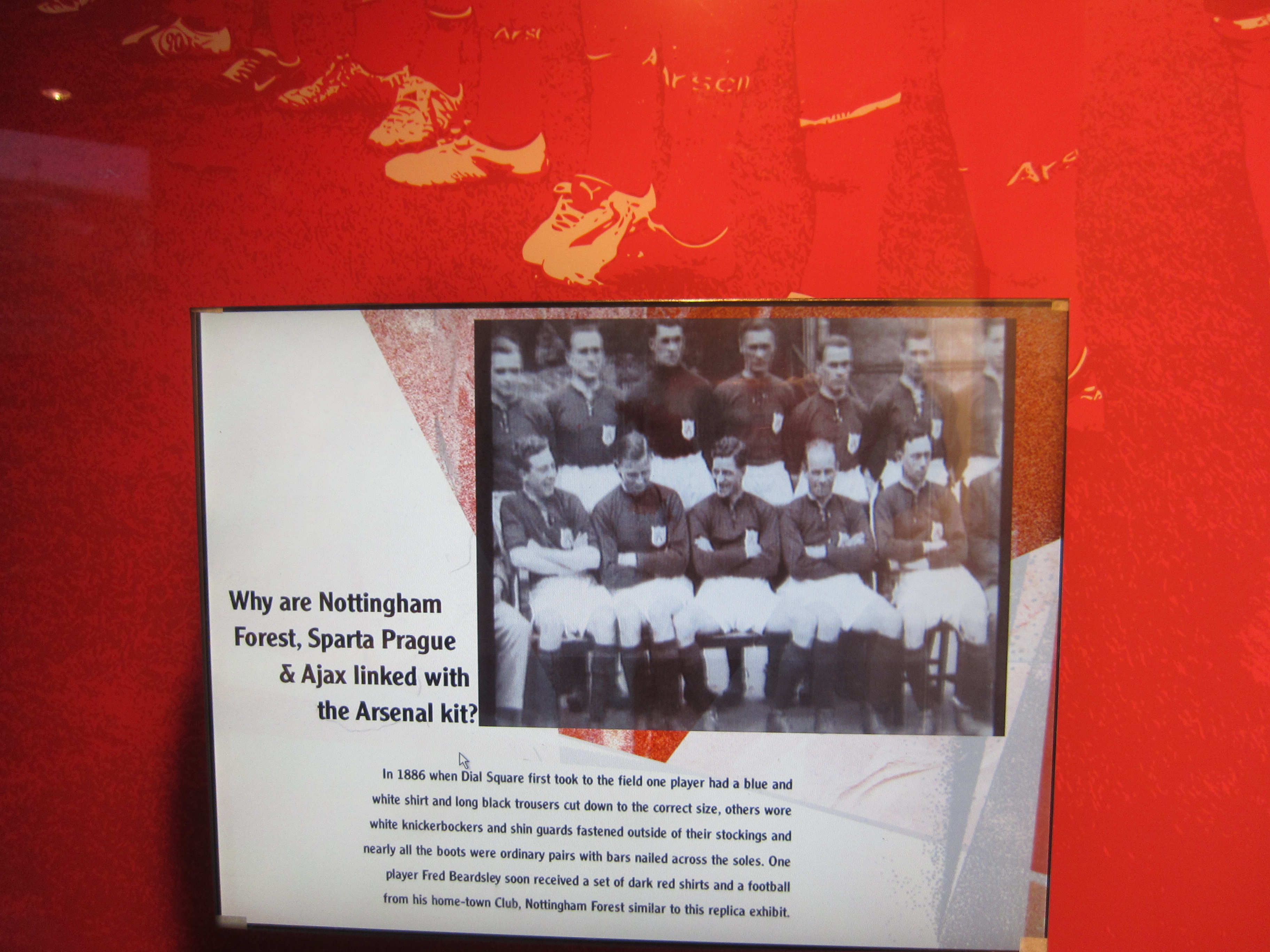
The first half focuses very much on the players, although there are also sections on the workers of the Woolwich Arsenal, Highbury, Arsenal fans, managers – and the club kit and crest. There are some interesting points in the final session. But the bulk of the shirts are spread around the museum in showcases about players and matches – quite a few of them folded, so they do not take up to much space. Which is a shame.

IMG_1418

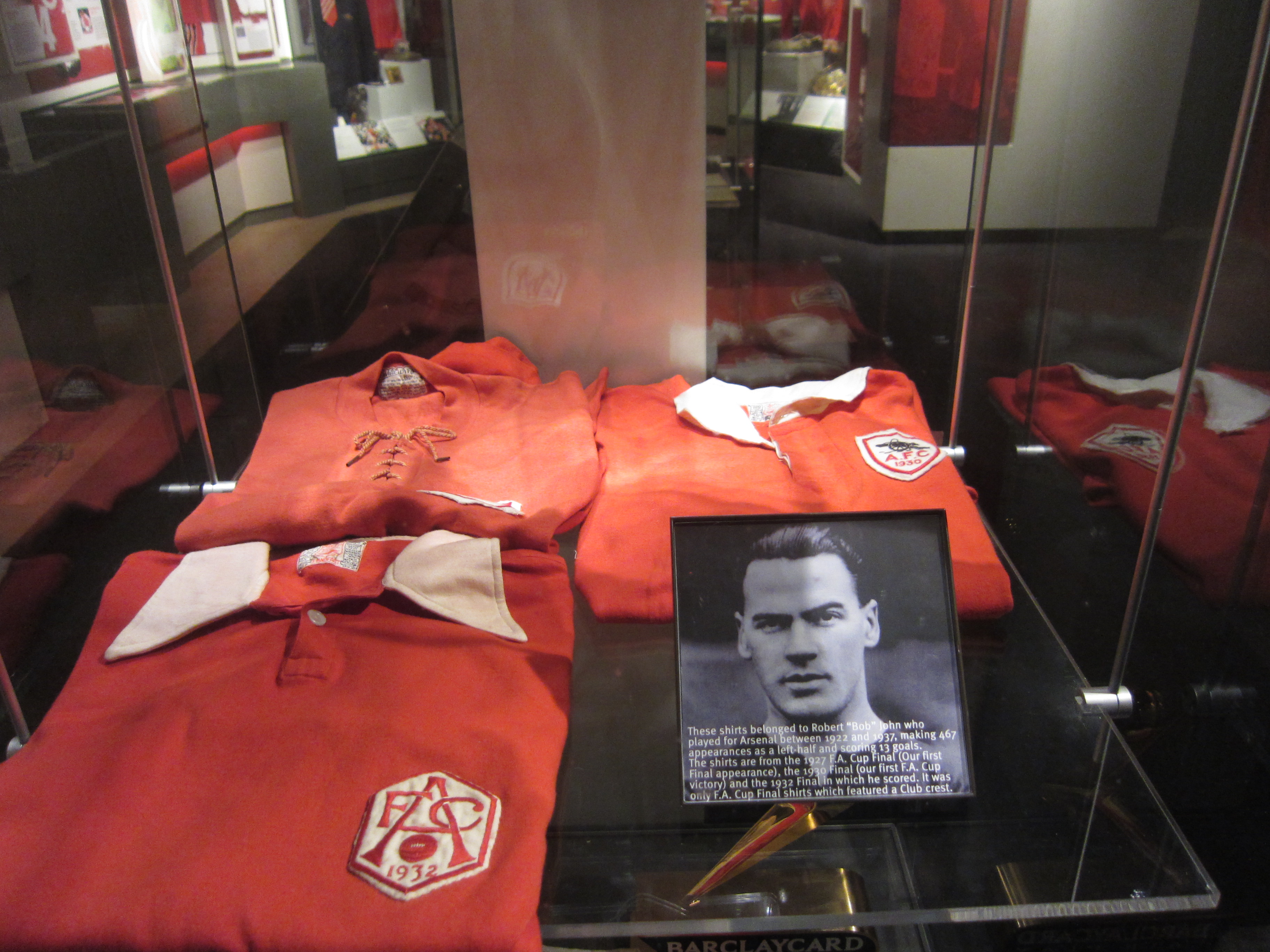
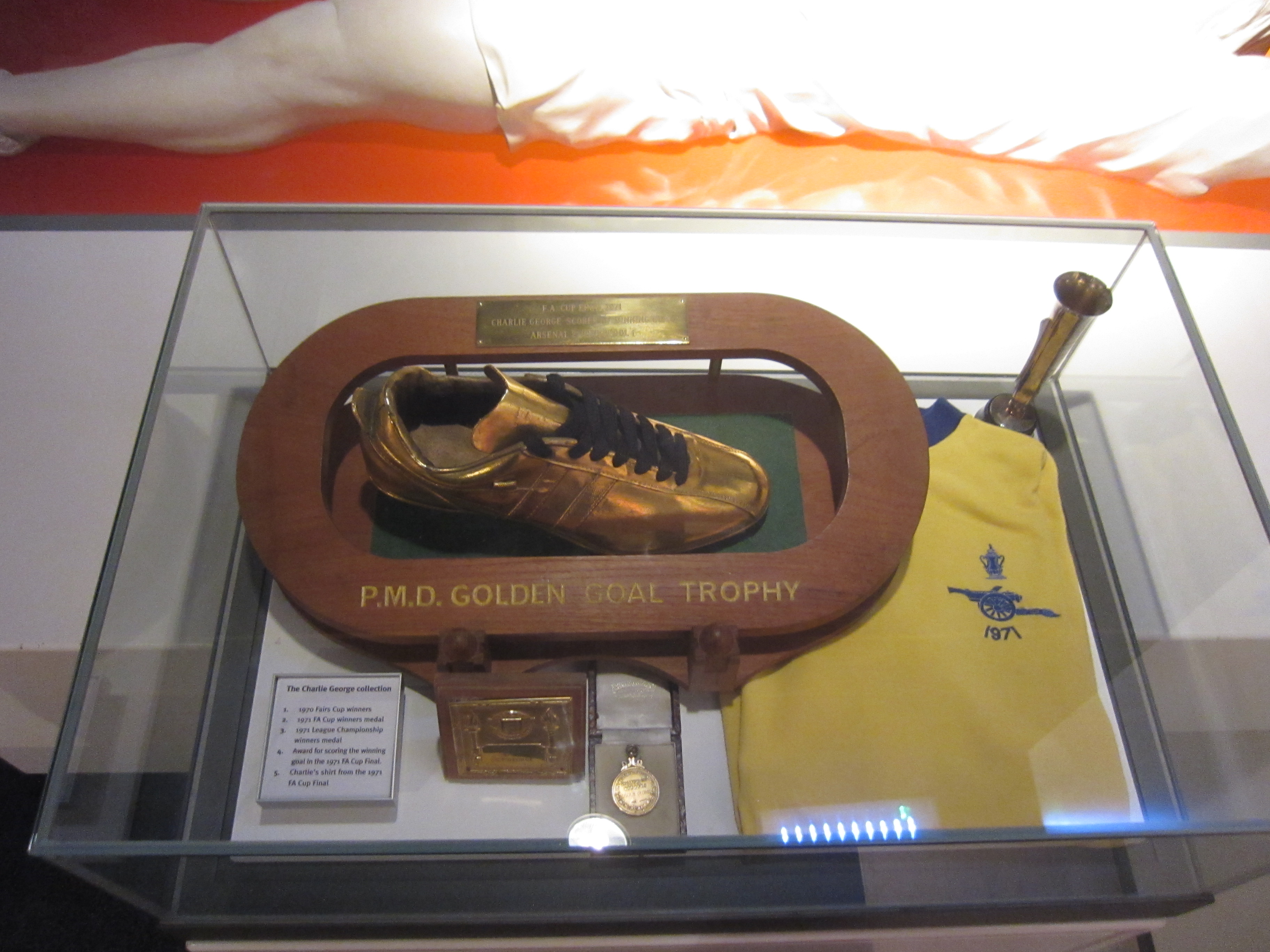
For instance, Pat Jenning’s shirt from the 1980 Cup Winners Cup Final is folded, so you can only see the embroidered crest. You cannot get an impression of how big it is. Whether the elbows were padded. See the (lack of) Sponsors’ logos. You can hardly see it is a shirt. But that doesn’t seem to be important. The same with Charlie George’s shirt from the legendary 1971 FA Cup Final. It is squeezed into a tiny showcase along with other Charlie George objects – whereas four times as much space has been allocated to the slightly ridiculous statue of Charlie George on his back celebrating the goal.

IMG_1472IMG_1473

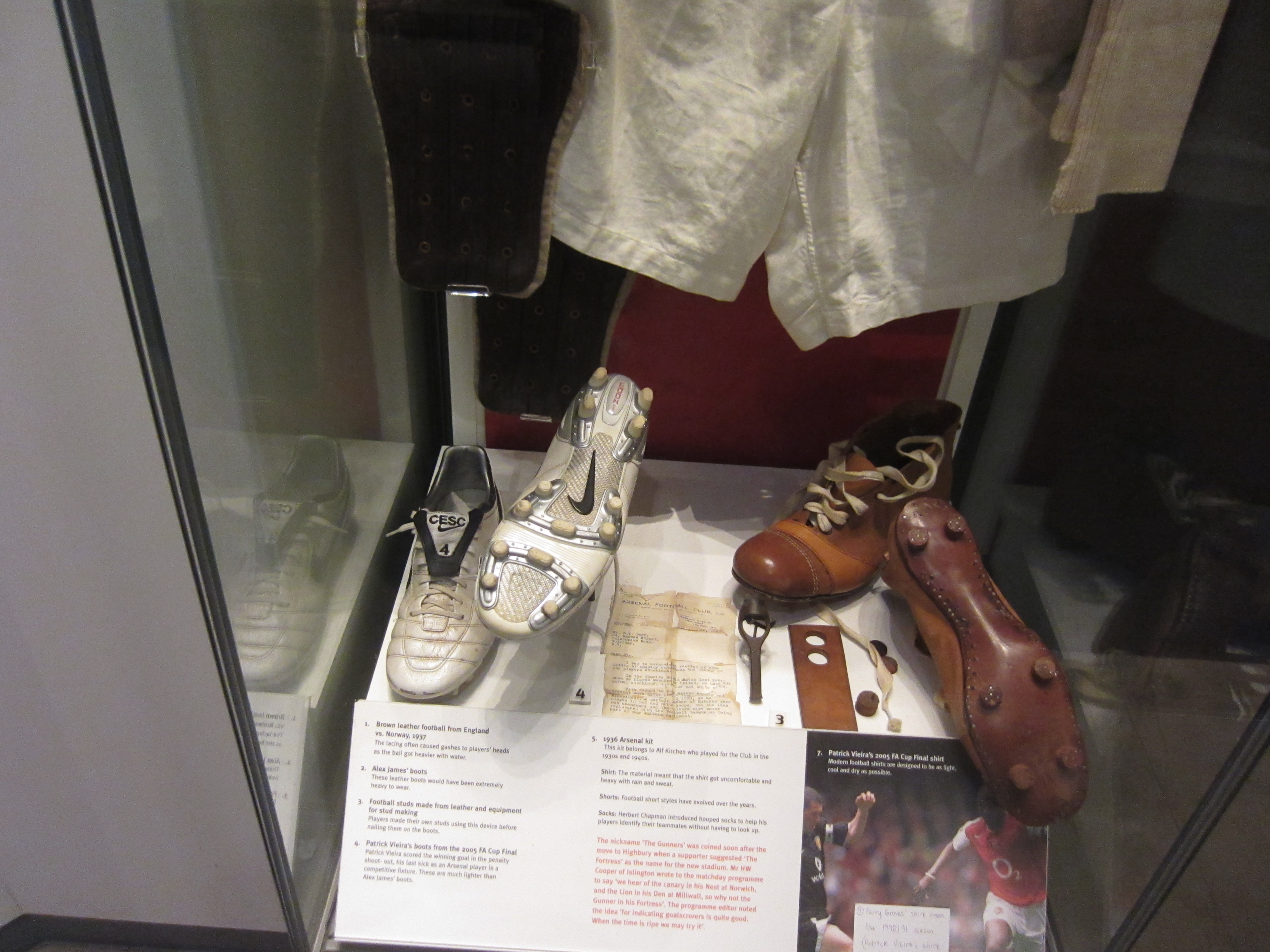
It is a pity, because there are so many interesting stories about the Arsenal shirt that could have been told, actually using displayed shirts. Where you could look and compare. As it is, with one exception, the shirts are only displayed as relics of players, the exception being a shirt from 1934/35, the first season when the red shirt had white sleeves.  Still, the story about the shirt is not really developed around the showcase, although you can find a little more about on an adjacent touch screen. It must have been these touch screens that made the ticket seller advertise the exhibiton as “inter-active”. But there is no real interaction – only choices of pages on screens. And compared to other museums, the touch screens are not really cuttingedge technology.

IMG_1422IMG_1426IMG_1428

To be fair, there are several interesting objects on display, apart from the 1934/5 shirt. For instance, there is a lot of good archival stuff,  with Archibald Leach’s stadium plan, player contracts, letters to parents of youth players, photos, rule books, an old song sheet, match tariff boards among them. Particularly the section around the stadium and the fans has some interesting stuff, again mainly archival, but there is also an old fans’ rattle, and a couple of horse shoes excavated from under the North Bank of Highbury. Legend has it that a horse and cart fell into a hole during the constructon in 1913 – and the text plays on the possibility that the find could be connected, although it would seem strange that there should be no other remains than two horseshoes. Anyway, a good story that makes you look at the objects and form your own opnion.

IMG_1328IMG_1347IMG_1525

It is, however, a bit worrying to see the condition of a letter from Herbert Chapman to Jcok Rutherford’s family from 1925. It has faded so much, that only the signature is clearly visible. Being displayed in very bright light won’t do it any good.

IMG_1380

There are also fine objects such as Herbert Chapman’s hat and chair, the phone in the Directors’ box from which George Graham instructed the bench and the centre-spot from Highbury. Several players seem to have donated small collections of items, such as Charlie George. But they are not really used for telling stories except the glorious ones about wins and heroes.
IMG_1366

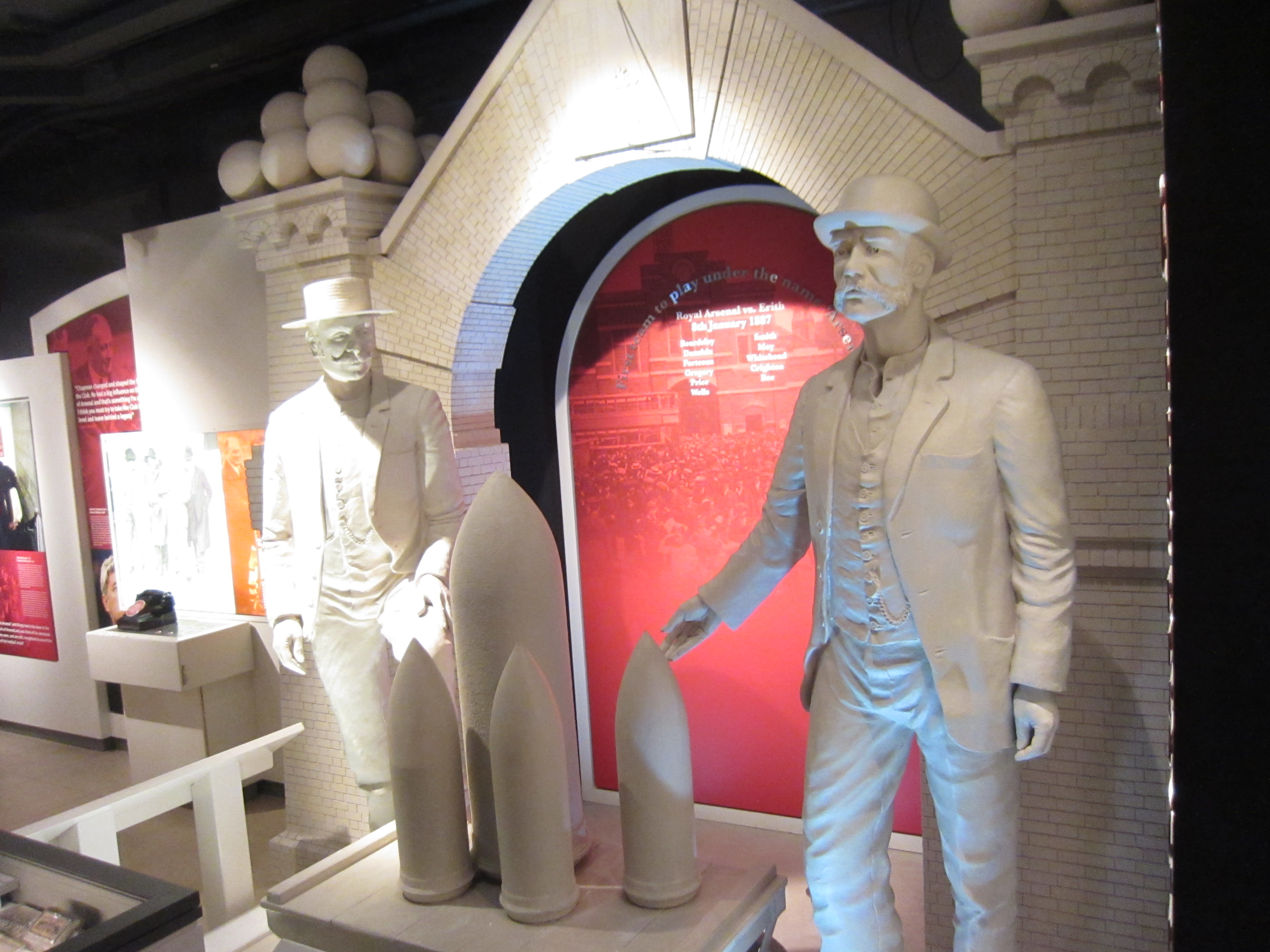
In general, the Arsenal museum has so much focused on an overarching story of glory, that there is hardly any room for the little interesting stories that are easy to grasp, and you can take away with you. There are short mentionings of Arsenal and Tottenham playing each other to raise money for the Titanic Disaster Fund; that Arsenal played at White Hart Lane during WWII; that Herbert Chapman fostered team spirit through golfing; but these stories are rare and not unfolded. Even the story from the early days, under the Boer war, when the munition workers had to work overtime on Saturday, and therefore couldn’t attend matches and forced the club to become a limited company, is not told.

Character: Very boastful, and, despite some talent, very little substantial to show. Niklas Bendtner.

Tagged with: , ,
Posted in Football museum, Football museums, Uncategorized

The Chelsea Museum

 IMG_4464IMG_4469

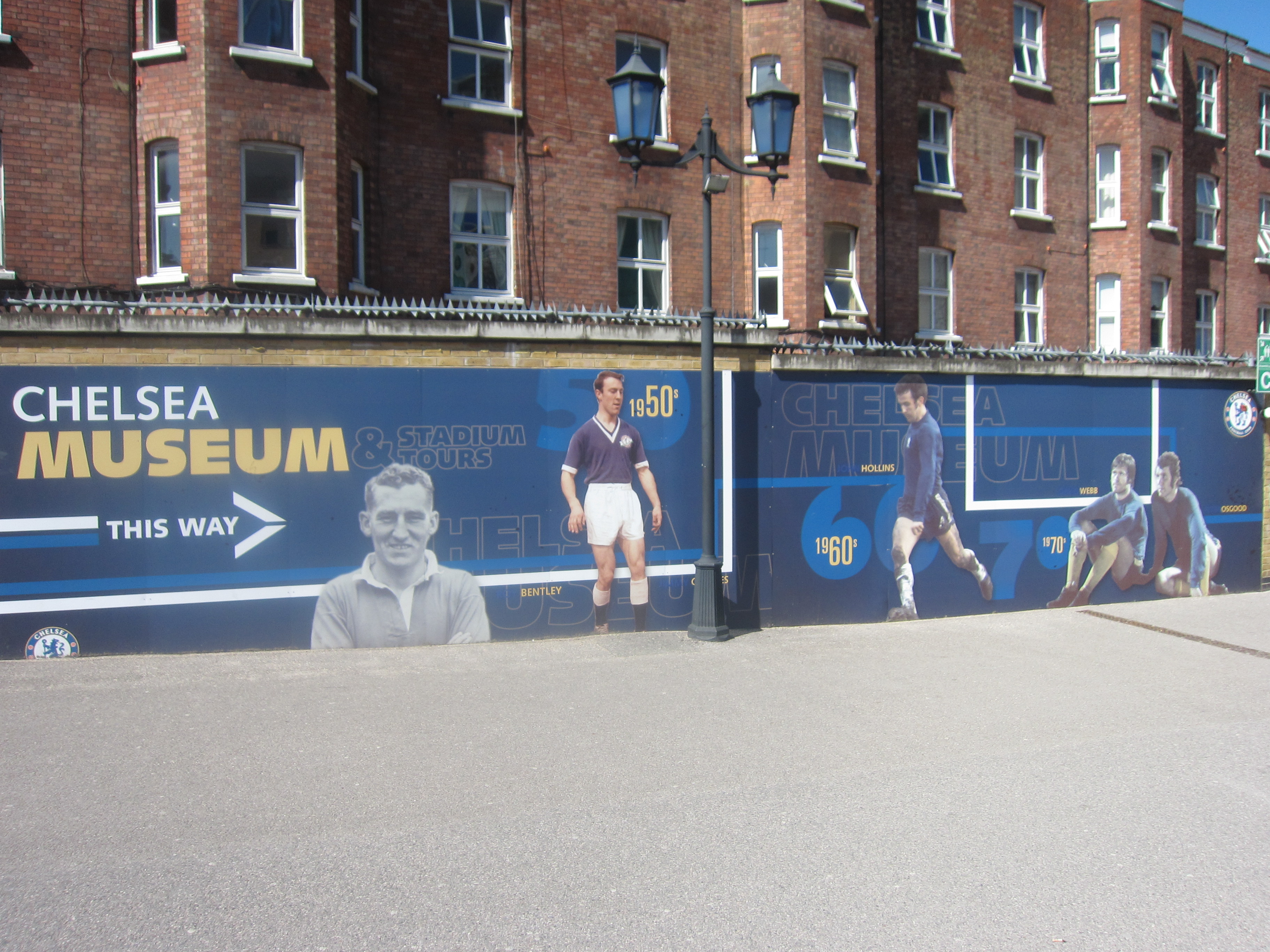
I had heard a lot of negative things about the Chelsea museum, before I visited it, so my expectations were not that high. On a symposium on football museums, the designer Chris Mather claimed that the brief had said “Get them inside and on to the souvenir shop as quickly as possible”. In fact, I have been told that the development and designing process was just as quick. Five months, it is claimed, it took to plan and build the museum in the 670 squaremetre space in a building behind the Matthew Harding stand at Stamford Bridge. I have also heard fellow Danish museum professionals exclaim how disappointing they found it, but in all fairness, I have not heard many positives about football museums from fellow museum professionals, with The National Football Museum in Manchester an exception.
IMG_4486IMG_4497

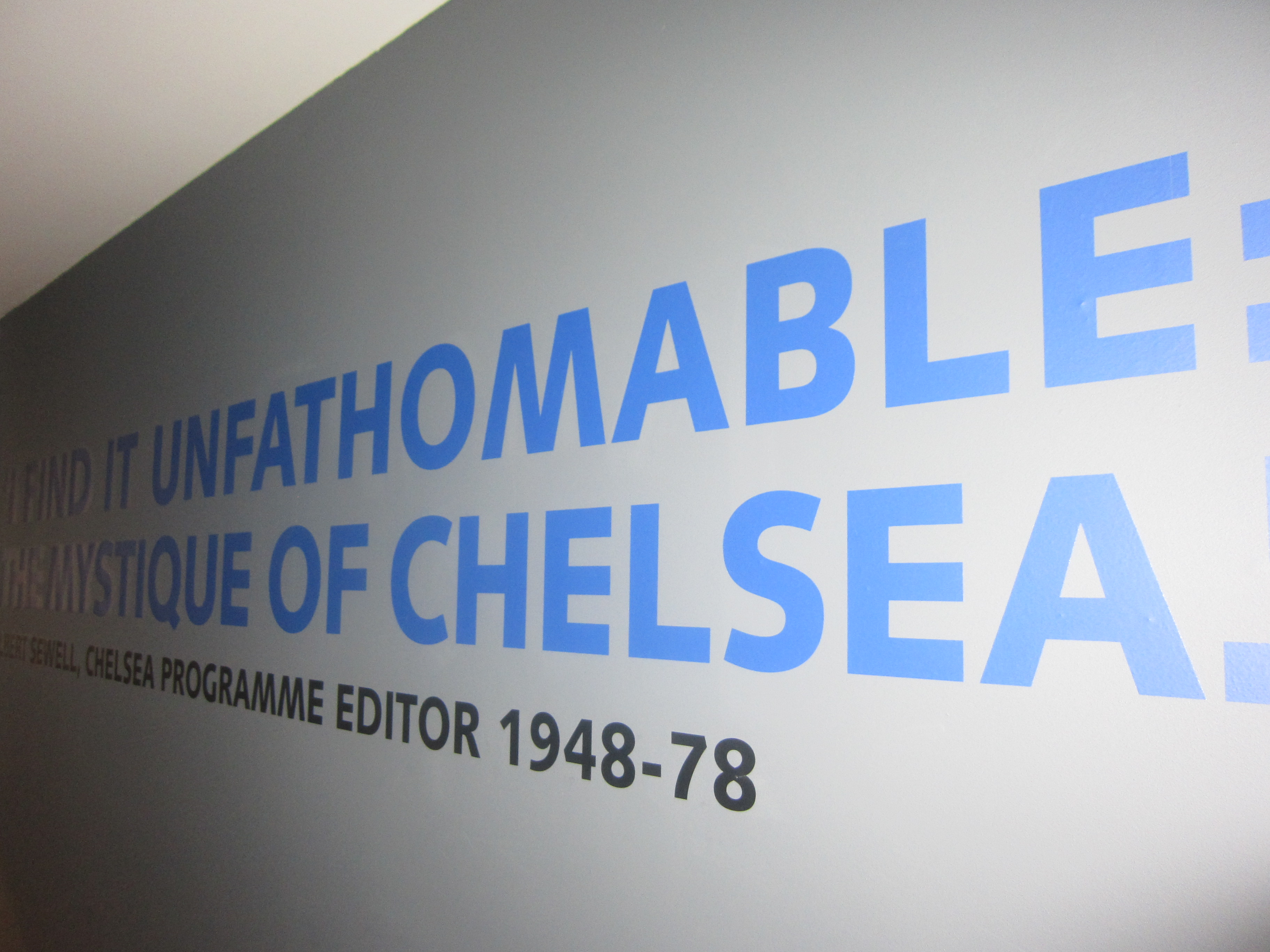
To some extent, I can understand the criticism. The exhibition has been put up so hastily that, for instance, the welcoming quote from Albert Sewell, the programme editor “I find it unfathomable: The mystique of Chelsea” is impossible to read in the corridor, unless you use the flash of your camera to lighten up the darkness – and the positioning of the following texts is very poor, and they are very difficult to read because of the small size of the text and the use of white letters on a light blue background.

IMG_4534IMG_4663

And when you look at it, the collection does not seem overwhelming. The exhibition is definitely not carried by the objects but rather by the head- and storylines in huge printing on the wall. And this is often more boastful than informative.To give an example. A collection of shirts are displayed under the headline “On 25th August 1928 Chelsea became the first team in London to wear numbers on the back of their shirts”. Actually, on that day, numbers were worn in two matches, Sheffield Wednesday vs. Arsenal and Chelsea vs. Swansea. Another example of the text, perhaps, going a bit too far is: “No set of supporters has embraced overseas players more than ours. As communication shrinks the globe and Chelsea’s popularity broadens we can truly say that the planet is slowly turning royal blue”. Or what about this quote: “They are a cosmopolitan, philosophical tribe down in west London, they march with the times, sometimes ahead of it: they accept change, knowing that nothing remains static”.

IMG_4496IMG_4513

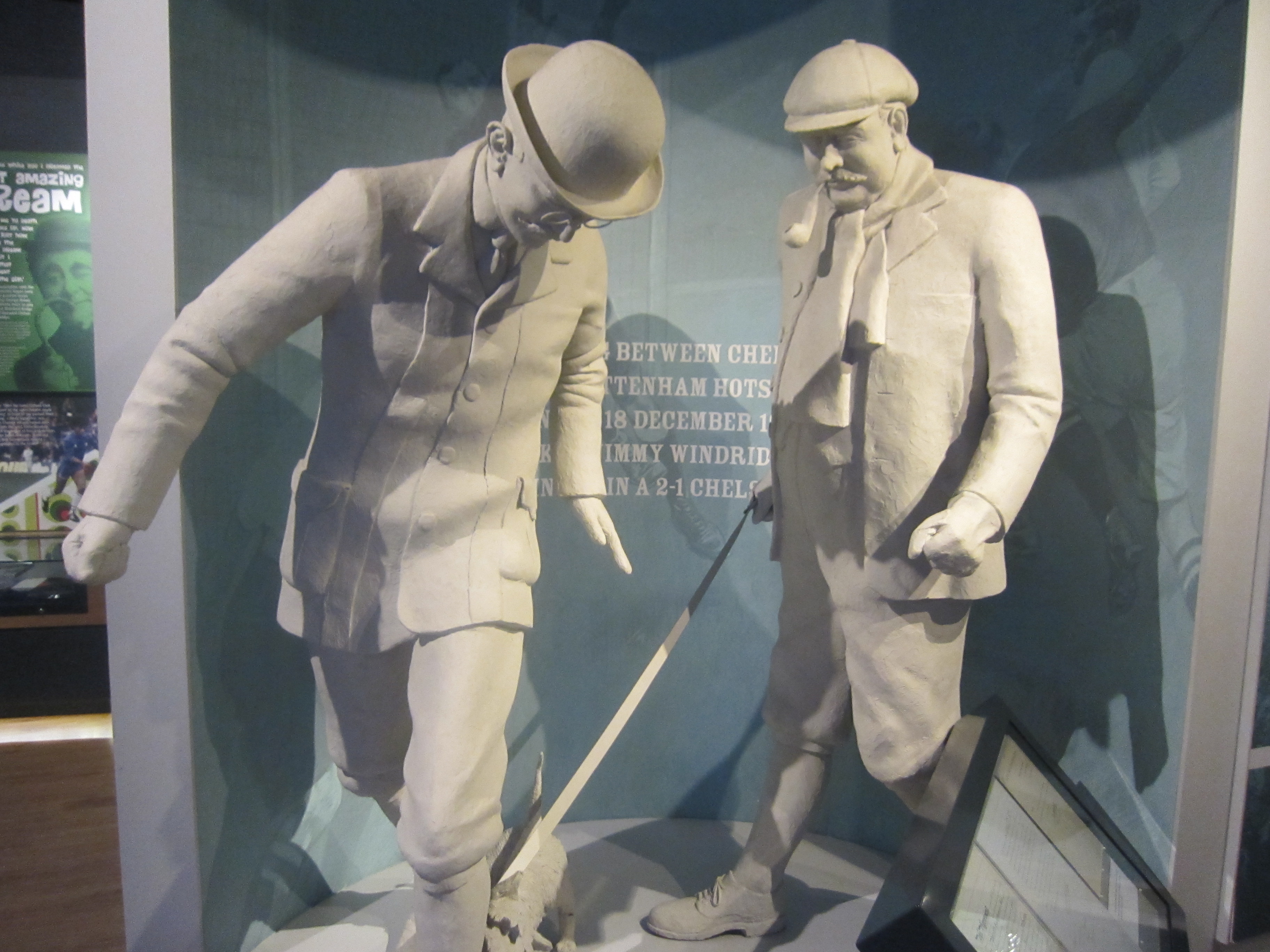
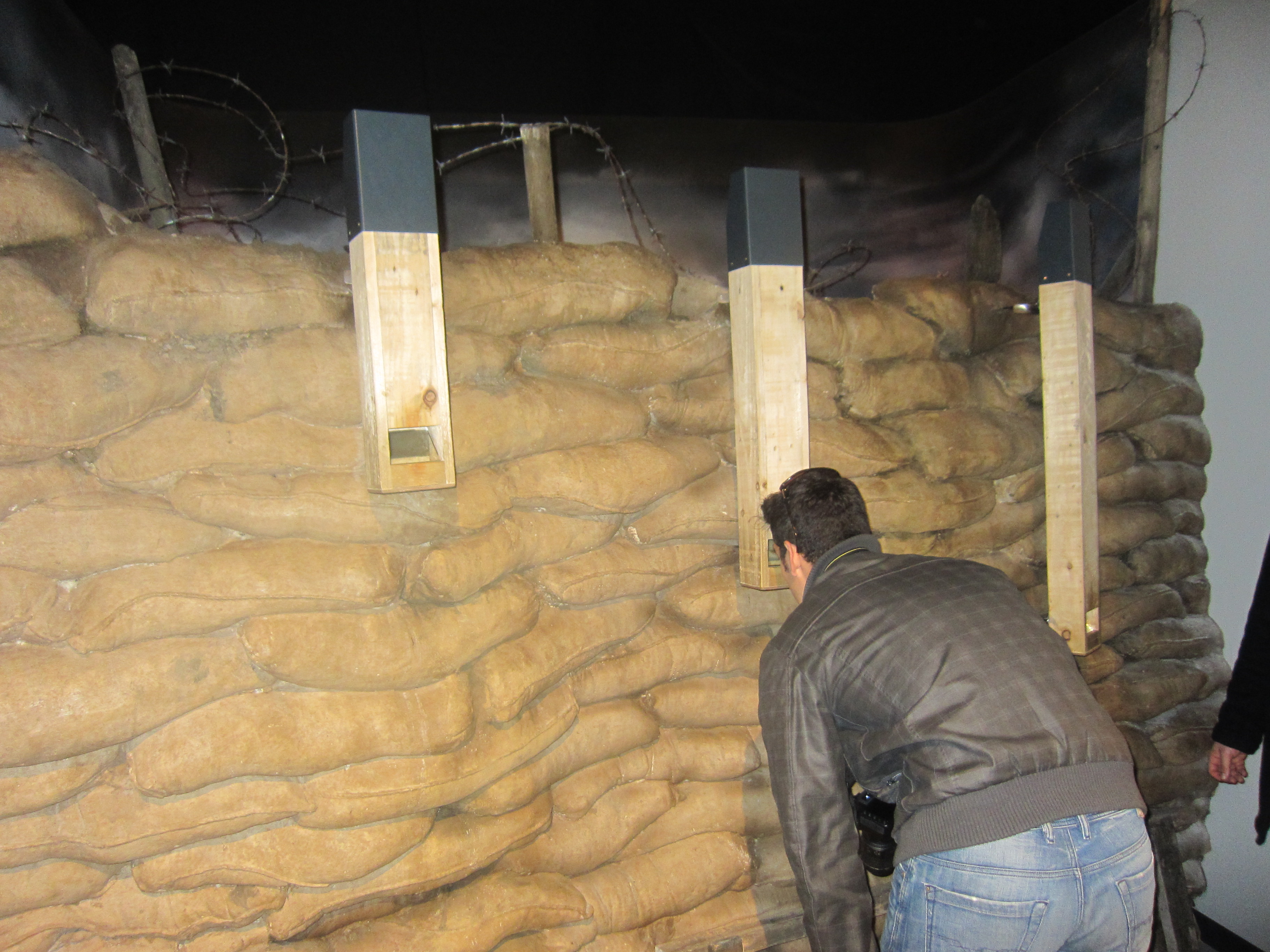
Apart from the sometimes rather boastful texts, statues of players are used to help the story along when there is a shortage of museum objects. Personally, I don’t like them – I find them a bit ridiculous, but they seem to be a trademark Chris Mather thing with statues also crammed into the Arsenal museum and the now closed Manchester City museum. But I must admit, that the first world war trench in a football museum (which is the iconic representation of WWI in all military museums) took me so much by surprise that I studied the section on Chelsea during the wars more carefully than I would have done otherwise.

IMG_4549_1IMG_4541

There are other Mather trademark elements. The shooting and reflexes galleries, the photo-sessions, the 3D film. Which probably gives the impression of the exhbition being both interactive and innovative. But I would prefer a kind of engagement, where visitors could share their stories and experiences, engaging with the exhbition rather than being distracted from it.

Having said all that, I think that there are a lot of good things in the Chelsea museum. It is probably club historian Rick Glanville who was chosen the themes on which the exhibtion focus. Which are the football ground Stamform Bridge, Chelsea at war, Chelsea’s international connections and “swinging London”. True, there are more sections like the shirt one, the “wall of honour”, “What it takes” and a couple of others. But the first four stand out, because they really give you something to reflect on.

IMG_4523IMG_4524_1IMG_4528IMG_4518_1

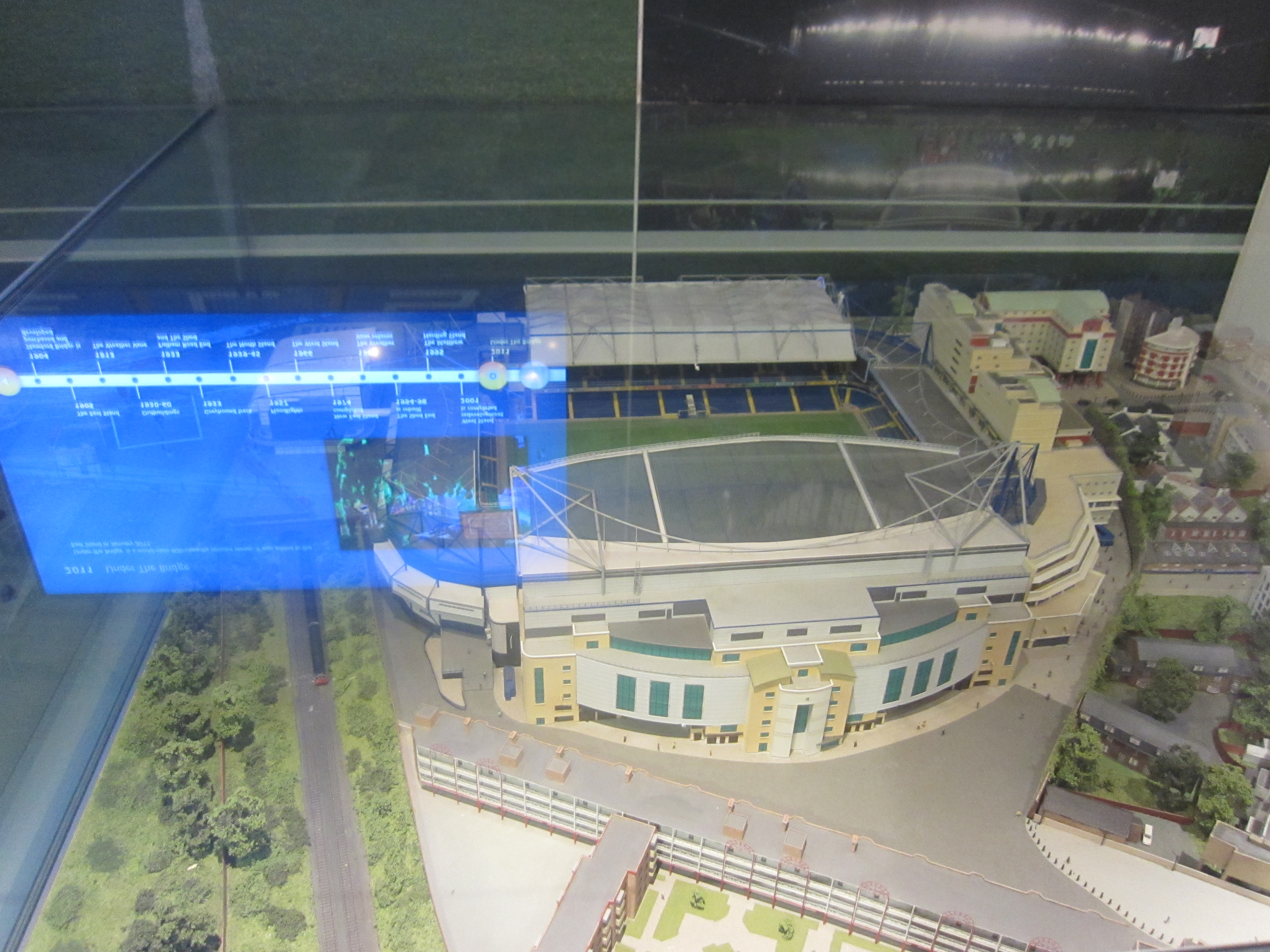
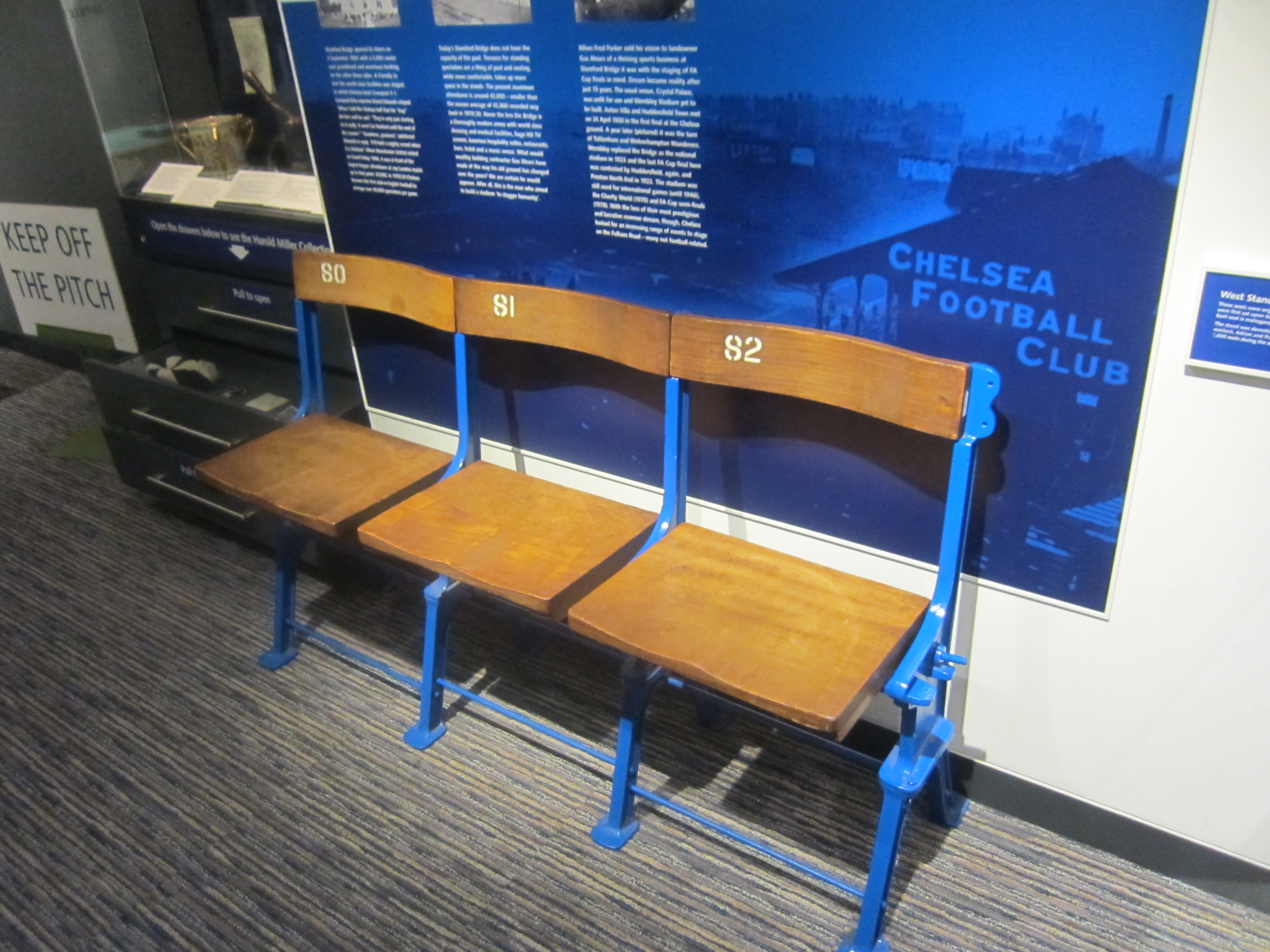
I think it is brillant to spend so much space on two giant models of Stamford Bridge in the sixties with the impressive terracing and the modern ground. Among the exhibitits are wooden chairs from 1966-97 and a shirt from the campaign to save the Bridge in the 80’s, There is a really good mixture between texts, photos, a digital timeline, and screens that contrast the football experience “then and now”. Comparing and contrasting is always powerful in museum displays. Perhaps it would work even better, if the wooden seats were supplemented by modern plastic ones.

IMG_4595IMG_4610_1

This tecnique is also put to good use in a showcase in the “Players, managers and directors – even grandstands – come and go, but the supporters always remain. What changes have the generations of Chelsea fans witnessed over more than a century of football at Stamford Bridge?” display. A shinpad from the 1920’s besides a modern one. Tracksuit tops from the 60’s and today. Boots and football – juxtaposed so they show change. And in this way making very good use of the apparently rather limited collections at the museum’s disposal.
IMG_4543IMG_4546

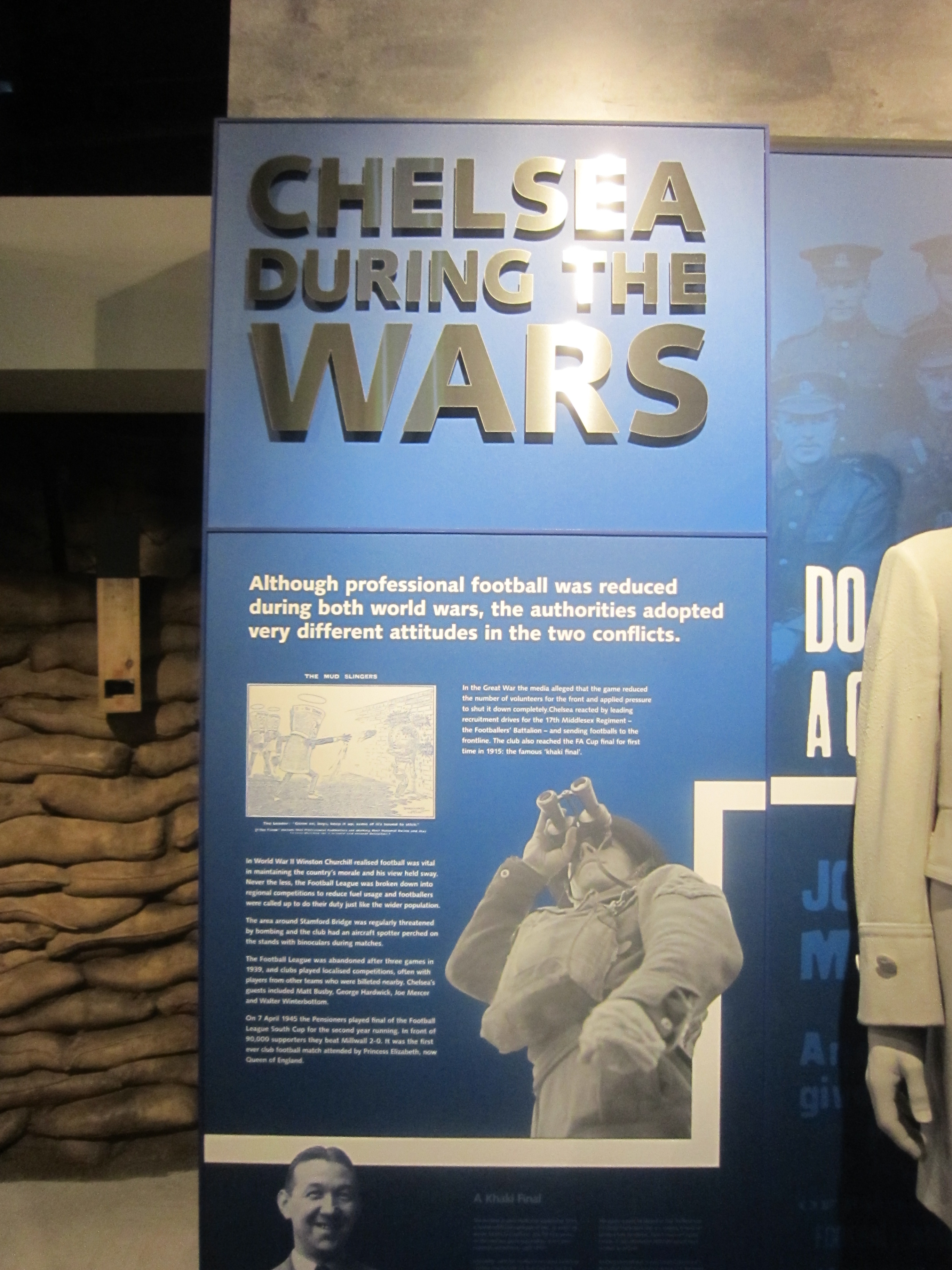
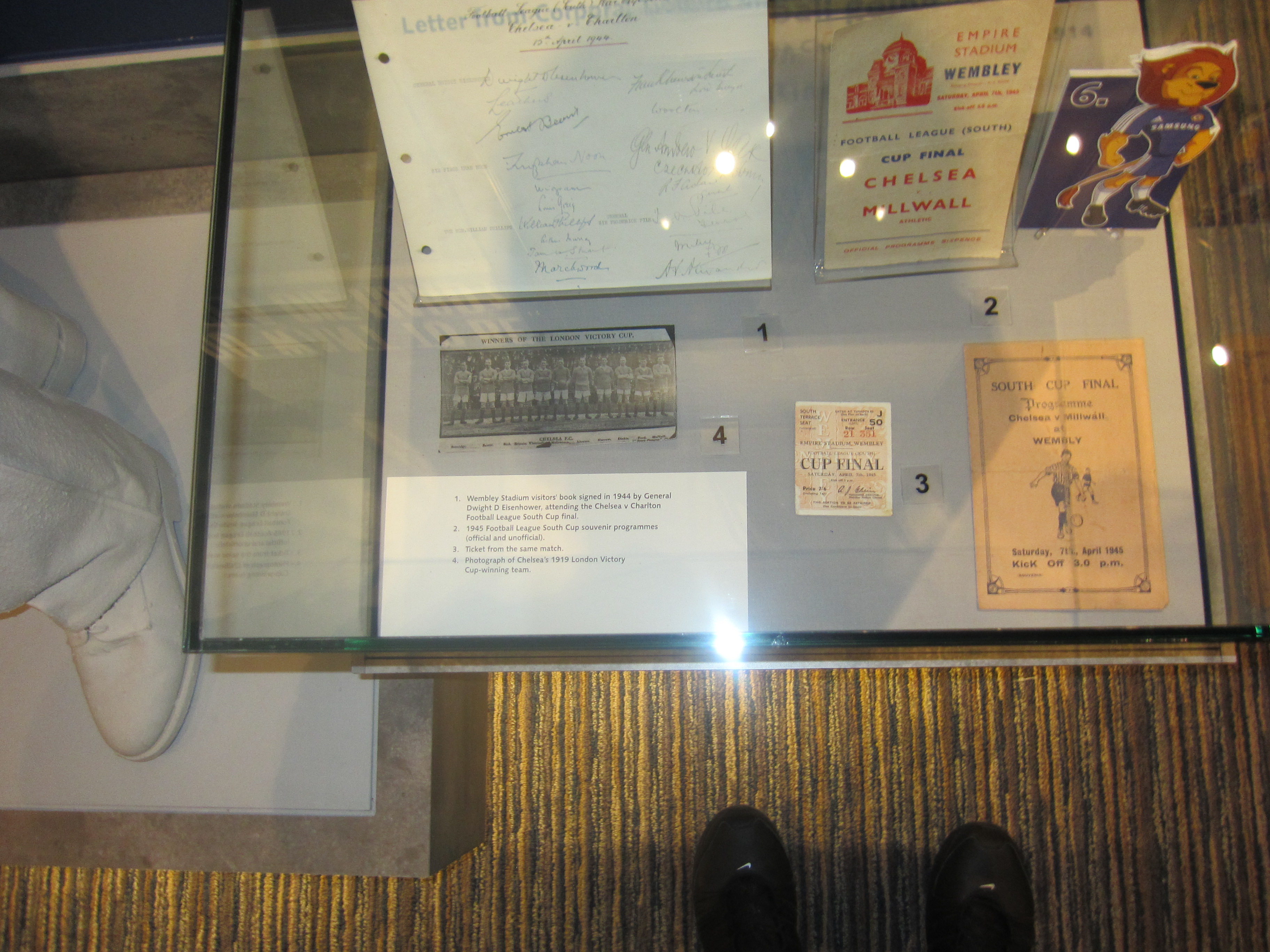
In the Chelsea at war session, the eyecatching trench experience may be a bit too much. And technically speaking, the relatively large amount of text is not comme-il-faut in museums. But the stories about Bob ‘Pom Pom’ Whiting, who was found guilty of desertion on the day of his child’s birth – and was eventually killed by shell-fire in 1917 – and the Chelsea manager Bob Birrel defusing an unexploded bomb on the stadium terrace in order for a match to go ahead, are the sort of vivid stories that you remember long after a musem visit. It may be that the texts are longer than the perceived norm. But if they had been shorter, they wouldn’t have conveyed such interesting stories. And there are really interesting objects as well. For instance the visitors book from Wembley, signed by Eisenhower attending Chelsea vs. Charlton in 1944. In fact, that story could also have been unfolded even further.

IMG_4552_1IMG_4563_1

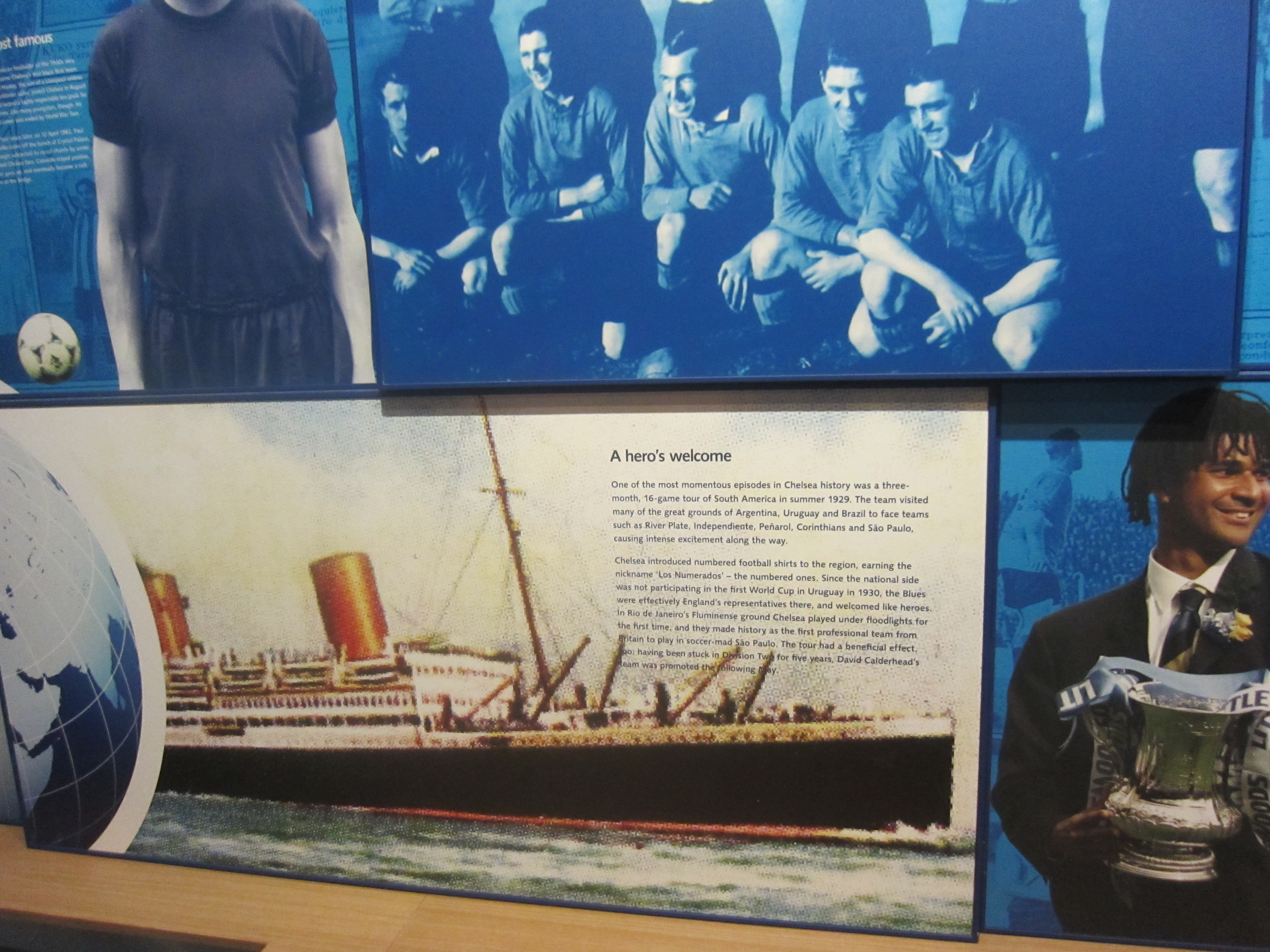
Judging from the objects on display, the bulk of the Chelsea collection has been presents from trips abroad along with a programme collection. So a lot of these objects have been used to illustrate the “Blue planet” section. This section does add a further understanding of Chelsea to an outsider like me. The year after the club was formed, in 1906, they toured Europe with Denmark the first port of call – which was not that common in those days. They went to South America for three months in 1929 – and featured a Jamaican player in the 30’s (but no mentioning of present owner, Abramovich). Perhaps the section could have been more focused around these events (there is, for instance, a travel itineray exhibited in another part of the exhibtion which would have fitted in better here than some of the other objects, although as a Dane, it was great to see the ball from Nils Middelboe’s debut in 1913.). But for facts/stories that are suited for presentaion in the museum medium, these are very well selected.
IMG_4590_1IMG_4594_1

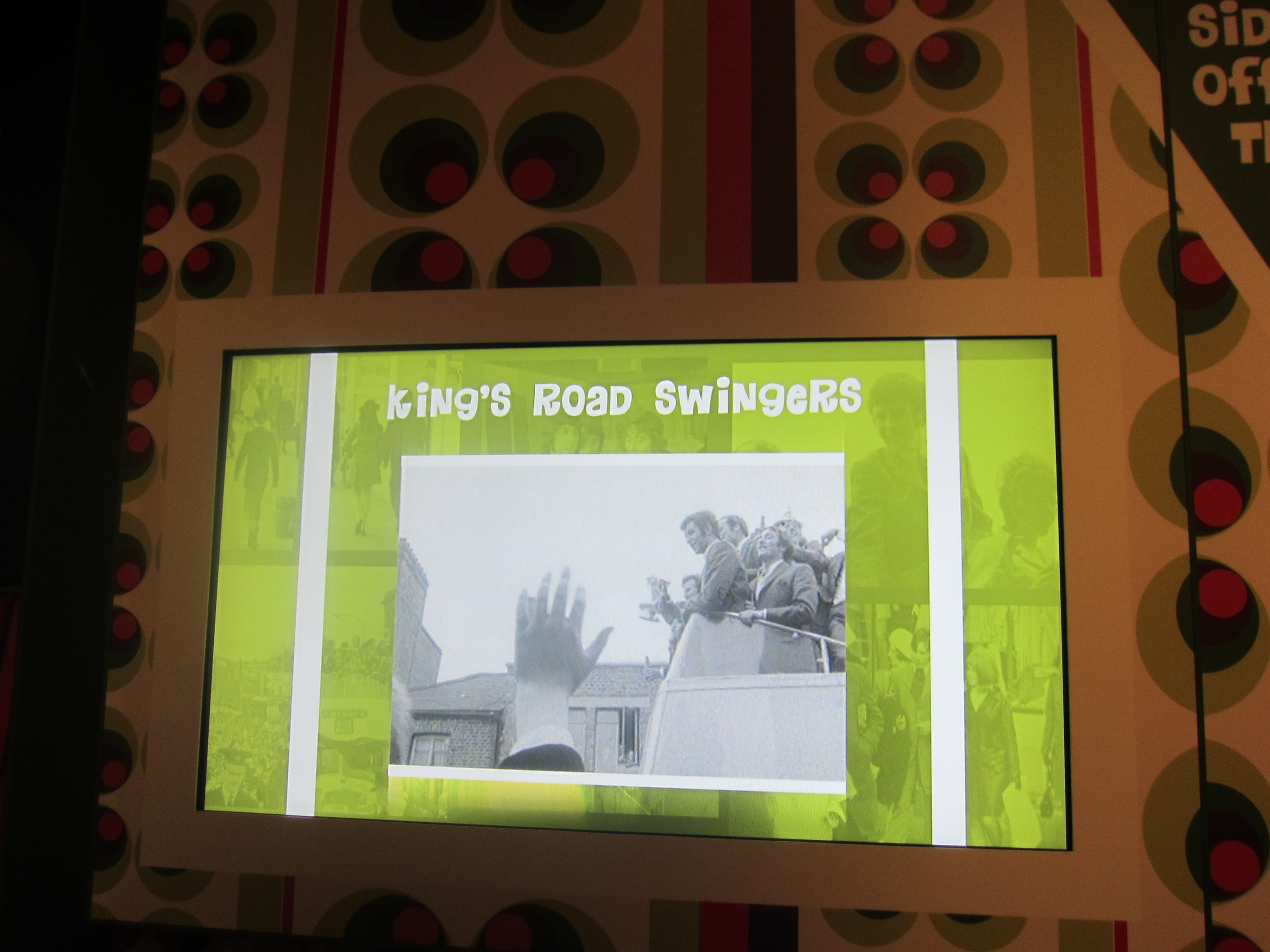
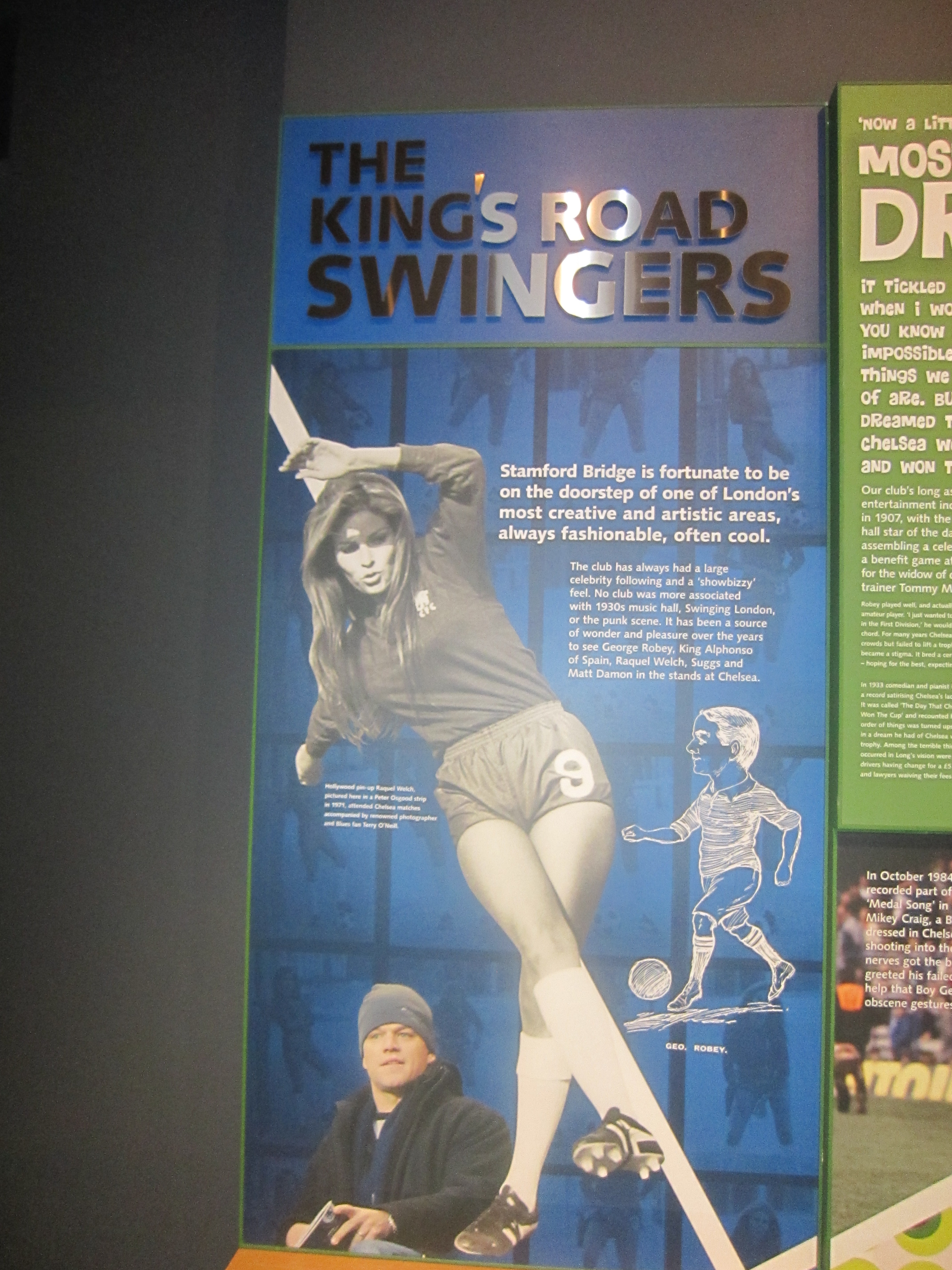
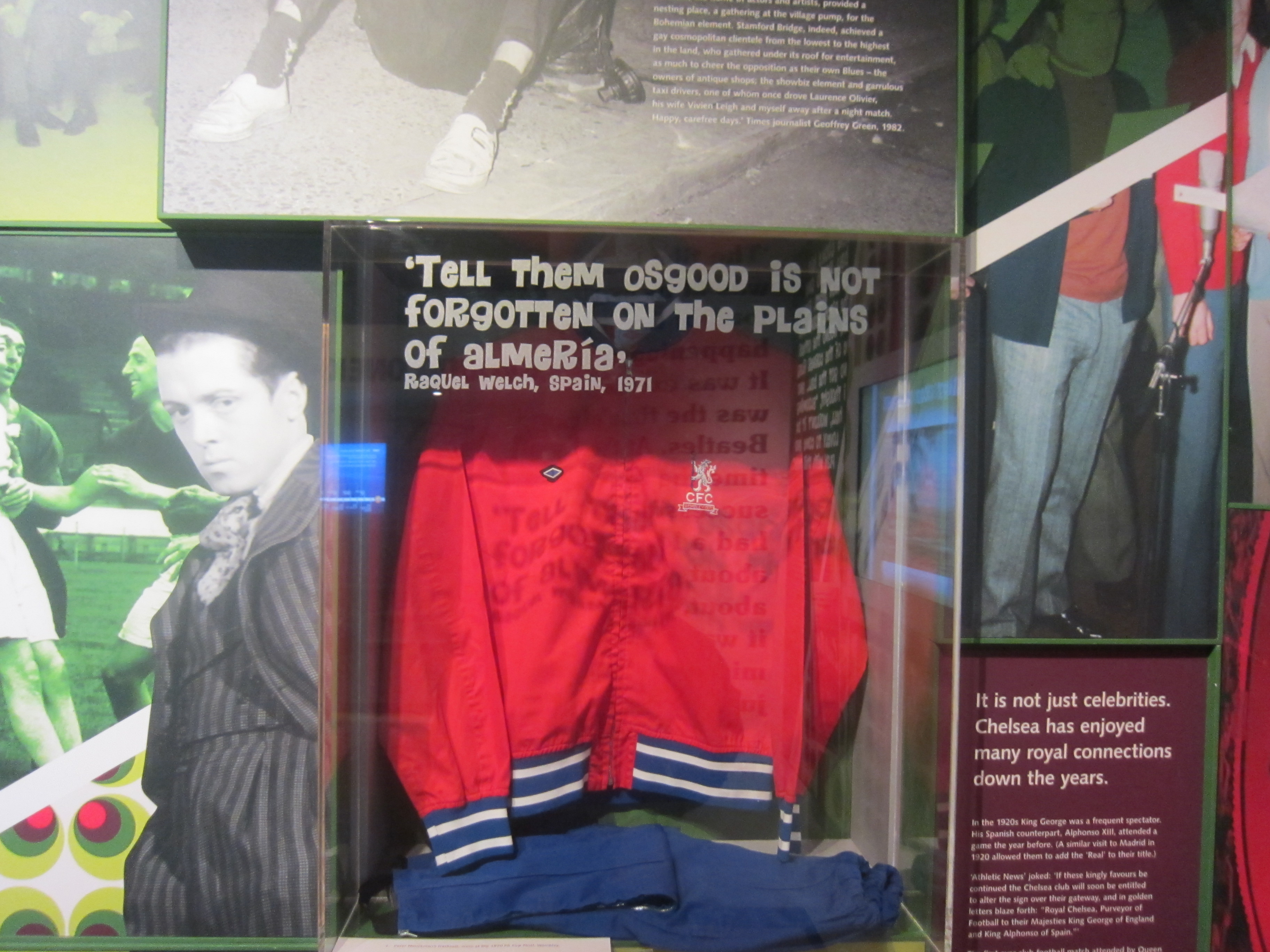
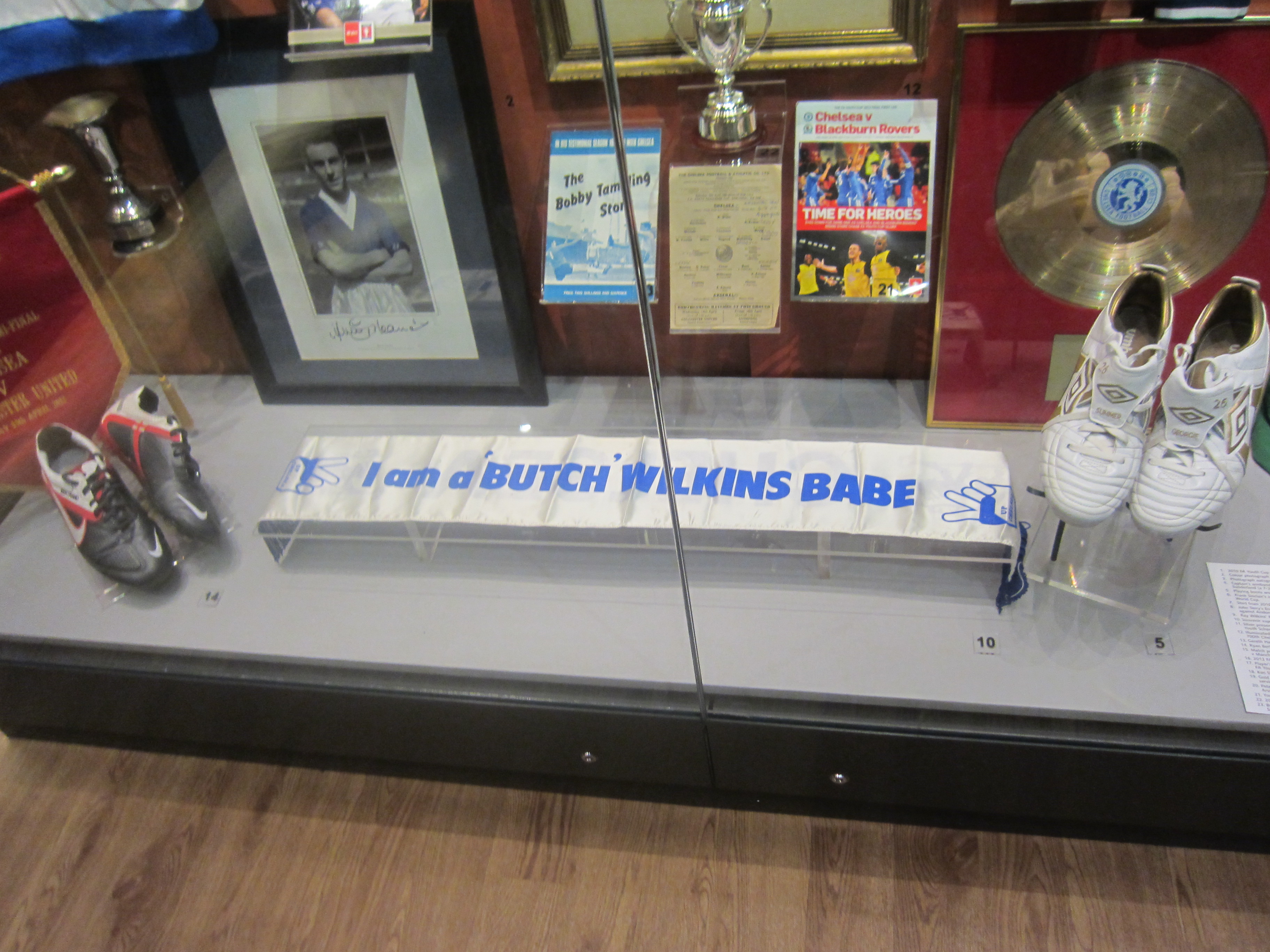
And I also like the “Kings Road Swingers” section. The graphics. photos, quotes, Peter Osgood-related objects and music (the 1972 “Blue is the colour” Cup Final record) really gives a wonderfully cohesive impression of Chelsea as part of swinging London. The objects in themselves are not sensational, but the staging of them in a context is well done. Perhaps there could have been a bit more focus on Peter Osgood – but instead Raquel Welch is quoted: “Tell them Osgood is not forgotten on the plains of Almeira”, accompanied by a photo of her in a Chelsea kit during a film shooting. Certainly to someone who grew up in those years, it works better than more didactic museum texts about what the sixties and seventees were like. But the section would have been even better with a session devoted to fans’ consumption of the games – where the cup final rosette from 1970 and the satin “Butch Wilkins” scarf could be displayed

IMG_4584IMG_4581_1IMG_4644_1

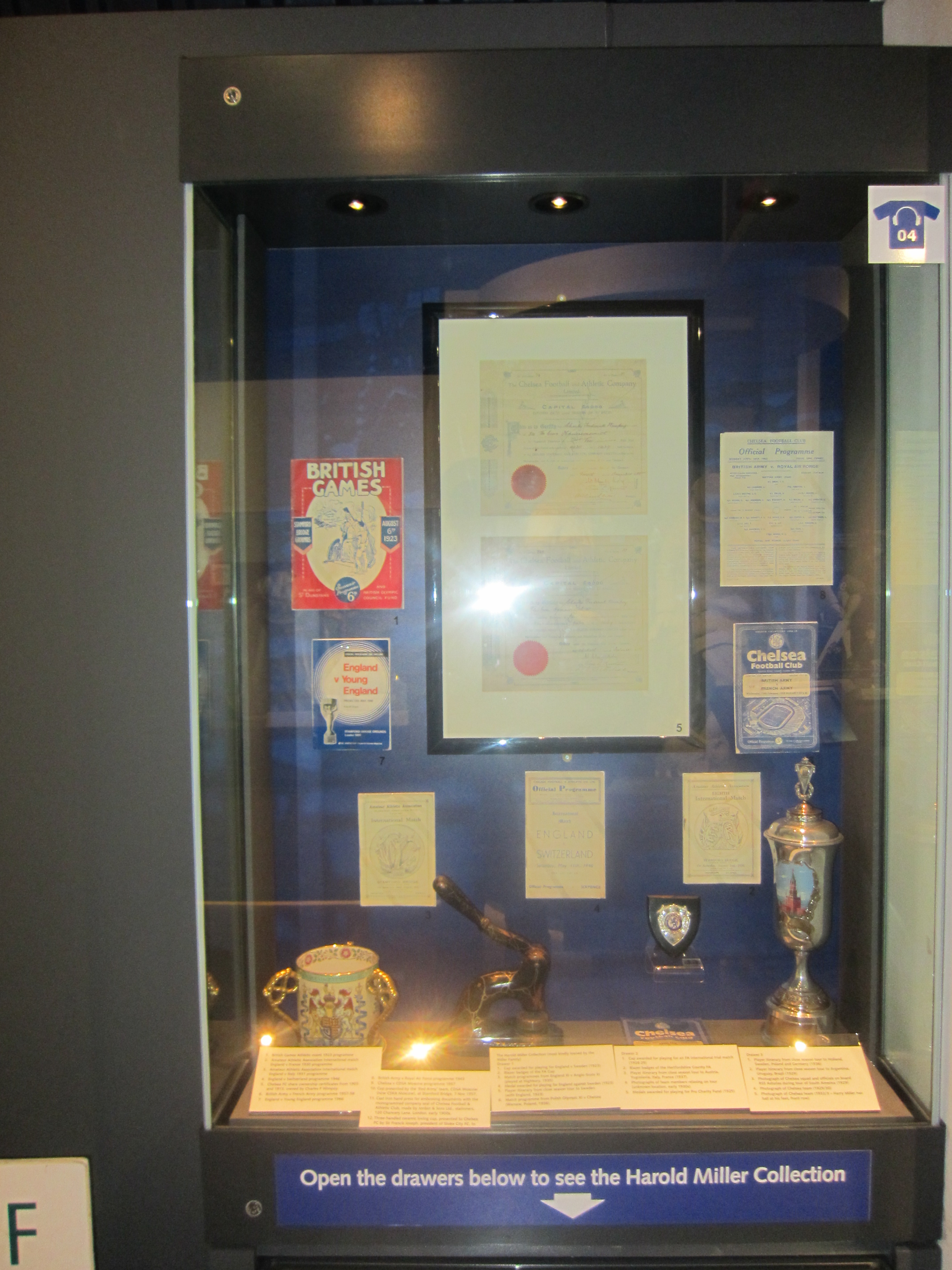
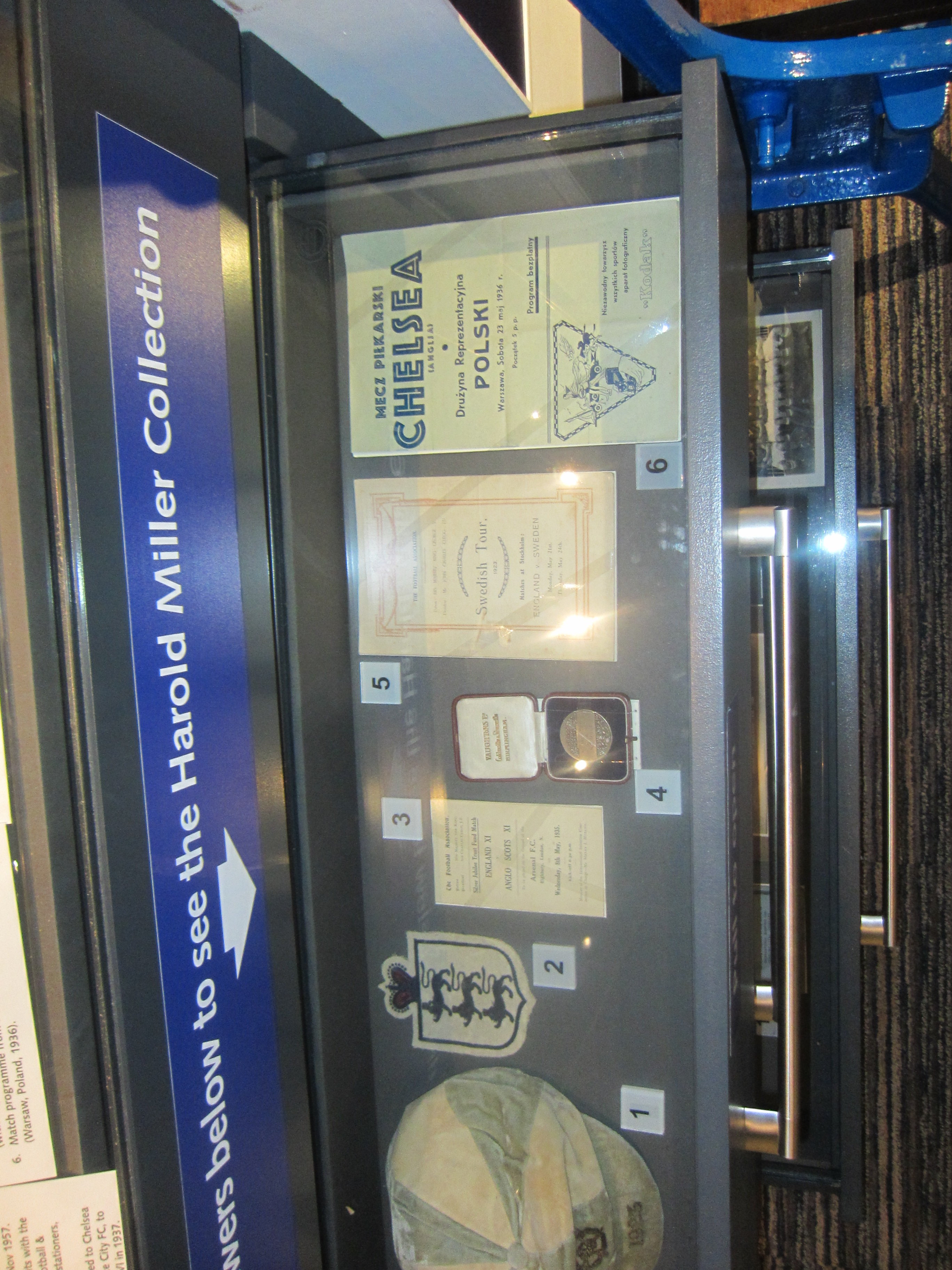
These sections alone were, to me, worth the entrance fee of £ 10. All achieved without that many objects. Perhaps the most interesting collection of objects in the museum is the “Harold Millor Collection” to which there is allocated three drawers in a display case. And it is among them you find a travel itineray from the 1929 tour. But the presentation of this collection is one of the less fortunate examples of the haste with witch the musem has been built. There is no text telling who Harold Miller is/was. As he features on a match photo, you can guess he was a footballer. But what was special about him? And the collection? Besides, the drawers are difficult to pull out and the informarion about the objects sparse.

IMG_4500IMG_4502_1

Character: The focus on the Bridge, the King’s Road Swingers – and to some extent the Chelsea at War and Blue Planet – demonstrate a high awareness of the strengths of the museum as a means of communication. The juxtaposing of selected objects also shows a great positional awareness. But the boastful appearance along with the sloppiness with texts and the presentaion of the Harold Millor Collection really detracts from the overall impression. Missed opportunities. Fernando Torres? Perhaps not boastful enough. Robben’s spell at Chelsea?

Tagged with: ,
Posted in Football museum

The Wolverhampton Museum

IMG_0715
To me and probably many other Danish football fans my age, Wolverhampton Wanderers will always bring back memories of winter Saturdays spent in front of the television, watching Derek Dougan or Kenny Hibbitt in action on a muddy field with the characteristic 7-pitch stand in the background.

Nothing remains of the football ground of the 70’ies; the present four stands have all been completed within the last two decades and made Molineux a modern state-of-the-art stadium. But in contrast to some other modern stadiums, there is a special feeling to it: The elegant yellow bricks walls and marked orange steel constructions, the seating in yellow and black with the ominous Wolves logo, the curving Billy Wright and Steve Bull stands, and the Jack Harris stand build into the hill, where the imposing terraces of the South Bank used to be.

IMG_0876 IMG_0903

In 2008 plans were put forward to rebuild the stadium and fill out the quadrants between the stands to knit them into one big construction – but as it stands, Molineux differs from most other modern stadiums with having four separate stands.  There is a family feeling around the ground. In the brand new Stan Cullis stand from 2011 there are baby change facilities, accessible toilets, and whereas other grounds threaten spectators with arrest if they take alcohol into the stands, the signs kindly ask people to “Drink up. Please don’t take alcohol past this point”. Judging from the menus, the catering also looks more diverse (and healthy) than in many other grounds – and the walls inside are decorated with art. The location of a hairdresser at the ground only adds to this family friendly atmosphere.

IMG_0893 IMG_0894

You are greeted with the same sense of a family club when you enter the purpose-built museum in the Stan Cullis stand. A film of Wolves fans of different age, gender, ethnicity express their loyalty and passion – “We are Wolves”.  Once you have entered through a turnstyle, you can choose between an activity area, a chronological presentation of Wolves’ history  or skip to series of thematic displays ending in a hall-of-fame.

IMG_0471

Chronological presentations quite often become rather tedious in museums. Allowing chronology rather than objects to structure the room, objects are often reduced to props to illustrate the essential text. And it can quite easily generate museum fatique, as visitors sense that they have to keep walking and reading for a considerably distance before coming to the most recent and probably most interesting  sections.

But in this case I found it captivating. It is not that the objects on display differ that much from objects in similar museums. They consist mainly of tickets, teamsheets, programmes and posters from matches; shirts, boots and the odd football from the players; cups, medals and pennants from big matches; football cards and postcards;  a few rosettes, scrapbooks and other fan’s memorabilia. Supplemented by odd items such as a seat from the ground in the 1930’s, celebrity fan Robert Plants Wolves Head, and, the star object: a diary from a European tour in 1938.

So why did this “standard” set of objects work so well?

Firstly, the design was inviting, the golden background creating the Wolves atmosphere and at the same time forming an aesthetically beautiful background to the wonderful old black and white photos.

IMG_0493

Secondly, the photos were brilliant. For instance the 19th century photo of the Molineux pleasure gardens opens in a wonderful way the story of the club finding its home .  Or the Immortals team from around the century. There are football cards from tobacco boxes, international postcards from the 1930’ies-50’ies, fans’ photos from the cup glory in 1973.

IMG_0567

Thirdly, with the help of small details, the individual sections quite often elegantly relate to the big story. That is particularly the case with the 1938 diary. But the clubs origin and finding a home in the Molineux gardens gives you a distinct view of emerging football in the 1890’ies; the second world war features – the sixties (with Wolves joining the Monkees on a tour in the states); etc.

IMG_0660

Fourthly, the objects are displayed in an excellent way. For instance, the first three showcases you encounter show a shirt and boots from the 50’ies, 80’ies and 2010’s respectively. The showcases are designed as dressing room walls, and beside these central items, you find soapboxes from the respective decades. In other showcases it is a transistor radio or a television set from the 1950’ies .

IMG_0457 IMG_0458

Fifthly, the story of Wolves form a strong narrative with ups and downs – and quite interestingly it seems the story was intended to end on a high with Wolves being back in the Premiership – only for the relegation in the summer months before opening to add another twist in a dramatic tale. A tale that oozes with pride because of it. We are Wolves – and we are not just glory seekers. It also adds authenticity to the museum. A football club’s life consists of ups and downs – without downs, no ups. The chronological part ends with the “We’re Back” story – but in the last few lines, it has been added that Wolves was relegated at the end of the 2011-12 season. Ups and downs – and authentic pain. Or as a quote in the exhibition says: “It’s like being part of a very big family. Sometimes your family makes you smile, sometimes they make you cry and sometimes they make you feel very proud”.

IMG_0579 IMG_0591

In the middle of the chronological exhibition, some of the main characters have got their own showcases. Stan Cullis, Billy Wright, Derek Dougan, John Richards, Steve Bull, and Sir Jack Hayward. Other players are mentioned, and objects relating to them featured. But the Wolves museum has resisted the temptation to overdo it and present all their greats.

The chronological display gives a good reference guide to the thematic displays. These include the ground, fans, youth development, training methods, shirts and equipment. Again there are some brilliant photos and objects to lift most of the stories (although the youth development fall a bit flat compared to the others). Quite often, museums shy away from writing long texts, fearing that visitors will be bored. But here, stories are allowed to be told, as for instance the story of the surviving turnstyle from the old Molineux.

IMG_0731 IMG_0732IMG_0794

The exhibition features quite a few interactive installations, presumably to keep young visitors preoccupied while their parents or grandparents spend time on objects, photos and texts. There is a greatest fan quiz, you can challenge goalkeepers, take penalties etc.  I know I am not the target group for this – and I know that my son enjoyed the similar installations at the National Football Museum. But it does seem a little predictable, if not boring. And within a couple of years it will probably appear outdated and have to be replaced.

IMG_0746 IMG_0845 IMG_0846

And that leads me on to the most negative aspect of the Wolves museum. The admission fee is £ 7.00. You can argue that other museums with similar state of art interactivities charge that – you can even argue that the Wolves museum is much more advanced in this area than, say, Arsenal, Liverpool and Manchester United. But – these clubs attract foreign tourists in their thousands. The exhibition at Wolves will mainly appeal to locals – and to charge that much of your local fan base seems rather problematic.

I think the Wolves museum would be better served catering for the local audience. Making more fans’ displays, or perhaps thematical displays about the social changes to football over the decades – or perhaps like the National Museum of Liverpool dedicate three showcases to fanzine editors and ask them to update them frequently, and make it a venue for fans to meet. And perhaps make that possible for fans by making tickets valid for a year – and perhaps reduce the price.

IMG_0769

Favourite object: The diary from 1938 tells a remarkable story – but it is not the visually most appealing. The price for that is the giant Wolves crest sculpture on loan from Robert Plant – again accompanied with a great quote: “I don’t need the money. You can only have one car and one Wolverhampton Wanderers season ticket”. Well, many present day footballers wouldn’t subscribe to that – but coming from one of the great rock stars, it puts (some) modern footballers’ lifestyle into perspective.

IMG_0827

Character: So which player can sum up the Wolves museum? He may not have made it into the small group of special ones in the exhibition – but it has got to be Kenny Hibbitt. Images of Kenny Hibbitt passionately and unorthodoxly weaving his way through a crowd of players on a muddy pitch at Molineux kept cropping up as I wandered around the exhibition. Pride, passion, dedication, great effort – with a couple of wonderful goals thrown in. I just HAD to buy a 1976 Wolves shirt on the way out!


Tagged with: , , , ,
Posted in Football museum, Football museums

Emirates, London

004005

My first match in England was Arsenal against Manchester United at Highbury 35 years ago, so it is fitting that I end this 17-match trip around English grounds with the same fixture at Arsenal’s new ground, the Emirates. Coaches for the match having sold out by the time I get hold of a ticket, I take the train to London, and I arrive at Arsenal tube station. Perhaps because my first memories of going to a match in the UK are from here, seeing the narrow terraced streets with stalls selling souvenirs and food makes me think that this is more “authentic” than the impressive “City Square” at the Etihad after all.

007009

There is the Arsenal supporters club, with ageing women selling tickets for the coach to Newcastle next week, and people walking in and out for a drink. There is a pie stall at “Piebury Corner”, with a selection of pies named after Arsenal players. I opt for a “Tony Adams” – fitting name for a steak and ale pie! And it is quite good as well! And, of course, plenty of stalls selling old programmes or souvenirs.

011016013

Strikingly though, half the people at this time of the day (3 hours before kick-off) are Scandinavians and Asian tourists. Like me, they walk to Highbury to see the former ground turned into apartments. Having just seen the sorry state of Filbert Street in Leicester two days earlier, this is really THE way to preserve the important cultural heritage that football grounds embody. Of course, the art deco façade of Highbury is more appealing than some of the other grounds, but still, they could have tried to maintain some sort of resemblance to the shape of the ground when building new houses at Filbert Street. For this reason alone, Arsenal is definitely worth a visit when in London.

023

I move on to the new stadium, the Emirates, just down the road. It is nice that they haven’t moved it to a space far from the old ground. But having just visited the Etihad in Manchester the previous day, I am not too impressed. There is not the same integration of the different facilities around the ground; and it does not have the same finishing touch as the Etihad. A friend who is an architect as well as an Arsenal fan has called it “car park architecture”, and apart from the shiny glass facade, I can see what he means. The entrance to their museum in the neibhbouring building also looks rather uappealing. But they have a “Guide dog toilet”, something I haven’t come across at a football ground before.

026030031

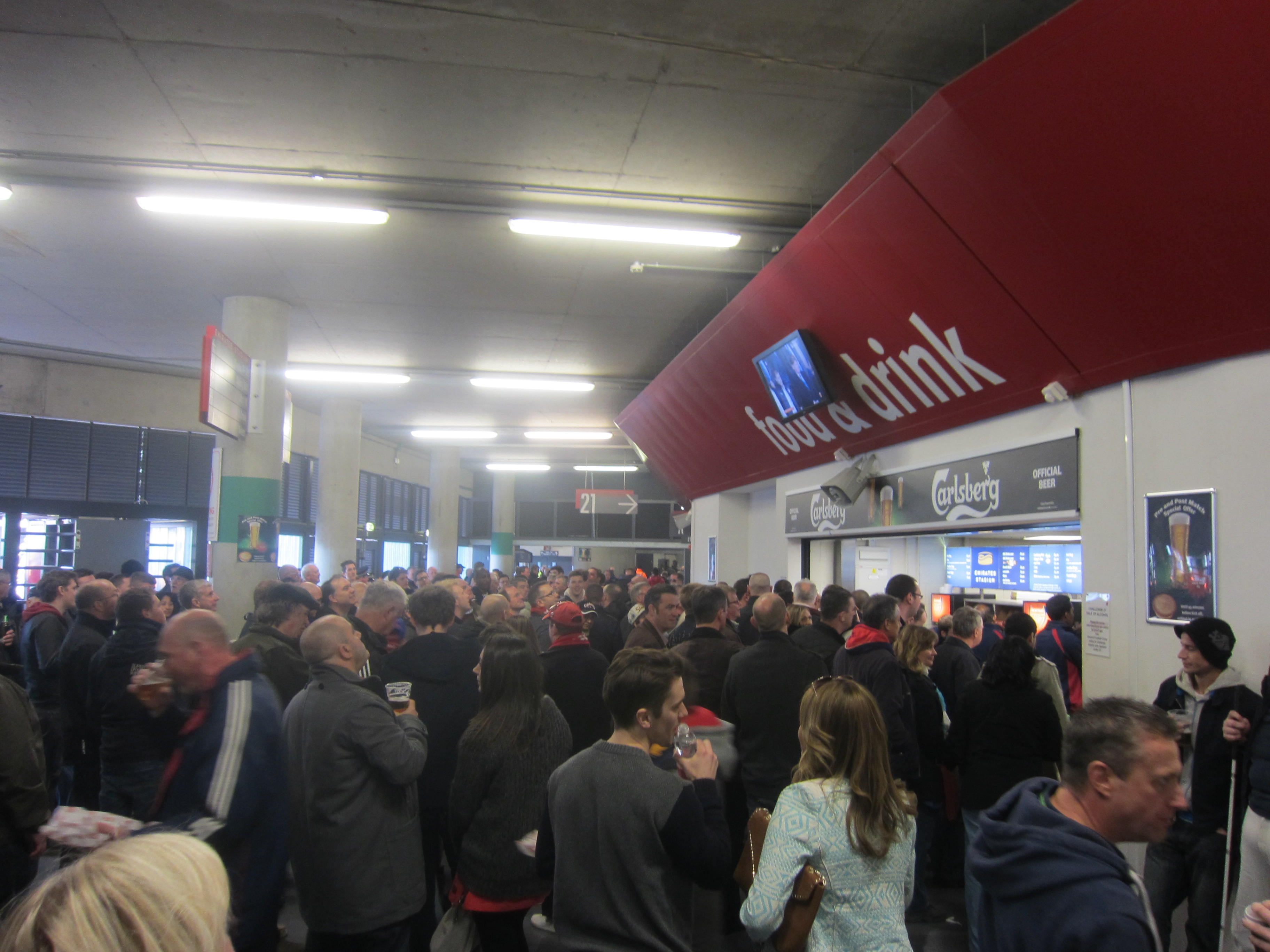
It is not better when you go inside. Maybe because it is the away section, the room is not particularly big; the walls undecorated concrete, and the catering facilities not very inspiring. Compared to the two other modern stadiums visited the previous two days, the Emirates cannot really compare. But gradually the place is filled with United supporters in party mood, and there is singing and dancing to liven up the place. I enter the stands 25 minutes before kick-off, so I just escape a smoke bomb dropped in the midst of the celebrations.

044048050

In the stands, the Emirates looks very much like the Etihad. Only red rather than blue – and bigger with a capacity of 60.000 compared to 48.000. On the one hand, light, open and spacious. And on the other hand atmosphere tend to vanish in the air, although the 3.000 strong United contingent try to keep the party going with “Twenty times, twenty times Man United, twenty times twenty times I say, twenty times twenty times Man United, playing football the Busby way”. I am seated right next to a tunnel in the corner, and compared to my view from at similar position at West Ham, this is so much better, the seats are better (although they are not used in this section), and there is plenty of space between them, so the crowd move around fairly freely. The very vocal and spirited youngsters next to me move over to some friends during the first half. And I see them turning up in several different parts of the section.

Still, I prefer the atmosphere generated at the old ground. You can always see the goals on television the next day. The atmosphere, you can’t get anywhere else.

IMG_5604 IMG_5607

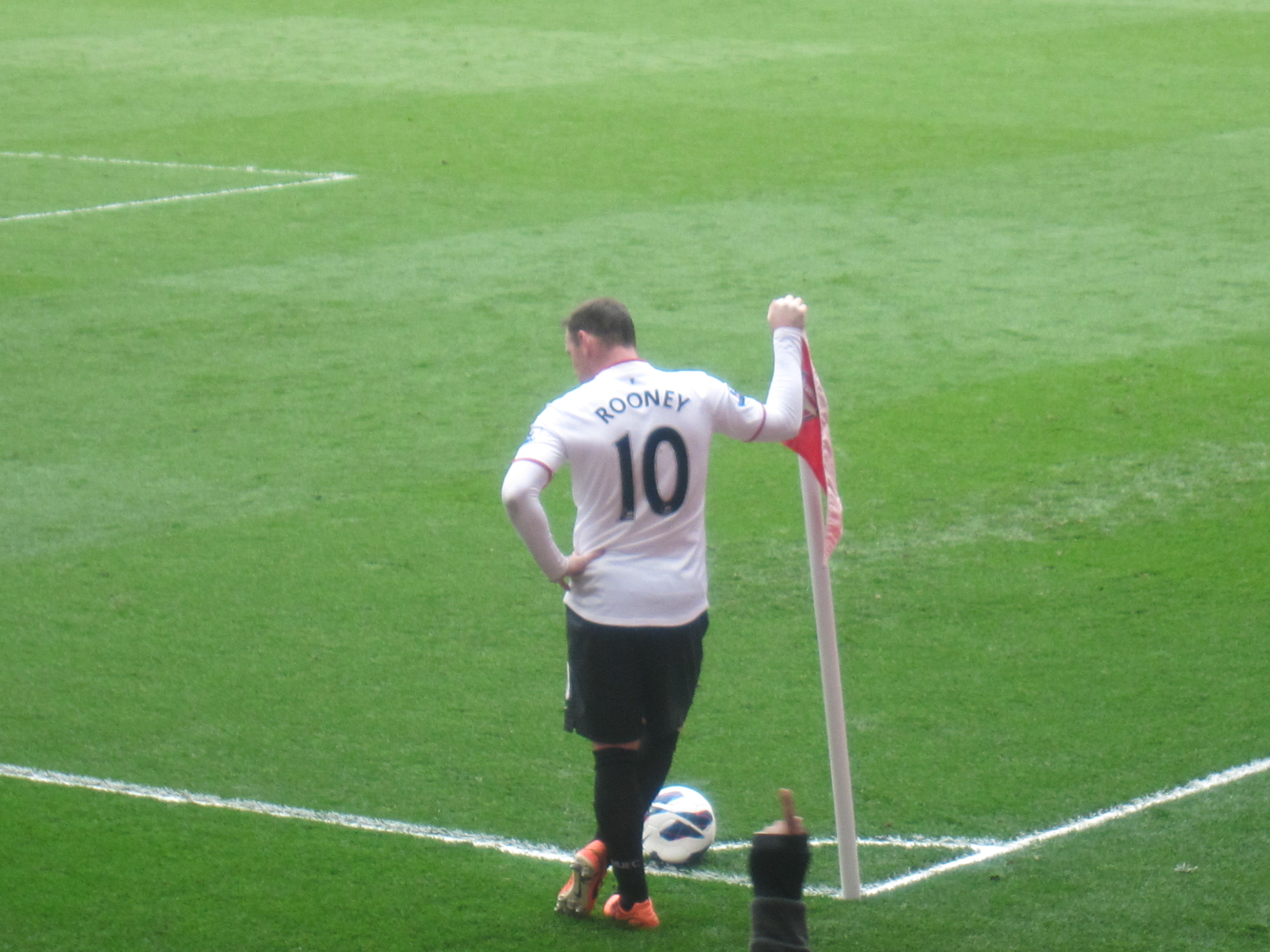
After plenty of media speculation, Arsenal do give United a guard of honor as newly crowned champions as they enter the pitch. But the crowd is not pleased, and although the volume never reaches a high level because of the stadium design, you can hear the Arsenal fans seizing every opportunity to boo and jeer their former hero, Robin van Persie. And Rooney and Rio for that matter. Not that it seemed to affect them, though.

064108

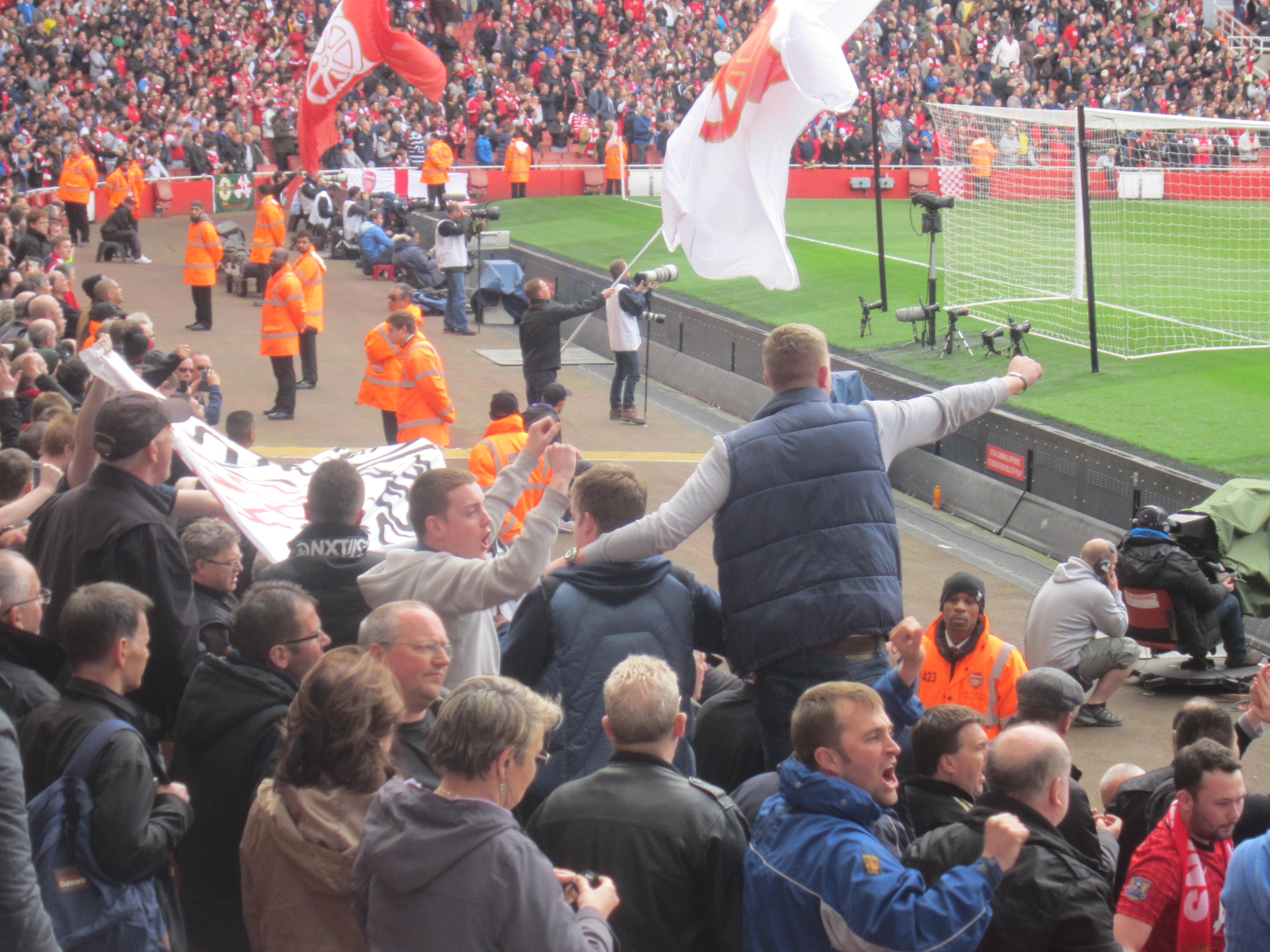
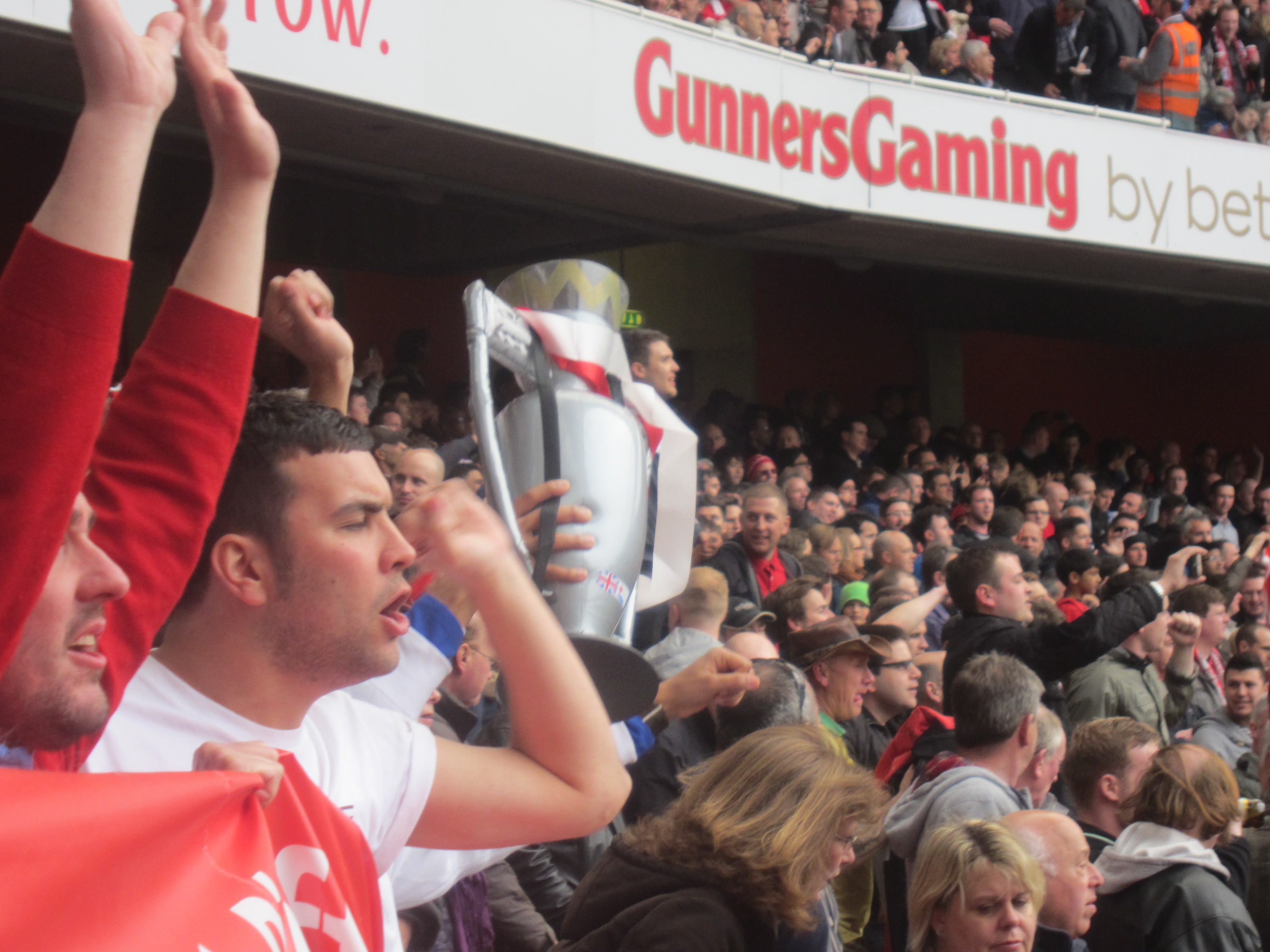
Having already won the title, United are not really up for it in the opening 15 minutes. And after two minutes, Walcott scores for Arsenal, although televion pictures later reveals that he was well off-side when played through. The goal doesn’t spoil the party mood in the United section, though. Lots of fans turn to the Arsenal fans sitting above us, mockingly cheering, gesturing, before immersing themselves in a several minutes long “twenty times” rant.

066067071068

I recognize at least half a dozen faces from the coach load I went with to the West Ham match. Some of them are busy walking around shaking hands with other fans; some leave almost 10 minutes before halftime to get to the beer downstairs. They miss van Persie first winning and then converting a penalty, giving the celebrations and chanting at Arsenal fans new energy.

077083093

In the second half, United continue to carve out some good openings, without playing particularly well, but they lack the final cutting edge, and the match finishes 1-1. As we leave the ground, celebration songs are mixed with mocking of Arsenal supporters. It does not seem malicious, but some have definetely had a lot to drink and their joy tends to spill over. A guy next to me has his hat ripped off and thrown away, much to his annoyance – but others help him recover it. The smokebomb inside is much worse, as it may lead to a cut-down in the already sparse ticket allocation for United fans. The mounted police outside seem alert to intervene, if things should get out of hand.

099121125

Most United supporters go to London by coach or car, train tickets being fairly expensive. So I feel rather lonely as I turn towards the tube to get me to London Euston. The queue seems massive, and I wonder how many hours it will take to get the thousands of fans away from the small tube station. But surprisingly, their is a slow but steady flow, and I even manage to get a train earlier than planned.

129131132

Tagged with: , , , ,
Posted in Football grounds, Uncategorized

Enter your email address to subscribe to this blog and receive notifications of new posts by email.

Join 4,517 other subscribers
Follow Football and material culture on WordPress.com